What the Creator Economy Really Needs in 2026 - AHN Media Group

Blogs, Development

December 19, 2025

SHARE:

The creator economy is no longer a niche corner of the internet. It is a $250 billion industry, powering modern marketing, culture, and commerce. Yet for the creators at its core, the experience often remains unstable and fragmented. Inconsistent rates, shifting platform demands, and “gifting” budgets paired with outsized expectations have left many navigating an ecosystem that hasn’t caught up to their value.

As we look toward 2026, the industry is approaching a tipping point. Growth alone is no longer enough. What creators need now are standards, systems, and support that allow them to build sustainable careers—not just viral moments.

Below are five critical shifts shaping the future of creator work, and the standards Meraki is building to support a stronger, more intentional industry.

1. Stronger Structure for a Growing Industry


Photo courtesy of Vivian Kwan (center), Founder of Meraki Group

While creator content has never been more polished, the backend of the industry remains disorganized. Uneven pay scales, scope creep mid-campaign, and unclear paths to professional growth are still common. Creators are often met with constant brief changes or “gifting” requests that require high-level deliverables without fair compensation.

The gap: There is no shared structure defining fair rates, clear deliverables, or realistic timelines across the industry. Expectations are often implied rather than stated, leaving creators to absorb last-minute changes, unpaid revisions, and expanded usage. Over time, this places most of the financial and emotional risk on creators instead of being shared evenly with brand partners.

The Meraki solution: Meraki builds every partnership on clarity. Terms and rates are established upfront, expectations are clearly defined, and communication stays transparent throughout the process. By setting strong boundaries early, creators are protected from underpayment, and brands begin each project with a shared roadmap for success.


2. Education That Powers Careers, Not Just Content


Image Source: Pexels

The biggest challenges creators face are rarely creative. They are structural. Pricing work correctly, understanding usage rights, and identifying harmful contract clauses remain major pain points—even for experienced creators.

Too often, creators are expected to learn these lessons the hard way.

The gap: Most creators enter the industry without access to professional guidance that supports long-term career growth. Knowledge around contracts, licensing, and negotiation is often gatekept or learned through costly mistakes. As a result, many creators stay stuck in short-term cycles instead of building sustainable paths forward.

The Meraki solution: Meraki focuses on training ethical, creator-first managers who act as true career partners. Through negotiation support and education around contract red flags, creators are equipped to think beyond the next deal and toward sustainable, multi-year growth.


3. Standards in Negotiation and Contracts


Image Source: Pexels

A significant number of creators still undercharge for their work, and 26% report needing help navigating contracts. Without standardized deal benchmarks, creators are often left guessing their worth—leading to pay gaps, rights misuse, and legal risk.

The gap: Negotiation norms vary widely, with no clear benchmarks for fair compensation or usage terms. Many contracts are written in dense legal language that creators are expected to sign without full understanding. This imbalance leaves creators vulnerable to losing control of their work and long-term earning potential.

The Meraki solution: Meraki empowers creators with defined negotiation standards and the confidence to secure fair, market-value deals. By demystifying contracts and usage terms, creators can focus on their craft knowing their income and intellectual property are protected.


4. Work Models That Protect Wellbeing


Image Source: Pexels

Burnout has become one of the industry’s most pressing issues, affecting more than half of full-time creators. The always-on model—driven by algorithm shifts and last-minute deadlines—is no longer sustainable.

Creativity cannot thrive under constant urgency.

The gap: Many campaigns are built around speed and volume rather than realistic creative timelines. Creators are expected to be constantly available, adapt instantly, and produce under pressure without recovery time. Over time, this erodes both creative quality and mental health.

The Meraki solution: Meraki advocates for structured planning and sustainable workflows. Campaign timelines are built to protect both creative quality and mental health, proving that high-level output does not require constant exhaustion.


5. Representation Rooted in Voice, Not Trends

 

Image Source: Pexels

Creators are increasingly resistant to being reduced to labels or treated as trend-driven checkboxes. True representation starts with understanding a creator’s voice—not forcing them into a predefined brand narrative.

The gap: Many partnerships remain transactional, prioritizing short-term relevance over genuine alignment. Creators are often selected to fill a category rather than for their perspective or long-term vision. This leads to inauthentic work that disconnects creators from their communities.

The Meraki solution: Meraki begins every partnership by listening. By understanding each creator’s goals and vision, Meraki aligns them with brands that share their values—fostering long-term relationships that feel authentic to both the creator and their community.
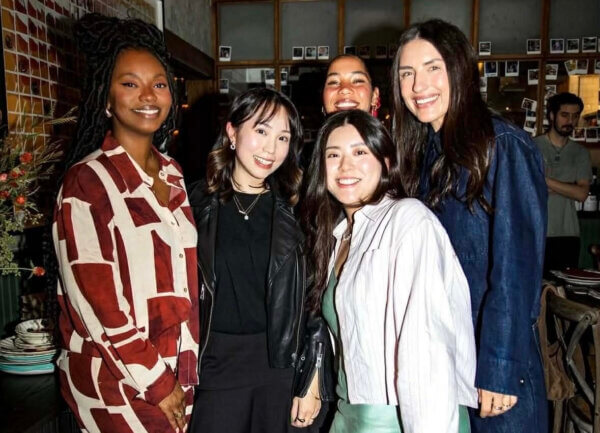
 

Photo courtesy of Vivian Kwan (second from left), Founder of Meraki Group


The Next Era: Purpose Over Pressure

As we look toward 2026, the transition from a “Wild West” to a professionalized industry requires more than just better tools—it requires a fundamental shift in how we value the humans behind the content. 

Meraki sits at the center of this new era, bridging creative passion with real professional growth. By pushing for fair standards, ethical representation, and sustainable careers, Meraki does more than manage creators; they help protect the future of creative work.wi

Learn more about Meraki Group:
📍Website

📍Instagram 

Related Articles

Image Source king5.com

Uncategorized

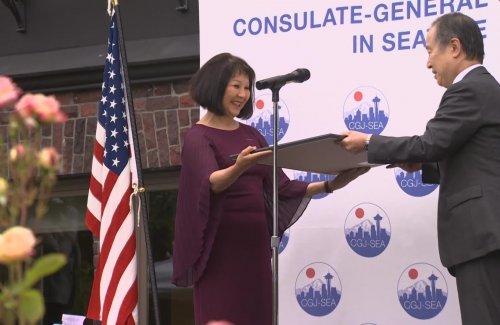
Former King 5 Anchor Lori Matsukawa Receives One Of Japan’s Highest Honors

Lori Matsukawa, a former Hawaii resident, and Seattle news anchor received the ‘Order of the Rising Sun Sun, Gold and Silver Rays’, one of Japan’s highest honors.

The award was for her contribution to promoting Japan-U.S. friendship. “This is a true honor and thrill for me because for the last several years, I’ve been really working hard to connect people in Japan and people in the United States on a person-to-person basis,” Matsukawa told KING 5.

The award was more generally bestowed upon distinguished members of the Japanese military since 1875, but in 2003, the honor was extended to women.

Matsukawa was a well-known journalist for the Seattle media and KING 5, as well as a former president of the Japanese Cultural & Community Center of Washington. She brought to light important events in Japanese American history, particularly those that occurred during World War II, through her reporting.

Her Emmy-award-winning documentaries centered on the detention of Japanese people in the Pacific Northwest during World War II.

Matsukawa was also instrumental in founding a chapter of the Asian American Journalists Association.

King County has designated June 29, 2019, as Lori Matsukawa Day in honor of her retirement.

Image Source planetnewspost.com

Uncategorized

Renowned NYC Little Tokyo Restaurateur Faces $95M Sexual Assault Lawsuit

A $95 million lawsuit has been filed against a restaurant owner behind several top East Village Japanese restaurants, Shuji Bon Yagi for allegedly sexually assaulting an employee this winter. 

The lawsuit was filed by Nozomi Horikoshi, a top executive at Yagi’s restaurant group T.I.C., who claims Yagi allegedly assaulted her while she had passed out after a night of drinking and could not consent, according to the New York Post.

According to the allegations made in her file, Horikoshi, who has been employed by the well-known restaurateur for close to a decade, stated that he invited himself to celebrate the birthday of another female colleague “knowing that his wife was in Japan throughout the weekend.”

Horikoshi claimed that her boss forced her into a taxi sometime after 2:00 a.m. and then began groping, caressing, and attempting to kiss her when she was very intoxicated. She “tried to push Yagi off her and told him to stop, but due to her level of intoxication, the plaintiff eventually lost consciousness inside the taxi,” the filing alleges.

Yagi reportedly drove her directly to his residence on West 58th Street, as obtained from the GPS information from Horikoshi’s cell phone. Horikoshi ultimately awoke with her employer allegedly resting on top of her while she was naked from the waist down.

“I realized I was naked from the waist down … that was so embarrassing.” The 51-year-old married mother of three told the New York Post, “I was like what happened? I have to go home. I knew that something happened already,” she continued. “There was a feeling of shame.”

Horikoshi’s attorney claimed the lawsuit was about “power and accountability” for Yagi, a high-profile businessman renowned for influencing Japanese cuisine in New York.

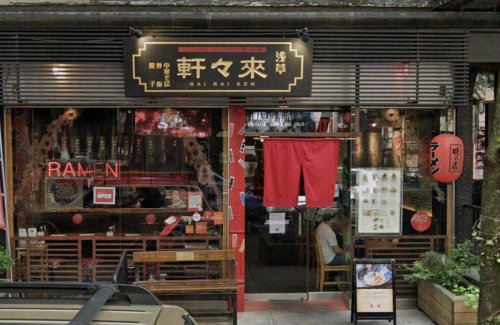
Dubbed an “East Village ambassador for Japanese cuisine” by the New York Times, Yagi’s restaurants include Rai Rai Ken, Cha-An, Sobaya, and Bar Decibel.

Sinful Treats

Uncategorized

Recession, Pandemic Won’t Stop This Momma Baker For Taking On New Opportunities

Have you ever thought of opening a business during a recession? How about during the pandemic? Well, this lionhearted momma just did that!

Filipino-American Mariel Black started her baking business, Sinful Treats, in June 2009, at the peak of the recession — everyone thought she was crazy to start a business at that time. She had only one product to sell, some unknown Filipino pastry called ‘Food for the Gods’. “No one knew what it was. I had to tell people, ‘it’s like a blondie with dates and walnuts’” she said. Starting out as an online bakery, she gave out samples to whoever was open to trying her product. People never heard of it, but once they tasted it, they loved it! 

Because everyone was hurting during the recession, she found that people were more inclined to help each other. Soon, a few coffee shops agreed to carry her products, and she also kept selling online.

“This photo marks the beginning of our Sinful Treats adventure. My boys have been involved since Day 1.” -Mariel

Her big break came in 2011 when the Railroad Museum in Old Sacramento ordered 19,800 Snickerdoodle cookies for their main holiday event, The Polar Express. A year before that, she took her 4-year-old son on the train ride, where they served cookies and hot cocoa just like in the movie, Polar Express. He took one bite of the cookie, then he told her that she should make the cookies. “Ah, the power of suggestion, from a 4-year-old!” Mariel exclaimed. 

She talked to the coordinators and gave them cookie samples and they loved them. The following year, they ordered 19,800 Snickerdoodles. “I said YES, even if at that time,” she said, “I had no kitchen and no employees to help me. I had a couple of months to figure out how to make it happen.”

She rented a kitchen in a restaurant at night and asked friends to help, “I had a crew of 5 people. Like little elves, we’d bake all night while the restaurant was closed.” They only had one oven with 2 racks, only able to bake 48 cookies every 12 minutes. The cookies were baked from scratch, scooped by hand, packaged individually, sealed with a heat sealer, and labeled — all 19,800 of them! 

“It was the most exhausting but exhilarating experience. It was then I knew that I loved the thrill and pain that came with being a business owner.” She’s been baking for the Railroad Museum since then.

“Ah, the power of suggestion, from a 4-year-old!”

-Mariel black

Sinful Treats grew to have its own retail location a few years later and became a full-service bakery and catering company. They created and launched their first baking mix in 2015 with their signature product, “the treat that started it all” — Food for the Gods Baking Mix.

The year 2020 would have been their 10th year baking for the museum, “but 2020 had a different plan for all of us” she said. All of their Fall and Holiday events have been canceled. “Being in the baking business, our fourth quarter is when we make the most. Suddenly, all of it was gone. Having survived and thrived during the recession, I can honestly say this year, this pandemic is a lot harder than the recession.”

But the lockdown didn’t stop Mariel to continue her passion, rather she pursued another idea – to have a one-stop shop for baked goods. “Recession, pandemic, lockdowns won’t stop me. There are always opportunities even in the worse scenarios.” 

In October 2020, she launched an online marketplace where local bakers can sell their products and grow their small businesses. Sinful Treats is now home to the best local brands. Mariel’s goal is to empower small business owners, especially women and minority-owned businesses. All Bakers and Food Makers who have something special and have unique products to offer are welcome to join, “The food industry is already very competitive, but we are stronger together. So my hope is that through this marketplace, we can all help each other grow.” They ship cakes, cookies, desserts, and gourmet food across the United States.

Sinful Treats’ Business Partners

“The food industry is already very competitive, but we are stronger together. So my hope is that through this marketplace, we can all help each other grow.”

-Mariel black

“Everything I have worked for seemed to be a stepping stone to what I’m doing now,” she said, “Having a brand that’s already established, a working website, products that have been tried and proven, years of networking and relationship building, all of this and more are now helping to make this new path easier to take and faster to grow.”

Mariel always gets a thrill watching businesses grow, she also shares over a decade of her experience and wisdom with new small business owners. “I love baking, but my real passion is business”. She guides her marketplace sellers with what they need; teaching them about branding, pricing, basic accounting, packaging, shipping, and even how to improve their products and come up with new ones.  

“I always tell my kids, when something bad happens, it’s usually a blessing in disguise,” she added, “True entrepreneurs find opportunity even in the worst scenarios.” 

Website: sinfultreats.net

Instagram: @sinfultreats

Facebook: Sinful Treats

Twitter: @SinfulTreats

Image Source istock

Uncategorized

New Report Says There Is Still A Talent Crunch In Southeast Asia Amidst The Layoffs

One of Southeast Asia’s biggest job platforms, Glints, just put out a report that shows the situation may not be as severe as they seem.

Glints co-founder and CEO Oswald Yeo told TechCrunch that there has been a lot of funding injected into the IT business. This is a response to the two-to-three-year bull run, and as a result, several firms grew swiftly. 

Yeo said that Singaporean firms seemed to adapt fastest to macroeconomic changes and that this wasn’t a terrible thing because other firms wanted to move swiftly, too. 

Operations, finance, HR, and certain sales and marketing teams have been hit hard, while businesses turned to Vietnam and Indonesia, which have fewer layoffs, for top-tier technical personnel. Moreover, the pandemic has created a decentralized-minded workforce.

Yeo observed that the pandemic had made remote work more convenient, necessitating cost-cutting measures. Many firms turn to remote employment to optimize their human and financial capitals. 

They have seen that remote work prospects on Glints have expanded tenfold in a year. Some regional firms in Malaysia continue to hire foreigners, while others only hire Malaysians. According to Glints, mid-to senior-level employees’ compensation won’t diminish, but junior talent may.

One-year fixed-term contracts are another trend that helps firms predict their financial destiny, as employers are wary about signing long-term contracts. 

He believes that not everything was awful — the need for technological and product skills on Glints favored job seekers.

Layoffs help startups build core teams. Yeo said that because there is less rivalry for talent, it’s a fantastic moment for organizations in a strong position to hire top managerial talent.