Uncategorized

September 9, 2022

SHARE:

“Everyone has tried to tell our stories on film and television, but they are inaccurate because the producers, directors, and storytellers haven’t lived it.”  — Thuc Doan Nguyen described the other filmmakers who wanted to finance her upcoming film but were never satisfied with what they could do for her story.

Nguyen was eager to continue working on her script “Scent of the Delta,” a semifinalist at the 2020 film festival that will shortly be filmed. Carrie, a multiracial lady in New Orleans, is caught between two cultures. The narrative discusses anti-Asian prejudice, Asian sex workers’ misery, human trafficking victims, and Vietnamese patriarchal standards.

This gave Nguyen focus and purpose, and she became a screenwriter. Her first assignment in New Orleans showed her how misunderstood the Vietnamese population was. She cited her family’s terrifying refugee experiences and which fueled her desire and determination to do more.

Nguyen’s initial career path never involved writing. As a 3-year-old, she was entrusted to churchwomen, whom she refers to as her American grandmothers, because her family did not speak English when they immigrated to the United States. Her family relocated to southern Maryland with new employment opportunities awaiting her parents.

Since Nguyen had already made it to the semi-finals of the 2022 festival and Sundance Film Institute had expressed interest in the script, she decided to push forward with the project. She anticipated additional difficulties and major setbacks while adapting the screenplay into a film. Vietnamese-American producers had expressed interest in funding the film, but she knew they were missing the mark. 

She believes that the production team and actors cast by the producers will not complement her story. Because of this, she has made a life-changing choice. She declined a $5 million sponsorship offer for her film and decided to make it herself. As a result of her discernment, she was able to meticulously plan out the production of the film version of the story that she envisioned. 

Her film will be developed and directed by her team and a well-known production. She chose Le Ly Haslip, who wrote Oliver Stone’s “Heaven and Earth,” and Maria Judice, a science-fiction film producer. 

Nguyen wants the audience to comprehend the genuine narrative behind her writing, as shared by people who experienced it. The film’s shooting is set to get underway in Louisiana in 2023.

This upcoming fall, she was also nominated for the 2022 Gold Fellowship Award from the Academy of Motion Picture Arts and Sciences due to her continued perseverance and incredible creative work.
Related Articles

Image Souce: olliecantos.com

News

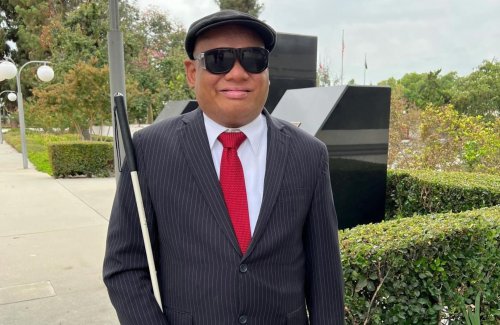
Blind Filipino-American Civil Rights Attorney Gets Elected As West Covina City Council Member

Filipino-American Ollie Cantos, who was born with a visual impairment, is now taking his experience and knowledge to West Covina City Hall.

In 1997, he graduated from Loyola Law School in Los Angeles with a law degree. He served as a staff attorney at the Disability Rights Legal Center after graduating. He also held various roles as a civil rights attorney in the Washington, D.C. government before the coronavirus emerged.

Now, he is a sworn-in member of the West Covina city council and is looking forward to contributing back to his community, where he was raised by his Filipino immigrant parents.

“My excitement level is off the charts because this represents the culmination of a lot of hard work of countless people that got us here and when we look at the opportunities that are ahead of us to unite, and to be supportive of making the city better, this day is also historic,” Cantos said in an interview.

Cantos will collaborate with a fellow Filipino on the current city council, as Letty Lopez-Viado, the first Filipino-Mexican mayor of the city, was also elected unopposed in November. She was first elected to the city council in 2018 and served as mayor of the city from 2020 to 2021.

“Though he can’t see with his eyes, he sees with his heart,” Lopez-Viado said of Cantos as she got sworn in. “He’s a very intelligent, well-spoken gentleman, and I’m very excited to work with him.”

Image Source: Considered Objects

Stories

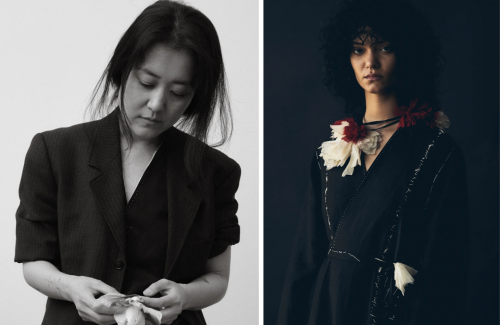
Japanese-American Designer Sara Sakanaka Revamps Vintage Kimonos Into Modern Clothing

Each of us has a unique way of imparting the memories, stories, and mementos we want to pass on to our future generations. As for 39-year-old Japanese-American designer Sara Sakanaka, the way is by incorporating ancient tales into modern clothing.

In her studio in Brooklyn, Sara preserves a little drawstring bag that her grandmother sewed for her decades ago. One of Sakanaka’s oldest mementos, this heirloom represents a long-standing ideology and was made from leftover fabric.

You will also find in her studio, folded stacks of rescued textiles waiting for her to stitch them into something new, exactly like her grandmother used to do as a hobby.

After her grandmother passed away, Sara began studying the kimonos she had inherited from her. She realized that giving these garments a second chance through reconstruction was a means of healing and re-establishing her identity and cultural roots.

Her initial creation was a classic, collared, button-down shirt. She embroidered a tiered patchwork flower fashioned from leftover silk scraps inside each garment she produced.

“There’s this whole idea that objects have lives,” she says in a Vogue interview. “I like to see every piece as a truly considered object in that way,” thus, naming her label as Considered Objects.

Considered Objects offers tapered silk slacks, oversized coats, two-toned vests, draped dresses, and hand-sewn accessories. Each item is made of recyclable materials, and within each garment is a silk scrap flower and a tag. Each shirt comes with a drawstring bag, a keepsake designed to be handed on like the one she inherited from her grandma.

Image Source: Business Insider / Linkedin

Stories

These Two South Asian Millenials Are Breaking Cultural Barriers To Empower Women’s Financial Freedom and Literacy

“Our culture has countless strict gender roles, one of which is that men manage money and women don’t,” Aashka Piprottar, the founder of Boss Betis, told Wealthy Wolfe’s Parween Mander over email. “So while men get to discuss money openly and proudly, women, if they ever discuss it, do so in hushed, quick voices.”

Those gender roles convinced Aashka from a young age “that I was just destined to be ‘bad with money’ and I would just have to rely on my father — and then in the future, probably my husband — to manage the money for me,” she adds. 

Boss Betis is a community-based platform to destigmatize the conversation around money, specifically the unique challenges faced by desi women. The platform wants to instill that financial freedom and literacy are essential to women’s empowerment. 

While Wealthy Wolfe is a digital financial coaching & education platform for women of color from immigrant upbringings specifically.

Aashka also told Parween that she’s unlearned the harmful money narratives of her childhood through working in the wealth management and financial wellness space.

By 27, Parween had a $150,000 net worth, so she could support herself and her parents without feeling burdened. She advised that we must put on our financial oxygen masks first, as well as to start a  “Parent fund” account to save money for our families in case they need it, “This is a way to set a financial boundary so that you don’t feel resentful or sabotaged if they require funds from you.” Parween wrote on Business Insider.

Understanding the complexity of the South Asian culture, Parween has helped one of her clients to set up strategic savings accounts to separate her money, while still contributing funds when her client’s parents asked for it.

Parween affirms that cultural expectations and narratives play a huge role in their ability as South Asian women to make different decisions, especially when it comes to their money and building wealth. 

Image Source: Omakase Restaurant Group

Stories

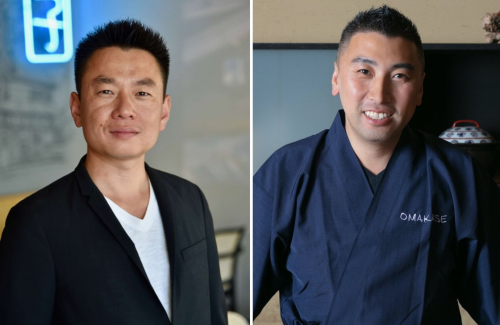
Omakase Restaurant Group: How These Two Immigrants Went From Dishwasher And Busboy To Co-Founders

Kash Feng, co-founder and CEO of Omakase Restaurant Group, moved to the Bay Area at age 18. He was the only child of factory workers, so when he moved to the U.S. in 1999 with his buddies, he borrowed $20,000 from relatives and friends, promising to return them.

Feng started working as a dishwasher at a Chinese restaurant in the East Bay, and was quickly promoted to busboy. He progressed through various industrial occupations, frequently juggling three jobs at once, while also taking English classes.

In 2007, he met Jackson Yu, who eventually became his business partner and executive chef of Omakase sushi restaurant. Like Feng, Yu also had modest beginnings. At 16, he and his parents left China and moved to the Bay Area. 

Yu was a Japanese buffet busboy and gas boy on his days off. He was once asked to help out when the sushi chef cut his fingers one day. Yu then became so skilled that he could manually shape 2,000 identically sized sushi rice balls per day. Other sushi establishments took notice of this, including the well-known Ebisu in the Sunset, where he worked for five years to master sushi making.

They were both 26 when they decided to start their own restaurant business, Live Sushi, pooling all their savings and borrowing from relatives. Their restaurant was a hit from the beginning. Eventually, they were able to pay off all their loans, and the rest is history.

Now, Omakase Restaurant Group is an ever-growing empire, with different establishments all over San Francisco.