Uncategorized

September 23, 2022

SHARE:

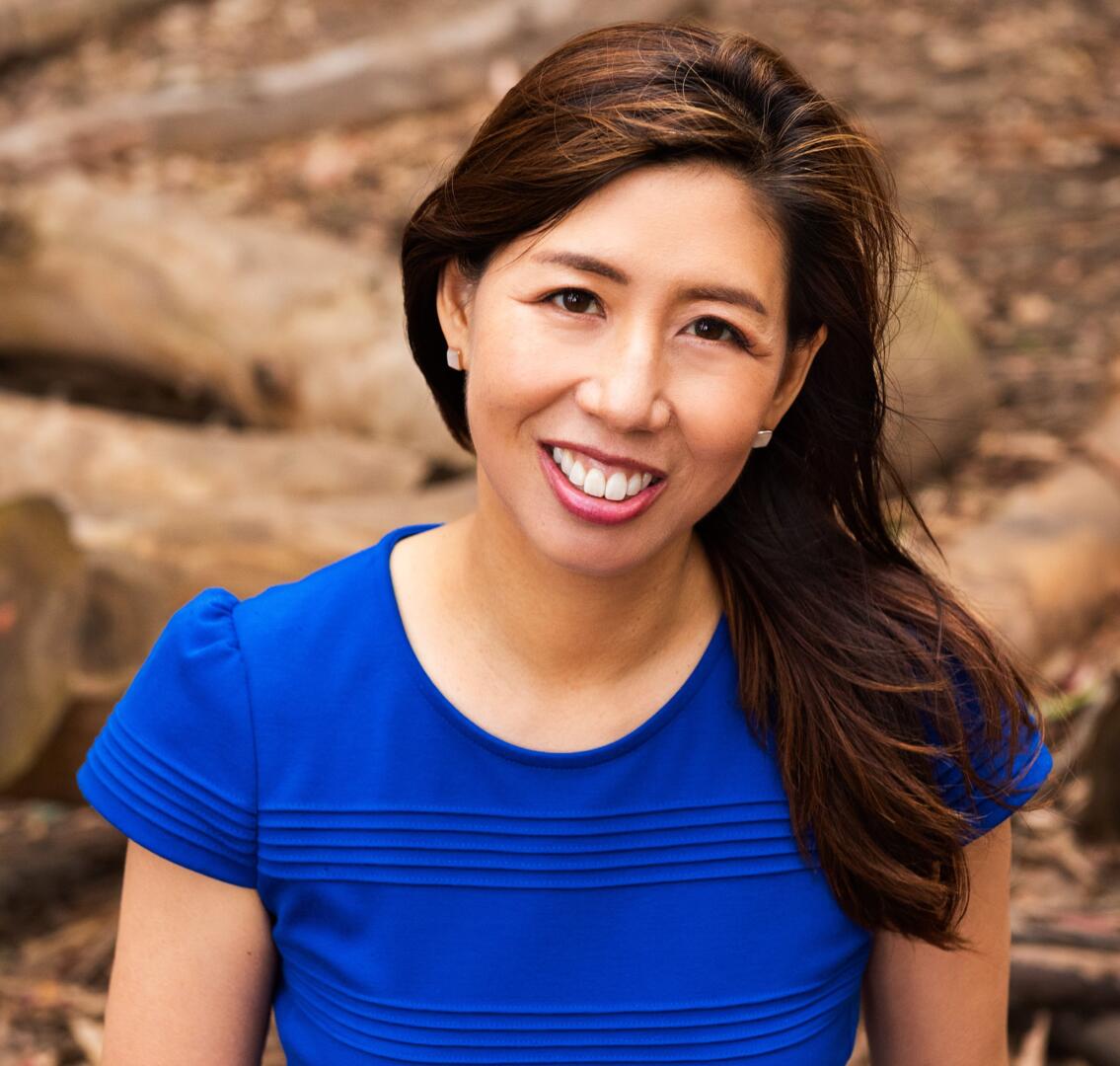
Two mom-friends and milk tea lovers Olivia Chen and Pauline Ang have capitalized on the early success of their milk tea company by sending samples to the head office in Costco which lead to launching their product with the retail giant in just three and a half months.

“We are still pinching ourselves that our Twrl’s Taiwan-Style Black Milk Tea is now in Southern California Costco!” Olivia says, “We’re starting with 3 locations: Irvine, Monterey Park, and Tustin (2700 Park Avenue).” 

Pauline (left) and Olivia (right)

They overcame it without calling in a broker to help them. It wasn’t easy at all, however, this exemplifies the importance of hard work and perseverance of the duo to learn every step of the way for their small business to set foot in one of the world’s largest retail stores.

Olivia enthusiastically shares with Asian Hustle Network the timeline of how their plant-based Twrl Milk Tea made it into Costco to help entrepreneurs navigate the highly competitive food and beverage space. 

Roadshow Or Small Rotation

We met our buyer at Expo West (Think Super Bowl for the Food & Beverage industry where retailers and manufacturers meet up. Super worth doing if you are in CPG. We even landed our 1st TV interview).

After Expo West, we sent more samples to the office and began negotiations for placement. We were offered two ways of being at Costco:

Roadshow

  • 4 days of selling on consignment. We could control costs by using our own people and decide the volume of product we wanted to bring in.
  • Typically, this is how small brands enter Costco. If it does well, you are offered a rotation. If you don’t do well, then it’s really hard to get into the regular set.

Small Rotation

  • We started with a number of stores and the item is part of the regular set.
  • This is harder to secure because Costco is paying for the inventory and the buyer has to believe in your product.

In both situations, it is critical that Twrl Milk Tea sells well and ideally sells out. Why is this important?

It proves to the Costco Buyer that there is a market for our better-for-you plant-based milk teas. More importantly, companies owned by Asian American small business owners like ours are proven to be great partners worth investing time in and onboarding.

Reasons For Opting for Small Rotation

After a few weeks of due diligence on our end, we decided to go with a small rotation. Our reasons were simple:

  • Our manufacturer could produce the volumes needed and in the time we needed. Not always the case in this crazy supply chain. We are made in the USA so it makes a huge difference in our speed for delivery.
  • We could handle the financial obligations to fund the inventory. It’s a lot of money upfront so it’s not a light decision for a smaller company like ours. And, there is still a chance you can be sitting on inventory if it does not sell through.
  • We are committed to Costco and wanted to be part of the regular set and did not want to take the chance that with Roadshow which is only 4 days could be a bust due to so many variables that we may not be able to control.
  • We love Costco ourselves and shop there regularly so we saw our consumers there! Did you know the typical Costco shopper is 35-44 years old, an Asian female making $125,000 and the average trip is $114?!

Roadshow which is only 4 days could be a bust due to so many variables that we may not be able to control.

-Olivia Chen

Decisions, Decisions, Decisions

What flavor to sell?

Out of our 3 flavors, we selected Taiwan-Style Black Milk Tea to launch because it’s one of our best sellers and our Taiwan-Style Black Milk Tea flavor is really unique. Our single-origin loose-leaf black tea is a one-of-a-kind varietal, sourced from a small multi-generational family farm on a misty slope, fed by sweet mountain spring water.

Our tea flavor, aroma, and health benefits are un-parallel to anything on the market. We use pea milk and lightly sweetened our teas with organic agave so our tea flavors really come through. Only 45 calories & 6g of sugar per can.

What would the packaging look like?

Packaging design and sourcing begin for Costco. Luckily for us, Pauline Ang is a seasoned graphic design guru (with 15+ years in the food and beverage packaging for Fortune 500 companies) and designs all our packaging in-house so we could save costs and time here!

How to onboard?

Mountains of paperwork for our two-person team begin. We didn’t use a broker and did everything ourselves. Yes, a broker would have been so incredibly helpful to answer all the questions that we didn’t know the answers to and definitely would have saved us some headaches.

Big Takeaways

  • Don’t be afraid to chase the account you want to be in. Don’t be shy about sharing your vision of where you see the company. Special thanks to Ryan Sung of Honolulu Cookie Company and Vincent Kitirattragarn of Dang Foods for talking to us about their journey with Costco and encouraging us to go for it.
  • It can be done without a broker but not without headaches and some huge learning curves and we did make some mistakes along the way.
  • Have an advocate. We have been super lucky that our buyer has been so incredible to work with and it’s important to have such an advocate in the company. Cannot over-emphasize this enough!
  • Your team matters. Grateful to share this journey with Pauline Ang who is such an amazing friend and business partner. We are two moms that love Milk Tea and simply wanted to make milk tea —a quintessential Asian drink that we love—even better.

Don’t be shy about sharing your vision of where you see the company.

-Olivia chen

Connect with Olivia and Pauline

Your support would mean the world to our small business and the small family farms that use sustainable practices for a tea that’s better for you, and better for the planet. Follow our journey: Instagram, Facebook, TikTok, Twitter

Twrl Warehouse

Related Articles

the guardian-jpg

News

Indian Immigrant Uncovers South Asian Stories Through Media Platform

Founded by Snigdha Sur in 2019, the Juggernaut is a subscription-based website that breathes life into forgotten histories and brings depth to current topics.

Sur was born in India and immigrated to the United States with her parents in 1990. Growing up in the Bronx and Queens, she experienced firsthand the lack of media outlets catering to South Asians of her generation. This led her to create a platform that would bridge the gap and provide authentic representation.

Sur’s journey towards launching the Juggernaut was marked by exceptional academic achievements and valuable professional experiences. After completing her undergraduate studies at Yale University, she embarked on a career in management consulting, working at prestigious firms like McKinsey & Company. She then pursued an MBA at Harvard Business School, where she honed her strategic acumen and entrepreneurial spirit.

Juggernaut’s mission is to uncover compelling stories that frequently go overlooked. The platform quickly gained traction, capturing the attention of a diverse audience eager for meaningful storytelling. 

Sur faced her fair share of challenges along the way. During the COVID-19 pandemic, Sur adeptly adapted the platform’s focus, demonstrating resilience and a commitment to delivering the content that resonates most with the Juggernaut’s audience.

Looking ahead, Sur envisions a future where the Juggernaut becomes a household name, synonymous with South Asian storytelling and expertise. Drawing inspiration from successful media ventures like the New York Times and the Athletic, Sur envisions a platform that collaborates with major productions, offers narrative consultation, and produces compelling content across various mediums. 

Featured Image Source: The Guardian

cnn-jpeg

News

TikTok Invests Billions to Drive E-Commerce Success in Southeast Asia

TikTok, the popular short video app owned by ByteDance, has announced plans to invest billions of dollars in Southeast Asia in a bid to boost its e-commerce business.

The move comes as TikTok aims to capitalize on its large user base in the region and address concerns over data security. With a collective population of 630 million, half of whom are under 30 years old, Southeast Asia represents a key market for TikTok, attracting over 325 million monthly visitors to the app.

Despite its impressive user numbers, TikTok has struggled to convert its popularity into significant e-commerce revenue in Southeast Asia, facing tough competition from established players such as Shopee, Lazada, and Tokopedia.

To address this challenge, TikTok CEO Shou Zi Chew revealed the company’s plans to invest billions of dollars in Indonesia and the broader Southeast Asian region over the next few years. While a detailed breakdown of the investment plan was not provided, TikTok intends to focus on training, advertising, and supporting small vendors interested in joining its e-commerce platform, TikTok Shop.

Chew emphasized that TikTok’s content is becoming more diverse as the platform expands beyond advertising into e-commerce. This evolution enables consumers to make purchases directly through the app during live streams. In Indonesia, TikTok’s largest market in Southeast Asia, the platform already hosts 2 million small vendors selling their products. The region’s e-commerce transactions reached nearly $100 billion in 2022, with Indonesia alone accounting for $52 billion of that figure, according to Reuters.

While Southeast Asian governments have not imposed major bans on government devices, TikTok has faced scrutiny regarding its content. In 2018, Indonesia briefly banned the app due to concerns over inappropriate content, while Vietnam has expressed concerns about the platform’s impact on local culture and tradition.

Despite the challenges posed by established competitors and data security concerns, TikTok remains committed to expanding its presence in Southeast Asia and tapping into the region’s vibrant e-commerce market.

Featured Image Source: CNN

the toronto star-jpg

News

Olivia Chow Makes History as First Chinese-Canadian Mayor in Toronto

Olivia Chow has emerged as Toronto’s first Chinese-Canadian mayor, ending over a decade of conservative rule and ushering in a new progressive era for the city.

Olivia was 13 years old when she first arrived in the country as an immigrant. Now, at 66, she has achieved a remarkable feat, surpassing 102 candidates to become Toronto’s first Chinese-Canadian mayor.  During her campaign, she focused on addressing the housing affordability crisis and pledged to raise the city’s low property taxes while providing support for tenants.

Upon taking office, Olivia faces opposition from Ontario’s premier, Doug Ford, who had warned that her victory would be an “unmitigated disaster.” Ford’s brother, Rob Ford, previously served as mayor of Toronto but faced controversy due to a video showing him smoking crack cocaine and a cancer diagnosis.

Throughout her career, Olivia has served as a member of parliament for the New Democratic Party, a Toronto city councilor, and a school board trustee. She also campaigned alongside her late husband, Jack Layton, who ran for mayor in 1991 and later became the leader of the opposition in Canada.

Olivia assumes the role of mayor at a challenging time for Toronto. The city, with a population of 2.7 million and a metropolitan area of nearly 7 million, is grappling with surging rents and a budget deficit of approximately $1.5 billion. Public safety concerns have also grown, particularly following a series of violent attacks on individuals using the public transit system.

According to The Guardian, Olivia is expected to be a champion for transit, as well as for walking and cycling – she does not have a driving license – and has promised to turn the tide on years of low-tax austerity politics enacted by her conservative predecessors.

Featured Image Source: The Toronto Star

vogue sg-jpg

News

Daniel Wu Shines Spotlight on Asian Cultural Icons in ‘American Born Chinese’

Daniel Wu, known for his roles in “Into the Badlands” and “Westworld,” is thrilled to bring Gene Luen Yang’s celebrated graphic novel, “American Born Chinese,” to a wider audience through its screen adaptation.

In a Zoom interview with UPI, Wu expressed his excitement about introducing the action-comedy story to a broader mainstream audience. The series, which is now streaming on Disney+, follows the journey of Jin Wang (played by Ben Wang), a teenager navigating the challenges of fitting in at his high school against the wishes of his traditional parents (portrayed by Yeo Yann Yann and Chin Han).

“The screen adaptation that was done by Kelvin Yu is amazing in integrating these three disparate story lines,” Wu said to UPI.

When Jin meets Wei-Chen (Jimmy Liu), a Chinese immigrant and the secret son of the legendary Monkey King (portrayed by Wu), their intertwined destinies set the stage for a captivating narrative.

Wu emphasized the significance of showcasing the iconic Monkey King character to a different audience, highlighting the character’s deep-rooted connection to Asian culture. By doing so, he hopes to reveal the Asian “superheroes” and idols from his own childhood to viewers who may not be familiar with these cultural icons. 

According to UPI, Wu found a personal connection to the Monkey King character as a father himself. Reflecting on his experiences during the COVID-19 pandemic and the challenges of distance learning, he humorously described himself as a “Tiger Dad.”

“I realized that I am part Tiger Dad and that I am strict on my kid and then I need to let go,” he said to UPI. “This character is dealing with that same situation.”

Wu is working alongside Michelle Yeoh who portrays Guanyin the Goddess of Mercy. Despite knowing each other for two decades, this project marked their first collaboration, making it even more special.

With its visually spectacular action sequences and heartfelt storytelling, the series offers a distinctive viewing experience that can be cherished by families across generations.

Featured Image Source: Vogue SG