Uncategorized

July 15, 2022

SHARE:

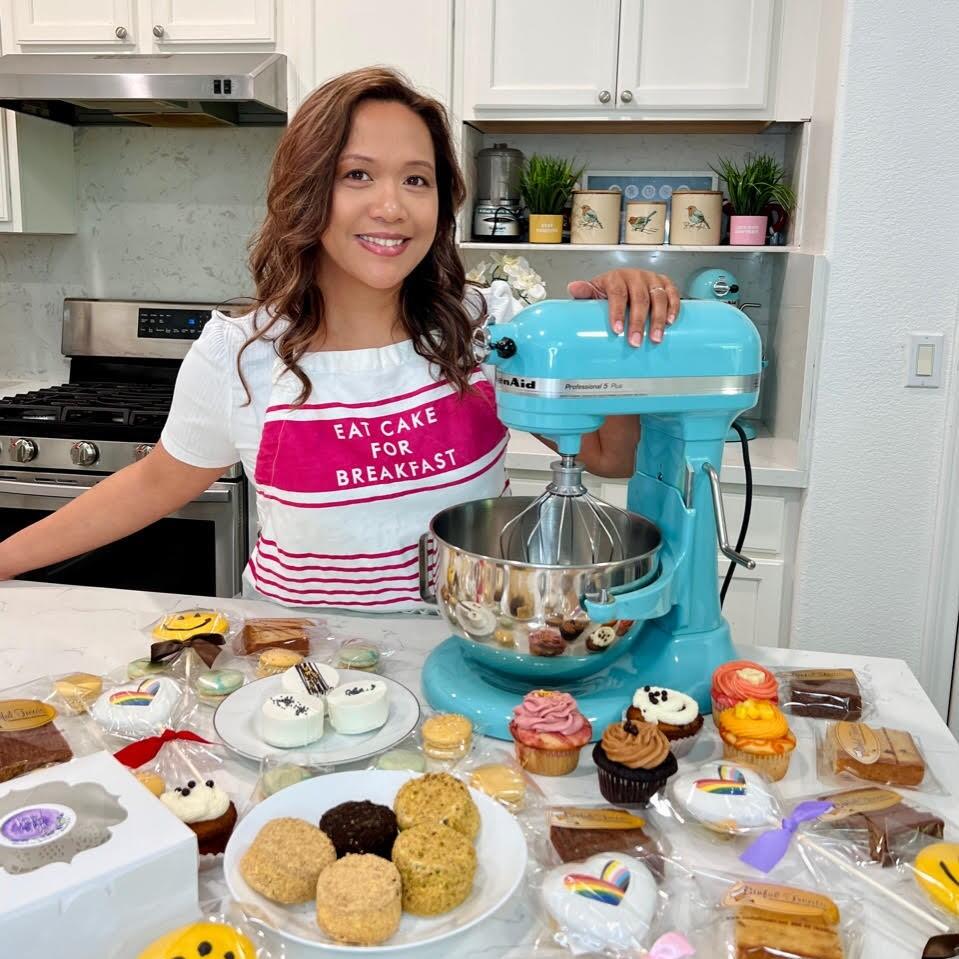
Have you ever thought of opening a business during a recession? How about during the pandemic? Well, this lionhearted momma just did that!

Filipino-American Mariel Black started her baking business, Sinful Treats, in June 2009, at the peak of the recession — everyone thought she was crazy to start a business at that time. She had only one product to sell, some unknown Filipino pastry called ‘Food for the Gods’. “No one knew what it was. I had to tell people, ‘it’s like a blondie with dates and walnuts’” she said. Starting out as an online bakery, she gave out samples to whoever was open to trying her product. People never heard of it, but once they tasted it, they loved it! 

Because everyone was hurting during the recession, she found that people were more inclined to help each other. Soon, a few coffee shops agreed to carry her products, and she also kept selling online.

“This photo marks the beginning of our Sinful Treats adventure. My boys have been involved since Day 1.” -Mariel

Her big break came in 2011 when the Railroad Museum in Old Sacramento ordered 19,800 Snickerdoodle cookies for their main holiday event, The Polar Express. A year before that, she took her 4-year-old son on the train ride, where they served cookies and hot cocoa just like in the movie, Polar Express. He took one bite of the cookie, then he told her that she should make the cookies. “Ah, the power of suggestion, from a 4-year-old!” Mariel exclaimed. 

She talked to the coordinators and gave them cookie samples and they loved them. The following year, they ordered 19,800 Snickerdoodles. “I said YES, even if at that time,” she said, “I had no kitchen and no employees to help me. I had a couple of months to figure out how to make it happen.”

She rented a kitchen in a restaurant at night and asked friends to help, “I had a crew of 5 people. Like little elves, we’d bake all night while the restaurant was closed.” They only had one oven with 2 racks, only able to bake 48 cookies every 12 minutes. The cookies were baked from scratch, scooped by hand, packaged individually, sealed with a heat sealer, and labeled — all 19,800 of them! 

“It was the most exhausting but exhilarating experience. It was then I knew that I loved the thrill and pain that came with being a business owner.” She’s been baking for the Railroad Museum since then.

“Ah, the power of suggestion, from a 4-year-old!”

-Mariel black

Sinful Treats grew to have its own retail location a few years later and became a full-service bakery and catering company. They created and launched their first baking mix in 2015 with their signature product, “the treat that started it all” — Food for the Gods Baking Mix.

The year 2020 would have been their 10th year baking for the museum, “but 2020 had a different plan for all of us” she said. All of their Fall and Holiday events have been canceled. “Being in the baking business, our fourth quarter is when we make the most. Suddenly, all of it was gone. Having survived and thrived during the recession, I can honestly say this year, this pandemic is a lot harder than the recession.”

But the lockdown didn’t stop Mariel to continue her passion, rather she pursued another idea – to have a one-stop shop for baked goods. “Recession, pandemic, lockdowns won’t stop me. There are always opportunities even in the worse scenarios.” 

In October 2020, she launched an online marketplace where local bakers can sell their products and grow their small businesses. Sinful Treats is now home to the best local brands. Mariel’s goal is to empower small business owners, especially women and minority-owned businesses. All Bakers and Food Makers who have something special and have unique products to offer are welcome to join, “The food industry is already very competitive, but we are stronger together. So my hope is that through this marketplace, we can all help each other grow.” They ship cakes, cookies, desserts, and gourmet food across the United States.

Sinful Treats’ Business Partners

“The food industry is already very competitive, but we are stronger together. So my hope is that through this marketplace, we can all help each other grow.”

-Mariel black

“Everything I have worked for seemed to be a stepping stone to what I’m doing now,” she said, “Having a brand that’s already established, a working website, products that have been tried and proven, years of networking and relationship building, all of this and more are now helping to make this new path easier to take and faster to grow.”

Mariel always gets a thrill watching businesses grow, she also shares over a decade of her experience and wisdom with new small business owners. “I love baking, but my real passion is business”. She guides her marketplace sellers with what they need; teaching them about branding, pricing, basic accounting, packaging, shipping, and even how to improve their products and come up with new ones.  

“I always tell my kids, when something bad happens, it’s usually a blessing in disguise,” she added, “True entrepreneurs find opportunity even in the worst scenarios.” 

Website: sinfultreats.net

Instagram: @sinfultreats

Facebook: Sinful Treats

Twitter: @SinfulTreats
Related Articles

VideoScreenshot--YouTube-NielsenNoodlesGenerationalViewsonEquitableJournalismwithAsAmNewsandAsianFeed-3’23”

Stories

Nielsen Noodles: Generational Views on Equitable Journalism with AsAmNews and AsianFeed

First Slurp! 

Food is a way for us to connect and tell stories by engaging all of our senses. Nielsen Noodles is a series where we gather to share our own stories while discussing insights and current events over a bowl of instant noodles. We virtually shared a bowl of noodles with Michael Lai, CEO and Co-Founder of Famous Media Group and AsianFeed, along with Randall Yip, Founder and Executive Editor of AsAmNews; two trailblazers in AANHPI news and journalism. 

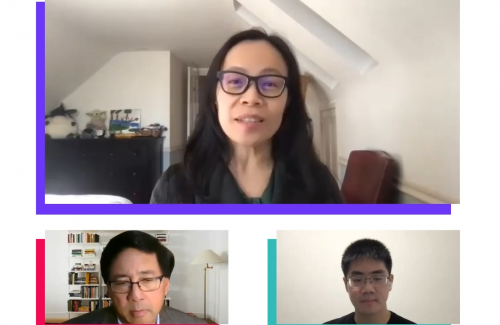
(Top) Randall Yip , (Bottom L-R) Patricia Paturangi, Michael Lai

Which noodle dish did you choose to bring to the conversation?

Randall brought a bowl of wonton noodle soup from his family’s favorite hole in the wall, sharing, “All of my favorite items thrown into one… I picked this because it reminds me of my mom …  she loved to sit around the table and get the family together and just talk, that was her excuse to get the family together.”  

Michael shares, “I brought my favorite brand of instant ramen, I usually add an egg and some bok choi… I always remember coming home from practice, my parents were a little too tired to cook so we all would eat instant noodles and share conversations about our days. Memories and nostalgia from childhood are what these noodles remind me of.” 

Tell us about your news outlet, what is the story behind founding each of your outlets?

Randall recalled growing up in a time where the only Asian American role model on TV was Bruce Lee. While he and his friends idolized the kung fu star, he felt his community was missing critical daily representation in news.

“I wanted to share a different light, we tried to focus on Asian Americans who were role models breaking stereotypes. On the second front, we wanted to have a daily news site because Asian Americans were missing a news site where you could follow Asian American News on a daily basis. So from the very beginning, we’ve operated 365 days a year and we have not deviated from that, ” says Randall.

Michael comes from a different generation of representation. While striving for authentic storytelling connects both Michael and Randall, Michael aims to build a community of Gen Zers through short form, sociable content.

 “We’re an Asian-centric digital media brand, founded just last year, and grown to more than 200,000 followers across social channels. Designed at conception as a media brand to celebrate the shared cultural experiences of the younger generations in America and around the world. 

Growing up I was one of three Asian Americans in my entire school district, I often felt alienated from my Asian American identity. Outside of my parents, there weren’t really many opportunities for me to connect with others who shared my culture and ethnic background… My goal was to create a digital space that I feel I would have benefited from when I was younger, where stories that were important to me were the focus and where I could connect with others who shared similar cultural experiences.” says Michael. 

Why is it so important that diverse media be well-represented in the industry?

Nielsen research has found that certain shows with diverse representation both in front and behind the scenes, attracted more of that audience group – we want more of what’s familiar. From a similar standpoint, it’s also important to have diverse-owned media equally represented in the media ecosystem. 

“There are so many diverse community-centric stories to be told. The only way to make sure these stories are told in an authentic manner is for them to be told by members of the community in front of the camera, and behind the camera as well. It’s so important because there are so many cultural nuances and contextual clues that I think are important. Audiences these days can really tell when something is just superficial versus something that is truly authentic and a project designed to forward and advance the community,” notes Michael. 

He continues to say, “Especially this younger generation growing up, I think there are so many independent content creators emerging, creating amazing content that resonates not only with their own individual community, but also with the broader community at large. I think that is super important, and a trend that will continue to really advance the representation.”

Why is it so important for advertisers to invest in Asian American-owned media?

When we think of advertisers, we often think of Fortune 500 companies and major brands but in a community, such as Asian Hustle Network, we have inspiring entrepreneurs building Asian American-owned businesses. This year Nielsen started a Diverse-owned Media Initiative to help raise visibility of diverse media suppliers so they have a fair and equitable chance to get in front of ad buyers. 

Randall says, “I think the smart brands realize that they can’t continue doing what they have been doing. They need to expand their reach and customer base.” 

Michael says, “[Advertisers] are really starting to realize that Asian Americans are an important audience too. I think we’re one of the most rapidly growing consumer demographics in terms of pace of growth and authentic messaging is important… For advertisers to want to connect with those audiences, I think it’s extremely important, specifically for Asian Americans, to diversify their marketing budgets to allocate some of that budget for those audiences. 

Michael explains further “It’s not just Asian-Americans consuming this content, there are so many instances where K-POP, BTS, Blackpink, Squid-game, Korean dramas, as well as other Asian Entertainment groups. It’s just amazing how widespread it has become, it’s not just Asian-Americans, it’s really everybody is engaging as a whole in these stories that are inherently culturally Asian-based.

Final Slurp!

Michael and Randall have many things in common, especially their desire to champion equity in journalism, entertainment, and storytelling.

Randall urges up-and-comers: “Every brand comes with its own story, every entrepreneur has their own story to tell. Don’t be afraid to tell your story and don’t be afraid to pitch it to media outlets. You’re going to find that there will be a lot of interest…Be Inspiring!” 

Media is where the unique stories and voices of our community can be found. As our community becomes even more diverse, providing opportunities for greater equity in media and enabling more diverse voices becomes even more critical. The people behind the stories who are from our community — from journalists to media owners — continue to stand together to open up more opportunities for future generations of storytellers. Thank you Michael and Randall for paving the way with your passion and commitment.

Watch the full Nielsen Noodles episode here!

Learn more about Nielsen at www.nielsen.com.

Image Source: UPS Mag

News

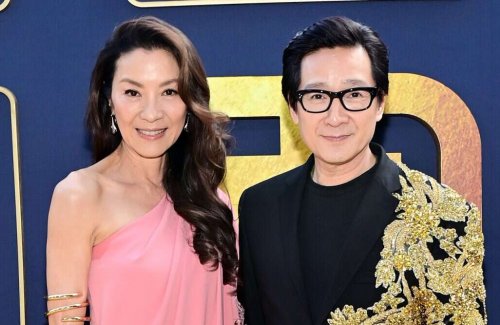
American Born Chinese: Michelle Yeoh and Ke Huy Quan Continue To “Ninja-kick” The Barriers For Asian Actors To Hell

“I think we’ve broken that glass ceiling, we’ve ninja-kicked it to hell,” said Michelle Yeoh on a panel for the Television Critics Association on Friday. “And hopefully it will never come back, broken like Humpty Dumpty pieces.”

Michelle was born in Malaysia and was a major Hong Kong action movie star before moving to America to a vastly different Hollywood landscape. She said that there were no roles out there that represented Asians before, the Hollywood situation has been improving for Asian actors and directors.

Yeoh reunites with her “Everything Everywhere” co-star and fellow Globe winner and Oscar favorite Ke Huy Quan in “American Born Chinese.”

Quan broke out as a child actor but eventually dropped out of acting because the roles were so scarce. He said that it was challenging to be an Asian actor as there were not many opportunities. It didn’t work out for him for two decades, but the landscape has changed.

According to Quan, the audience may react to the show with various emotions. Some are going to be upset, while others might find it humorous. He claimed that he experienced a vast range of feelings while portraying his character.

American Born Chinese was based on the 2006 graphic novel of the same name by Gene Luen Yang, follows struggling student Jin Wang (Ben Wang), who meets a Chinese-born student and is pulled into a supernatural world that includes Yeoh as the undercover Goddess of Mercy and Daniel Wu as the Monkey King. The series is set to premiere on Disney+ in 2023.

Image Source: The Harvest Official Trailer - YouTube

News

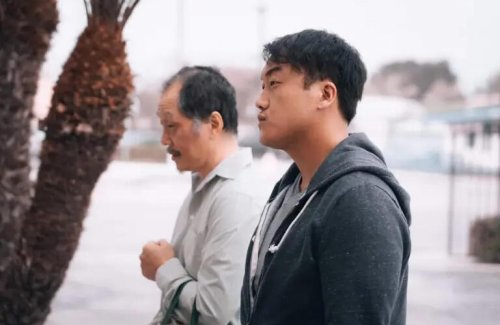
Upcoming ‘The Harvest’ Movie Features a Hmong Family and the Strength and Endurance of their Bond

Recently, Asian Americans are receiving a lot of praise in both film and television. The fact that Asian Americans are becoming more visible is fantastic, but most of these movies just focus on Chinese Americans, which is limiting for other Asians, particularly South and Southeast Asians.

This is what inspired Caylee So’s The Harvest, highlighting the Hmong community, illustrating how similar and yet dissimilar this culture is to what western society considers to be “Asian.”

The synopsis of the movie is that, Thai Moua returns to his family’s home in Southern California after several years of living in San Francisco to find his entire world in chaos.Thai and his family maintain a brave façade while witnessing the debilitating effects of his father Cher’s kidney failure. Thai is torn between trying to please his father and wanting to live his own life, between being a good son and growing up, but most of all, he is conflicted about keeping the cause that has kept him away for so long a secret.

The Harvest addresses the tenacity and endurance of family ties and how they can carry us through even the most trying times in a powerful and sympathetic way.

Doua Moua, who plays Thai and also wrote the compelling screenplay, said in a press statement, “As an actor, I was told my type of Asian does not fit into the narrative of America, which led me to writing narratives that I wanted to tell. I want to redefine what diversity really means and that is inclusion in front and in back of the camera.”

The show stars Doua Moua (Mulan & Gran Torino), Perry Yung (Warriors & The Knick), Dawn Ying Yuen, Chrisna Chhor, Lucas Velazquez, Hua Lee, Alfonso Caballero, Tomas K Thao, Mai Moua, Tsabmim Xyooj, Kue Lee, Chai Yang, ZhongKhang Yang, Mary Ly, Amery K Thao, Anneston Pisayavong, Arianna Rivas, Blake Kevin Dwyer, Greg Yoder, Christine Lin, and Tress Glenn.

The Harvest is not yet scheduled for release.

Image Source: Bloomberg

Stories

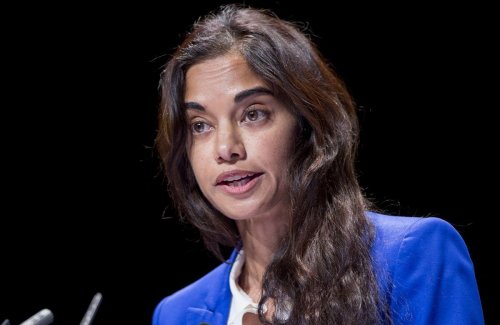
Mala Gaonkar – The Woman in Charge of the Biggest Hedge Fund Launch

With $1.8 billion under management, Mala Gaonkar’s SurgoCap Partners began trading and made history as the largest debut of a woman-led hedge fund in the industry’s history.

SurgoCap Partners invests in technology’s influence on financials, industrials, healthcare, and corporate data. The 20-person company bets on and against equities and can invest 25% of its assets in privately held enterprises.

At an investor conference in June, Gaonkar expressed her support for ServiceNow Inc., an enterprise software provider that aids in workflow automation.

Born in the US and raised in Bengaluru, India, Mala was a Kauffman Fellow. After graduating from Harvard with an MBA and economics degree, she founded Lone Pine in 1998. Later, she managed technology, media, internet, and telecom bets as a portfolio manager. She led the firm’s long-only funds.

She is also a founding trustee of Ariadne Labs, the Queen Elizabeth Prize for Engineering, the Tate Foundation, and Surgo Ventures, a charity that produces data-driven social and health solutions.

She is setting aside $100 million in capacity at SurgoCap for smaller endowments, foundations, and organizations that support marginalized populations or address climate change. She has amassed $35 million thus far.

Mala signed the Giving Pledge that she would devote the majority of her wealth to charitable causes.