Uncategorized

July 15, 2022

SHARE:

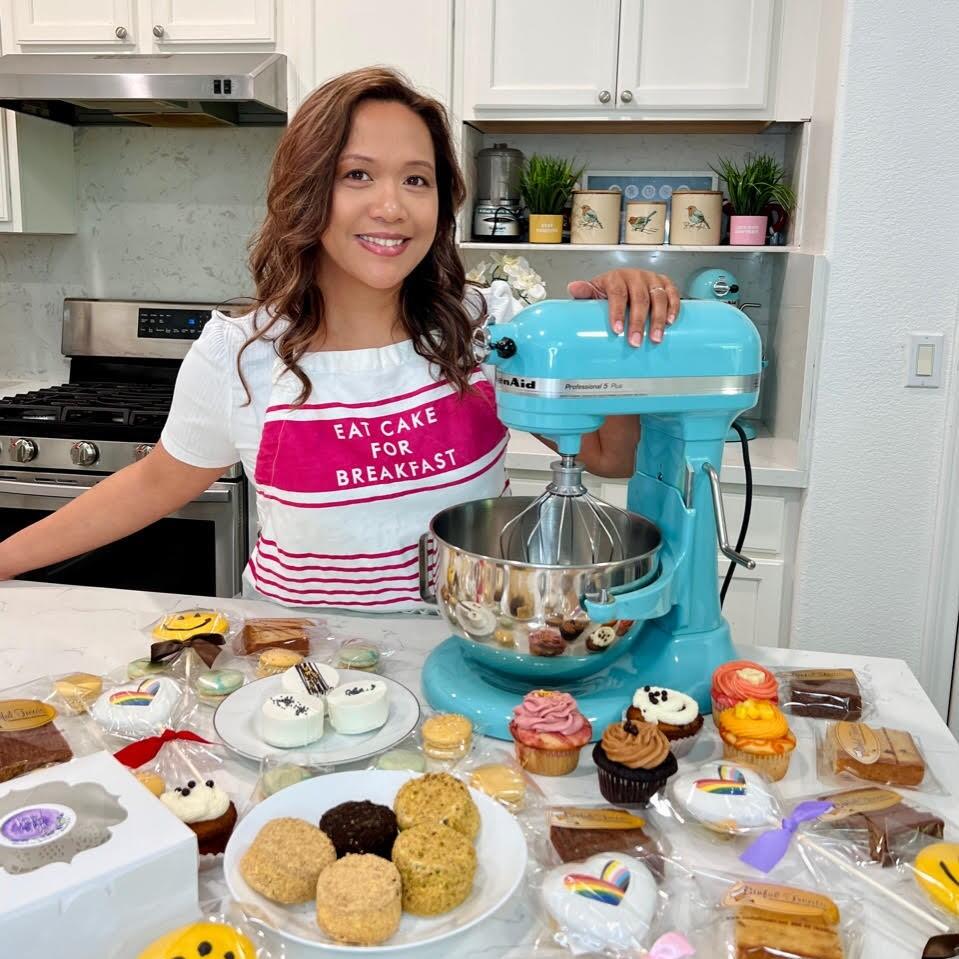
Have you ever thought of opening a business during a recession? How about during the pandemic? Well, this lionhearted momma just did that!

Filipino-American Mariel Black started her baking business, Sinful Treats, in June 2009, at the peak of the recession — everyone thought she was crazy to start a business at that time. She had only one product to sell, some unknown Filipino pastry called ‘Food for the Gods’. “No one knew what it was. I had to tell people, ‘it’s like a blondie with dates and walnuts’” she said. Starting out as an online bakery, she gave out samples to whoever was open to trying her product. People never heard of it, but once they tasted it, they loved it! 

Because everyone was hurting during the recession, she found that people were more inclined to help each other. Soon, a few coffee shops agreed to carry her products, and she also kept selling online.

“This photo marks the beginning of our Sinful Treats adventure. My boys have been involved since Day 1.” -Mariel

Her big break came in 2011 when the Railroad Museum in Old Sacramento ordered 19,800 Snickerdoodle cookies for their main holiday event, The Polar Express. A year before that, she took her 4-year-old son on the train ride, where they served cookies and hot cocoa just like in the movie, Polar Express. He took one bite of the cookie, then he told her that she should make the cookies. “Ah, the power of suggestion, from a 4-year-old!” Mariel exclaimed. 

She talked to the coordinators and gave them cookie samples and they loved them. The following year, they ordered 19,800 Snickerdoodles. “I said YES, even if at that time,” she said, “I had no kitchen and no employees to help me. I had a couple of months to figure out how to make it happen.”

She rented a kitchen in a restaurant at night and asked friends to help, “I had a crew of 5 people. Like little elves, we’d bake all night while the restaurant was closed.” They only had one oven with 2 racks, only able to bake 48 cookies every 12 minutes. The cookies were baked from scratch, scooped by hand, packaged individually, sealed with a heat sealer, and labeled — all 19,800 of them! 

“It was the most exhausting but exhilarating experience. It was then I knew that I loved the thrill and pain that came with being a business owner.” She’s been baking for the Railroad Museum since then.

“Ah, the power of suggestion, from a 4-year-old!”

-Mariel black

Sinful Treats grew to have its own retail location a few years later and became a full-service bakery and catering company. They created and launched their first baking mix in 2015 with their signature product, “the treat that started it all” — Food for the Gods Baking Mix.

The year 2020 would have been their 10th year baking for the museum, “but 2020 had a different plan for all of us” she said. All of their Fall and Holiday events have been canceled. “Being in the baking business, our fourth quarter is when we make the most. Suddenly, all of it was gone. Having survived and thrived during the recession, I can honestly say this year, this pandemic is a lot harder than the recession.”

But the lockdown didn’t stop Mariel to continue her passion, rather she pursued another idea – to have a one-stop shop for baked goods. “Recession, pandemic, lockdowns won’t stop me. There are always opportunities even in the worse scenarios.” 

In October 2020, she launched an online marketplace where local bakers can sell their products and grow their small businesses. Sinful Treats is now home to the best local brands. Mariel’s goal is to empower small business owners, especially women and minority-owned businesses. All Bakers and Food Makers who have something special and have unique products to offer are welcome to join, “The food industry is already very competitive, but we are stronger together. So my hope is that through this marketplace, we can all help each other grow.” They ship cakes, cookies, desserts, and gourmet food across the United States.

Sinful Treats’ Business Partners

“The food industry is already very competitive, but we are stronger together. So my hope is that through this marketplace, we can all help each other grow.”

-Mariel black

“Everything I have worked for seemed to be a stepping stone to what I’m doing now,” she said, “Having a brand that’s already established, a working website, products that have been tried and proven, years of networking and relationship building, all of this and more are now helping to make this new path easier to take and faster to grow.”

Mariel always gets a thrill watching businesses grow, she also shares over a decade of her experience and wisdom with new small business owners. “I love baking, but my real passion is business”. She guides her marketplace sellers with what they need; teaching them about branding, pricing, basic accounting, packaging, shipping, and even how to improve their products and come up with new ones.  

“I always tell my kids, when something bad happens, it’s usually a blessing in disguise,” she added, “True entrepreneurs find opportunity even in the worst scenarios.” 

Website: sinfultreats.net

Instagram: @sinfultreats

Facebook: Sinful Treats

Twitter: @SinfulTreats

Related Articles

News

How Wang Xiaokun Turned His Milktea Business into a Billion-Dollar Success

Wang Xiaokun, a 40-year-old Chinese entrepreneur, has achieved a remarkable feat by becoming a billionaire through his milk tea venture. He is the visionary founder of Cha Panda, a Chinese tea chain.

Recent funding rounds have catapulted his tea business’s valuation to an impressive $2.1 billion. Forbes estimates Wang’s personal fortune at a staggering $1.1 billion, primarily due to his substantial 60% ownership stake in the Chengdu-based beverage chain.

Over the past three years, Cha Panda has experienced rapid expansion, now boasting an extensive network of over 7,000 stores. The chain is known for its signature beverages, including mango pomelo sago, taro bubble tea, and jasmine milk green tea, all offered at an affordable price point of $3.60 or less, as reported by Forbes.

Notably, Wang’s wife, Liu Weihong, has also enjoyed a substantial increase in her wealth, with an estimated fortune of $700 million, thanks to her 33% ownership stake in the company. She plays a pivotal role as the chair of the supervisory committee, responsible for overseeing Cha Panda’s daily operations, as indicated in a preliminary prospectus filed with the Hong Kong Stock Exchange. 

According to MSN, the roots of Cha Panda trace back to 2008 when Wang began selling fruit and bubble tea from a modest shop near a school in Chengdu, known for its spicy cuisine and as the home of giant pandas. Over the subsequent decade, Wang diligently expanded Cha Panda’s network of stores to 531 by 2020. However, the pivotal moment occurred when he embraced a franchising model.

Today, Cha Panda focuses on crafting beverage recipes and supplying ingredients like fruit and tea leaves to Cha Panda-branded beverage shops. This innovative approach allows Wang to maintain lower operational costs compared to competitors like Hong Kong-listed Nayuki Holdings, which grapple with higher employee salaries and rental expenses for their directly operated stores.

Featured Image Source: India Times

News

The Success Story of Each-A-Cup in the World of Bubble Tea

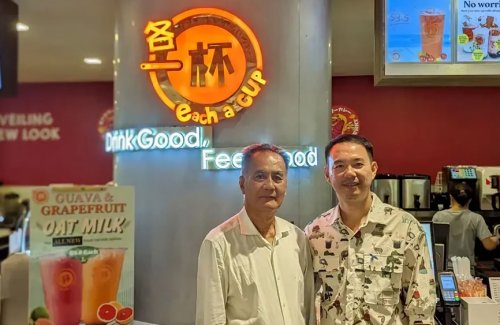
Back in 1999, Singapore was swept by the bubble tea craze. And while a lot of bubble tea shops have come and gone, Each-A-Cup kept thriving. This enduring success story is shown through the experiences of its founders: father and son, Michael and Ivan Chua.

Before entering the F&B industry, Michael Chua enjoyed a successful career as a musician, touring with Taiwanese singer Teresa Teng. However, his entrepreneurial spirit led him to start an ice cream business in Taipei, which later became Gelare. Afterward, he co-founded Healthy 2000, a beverage business in Taiwan. Sensing the growing interest in bubble tea in Singapore, Michael rebranded Healthy 2000 as Each-A-Cup in 1999, marking the beginning of their journey.

During the early years, Each-A-Cup faced fierce competition from rivals like Quickly and Happy Cup. However, they stood out due to the novelty and quality of their offerings, gaining widespread recognition.

The bubble tea industry in Singapore took a downturn in 2001 as prices dropped dramatically, and the market became oversaturated with hundreds of bubble tea shops. Many struggled to maintain quality, and even reputable brands faced losses. However, Michael remained resilient, believing in the enduring appeal of bubble tea.

Recovery came in 2003, and Each-A-Cup began rebuilding the business. Ivan, Michael’s son, joined in 2007, bringing fresh energy and ideas to the brand. The second wave of the bubble tea craze saw new players entering the market, but Each-A-Cup’s commitment to authenticity and quality set them apart.

As the founders, Michael and Ivan Chua, continue to guide the brand, the future of Each-A-Cup looks as bright as ever in the dynamic world of bubble tea.

Featured Image Source: CNA Lifestyle

Collin Hall

Stories

Celebrating Individual Narratives and Multiracial Identities Through the Book ‘Mostly Me’

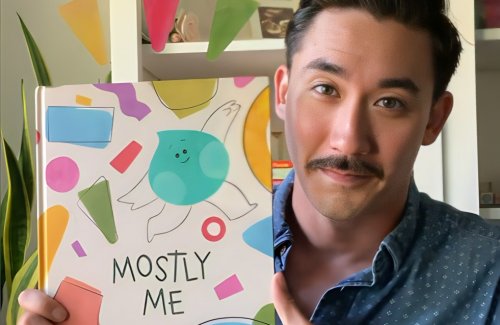
In a world where the narrative of identity often falls into predefined categories, Mostly Me by Collin Hall emerges as a refreshing beacon of self-discovery.

Released on September 18 by Gloo Books, this picture book takes readers on a captivating journey, skillfully illustrating the complexities of biracial identity.

Author and Illustrator

Written by Collin Hall and beautifully illustrated by Crystal Dawn Chaffee, both of whom share a biracial heritage, Mostly Me is a heartfelt project born from personal experiences. Collin embarked on this creative journey shortly after the birth of his first daughter, driven by a powerful desire to equip her with the tools to embrace her multiracial identity.

Collin Hall is a proud biracial Korean/American based in Austin, TX, offering a voice that resonates deeply with those navigating the intricate terrain of identity.

Diverse Representation

According to the *Cooperative Children’s Book Center’s 2022 Diversity Statistics database, only 0.7% of children’s books published in 2022 were authored by multiracial individuals and focused on multiracial characters.

Collin’s Personal Journey

Collin Hall shares, “The biggest hurdle for this project was the internal identity-wrestling before words were even on paper. Having to re-engage with a part of myself I had avoided for a long time was hard, and typically paired with a good dose of uncertainty and guilt. Finding my own footing was, and is, a process, but one that put me in a much better spot to discuss multiracial identity with my own kids in the future.”

He also shared how re-learning Korean nursery rhymes was also a challenge and that it took longer than he expected.

Embracing In-Between Spaces

Mostly Me may be short and whimsical, but it carries a profound message—it’s entirely acceptable to exist within the fluid spaces of identity. It encourages individuals to wholeheartedly embrace all aspects of their heritage, irrespective of societal expectations.

I’ve got some green, I’ve got some blue. 

Some have asked, “So what are you?” 

Not quite blue, not fully green. 

I’m something new. I’m in-between.

Affirmation and Unity

Mostly Me serves as an affirmation, resonating with Collin and Crystal’s own experiences and the experiences of every multiracial child navigating the intricate landscape of identity. It instills the confidence to boldly claim one’s space in the world, reminding us all that there is no universal guidebook for this journey. Instead, it offers the comfort of shared emotions, questions, and experiences.

Within the pages of Mostly Me, Collin Hall extends an invitation to readers to embark on a profound journey of self-discovery. This remarkable book celebrates the beauty of embracing multiracial identities, encourages us to revel in the uniqueness of our individual narratives, and, above all, empowers us to find the strength to assert our presence in a wonderfully diverse world.

As we eagerly anticipate its release, Mostly Me promises to inspire and resonate with readers of all backgrounds, young and old, seeking to understand the rich tapestry of identity that defines us all.

CONNECT WITH COLLIN HALL / MOSTLY ME

Instagram: @mistercollin

Order here: gloobooks.com/products/mostly-me

Gloo Books: @gloobooks

*Independent analysis of data accessed on 07/02/2023 by Gloo Books using the Cooperative Children’s Book Center (CCBC), School of Education, University of Wisconsin-Madison Diversity Statistics Book Search (https://ccbc.education.wisc.edu/diversity-statistics-book-search/). Permission to publish granted by the CCBC 07/13/2023.

News

Hmong Legacy Market: Bridging Cultures Through Food and Community

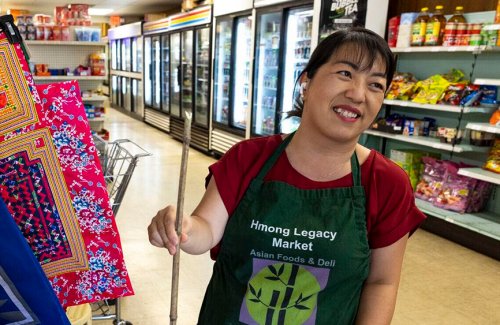
At Hmong Legacy Market, located on Madison’s South Side, you’ll discover a treasure trove of homemade Asian cuisine. From steaming bowls of beef pho to whole roasted tilapia seasoned with herbs and chili, and delightful sesame rice balls filled with mung beans and coconut, this independent Asian grocery store offers a culinary journey.

Ze Yang, one of the owners, can often be found expertly preparing dishes like squash curry. To her, food is more than sustenance; it’s a connector, a storyteller, and a unifying force that brings people together.

As a young child in the 1980s, Ze Yang lived in a refugee camp in Thailand with her family, having fled Laos during the aftermath of the Vietnam War. In 1991, Ze Yang’s family received the opportunity to immigrate to the United States, sponsored by a distant uncle who had settled in California. Their early days in the U.S. were marked by challenges—language barriers, cultural shock, and financial difficulties. However, their farming skills from Laos allowed them to grow crops like green beans, tomatoes, and peppers, which they sold to support their family.

After six years in California, Ze Yang’s family decided to move to Wisconsin, drawn by the promise of better public schools and economic opportunities. Ze Yang’s parents worked tirelessly, holding multiple jobs to make ends meet. This experience inspired Ze Yang to become a teacher, focusing on helping immigrant children adapt to the American education system.

Ze Yang’s family thrived. They bought a house, built a family, the kids went to school, but they also wanted to pursue their entrepreneurial dream. They longed to create a space where people from diverse backgrounds could gather, savor homemade dishes, and access pantry staples from across Asia. This is why they opened Hmong Legacy Market, offering an extensive array of products, from giant spring roll skins to bamboo shoot chili oil, and from mango mochi to traditional Hmong celebratory clothing.

More than just a grocery store, Hmong Legacy Market is committed to the well-being of the community. In 2021, it partnered with Public Health Madison and Dane County to serve as a mobile COVID vaccination clinic. Looking ahead, Ze Yang envisions the store’s legacy continuing to thrive, driven by the spirit of family and the desire to improve and grow.

Featured Image Source: Madison