Uncategorized

July 15, 2022

SHARE:

Have you ever thought of opening a business during a recession? How about during the pandemic? Well, this lionhearted momma just did that!

Filipino-American Mariel Black started her baking business, Sinful Treats, in June 2009, at the peak of the recession — everyone thought she was crazy to start a business at that time. She had only one product to sell, some unknown Filipino pastry called ‘Food for the Gods’. “No one knew what it was. I had to tell people, ‘it’s like a blondie with dates and walnuts’” she said. Starting out as an online bakery, she gave out samples to whoever was open to trying her product. People never heard of it, but once they tasted it, they loved it! 

Because everyone was hurting during the recession, she found that people were more inclined to help each other. Soon, a few coffee shops agreed to carry her products, and she also kept selling online.

“This photo marks the beginning of our Sinful Treats adventure. My boys have been involved since Day 1.” -Mariel

Her big break came in 2011 when the Railroad Museum in Old Sacramento ordered 19,800 Snickerdoodle cookies for their main holiday event, The Polar Express. A year before that, she took her 4-year-old son on the train ride, where they served cookies and hot cocoa just like in the movie, Polar Express. He took one bite of the cookie, then he told her that she should make the cookies. “Ah, the power of suggestion, from a 4-year-old!” Mariel exclaimed. 

She talked to the coordinators and gave them cookie samples and they loved them. The following year, they ordered 19,800 Snickerdoodles. “I said YES, even if at that time,” she said, “I had no kitchen and no employees to help me. I had a couple of months to figure out how to make it happen.”

She rented a kitchen in a restaurant at night and asked friends to help, “I had a crew of 5 people. Like little elves, we’d bake all night while the restaurant was closed.” They only had one oven with 2 racks, only able to bake 48 cookies every 12 minutes. The cookies were baked from scratch, scooped by hand, packaged individually, sealed with a heat sealer, and labeled — all 19,800 of them! 

“It was the most exhausting but exhilarating experience. It was then I knew that I loved the thrill and pain that came with being a business owner.” She’s been baking for the Railroad Museum since then.

“Ah, the power of suggestion, from a 4-year-old!”

-Mariel black

Sinful Treats grew to have its own retail location a few years later and became a full-service bakery and catering company. They created and launched their first baking mix in 2015 with their signature product, “the treat that started it all” — Food for the Gods Baking Mix.

The year 2020 would have been their 10th year baking for the museum, “but 2020 had a different plan for all of us” she said. All of their Fall and Holiday events have been canceled. “Being in the baking business, our fourth quarter is when we make the most. Suddenly, all of it was gone. Having survived and thrived during the recession, I can honestly say this year, this pandemic is a lot harder than the recession.”

But the lockdown didn’t stop Mariel to continue her passion, rather she pursued another idea – to have a one-stop shop for baked goods. “Recession, pandemic, lockdowns won’t stop me. There are always opportunities even in the worse scenarios.” 

In October 2020, she launched an online marketplace where local bakers can sell their products and grow their small businesses. Sinful Treats is now home to the best local brands. Mariel’s goal is to empower small business owners, especially women and minority-owned businesses. All Bakers and Food Makers who have something special and have unique products to offer are welcome to join, “The food industry is already very competitive, but we are stronger together. So my hope is that through this marketplace, we can all help each other grow.” They ship cakes, cookies, desserts, and gourmet food across the United States.

Sinful Treats’ Business Partners

“The food industry is already very competitive, but we are stronger together. So my hope is that through this marketplace, we can all help each other grow.”

-Mariel black

“Everything I have worked for seemed to be a stepping stone to what I’m doing now,” she said, “Having a brand that’s already established, a working website, products that have been tried and proven, years of networking and relationship building, all of this and more are now helping to make this new path easier to take and faster to grow.”

Mariel always gets a thrill watching businesses grow, she also shares over a decade of her experience and wisdom with new small business owners. “I love baking, but my real passion is business”. She guides her marketplace sellers with what they need; teaching them about branding, pricing, basic accounting, packaging, shipping, and even how to improve their products and come up with new ones.  

“I always tell my kids, when something bad happens, it’s usually a blessing in disguise,” she added, “True entrepreneurs find opportunity even in the worst scenarios.” 

Website: sinfultreats.net

Instagram: @sinfultreats

Facebook: Sinful Treats

Twitter: @SinfulTreats

Related Articles

Image Source Business Insider

Uncategorized

The Ups And Downs Of A 23-Year-Old Entrepreneur As He Rides The Wave Of Success He Has Built Through Rental Arbitrage

You still have the right to hope for the best and move forward even if you face adversity just as you reach the pinnacle of your accomplishments. This 23-year-old entrepreneur is proof that hard work and determination can pay off.

Derek Cheung is a former college student who got into rental arbitrage. He was an intern when he discovered the company that operates short-term rentals for properties it doesn’t own.

In 2018, he began engaging in rent arbitrage by acquiring his first two apartments. Derek’s first steps weren’t smooth sailing. He did a lot and did extensive research to ensure he was following a solid business plan.

Derek learned the legal paperwork and communication skills involved in real estate and rent arbitrage transactions, especially since many landlords have specific preferences for working with such parties — he even went through around a hundred landlord leads.

He also made sure he knew how to service the property, maintain fixtures, decorate it, and approach landlords in negotiations. Since his first deal was with an agent who represents multiple landlords, his career took off from there.

Derek’s first annual leases were signed in February 2019. One-bedroom flats cost $1,215 per month while studios cost $999. He put down a $500 security deposit on each flat, plus the first month’s rent. Short-term rentals were permitted under the terms of his additional contract.

As a result of working part-time while in school, Derek was able to save $8,000. He also had a $5,000 credit card limit, which was sufficient at the time. He spent $5,000 on secondhand items from Facebook Marketplace. He rented U-Haul to move things and asked two friends to help. After he had set them up, he took photos of the units and posted them on Airbnb.

He kept moving forward with the strategy, and soon he was managing and cleaning six apartment blocks. He had reached a terrifying $10,000 in liability and rent expenses, but he was convinced that he had to risk money in order to make a lot.

Unfortunately, the pandemic hampered travel and bookings. At that time, he owed $20,000  in monthly expenses. He began calling builders, corporate movers, and insurance housing agencies weekly to offer his units, and advertised on Zillow, Corporate Housing by Owner, Furnished Finder, and Craigslist. His top priority was serving customers who had booked 60 days in advance.

When the pandemic subsided, he created a new plan to make up for his losses. Derek lowered his prices just enough to break even or make a small profit. He was also keen on securing long-term visitors and started taking reservations from people in the area who were in between leases, evicted from their homes, or were staying in hotels because their insurance wouldn’t cover them.

Derek had 50 properties by the end of 2021, with 44 of them being fully functional. His revenue increased by about 22% this year.

Image Source openthemagazine.com

Uncategorized

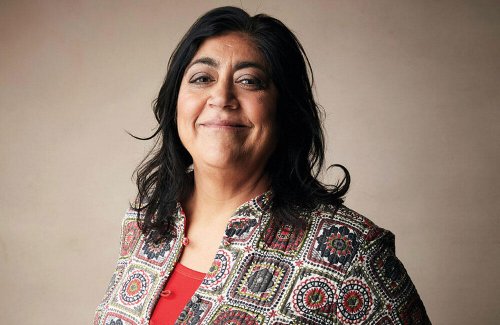
Director Gurinder Chadha On Shaping Her Successful Career By Celebrating Difference

“People might tell you that you’re the odd one out. Remember you’re not, you too are the mainstream. The world might try to make differences a pejorative thing, but I’ve carved out a whole career by celebrating it,” says the 62-year-old film director, Gurinder Chadha, in her recent candid interview with The Guardian.

Gurinder Chadha was born in Kenya, then a British colony. Her family was part of the Indian diaspora in East Africa. They moved to London when she was two and rented a single bedroom. She recounts being shoved into a metal bed frame by their landlord’s son. Her mother was devastated but couldn’t comfort her. “I still remember the indignity and injustice,” she adds.

For a while, she even refused to eat Indian food and had her chapatis with jam and butter. At age 10, she ran away from home and considered it an “escape” to be more British.

Gurinder considers the 2002 box-office hit ‘Bend It Like Beckham’ she directed a watershed moment. She tells The Guardian that until then, the perception was that Indian girls in the UK were obeying and submissive to strict families, but that wasn’t their experience.

“As an immigrant kid, you realise early on you and your parents live different realities,” she adds, “You can fight and rebel, or accept your parents for who they are, work around them, and get on with it. That’s what we did.”

It took three years to get the sports comedy-drama film green-lit. Everyone told her an Indian girl playing football wouldn’t attract the audience. However, it’s the only film to be released in every country since it debuted 20 years ago. “For people on the margins all over, it was transformative”

Unfortunately, her father died suddenly in 1999, and he never got to see Gurinder’s biggest achievements. This made her unappreciated her success for a long time as her father wasn’t there to share it with. It changed when she became a mother of twins in her late 40s, “Having my children celebrate my work has seen something shift within me. Finally, I’ve started to let myself believe it”

280828065_10210184429204132_8785869350725322057_n

Uncategorized

26-Year-Old Filipino Entrepreneur Turns Waste Coconut Shells Into A Thriving Business

With zero funding, Filipino entrepreneur MJ Loleng built her start-up company, Ecobriqs Charcoal Briquettes, an innovative eco-friendly charcoal business from waste coconut shells.

She was able to attract investors with her idea who also had a passion for sustainability and providing employment to those who are poor in the Philippines, as she said that she experienced being poor herself. MJ wants to show that poverty is no reason to give up on ambitions.

MJ wrote on her Facebook, “For the past 4yrs I was just crystal focus on surviving and making things happen. I know I’ve always wanted to help, and I know that I can do it by building a business.”

When “Samgyeopsal” or Korean BBQ restaurants became popular in the Philippines, Ecobriqs experienced a surge in popularity. Briquettes were the ideal kind of coal to use since they did not produce smoke or odor and could be used more than once.

The pandemic drove several eateries to close, putting Ecobriq into a major setback for half a year, but MJ thought of another idea. She collaborated with her friends and opened their own Korean BBQ restaurant, Umma’s Samgyup Café, with a starting capital of P5,000 ($90).

As a result of MJ’s expanding business portfolio, she is now able to bring in more than P100,000 ($2000) per month, and learned stock trading in order to increase her income.

Her advice to aspiring entrepreneurs is to be persistent in achieving their goals, “I also didn’t know how we got this far. I just keep the faith, believe in my team, took the risk, give it ALL IN, and did my best” 

Image Source John Andrew Dangca Facebook

Uncategorized

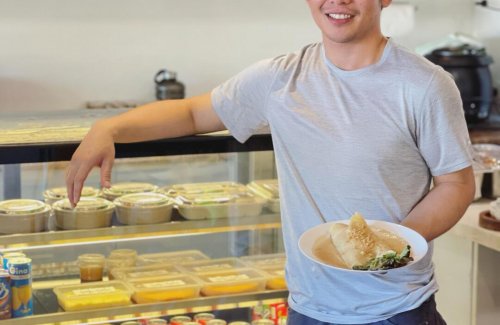
From Former Janitor To Leading A Flourishing Filipino Restaurant In Australia

Who would have thought that the odd jobs of a janitor and a street vendor would lead to such a great story? This is what actually transpired to John Andrew Dangca, the owner of a Filipino restaurant in Canberra, Australia.

Before establishing his popular restaurant among Filipinos, he worked as a street vendor and janitor. Despite his difficult beginning, he was determined to succeed. He saved money and eventually opened his own restaurant. His business success has allowed him to provide for his family. 

Salu-Salo Restaurant, which has been serving Filipino cuisine in Canberra, Australia was also impacted by the pandemic. Fortunately, he was able to adapt by pivoting to a delivery and take-out model. 

He says that they’ve been able to weather the challenge because of the support of their customers. Andrew admitted that he reaches out to his customers to order some food, and if they do, he personally travels to them, regardless of the distance. 

His journey to Australia began when he was young and open to the idea of studying or working abroad. His aunt sponsored his trip to Australia in 2013, where he enrolled in college and began training as a cleaner. It was never easy for him to juggle a job and schoolwork, but he did it because he wanted to provide for his family.

Andrew’s story demonstrates that it is possible to achieve success despite challenging circumstances if one is willing to work hard and never give up. “I put in a lot of effort and always try to do my best in order to be where I am now,” he stated on a Philippine TV show. 

He proved that beginning in a low position, such as working as a janitor or street vendor, is not an obstacle to future success. Rather, this will serve as the fuel that propels you forward toward achieving your goals.