“I want to tell everyone it is NOT EASY. For all the folks in the restaurant/food business, I respect you and take my hat off to you.”
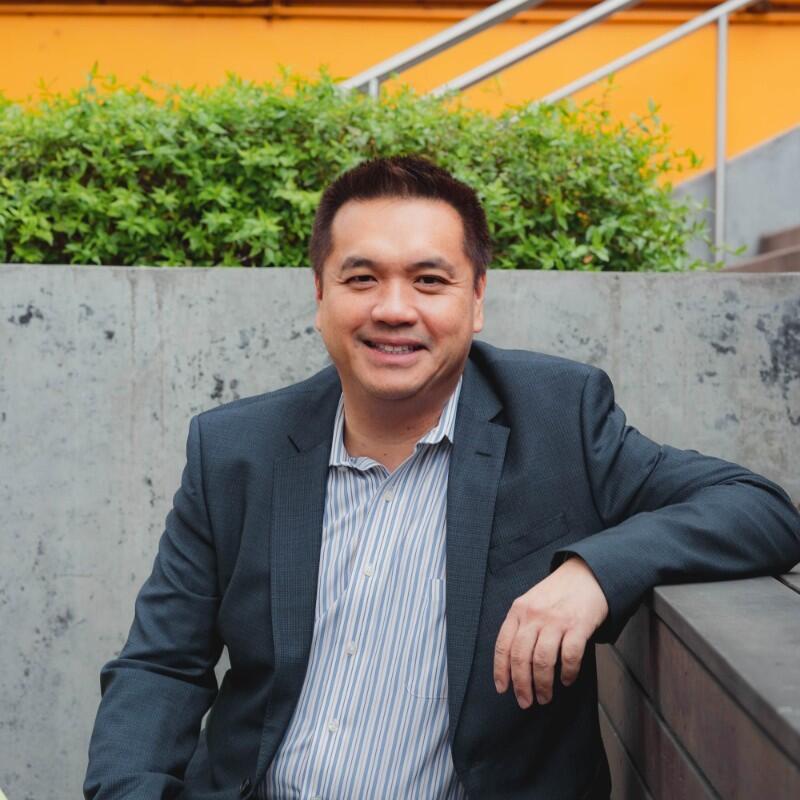
Tony’s current passion projects include helping to bring popularity to Vietnamese coffee in the United States and guiding the next generation of young, ambitious entrepreneurs to realize their full potential.
He is married to his lovely wife Van Lam and has two sons named Damon and Andy. His son Andy is on the spectrum (ASD), “Raising an autistic child has many challenges and requires a lot of patience. These kids have a special place in my heart.” Because of this, he is currently working closely with Linda Nguyen, founder Laugh Out Loud with Autism Foundation (LOLA) whom he got connected through the Asian Hustle Network (AHN), “Much respect for this beautiful human being for having a BIG heart. We need more compassionate leaders like her in this world.” he said.
Known for being a successful serial entrepreneur, Tony shared his successes and his humble beginnings and challenges that made him the hustler he is today.
Escaping Vietnam
My story began 45 years ago from today. During the Fall of Saigon (April 30th, 1975), I was only 3 months old when my family fled on a tiny boat to the US. My father was one of the Naval captains of the South Vietnam government.
My mother had just given birth to me and they had to make the difficult decision: Should they stay, or should they go with a 3-month-old baby and risk death by the communist government? They made the decision to drop everything they had and took a chance on a better life into the unknown.
My grandma, aunts, uncles, and cousins left everything behind and boarded the boat. My father to this day still has nightmares of the harrowing escape.
My mother had just given birth to me and they had to make the difficult decision: Should they stay, or should they go with a 3-month-old baby and risk death by the communist government?
-Tony Lam

A Fresh Start
My family was refugees in the Philippines for about 6 months. Not knowing what would happen, my family prayed hard and God answered our prayers. We were sponsored by an American family through Catholic Charities.
This American family took in a total of 6 of us, gave us a roof over our heads, put food on the table, and gave my family support for a couple of years to survive. My “sponsored grandparents” are now angels in heaven, but their kids whom I called Aunt Kim and Uncle John still live in southern California and we still communicate every so often. My family is grateful to their parents’ kindness and open heart to take in complete strangers into their homes.
My family would move to the Bay Area a few years later for a fresh start. My brother and sister were born, and we quickly became a family of 5. My father got his AA degree from San Jose City College and his trade was being a technician fixing medical devices for hospitals while my mother worked as an assembly worker.
Building Blocks That Lead To Success
I remember growing up in a poor neighborhood, teased by classmates for being Asian. Racism did exist at an early age for me but I did not let it bother me.
I remember my parents giving me a $100 allowance to buy enough clothes every year during my middle and high school years. So no, I did not grow up with a silver spoon in my mouth, but I was grateful for what I had. I got decent grades but was not smart by all means in high school.
I attended California Polytechnic State University (Cal Poly) where I got my business degree. My dream was to open a business one day but I didn’t know at the time what it would be. My first job out of college was at Cisco Systems (’97). I worked for corporate for way too long (14 years). I was a workaholic working 60-70 hr. weeks to save up money to start a family one day.
I should mention that this all would not have been possible without the love and support of my wife. I met my beautiful wife Van Lam through a college friend. We chatted for 3 months via Yahoo Messenger, fell in love, and married her one year later in Vietnam. We have two boys (Damon – 10 yrs. old and Andy – 7 yrs. old)
While I was working at Cisco, I discovered my first hustle (Wingstop) and the many more that would follow after leaving the company.
I was a workaholic working 60-70 hr. weeks to save up money to start a family one day.
-TONY LAM
The Serial Entrepreneur
Wingstop Franchisee — for 5 Locations (San Jose, Milpitas, Fremont, Union City) in the Bay Area for over 3 decades.
COOP Marketing President — for 50 Wingstop in the Bay Area instrumental in inking the deal with the GS Warriors and becoming “The Official Wings of the Golden State Warriors” since 2015
Omni Bev Co-founder — the first company to have an RTD (Ready to Drink) Vietnamese cold brew with condensed milk on the market with a shelf life of over 6 months. Its coffee beans are imported directly from Da Lat. They also serve nitro cold brew!

Mavens Creamery Shark Tank Winner — a macaron ice cream place that started in a 400 sq. ft. garage, expanded to 300 venues, and 4 years later struck a Shark Tank deal on TV with Barbara Corcoran.
alaMar Kitchen & Bar Co-Owner — voted the Best Seafood Restaurant in Oakland by Oakland Magazine in 2020, was also featured in the Michelin Guide for 3 years, and on KQED
Okashi Fusion Co-Owner — with a 4.8/5 star rating on Yelp reviewed by 710 customers, is the “BEST POKE in town with the BEST desserts” as Tony describes.
VitaBowl Board Advisor & Investor — a premium on-demand delivery brand that serves locally sourced, vegetarian, superfood meals and beverages. Tony teamed up with Charles Michael Yim through Asian Hustle Network, who also struck a deal on Shark Tank. Charles has assembled an A-team of talent, “I am honored to be working with these guys. Together, we have started a new company VitaBowl.” he expressed.
Enterprise Purchasing Group Co-Owner — a group purchasing organization that leverages the combined volume of many e-commerce businesses to secure exclusive programs with major shipping carriers (USPS, UPS, DHL, FEDEX) for both domestic and international destinations. “Our team has saved 10’s of millions for many customers spending in the range of $10K to $70M+ to date,” Tony added, “If you ship at least 50 orders a day domestically, we can surely help you with saving with our program.”
A Few Hurdles That Turned Into Bigger Opportunities
When IOS apps were just coming out in 2011, my partner and I created a booking app called Chimpped, which allows users to book with all your service providers (e.g. your dentist, doctor, kid’s activities, restaurant, etc.). One and a half years later, we closed down our business because we ran out of money and did not get enough traction. The “high tuition” I had to pay through this failure allowed me to consult with other app companies.
The apps KEA, Nextforce, and WorkStream have gone through Series-A funding and 1 Seed round. The seeds have been planted, just waiting on fruits to grow.
The “high tuition” I had to pay through this failure allowed me to consult with other app companies.
-Tony Lam
What Is Next For Tony Lam?
Tony wants to dedicate his time to the special needs / autistic community and provide resources such as jobs and career-building services.
He is also planning on launching Andy’s cafe where a large portion of the staff hires will be from the special needs community. The plan is to launch this in 2023 in California. If successful, he would like to open 100 of these in the next 5 years to give the special needs community a safe place to work and be able to socialize with people
Lastly, Tony is planning on starting up a PE fund to invest in startup CPG companies.
Advice To Aspiring Entrepreneurs
- Surround yourself with mentors and successful entrepreneurs. Join a support network of folks that bring positive energy
- Write up a business plan so that you have done the research before venturing out
- Have 18 months of the runway of savings to cover your expenses while you launch your company
You can reach Tony at tony@launchyourfirst.com