Uncategorized

September 16, 2022

SHARE:

“I want to tell everyone it is NOT EASY. For all the folks in the restaurant/food business, I respect you and take my hat off to you.”

Tony’s current passion projects include helping to bring popularity to Vietnamese coffee in the United States and guiding the next generation of young, ambitious entrepreneurs to realize their full potential. 

He is married to his lovely wife Van Lam and has two sons named Damon and Andy. His son Andy is on the spectrum (ASD), “Raising an autistic child has many challenges and requires a lot of patience. These kids have a special place in my heart.” Because of this, he is currently working closely with Linda Nguyen, founder Laugh Out Loud with Autism Foundation (LOLA) whom he got connected through the Asian Hustle Network (AHN), “Much respect for this beautiful human being for having a BIG heart. We need more compassionate leaders like her in this world.” he said. 

Known for being a successful serial entrepreneur, Tony shared his successes and his humble beginnings and challenges that made him the hustler he is today. 

Escaping Vietnam

My story began 45 years ago from today. During the Fall of Saigon (April 30th, 1975), I was only 3 months old when my family fled on a tiny boat to the US. My father was one of the Naval captains of the South Vietnam government. 

My mother had just given birth to me and they had to make the difficult decision: Should they stay, or should they go with a 3-month-old baby and risk death by the communist government? They made the decision to drop everything they had and took a chance on a better life into the unknown. 

My grandma, aunts, uncles, and cousins left everything behind and boarded the boat. My father to this day still has nightmares of the harrowing escape.

My mother had just given birth to me and they had to make the difficult decision: Should they stay, or should they go with a 3-month-old baby and risk death by the communist government?

-Tony Lam
3 year-old Tony

A Fresh Start

My family was refugees in the Philippines for about 6 months. Not knowing what would happen, my family prayed hard and God answered our prayers. We were sponsored by an American family through Catholic Charities.

This American family took in a total of 6 of us, gave us a roof over our heads, put food on the table, and gave my family support for a couple of years to survive. My “sponsored grandparents” are now angels in heaven, but their kids whom I called Aunt Kim and Uncle John still live in southern California and we still communicate every so often. My family is grateful to their parents’ kindness and open heart to take in complete strangers into their homes.

My family would move to the Bay Area a few years later for a fresh start. My brother and sister were born, and we quickly became a family of 5. My father got his AA degree from San Jose City College and his trade was being a technician fixing medical devices for hospitals while my mother worked as an assembly worker.

Building Blocks That Lead To Success

I remember growing up in a poor neighborhood, teased by classmates for being Asian. Racism did exist at an early age for me but I did not let it bother me.

I remember my parents giving me a $100 allowance to buy enough clothes every year during my middle and high school years. So no, I did not grow up with a silver spoon in my mouth, but I was grateful for what I had. I got decent grades but was not smart by all means in high school.

I attended California Polytechnic State University (Cal Poly) where I got my business degree. My dream was to open a business one day but I didn’t know at the time what it would be. My first job out of college was at Cisco Systems (’97). I worked for corporate for way too long (14 years). I was a workaholic working 60-70 hr. weeks to save up money to start a family one day.

I should mention that this all would not have been possible without the love and support of my wife. I met my beautiful wife Van Lam through a college friend. We chatted for 3 months via Yahoo Messenger, fell in love, and married her one year later in Vietnam. We have two boys (Damon – 10 yrs. old and Andy – 7 yrs. old)

While I was working at Cisco, I discovered my first hustle (Wingstop) and the many more that would follow after leaving the company.

I was a workaholic working 60-70 hr. weeks to save up money to start a family one day.

-TONY LAM

The Serial Entrepreneur

Wingstop Franchisee — for 5 Locations (San Jose, Milpitas, Fremont, Union City) in the Bay Area for over 3 decades.

COOP Marketing President — for 50 Wingstop in the Bay Area instrumental in inking the deal with the GS Warriors and becoming “The Official Wings of the Golden State Warriors” since 2015

Omni Bev Co-founder — the first company to have an RTD (Ready to Drink) Vietnamese cold brew with condensed milk on the market with a shelf life of over 6 months. Its coffee beans are imported directly from Da Lat. They also serve nitro cold brew!

Omni Bev Co-Founders Tony Lam and Tammy Huynh

Mavens Creamery Shark Tank Winner — a macaron ice cream place that started in a 400 sq. ft. garage, expanded to 300 venues, and 4 years later struck a Shark Tank deal on TV with Barbara Corcoran. 

alaMar Kitchen & Bar Co-Owner — voted the Best Seafood Restaurant in Oakland by Oakland Magazine in 2020, was also featured in the Michelin Guide for 3 years, and on KQED

Okashi Fusion Co-Owner — with a 4.8/5 star rating on Yelp reviewed by 710 customers, is the  “BEST POKE in town with the BEST desserts” as Tony describes.

VitaBowl Board Advisor & Investor — a premium on-demand delivery brand that serves locally sourced, vegetarian, superfood meals and beverages. Tony teamed up with Charles Michael Yim through Asian Hustle Network, who also struck a deal on Shark Tank. Charles has assembled an A-team of talent, “I am honored to be working with these guys. Together, we have started a new company VitaBowl.” he expressed.

Enterprise Purchasing Group Co-Owner — a group purchasing organization that leverages the combined volume of many e-commerce businesses to secure exclusive programs with major shipping carriers (USPS, UPS, DHL, FEDEX) for both domestic and international destinations. “Our team has saved 10’s of millions for many customers spending in the range of $10K to $70M+ to date,” Tony added, “If you ship at least 50 orders a day domestically, we can surely help you with saving with our program.”

A Few Hurdles That Turned Into Bigger Opportunities

When IOS apps were just coming out in 2011, my partner and I created a booking app called Chimpped, which allows users to book with all your service providers (e.g. your dentist, doctor, kid’s activities, restaurant, etc.). One and a half years later, we closed down our business because we ran out of money and did not get enough traction. The “high tuition” I had to pay through this failure allowed me to consult with other app companies.

The apps KEA, Nextforce, and WorkStream have gone through Series-A funding and 1 Seed round. The seeds have been planted, just waiting on fruits to grow.

The “high tuition” I had to pay through this failure allowed me to consult with other app companies.

-Tony Lam

What Is Next For Tony Lam? 

Tony wants to dedicate his time to the special needs / autistic community and provide resources such as jobs and career-building services.

He is also planning on launching Andy’s cafe where a large portion of the staff hires will be from the special needs community. The plan is to launch this in 2023 in California. If successful, he would like to open 100 of these in the next 5 years to give the special needs community a safe place to work and be able to socialize with people

Lastly, Tony is planning on starting up a PE fund to invest in startup CPG companies.

Advice To Aspiring Entrepreneurs

  • Surround yourself with mentors and successful entrepreneurs. Join a support network of folks that bring positive energy
  • Write up a business plan so that you have done the research before venturing out
  • Have 18 months of the runway of savings to cover your expenses while you launch your company

You can reach Tony at tony@launchyourfirst.com
Related Articles

1-jpg

Stories

How China’s Anta Became Puma’s Largest Shareholder and the World’s No. 3 Sportswear Giant Behind Nike and Adidas

China’s Anta Sports is making a bold global move, stepping beyond its home market with a major investment in Puma.

The company acquired a 29 percent stake in the German sportswear brand in a $1.8 billion deal, becoming Puma’s largest shareholder.

This signals Anta’s growing ambition to compete head-to-head with the biggest names in the global sportswear industry.

Image Source: Yicai Global

From Small Workshop to Global Brand

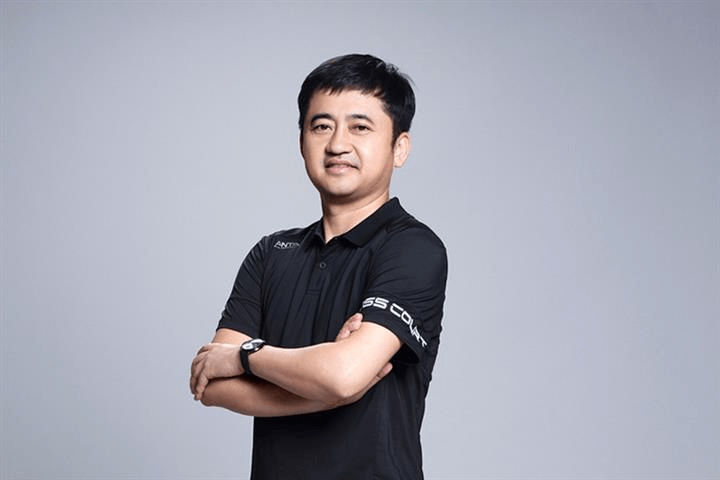
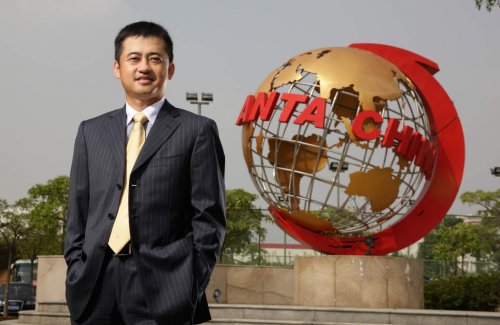
Anta’s journey began in 1986 when founder Ding Shizong, a high school dropout from Fujian, borrowed 10,000 yuan from his father to start reselling shoes. After quickly turning a profit, he reinvested his earnings and built a small manufacturing workshop. This early hustle laid the foundation for what would become one of China’s biggest sportswear companies.

By 1991, Anta had officially launched its own brand and began expanding across China. Over time, the company focused on scaling production, improving product quality, and building strong local distribution. These efforts helped Anta grow from a small business into a global brand with a strong foothold in the sportswear market.

Image Source: CGTN

Competing With the World’s Biggest Brands

Today, Anta controls around 23 percent of China’s sportswear market, surpassing both Nike and Adidas within the country. Its dominance at home has helped fuel its rise on the global stage, where it now ranks as the third-largest sportswear company. This growth reflects both strong local demand and strategic expansion beyond China.

Founder Ding Shizong has made it clear that Anta’s vision goes beyond being a regional leader. Rather than becoming the “Nike of China,” he aims to build what he calls the “Anta of the world.” With its recent investment in Puma, the company is taking a major step toward that goal and solidifying its place among the industry’s global giants.

image-png

News

Why Bhutan is the Smartest Place for Founders and Entrepreneurs to Reset in 2026

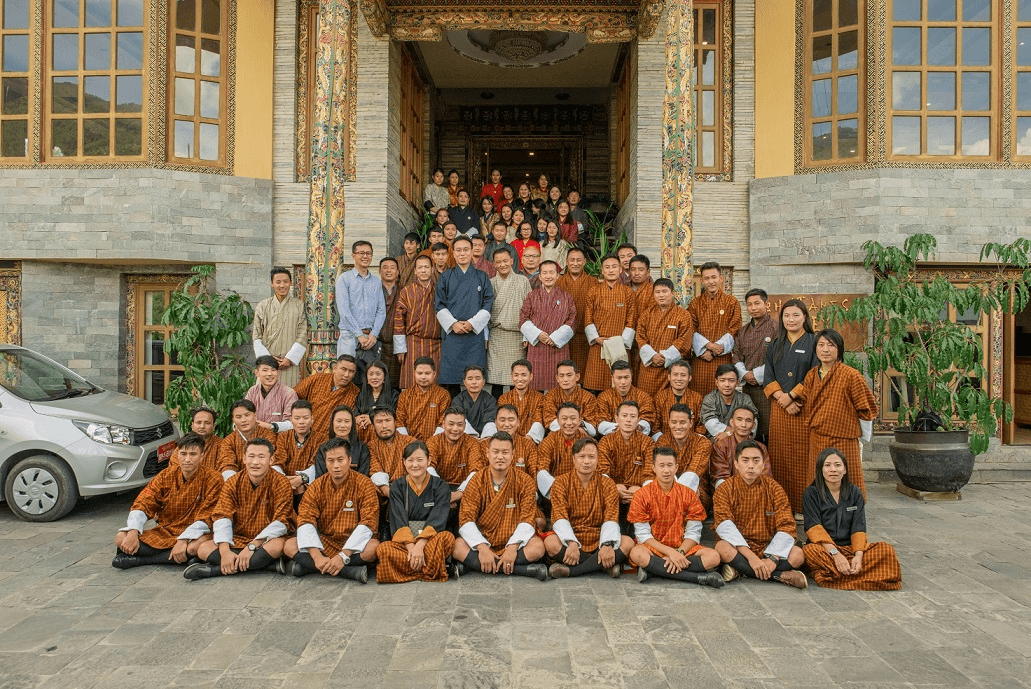
Most founders today are running on packed schedules but feeling mentally drained, and burnout is quietly becoming part of the routine.

When everything feels urgent, there is barely any space left to think — and decisions made from pressure rarely lead anywhere worth going.

That is exactly where Bhutan comes in. Its slower pace and untouched stillness create the kind of environment that gives ambitious minds the room to pause, reflect, and return with sharper focus.

The Philosophy That Reframes Success

Bhutan approaches progress differently, placing equal importance on well-being and growth. Through its Gross National Happiness framework, the country measures success beyond economic output, and recent data shows that over 93% of the population falls within the happiness gradient. This perspective is not theoretical, it is reflected in how people live and make decisions every day.

You start to notice it in small but meaningful ways, like how conversations are not rushed and how people are fully present. There is a steady rhythm to daily life that feels intentional rather than pressured. That alone creates a different kind of mental space.

For founders and entrepreneurs, being in that environment naturally raises questions about what really drives their decisions. It becomes easier to see how much of leadership is shaped by urgency rather than purpose. That shift in awareness is often where real clarity begins.

The Travel Model That Guards Your Headspace

Bhutan keeps tourism at a manageable level, which helps protect both the experience and the environment. In 2025, the country welcomed nearly 210,000 visitors, a number that is intentionally kept low compared to other destinations. As a result, places feel calm and never overcrowded.

There is also a Sustainable Development Fee of about USD 100 per night, which supports conservation and local communities. This approach ensures that tourism grows in a way that does not take away from what makes Bhutan special. It also sets the tone for a more thoughtful way of traveling.

Because of this model, the pace of each trip feels more balanced and unhurried. Days are not tightly packed, which gives you time to take in each experience without feeling rushed. For founders and entrepreneurs, that space often becomes the most valuable part of the journey.

The Environment That Resets How You Think

Bhutan’s landscapes make it easy to slow down without trying too hard. In places like the Phobjikha Valley, the wide open views and quiet surroundings create a sense of calm that is hard to find elsewhere. Even visiting Tiger’s Nest requires a steady climb, which naturally shifts your pace and focus.

There is no constant noise pulling your attention in different directions. Instead, the stillness gives your mind room to settle and process things more clearly. It is often in these quiet moments that new ideas begin to form.

Over time, you notice a change in how you think and respond to things. Decisions feel less rushed and more intentional, which is something many founders and entrepreneurs struggle to achieve in their usual environment. By the end of the trip, the reset feels real and something you can carry with you.

If you are looking for a reset that goes beyond rest and actually changes how you think, explore Bhutan with Druk Asia here:

📍Website

unnamed-png

Stories

The Journey of 20-Year-Old Alex Eala to the WTA Top 50 After Taking Down the Biggest Names in Women’s Tenn

At just 20 years old, Alex Eala is emerging as one of the most exciting new forces in women’s tennis. The Filipina athlete has captured global attention after defeating some of the sport’s most established champions.

In a sport historically dominated by Western powers, Eala’s rapid climb is a major milestone for Asian representation in tennis. Her growing success signals a shift in the global landscape of the sport.

Image Source: SCMP

A Breakthrough That Turned Heads in Miami

Eala’s breakthrough moment came at the 2025 Miami Open, where she entered the tournament as a wildcard. Few expected the young Filipina to make a deep run, but she quickly stunned the field with a series of commanding victories.

During the tournament, Eala defeated multiple Grand Slam champions, including Iga Świątek, Madison Keys, and Jeļena Ostapenko. She later added a win over Coco Gauff, further proving she could compete against the very best in the sport.

Her run to the semifinals became one of the biggest stories of the tournament. It pushed her ranking into the WTA Top 100 and introduced her to a much wider global audience.

Image Source: DZRH

Climbing Into the WTA Top 50

Following her breakout performance, Eala continued to build momentum throughout the season. Strong results in several tournaments helped her steadily climb the rankings and establish herself among the sport’s rising contenders.

By the end of the year, Eala officially entered the WTA Top 50, becoming the first Filipina player to reach that milestone. The achievement marked a historic moment not only for Philippine tennis but also for Southeast Asian representation in the sport.

More than just a personal accomplishment, her rise is inspiring a new generation of young athletes across Asia. As she continues to compete on the world stage, Alex Eala’s journey shows how talent, discipline, and opportunity can reshape the future of global tennis.

unnamed-jpg

Stories

The Spirit of a Fighter: How Stepping Into a Muay Thai Ring Changed the Way Alice Shikina Works as a Mediator and Negotiation Trainer

The first time Alice Shikina stepped into a Muay Thai ring, the moment felt bigger than the fight itself. The gloves were heavy, but what weighed more was everything she had been carrying in the months before.

She was in her late thirties, newly divorced, and raising two young children on her own. Her kids were just two and five years old, and the life she had carefully built no longer looked the same.

At the same time, she was trying to establish herself as a mediator and build her own business from the ground up. She didn’t know it yet, but the self-trust she was about to forge in that ring would become the foundation of how she led others through their own conflicts.

The Fight Before the Fight

Kickboxing began as a way to cope during a season that felt completely overwhelming. It gave Alice a physical outlet when her thoughts wouldn’t quiet down and her emotions felt too heavy to carry.

A few months later, Alice’s coach asked if she would consider competing. The idea unsettled her because she had never fought before and had never faced someone trained to strike back. For two months, she wrestled with the decision. What frightened her most was not losing, but the possibility of doubting herself under pressure.

When she finally committed, her routine became disciplined and demanding. She trained three hours a day, carving out time in the early mornings and late evenings while continuing to care for her children and grow her work.

The night before her first fight in Iowa, a coach told her that the real fight was already over because it happened during the grueling months of preparation. Once she realized that, her nerves calmed and a quiet steadiness took over. Even as she approached the ring to step in and fight, she felt unusually calm. She didn’t win that match, but she stayed on her feet until the final bell, and for a woman rebuilding her life, that was more than enough.

What the Ring Taught Her About Pressure

Alice went on to fight three more times. Afterwards, Alice turned her sights to competing in triathlons and even placed first in her age group at the Alcatraz Duathlon. While the medals were nice, the real reward was the quiet discipline she built through the discomfort of training.

She came to understand that fear does not simply fade with time. It softens only when you decide to move toward it.

She also learned that preparation changes how you carry yourself in difficult moments. When you put in the work, you stand differently, breathe more steadily, and think more clearly under pressure.

Today, those lessons shape how she sits with couples navigating divorce and teams facing workplace conflict. When emotions rise and conversations begin to unravel, she remains steady, drawing on the same discipline that once kept her composed in the ring.

Building Her Practice on Her Own Terms

Alice now runs Shikina Mediation and Arbitration full-time, helping divorcing couples, families, and organizations reach agreements they once thought were out of reach. Most clients come to her when communication has broken down and trust feels fragile.

Early in her career, she tried building her business by networking with attorneys, but quickly saw the bias against non-attorney mediators in a field long dominated by older white men. Instead of forcing herself into a system that did not fully welcome her, she shifted her focus to working directly with couples and workplace clients, growing her practice into a thriving full-time business over the past decade. In 2025, Alice was awarded the prestigious Raymond Shonholtz Visionary Peacemaker Award by San Francisco’s Community Boards.

Her work has expanded beyond the mediation room. She hosts the podcast, Negotiation with Alice, now over 100 episodes strong. She authored the book Negotiating with Your Kids, and continues to teach communication and conflict resolution to executives and C-Suite staff. As a second-generation Okinawan American whose parents survived the Battle of Okinawa as children, resilience runs deep in her story. 

Nothing in business, she says, will ever feel as intimidating as stepping into a ring to face an unknown opponent. In that ring, she rebuilt her confidence. At the mediation table, she now helps others rebuild their lives with clarity, courage, and peace.

Discover more from Alice Shikina here:

📍LinkedIn

Learn more about Shikina Mediation and Arbitration here:

📍Facebook

📍Website