Uncategorized

September 16, 2022

SHARE:

“I want to tell everyone it is NOT EASY. For all the folks in the restaurant/food business, I respect you and take my hat off to you.”

Tony’s current passion projects include helping to bring popularity to Vietnamese coffee in the United States and guiding the next generation of young, ambitious entrepreneurs to realize their full potential. 

He is married to his lovely wife Van Lam and has two sons named Damon and Andy. His son Andy is on the spectrum (ASD), “Raising an autistic child has many challenges and requires a lot of patience. These kids have a special place in my heart.” Because of this, he is currently working closely with Linda Nguyen, founder Laugh Out Loud with Autism Foundation (LOLA) whom he got connected through the Asian Hustle Network (AHN), “Much respect for this beautiful human being for having a BIG heart. We need more compassionate leaders like her in this world.” he said. 

Known for being a successful serial entrepreneur, Tony shared his successes and his humble beginnings and challenges that made him the hustler he is today. 

Escaping Vietnam

My story began 45 years ago from today. During the Fall of Saigon (April 30th, 1975), I was only 3 months old when my family fled on a tiny boat to the US. My father was one of the Naval captains of the South Vietnam government. 

My mother had just given birth to me and they had to make the difficult decision: Should they stay, or should they go with a 3-month-old baby and risk death by the communist government? They made the decision to drop everything they had and took a chance on a better life into the unknown. 

My grandma, aunts, uncles, and cousins left everything behind and boarded the boat. My father to this day still has nightmares of the harrowing escape.

My mother had just given birth to me and they had to make the difficult decision: Should they stay, or should they go with a 3-month-old baby and risk death by the communist government?

-Tony Lam
3 year-old Tony

A Fresh Start

My family was refugees in the Philippines for about 6 months. Not knowing what would happen, my family prayed hard and God answered our prayers. We were sponsored by an American family through Catholic Charities.

This American family took in a total of 6 of us, gave us a roof over our heads, put food on the table, and gave my family support for a couple of years to survive. My “sponsored grandparents” are now angels in heaven, but their kids whom I called Aunt Kim and Uncle John still live in southern California and we still communicate every so often. My family is grateful to their parents’ kindness and open heart to take in complete strangers into their homes.

My family would move to the Bay Area a few years later for a fresh start. My brother and sister were born, and we quickly became a family of 5. My father got his AA degree from San Jose City College and his trade was being a technician fixing medical devices for hospitals while my mother worked as an assembly worker.

Building Blocks That Lead To Success

I remember growing up in a poor neighborhood, teased by classmates for being Asian. Racism did exist at an early age for me but I did not let it bother me.

I remember my parents giving me a $100 allowance to buy enough clothes every year during my middle and high school years. So no, I did not grow up with a silver spoon in my mouth, but I was grateful for what I had. I got decent grades but was not smart by all means in high school.

I attended California Polytechnic State University (Cal Poly) where I got my business degree. My dream was to open a business one day but I didn’t know at the time what it would be. My first job out of college was at Cisco Systems (’97). I worked for corporate for way too long (14 years). I was a workaholic working 60-70 hr. weeks to save up money to start a family one day.

I should mention that this all would not have been possible without the love and support of my wife. I met my beautiful wife Van Lam through a college friend. We chatted for 3 months via Yahoo Messenger, fell in love, and married her one year later in Vietnam. We have two boys (Damon – 10 yrs. old and Andy – 7 yrs. old)

While I was working at Cisco, I discovered my first hustle (Wingstop) and the many more that would follow after leaving the company.

I was a workaholic working 60-70 hr. weeks to save up money to start a family one day.

-TONY LAM

The Serial Entrepreneur

Wingstop Franchisee — for 5 Locations (San Jose, Milpitas, Fremont, Union City) in the Bay Area for over 3 decades.

COOP Marketing President — for 50 Wingstop in the Bay Area instrumental in inking the deal with the GS Warriors and becoming “The Official Wings of the Golden State Warriors” since 2015

Omni Bev Co-founder — the first company to have an RTD (Ready to Drink) Vietnamese cold brew with condensed milk on the market with a shelf life of over 6 months. Its coffee beans are imported directly from Da Lat. They also serve nitro cold brew!

Omni Bev Co-Founders Tony Lam and Tammy Huynh

Mavens Creamery Shark Tank Winner — a macaron ice cream place that started in a 400 sq. ft. garage, expanded to 300 venues, and 4 years later struck a Shark Tank deal on TV with Barbara Corcoran. 

alaMar Kitchen & Bar Co-Owner — voted the Best Seafood Restaurant in Oakland by Oakland Magazine in 2020, was also featured in the Michelin Guide for 3 years, and on KQED

Okashi Fusion Co-Owner — with a 4.8/5 star rating on Yelp reviewed by 710 customers, is the  “BEST POKE in town with the BEST desserts” as Tony describes.

VitaBowl Board Advisor & Investor — a premium on-demand delivery brand that serves locally sourced, vegetarian, superfood meals and beverages. Tony teamed up with Charles Michael Yim through Asian Hustle Network, who also struck a deal on Shark Tank. Charles has assembled an A-team of talent, “I am honored to be working with these guys. Together, we have started a new company VitaBowl.” he expressed.

Enterprise Purchasing Group Co-Owner — a group purchasing organization that leverages the combined volume of many e-commerce businesses to secure exclusive programs with major shipping carriers (USPS, UPS, DHL, FEDEX) for both domestic and international destinations. “Our team has saved 10’s of millions for many customers spending in the range of $10K to $70M+ to date,” Tony added, “If you ship at least 50 orders a day domestically, we can surely help you with saving with our program.”

A Few Hurdles That Turned Into Bigger Opportunities

When IOS apps were just coming out in 2011, my partner and I created a booking app called Chimpped, which allows users to book with all your service providers (e.g. your dentist, doctor, kid’s activities, restaurant, etc.). One and a half years later, we closed down our business because we ran out of money and did not get enough traction. The “high tuition” I had to pay through this failure allowed me to consult with other app companies.

The apps KEA, Nextforce, and WorkStream have gone through Series-A funding and 1 Seed round. The seeds have been planted, just waiting on fruits to grow.

The “high tuition” I had to pay through this failure allowed me to consult with other app companies.

-Tony Lam

What Is Next For Tony Lam? 

Tony wants to dedicate his time to the special needs / autistic community and provide resources such as jobs and career-building services.

He is also planning on launching Andy’s cafe where a large portion of the staff hires will be from the special needs community. The plan is to launch this in 2023 in California. If successful, he would like to open 100 of these in the next 5 years to give the special needs community a safe place to work and be able to socialize with people

Lastly, Tony is planning on starting up a PE fund to invest in startup CPG companies.

Advice To Aspiring Entrepreneurs

  • Surround yourself with mentors and successful entrepreneurs. Join a support network of folks that bring positive energy
  • Write up a business plan so that you have done the research before venturing out
  • Have 18 months of the runway of savings to cover your expenses while you launch your company

You can reach Tony at tony@launchyourfirst.com

Related Articles

photos_by_monika_ami_img_6623

Stories

The Power of Representation: Ami Desai’s Impact on Media and Beauty

The path to success in content creation is never paved with roses, and no one understands this quite like Ami Desai. From her beginnings in broadcast journalism to becoming a well-known beauty and lifestyle influencer, Ami has shaped her career through authenticity, adaptability, and a strong dedication to representation.

As an Indian-American raised in Los Angeles, Ami grew up as a first-generation South Asian immigrant, a generation that deeply felt the need for greater South Asian representation in the media. After earning her degree from UC Berkeley and a master’s from Boston University, she built a solid media foundation through roles at CNN and Inside Edition. During this time behind the scenes, she discovered her passion for on-camera hosting, eventually landing her dream role as the host of the first digital show for Oprah.com. In 2011, Ami made a pivotal move by hosting a luxury travel show in India, which allowed her to reconnect with her roots and gain international exposure.

Simultaneously, Ami began building her own beauty business with her family. She went on to become one of the first South Asian content creators to collaborate with major brands like Toyota and Pampers on large campaigns, while also highlighting important Indian traditions and holidays such as Diwali. Recognizing the lack of representation for her ethnicity in the media and beauty industries, Ami founded her life’s mission, merging her experiences as a host, makeup artist, and mom to help other women advocate for themselves while balancing various roles. This gap in representation became her motivation to amplify underrepresented voices and promote diversity.

In 2016, Ami took a leap of faith, leaving traditional media behind to forge her own path in the influencer space. Despite pitching herself as a contributor or expert to various outlets, she faced rejection, which drove her to create her own content on social media platforms. Through this experience, she realized that content creation involved more than just posting visually appealing images—it required strategic planning, engagement tracking, and brand pitching. Even as the industry pushed her to narrow her niche, Ami confidently embraced her multifaceted identity, sharing content that reflected her life as a mother, beauty expert, and entrepreneur. This authenticity deeply resonated with her audience, ultimately helping her build a loyal fanbase connecting creators and audiences.

In the latest episode of the Creators Podcast, presented by Asian Hustle Network in collaboration with Meta Prosper, Ami shares a story of resilience, adaptability, and a deep dedication to her community. Whether you’re an aspiring content creator, a beauty lover, or someone who enjoys learning about authentic journeys, this episode is filled with valuable insights and inspiration.

Connect with Ami Desai:

Instagram: @amidesai

E3JPPIEBT5HCFPAJYT6B5GYEDU-jpg

News

Is the Model Minority Myth an Obstacle to Real Representation?

The Trap of Positive Stereotypes

The original “Charlie’s Angels” was a successful hit, not only because it made $93 million and grossed more than $264 million at global offices, but it also created exposure for Asian American representation.

Lucy Liu plays Alex Munday, a strategist, expert martial artist, and agent. Munday’s parents were Havard professors of economics and philosophy, and she, at an early age, was a child prodigy excelling at chess, equestrianism, fencing, archery, and gymnastics. Besides that, she holds a medical degree, spent her teenage years learning with a Tibetan guru, danced with the Stuttgart Ballet, and was a part-time aerospace engineer and on-call consultant for NASA. 

Lucy Liu as Alex Munday in 'Charlie's Angels' (Image source: 'Charlie's Angels' - 2000)

Lucy Liu as Alex Munday in ‘Charlie’s Angels’ (Image source: ‘Charlie’s Angels’ – 2000)

Does the entire introduction sound familiar? Swap out the name Alex Munday for your overachieving Asian cousin, sibling, or the “top Asian kid” your parents always compare you to, and you’d likely end up with a strikingly similar description.

It is undeniable that contemporary films, comedies, memes, and other forms of content have taken extensive lengths to represent Asian culture. Yet, they have also perpetuated a troubling stereotype. To complicate matters, many within the Asian community unknowingly reinforce these portrayals, cementing these narratives even further.

The article’s purpose is not to mock or diminish the accomplishments of any individual, community, or effort in striving for representation and equality. On the contrary, it is essential to celebrate the contributions of the many talents and media that have significantly advanced global awareness and appreciation of Asian culture and heritage. Hence, the article wishes to provide a nuanced perspective on contemporary topics while providing debate on the norms, beliefs, and habits created in our society.

What is the Model Minority Myth?

According to the University of Michigan, Densho, and other sources, after World War II, the United States underwent significant changes in its laws and policies to address mounting international criticism of racial prejudice and ongoing protests from ethnic communities within the country. 

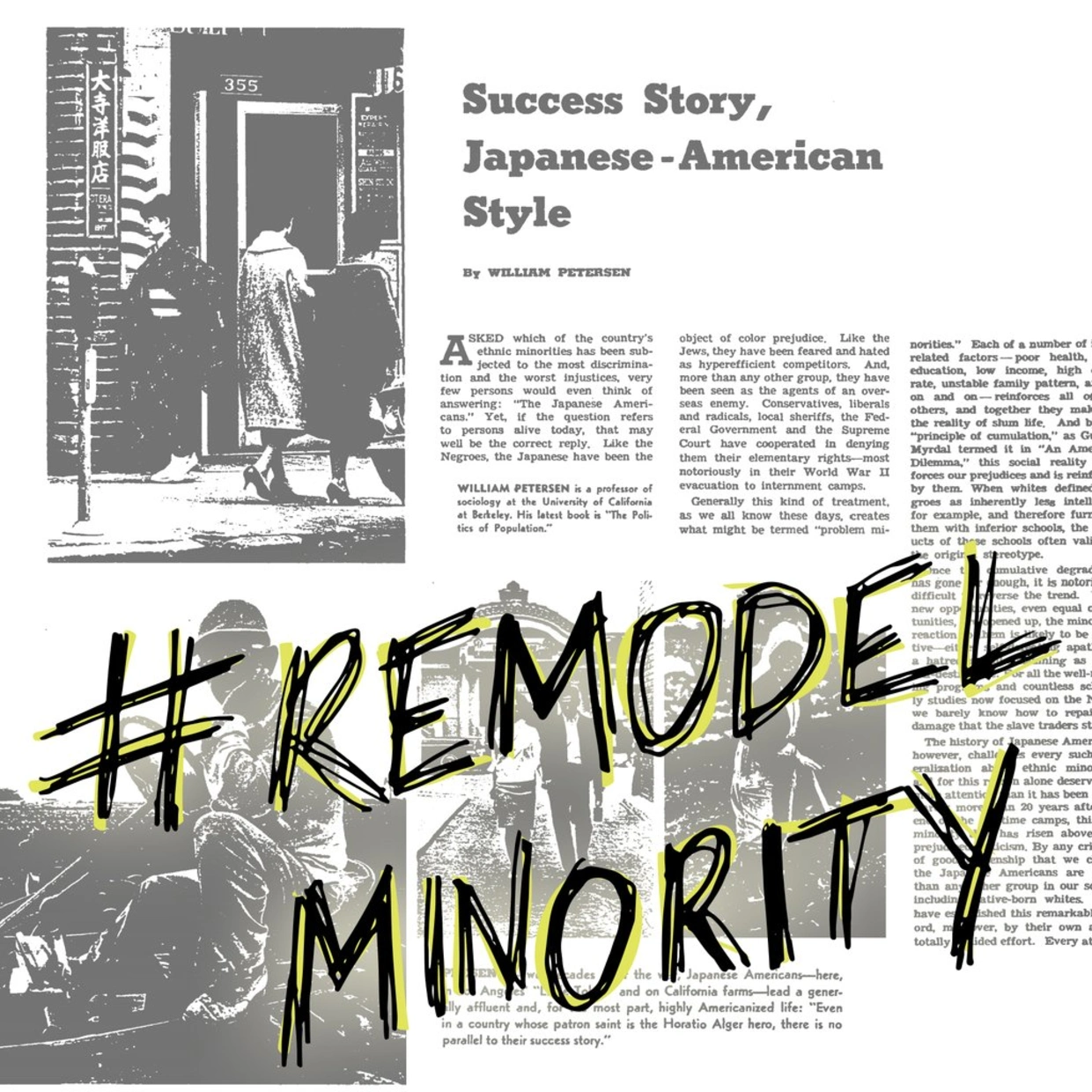
“Success Story, Japanese American Style” by William Petersen (Image source: Smithsonian APA)

“Success Story, Japanese American Style” by William Petersen (Image source: Smithsonian APA)

As PBS illustrates, new regulations like the Chinese Exclusion Act shifted toward dismantling exclusionary measures and advocating for Asian communities and immigrants, particularly skilled and educated migrants. The University of Michigan further exemplifies, articles like “Success Story, Japanese American Style” by William Petersen began to appear  – praising how despite years of racial prejudice and discrimination, Japanese Americans were still able to achieve great socioeconomic status thanks to hard work and other cultural values of discipline and compliance to social hierarchy. 

By focusing on the facets of income, education level, and low crime rates as the definition of success instead of underlining economic and social factors, Asian Americans are often portrayed as hardworking, disciplined, and intelligent—a concept scholars refer to as the model minority. 

Model Minority Myth in Silencing Activism

While this stereotype may appear beneficial on the surface, Ted-Ed, in collaboration with Densho, emphasizes that there are no “good” stereotypes. As cited by PBS, cultural historian Robert G. Lee argues that such inclusion does not promote equity but instead undermines activism and disregards the struggles of other marginalized groups.

This is significant because the model minority myth obscures disparities within the diverse Asian American community, perpetuating the misconception that Asian identity is monolithic, often reduced to just China, Korea, and Japan. Furthermore, the stereotype marginalizes individuals who fail to meet its expectations, silencing those who speak out against it.

Societal pressure on Asian individuals (Image source: Kamanaoleeward)

Societal pressure on Asian individuals (Image source: Kamanaoleeward)

For instance, an Asian student with subpar grades might be labeled as lazy rather than being understood in the context of contributing factors like economic hardship or family struggles. The danger of accepting “positive” stereotypes lies in their ability to perpetuate harmful narratives and create unrealistic standards, fostering a cycle of self-framing that damages both individuals and the broader Asian community.

When Representation Unintentionally Reinforces Stereotypes

Let’s use another example to understand this dichotomy. 

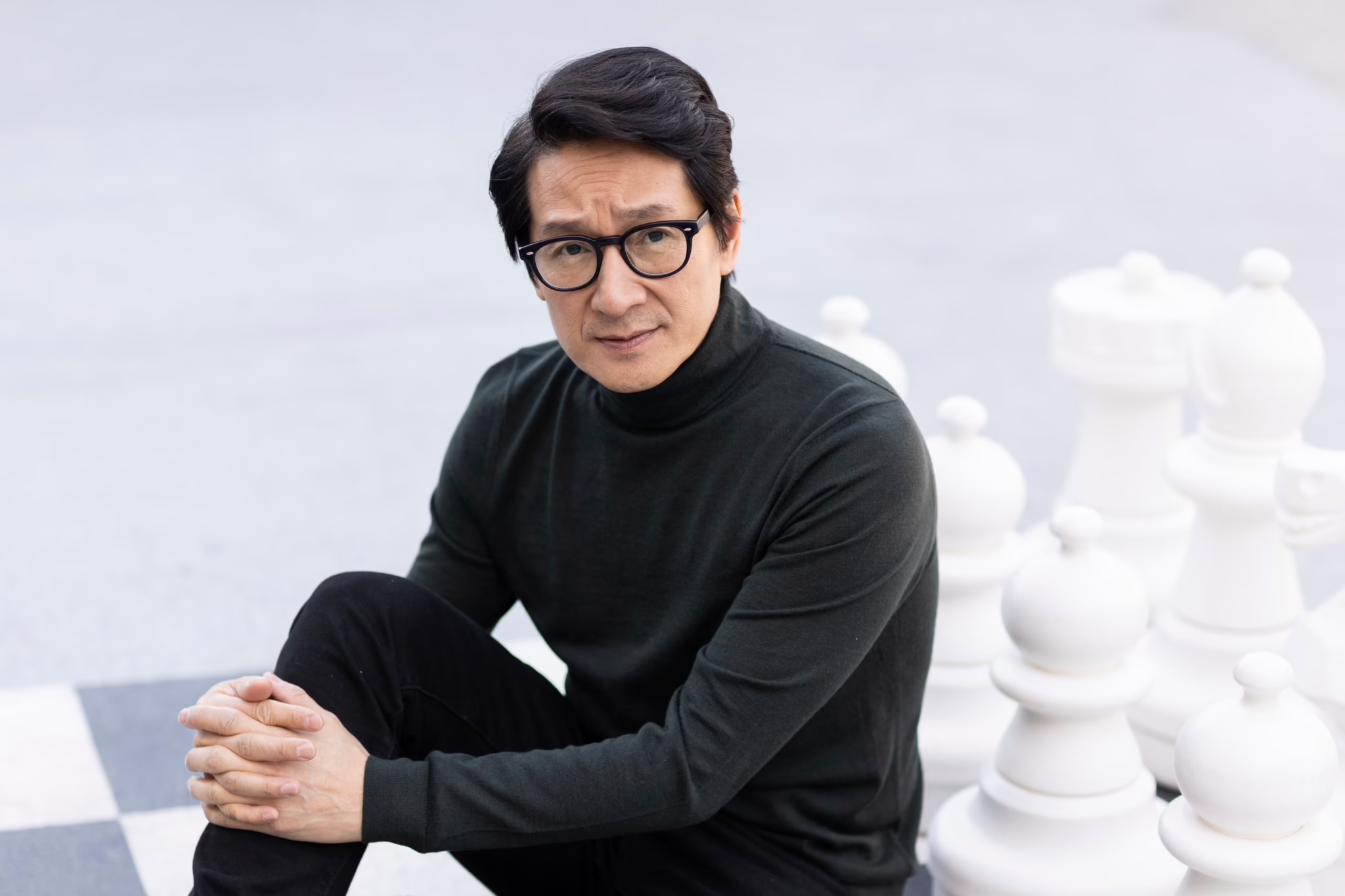
Ke Huy Quan, the American actor of Vietnamese descent, is well known in the notorious “Indiana Jones and The Temple of Doom”, “Everything Everywhere All At Once”, and “Loki” Season 2. His selection as an exemplar highlights how his journey encapsulates the model minority stereotype and demonstrates how Asian communities may unconsciously perpetuate such narratives.

In “Indiana Jones and the Temple of Doom”, Quan portrays Short Round, a clever Japanese sidekick aiding Dr. Jones on his adventures. Ironically, this character aligns with the early stages of the model minority stereotype. Short Round comes from a disadvantaged background, surviving through pickpocketing, but his association with Dr. Jones transforms him into a more thoughtful and capable individual, elevating his social status by the film’s conclusion.

In “Everything Everywhere All At Once”, Quan embraces the archetype of the modern Bruce Lee or Jackie Chan—a martial arts expert and mentor to the protagonist, reminiscent of Mr. Miyagi in “The Karate Kid”. Finally in Loki Quan plays Ouroboros, a lovable and intelligent technician who once was a writer and a teacher of theoretical physics at Cal Tech. 

Ke Huy Quan (Image source: The Independent)

Ke Huy Quan (Image source: The Independent)

In a meta and somewhat ironic twist, both Ke Huy Quan’s career and the roles he portrays reflect how Asians may unknowingly perpetuate the stereotypes they are often subject to. While Quan’s rise to fame is a testament to his dedication and perseverance, his portrayal of characters like the “witty young sidekick” learning from a Caucasian hero, the martial arts mentor, and the intellectual expert, inadvertently reinforces the very tropes that have shaped the Asian image in media. Despite his immense talent and the love he has earned within the Asian community, these roles contribute to the ongoing cycle of cultural expectations and representation.

Breaking the Myth of the Model Asian

It is entirely debatable that it is not the fault of the actors. We admire Ke Huy Quan for his remarkable journey and his representation of the Asian community. Nevertheless, through observing content produced by modern media, one will recognize certain tropes from the Asian community. 

Steven He satirizes Asian parents, Jimmy O. Yang joking about Asian habits, Lily in “Pitch Perfect”, Rajesh Koothrappali in “The Big Bang Theory”, Louis and Jessia Huang in “Fresh Off The Boat”, and the list goes on. Even the news you see about an “Asian underdog politician” rising to power or the “overlooked Asian business owner” continues to reinforce these themes. While these portrayals are well-intended, they still fall into a pattern of representation that, ironically, reflects the very stereotypes they aim to challenge.

These stereotypes create an environment of competition and segregation in the Asian community, where individuals feel pressured to conform to a specific image. To maintain an idealized representation, certain behaviors become expected, specific careers are favored, and everyone feels compelled to excel in particular areas.

A ramification of this mindset would be far-reaching. For example, economic struggles may be ignored, as the stereotype dictates that all Asians should be successful. Mental health issues among children are dismissed because it is assumed that the Asian parenting and education system naturally fosters resilience. Furthermore, social problems like drug use or teenage pregnancy are seen as impossible within this community because Asians are stereotypically perceived as disciplined and morally upright. These misconceptions, while seemingly small, perpetuate harmful beliefs and ultimately hinder inclusivity, reinforcing negative stereotypes that shape the broader perception of the Asian community.

Shaping Our Own Story in Media and Beyond

“There are more Asians than any kind of race on the planet. That means we are the majority, we dictate normal behavior,” Ronny Cheng states in his comedy skit.

Asia comprises 59% of the world’s population, hence we are the majority. However, this work is not a manifesto calling for the unification of an ideal but serves as a reflection of the society we live in. The media plays a pivotal role in shaping our perception. The argument is not to elicit a conspiracy theory but to help readers ponder the question, how do we want to be represented? Thanks to pioneers like Lucy Liu and Ke Huy Quan, the Asian community has gradually won more exposure from media outlets. Now, it is the turn of the new generation to represent the Asian community in all its diversity and complexity.

Sources:

The Conversation, Pew Research Center, Adoptive Families, 2 Sao, Vietcetera, TruTV, USA Today, Tien Phong, Screen Rant, Marvel, Mary Sue, Indiana Jones Wiki Fandom, Charlie Angels Wiki Fandom, Vanity Fair, Washington Post, Ted Ed, Densho, PBS, University of Michigan.

american-dream-2-scaled-jpg

News

The American Dream: A Promise, a Paradox, and the Asian Experience

The Immigrant Struggle

“We dream of going to America, to change our lives, we believed. But my life changed so much. I felt sad about life, didn’t know the language, and didn’t know the roads. I had no friends, so I felt very sad.” – Phong, a Vietnamese American expat interviewed by the Pew Research Center.

“I sometimes, just a little, wish that I would disappear so that my parents and my sister could be better off.” – Nolan, an Asian American interviewed by the Pew Research Center.

Dreams vs. Reality

The American Dream is often celebrated as a path to success, yet its reality is far more nuanced. Tales of rags to riches from Asian peers suggest its promise, but the Pew Research Center reports that one in ten Asian Americans still live in poverty as of 2024. The issue lies not solely in the Dream itself but in how it is constructed and understood.

For many Asians, the American Dream is synonymous with upward mobility achieved through hard work and resilience—a belief that effort alone can overcome systemic barriers. But resilience, by its nature, demands enduring hardship and accepting foreignness, perpetuating a narrative that reinforces isolation and discrepancy.

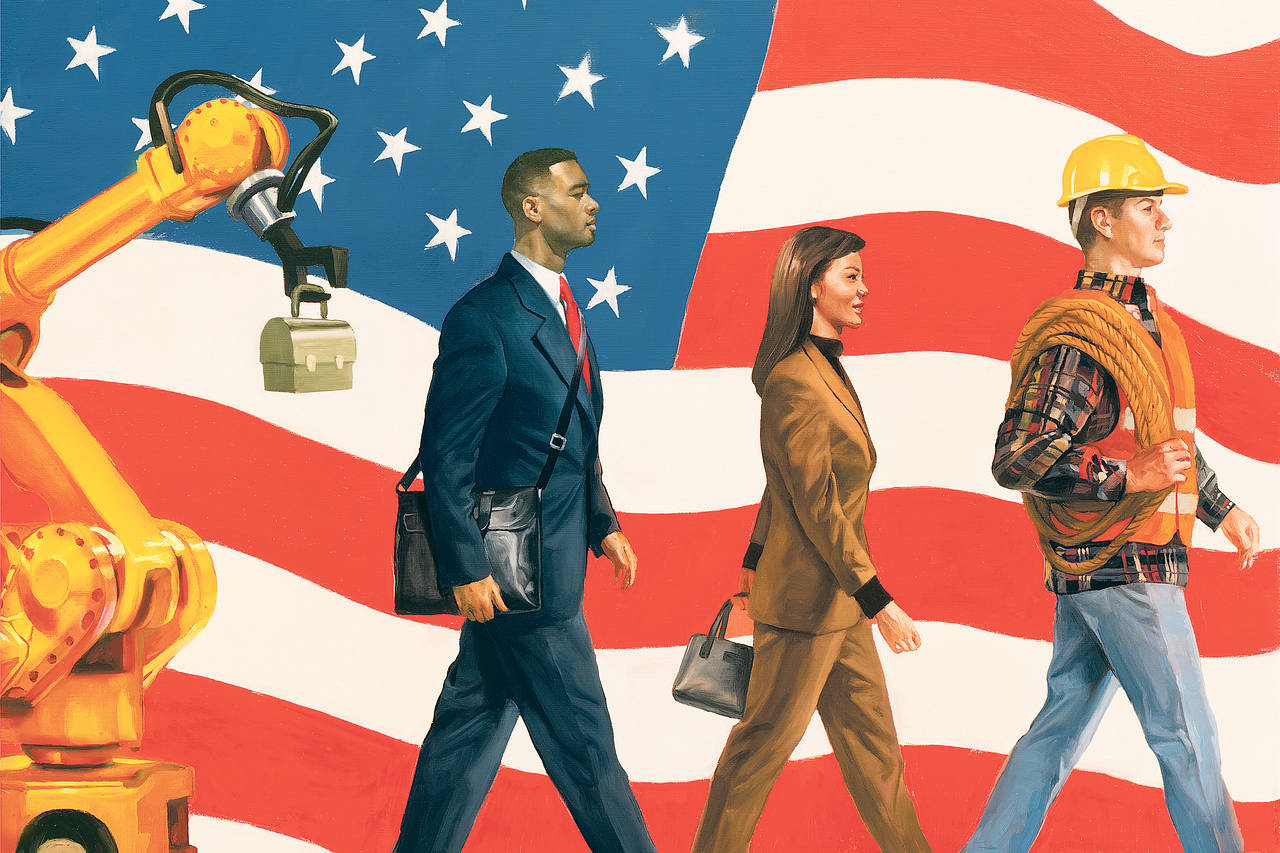
The American Dream is synonymous with upward mobility achieved through hard work and resilience (Image Source: Roberto Parada)

The American Dream is synonymous with upward mobility achieved through hard work and resilience (Image Source: Roberto Parada)

The Illusion of Gold

The idolization of a Western nation paved in gold is an illusion that perpetuates xenophobia and the model minority myth. This ideological flaw is alluring and dangerous. We have all heard heartbreaking stories of illegal labor exports and stowaway immigrants. Yet we tend to remember the rags-to-riches stories because it is comforting to view ourselves as the ones who might make it. All while labeling these immigrants as illegal, the other, the individual Asian Americans who will live in poverty. But by doing so, we have fallen trapped in the American Dream, clawing our way to the top for the sake of others. 

After the pandemic, anti-Asian and hate crimes have increased. The encounter paints a reflection of our society, there is no line between the one and the other nine, we are Asians and that is our identity. Then is the American Dream a lie? Not necessarily—but it is far from universal.

Community as the Key

Like all dreams, it is what we make of it.  Whether in America, Asia, or any part of the world, opportunities coexist with difficulties. Moving to another country means tackling obstacles such as language and cultural barriers alongside the burden you once had at home. Statistics show that 61% of Asian adults seek family and friends when facing financial burdens. This can become challenging when migrating to a new country. 

The key lies in recognizing that success is not achieved alone. Building networks and fostering solidarity within communities can challenge the isolating demands of resilience and redefine the Dream as a collective effort toward meaningful progress.

The American Dream is both a beacon of hope and a paradox. For many Asian Americans, the pursuit of upward mobility comes with sacrifices that are often overlooked. Yet, success doesn’t need to be a solitary journey. By embracing shared struggles and fostering a supportive community, one can find hope by redefining what the American Dream truly means.

Sources: Pew Research Center – 1 in 10: Redefining the Asian American Dream (Short Film), Pew Research Center – The Hardships and Dreams of Asian Americans Living in Poverty, Edelman, C&EN, Reappropriate.

A Test-jpg

News

Chicago’s Gangnam Market Rings in Lunar New Year With Food and Tradition

Year of the Snake has arrived, and Chicago’s Gangnam Market slithered into the year with an exciting two-day celebration on January 25 and 26. Since its launch in December 2024, Gangnam Market has quickly established itself as one of Chicago’s go-to spots for Asian culinary delights. This event further solidified Gangnam Market’s vision of bringing Asian culture forward.

The 28,000-square-foot “American-Asian hybrid” grocery store has gathered communities of diverse backgrounds into one place, all honoring and embracing the rich traditions of the Lunar New Year. The weekend celebration offered attendees an exciting lineup of activities, from electrifying cultural performances to mouthwatering food.

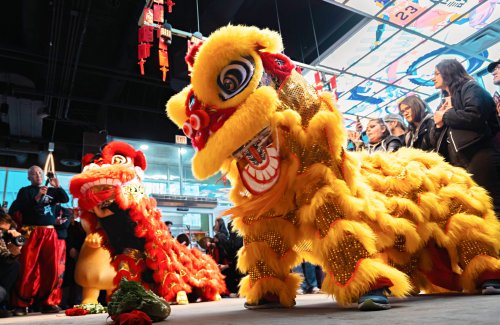
One of the event’s prominent features is the lion dance and drumming performance by Yu’s Lion Dance Sports Association of Chicago, captivating audiences with an energetic and meaningful display of fortune and prosperity. Adding a playful touch, Pokémon characters also held special meet-and-greets that attracted children and fans alike. (Who doesn’t love Pokémon anyway?) Guests also received lucky red envelopes with coupons for exclusive prizes at the event.

Lion dancers, drummers, and Pikachu captivate the crowd at Gangnam Market’s Lunar New Year celebration.

Food lovers were definitely not left out, with live demonstrations of Tanghulu-making (Chinese candied fruit skewers) and more than a dozen market vendors offering a taste of classic and contemporary Asian delights, with free food and drink samplings.

One of the event’s sweet treats is Tanghulu – candied fruit on skewers with a crispy sugar coating.

Reflecting on the successful turnout, Gangnam Market owner Kenny Yang expressed his gratitude for the community’s eager participation and commitment to heritage preservation. “We were overwhelmed and humbled by the incredible response, and thank all who came out to celebrate Lunar New Year with us.”