Uncategorized

July 19, 2022

SHARE:

In the view of society, hair is connected with youthfulness and beauty in women, virility, and masculinity in men. It should come as no surprise that hair loss may make many men and women feel self-conscious. But should that be always the case?

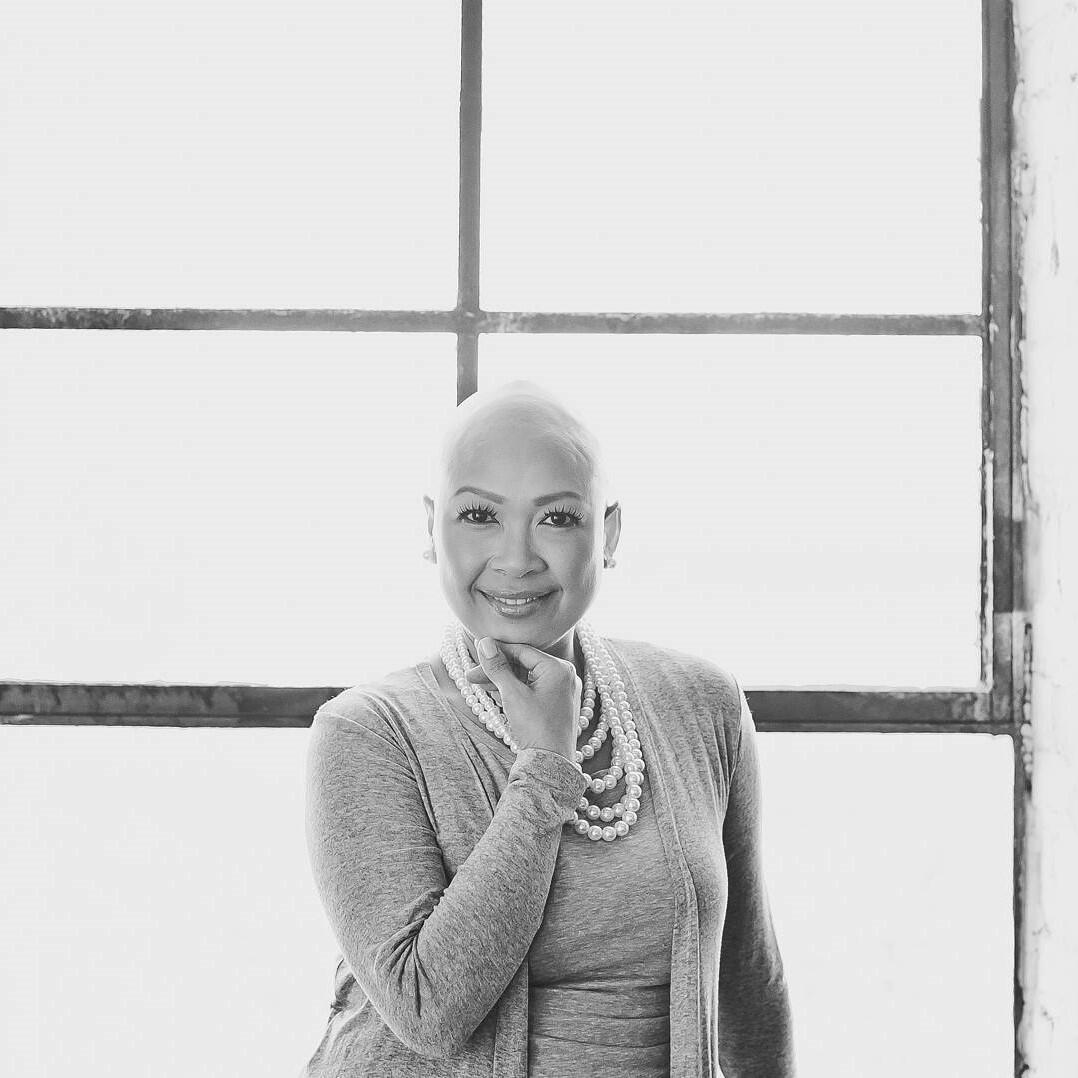
Caroline Mangune Alanis was only 4 years old when she lost all her hair, “I don’t even know what it is like to have hair.” she said. Caroline has Alopecia Universalis (AU)  — the rarest form of Alopecia Areata, it’s an autoimmune condition that attacks the hair follicles.

Growing up Bald

Born in the Philippines to a strict father and a sweet and kind soul mother, as she describes, “My dad didn’t allow me to go out with friends a lot. I was never allowed to go on sleepovers.  He sheltered me from people. I never realized that until I was an adult, and reflected on my childhood.” She also has two brothers who were protective as well.

At the tender age of 4, she was already practicing “DAILY AFFIRMATIONS” although she never knew how impactful they were,  “I was always told to look in the front of the mirror.  I would say, I am beautiful, I am strong, I am special. I have beautiful eyes, beautiful skin, etc.”  Her parents never told her the pain and heartbreak of raising her, rather they just always told her how special and beautiful she was, “They always told me I was meant to stand out.”

She had no recollection of the time her hair started falling out, but she was told that her hair fell off within a 2-week time frame, “My mom said it could have been brought by stress from an earthquake we had in the Philippines.”  

Caroline was never allowed to say negative words about herself, or else her father would scold her. She was imparted that words she says about herself will either bring her up or tear her down, “So maybe I thought negative things about myself, but I never said it. Growing up bald, I never felt ugly, just incomplete.”

Growing up bald, I never felt ugly, just incomplete.

– Caroline Mangune Alanis

Although her parents taught her how to be courageous and had always made her feel how beautiful and blessed she was, growing up bald was not easy — she had to endure the everyday pressure of life. “There was the pressure of seeing little girls with beautiful hair and wishing every day that I had that. There was the pressure of kids being mean and pulling off my bandana and laughing at me because I was bald.” She faced the pressure of name-calling and bullying.

Caroline’s parents finally convinced her to start wearing a wig which, unfortunately, didn’t make things easier as she recalls. Walking home from school one day with her brother, a girl decided it would be fun to pull Caroline’s wig off and throw it on the ground. “At that moment, all I could do was cry and run home,” she adds, “every day I feared leaving the house, the emotional scar is unimaginable.”

She learned how to hide her AU, she felt as if people wouldn’t accept her for being her so it became a secret, and only her family and those she truly trusted, which were not many, knew the real Caroline.

In high school, only a handful knew about her AU, “which made it so easy to try to blend in since I never wanted to stand out, never!” The ironic part about it, as Caroline describes, was she would always be the one to be called by her teachers to lead a project, sing solos, and participate in plays and fashion shows. They even nominated her to join the homecoming queen and enter a beauty pageant. However, “I realized that my fear never really went away by keeping my AU a secret and the emotional scar was also still a part of my life.”

Every day I feared leaving the house, the emotional scar is unimaginable.

-Caroline Mangune Alanis

Being Bold With The Love Of Her Life

She met her husband Mark from work, where they were both managing stores at a mall in Chicago. They became best friends and were each other’s plus one at weddings, “We didn’t start dating until I transferred to another mall.” she said.    

But the day has to come when she must tell Mark about her condition, “Telling Mark about my alopecia was very difficult. He once told me that he loved hair and eyes on a woman,” she adds, “He himself has gorgeous hair.” Caroline felt she didn’t have one of the criteria Mark was looking for. Although she mentioned several times that she had something to tell him and he would always say “whenever you are ready.” Caroline thought that they both knew that Mark is aware of her wearing a wig, they just never talked about it. 

Mark and Caroline had been dating for about a year when she finally tried to tell him one evening. She got choked up and started crying. He told her, “Caroline, don’t you think I know you by now from your head down to your toes?” He had tears in his eyes. She then asked Mark why he didn’t tell her.  He replied, “I wanted you to trust me enough to tell me”.  

As they began to start their family, Caroline’s AU became their secret. She held her family bound to her alopecia. When her daughters’ were infants, she wouldn’t carry them in public for fear that they would pull her wig. “They were taught never to touch mommy’s hair, ever!” 

Her daughter could never have friends sleep over because it would be very uncomfortable for Caroline to be her in her own home. “My daughters were always fearful when we were out in public, especially on windy days.” 

Caroline’s baldness was a big secret, even her husband’s family didn’t know, “because I hid so much all my life, I didn’t realize I walked in fear every day.  I didn’t realize I lived in bondage.”

Mark told her, “Caroline, don’t you think I know you by now from your head down to your toes?” He had tears in his eyes. She then asked Mark why he didn’t tell her.  He replied, “I wanted you to trust me enough to tell me”.  

Embracing Being Beautiful

In the summer of 2015, her life opened a new door, she became a part of an International Alopecia Group on Facebook and realized that her journey with AU has prepared her to help others like her. She saw so many men and women devastated by losing their hair. They were going through a lot of emotional pain, “You see, alopecia can happen at any time in one’s life so the adults experience a loss and have to grieve.” Caroline said. Alopecia might not be life-threatening but it is life-altering. Hair, eyebrows, and lashes truly make a difference in one’s appearance, “I myself put my face on every day.” she added. 

She also saw some men and women walking proudly bald. One man, in particular, Anthony Carrigan, an actor who also kept his alopecia a secret but he came out and had been helping others and is a beacon of light.  

Then, Caroline started giving advice about doing daily affirmations, “doing lots of SELF LOVE!”  as well as giving makeup tips, the alopecia community knows her as the “Eyelash Queen”.

But once the parents of alopecia children started posting their heartbreaks, “that’s when I realized my parents’ challenges of raising me, a bald child.” Caroline started reiterating what her parents taught her. She gave advice to parents, about how special their child was, how they were perfect and beautiful just as they were. “Alopecia children are so strong,” she noted.

“I then realized I was all those things: perfect, beautiful, and strong,” she said, but her baldness was still a secret. Caroline thought to herself, how does she encourage others to accept themselves if she herself could not let people know about her condition? So as those thoughts lingered in her head, she began telling her family and friends — she only wanted to tell people, not show people. Her goal was to have 30 different wigs for each day of the month.

“But God! God had other plans for me,” the unexplainable started occurring, her wigs became unbearably uncomfortable to wear, “it almost felt like my scalp was burning,” which she thought was completely strange since she has been wearing them for 40 years. It took a lot to take a look at herself bald.  She then began to think, “How can I tell my daughters  and others that beauty really lies deep within if I myself can’t see past my lack of hair?”

On August 14, 2015, on her way home with her husband from dinner, Caroline’s wig was getting itchy so she took it off to scratch her head. She was about to put her wig back on but Mark held her hand to stop her. He said “Honey, don’t put it on, you’re fine. You are safe with me, nothing can hurt you, and no one will hurt you. You are beautiful.” She reluctantly did what he asked and wanted to be strong for him. 

Mark kept holding her hand tight and kept asking if she was okay,  “I just kept saying it is scary.”  As they were nearing their home, her husband pulled over and said “Come on let’s take a selfie.” to lighten the situation. Her husband dropped Caroline off in front of their home, with her wig in her purse. Mark told her to go ahead and go into their home.  

“For the first time in 40  years, I felt God’s love on my head. The soft wind touched my head, a few raindrops falling on my head. I cried and laughed as I ran to my house.” she recalls.  

After that night, her husband helped Caroline with her small steps into seeing herself for who she was — a beautiful woman living with AU. Slowly, she found herself no longer wearing her wigs. They would go on drives and take walks on the beach. “I felt free, my secret slowly fading; including the emotional scar.”

I felt free, my secret slowly fading; including the emotional scar.

-Caroline Mangune Alanis

“On Sept 9, 2015, I posted it on Facebook, I cried the whole night.  Everyone was so kind.  I was still afraid, but I started walking bald.” she expressed.

In the fall of that year, it started getting cold and she didn’t like her hats since they looked terrible without any hair. She was pretty sad because she really did not want to start wearing her wigs again, “I just prayed and asked God to lead me in what I am supposed to do. I got my answer on Sunday, October 4th,” A lady stopped her and asked if she has Alopecia, to which she responded “Yes!”. The woman said, so did she, and asked Caroline, how does she do it? — She knew the lady meant how she could walk around without her wig.

Caroline answered “I don’t know. This is all new to me. “God is giving me the strength to do this. I couldn’t have done this on my own.” So that day, she officially retired all her wigs. “Yes, I put them all away for those special occasions,” she added.

She has met so many people just like her all over the world which inspired her to start her own Alopecia Group in Chicago, where they meet once a month. “I love having a family I call my own, people who truly understand me.”

The Chicago Alopecians

Caroline together with her friends started the Facebook group, with her as the main facilitator. It is a place where they can share their personal journeys and ask for advice or help. The Chicago Alopecians’ mission is to ensure that no one feels alone. Recently, they have been planning to create more events to cater to everyone, children, teens, and men. 

“We each have our own alopecia journey and we just want to connect with each other,” said Caroline. They also allow wig vendors in the group, “Chicagoland is such a big place. I love having a solution for everyone in the group.” As of writing, they currently have 332 members, and they’ve also started an Instagram page to widen their reach.

For the international group, Caroline is also encouraging others to create their own alopecia groups — their own tribe in their local towns.

“I have always known God wanted me to stand out, but I was always afraid.  These days, I am no longer afraid to not have my wig on, I embrace it.”

Caroline is truly a woman who is defying what society calls “beautiful”. 
Related Articles

News

Expanding the Legacy of a Family-Owned Chinese Restaurant Chain

In the heart of Los Angeles is a vibrant embodiment of the American dream—a dream realized through the culinary journey of a family-owned Chinese restaurant chain.

In the early 1960s, Kai Tai Chang and his wife, May, left Hong Kong for Los Angeles, seeking a better future. Kai Tai, driven by his unwavering work ethic, found opportunities in Chinatown’s food industry. He worked tirelessly, holding multiple jobs to support his family.

Kai Tai’s dedication led him to become a chef at the Phoenix Inn, a restaurant at Ord and New High streets. Over time, a strong friendship with the retiring owner paved the way for him to purchase the restaurant.

May Chang played a pivotal role as the welcoming face of the Phoenix Inn, forging personal connections with customers. For two decades, the Chang family thrived by prioritizing personalized service, valuing their staff, and offering delicious cuisine.

In 1997, the family expanded to Alhambra, introducing a unique addition to their menu—desserts, including classic Asian treats and fresh fruit options. Their commitment to culinary excellence, even sending Elaina to Le Cordon Bleu in Pasadena to hone her pastry skills, was rewarded with success.

Image Source: KTLA

Despite the challenges posed by the pandemic, Phoenix persevered with take-out and delivery services, expanding to its 13th location in San Diego in 2023. Nick Chang, the next generation, took the reins as president in 2021, committed to maintaining their high standards of quality and exceptional customer service as they continue to grow.

The Chang family takes pride in their legacy, built on a foundation of culinary excellence and heartfelt service, reflected in the glowing Phoenix signs that now shine beyond the Southland.

Featured Image Source: KTLA

Spectrum News-jpg

News

Young Entrepreneur Olivia Huynh Rockets to Success with Unique Bubble Tea Shop

In the heart of North Texas is an extraordinary 11-year-old, Olivia Huynh, with big dreams and ambitions as diverse as acting, singing, and artistry.

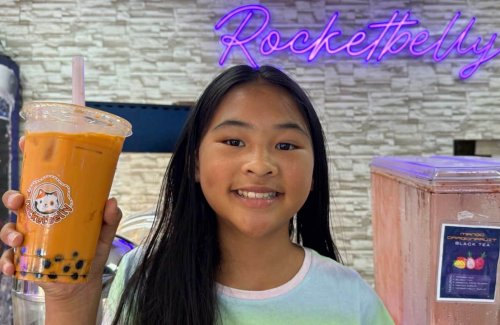
At her young age, Olivia is the proud owner of Rocketbelly, an Arlington-based bubble tea shop claiming to be the sole self-serve boba tea destination in Texas. “She really is the owner,” said Olivia’s mother, Mary Huynh, to Spectrum News. “She thought of the concept and runs the place. Most of the money we used came from money she’s earned in modeling and acting gigs.”

Olivia was 4 years old when she expressed her desire to be in movies. Her mother created a YouTube channel, featuring a young Olivia’s DIY arts and crafts, sweet treat tutorials, and imaginative gift ideas. Simultaneously, Olivia started auditioning for commercials, landing roles in major brand advertisements.

As for Rocketbelly, the outer space-themed shop opened its doors in the fall of 2022,  offering a diverse range of 10 milk tea and two fruit tea flavors, along with 28 different toppings, including freshly made boba.

Image Source: Spectrum News

The Huynh family has ambitious plans to expand Rocketbelly to multiple locations across North Texas, while Olivia remains resolute in pursuing her acting career with the full support of her family.

Featured Image Source: Spectrum News

jennfinalimages-197-jpg

Stories

This Couple Created a Mahjong Inspired Game That Celebrates Diverse Cultures

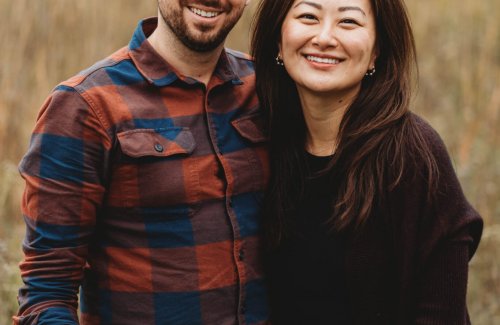
Meet Jennifer Guo and Adam Szakacs, a couple with a creative vision. They wanted their child to cherish both her Chinese and Jewish roots, despite living far from family. So, they invented something extraordinary.

Inspired by their grandmothers’ unexpected friendship over mahjong, they reimagined the game as “Not Your Ma’s Jong.” This isn’t just any game; it’s a lively card version of mahjong that celebrates their backgrounds. It carries a powerful message – embracing your heritage and sharing it with others is something to be proud of.

Through Not Your Ma’s Jong, Jennifer and Adam hope to bring people closer. By sharing traditions, they aim to show that understanding each other’s cultures can create harmony.

In an exclusive interview with Asian Hustle Network, Jennifer and Adam share their journey in creating “Not Your Ma’s Jong.” Read through as we get a glimpse of how this game could help forge connections and celebrate diverse cultures.

Whether celebrating certain holidays, traveling together to meaningful places, or simply making a memorable recipe together, spending quality time together is the most important thing – and playing a game like Not Your Ma’s Jong is one way to spend time together.

Jennifer Guo

Can you tell us about the inspiration behind creating Not Your Ma’s Jong and how it connects to your Chinese and Jewish heritage?

Jenn: I learned how to play mahjong as a kid by watching my grandma play in China. Mahjong was a part of our daily lives and at the center of every family occasion. For me, mahjong is a way to connect with those memories.

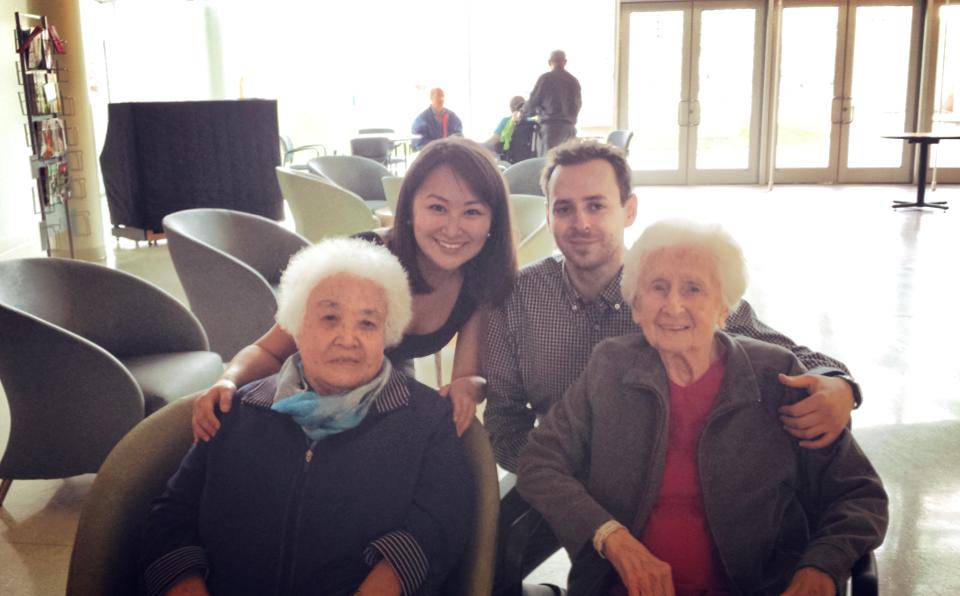
My grandma used to split her time between her home in Xi’an, China, and Toronto where she stayed with my parents. In 2014, we brought my grandma to visit Adam’s granny who was healing from a hip injury. My grandma speaks only Mandarin, so we started by translating some simple hellos and small talk. It was so special to have them meet and communicate with each other.

Adam: At one point, we were talking about their respective cultures and the things they enjoy. My granny plays a lot of card games and also mentioned mahjong. Jenn’s grandma’s eyes lit up, and she told us about playing throughout her life. Jenn’s grandma is certainly the more avid player, but once my granny’s hip recovered and she was back home, they were able to play together.

Jenn: When I was pregnant with our first daughter in 2018, we started thinking about how we could connect our children with their cultures and heritage. I realized that living in Canada, they would not have the same exposure to Chinese traditions like mahjong as I did growing up. We started thinking about ways to honor the memories we had of growing up with our parents and grandparents and decided to create a simplified version of mahjong, which became Not Your Ma’s Jong.

Jenn and Adam with their grandmas

As an international card game played around the world, what do you believe makes Not Your Ma’s Jong unique and appealing to a diverse audience?

Adam: We realized that even though our grandparents played mahjong and we played with them, we never played with our friends. We started asking around and kept hearing the same thing–most of our friends had heard of mahjong or seen their families play, but few knew how to play themselves.

Jenn: Not Your Ma’s Jong is a simplified version of mahjong, using 75 cards as opposed to 144 tiles in the traditional game. The rules are also simplified to create a fast-paced and fierce game that anyone can pick up quickly. When we started playing test versions with our friends, the excitement showed us we were on to something!

Could you share some examples of how you incorporated Chinese and Jewish emblems into Not Your Ma’s Jong? How do these cultural elements enhance the gameplay experience and foster cultural understanding?

Jenn: We wanted to dedicate the game to our grandmas. Many of the cards are symbols from growing up with them – some with Adam’s Jewish granny, and some with my Chinese grandma. Some center around memories of family feasts we’d eat together, gifts they’d give us, or how they made us feel – and while the symbols are specific to our cultures, those memories and feelings are universal.

Other cards are a bit whimsical – we imagined what their friendship could have been if they had lived near each other earlier in their lives. Things like doing tai chi together in a park, or building a muscular snowman together! We wanted to make them relatable for people who grew up in any culture, with special winks for people who grew up Chinese or Jewish.

What are some of the challenges you faced while developing and popularizing Not Your Ma’s Jong? How did you overcome those challenges, and what lessons did you learn along the way?

We had a lot of fun creating Not Your Ma’s Jong – but turning it into a product and making people aware of it was hard! After the initial Kickstarter campaign, the remaining games sat in our home for over a year until we started to get some media attention. We were fortunate that a blog article turned into a newspaper feature which then got our story and the game featured on TV twice! Hasbro took an interest at that point, licensed the game and it’s now being sold around the world. This showed us that people love it once they hear about it! That initial exposure was the hard part.

Can you share any heartwarming stories or feedback you have received from players of Not Your Ma’s Jong?

Adam: The initial Kickstarter campaign was a very personal experience for us. We received stories and repeat orders from some of the earliest recipients of the game, sharing how they played with their parents, children, or nieces and nephews, and how it caused them to reminisce about their own family stories when they saw the illustrations on the cards. We still love getting emails and seeing reviews from people who feel a connection to the game.

What advice would you give to individuals or families who are seeking to explore and celebrate their own cultural heritage? How can games like Not Your Ma’s Jong play a role in this process?

Jenn: It was important to us to not let our families’ cultures and memories fade away for our daughters, and creating this game was one of our ideas to do that. I know it’s hard – especially with young kids – but I think it’s important for parents to think back on their childhoods and choose some of the traditions that they want to continue with their children. Whether celebrating certain holidays, traveling together to meaningful places, or simply making a memorable recipe together, spending quality time together is the most important thing – and playing a game like Not Your Ma’s Jong is one way to spend time together.

In conclusion, what message or lasting impact do you hope Not Your Ma’s Jong will leave on players and society as a whole?

Jenn: The world can sometimes feel so divided – we hope people see this game, and the story behind it, as a small example of how people with different cultural backgrounds and languages can find common ground and develop a friendship. We hope they get a glimpse into Chinese and Jewish cultural experiences and relate with their own experiences too!

CONNECT WITH NOT YOUR MA’S JONG

Instagram: @notyourmasjong

Threads: @notyourmasjong

Website: notyourmasjong.com

People Daily-png

News

Meet The Chinese Pancake Shop Owner with Exceptional Calligraphy Skills

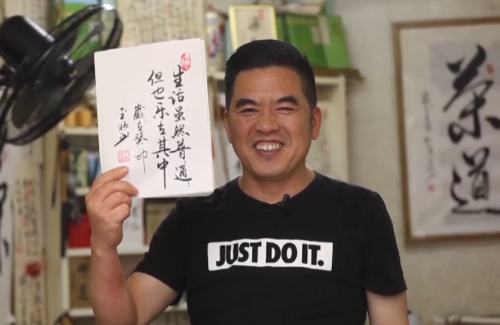
Mastering the art of calligraphy has transformed Kang Jinming, a humble 50-year-old proprietor of a cozy pancake roll shop, into a local sensation known as “the calligrapher at a pancake shop.” Situated in the heart of Hefei city, the capital of China’s Anhui Province, Kang’s unassuming establishment is renowned for its delectable stuffed pancake rolls, a favorite among the locals.

Over weekends, as customers savor their pancake rolls, Kang surprises them with a small yet significant gift—a carefully composed note featuring a line of poetry, a fragment of prose, an age-old adage, or a beautifully scribed Chinese character. Most commonly, the characters for “Le” (joy) and “Qu” (fun) are included in these tokens.

For 30 years, while taking care of his shop, he practiced calligraphy. When there are no customers around, Kang quietly sits at a small table and practices his writing with a brush. After closing his shop, he continues on bigger pieces of paper. His love for calligraphy makes him use anything he can find to write on – old books, newspapers, and even cardboard.

Kang’s establishment has become a local attraction, drawing both online attention and physical visits from locals and tourists alike. Looking to the future, Kang aims to create a few calligraphy pieces and have them framed as a legacy for the next generation.

“That’s what lies in the innermost part of my heart—knowing that I’ve left something in the world and society and that I’ve been happy doing what I love. I will be content with my life,” he shared with People Daily.

Featured Image Source: People Daily