Uncategorized

September 23, 2022

SHARE:

Two mom-friends and milk tea lovers Olivia Chen and Pauline Ang have capitalized on the early success of their milk tea company by sending samples to the head office in Costco which lead to launching their product with the retail giant in just three and a half months.

“We are still pinching ourselves that our Twrl’s Taiwan-Style Black Milk Tea is now in Southern California Costco!” Olivia says, “We’re starting with 3 locations: Irvine, Monterey Park, and Tustin (2700 Park Avenue).” 

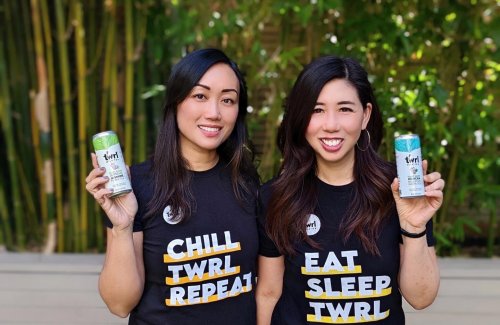
Pauline (left) and Olivia (right)

They overcame it without calling in a broker to help them. It wasn’t easy at all, however, this exemplifies the importance of hard work and perseverance of the duo to learn every step of the way for their small business to set foot in one of the world’s largest retail stores.

Olivia enthusiastically shares with Asian Hustle Network the timeline of how their plant-based Twrl Milk Tea made it into Costco to help entrepreneurs navigate the highly competitive food and beverage space. 

Roadshow Or Small Rotation

We met our buyer at Expo West (Think Super Bowl for the Food & Beverage industry where retailers and manufacturers meet up. Super worth doing if you are in CPG. We even landed our 1st TV interview).

After Expo West, we sent more samples to the office and began negotiations for placement. We were offered two ways of being at Costco:

Roadshow

  • 4 days of selling on consignment. We could control costs by using our own people and decide the volume of product we wanted to bring in.
  • Typically, this is how small brands enter Costco. If it does well, you are offered a rotation. If you don’t do well, then it’s really hard to get into the regular set.

Small Rotation

  • We started with a number of stores and the item is part of the regular set.
  • This is harder to secure because Costco is paying for the inventory and the buyer has to believe in your product.

In both situations, it is critical that Twrl Milk Tea sells well and ideally sells out. Why is this important?

It proves to the Costco Buyer that there is a market for our better-for-you plant-based milk teas. More importantly, companies owned by Asian American small business owners like ours are proven to be great partners worth investing time in and onboarding.

Reasons For Opting for Small Rotation

After a few weeks of due diligence on our end, we decided to go with a small rotation. Our reasons were simple:

  • Our manufacturer could produce the volumes needed and in the time we needed. Not always the case in this crazy supply chain. We are made in the USA so it makes a huge difference in our speed for delivery.
  • We could handle the financial obligations to fund the inventory. It’s a lot of money upfront so it’s not a light decision for a smaller company like ours. And, there is still a chance you can be sitting on inventory if it does not sell through.
  • We are committed to Costco and wanted to be part of the regular set and did not want to take the chance that with Roadshow which is only 4 days could be a bust due to so many variables that we may not be able to control.
  • We love Costco ourselves and shop there regularly so we saw our consumers there! Did you know the typical Costco shopper is 35-44 years old, an Asian female making $125,000 and the average trip is $114?!

Roadshow which is only 4 days could be a bust due to so many variables that we may not be able to control.

-Olivia Chen

Decisions, Decisions, Decisions

What flavor to sell?

Out of our 3 flavors, we selected Taiwan-Style Black Milk Tea to launch because it’s one of our best sellers and our Taiwan-Style Black Milk Tea flavor is really unique. Our single-origin loose-leaf black tea is a one-of-a-kind varietal, sourced from a small multi-generational family farm on a misty slope, fed by sweet mountain spring water.

Our tea flavor, aroma, and health benefits are un-parallel to anything on the market. We use pea milk and lightly sweetened our teas with organic agave so our tea flavors really come through. Only 45 calories & 6g of sugar per can.

What would the packaging look like?

Packaging design and sourcing begin for Costco. Luckily for us, Pauline Ang is a seasoned graphic design guru (with 15+ years in the food and beverage packaging for Fortune 500 companies) and designs all our packaging in-house so we could save costs and time here!

How to onboard?

Mountains of paperwork for our two-person team begin. We didn’t use a broker and did everything ourselves. Yes, a broker would have been so incredibly helpful to answer all the questions that we didn’t know the answers to and definitely would have saved us some headaches.

Big Takeaways

  • Don’t be afraid to chase the account you want to be in. Don’t be shy about sharing your vision of where you see the company. Special thanks to Ryan Sung of Honolulu Cookie Company and Vincent Kitirattragarn of Dang Foods for talking to us about their journey with Costco and encouraging us to go for it.
  • It can be done without a broker but not without headaches and some huge learning curves and we did make some mistakes along the way.
  • Have an advocate. We have been super lucky that our buyer has been so incredible to work with and it’s important to have such an advocate in the company. Cannot over-emphasize this enough!
  • Your team matters. Grateful to share this journey with Pauline Ang who is such an amazing friend and business partner. We are two moms that love Milk Tea and simply wanted to make milk tea —a quintessential Asian drink that we love—even better.

Don’t be shy about sharing your vision of where you see the company.

-Olivia chen

Connect with Olivia and Pauline

Your support would mean the world to our small business and the small family farms that use sustainable practices for a tea that’s better for you, and better for the planet. Follow our journey: Instagram, Facebook, TikTok, Twitter

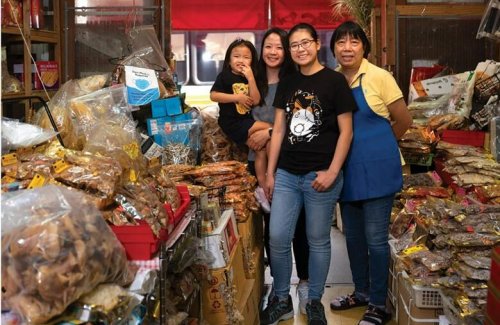
Twrl Warehouse

Related Articles

Image Source: Silicon India

News

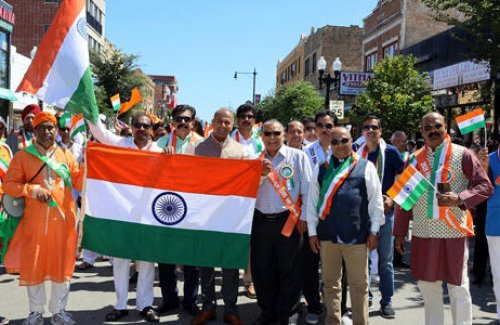
South Asians Found Second Home in Devon Avenue’s “Little India”

At Devon Avenue in Chicago, immigrants from India discovered a taste and comfort of their home country.

The area, commonly referred to as “Little India,” has served as a shelter for Indians who miss their culture.

Finding a home in it, Indians such as National Indo-American Museum board member Beverly Kumar, go there every now and then, especially when she craves Kalakand, a traditional Indian fudge.

According to Kumar, “It’s very comforting knowing that just 14 miles away from my house, there is an essence of Little India.” She also mentioned how reminiscing it is to see familiar sights, sounds, scents, and flavors when visiting Devon Avenue since it makes her feel as though she has never left home.

The area not only became a haven for Indians, but also for other South Asians who opened grocery stores, sari and jewelry stores, as well as many other enterprises in addition to food stores.

In the middle of 1960s, the place it became the second and fourth-largest enclave for Indian and Pakistani Americans, respectively.

The Federal Immigration and Naturalization Act of 1965 ushered in the first wave of South Asian immigration, which established settlements for South Asian professionals in Chicago, while the second phase arrived in the 1980s and 1990s.

Psychotherapist Ranjana Bhargava was one of the first immigrants who yearned for vegan food and searched for spices to sate her craving for Indian cuisines, which she found at Mexican places.

Between the first and second waves, businesses such as The Sari Palace sari store and Indian grocery stores began to thrive there.

Since then, a new community has been created where Indians continue to practice their culture through activities like viewing Indian movies, getting together, playing instruments, performing traditional dances, and eating.

The once Jewish-dominated place became a mainly Indian community which captivated more visitors where one can meet not only Indians but people of different races.

Image Source: Olivier Koning / Honolulu Magazine

Stories

Chinatown’s Oldest and Most Respected Businesses Proudly Carried On By Next Generation

The blood of entrepreneurship runs through the veins of Chinatown’s Chinese food business owners, as three of the longest-running businesses have their children enter the management fields of their family business.

Tony and Selina Chun, together with Alan and Helen Chun, who have been in the business for decades, fully trusted their children to run the meat market company they bought in the 1980s.

The older generation passed it down to their children believing that they would treat it the same way they had after 40 years of building and creating the Chinatown cornerstone with crispy roast pigs, burnished roast ducks, and glazed char siu along with butcher store and seafood vendor.

Frankie, 35, and his cousins are now in charge of running the company that they established through diligence and thrift. Given that they have a family business to manage, Frankie has known since then that he won’t take long in any career.

He was reported in Honolulu magazine as saying, “I knew that anything I was going to pursue wasn’t going to be lengthy, because the family would always ask us back for support.”

He and his cousins learned the operations as a result of early exposure to the business and used them as a means of support, which pleased their parents, especially when they took their first vacation in four decades.

Meanwhile, Liana Fang, whose parents Wesley and Jie Mei Fang founded Sing Cheong Yuan Bakery, assists in running the business.

The pair bought the bakery from its original owners and then expanded it by bringing in more goods. The homemade goods were prepared using original family recipes that they later improved.

The 27-year-old claims she adores Chinatown but acknowledges that she is more passionate about cooking than baking. “It’s so authentic. I love Asian food, the fresh markets, the mom-and-pop shops,” she said.

Completing the list, the 33-year-old daughter of Sun Chong supermarket co-owner Ann Sung also contributes to management of the business.

Sun helps them sell their products and other items by marketing it online and by helping accomplish other stuff needed in the business.

Sun, who grew up at the shop with her cousins, said that their business is like a thread that can connect generations. She also claimed that coming home after studying abroad was like paying back her mother, who had done everything for her. Sun plans to update and improve her mother and aunt’s traditional business structure.

Image Source: Yahoo! Life

Stories

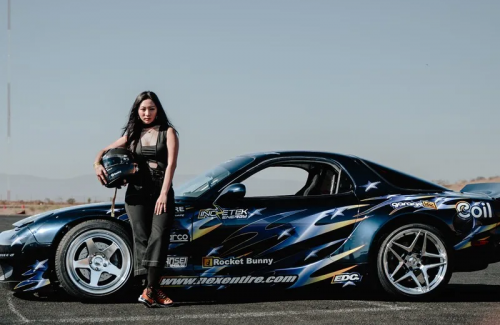
29-Year-Old Drift Racer Sara Choi Excels With Prowess In Male-Dominated Industry

Sara Choi, a South Korean drift racer, is one of the rare female drift racers who compete on an equal or even higher level with men in the automotive industry.

“Men have egos. Men have pride,” says Choi upon knowing that some guys dislike her. 

The 29-year-old was taken care of by a gang of automobile kids after leaving her Hawaii home at 15 and this is when she first acquired her curiosity and passion in cars.

Cool as she is, Choi drives a car at 70 mph while it “drifts” due to oversteering and also has to deal with microaggressions and crude remarks about her body as a drift racer.

Being one of the few women of color who is so skilled at it, vehicles are more than simply a hobby, a source of celebrity, or a source of income to her. Not only did she find a great deal of thrill when she drives sideways at high speed, but a new family as well.

“In Hawaii, we only have three freeways. Every Wednesday and every weekend, they would host a “car cruise meet” at the military base, which was everyone—sometimes up to 200 or 300 cars—going on the freeway and just racing. I would always go with my friends to that,” Choi said in Cosmopolitan. 

When Choi got her first full-time work at a tuning shop, she got a 1999 Civic through her boss, which she paid for with every paycheck. This marked the beginning of her passion for cars. 

After being introduced to drifting, she traveled to Japan, the country where the practice first emerged, years later. After completely experiencing the pleasure of drifting there, she grew passionate about it to the point that it became not only a hobby but a career.

Choi revealed that she is still debating whether or not to compete because it is a male-dominated field and that she is experiencing psychological difficulties.

She is currently concentrating on running racing events to keep the fire going.

One big achievement she had in the arena was when she created the Acura mod, a vehicle she worked on for three months for the SEMA exhibition in Las Vegas.

Additionally, Choi encouraged other women who want to pursue drift racing to “Just do it,” adding that they should put themselves out there to connect with individuals in the field.

Image Source: Twrl Milk Tea

Stories

These Two Moms Started Milk Tea Company To Take Pride Of Their AAPI Identity

In order to realize their dream of founding a food company, Olivia Chen and Pauline Ang chose to create Twrl, a milk tea business that embodies their beliefs as mothers, graduates of Berkeley, and members of the AAPI community.

For their whole 20-year friendship, they have always shared a love of food.

In spite of the challenges of setting up a tiny business in the midst of a pandemic, Pauline took the time to experiment and eventually make the tea she wanted. In the Twrl, she invented the first vegan, low-sugar, and low-fat milk tea.

The two eventually hired a co-packer and a food scientist for their canned and on-the-go product.

The co-founders’ early supply purchases from small family farms had been stirring. They were able to help them by making them their suppliers and even assisted them to get non-GMO certification through their products.

Because peas have a neutral flavor, require very little water, and produce significantly fewer carbon emissions than soy and almonds, Twrl used them to make sustainable milk tea.

Olivia and Pauline chose the name Twrl for their company based on a Chinese tale about brewed tea. Twrl is a company that embodies tradition and history with a touch of modernism.

As Asian-Americans who grew up drinking milk tea as part of their family heritage, they are major admirers of it and have even changed its ingredients with their loved ones.

Olivia went on to say that teas in cafés have extremely high-calorie content, low-quality ingredients, and impractical portability. In Twrl, they created its antithesis.

Olivia said they are motivated by the need to create a product that accurately represents America as a nation of immigrants, just like them and their families. A company that offers people the chance to blend their races and serve as role models in the community.

She clears up that as the organization’s founders, they are an Asian-American brand rather than an Asian or American brand.