News

January 19, 2024

SHARE:

Across Asia, a new wave of second- and third-generation business heirs is redirecting family enterprises toward sustainable investments, challenging traditional profit-centric businesses.

Komal Sahu, Chief of Sustainable Finance at AVPN, the largest network of social investors in Asia, notes that younger generations are recognizing their family’s wealth as a catalyst for positive transformation. By integrating environmental, social, and governance factors into their investments, these heirs aim to drive positive change while maintaining financial viability.

Al Jazeera has shared three business heirs across Asia that exemplifies this:

In Malaysia, 27-year-old Abe Lim, an heir to a lubricant and cleaning products business, departed from her father’s profit-focused approach, despite being groomed to take over the company. Instead, she founded Purpose Plastic, successfully transforming discarded plastic into home decor and other products while emphasizing sustainability.
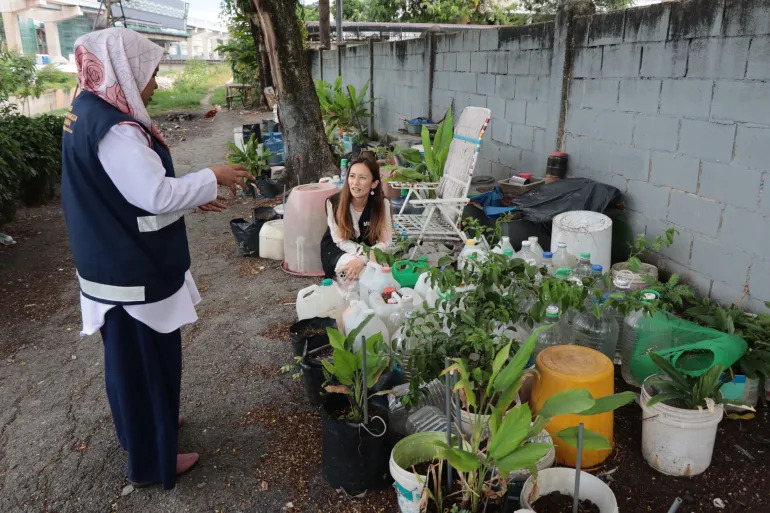
Image Source: Al Jazeera / Abe Lim

In some cases, the older generation encourages innovative thinking to secure the ongoing success of their businesses. The Lopez family in the Philippines, known for success in telecommunications and energy, divested from coal in 2016 to focus on renewable energy. Marianna Lopez Vargas, partnerships manager at the Oscar M Lopez Center, believes that a complete transition to renewables is achievable with the right incentives.

Singapore-based Fernando Scodro, responsible for his family office’s investment strategy, is educating his family about socially conscious investing, which leads to impactful investments like COGNI, a Brazilian startup focused on energy efficiency.

As these Asian business heirs redefine success, their commitment to sustainable investments signals a profound shift toward a more socially and environmentally conscious business landscape.

Featured Image Sources: Al Jazeera, Esquire PH, X

Related Articles

Image Source istock

Uncategorized

New Report Says There Is Still A Talent Crunch In Southeast Asia Amidst The Layoffs

One of Southeast Asia’s biggest job platforms, Glints, just put out a report that shows the situation may not be as severe as they seem.

Glints co-founder and CEO Oswald Yeo told TechCrunch that there has been a lot of funding injected into the IT business. This is a response to the two-to-three-year bull run, and as a result, several firms grew swiftly. 

Yeo said that Singaporean firms seemed to adapt fastest to macroeconomic changes and that this wasn’t a terrible thing because other firms wanted to move swiftly, too. 

Operations, finance, HR, and certain sales and marketing teams have been hit hard, while businesses turned to Vietnam and Indonesia, which have fewer layoffs, for top-tier technical personnel. Moreover, the pandemic has created a decentralized-minded workforce.

Yeo observed that the pandemic had made remote work more convenient, necessitating cost-cutting measures. Many firms turn to remote employment to optimize their human and financial capitals. 

They have seen that remote work prospects on Glints have expanded tenfold in a year. Some regional firms in Malaysia continue to hire foreigners, while others only hire Malaysians. According to Glints, mid-to senior-level employees’ compensation won’t diminish, but junior talent may.

One-year fixed-term contracts are another trend that helps firms predict their financial destiny, as employers are wary about signing long-term contracts. 

He believes that not everything was awful — the need for technological and product skills on Glints favored job seekers.

Layoffs help startups build core teams. Yeo said that because there is less rivalry for talent, it’s a fantastic moment for organizations in a strong position to hire top managerial talent.

Image Source generocity.org

Uncategorized

Founder of Penn Asian Senior Services Im Ja Choi Passed Away At 73

A well-known supporter of Asian American seniors and the founder and emeritus CEO of the nonprofit Penn Asian Senior Services, Im Ja Choi,  passed away on Wednesday, June 22, from lung cancer in a South Korean hospital, she was 73. 

A memorial service will be conducted on July 16 at 3:00 pm at the Evergreen Center in Philadelphia. Contributions in her name will be appreciated.

Ms. Choi was born in Seoul, South Korea in 1948, majored in literature, and graduated from Korea University. She moved to Philadelphia after marrying her childhood friend Jung Choi in 1971, where she studied organizational dynamics at the University of Pennsylvania. She was a top-producing real estate agent in the 1980s and 1990s. 

She started Penn Asian Senior Services in 2004 to help Asian American elders with linguistic and cultural obstacles. Because she couldn’t get home care for her mother, and after hearing horrible experiences from other caregivers, she founded the charity that provides in-home care and homemaking services in over two dozen languages.

She undertook the fundraising efforts and strategic planning of the nonprofit, for which the charity received grants from the U.S. Department of Health and Human Services and numerous organizations. 

Moreover, she has also opened an adult day care for immigrants with language and cultural barriers, a state-licensed vocational school for entry-level Asian health-care workers, and a seniors community center. 

In 2013, she received the Ellis Island Medal of Honor from the National Ethnic Coalition of Organizations. The Independence Blue Cross Foundation president Lorina Marshall-Blake wrote that the region needed more health visionaries like Im Ja Choi. Ken Yang, CEO of Penn Asian Senior Services, said Ms. Choi’s care, generosity, and love for her family and community matched her innovative leadership.

She was also recognized by the governor as a 2014 Distinguished Daughter of Pennsylvania for her “extraordinary service and achievements to the Commonwealth.” In the same year, she gave the commencement address at Penn State Abington where she quoted “Where there’s a will, there’s a way.”