Awaken* newsletter

September 5, 2024

SHARE:

Fifty thousand dollars. That’s the average cost of in-vitro fertilization (IVF) treatment in the US. Although the number of employers covering fertility treatment has risen significantly over the past few years, the percentage of employers that provide fertility benefits is still around 40%. This has left many hopeful parents stranded, unable to afford the hefty price tags out-of-pocket.

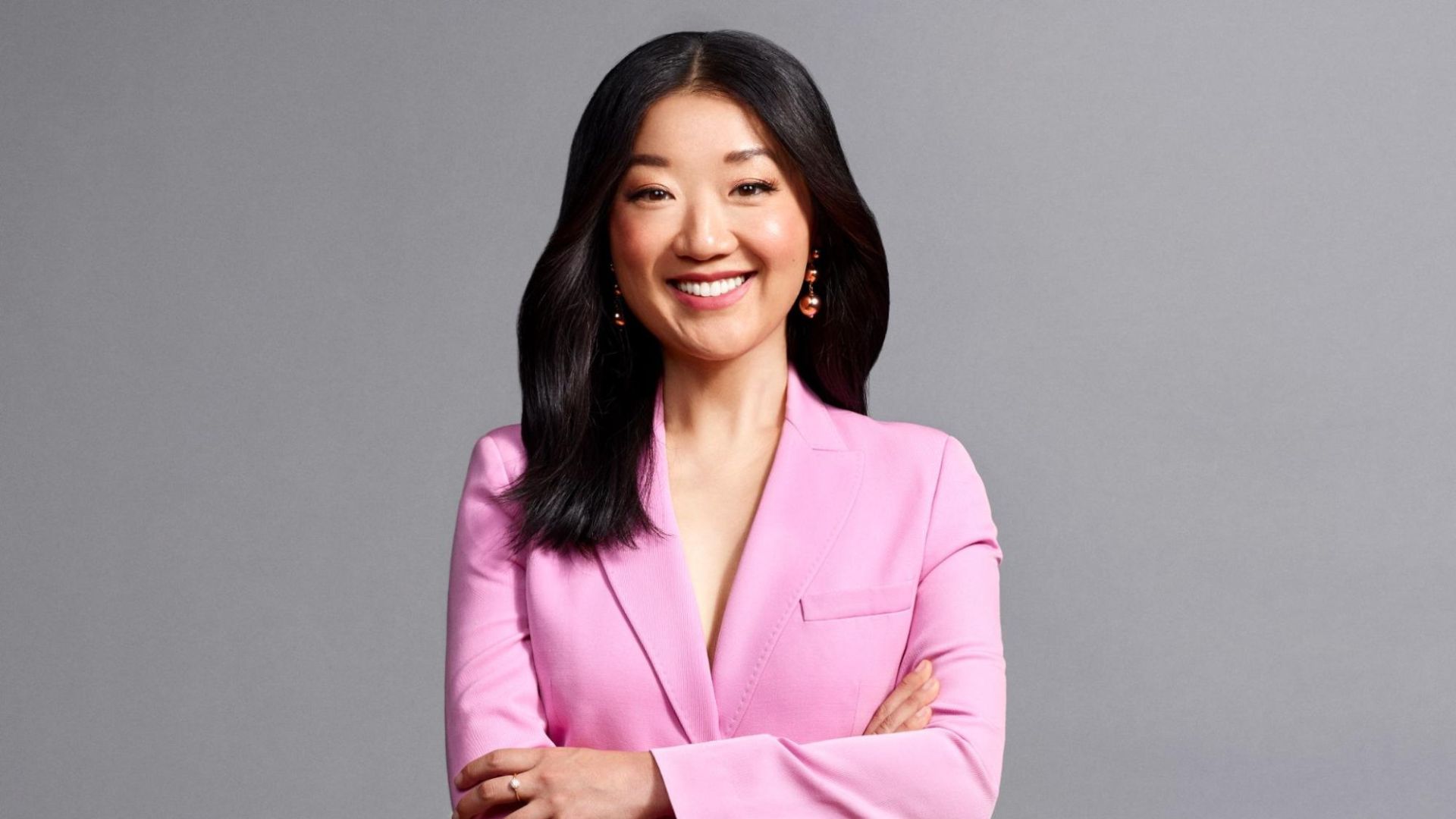
The good news is that we have many talented people working on this issue. Tammy Sun is the CEO and co-founder of Carrot Fertility, a startup that has raised more than $115 million to help employers, health plans, and health systems provide comprehensive fertility care benefits to people globally. We sat down with Tammy to chat about her work with Carrot and reflections on her founder journey.

TLDR; Key Takeaways

If you only have a few minutes, here are a few golden nuggets from our conversation with Tammy:

  • Storytelling is a core component of innovation. Whether you’re pitching investors, engaging with potential hires, launching a new product, or closing new customers, it’s critical that you can clearly articulate and curate the value proposition to each of your stakeholders. Practicing this skill will naturally lead to new conversations about how your product/service could be improved. 
  • The best way to build something people want is to listen to your customers’ problems. When talking to potential customers, give them the breathing room to talk generally about problems they are facing. This can provide valuable insight into the meaningful problems that need solving.
  • Choose a problem you want to work on where you have a personal connection to the issue, especially in healthcare. If your startup succeeds, you will be working on the same problem for 10+ years. Choosing a problem that you will have a lifetime of curiosity about will keep you motivated.
  • In the early stages of fundraising, focus on discovering your early believers instead of convincing people to care. Your early backers should be people who are as visionary as you are about your problem. Don’t waste time convincing investors who can’t be convinced, move on quickly.
  • Different stages of company building can require different employees. It’s important to remember that very few people can support your company from day 1 to an exit because most don’t have that prior experience. As a founder, you want to assess if the team you have is able to help you reach your next few milestones and reassess the next key growth stage of your company.  
  • The CEO acts as a culture’s pacesetter. As simple as it may be, you need to reflect on the behavior and aura you would like to see within your company. Alignment around company culture starts with you. 

What made you decide that starting a company was the right answer to the lack of access to fertility care?

Before starting Carrot, I spent some time in government, policy, and political work. There’s definitely a huge opportunity through policy to make large-scale improvements and changes to healthcare and other areas that can impact millions of people, particularly around regulatory issues related to fertility care, pregnancy care, and menopause care. But, I think the private sector and companies have a unique sharpness that can impact people in direct ways that nonprofits, legislative efforts, or even judicial efforts can’t.

In this country, whether you like it or not, people get most of their healthcare through their jobs. Employers, health plans, and the partners within the healthcare ecosystem that work with them are very much the primary delivery and distribution mechanisms for healthcare. I really believe that lifelong fertility care–from preconception all the way through menopause, low testosterone, and midlife care–is a vital and fundamental part of human healthcare. In order to bring fertility care to the table as a first-class citizen within the healthcare stack of work, we committed ourselves to making it easy for employers of any size, anywhere in the US and around the world, to customize their products and deliver fertility benefits to their employees in a way that is easy and seamless, and really elevates the experience for those employees.

There’s a place for all different types of work and activity that can impact this space, including nonprofits and public sector work at the federal and state levels. For us, we felt that the private sector and the company vehicle specifically were going to be the most impactful for the change we wanted to see in the world.

What valuable skills did you learn during your time in the public sector that are transferable to what you’re doing now?

In both the public and private sectors, as well as the nonprofit sector, the ability to clearly articulate your ideas with strong and compelling stories is really important. Whether you are in the public sector arguing for a piece of legislation or a specific law, or you’re in the private sector raising capital, launching products, or even recruiting talent and hiring people, it really depends on how good you are at telling your story and articulating an idea about the future. That’s something I was really able to bring with me in that transition.

We know that you played around with a few other ideas including some D2C ideas before committing to your current idea. How did you land on your current business?

It’s a great question. I’m an avid consumer of B2C-type healthcare products. I wear all the wearables and things like that. But as I said, if you’re really talking about healthcare with a capital H, you have to figure out a way to integrate with plans, payers, and employers. We tried many different ideas in the first year and a half of the company. Some of them were direct-to-consumer. We tried to make it really easy for people to access loans and financing. Ultimately, we shut that part down because we didn’t really want to be in the business of financing as the single solution. Medical debt is the number one reason that Americans file for bankruptcy, and we didn’t want to contribute to that. It’s great for some people, but at scale, it’s not a worthwhile solution. We tried all sorts of direct-to-consumer things. I didn’t know anything about benefits, employers, or the many acronyms in the space like ERISA, HIPAA, HRA, or HSA. But what I knew in the early days was that when I started talking to potential customers, all they wanted to do was talk about their problems and what kind of product they would be interested in if we were to build it. The enthusiasm and desire for a product that would make it easy for HR leaders and benefit leaders to meet their needs within their employee population was striking from day one. As soon as we pursued that avenue, we never stopped.

Within the fertility care industry, what do you think founders and other innovators should be focusing on?

I feel like the right match between the founder and the problem is as important as the match between the product and the market. What you want to do if you’re a founder thinking about starting a company is to make sure you have an almost never-ending well of curiosity about the problem you’re trying to solve. You don’t really need to have a clear solution in the early days, but you must have unending curiosity and empathy, particularly in healthcare. You need to understand who is impacted by the problem, who is hurt by it, and who feels pain as a result. Spend a lot of time understanding what that looks like even before you think about trying different MVPs and ways to solve it. If you have a personal connection to the issue, especially in healthcare, it contributes to a lifelong curiosity about how people experience the problem you’re trying to solve. This continuous curiosity allows you to keep innovating even two, three, five, or ten years later, building products and services that add value to people’s lives.

Given that fertility care has only recently seen an influx of venture capital, what do you think are potential exit options for fertility companies?

There are lots of ways along the journey to create liquidity for investors, shareholders, early employees, etc. As the category matures, those opportunities will increase, and we’ll see a lot more diverse outcomes across the category. That’s a good thing; it’s a sign of progress and market maturity. I’m excited about that because I think it’s coming. For early-stage founders, it’s less important to spend time mapping corporate strategy and how you are going to get to an exit. Instead, be maniacal about serving customers and the rest will generally sort itself out. But to your point, this category has been ignored for a long time, so it’s exciting to see how this area of healthcare is getting attention and being prioritized as an area of opportunity for investment.

When you were choosing an idea, was the total addressable market something that you thought about? 

Certainly, in the earlier days, it’s almost a conversation that doesn’t really need to be had. Generally, you want to try to solve a very specific thing really well out of the gate and then use that as a wedge and leverage to expand from there. But I did spend a lot of time evangelizing and educating different people, particularly investors, to address questions about how big the TAM would be. I had to explain why egg freezing was not a niche problem and all the things that, in retrospect, I’m sure you could appreciate as well. It’s very clear now and it’s part of the mainstream conventional wisdom that this is a very large area of healthcare. It affects almost every human being—people who are pregnant, and people who are not pregnant. We were the first to launch a menopause product into the employer market a few years ago, and we really think about that as both reproductive and post-reproductive fertility care. If we were to talk about menopause care five years ago, the category hadn’t matured enough where people would even take that seriously. 

If you’re new to fundraising, it’s a little bit jarring in the early days to get so many rejections, particularly if you’re generally a high-achieving person. I wouldn’t think about fundraising as convincing. I would think about it more as discovering, especially in the early days. It’s less about trying to convince a lot of people about your TAM and more about moving on quickly from people who you sense can’t be convinced and finding people who are as visionary and evangelical about your problem set as you are. 

How did you think about making your first few hires? Why did you hire them, and what lessons did you learn from those first few hires?

The first few hires generally are partially a function of who’s around you. What’s your current community like, whether it’s college or whether you’re in New York or Silicon Valley? What is your immediate vicinity, and who’s in your personal network? An important thing about your first few hires is understanding how to discern when the first few hires have hit their ceiling. You’ll have your first few hires, and then you’ll have your first few fires. The latter is probably as important as the former. 

Very few people can scale a company from zero to 100 million and be able to excel for that entire journey. More people will be particularly excellent at a particular stage of the company, whether it’s zero to a million, a million to 10, or 10 to 30. As a founder, you want to be able to hire and understand what the business needs, not just in this moment, but in the next few moments that are coming. And then, regardless of your personal relationships, you have to be able to shake your team up if needed and build it for the next phase. Sometimes that means you stick with some folks from your founding team. Sometimes that means you separate, and that’s okay. They’ll always be part of the story, but hiring and firing is probably one of the most challenging aspects of early-stage company building.

How did you think about culture-building? 

The thing that was most important for me was that the people in the early team were as obsessed as I was with customers, users, the product, and the problem. We knew very early on that the product would change and it would change very quickly. You want to be surrounded by people who are just as curious as you are about all the things that really matter. I was very lucky that I had a lot of people around me in those early days where our curiosity matched each other. Our level of intensity and our level of passion were all well-calibrated with each other.

Where you find problems, especially in early-stage company culture, is if that calibration is off and some people are running at different speeds. You want your initial team to be extremely aligned, running at the same speed. Everyone should be equally passionate, curious, and taking advantage of the fact that you are early and minimal; so information, knowledge, and insights can travel very fast within the team. As a CEO, you are generally the pacesetter when it comes to progress and culture. I would encourage early-stage founders to think of themselves as pacesetters and examples so that others can see what kind of behavior comprises the culture of a company.

How has your identity as an Asian impacted your founder journey?

The area where it has impacted me is representation, meaning I didn’t have that many Asian role models coming up. That absence has really emphasized the need for empathy, not just for other founders, but also for users and members. For example, considering where our users come from. Where do they feel like there are no role models? Where do they feel like there is no precedent? Where do they feel like it’s lonely? I think my own experience has enlarged and augmented my sense of empathy in all directions with other founders, but also within my customer base and my membership base as well.

Can you share more about the policy-related work Carrot has been doing or that you’ve personally been doing in Alabama to expand and protect access to IVF and other fertility benefits?

What happened in Alabama was bad. We anticipated it and moved very quickly to make sure that our members who were impacted in Alabama were supported. While the change didn’t affect a huge number of members, it was significant from a cultural and media perspective. We made sure that members were communicated with, that customers who were impacted felt supported, and that we were able to answer lots of questions from our partners within our ecosystem.

A silver lining of the Alabama situation is that a strong bipartisan consensus emerged in favor of access to IVF. You saw Democrats, Republicans, and independents all speak up in favor of IVF and fertility care as a fundamental part of healthcare. This is medical care. I saw almost no voices trying to restrict access to it from a political or policy perspective. That is a significant silver lining and an area where we’ve tried to center ourselves and expand the consensus in favor of support. We believe that anything that prohibits or decelerates access to care is bad, and the Alabama event was certainly in that category.

Lastly, is there anything that you’d like to shout out or promote?

My friend April Koh. She’s the founder and CEO of Spring Health, which is a mental health company. She and I have known each other for a long time. She’s done such a phenomenal job in the mental health space with Spring, so I’d like to shout out April.


Related Articles

Interior-Chinatown-e1729570164214

News

Jimmy O. Yang Finally Wins the First Lead Role in Charles Yu’s “Interior Chinatown”

After years of working at odd jobs, Yang has found his first lead role and left Yu knocked back in tears during his audition.

A Lemon. The $1,500 Toyota Corolla with no power windows, a busted side door, and poor brakes is what Jimmy O. Yang rode around Los Angeles to prepare for his role as Willis Wu, an overlooked Asian American everyman in the series “Interior Chinatown.” 

The result? “Pull over, call whoever got you in here. If you can’t, you gotta go…” A rude remark from the studio’s guard as Yang recalled in a Zoom with the Los Angeles Times (LA Times) even though he was No.1 on the call sheet. 

The experience reminded Yang of his life story as a Hong Kong immigrant moving to the United States. Yang stated in the interview, “Willis’ journey is such a metaphor for the Asian American experience because we are the model minority, but at the same time we are invisible. People talk about Black and white, but where do we fall? You’re just not seen for who you are.” In an article by SCMP, the actor-writer-comedian further exemplifies, “Willis laments feeling like a background actor in someone else’s story and longs to be in the spotlight, but that’s hard if you look like me.”

At the age of 13, Yang relocated to Los Angeles feeling the intense culture shock. “My goal was to just assimilate so I don’t get made fun of,” Yang recalled. In the school’s locker room, he was mocked for wearing whities instead of boxers. During 8th grade, his peers had mustaches and dunked basketballs while he barely hit puberty. Using a fake address, he enrolled in Beverly Hills High School and immersed himself in American pop culture. Unable to rap, Yang learned to incorporate his violin into the hip-hop beats he made through a software named Fruity Loops.

Despite his parents’ harsh opposition, Yang acknowledges, “I don’t think they were, like, anti-art by any means. My dad probably wishes he could have been an actor or a musician. It just truly wasn’t a real job for him. He wanted me to be financially stable, and not be homeless.” Yang started working at a string of odd jobs from selling used cars to DJing at strip clubs. Stand-up comedy, which Yang has now become notorious for besides acting, became his informal acting, writing, and directing school. 

Persistent in his passion, Yang landed small speaking roles in series like “Agents of S.H.I.E.L.D.,” where he was misunderstood as a background actor for his ethnicity, and “Silicon Valley,” originally a one-off guest role or a one-note cliché. Yang’s fame finally came in Crazy Rich Asians. Yang claims, “If I botched an audition, I never blamed the fact that they weren’t looking for an Asian actor. It didn’t deter me. But looking back, we had very limited opportunities. Since ‘Crazy Rich Asians,’ I think there’s more.” The success has made Yang’s father, Richard Ouyang, proud – even helping him with commercial and acting gigs with his son. 

The series “Interior Chinatown” became an immediate connection to Yang. According to the LA Times, Charles Yu, creator of the series which was adapted from his National Book Award-winning novel of the same name, was inspired by, “people who have these backstories, but they don’t get to tell those stories”. He was astonished by Yang’s performance as he felt a connection between Yang’s multicultural background, multilingualism, and his natural ability for acting. 

Despite the grueling six months of shooting, doing comedy, drama, and Kung Fu every week, Yang happily states, “It was very grueling. But of course, it’s a beautiful story worth telling.” At the end of the day, whether it is for better or worse, Yang’s days of being a sidekick are finally over.

Featured Image Source: Mike Taing from The Wrap

240909_AHN Stories (1)-png

Stories

Dr. Tiffany Moon on Empowering Women Through LeadHer Summit

Do you ever feel like you’re juggling a hundred things at once—your career, family, personal goals—and wonder how to keep it all together?

Dr. Tiffany Moon knows exactly what that’s like. As a mother, doctor, entrepreneur, and advocate for women’s empowerment, she has mastered the art of balancing multiple roles without losing sight of her passions. Not only did she figure out how to manage all these roles, but she’s also thriving in each of them.

Driven by her love for creativity and her desire to inspire others, Dr. Moon ventured into entrepreneurship, launching Aromasthesia Candles and Three Moons Wine. Most recently, she founded LeadHer Summit, a leadership conference designed to uplift and empower women from all different professional backgrounds.

Here’s how Dr. Moon is redefining success by finding joy in balancing her work, passions, and family—while staying true to her authentic self:

The Heart Behind Her Success

Dr. Tiffany Moon’s journey to success was deeply influenced by her immigrant parents, whose sacrifices fueled her ambition. Watching them work tirelessly to create a better life for their family shaped her determination to thrive—not just for herself, but for her twin daughters.

“I saw firsthand the struggles they faced, and I knew I wanted to create a better life for myself and my children,” she reflects.

Driven by this desire, Dr. Moon achieved remarkable milestones early on. By 19, she had graduated from Cornell University, and by 23, she completed medical school, quickly establishing herself as a respected anesthesiologist. However, her goals extended beyond her medical career. She also stepped into entrepreneurship to show her daughters that women can lead, build businesses, and create their own opportunities without sacrificing joy.

“I want my daughters to know that they don’t have to give up parts of themselves to fit into a box others might create for them,” Dr. Moon explains. “Being true to who they are is the most powerful way to lead and succeed.”

Navigating Challenges and Finding Her True Self

Like many of us, Dr. Moon faced pressures to meet the expectations placed on her, both by society and herself. As a first-generation Chinese American, she felt the weight of cultural norms that pushed her to be the perfect daughter, doctor, wife, and mother. This constant striving for perfection left her feeling exhausted and burnt out.

It wasn’t until she took a step back that she realized something needed to change. Through therapy, self-reflection, and surrounding herself with supportive mentors, Dr. Moon learned to let go of the need for perfection and embrace her true self. She began to prioritize her own well-being, and in doing so, she found a sense of freedom and joy that had been missing.

“It was a long process, but it’s something I now advocate for, especially with other women who feel like they have to do it all.“

In her book, Joy Prescriptions, Dr. Moon shares her journey of overcoming perfectionism and embracing vulnerability and authenticity, inspiring others to follow a similar path.

Turning Passion Into Purpose

Beyond medicine, Dr. Moon’s entrepreneurial spirit has flourished. She’s combined her love for creativity and her professional knowledge to launch two successful businesses: Aromasthesia Candles, a line of candles inspired by her medical career, and Three Moons Wine, which she started with her husband. Both ventures reflect her belief that you don’t have to limit yourself or strive for perfection—you can embrace all the different facets of who you are and explore them fully.

But perhaps her most meaningful venture is the LeadHer Summit, a leadership conference dedicated to empowering women across various industries. 

The LeadHer Summit 2024, set to take place from November 8 to 10 at the JW Marriott in Dallas, TX, is designed to inspire women to connect, grow, and take bold steps in their careers and personal lives. 

The 3-day event features keynote sessions, hands-on workshops, and panel discussions led by 25 expert speakers. Attendees will have the opportunity to build meaningful connections through networking opportunities and celebrate in style at the exclusive Glam Gala.

For more information, visit leadhersummit.com

Creating a Legacy for the Next Generation

At the heart of everything Dr. Moon does is her desire to leave a positive legacy for her twin daughters. She wants them to grow up knowing they can chase their dreams and still be true to who they are.

For Dr. Moon, success isn’t about sacrificing joy but about finding purpose in everything you do. Through her own life, she’s inspiring women everywhere to embrace authenticity and live fearlessly, showing that it’s possible to lead with both heart and ambition.

Connect with Dr. Tiffany Moon

Instagram: @leadhersummit @tiffanymoonmd
TikTok: @tiffanymoonmd
Facebook: Tiffany Moon, MD
LinkedIn: Tiffany Moon, MD, FASA

Elegant Cinematic Wedding Thumbnail HD 169-png

News

FaZe Jason Sparks a NewJeans Renaissance, Surpassing 100K Twitch Subscribers

NewJeans is onto another journey of global stardom, this time, it is towards a quite interesting, new audience. Their song “ETA” has surprisingly witnessed a resurgence after 1 year of its release, which many humorously referred to as “NewJeans Renaissance.” It all happened when Vietnamese American streamer Jason “theween” Nguyen, ranked 15th globally and 10th in the U.S. on Twitch, celebrated reaching 100,000 subscribers by playing the track during his livestream, becoming the 2nd most-subscribed Twitch streamer.

The viral meme of him and his friends passionately screaming the song lyrics “What’s your ETA?” took the internet by storm. Thanks in part to Jason’s live stream and the song’s inherent quality, this track’s daily streaming exploded. From September 29 to October 2, the song reached 322,985, 424,271, 563,295, and 659,860 streams on Spotify. On October 1 and 2, “ETA” became the most streamed song by NewJeans, despite its 1-year release. 

Jason Nguyen celebrated his 100,000-subscriber milestone to “ETA” by NewJeans

However, besides the song as an upsetting observation of modern romance, Jason has challenged a stereotype long-fixated on K-pop listeners. K-pop, especially in Western countries, was a novel concept until recent years. Since the global expansion of K-pop, it has gained a significant amount of popularity. Just when it seems like the world is more open to a new musical force, stereotypes remain or even worsen. 

K-pop was usually linked to cute, dreamy imagery, which widely attracted teenage girls and was often seen as un-masculine. Many, especially men, did not have a positive outlook on the genre, believing that its image went against their ideals of masculinity and lifestyle. NewJeans’ songs, which exude youthful femininity and often above-board quirkiness, could easily fall into the ‘no’ lists of many men chasing after that idea. By publicly showing his admiration for the group, Jason Nguyen has proven that K-pop is an open space for all ages, genders, and sexual orientations. 

While singing and dancing along to the cheerleader-chanting tunes of “ETA,” Jason has created a fun and free atmosphere, creating a welcoming space for everyone, including the male-dominated gaming and streaming communities. His open appreciation for K-pop has helped introduce the genre to a broader audience, particularly within the streaming and gaming communities, encouraging more people to embrace the music free from societal labels.

Jason Nguyen, better known as JasonTheWeen, is a Vietnamese American YouTuber and Twitch streamer. He is known for his in-real-life streams and gaming content. Jason officially joined FaZe Clan in April 2024 as part of their reboot. 

NewJeans has never really left the K-pop scene, even though it’s been almost five months since their last single album, “How Sweet.” Since they first caught the world’s attention with hit after hit, their coming-of-age, iridescent music has shaped a distinctive persona in the industry. NewJeans arrived on the K-pop scene as a group of teenage girls next door navigating young love and friendships, while a transcendental ambiance hovers around them, instilling a touch of nostalgia yet mystique. This unexpected renaissance is just one more proof that NewJeans is here to stay.

articlestory_lrg_img (1)-jpg

Stories

Empowering Entrepreneurs with Eric Le Tai’s Digital Design Solutions

Eric Le Tai is not your typical product designer.

As the Founder of Collective Engram, an online design studio based in Nevada, Eric has carved out a niche for himself by blending creativity with purpose. With a background in art direction and a keen focus on user experience (UX) research, he is driven by research-based design that impacts the community and connects business brands with their customers.

But how did Eric get here?

Eric’s journey began in 2019 when he took a pivotal step by studying social impact in New York. There, he discovered how to craft digital solutions that address economic challenges. This ultimately inspired him to pursue entrepreneurship seriously. “My passion for entrepreneurship has always driven me, but transitioning from a traditional 9-5 mindset has been a journey,” Eric shared with AHN.

Despite all the hurdles that he’s encountered, Eric is proud of his willingness to take risks, embrace failure, and keep moving forward.

Through Collective Engram, Eric hopes to form a collaborative community of professionals—designers, researchers, and developers—working together to deliver innovative digital services to small businesses in need.

His mission is simple but profound: to empower entrepreneurs and small businesses by offering design and research services tailored to their needs, while also creating new opportunities for collaboration within the industry.

The Services of Collective Engram

Eric offers a wide range of services that cater to businesses and entrepreneurs at different stages of their digital journeys. His primary focus is on final design deliverables for web, applications, and print. Clients can opt for additional research services, but they are not always required.

Here’s a breakdown of the services offered through Collective Engram:

User Research (optional):

  • UXR Research Report
  • Competitive Analysis
  • Personas

Final Designs (Figma, Photoshop, etc.):

  • Visual Design Final
  • Wireframe
  • Interactive Prototype

Design Support:

  • Design System/Components
  • User Journey Flow/Site Map
  • Product Strategy Workshopping
  • Presentation Support
  • Development Support (Hand-Off)

Any new business can benefit from creating an online website or blog for their product, but Collective Engram is especially beneficial for small businesses, entrepreneurs, and startups that need a professional and cohesive online presence.

For larger projects, such as application development or e-commerce platforms, Eric’s product design and research services become particularly valuable. He tailors his approach based on the client’s needs and the goals they wish to achieve with their product.

The Future of Collective Engram

Looking ahead, Eric sees exciting opportunities for Collective Engram. “My main focus is bringing in new clientele and optimizing the workflow process for different client needs,” Eric says. Currently, his primary focus is web design, but he plans to expand into larger-scale projects such as application and product design and large e-commerce platforms.

Eric is also exploring opportunities in industries like healthcare and education, where large-scale data analytics play a crucial role. In addition, he is learning the basics of front-end development to work more seamlessly with developers on future projects.

Connect with Eric

In his efforts to better understand potential clients and their needs, Eric offers free consultations for businesses interested in working with him. You may reach him at: collectiveengram.com