Stories

July 11, 2023

SHARE:

In a world that often values practicality over creativity, it can be challenging to pursue our passions and follow our hearts. But for Kelly Bit, the founder of SUBLIMA, it was a calling that she couldn’t ignore.

After years of working as a financial news journalist, Kelly realized that she missed the creative arts as a major part of her life. She started spending her free time making jewelry, and the intentional lifestyle switch brought her a lot of fulfillment.

SUBLIMA is a sustainable, handmade jewelry brand, referencing subliminal messages that produce hidden feelings in our everyday lives. Art imitating life.

In this article, we will explore Kelly’s journey of following her passions, the artistry and intentionality behind her jewelry, and how she is bringing her love of art and design to the world through SUBLIMA.

HOW IT ALL STARTED

I’ve always loved crafting. I’m an only child, and when I was very young, I spent a lot of my time drawing or creating cardboard models of things that I found delightful. I’ve always been captivated by beautiful forms and well-loved objects in our every day and creating artful homages to them.

During my career as a journalist, I missed crafting and the creative arts, so I started spending my free time making—drawing, painting, sewing, and creating jewelry. I wanted to invest in one of those hobbies in a more disciplined way, and I saw jewelry as having commercial prospects. I enrolled in metal smithing and wax carving classes after work, and that’s what gave me the skills and confidence to start a jewelry brand.

THE CREATIVE PROCESS

I love commemorating ordinary moments of delight by capturing something of their essence through elevated and artful jewelry that I make by hand.

I have many delightful memories centered around food and the people I enjoy it with, so that’s one reason why many of the pieces are Asian food inspired. I also tend to notice beautiful and aesthetic aspects of food all the time—like the way milk tea splashes with movement, or the mesmerizing repeating folds of dumplings—so those types of details make me want to highlight how interesting they look through an unexpected art medium.

The way that I make my pieces is by carving wax by hand to create wax prototypes. The prototypes are then molded, and from the molds, the pieces are cast in recycled brass or sterling silver and polished and assembled by hand.

HER APPROACH TO SUSTAINABILITY IN MAKING JEWELRY

The casting company I work with, which is based in midtown Manhattan and family-run, uses a New York-based company called United Precious Metals to recycle their metal and for purchasing refined recycled metal to use in new castings.

In choosing to partner with my casting company, their ability to source recycled metals was important, and I love how I’ve been able to offer sustainable jewelry since day one. It’s important to me because using recycled metals compared to newly mined metals reduces greenhouse gas emissions and conserves natural resources. And I’m thrilled with the quality of the pieces—the recycled brass and sterling silver are both beautiful bright colors, and I provide a polishing cloth to keep the pieces shiny forever since none of the casted pieces are plated.

WHAT SHE HOPES TO COMMUNICATE WITH HER DESIGNS

I love seeing how different people style the jewelry and how they implement their vision of themselves—what they want to project into the world through their self-expression—using the jewelry as part of their toolkit.

My general hope is that the pieces can be marveled at as wearable works of art and that conceptually they serve as a reminder to see an elevated beauty in everyday moments. For some styles, like those based on Asian food or other cultural motifs, I’d love for people to wear them with a sense of pride or appreciation of Asian culture.

WHAT SETS SUBLIMA APART FROM OTHER BRANDS

Aesthetically, I aim to make jewelry that looks unlike anything else in the market, at once striking and timeless, with quality that lasts a lifetime. My designs are unusual and eye-catching, somewhat abstract, and can be styled as edgy or classic. Executing these concepts while drawing inspiration from my Chinese American heritage and Asian culture helps set SUBLIMA even further apart from the rest.

The rise in anti-Asian hate after the pandemic made me turn specifically to Asian culinary delicacies as a source of inspiration, to create symbols of cultural pride by elevating the beauty of Asian food through the art of jewelry in a highbrow way, and it’s not something that I’ve seen done by other artists.

Since the pandemic, and even before, there’s been a growing and palpable demand for Asian products and stories. There’s an appetite for consumer brands to create products that help reinforce the emotional connection to identity and culture. The way that I’ve been doing that with SUBLIMA is a two-pronged approach: first through visual representation, and more meaningfully, I’ve pursued partnerships with local nonprofits serving the Asian American and Chinatown communities here in New York. Since 2020, SUBLIMA has donated $65,000 to nonprofits supporting NYC’s Chinatowns, after-school programming, affordable housing, and food security.

KELLY’S VISION FOR SUBLIMA

My long-term vision is to be the premiere jewelry brand for Asians and Asian Americans and to have the jewelry represent not only high art but humanism and community impact.

One of my biggest desires and goals is for my work to gain more exposure so that its inspiration and aesthetic beauty reach more people. That means collaborating with more organizations and people who share SUBLIMA’s values, being part of events where I can meet people and build connections, getting my jewelry into more stores, and working with more cultural gatekeepers, such as editors or stylists, to spread the word.

CONNECT WITH KELLY

Website: sublimajewelry.com

Facebook: @sublimajewelry

Instagram: @sublimajewelry

Tiktok: @sublimajewelry
Related Articles

Image Source: Open Table

Blogs, Development, Ideas

If You Are Doubting On Your Career Move, Take It From This CEO Who Made Corporate Twists and Turns

If you’re worried about making the wrong career move because you’ve started to second-guess yourself, keep in mind that there is no bad decision regarding your professional development. Debby Soo, CEO of restaurant reservation service OpenTable, can understand.

Consider Soo’s words carefully if you’re struggling to make a major career choice or feel paralyzed by uncertainty.

She eventually settled on a mantra that brought her peace. She struggled with worry and stress over her future career path and doubted her choices at each turning point. Eventually, things worked out for her. 

She realized that her work experience was valuable despite her dissatisfaction with her job. She knew that her decision which appeared disastrous at the time might ultimately result in professional success in ways she could never have imagined. Soo firmly believed there are no wrong turns in any career, “I didn’t have to spend so much time stressing about it,” she told CNBC Make It.

To maximize one’s employment as a learning opportunity, Soo suggested working diligently in any position. Soo advised, “Do the work, do the homework, and be prepared, even if it’s a boring and tedious task or position,” Soo explains to CNBC Make It, “If you put in the effort, something will come to fruition eventually.”

As a result of keeping an open mind and learning from her mistakes, she has come to appreciate the tasks she once found tedious. She has acquired knowledge in areas such as the types of work one never wants to do again and the best ways to handle problematic coworkers.

Soo was well aware that one choice regarding a job opportunity would not determine the course of the rest of her life. She may find that her definition of an ideal dream job shifts for the better due to the twists and turns she encounters along the way toward her goal of advancing her career. 

At the moment, Soo has continued to manage OpenTable since 2020. After more than a decade at the travel search company Kayak and work experience at Google that left her with a great deal of doubt about her professional future, Soo is now actively working to better herself and is successfully advancing her career as a CEO woman.

Image Source: Brendan Duong

Stories

A Secret Business Purchase Grew Into A Multi-million Dollar Enterprise

Tess Nguyen who is a trained physiotherapist was searching Gumtree, Australia’s marketplace, for a physiotherapy clinic to buy. Instead, a sleepwear ad called Midnight Mischief captured her eye, “I’d never heard of personalised pyjamas, and I was pretty up-to-date with trends, so I sent an inquiry,” she told 7life.

She consulted her friends who have accounting and business experience and told Tess it was worth nothing and advised her not to buy it. However, she liked the pyjamas’ style and name, plus she was able to bargain the business down to $15,000. So, a month later she bought the business.

Tess kept the purchase secret from her family. The business was going slow during the first two years, and running the business while working as a full time physiotherapist, took its toll.

When 2020 hit, the business was ready for the huge demand prompted by COVID and people staying at home. The big moment was when TV presenter Jules Sebastian posted a photo of herself wearing Midnight Mischief pyjamas.

The brand grew 165% in the year to July 2021. And Tess has gone from pyjama girl to Pyjama Queen – selling a set every 10 minutes. The designs retail for about $99.95 – and her sleepwear empire is now turning over $2.3 million.

“I’m so glad I did it and I’d tell anyone else to do the same,” Tess told 7Life, “Just go for it. You can figure it out as you go along. It’s worked for me.”

Image Source: Chris Pizzello/ Invision /AP file

Stories

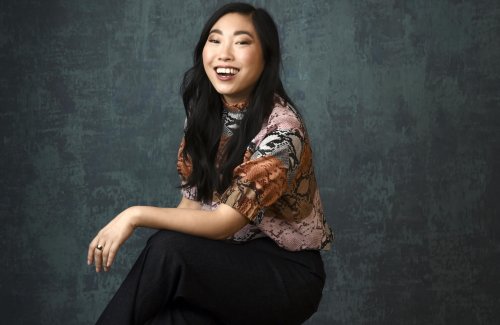
Awkwafina Knows Best About How She Is Still More Financially Great Living On $500 A Month

Even though the Crazy Rich Asians actress’ wealth is likely in the millions, she believes that a mere $500 per month is sufficient to cover her expenses.

The 32-year-old actress recently told Harper’s Bazaar that her money philosophy goes back to when she was building her Awkwafina musical and comedy persona, which she used as an outlet for her creativity while she worked a day job in book publicity.

Her grandmother brought her up in a one-bedroom apartment in Queens, New York. Because her family’s restaurant went out of business and they were forced to sell their home, she has developed a greater appreciation for monetary gain than any other aspect of her life.  

Awkwafina remembers that funds were tight at home and that she would stay up late with her grandma, who worried about paying the bills.

She also claims that despite being in a better financial position to support her family and herself, she still maintains a just-the-basics mentality. The actress has been known to buy clothes at Target and not spend much money on anything. She set out with the simple objective of covering her living expenses. 

She explains to Harper’s Bazaar, “I went into this mode off, if I can make $500 a month, that’s all I need.” 

Awkwafina’s motivation and success are attributed mainly to her refreshingly optimistic view of financial considerations. She has kept herself busy acting in the years since, including launching her comedy series on Comedy Central and becoming the first Asian-American actress to win the Golden Globe for best actress for her lead role in the 2019 drama “The Farewell.”

Image Source: Photograph by Ken Richardson Boston Magazine

Stories

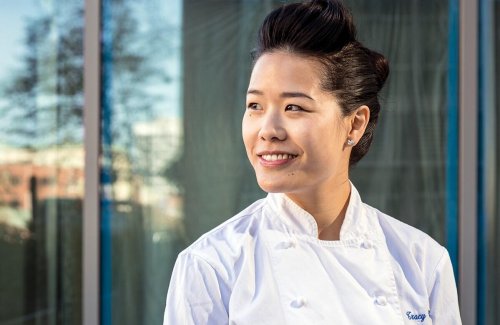
Chef Tracy Chang Gives Back To The Community Through The Language Of Food

Restaurateur Tracy Chang started the nonprofit Off Their Plate and Project Restore Us through the COVID-19 pandemic in 2020. 

The owner of the Japanese tapas restaurant,  PAGU, started Off Their Plate as a way to feed healthcare workers, and Project Restore Us sends nutritious and culturally appropriate grocery boxes to families living in food deserts. Both groups work to support local kitchens run by women and BIPOC and volunteers.

As a chef, Tracy also finds herself more in tune with customers than ever before. As someone who grew up lactose intolerant, she sources ingredients responsibly and remains mindful of the way guests feel after they leave her restaurant. This is also part of her restaurant’s ethos.

Her grandmother has also influenced Tracy’s cooking. Although her grandmother didn’t speak English, she spoke the language of food really well, said Tracy, and that was something that always resonated with her.

For Tracy, her personal experience has definitely come into play — trained in Spain but worked at a Japanese restaurant, and she grew up with a lot of Japanese and Taiwanese food, “The menu at PAGU is autobiographical and about my experience learning very specific dishes and techniques from people like my grandmother, my mentor and some of the chefs I’ve worked with.” she told TimeOut.