Stories

April 30, 2024

SHARE:

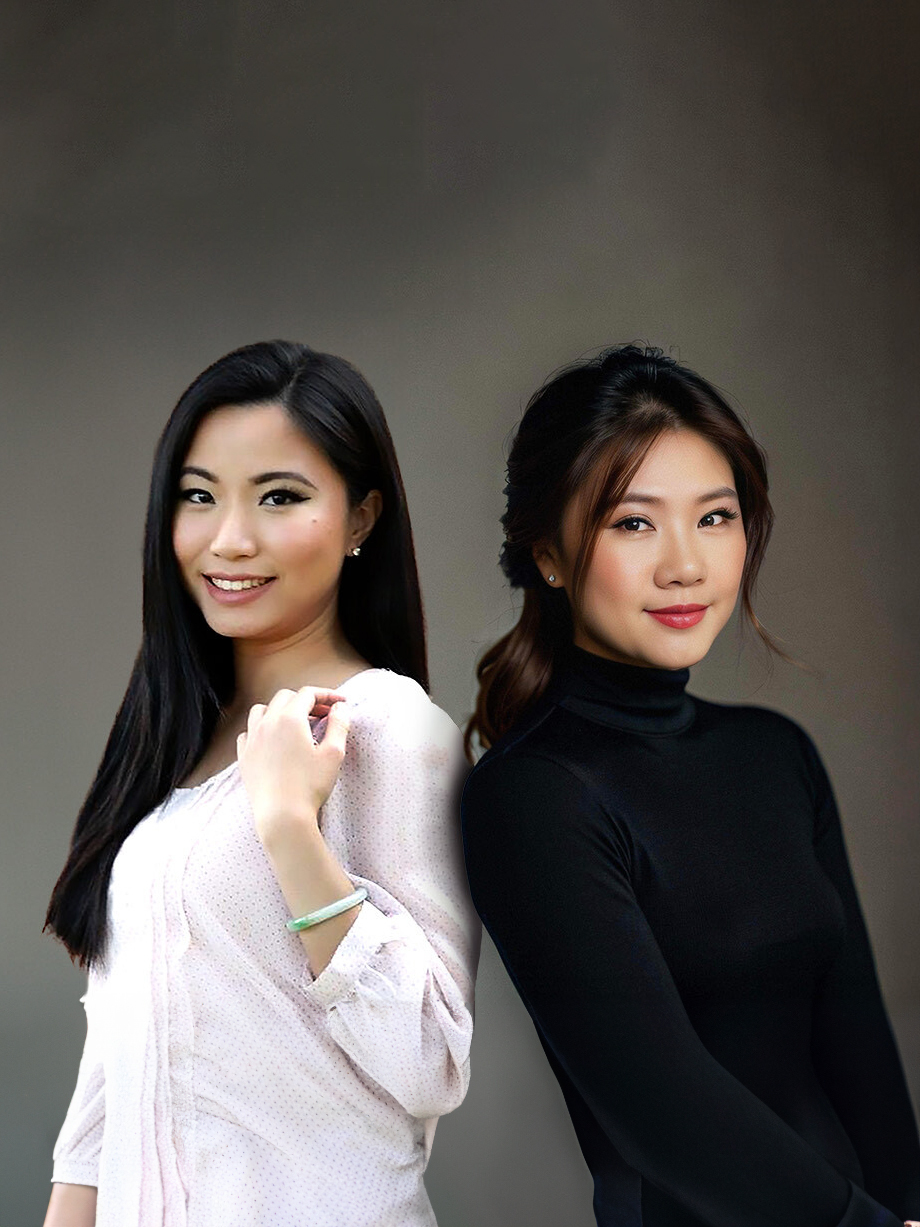
In a world where AI is all the rage, two AHN members are using AI to champion authentic storytelling in the publishing industry.

As entrepreneurs and advocates for change, Yobe Qiu and Serena Li have made it their mission to champion diversity and inclusion in children’s literature, ensuring that every child, regardless of their background, sees themselves represented and celebrated. Now they are building a new platform together  – BookAnAuthor.com – which uses machine learning to make it easier for schools, organizations and corporations to book authors for events, and buy directly from authors.

A MATCH MADE IN AHN

We had the opportunity to have an exclusive interview with Yobe and Serena, whose journeys began with a chance encounter on the Asian Hustle Network community. Yobe is a serial entrepreneur in education and founder of By Yobe Qiu Multicultural Books and Toys, while Serena is the founder of Duck Duck Books and Eco Goods. It was here that Yobe and Serena found common ground:

Yobe: We were both members of the AHN group and I have posted a few times in the group to connect with other “hustlers.” One day I posted about looking for an editor in our community for our newest book, “I Am an Amazing Asian Girl”. I wanted to make sure my editor is someone who my book can speak to and Serena commented on my post that she could help. That was the start of our relationship, and AHN was our matchmaker! 

We started working together on that project and I was extremely impressed with her talent, dedication, and brilliance, we went on to do a few more projects together. What initially drew us to each other’s work was our experience in our fields, our respect for each other’s work ethics, and our support for each other to help one another grow. 

Serena: I am incredibly grateful that Yobe took a chance with me. During the pandemic, where in-person interaction was close to none, Yobe trusted me with her book – a stranger across the country. Our relationship is a testament to the power of community. 

ASIAN AMERICAN BOOKS EVERYWHERE ALL AT ONCE

Together, Yobe and Serena embarked on a mission to promote diversity and representation in children’s literature, culminating in the launch of the “Asian American Books Everywhere All At Once” campaign in April 2023. The campaign aimed to provide books featuring AAPI characters and stories to schools across the United States, championing authentic storytelling and cultural celebration:

Yobe: I was inspired by Michelle Yeoh when she said at the Oscars, “Every little girl who looks like [her] to know what’s possible. Dream big.” I wanted to provide books to schools that feature AAPI children, families, and cultures, to help our children feel represented and celebrated. That night, I called up Serena and two other author friends to join forces. We named the campaign, “Asian American Books Everywhere All at Once” as a spin-off from EEAAO’s huge win for the AAPI community in media! The name, despite being very long, received tremendous support among the community. It was very timely. Within a month, we exceeded our original goal and sent over 1500+ books to 20 schools across 5 states and donated books to them. 

Serena: All of the books we donated either featured AAPI characters or were written by an AAPI author. Our effort was a direct response to the book ban that was happening across the U.S. Instead of sitting still, we rallied our community at a grassroots level to support the schools around the country. 

DIFFERENT UPBRINGINGS, SAME GOALS

Yobe and Serena grew up from different backgrounds, but together, they draw upon their rich experiences to advocate for greater inclusivity and representation in children’s literature, ensuring that young readers from all walks of life feel empowered and inspired by the stories they encounter.

Yobe: Growing up surrounded by diversity and a very strong Chinese community in NYC’s Chinatown, I am proud of who I am and my culture because it was celebrated in the city. I wouldn’t be who I am today if it wasn’t because of the environment I grew up in. I’ve learned to be curious and make friends with people from all cultures growing up in the Big Apple. The hustling culture and welcoming spirit of New York Chinatown is ingrained in my DNA. 

My first job after graduate school was teaching. I wanted to discuss the Lunar New Year with my students, but there weren’t any materials that covered the diverse ways many Asian diasporas celebrate their New Year. I had students who were Korean, Vietnamese, Indian, and Thai in the classrooms, but most of the books were about the Chinese New Year. In my opinion, it was important not only to discuss the culture I was from but also to acknowledge the blended cultures my daughter’s generation would grow up in. So I took the initiative and wrote my very first book, “Our Lunar New Year: Celebrating the Lunar New Year in 5 Different Asian Communities.”

Serena: My experience was a bit different than Yobe’s. I moved to a suburb in Houston, TX at the age of 14 with my family. I didn’t speak any English. At that time, Houston wasn’t nearly as diverse. I remember my neighbors and classmates genuinely asking me, “Do Asians speak Asian?”. The road to immigration was hard, but I survived it. Being a 1.5-generation Chinese American, I identified equally as a Chinese person and as an American. 

Fast forward, now that I have children of my own, I look at them daily and ponder how they would identify themselves. I want them to grow up being proud of exactly who they are, their family history, and their blended cultures. I want to write books that hone in on the social emotional themes that are cross-cultural, so children can be kind to themselves and kind to others. I want to write books that are bilingual, so children of different cultures can learn to be open-minded. 

BOOKANAUTHOR.COM: YOUR GATEWAY TO LITERARY CONNECTIONS

Building upon the success of their campaign, they set their sights on a new endeavor: BookAnAuthor.com. This innovative platform, set to launch on April 15, 2024, aims to connect authors with schools, organizations, and independent bookstores, making literary engagements more accessible and fostering a love for reading among students nationwide:

Yobe: For the same reasons why literature should feature more diverse characters and stories, coming out of the pandemic, we see an increasing need for in-person literary engagements. There’s nothing that inspires students more than meeting their favorite authors. Currently, there isn’t a platform available that helps schools and organizations discover and book authors for events based on their requirements and constraints. The diverse authors, especially those who don’t have traditional agents representing them, are having a hard time finding which institutions are seeking authors for events at the moment. We want to build an ecosystem that offers literary services in a comprehensive way, from discovery to booking, from bulk orders to fundraising. Our tagline is “Your Gateway to Literary Connections”. 

Serena: Both Yobe and I are passionate about helping other authors. We each have consulting businesses helping authors realize their publishing dreams. Book An Author naturally becomes our next step. It allows us to take the learning from our very successful Asian American Books Everywhere All At Once campaign last year and scale it to support not only our immediate network but also the entire publishing community. We are here to use technology to disrupt the publishing industry! 

With BookAnAuthor.com, authors can showcase their profiles, books, and expertise, organized by zip code, rates, and availability. This allows for efficient management of bookings, event scheduling, and receipt of valuable feedback from schools, ultimately improving services and expanding audiences.

For schools, the platform simplifies the process of finding and booking diverse, vetted authors for visits, workshops, and other activities. It offers flexible discovery and booking options based on location, rates, and genres, as well as the ability to release RFPs and review customized bids systematically.

Additionally, the platform provides access to educational resources, enables educators to share feedback and ratings, and includes money-back guarantees and security features for easy booking processes.

CONNECT WITH YOBE AND SERENA / BOOK AN AUTHOR

“We are so grateful to have this community and if anyone has any insight for us, we are all ears. We are also happy to help anyone else in the community if they need help with publishing!” – Yobe Qiu

Book An Author: @BookAnAuthor (Facebook, Instagram, LinkedIn, TikTok) 

Website: bookanauthor.com 

Yobe Qiu, Co-founder and CEO, CFO: https://www.linkedin.com/in/yobe-qiu/

Serena Li, Co-founder and COO, CMO: https://www.linkedin.com/in/serenayli/

By Yobe Qiu – Multicultural Children’s Books and Toys: @ByYobeQiu (Facebook, Instagram, TikTok, Amazon) 

Duck Duck Books + Eco Goods – Multilingual, SEL Kids Books and Eco-conscious Gifts: @duckduckbooks (Facebook, Instagram, Threads, TikTok, Pinterest, Google, YouTube)
Related Articles

1image3-jpg

Stories

Cheryl Mainland on Making Chinese Cool and Empowering the Next Generation

“Over time, I realized that speaking and understanding Chinese wasn’t just a ‘useful skill’—it is my superpower and key to belonging,” says Cheryl Mainland, Founder & CEO of Dragon Academy. Her fluency in Chinese has been a source of identity and has played a key role in her journey—from understanding her cultural heritage to excelling at Harvard in East Asia Studies and negotiating successful global business deals.

Recognizing the power of language to bridge cultures and connect with 1.3 billion native Chinese speakers, Cheryl is now committed to creating an engaging and interactive multi-media platform for children and adults worldwide to learn Chinese through Dragon Academy.

At its core, Dragon Academy is an epic tale of nine multicultural teens journeying through six mystical realms brimming with ancient legends, mythical beasts, and dragons – all united in a quest to bridge worlds. This story is told across multiple media formats and channels, including a book series, social media content, an AI animation series, and other cultural initiatives. Complementing their adventure is a highly gamified app that transforms Chinese language learning into an exciting, immersive, (and even addictive) experience.

A mother of three, serial entrepreneur, lifelong adventurer, and avid surfer, Cheryl has become an inspiration to many. She has been featured in top media outlets such as The Wall Street Journal, Financial Times, Vogue, Tatler, WWD, and numerous other prestigious publications.

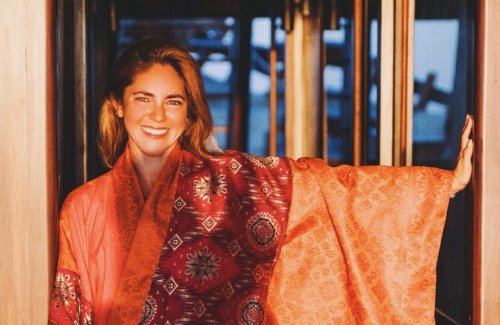
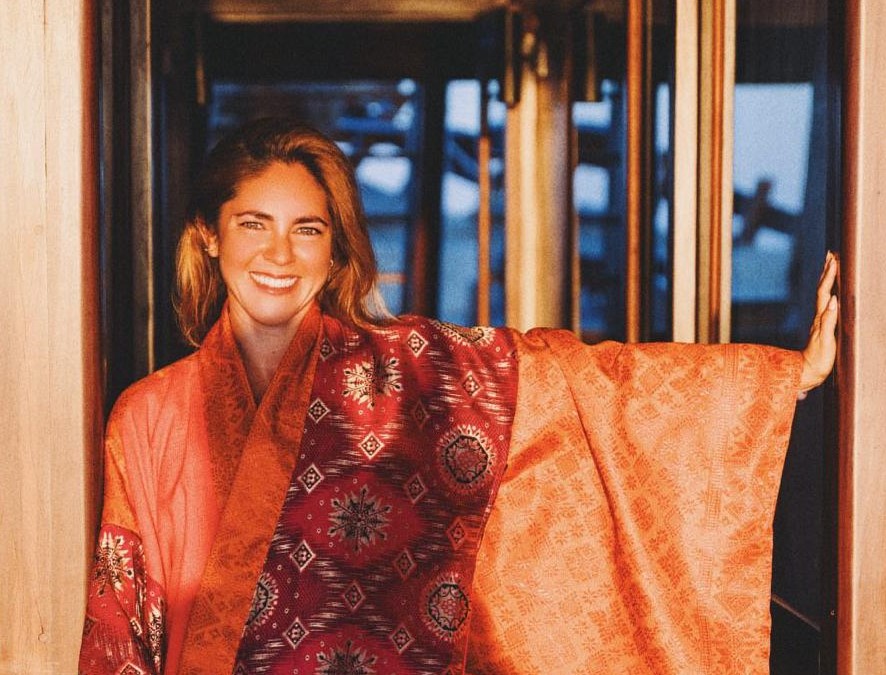
Cheryl Mainland, Founder & CEO, Dragon Academy (Image Source: Samanta Katz)

The Struggle of Language and Identity

Cheryl embodies the essence of a third-culture kid. Born in Taiwan, she is half-Chinese, half-American, and raised across Asia, she navigated the complexities of identity, language, and belonging from an early age.

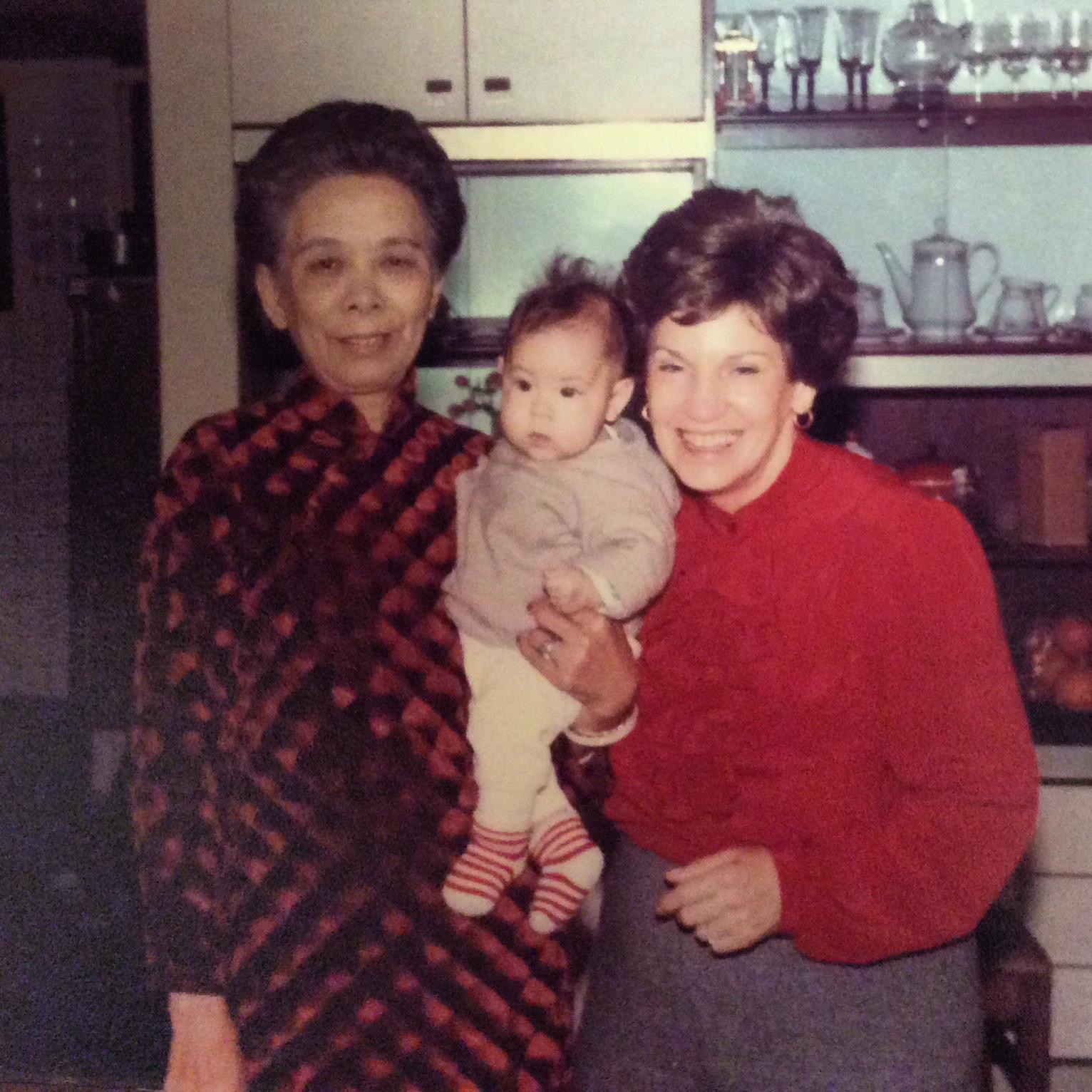
Cheryl with her maternal and paternal grandmothers Taipei, Taiwan, 1983 (Image Source: Cheryl Mainland)

“Like many of us, I grew up straddling two worlds. The ultimate translator of languages, cultures, generations.  I carry with me the collective memory of (boring) Saturday Chinese school, the struggle of keeping up with my Chinese lessons, and the challenge of celebrating my heritage while forging my own path,” Cheryl says. “After having kids, I witnessed their similar struggles – nothing has changed.” She recognized that the traditional methods of learning Chinese – endless hours of copying hanzi characters on square grid paper (田字格) – have experienced minimal change over the centuries, relying on rote memorization rather than engagement.

Not wanting her children to face the same language learning struggles she faced (and hundreds of thousands of other Chinese learners), Cheryl is embracing this as an opportunity to spark a cultural movement that breathes new life into the Chinese language and culture. Dragon Academy’s strategy ignites a passion for learning through an epic narrative delivered via a highly gamified app, an AI mini-series, a book series, social media content, and a future film adaptation. Each of the multimedia platform components captures the story-based enthusiasm, teaching Chinese through nine proprietary building block methods that make learning Chinese fun, engaging, and truly relevant.

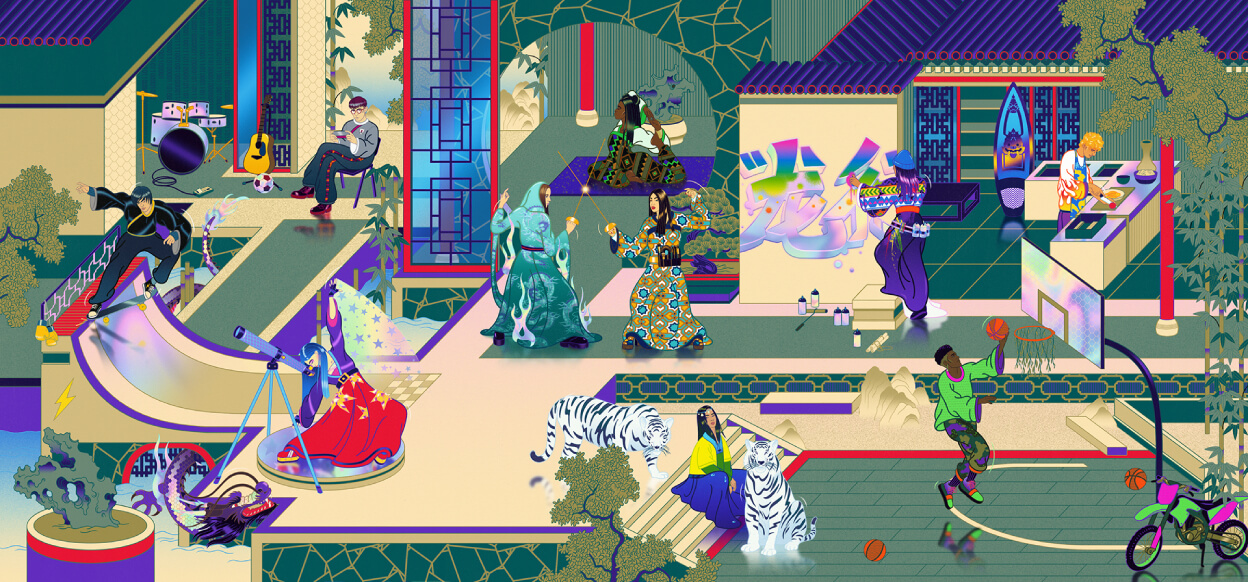
Dragon Academy Universe: the foundation of a highly gamified Chinese language learning app, book series, cartoons, feature films, documentaries, merchandise, and console games. (Image Source: Cheryl Mainland)

Cheryl’s Entrepreneurial Journey: Empowering the Masses

Throughout Cheryl’s entrepreneurial ventures, a constant theme has been empowering communities by identifying unmet needs and transforming the “uncool” into “cool” through innovative solutions. From dressing corporate women in clothes that boosted their self-confidence in the boardroom (The Fold London), to inspiring tweens and teens “to wear their invisible crown” on all special occasions (PromGirl.com), to reimagining sun-protective fashion—proving that staying safe in the sun doesn’t mean sacrificing style (Mott50)—her work consistently uplifts and inspires.


Most recently, to celebrate the launch of Dragon Academy Book 1 during Lunar New Year 2025, Cheryl partnered with artist Archie Geotina to honor the 46 million-strong Chinese diaspora through Pearls, an art series. Chinese Pearls features three generations of female surfers from diverse Chinese heritage – Indonesian Chinese, Singaporean Chinese, mixed-Chinese families, adoptees, and expats – riding Bali’s iconic waves in modern QiPao, empowering the community and highlighting its resilience, heritage, and unity.

A Future for the Community

“As an Asian American entrepreneur, Asian American mom, and a lifelong advocate for bridging cultures, I resonate deeply with AHN’s mission to uplift and empower the global Asian diaspora,” Cheryl affirms.  

She draws a parallel between Dragon Academy’s goal to reignite the next generation’s connection to their heritage and AHN’s commitment to rewriting narratives and celebrating Asian excellence. When asked about her future plans, Cheryl confidently states, “We are on an ambitious mission to increase the percentage of the world that speaks Chinese by 5% over the next five years.”

An estimated 5 million people started learning Japanese because of Manga, 15 million took up Korean because of K-pop, Dragon Academy is set to start a Chinese language movement. By juxtaposing storytelling and technology, Dragon Academy is approaching Chinese language learning from an “obsess, learn, master” order. 

“Imagine a world where kids want to learn Chinese because they see it as their ultimate superpower and key to belonging. That’s the future we’re building,” exclaims Cheryl.

And the journey is just beginning. Dragon Academy Book 1 launched at the beginning of this year. The highly gamified learning app, immersive AI mini-series, and a host of exciting cultural initiatives are currently in development. The first round of external investment has commenced – seeking visionary, like-minded investors to join this transformative movement.  Dragon Academy is poised to redefine the landscape of Chinese language learning and cultural exploration.

DRAGON ACADEMY “Traditional Scene.” The OG Dragon Keepers, ancestors of the 9 multicultural teenage protagonists of the Dragon Academy Universe. (Artist: Andrew Archer)

Learn More about Dragon Academy

Website: https://dragonacademy.com/

Instagram: @dragonacademy_official

Book 1: www.amazon.com/dp/B0DM4YDLL3

Connect With Cheryl Mainland

Instagram: @cherylmainland

LinkedIn: Cheryl Mainland

Email: Cheryl@dragonacademy.com

photos_by_monika_ami_img_6623

Stories

The Power of Representation: Ami Desai’s Impact on Media and Beauty

The path to success in content creation is never paved with roses, and no one understands this quite like Ami Desai. From her beginnings in broadcast journalism to becoming a well-known beauty and lifestyle influencer, Ami has shaped her career through authenticity, adaptability, and a strong dedication to representation.

As an Indian-American raised in Los Angeles, Ami grew up as a first-generation South Asian immigrant, a generation that deeply felt the need for greater South Asian representation in the media. After earning her degree from UC Berkeley and a master’s from Boston University, she built a solid media foundation through roles at CNN and Inside Edition. During this time behind the scenes, she discovered her passion for on-camera hosting, eventually landing her dream role as the host of the first digital show for Oprah.com. In 2011, Ami made a pivotal move by hosting a luxury travel show in India, which allowed her to reconnect with her roots and gain international exposure.

Simultaneously, Ami began building her own beauty business with her family. She went on to become one of the first South Asian content creators to collaborate with major brands like Toyota and Pampers on large campaigns, while also highlighting important Indian traditions and holidays such as Diwali. Recognizing the lack of representation for her ethnicity in the media and beauty industries, Ami founded her life’s mission, merging her experiences as a host, makeup artist, and mom to help other women advocate for themselves while balancing various roles. This gap in representation became her motivation to amplify underrepresented voices and promote diversity.

In 2016, Ami took a leap of faith, leaving traditional media behind to forge her own path in the influencer space. Despite pitching herself as a contributor or expert to various outlets, she faced rejection, which drove her to create her own content on social media platforms. Through this experience, she realized that content creation involved more than just posting visually appealing images—it required strategic planning, engagement tracking, and brand pitching. Even as the industry pushed her to narrow her niche, Ami confidently embraced her multifaceted identity, sharing content that reflected her life as a mother, beauty expert, and entrepreneur. This authenticity deeply resonated with her audience, ultimately helping her build a loyal fanbase connecting creators and audiences.

In the latest episode of the Creators Podcast, presented by Asian Hustle Network in collaboration with Meta Prosper, Ami shares a story of resilience, adaptability, and a deep dedication to her community. Whether you’re an aspiring content creator, a beauty lover, or someone who enjoys learning about authentic journeys, this episode is filled with valuable insights and inspiration.

Connect with Ami Desai:

Instagram: @amidesai

E3JPPIEBT5HCFPAJYT6B5GYEDU-jpg

News

Is the Model Minority Myth an Obstacle to Real Representation?

The Trap of Positive Stereotypes

The original “Charlie’s Angels” was a successful hit, not only because it made $93 million and grossed more than $264 million at global offices, but it also created exposure for Asian American representation.

Lucy Liu plays Alex Munday, a strategist, expert martial artist, and agent. Munday’s parents were Havard professors of economics and philosophy, and she, at an early age, was a child prodigy excelling at chess, equestrianism, fencing, archery, and gymnastics. Besides that, she holds a medical degree, spent her teenage years learning with a Tibetan guru, danced with the Stuttgart Ballet, and was a part-time aerospace engineer and on-call consultant for NASA. 

Lucy Liu as Alex Munday in 'Charlie's Angels' (Image source: 'Charlie's Angels' - 2000)

Lucy Liu as Alex Munday in ‘Charlie’s Angels’ (Image source: ‘Charlie’s Angels’ – 2000)

Does the entire introduction sound familiar? Swap out the name Alex Munday for your overachieving Asian cousin, sibling, or the “top Asian kid” your parents always compare you to, and you’d likely end up with a strikingly similar description.

It is undeniable that contemporary films, comedies, memes, and other forms of content have taken extensive lengths to represent Asian culture. Yet, they have also perpetuated a troubling stereotype. To complicate matters, many within the Asian community unknowingly reinforce these portrayals, cementing these narratives even further.

The article’s purpose is not to mock or diminish the accomplishments of any individual, community, or effort in striving for representation and equality. On the contrary, it is essential to celebrate the contributions of the many talents and media that have significantly advanced global awareness and appreciation of Asian culture and heritage. Hence, the article wishes to provide a nuanced perspective on contemporary topics while providing debate on the norms, beliefs, and habits created in our society.

What is the Model Minority Myth?

According to the University of Michigan, Densho, and other sources, after World War II, the United States underwent significant changes in its laws and policies to address mounting international criticism of racial prejudice and ongoing protests from ethnic communities within the country. 

“Success Story, Japanese American Style” by William Petersen (Image source: Smithsonian APA)

“Success Story, Japanese American Style” by William Petersen (Image source: Smithsonian APA)

As PBS illustrates, new regulations like the Chinese Exclusion Act shifted toward dismantling exclusionary measures and advocating for Asian communities and immigrants, particularly skilled and educated migrants. The University of Michigan further exemplifies, articles like “Success Story, Japanese American Style” by William Petersen began to appear  – praising how despite years of racial prejudice and discrimination, Japanese Americans were still able to achieve great socioeconomic status thanks to hard work and other cultural values of discipline and compliance to social hierarchy. 

By focusing on the facets of income, education level, and low crime rates as the definition of success instead of underlining economic and social factors, Asian Americans are often portrayed as hardworking, disciplined, and intelligent—a concept scholars refer to as the model minority. 

Model Minority Myth in Silencing Activism

While this stereotype may appear beneficial on the surface, Ted-Ed, in collaboration with Densho, emphasizes that there are no “good” stereotypes. As cited by PBS, cultural historian Robert G. Lee argues that such inclusion does not promote equity but instead undermines activism and disregards the struggles of other marginalized groups.

This is significant because the model minority myth obscures disparities within the diverse Asian American community, perpetuating the misconception that Asian identity is monolithic, often reduced to just China, Korea, and Japan. Furthermore, the stereotype marginalizes individuals who fail to meet its expectations, silencing those who speak out against it.

Societal pressure on Asian individuals (Image source: Kamanaoleeward)

Societal pressure on Asian individuals (Image source: Kamanaoleeward)

For instance, an Asian student with subpar grades might be labeled as lazy rather than being understood in the context of contributing factors like economic hardship or family struggles. The danger of accepting “positive” stereotypes lies in their ability to perpetuate harmful narratives and create unrealistic standards, fostering a cycle of self-framing that damages both individuals and the broader Asian community.

When Representation Unintentionally Reinforces Stereotypes

Let’s use another example to understand this dichotomy. 

Ke Huy Quan, the American actor of Vietnamese descent, is well known in the notorious “Indiana Jones and The Temple of Doom”, “Everything Everywhere All At Once”, and “Loki” Season 2. His selection as an exemplar highlights how his journey encapsulates the model minority stereotype and demonstrates how Asian communities may unconsciously perpetuate such narratives.

In “Indiana Jones and the Temple of Doom”, Quan portrays Short Round, a clever Japanese sidekick aiding Dr. Jones on his adventures. Ironically, this character aligns with the early stages of the model minority stereotype. Short Round comes from a disadvantaged background, surviving through pickpocketing, but his association with Dr. Jones transforms him into a more thoughtful and capable individual, elevating his social status by the film’s conclusion.

In “Everything Everywhere All At Once”, Quan embraces the archetype of the modern Bruce Lee or Jackie Chan—a martial arts expert and mentor to the protagonist, reminiscent of Mr. Miyagi in “The Karate Kid”. Finally in Loki Quan plays Ouroboros, a lovable and intelligent technician who once was a writer and a teacher of theoretical physics at Cal Tech. 

Ke Huy Quan (Image source: The Independent)

Ke Huy Quan (Image source: The Independent)

In a meta and somewhat ironic twist, both Ke Huy Quan’s career and the roles he portrays reflect how Asians may unknowingly perpetuate the stereotypes they are often subject to. While Quan’s rise to fame is a testament to his dedication and perseverance, his portrayal of characters like the “witty young sidekick” learning from a Caucasian hero, the martial arts mentor, and the intellectual expert, inadvertently reinforces the very tropes that have shaped the Asian image in media. Despite his immense talent and the love he has earned within the Asian community, these roles contribute to the ongoing cycle of cultural expectations and representation.

Breaking the Myth of the Model Asian

It is entirely debatable that it is not the fault of the actors. We admire Ke Huy Quan for his remarkable journey and his representation of the Asian community. Nevertheless, through observing content produced by modern media, one will recognize certain tropes from the Asian community. 

Steven He satirizes Asian parents, Jimmy O. Yang joking about Asian habits, Lily in “Pitch Perfect”, Rajesh Koothrappali in “The Big Bang Theory”, Louis and Jessia Huang in “Fresh Off The Boat”, and the list goes on. Even the news you see about an “Asian underdog politician” rising to power or the “overlooked Asian business owner” continues to reinforce these themes. While these portrayals are well-intended, they still fall into a pattern of representation that, ironically, reflects the very stereotypes they aim to challenge.

These stereotypes create an environment of competition and segregation in the Asian community, where individuals feel pressured to conform to a specific image. To maintain an idealized representation, certain behaviors become expected, specific careers are favored, and everyone feels compelled to excel in particular areas.

A ramification of this mindset would be far-reaching. For example, economic struggles may be ignored, as the stereotype dictates that all Asians should be successful. Mental health issues among children are dismissed because it is assumed that the Asian parenting and education system naturally fosters resilience. Furthermore, social problems like drug use or teenage pregnancy are seen as impossible within this community because Asians are stereotypically perceived as disciplined and morally upright. These misconceptions, while seemingly small, perpetuate harmful beliefs and ultimately hinder inclusivity, reinforcing negative stereotypes that shape the broader perception of the Asian community.

Shaping Our Own Story in Media and Beyond

“There are more Asians than any kind of race on the planet. That means we are the majority, we dictate normal behavior,” Ronny Cheng states in his comedy skit.

Asia comprises 59% of the world’s population, hence we are the majority. However, this work is not a manifesto calling for the unification of an ideal but serves as a reflection of the society we live in. The media plays a pivotal role in shaping our perception. The argument is not to elicit a conspiracy theory but to help readers ponder the question, how do we want to be represented? Thanks to pioneers like Lucy Liu and Ke Huy Quan, the Asian community has gradually won more exposure from media outlets. Now, it is the turn of the new generation to represent the Asian community in all its diversity and complexity.

Sources:

The Conversation, Pew Research Center, Adoptive Families, 2 Sao, Vietcetera, TruTV, USA Today, Tien Phong, Screen Rant, Marvel, Mary Sue, Indiana Jones Wiki Fandom, Charlie Angels Wiki Fandom, Vanity Fair, Washington Post, Ted Ed, Densho, PBS, University of Michigan.

american-dream-2-scaled-jpg

News

The American Dream: A Promise, a Paradox, and the Asian Experience

The Immigrant Struggle

“We dream of going to America, to change our lives, we believed. But my life changed so much. I felt sad about life, didn’t know the language, and didn’t know the roads. I had no friends, so I felt very sad.” – Phong, a Vietnamese American expat interviewed by the Pew Research Center.

“I sometimes, just a little, wish that I would disappear so that my parents and my sister could be better off.” – Nolan, an Asian American interviewed by the Pew Research Center.

Dreams vs. Reality

The American Dream is often celebrated as a path to success, yet its reality is far more nuanced. Tales of rags to riches from Asian peers suggest its promise, but the Pew Research Center reports that one in ten Asian Americans still live in poverty as of 2024. The issue lies not solely in the Dream itself but in how it is constructed and understood.

For many Asians, the American Dream is synonymous with upward mobility achieved through hard work and resilience—a belief that effort alone can overcome systemic barriers. But resilience, by its nature, demands enduring hardship and accepting foreignness, perpetuating a narrative that reinforces isolation and discrepancy.

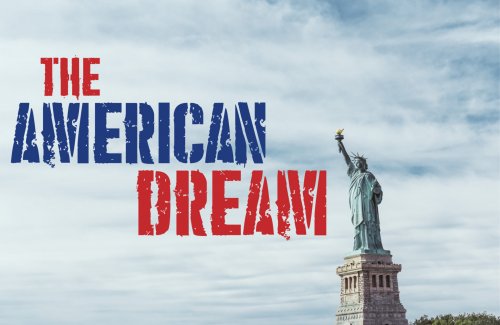
The American Dream is synonymous with upward mobility achieved through hard work and resilience (Image Source: Roberto Parada)

The American Dream is synonymous with upward mobility achieved through hard work and resilience (Image Source: Roberto Parada)

The Illusion of Gold

The idolization of a Western nation paved in gold is an illusion that perpetuates xenophobia and the model minority myth. This ideological flaw is alluring and dangerous. We have all heard heartbreaking stories of illegal labor exports and stowaway immigrants. Yet we tend to remember the rags-to-riches stories because it is comforting to view ourselves as the ones who might make it. All while labeling these immigrants as illegal, the other, the individual Asian Americans who will live in poverty. But by doing so, we have fallen trapped in the American Dream, clawing our way to the top for the sake of others. 

After the pandemic, anti-Asian and hate crimes have increased. The encounter paints a reflection of our society, there is no line between the one and the other nine, we are Asians and that is our identity. Then is the American Dream a lie? Not necessarily—but it is far from universal.

Community as the Key

Like all dreams, it is what we make of it.  Whether in America, Asia, or any part of the world, opportunities coexist with difficulties. Moving to another country means tackling obstacles such as language and cultural barriers alongside the burden you once had at home. Statistics show that 61% of Asian adults seek family and friends when facing financial burdens. This can become challenging when migrating to a new country. 

The key lies in recognizing that success is not achieved alone. Building networks and fostering solidarity within communities can challenge the isolating demands of resilience and redefine the Dream as a collective effort toward meaningful progress.

The American Dream is both a beacon of hope and a paradox. For many Asian Americans, the pursuit of upward mobility comes with sacrifices that are often overlooked. Yet, success doesn’t need to be a solitary journey. By embracing shared struggles and fostering a supportive community, one can find hope by redefining what the American Dream truly means.

Sources: Pew Research Center – 1 in 10: Redefining the Asian American Dream (Short Film), Pew Research Center – The Hardships and Dreams of Asian Americans Living in Poverty, Edelman, C&EN, Reappropriate.