Stories

March 10, 2026

SHARE:

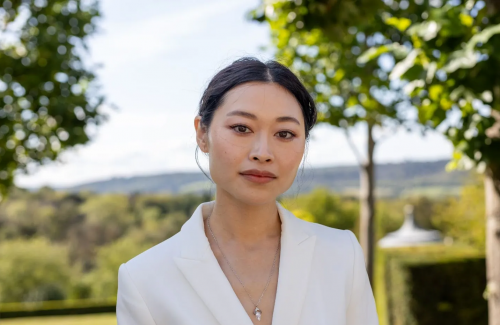
The first time Alice Shikina stepped into a Muay Thai ring, the moment felt bigger than the fight itself. The gloves were heavy, but what weighed more was everything she had been carrying in the months before.

She was in her late thirties, newly divorced, and raising two young children on her own. Her kids were just two and five years old, and the life she had carefully built no longer looked the same.

At the same time, she was trying to establish herself as a mediator and build her own business from the ground up. She didn’t know it yet, but the self-trust she was about to forge in that ring would become the foundation of how she led others through their own conflicts.

The Fight Before the Fight

Kickboxing began as a way to cope during a season that felt completely overwhelming. It gave Alice a physical outlet when her thoughts wouldn’t quiet down and her emotions felt too heavy to carry.

A few months later, Alice’s coach asked if she would consider competing. The idea unsettled her because she had never fought before and had never faced someone trained to strike back. For two months, she wrestled with the decision. What frightened her most was not losing, but the possibility of doubting herself under pressure.

When she finally committed, her routine became disciplined and demanding. She trained three hours a day, carving out time in the early mornings and late evenings while continuing to care for her children and grow her work.

The night before her first fight in Iowa, a coach told her that the real fight was already over because it happened during the grueling months of preparation. Once she realized that, her nerves calmed and a quiet steadiness took over. Even as she approached the ring to step in and fight, she felt unusually calm. She didn’t win that match, but she stayed on her feet until the final bell, and for a woman rebuilding her life, that was more than enough.

What the Ring Taught Her About Pressure

Alice went on to fight three more times. Afterwards, Alice turned her sights to competing in triathlons and even placed first in her age group at the Alcatraz Duathlon. While the medals were nice, the real reward was the quiet discipline she built through the discomfort of training.

She came to understand that fear does not simply fade with time. It softens only when you decide to move toward it.

She also learned that preparation changes how you carry yourself in difficult moments. When you put in the work, you stand differently, breathe more steadily, and think more clearly under pressure.

Today, those lessons shape how she sits with couples navigating divorce and teams facing workplace conflict. When emotions rise and conversations begin to unravel, she remains steady, drawing on the same discipline that once kept her composed in the ring.

Building Her Practice on Her Own Terms

Alice now runs Shikina Mediation and Arbitration full-time, helping divorcing couples, families, and organizations reach agreements they once thought were out of reach. Most clients come to her when communication has broken down and trust feels fragile.

Early in her career, she tried building her business by networking with attorneys, but quickly saw the bias against non-attorney mediators in a field long dominated by older white men. Instead of forcing herself into a system that did not fully welcome her, she shifted her focus to working directly with couples and workplace clients, growing her practice into a thriving full-time business over the past decade. In 2025, Alice was awarded the prestigious Raymond Shonholtz Visionary Peacemaker Award by San Francisco’s Community Boards.

Her work has expanded beyond the mediation room. She hosts the podcast, Negotiation with Alice, now over 100 episodes strong. She authored the book Negotiating with Your Kids, and continues to teach communication and conflict resolution to executives and C-Suite staff. As a second-generation Okinawan American whose parents survived the Battle of Okinawa as children, resilience runs deep in her story. 

Nothing in business, she says, will ever feel as intimidating as stepping into a ring to face an unknown opponent. In that ring, she rebuilt her confidence. At the mediation table, she now helps others rebuild their lives with clarity, courage, and peace.

Discover more from Alice Shikina here:

📍LinkedIn

Learn more about Shikina Mediation and Arbitration here:
📍Facebook

📍Website

Related Articles

Elegant Cinematic Wedding Thumbnail HD 169 (1)-png

News

GoldenTV Brings More AAPI Stories to Screen With New and Returning Shows

New series and movies are constantly getting announced—GoldenTV, the premier streaming platform dedicated to Asian American Pacific Islander (AAPI) stories, also joined the fun, announcing its highly anticipated 2025 programming lineup. According to an exclusive from Variety, the upcoming slate introduces a series of original content while offering a mix of returning favorites, and special holiday programming.

Exciting New Originals

“Stir the Pot” – Premiering February 7. Hosted by “Bling Empire” star Kelly Mi Li, this one-hour talk show features a hot pot session where AAPI celebrities and notable figures gather and engage in discussions about culture, good, and entertainment. 

“Crossing Over” – Premiering May 1. This docuseries focuses on an aspiring AAPI boy band from Hawaii on their recent journey of breaking into the mainstream as “H-Pop” (Hawaii Pop) artists.

“Follow Me Around” – Premiering Summer 2025. Following emerging creatives on their journey towards major career achievements, this series of both narrative and documentary offers audiences an exclusive sneak peek into their journeys. 

“Golden Made” – Premiering Summer 2025. This documentary series highlights AAPI professionals across different industries, exploring their origin stories and the creative process that brings them to their current success. 

Returning Fan Favorites

“The Takeaway” (Season 2) – Returning Fall 2025. Hosted by Michelle Park, this weekly entertainment news show delivers the latest in AAPI pop culture, including trending stories in film, television, and music.

Special Holiday Programming

In celebration of Lunar New Year, GoldenTV and its sister cable channel ChimeTV present the audience with exclusive holiday programming:

  • Unforgettable Gala – Weekly re-runs of the prestigious gala that spotlights AAPI talents in entertainment, art, and culture. 
  • Unforgettable Gala Red Carpet Special – A behind-the-scenes look at the 22nd Annual Unforgettable Gala, featuring red carpet hosts Jennifer Paz and Jannelle So.
  • “Iron Chef” All-Day Marathon – Classic episodes airing weekly on GoldenTV.
  • Martial Arts Marathon – Action-packed films airing weekly from the Shaw Brothers studio.

Exclusive Licensed Content

GoldenTV and ChimeTV will continue to feature a lineup of fan-favorite licensed programming, including “BTS Global Takeover,” “Cross My Mind,” “Iron Chef,” “Maker Nation,” “Matched,” “Nippon Professional Baseball,” “The Uncle Roger Show,” and “What’s on the Menu?”

A Bold Year for AAPI Representation

“Our Lunar New Year lineup exemplifies our commitment to delivering compelling, diverse, and fresh AAPI stories,” said Golden Media CEO Takashi Cheng. “We are excited to offer a broader variety of content, from talk shows and documentaries to major cultural events. It’s an incredible time for AAPI representation, and we are proud to be at the forefront of this movement.”

With its 2025 slate, GoldenTV continues to push boundaries and amplify AAPI voices, solidifying its place as a premier destination for authentic and impactful storytelling.

Featured Image: GoldenTV

donald-trump-trade-war-founder-focus-inc-2196825126-png

News

Tariffs and Trade Shifts: The Ripple Effect on Asian and Global Economies

The Ascension to Power

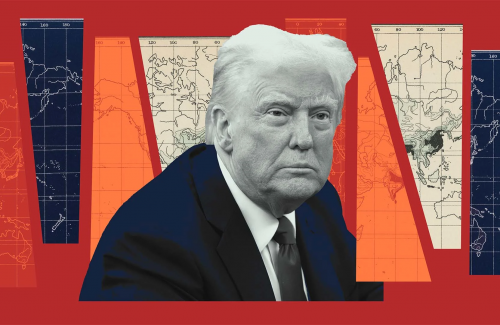
As Trump is re-elected, new reforms and policies are taking shape. Among them is his threat to impose a 25% tariff on Mexico and Canada, alongside a 10% tariff on China—claiming these countries allegedly failed to address illegal immigration and co-conspirators for illegal fentanyl distribution in the United States (US). 

Yet the article is not to stir political debate but to explore the ramifications of these tariffs on consumers and Asian countries. While many news outlets have focused on the potential setbacks in the affected countries, few have explored how others might either suffer or benefit from the situation. Hence, this piece shall highlight how Trump’s ascension to power might become the best opportunity for some Asian economies.

The Price of Tariffs

The Guardian defines a tariff as a tax imposed on foreign goods entering a country. As the world’s largest importer, the US brought in $3.2 trillion worth of goods in 2022, with imports from Canada, Mexico, and China totaling $1.2 trillion in 2023. Trump takes pride in this idea, believing the US government would receive more revenue through these tariffs, coining tariffs as the “most beautiful word in the dictionary” in an interview with Bloomberg. 

Brown University Professor of Economics Şebnem Kalemli-Özcan disagrees by arguing, “For many economists, tariff is actually the worst word in the dictionary.” She explains that ultimately American consumers and businesses will pay the price. As a trade-deficit nation, the US imports more than its exports. According to the Tax Policy Center, a 60% levy on Chinese goods accompanied by a 20% worldwide tariff could raise the costs for the average US household to up to $3,000 in 2025.

As companies face higher costs for goods, they often transfer those expenses to consumers through price increases. This can reduce consumer spending, which in turn lowers business investment and may lead to job losses.

Jason Miller, a professor of supply chain management at Michigan State University reaffirms such claims stating, “Because of the combination of these three countries, it’s going to be difficult to go down an aisle of a grocery store and not see some sort of inflationary effect.” Capital Economics projected that the newly announced tariffs could drive annual inflation up from 2.9% to as much as 4%.

Products affected by Trump’s Tariffs (Image source: BBC)

Nevertheless, Trump’s tariff threats carry weight, as they could impose significant economic pressure on targeted countries, prompting businesses to relocate. According to the BBC, Chinese factories with 500 workers have shrunk to just 200 employees, while American buyers are already exploring alternative manufacturing hubs in neighboring regions outside of China.

Business owner Huang Zhaodong, who recently relocated his factory, told the BBC that customers had pressured him to move production overseas. He agrees with their concerns, estimating that a 10% tariff increase could cost him an additional $800,000 in earnings. “Manufacturing clothes in China under these tariff conditions is simply unsustainable,” he said.

A Victor Emerges

Cases like Mr. Huang’s have proved the challenges that Trump’s tariff has imposed on countries like China. The beginning of the Trump trade war has led businesses to flee to Southeast Asian nations, most notably Vietnam. 

While other Southeast Asian nations also benefit from shifting supply chains, Vietnam has emerged as a top destination due to its growing industrial capacity and strategic location. The country recently rose to become the Association of Southeast Asian Nations (ASEAN) champion with an estimated 40% of all ASEAN exports to North America being from the country alone. Though it is difficult to quantify how many businesses have relocated from China, BBC reports that major brands like Puma, Nike, and Adidas have already moved production to Vietnam. Sources from Vietnam Briefing indicate Intel and Samsung have rapidly ramped up their investment in Vietnam and are projected to reach $100 billion in revenue by 2050. Propelled by robust exports and foreign investments, Vietnam’s economy has recently grown by 7.09%, reaching $476.3 billion—outpacing the 5.05% expansion seen in 2023.

It is debatable whether Trump’s glare will graze upon this nation. Experts debate whether he will target Vietnam with tariffs, as his trade policies often focus on countries with a trade surplus. In 2024, Vietnam held the third-largest trade surplus with the United States at $104.6 billion, accounting for nearly 30% of its total exports. This substantial trade imbalance makes Vietnam a potential target for Trump’s tariff threats. In this scheme, the nation might experience radical changes due to trade balances, exchange rates, supply chains, and foreign direct investment (FDI). However, Vietnam is more likely to benefit from US-imposed tariffs. This prediction is supported by trends from Trump’s first term when the country experienced significant economic growth due to an influx of manufacturers and factories relocating to Vietnam. 

Despite lingering skepticism, Trump has maintained a favorable view of Vietnam. As early as 1980, Trump publicly opposed the Vietnam War and visited the country twice during his first term. His business ventures have also extended to Vietnam, with his organization partnering with Kinh Bac City Development Holding Corporation (KBC) to develop a $1.5 billion complex in Hung Yen Province. Meanwhile, his new confidante, Elon Musk, has positioned Vietnam a key production hub for SpaceX’s Starlink satellite internet project, shifting suppliers and manufacturing from Taiwan to Vietnam to reduce geopolitical risks.

Reversing these investments may be impractical or simply too late. The confidence that both Trump and Musk have placed in Vietnam highlights the country’s growing role in global supply chains. Amid rising geopolitical tensions, Vietnam’s diplomatic strategy—often referred to as the “bamboo policy” for its balance of resilience and adaptability—has strengthened its international position. As long as the country continues to wisely navigate political and diplomatic negotiations and steer clear of populist pitfalls, Vietnam is well-positioned to sustain its economic growth and global influence.

1image001-png

News

How a Cambodian American Entrepreneur Founded a Long-Term Care Platform

Most people often overlook long-term care until they are older or faced with no other choice. Unfortunately, by that point, it may already be too late. Lily Vittayarukskul was pursuing a degree in aerospace engineering when she witnessed both her oldest brother and mother battle with an illness that required extensive long-term care. The situation became even more challenging when her aunt was later diagnosed with terminal colon cancer. The seek for quality care became daunting, even for those fortunate enough to have some form of insurance.

As a member of a Cambodian immigrant family, Lily experienced the challenges of caregiving firsthand, but the financial burden became unbearable. In a recent interview with TechCrunch, she exclaimed,  “It wiped us out financially.” The profound emotional and financial impact of the experience ultimately led her to shift her focus to genetic and data science.

Finally, in December 2021, she decided to take action by founding Waterlily, a San Francisco-based startup aimed at helping individuals and financial advisors navigate long-term care planning through cost modeling and funding strategies. Using artificial intelligence (AI) to forecast a family’s future long-term care needs and expenses, Waterlily predicts a family’s future long-term care needs and expenses, guides them in creating a care plan, and identifies the most suitable ways to finance it. Options may include purchasing life insurance with a long-term care rider, investing in a dedicated LTC policy, utilizing annuities, or self-funding.

Lily explains, “Most people begin thinking about long-term care between the ages of 65 and 70, or only when they need it, but by then, it can be too late.”

Leveraging more than 500 million data points and machine learning algorithms, Waterlily delivers highly personalized care and cost predictions. The platform forecasts when long-term care may be required, how it will unfold, and the potential expenses involved. Lily proudly states, “We have formal data-sharing agreements with long-term care providers, government databases, academic research studies, and individual users.”

Waterlily’s vision is undeniably compelling, and Lily isn’t the only one who sees its potential. She initially launched the company as a solo founder, but it soon caught the attention of angel investor Evan Ehrenberg, the former founder of Clara Health. Evan became intrigued by Waterlily’s early research and the industry’s reaction. Curious, he tested the platform himself and was stunned by its long-term care predictions—so much so that he hired a personal trainer, adjusted his diet, and revised his financial plans. Impressed by its impact, Evan, who became MIT’s youngest neuroscience PhD, officially joined Waterlily as a co-founder.

Evan Ehrenberg [left] and Lily Vittayarukskul [right] together (Image Source: Evan Ehrenberg)

Lily believes Waterlily differentiates itself from competitors by providing a more personalized experience through deep predictive modeling integrated into a user-friendly platform. Although it only launched in March 2024, the company’s monthly recurring revenue (MRR) has already grown to more than 22 times its initial level. Waterlily now serves eight major clients, including several Fortune 100 insurance carriers and Prudential.

Looking ahead, Waterlily aims to expand its services to include disability, critical illness, hospital indemnity, and Medicare planning, enabling families to make more informed health coverage decisions. Additionally, the company is exploring opportunities for international growth, with plans to enter markets in Asia, Canada, and the U.K.

John Kim, former president of New York Life and investor of Waterlily, sees the platform as the first AI-native guidance tool addressing one of the most pressing challenges of an aging American population.

Kim concluded, “Long-term care insurance is a growing and largely underserved need among trusted advisors today. Waterlily’s guidance tool stands alone in its ability to provide customized, personalized recommendations for long-term care needs. I believe it will be a game changer for the LTC insurance marketplace.”

l9pkmzhjhugqoza5bicx-jpg

News

Do Western Holidays Have a Place in Asian Cultures? A Debate on Globalization and Cultural Identity

In San Fernando, the Philippines, thousands of locals and foreigners flock to the streets to celebrate Christmas. The town, adorned with giant and intricate star lanterns, symbolizes hope and the victory of light over darkness. 

Star Lanterns in San Fernando, the Philippines (Image Source: Dico Calingal)

But how did a holiday rooted in Western tradition become celebrated in an Asian country, and what about the reverse? This raises an intriguing question about hybrid holidays and their influence on a nation’s cultural identity, particularly in Asian countries. Truth be told, nothing is perplexing about an Asian country celebrating a Western holiday and vice versa—who doesn’t want more holidays to celebrate? However, hybrid holidays allow for the exploration of whether these celebrations diversify the identity of Asian countries or act as a catalyst for eroding their traditions and heritage.

As one of the largest diaspora populations on Earth, the Filipino diasporic communities provide a valuable lens through which to examine the rise of hybrid holidays and their impact on national cultural identity. According to Dr. Anthony C. Ocampo’s interview with NBC, the Philippines underwent a dramatic transformation during its three-and-a-half-century Spanish colonial period. Similar to the Philippines, many Asian nations also endured decades of colonization, imperialism, and the imposition of Orientalist ideologies. For example, countries like Vietnam have adopted numerous terms from Latin, such as Noel, festival, flan, and vin (the Vietnamese term for wine, rượu vang, is pronounced vin). Scholars widely acknowledge that colonizers employed various tools—religion, education, and language—to assert control. Thus, it’s debatable whether exposure to foreign holidays and customs serves as another subtle form of maintaining dominance.

Yet, both nations, like many other Asian countries, have become uniquely distinct. More interestingly, many countries under foreign rule experienced a period of hesitation in adapting to these foreign changes. Only in the modern era did we see these holidays being adopted. Globalization and social media have accelerated cultural exposure and sparked a desire to assimilate among individuals. As a result, we see holidays becoming more homogeneous and embraced regardless of ethnicity. For instance, Vietnam celebrates both New Year and Lunar New Year with fireworks and live events aimed at captivating both international and local audiences. In contrast, states like California in the U.S. not only celebrate the Lunar New Year but declare it a state holiday to promote diversity and honor the traditions of its Asian community.

People celebrating Lunar New Year at Santa Monica, California (Image Source: Santa Monica)

For many, globalization represents homogeneity and modernization, but the challenge of rapid development lies in balancing it with cultural identity. On this precipice, an argument emerges that cultural hybridity is unattainable without conflict. While the topic of immigration might seem like a digression from the discussion of hybrid holidays, it provides insight into why such holidays may disadvantage Asian communities. The upcoming article on The Broken Dream delves deeper into the harsh realities faced by Asian immigrants, addressing the barriers to cultural assimilation. Upon arriving in a new country, many immigrants face language barriers that hinder their ability to engage in daily life. Additionally, being in a foreign land creates a disconnect from cultural practices once shared back home. This amalgamation has contributed to the erosion of cultural identity within the Asian diasporic community and, ultimately, a lack of representation and recognition of Asian holidays in Western nations. Thus, despite both Western and Asian countries experiencing globalization, the lack of representation and centuries of influence have made Asian communities more likely to accept Western holidays rather than maintain their own.

Understanding the significance of hybrid holidays on a nation’s cultural identity requires accepting that not all nations are the same. Globalization offers vast development, but it also poses the risk of diluting cultural identity, particularly for Asian communities across the globe. However, the growth opportunities outweigh the risks, as seen in the increasing recognition of holidays like Diwali and the growing acknowledgment of the Lunar New Year by international brands seeking to connect with consumers. Hybrid holidays provide an intriguing perspective on how Asian cultural identities have evolved, influenced, and grown. Through globalization, the world has come to recognize and appreciate the profound impact of the Asian community. This opportunity to celebrate and embrace holidays from diverse backgrounds has enriched Asian cultures, making them more accessible to people from different parts of the world. 

The implications of this insight are vast. As members of the Asian community, we must understand that representation matters. The holidays we celebrate reflect our individual and collective identity, showing that we are adaptable to change while remaining true to our roots. This adaptability is one of the reasons why the cultural identity of Asian countries is so idiosyncratic. Now, the only question for us as readers is how we can represent our identity in a way that makes us proud while staying true to our heritage.