Stories

April 2, 2026

SHARE:

Loneliness is often seen as a personal feeling, but for Simone Heng, it became a question worth exploring on a global scale.

Now, with the upcoming Chinese translation of her 2023 book, Let’s Talk About Loneliness, her message is reaching a new audience and entering a new chapter.

What began as a deeply personal experience has grown into a wider mission to make conversations about loneliness more accessible across cultures.
From Personal Isolation to a Written Voice

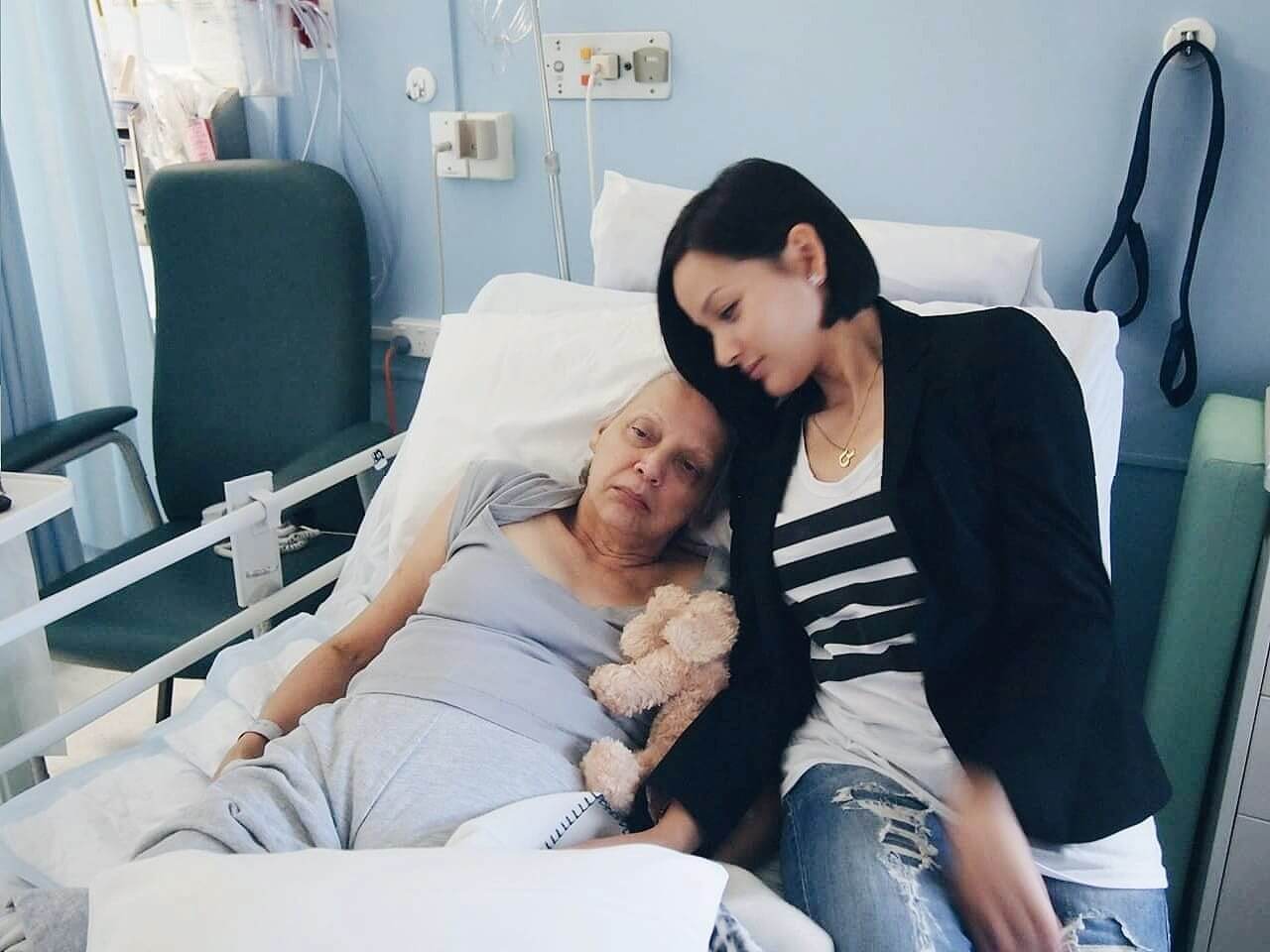
Simone Heng’s book Let’s Talk About Loneliness was born from a period of deep emotional isolation. After leaving her broadcasting career to care for her paralyzed mother, she found herself cut off from her social world. While others were building families and careers, she was navigating caregiving, grief, and isolation.

Before that chapter, her life had always been shaped by movement. She was born and is based in Singapore, grew up in Australia, studied in Switzerland, and worked in the UAE. Her background reflects a mix of cultures, even reflected in her DNA, which shows 11 different ethnicities.

But the defining moments were not just about where she had been, but what she had gone through. She lost her father at 19, and 10 years later, along with her sister, became the main support to her mother. Those experiences reshaped her priorities and slowly pulled her away from the life she was chasing.

In that quieter, more difficult season, she began asking questions she could not ignore. Why does loneliness feel so heavy, even when you are not physically alone? Why is it so hard to talk about?

Over time, Simone realized something that became central to her work. Loneliness is not simply about being alone. It is the gap between the kind and amount of connection a person wants and what they are actually experiencing.
A Book That Challenges Cultural Assumptions

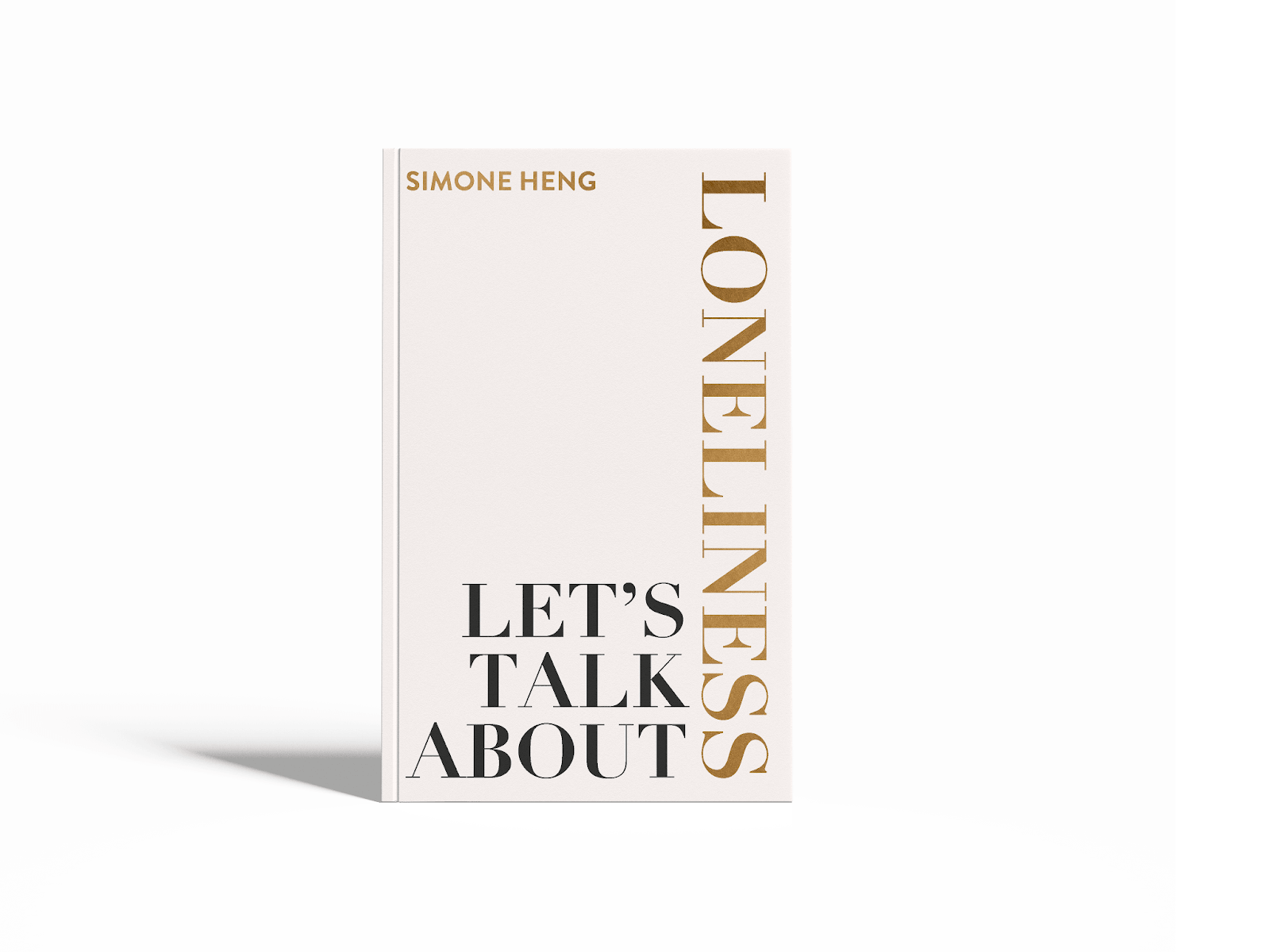
Let’s Talk About Loneliness explores an idea many people overlook. Loneliness can exist even in collectivist societies. Simone highlights how cultural expectations, emotional restraint, and unspoken pressures can make it harder to express isolation. This perspective brought a diverse lens to the dialogue on loneliness often dominated by Western viewpoints.

She points out that in cultures where people are expected to always be surrounded by family, saying “I am lonely” can carry stigma. At the same time, many connections are shaped by obligation rather than genuine emotional closeness. These kinds of relationships do not always meet deeper emotional needs, and can leave people feeling alone even when they are not physically isolated.

Retitled in Chinese as “Anyway, I Am Just as Lonely,” it will be available in Xinhua, Sisyphus, and Yanijou bookstores in China. The book blends research with lived experience, making it both informative and deeply personal. With the release of the Chinese edition, the focus is on reaching Chinese-speaking communities where conversations around loneliness are often less visible.

Building a Mission Around Human Connection

Beyond the book, Simone Heng’s work continues to focus on one idea. Human connection is not just something we hope for, but something we absolutely must learn and build, particularly in the era of AI.

After spending 15 years in broadcasting, she chose to step away and start again in 2019. It was not an easy decision, and she built her career without financial backing, relying on persistence and clarity in what she wanted to create.

Today, she is a global speaker who works with leading organizations such as Google, Meta, Harvard University, and JPMorgan. She teaches audiences how to build meaningful connections both in and beyond the workplace.

Her message continues to resonate because it speaks to something many people are quietly experiencing. Without a sense of belonging and psychological safety, it becomes harder to think clearly, create, and show up fully.

At its core, her work is a reminder that connection is not about how many people are around us. It is about how understood we feel. And sometimes, putting that feeling into words is the first step toward changing it.

Learn more about Simone Heng here:

📍Website

Related Articles

Image Source istock

Uncategorized

New Report Says There Is Still A Talent Crunch In Southeast Asia Amidst The Layoffs

One of Southeast Asia’s biggest job platforms, Glints, just put out a report that shows the situation may not be as severe as they seem.

Glints co-founder and CEO Oswald Yeo told TechCrunch that there has been a lot of funding injected into the IT business. This is a response to the two-to-three-year bull run, and as a result, several firms grew swiftly. 

Yeo said that Singaporean firms seemed to adapt fastest to macroeconomic changes and that this wasn’t a terrible thing because other firms wanted to move swiftly, too. 

Operations, finance, HR, and certain sales and marketing teams have been hit hard, while businesses turned to Vietnam and Indonesia, which have fewer layoffs, for top-tier technical personnel. Moreover, the pandemic has created a decentralized-minded workforce.

Yeo observed that the pandemic had made remote work more convenient, necessitating cost-cutting measures. Many firms turn to remote employment to optimize their human and financial capitals. 

They have seen that remote work prospects on Glints have expanded tenfold in a year. Some regional firms in Malaysia continue to hire foreigners, while others only hire Malaysians. According to Glints, mid-to senior-level employees’ compensation won’t diminish, but junior talent may.

One-year fixed-term contracts are another trend that helps firms predict their financial destiny, as employers are wary about signing long-term contracts. 

He believes that not everything was awful — the need for technological and product skills on Glints favored job seekers.

Layoffs help startups build core teams. Yeo said that because there is less rivalry for talent, it’s a fantastic moment for organizations in a strong position to hire top managerial talent.

Image Source generocity.org

Uncategorized

Founder of Penn Asian Senior Services Im Ja Choi Passed Away At 73

A well-known supporter of Asian American seniors and the founder and emeritus CEO of the nonprofit Penn Asian Senior Services, Im Ja Choi,  passed away on Wednesday, June 22, from lung cancer in a South Korean hospital, she was 73. 

A memorial service will be conducted on July 16 at 3:00 pm at the Evergreen Center in Philadelphia. Contributions in her name will be appreciated.

Ms. Choi was born in Seoul, South Korea in 1948, majored in literature, and graduated from Korea University. She moved to Philadelphia after marrying her childhood friend Jung Choi in 1971, where she studied organizational dynamics at the University of Pennsylvania. She was a top-producing real estate agent in the 1980s and 1990s. 

She started Penn Asian Senior Services in 2004 to help Asian American elders with linguistic and cultural obstacles. Because she couldn’t get home care for her mother, and after hearing horrible experiences from other caregivers, she founded the charity that provides in-home care and homemaking services in over two dozen languages.

She undertook the fundraising efforts and strategic planning of the nonprofit, for which the charity received grants from the U.S. Department of Health and Human Services and numerous organizations. 

Moreover, she has also opened an adult day care for immigrants with language and cultural barriers, a state-licensed vocational school for entry-level Asian health-care workers, and a seniors community center. 

In 2013, she received the Ellis Island Medal of Honor from the National Ethnic Coalition of Organizations. The Independence Blue Cross Foundation president Lorina Marshall-Blake wrote that the region needed more health visionaries like Im Ja Choi. Ken Yang, CEO of Penn Asian Senior Services, said Ms. Choi’s care, generosity, and love for her family and community matched her innovative leadership.

She was also recognized by the governor as a 2014 Distinguished Daughter of Pennsylvania for her “extraordinary service and achievements to the Commonwealth.” In the same year, she gave the commencement address at Penn State Abington where she quoted “Where there’s a will, there’s a way.”