Stories

September 13, 2023

SHARE:

Founded in 2015, Pokeworks emerged as a culinary venture stemming from a shared vision. Drawing inspiration from numerous trips to Hawaii, the founders were captivated by the distinct flavors of poke, prompting them to bring this fresh, healthful, and beloved island delicacy to the mainland United States.

With a steadfast commitment to a wholesome lifestyle and premium ingredients, Pokeworks offers a culinary experience that reverberates with authenticity. Their menu artfully captures the genuine essence of Hawaiian flavors, showcasing a medley of signature creations and customizable options.

Aside from this, Pokeworks champions sustainability, prioritizing responsibly sourced seafood and conscientious material choices. This ethos extends to all aspects of the brand’s operations, affirming a holistic dedication to social and environmental responsibility.

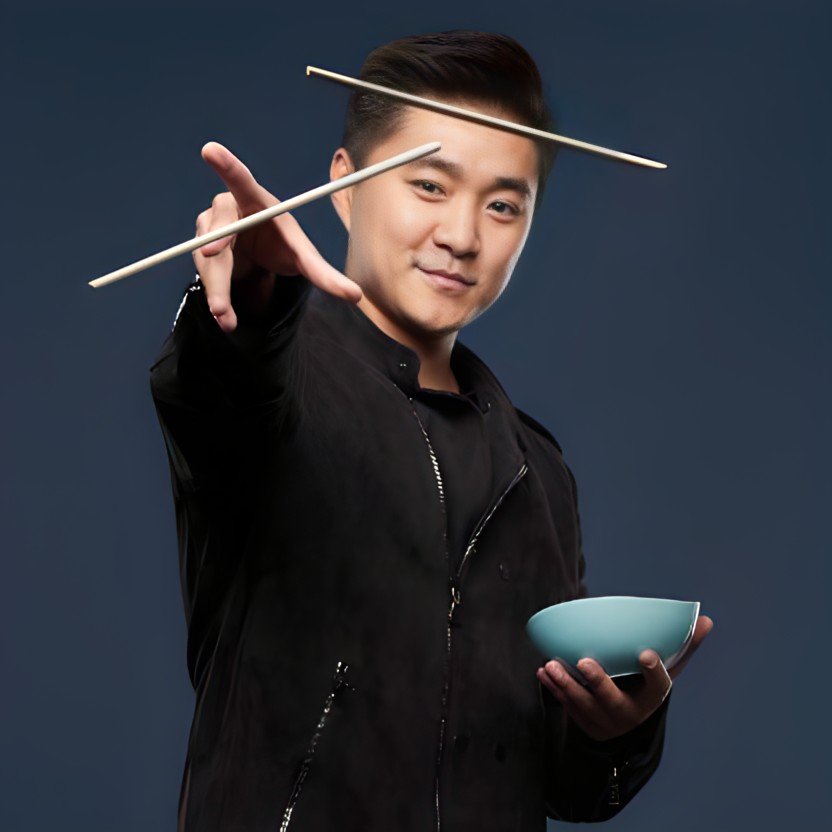
Asian Hustle Network had the chance to sit down for an interview with one of Pokeworks’ co-founders, Peter Yang. Join us as we delve deeper into their story and uncover the insights that drive their success.

HOW IT ALL STARTED

The idea of Pokeworks dates back to 2015, when my co-founders, Mike Chen and Mike Wu, met over lunch. Mike Chen just had his wedding in Maui and Mike Wu had just come back to the mainland after months in Oahu launching a restaurant. They reminisced about the delicious poke they enjoyed on the island and wondered why it’s not a staple on the mainland. We took inspiration from build-your-own fast casuals like Chipotle, and ran with the idea of “Poke Your Way”. As cliche as it sounds, we spent months R&D’ing out of Mike Wu’s garage until we all felt the flavors were perfect.

Several months later, we opened the doors to our first location in midtown Manhattan – a tiny 750-square-foot space. It was a cold December, and most of the city had left for the holidays – it was quiet… and our sales were bleak. Besides correcting our guests on the pronunciation of “poke”, I had to turn away several guests with “Sorry, no, we do not sell Pokemon cards.” Educating the market was definitely an early challenge we had to overcome.

The new year rolled around and our lines got progressively longer day after day. As business grew, we kept our heads down and continued to focus on operational excellence – great products and great guest service. Word quickly spread, and we became the popular kids on the block.

Fast forward 8 years and a pandemic later, we’re 70 locations proud across the U.S., Canada, Mexico, and Taiwan.
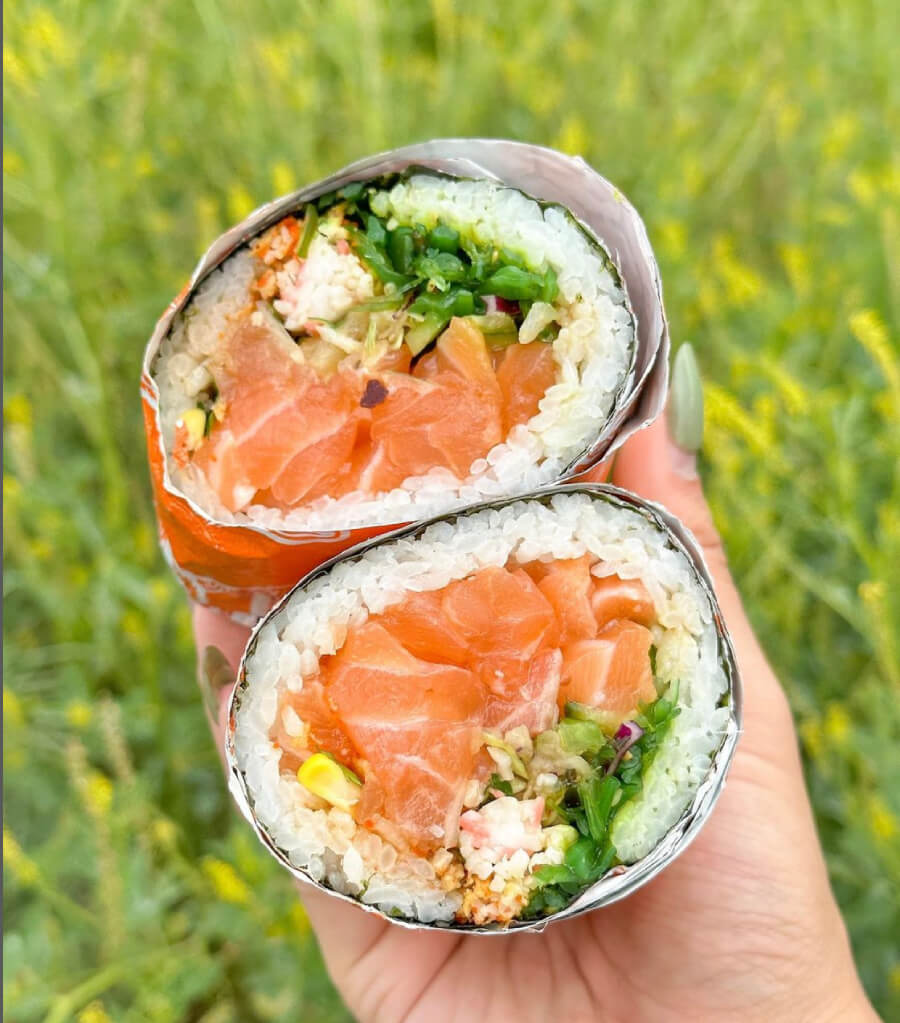
SUSHI BURRITO

THE CONCEPT OF SUSHI BURRITO

We aimed to create a handheld version of Poke by blending two of my personal favorites: a burrito and a sushi roll – what’s not to love? We had fun with it and added it to the menu.

Little did we know, this menu addition would become a turning point in our growth.

During a lunch rush one day, a representative from Business Insider walked into our tiny shop and asked if she could record a video featuring our Poke Burrito. Despite my initial hesitation – our shop was so small that my staff and I could barely squeeze another body in without slowing down our line – I agreed. Well, it was a good thing I let her shoot the video because once it was uploaded, it went absolutely viral.

It. Was. Insanity. This short 1 minute clip, triggered lines around the block for months. We had to hire bouncers for crowd control!

POKEWORKS’ COMMITMENT TO SUSTAINABILITY

Early in our brand development, the co-founders took deliberate steps to define our core values. One of them is: “Sustainability – meeting today’s needs without compromising tomorrow.” The founders understand that it goes beyond just making a profit, but how we can leave the world a better place for our children. Personally, since becoming a father recently, this sentiment has never rung louder. We want to make sure it’s not just a marketing buzzword, but a core value that helps guide our every decision. 

All of the seafood that we source carries a “Best Choice” rating by the Monterey Bay Seafood Watch, procured from vendors that are environmentally and socially responsible. Our tuna is exclusively procured from Marine Stewardship Council (MSC) certified sources, a reflection of our commitment to ending overfishing and promoting sustainable fishing practices. Our salmon holds certifications from both the Aquaculture Stewardship Council (ASC) and Best Aquaculture Practices (BAP), embodying the highest industry standards for minimizing environmental impact and upholding the well-being of communities, workers, and animals.

For many of our store build-outs, the wood used in our dining rooms is of local species and is certified by the Forest Stewardship Council. In some of our shops, the facade of our counters is made with recycled bamboo chopsticks.

Our commitment to sustainability extends to exploring alternative seafood and plant-based products. We are partnering with leading plant-based food manufacturers such as Impact Foods and Omni Foods to explore alternative seafood options. Our plant-based spam musubis are also a huge hit! We’ve also partnered with innovators like Wildtype, to explore cutting-edge cultivated seafood.

FRANCHISEE SPOTLIGHT

We seek franchisees who embody a passion for the brand and resonate with our mission statement and core values. One of which is being service-obsessed: We put the team’s needs first. We are here to serve our guests and community. We do this by being responsive, helpful, productive, and following through with our commitments, and spreading aloha.

I’d like to extend a big shout-out to Alvin Zhang, an exceptional franchisee at Pokeworks who embodies this value and who truly shines as both an entrepreneur and an outstanding individual dedicated to his community. At the peak of the pandemic, when hospitals were facing dire circumstances, Alvin and his Pokeworks team worked overtime to generously donate over 2000 poke bowls to 12 hospitals across Queens NY, and Long Island.

UPLIFTING THE AAPI COMMUNITY

We take pride in the Asian-inspired products and flavors that we serve. From spicy Sichuan poke to sweet chili gochujang poke. Sharing these flavors from our roots to the mainstream is a great privilege. 

During COVID, we partnered with Heart of Dinner to help nourish NYC’s community of Asian elders. They have a wonderful mission of supporting the AAPI community, and we’re proud to be a part of it.

We also take immense pride in having Regina Cheung, a Chinese-American, at the helm as CEO at Pokeworks, leading the charge with remarkable expertise and charisma. Furthermore, all of the co-founders are Asian-American and share the immigrant journey. 

We hope that our story and Pokeworks’ AAPI leaders can inspire future generations of AAPI entrepreneurs to dive confidently into their careers and passions. 

PETER YANG’S ADVICE TO ASPIRING ENTREPRENEURS

Don’t do it alone. Learn to ask for help. It all starts within your community.

We are very proud to say that there are a total of 8 co-founders at Pokeworks. Most advisors will tell you that’s crazy, but we made it work! We’ve learned to set aside our egos and each of us plays a distinct and vital role within the organization.

This principle aligns perfectly with another core value of ours: the incredible power of teamwork.

CONNECT WITH POKEWORKS

Instagram: @pokeworksco

Website: pokeworks.com

Franchise: pokeworksfranchise.com
Related Articles

AHS EMAIL ANGLE (4)

Blogs, Development

Know Your Value Proposition

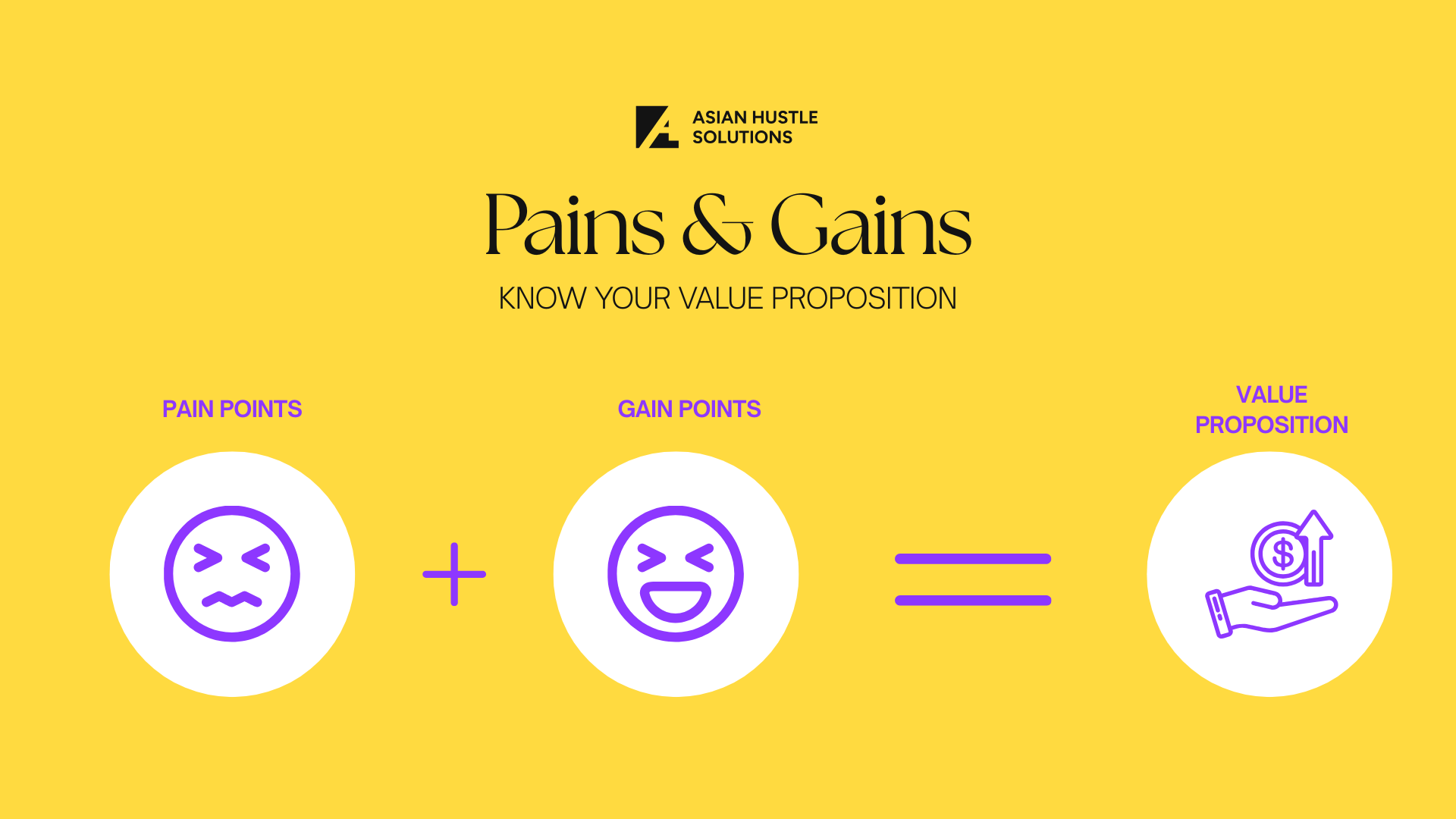
Pain points and gain points are not necessarily new concepts, but some might think they are opposing concepts, when in contrast, the two complement each other. Through customer pain and gain points, you can get a better understanding of your customers’ needs, and offer a unique value proposition.

  • Pain point: As the name suggests, it’s something that “pains” your customers; an issue that they have that needs to be addressed; a challenge that they need to overcome.
  • Gain point: Gain point, on the other hand, is more about you. What can your product or service do for the customers; what can they gain from using your service; what can you help them with?

The two are extremely simple and are a good place to start when you’re trying to advertise your product or service since they consider both your and your customer’s sides to offer a value proposition that is valuable. 

[Book a FREE call with us]
If you want to explore our services more, visit the Asian Hustle Solutions website at AHS.

Development

Winning The Race by Understanding Customer Journey

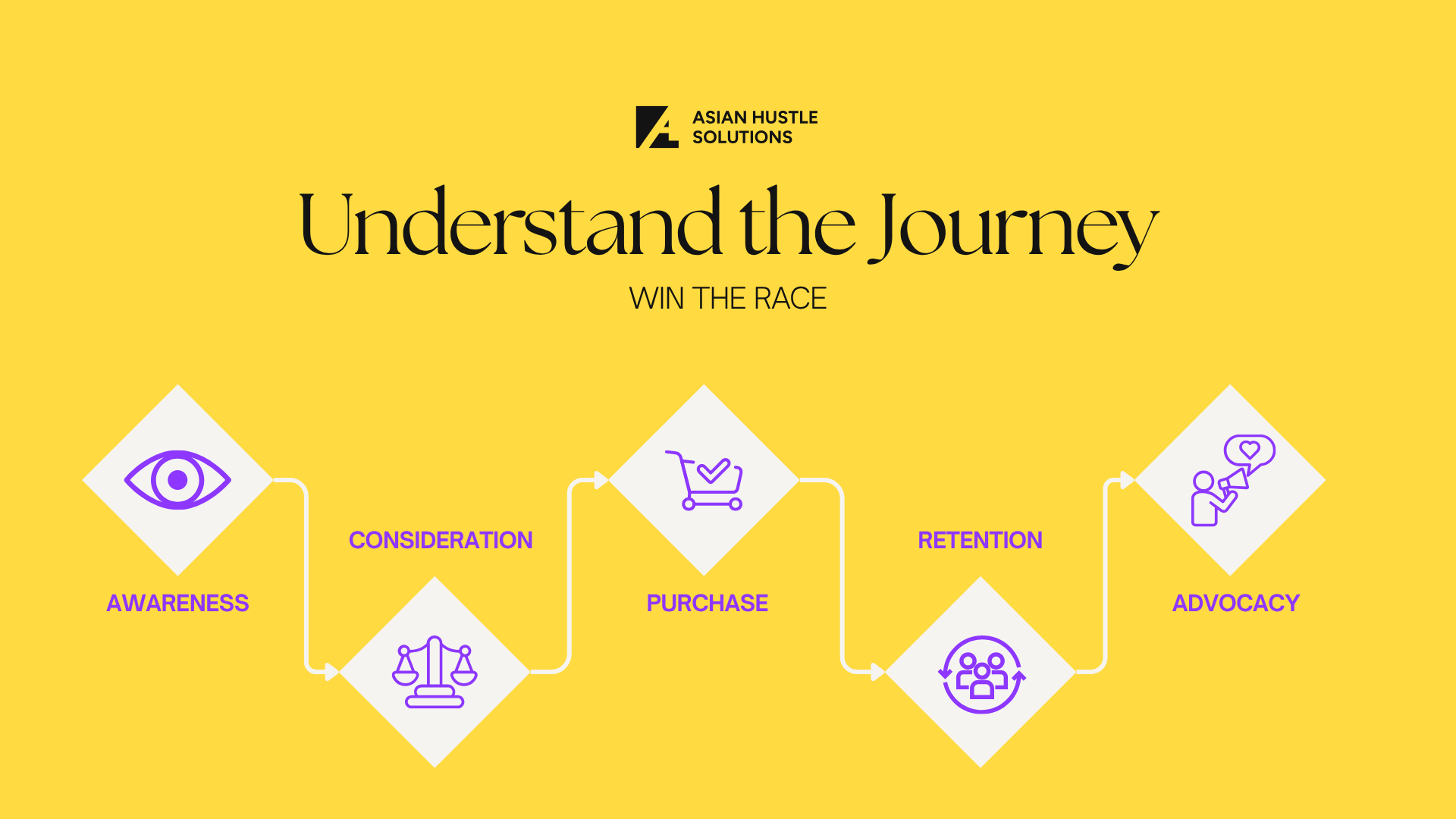
Before becoming a loyal customer, a lead has to interact with your product/service at various stages. This entire process is summarized in the customer journey, divided into 5 main stages:

  • Awareness: The customer becomes aware of your brand and your product, usually through search engines when searching for a solution to their problem.
  • Consideration: The customer is aware of your brands but also your competitors’;, they start wondering which of the options they should choose from.
  • Purchase: The customer makes a buying decision, either from your brand or your competitors’.
  • Retention: After the purchase, you need to consider how to get them to repurchase many more times, since retaining is cheaper than recruiting.
  • Advocacy: At this stage, the customer is basically your brand ambassador., Tthey love your product;, they tell their acquaintances about your product.

Understanding the journey and what stage the audience is at can help you understand their needs and adjust accordingly. Each stage has a different touchpoint as well, so adjusting to said touchpoint makes it more effective and less costly. Understanding the journey can help you win the race.

Why Asian Hustle Solutions?

At AHS, we specialize in helping brands capture attention and inspire action — whether you’re launching a new product or scaling your business, we’ll guide you to marketing that resonates and delivers results.

If you want to learn more about our services, visit the Asian Hustle Solutions website at asianhustlenetwork.com/services/

AHS EMAIL ANGLE (1)-png

Blogs, Development

Getting Back To Basics: 4Ps Marketing Mix

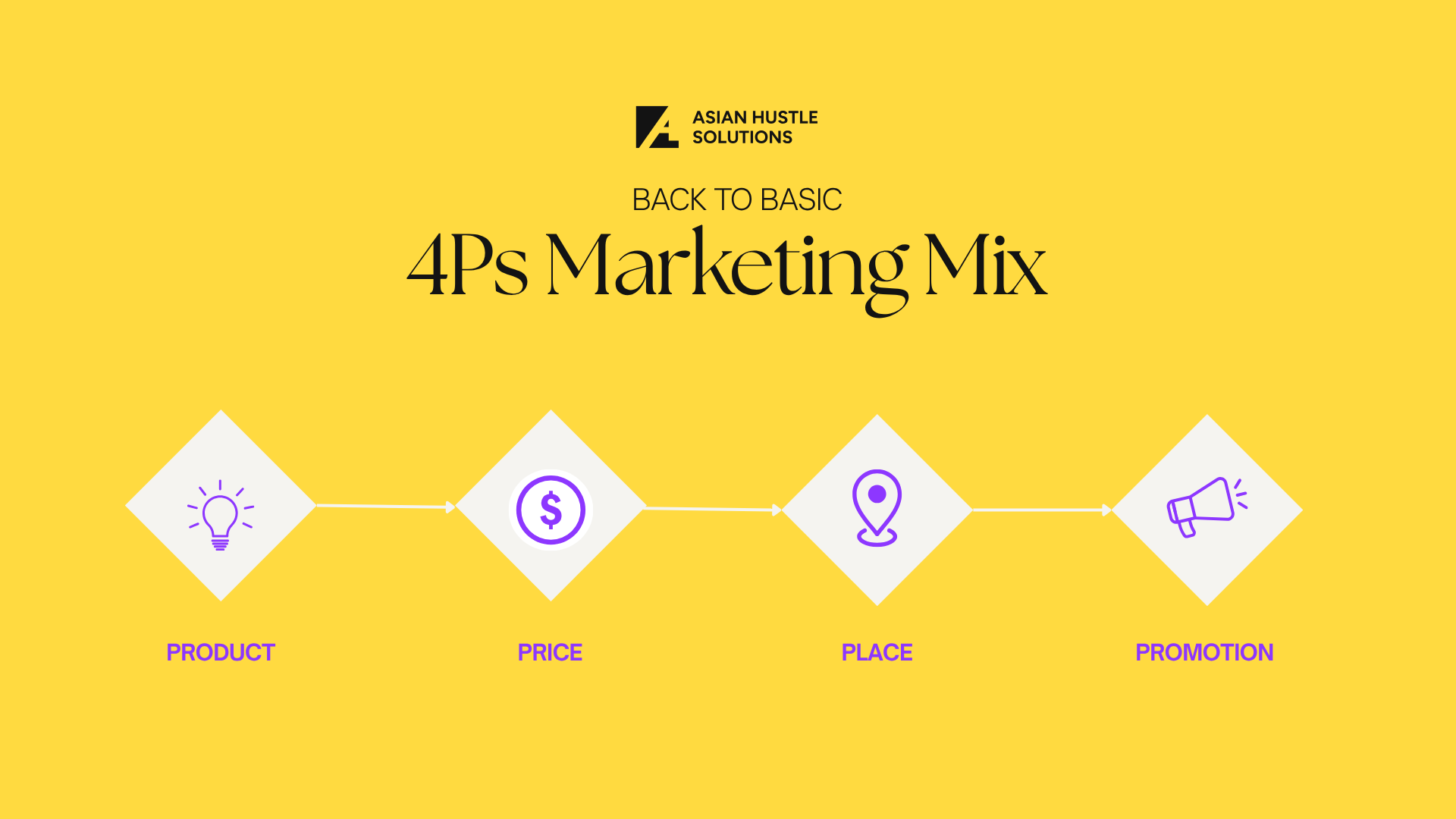
Sometimes, to create an effective marketing strategy for your business means going back to the basics. Popularized by Neil Borden, the 4P’s model is still widely used today, with each P representing a core aspect of the marketing mix:

  • Product: The core of your business, whether it is a physical product or a service. Understanding your product, what differentiates it from the competition, what is unique about it, etc.
  • Price: How much your product should be sold for. This should be based on the supply cost, how you position your product, and whether you should increase or decrease the price based on your target audience.
  • Place: The “where” of your product. Where can the customers purchase your products (online or physical stores, drug stores or supermarkets, etc). More so, it is also where you choose to advertise.
  • Promotion: How you reach your customer, either through advertising, public relations, or promotion, increases your brand awareness.

Why Asian Hustle Solutions?

At AHS, we specialize in helping brands capture attention and inspire action — whether you’re launching a new product or scaling your business, we’ll guide you to marketing that resonates and delivers results.

If you want to learn more about our services, visit the Asian Hustle Solutions website at asianhustlenetwork.com/services/

Stories

Building Tomorrow: How Nan Lin Redefines Homebuilding with 3D Printing 

For Nan Lin, entrepreneurship isn’t just business; it’s freedom. A freedom earned through sacrifice, relentless execution, and a refusal to accept the limits of a broken system. As the founder of Kaizen Capital and 4DIFY, Lin is reimagining the housing industry, tackling its inefficiencies with cutting-edge technology and a bold vision. His mission? To build stronger homes faster, at lower costs, empowering communities and challenging the status quo.

From Immigrant Roots to Visionary Leadership 

Lin’s journey began at age 10, when he immigrated to America with his mother. While adapting to a new country, he was inspired by his loving parents’ sacrifices, which shaped his relentless drive. “I saw the lengths they went to give me a better life,” Lin says. “Their love and dedication became my compass.” Years later, that resolve led to the creation of Kaizen Capital, where he transforms underutilized properties into vibrant housing solutions: ADUs, subdivisions, condo conversions, and luxury short-term rentals. By unlocking hidden value in land, he delivers market-rate and affordable housing that strengthens neighborhoods.

But Lin saw a deeper problem: traditional construction is slow, costly, and vulnerable to fire, pests, and natural disasters. Frustrated by an industry stuck in the past, he founded 4DIFY to lead a new era of construction through 3D-printed concrete homes.

Nan Lin | Founder and Principal of Kaizen Capital and 4DIFY

3D Printing: The Future of Housing, Today

Lin’s vision for 4DIFY was sparked by a frustrating reality: “Wildfires destroy neighborhoods every year, yet we keep building stick-frame homes that burn like kindling,” he says.

After visiting several 3D printer manufacturers, Lin partnered with New York–based SQ4D. It took nearly a year to secure exclusive licensing rights, navigate regulatory hurdles, and obtain building permits, but he got it done.

Now, 4DIFY is building California’s first community of 3D-printed concrete homes. As this article goes live, their first printed home is nearing completion, despite heavy regulations and a steep learning curve. The team is already outperforming traditional timelines and cost benchmarks. The second and third homes will soon print simultaneously, targeting completion in two months, effectively one home per month at under $200 per square foot.

Despite challenges as an Asian immigrant, Lin managed to transform them into motivation and success. 

“We’re aiming to build at half the cost and in a quarter of the time,” Lin says. “That’s not a dream. It’s the direction we’re heading.”

Built with concrete, reinforced with rebar, and topped with metal roofs, these homes are resilient against fire, wind, earthquakes, mold, and pests. They’re also designed for long-term savings, with lower maintenance, less waste, and reduced energy and insurance costs.

“Critics doubted it would work,” Lin reflects. “But seeing is believing. This is the future.”

A Philosophy of Purpose and Resilience

Lin’s journey has been marked by relentless challenges, some seemingly insurmountable. “Obstacles never stop,” he admits. Yet he transforms adversity into opportunity, fueled by a positive mindset, solution-driven focus, and disciplined execution. His trusted team is his backbone. “No one succeeds alone,” he says. “My team turns the impossible into reality.” This resilience shapes his leadership, blending bold vision with purposeful action to create opportunities, particularly for communities long excluded from wealth-building. “Housing isn’t just a product,” Lin says. “It’s a platform for empowerment.”

Recognition and Inspiration

Lin’s impact is gaining notice. The Sacramento Bee named him one of the Top 20 AAPI Change Makers, and he was honored in the Business Elite Awards’ 40 Under 40. But for Lin, the real reward is inspiring others. “I want to show the next generation of Asian entrepreneurs what’s possible when we claim our seat at the table,” he says.

Lin wants to create opportunities for those marginalized by elevating the future of construction, making it more accessible for his community.

Join the Housing Revolution

Nan Lin isn’t just building homes, he’s redefining what’s possible. Through Kaizen Capital and 4DIFY, he’s creating a future where housing is affordable, resilient, and sustainable. Follow his journey and see the revolution unfold.

Connect with Nan Lin: