Stories

October 13, 2025

SHARE:

Chris Hwang (left) and Jonathan Shen (right) – founders of The Golden Duck

Growing up with Asian snacks like salted egg yolk chips meant savoring flavors that felt both comforting and unforgettable. Yet when Jonathan Shen and Chris Hwang turned their eyes to the global market, they saw a different reality: these beloved treats were undervalued, underpriced, and largely overlooked by international consumers.

Back in 2015, Singapore’s FMCG market was crowded, dominated by established Western brands. Asian flavors were largely seen as niche, affordable snacks rather than premium products you’d gift or showcase in events.

Jonathan and Chris quickly recognized a gap: millennial consumers craved adventurous, culturally rooted flavors, but no brand was presenting them in a way that made people proud to share them.

They founded The Golden Duck with a vision to elevate Asian snacking to a globally aspirational experience.

Today, The Golden Duck has sold over 20 million packs worldwide, and is stocked in 650+ Woolworths and Metro stores.

How It Began: Inspiration from a Familiar, Unlikely Flavor

Jonathan Shen and Chris Hwang didn’t start with a massive budget or fancy offices. What they had was complementary expertise, and a shared passion for snacks. 

Jonathan, with a keen eye for branding and marketing, looked at salted egg yolk and asked: what if salted egg yolk could feel luxurious? 

While ubiquitous in Asia, it was rarely found outside hawker stalls or home-cooked dishes.

Chris, a stickler for quality and craftsmanship, understood that getting the recipe and packaging right could make all the difference.

When it launched, crowds queued for hours, wanting to get their hands on chips that tasted like home but looked like luxury. The Golden Duck’s Salted Egg Yolk later earned Jonathan & Chris recognition on Forbes 30 Under 30 Asia.

How It Went: Bold Flavors, Relentless Hustle

Entering a competitive FMCG market without big funding meant bootstrapping everything—from sourcing ingredients to hand-packing orders. They had to balance daring flavors with high-quality production, ensuring every snack met premium standards.

It wasn’t just about product innovation. Breaking into a market dominated by Western brands meant shifting perceptions: convincing consumers that Asian snacks could be modern and premium. Every unconventional pairing, every new flavor, was a calculated risk.

Chris ensured every ingredient and recipe exceeded expectations, while Jonathan told the story in a way that resonated with millennial snack enthusiasts.

They launched pop-ups, engaged directly with customers, and refined details one by one. Salted egg yolk became their signature flavor, but it was only the beginning. The Golden Duck now offers a growing range of gourmet Asian-inspired snacks, from Chilli Crab Seaweed to Tom Yum Goong and Spicy Mala Hot Pot.

What’s Next For The Golden Duck?

The Golden Duck isn’t slowing down. In 2025, the brand launched a new line of canister chips for Western markets including Australia, the United States, and Canada, with bold flavours like bold flavours like Truffle Wagyu, Kombu Seaweed Butter, and Sour Cream & Sriracha. At the same time, the company is actively entering new markets such as the UK, Europe, and China.

Innovation and sustainability remain at the heart of The Golden Duck’s strategy. The company continues to explore new flavors and formats while sourcing real ingredients to deliver premium, authentic taste experiences.

With every new flavor and product, Jonathan Shen and Chris Hwang are proving that Asian snacks can be premium and globally celebrated. Every bite is a story of heritage, innovation, and taste waiting to be told.

Connect With The Golden Duck

Website: https://www.thegoldenduck.co/

IG: @thegoldenduck.sg

@thegoldenduck.au

Related Articles

Image Source istock

Uncategorized

New Report Says There Is Still A Talent Crunch In Southeast Asia Amidst The Layoffs

One of Southeast Asia’s biggest job platforms, Glints, just put out a report that shows the situation may not be as severe as they seem.

Glints co-founder and CEO Oswald Yeo told TechCrunch that there has been a lot of funding injected into the IT business. This is a response to the two-to-three-year bull run, and as a result, several firms grew swiftly. 

Yeo said that Singaporean firms seemed to adapt fastest to macroeconomic changes and that this wasn’t a terrible thing because other firms wanted to move swiftly, too. 

Operations, finance, HR, and certain sales and marketing teams have been hit hard, while businesses turned to Vietnam and Indonesia, which have fewer layoffs, for top-tier technical personnel. Moreover, the pandemic has created a decentralized-minded workforce.

Yeo observed that the pandemic had made remote work more convenient, necessitating cost-cutting measures. Many firms turn to remote employment to optimize their human and financial capitals. 

They have seen that remote work prospects on Glints have expanded tenfold in a year. Some regional firms in Malaysia continue to hire foreigners, while others only hire Malaysians. According to Glints, mid-to senior-level employees’ compensation won’t diminish, but junior talent may.

One-year fixed-term contracts are another trend that helps firms predict their financial destiny, as employers are wary about signing long-term contracts. 

He believes that not everything was awful — the need for technological and product skills on Glints favored job seekers.

Layoffs help startups build core teams. Yeo said that because there is less rivalry for talent, it’s a fantastic moment for organizations in a strong position to hire top managerial talent.

Image Source generocity.org

Uncategorized

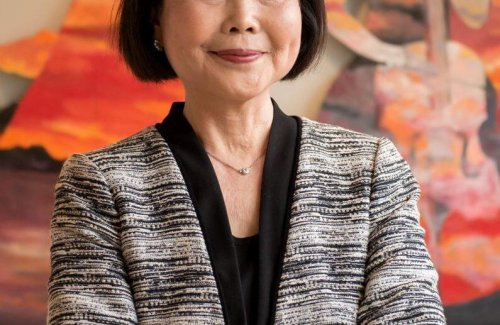
Founder of Penn Asian Senior Services Im Ja Choi Passed Away At 73

A well-known supporter of Asian American seniors and the founder and emeritus CEO of the nonprofit Penn Asian Senior Services, Im Ja Choi,  passed away on Wednesday, June 22, from lung cancer in a South Korean hospital, she was 73. 

A memorial service will be conducted on July 16 at 3:00 pm at the Evergreen Center in Philadelphia. Contributions in her name will be appreciated.

Ms. Choi was born in Seoul, South Korea in 1948, majored in literature, and graduated from Korea University. She moved to Philadelphia after marrying her childhood friend Jung Choi in 1971, where she studied organizational dynamics at the University of Pennsylvania. She was a top-producing real estate agent in the 1980s and 1990s. 

She started Penn Asian Senior Services in 2004 to help Asian American elders with linguistic and cultural obstacles. Because she couldn’t get home care for her mother, and after hearing horrible experiences from other caregivers, she founded the charity that provides in-home care and homemaking services in over two dozen languages.

She undertook the fundraising efforts and strategic planning of the nonprofit, for which the charity received grants from the U.S. Department of Health and Human Services and numerous organizations. 

Moreover, she has also opened an adult day care for immigrants with language and cultural barriers, a state-licensed vocational school for entry-level Asian health-care workers, and a seniors community center. 

In 2013, she received the Ellis Island Medal of Honor from the National Ethnic Coalition of Organizations. The Independence Blue Cross Foundation president Lorina Marshall-Blake wrote that the region needed more health visionaries like Im Ja Choi. Ken Yang, CEO of Penn Asian Senior Services, said Ms. Choi’s care, generosity, and love for her family and community matched her innovative leadership.

She was also recognized by the governor as a 2014 Distinguished Daughter of Pennsylvania for her “extraordinary service and achievements to the Commonwealth.” In the same year, she gave the commencement address at Penn State Abington where she quoted “Where there’s a will, there’s a way.”