Stories

November 4, 2025

SHARE:

When Nisha Desai and Alice Zhang met at Harvard Business School, neither of them expected that a casual conversation about their frustrations with therapy would spark the idea for something much bigger.

As they juggled graduate school and their own mental health, they often felt therapy wasn’t built for people like them – they spent more time explaining their background to their therapists than actually healing. 

They realized it wasn’t just them – there’s a gap in mental healthcare that left many in the Asian and multicultural community feeling unseen and misunderstood.

That shared realization became the seed for Anise Health: a platform built to make therapy culturally attuned, accessible, and truly effective for the AAPI community.

A Problem They Both Knew Too Well

Before their paths crossed, both founders had already seen the same issue from different directions.

Nisha, who grew up in Florida in a family of healthcare entrepreneurs, had always been drawn to questions of access and equity in care. After studying finance and marketing at the University of Pennsylvania’s Wharton School and earning her MBA from Harvard, she worked in healthcare investing and later in digital product management at Humana. It was there, while helping build a mental health app, that she started hearing a troubling pattern from thousands of users – the same barriers she had personally faced.

Nisha recalls that people weren’t saying therapy didn’t work. They were saying it didn’t fit, that they didn’t feel understood.

Alice, meanwhile, came to the same conclusion through her own deeply personal experiences. Born in China, raised across Japan and Canada, and now based in New York, she calls herself a “third culture kid.” Her multicultural background gave her adaptability, but also a sense of never fully belonging anywhere.

That feeling resurfaced when she sought therapy during business school. Despite being fluent in English, she found herself translating her own emotions for her therapist – explaining why criticism from parents felt like love, or why pursuing excellence felt non-negotiable.

Alice remembers feeling exhausted after each session, explaining her background again and again, and leaving each time feeling unseen.

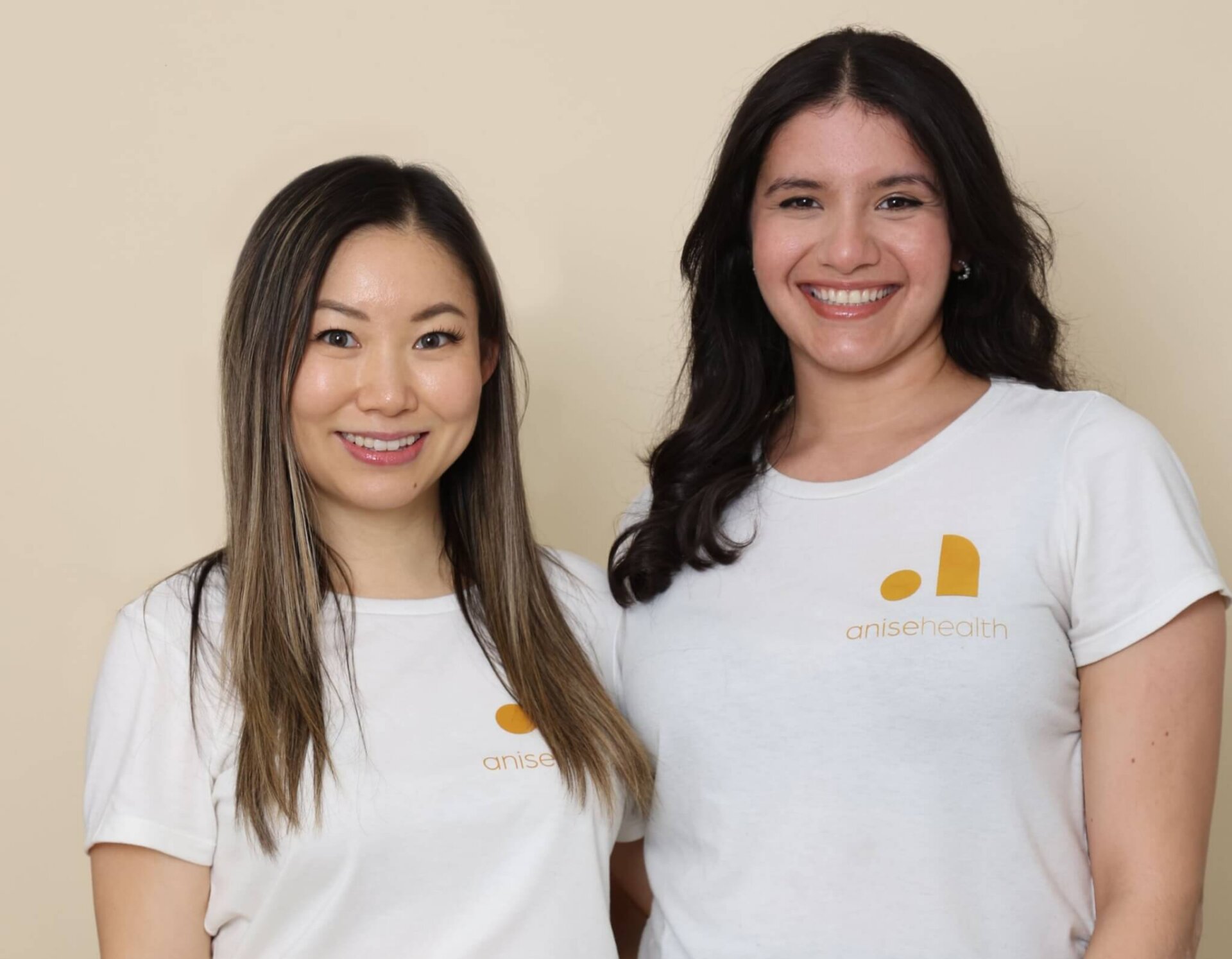
Alice Zhang (left) and Nisha Desai (right)

Building a Culturally Grounded Model of Care

After that pivotal conversation at Harvard, the two women began mapping out what culturally attuned mental health care could look like. They spoke to clinicians, patients, payors and community leaders, testing how cultural nuance could be integrated into evidence-based therapy and coaching.

They envisioned a new kind of care model: one that didn’t require clients to educate their therapists or set aside their cultural identity at the door. Instead, therapy would start from a place of understanding.

“Alice and I really built Anise to be what we believe our community has needed during our upbringing. What we kind of wished for ourselves through our own personal journeys with therapy.”

But building what didn’t yet exist came with challenges. They had to prove — to investors, clinicians, and even the broader healthcare system — that cultural context wasn’t just a “nice to have,” but essential to effective care. Many mental health professionals hadn’t been trained to deliver culturally adaptive therapy, so Anise Health had to design that framework from the ground up: provider training programs, accurate diagnostic tools, tailored care plans, curated resources and a scalable model for personalized, culturally attuned care.

Their persistence paid off. What started as late-night brainstorming sessions between classes evolved into a fully fledged mental health platform that blends clinical rigor with cultural empathy.

Growing the Movement

Since its founding, Anise Health has facilitated over 10,000 paid appointments and built a network of 60+ licensed providers across multiple states. The company is now expanding through insurance partnerships that make culturally attuned care more affordable and accessible.

Behind the scenes, Nisha leads operations and product design, while Alice drives partnerships and provider training.

Their complementary strengths, coupled with a shared sense of purpose, have helped Anise Health raise $6.4 million in funding and gain recognition as one of the top 10 most innovative Asian Pacific-led companies to watch by NYSE, Y Combinator, and Gold House.

Redefining the Future of Mental Health for Asian Communities

For both founders, Anise Health’s success goes beyond numbers. It’s about shifting how mental health is understood and delivered, starting with a community that has long been underserved and stigmatized.

“Our goal isn’t just to make care available,” Nisha says. “It’s to make it effective, culturally relevant, and sustainable within the healthcare system.”

By creating a new gold standard of culturally attuned care, Nisha and Alice aren’t just helping Asian Americans access therapy that finally feels like it speaks their language – they’re reimagining what inclusive mental health care can look like for everyone.

Learn more about Anise Health at anisehealth.co
Related Articles

Image Source: Open Table

Blogs, Development, Ideas

If You Are Doubting On Your Career Move, Take It From This CEO Who Made Corporate Twists and Turns

If you’re worried about making the wrong career move because you’ve started to second-guess yourself, keep in mind that there is no bad decision regarding your professional development. Debby Soo, CEO of restaurant reservation service OpenTable, can understand.

Consider Soo’s words carefully if you’re struggling to make a major career choice or feel paralyzed by uncertainty.

She eventually settled on a mantra that brought her peace. She struggled with worry and stress over her future career path and doubted her choices at each turning point. Eventually, things worked out for her. 

She realized that her work experience was valuable despite her dissatisfaction with her job. She knew that her decision which appeared disastrous at the time might ultimately result in professional success in ways she could never have imagined. Soo firmly believed there are no wrong turns in any career, “I didn’t have to spend so much time stressing about it,” she told CNBC Make It.

To maximize one’s employment as a learning opportunity, Soo suggested working diligently in any position. Soo advised, “Do the work, do the homework, and be prepared, even if it’s a boring and tedious task or position,” Soo explains to CNBC Make It, “If you put in the effort, something will come to fruition eventually.”

As a result of keeping an open mind and learning from her mistakes, she has come to appreciate the tasks she once found tedious. She has acquired knowledge in areas such as the types of work one never wants to do again and the best ways to handle problematic coworkers.

Soo was well aware that one choice regarding a job opportunity would not determine the course of the rest of her life. She may find that her definition of an ideal dream job shifts for the better due to the twists and turns she encounters along the way toward her goal of advancing her career. 

At the moment, Soo has continued to manage OpenTable since 2020. After more than a decade at the travel search company Kayak and work experience at Google that left her with a great deal of doubt about her professional future, Soo is now actively working to better herself and is successfully advancing her career as a CEO woman.

Image Source: Brendan Duong

Stories

A Secret Business Purchase Grew Into A Multi-million Dollar Enterprise

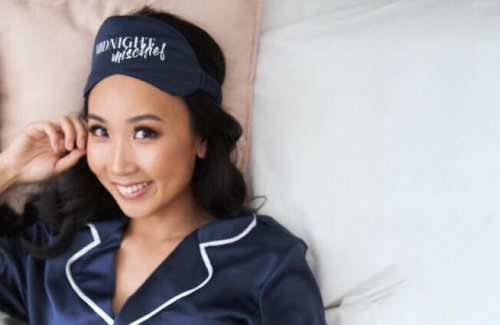
Tess Nguyen who is a trained physiotherapist was searching Gumtree, Australia’s marketplace, for a physiotherapy clinic to buy. Instead, a sleepwear ad called Midnight Mischief captured her eye, “I’d never heard of personalised pyjamas, and I was pretty up-to-date with trends, so I sent an inquiry,” she told 7life.

She consulted her friends who have accounting and business experience and told Tess it was worth nothing and advised her not to buy it. However, she liked the pyjamas’ style and name, plus she was able to bargain the business down to $15,000. So, a month later she bought the business.

Tess kept the purchase secret from her family. The business was going slow during the first two years, and running the business while working as a full time physiotherapist, took its toll.

When 2020 hit, the business was ready for the huge demand prompted by COVID and people staying at home. The big moment was when TV presenter Jules Sebastian posted a photo of herself wearing Midnight Mischief pyjamas.

The brand grew 165% in the year to July 2021. And Tess has gone from pyjama girl to Pyjama Queen – selling a set every 10 minutes. The designs retail for about $99.95 – and her sleepwear empire is now turning over $2.3 million.

“I’m so glad I did it and I’d tell anyone else to do the same,” Tess told 7Life, “Just go for it. You can figure it out as you go along. It’s worked for me.”

Image Source: Chris Pizzello/ Invision /AP file

Stories

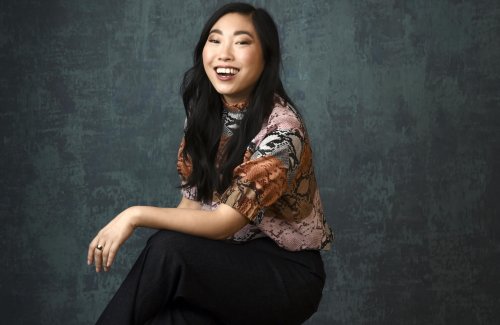
Awkwafina Knows Best About How She Is Still More Financially Great Living On $500 A Month

Even though the Crazy Rich Asians actress’ wealth is likely in the millions, she believes that a mere $500 per month is sufficient to cover her expenses.

The 32-year-old actress recently told Harper’s Bazaar that her money philosophy goes back to when she was building her Awkwafina musical and comedy persona, which she used as an outlet for her creativity while she worked a day job in book publicity.

Her grandmother brought her up in a one-bedroom apartment in Queens, New York. Because her family’s restaurant went out of business and they were forced to sell their home, she has developed a greater appreciation for monetary gain than any other aspect of her life.  

Awkwafina remembers that funds were tight at home and that she would stay up late with her grandma, who worried about paying the bills.

She also claims that despite being in a better financial position to support her family and herself, she still maintains a just-the-basics mentality. The actress has been known to buy clothes at Target and not spend much money on anything. She set out with the simple objective of covering her living expenses. 

She explains to Harper’s Bazaar, “I went into this mode off, if I can make $500 a month, that’s all I need.” 

Awkwafina’s motivation and success are attributed mainly to her refreshingly optimistic view of financial considerations. She has kept herself busy acting in the years since, including launching her comedy series on Comedy Central and becoming the first Asian-American actress to win the Golden Globe for best actress for her lead role in the 2019 drama “The Farewell.”

Image Source: Photograph by Ken Richardson Boston Magazine

Stories

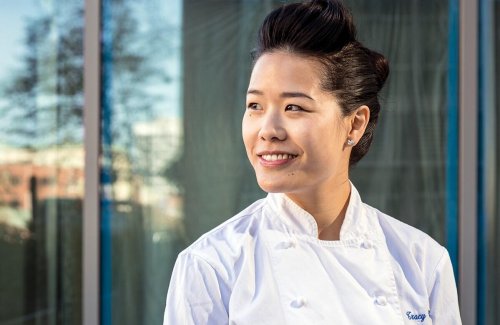
Chef Tracy Chang Gives Back To The Community Through The Language Of Food

Restaurateur Tracy Chang started the nonprofit Off Their Plate and Project Restore Us through the COVID-19 pandemic in 2020. 

The owner of the Japanese tapas restaurant,  PAGU, started Off Their Plate as a way to feed healthcare workers, and Project Restore Us sends nutritious and culturally appropriate grocery boxes to families living in food deserts. Both groups work to support local kitchens run by women and BIPOC and volunteers.

As a chef, Tracy also finds herself more in tune with customers than ever before. As someone who grew up lactose intolerant, she sources ingredients responsibly and remains mindful of the way guests feel after they leave her restaurant. This is also part of her restaurant’s ethos.

Her grandmother has also influenced Tracy’s cooking. Although her grandmother didn’t speak English, she spoke the language of food really well, said Tracy, and that was something that always resonated with her.

For Tracy, her personal experience has definitely come into play — trained in Spain but worked at a Japanese restaurant, and she grew up with a lot of Japanese and Taiwanese food, “The menu at PAGU is autobiographical and about my experience learning very specific dishes and techniques from people like my grandmother, my mentor and some of the chefs I’ve worked with.” she told TimeOut.