Stories

November 4, 2025

SHARE:

When Nisha Desai and Alice Zhang met at Harvard Business School, neither of them expected that a casual conversation about their frustrations with therapy would spark the idea for something much bigger.

As they juggled graduate school and their own mental health, they often felt therapy wasn’t built for people like them – they spent more time explaining their background to their therapists than actually healing. 

They realized it wasn’t just them – there’s a gap in mental healthcare that left many in the Asian and multicultural community feeling unseen and misunderstood.

That shared realization became the seed for Anise Health: a platform built to make therapy culturally attuned, accessible, and truly effective for the AAPI community.

A Problem They Both Knew Too Well

Before their paths crossed, both founders had already seen the same issue from different directions.

Nisha, who grew up in Florida in a family of healthcare entrepreneurs, had always been drawn to questions of access and equity in care. After studying finance and marketing at the University of Pennsylvania’s Wharton School and earning her MBA from Harvard, she worked in healthcare investing and later in digital product management at Humana. It was there, while helping build a mental health app, that she started hearing a troubling pattern from thousands of users – the same barriers she had personally faced.

Nisha recalls that people weren’t saying therapy didn’t work. They were saying it didn’t fit, that they didn’t feel understood.

Alice, meanwhile, came to the same conclusion through her own deeply personal experiences. Born in China, raised across Japan and Canada, and now based in New York, she calls herself a “third culture kid.” Her multicultural background gave her adaptability, but also a sense of never fully belonging anywhere.

That feeling resurfaced when she sought therapy during business school. Despite being fluent in English, she found herself translating her own emotions for her therapist – explaining why criticism from parents felt like love, or why pursuing excellence felt non-negotiable.

Alice remembers feeling exhausted after each session, explaining her background again and again, and leaving each time feeling unseen.

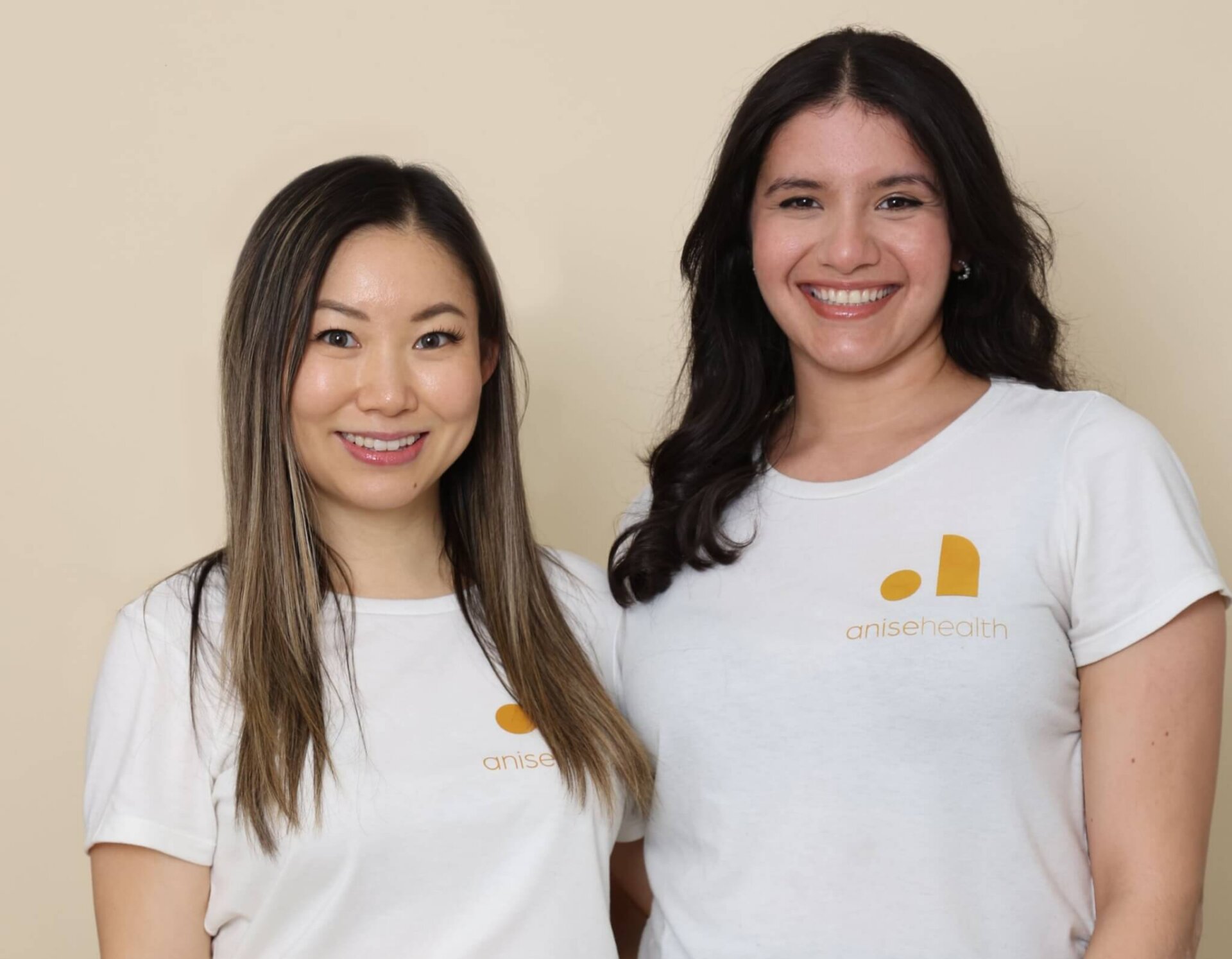
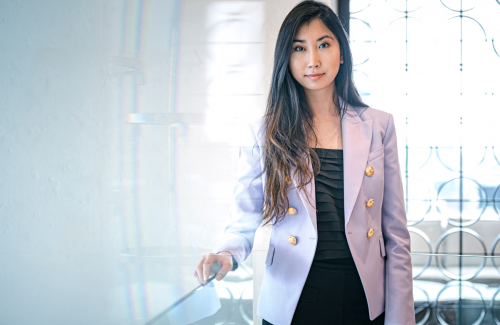
Alice Zhang (left) and Nisha Desai (right)

Building a Culturally Grounded Model of Care

After that pivotal conversation at Harvard, the two women began mapping out what culturally attuned mental health care could look like. They spoke to clinicians, patients, payors and community leaders, testing how cultural nuance could be integrated into evidence-based therapy and coaching.

They envisioned a new kind of care model: one that didn’t require clients to educate their therapists or set aside their cultural identity at the door. Instead, therapy would start from a place of understanding.

“Alice and I really built Anise to be what we believe our community has needed during our upbringing. What we kind of wished for ourselves through our own personal journeys with therapy.”

But building what didn’t yet exist came with challenges. They had to prove — to investors, clinicians, and even the broader healthcare system — that cultural context wasn’t just a “nice to have,” but essential to effective care. Many mental health professionals hadn’t been trained to deliver culturally adaptive therapy, so Anise Health had to design that framework from the ground up: provider training programs, accurate diagnostic tools, tailored care plans, curated resources and a scalable model for personalized, culturally attuned care.

Their persistence paid off. What started as late-night brainstorming sessions between classes evolved into a fully fledged mental health platform that blends clinical rigor with cultural empathy.

Growing the Movement

Since its founding, Anise Health has facilitated over 10,000 paid appointments and built a network of 60+ licensed providers across multiple states. The company is now expanding through insurance partnerships that make culturally attuned care more affordable and accessible.

Behind the scenes, Nisha leads operations and product design, while Alice drives partnerships and provider training.

Their complementary strengths, coupled with a shared sense of purpose, have helped Anise Health raise $6.4 million in funding and gain recognition as one of the top 10 most innovative Asian Pacific-led companies to watch by NYSE, Y Combinator, and Gold House.

Redefining the Future of Mental Health for Asian Communities

For both founders, Anise Health’s success goes beyond numbers. It’s about shifting how mental health is understood and delivered, starting with a community that has long been underserved and stigmatized.

“Our goal isn’t just to make care available,” Nisha says. “It’s to make it effective, culturally relevant, and sustainable within the healthcare system.”

By creating a new gold standard of culturally attuned care, Nisha and Alice aren’t just helping Asian Americans access therapy that finally feels like it speaks their language – they’re reimagining what inclusive mental health care can look like for everyone.

Learn more about Anise Health at anisehealth.co
Related Articles

Image Source: Locke Bio

Uncategorized

How This Sci-Entrepreneur Became A Company CEO At The Age Of 18

Capitalizing on her 14-year-old self’s science enthusiasm 12 years ago, Cathy Tie, transformed herself into a successful bioinformatician and entrepreneur.

At 18, the young Canadian became the co-founder of the $1 million dollar worth Ranomics company, a health risk prediction provider. While she co-founded Locke Bio, an e-commerce platform for pharmaceutical and other FDA-approved product suppliers when she was 23.

Today, the 26-year-old sci-entrepreneur shares that having a broader view is her key to being integrative and cross-disciplined in the many fields she is engaged in, as art and creativity are easier said than done.

During an interview with CNBC, Tie mentions her ability to connect ideas and see them far differently from how others perceive, including how science can grow and expand for beginners which she thinks is more artistic and creative than technical. 

This skill, however, is uncommon among teenagers. Yet, Tie’s innate dexterity manifested in her secondary years as she reserved a special place for science and relevant practical activities in her heart ever since a kid. 

Discontented with the standard curriculum, she wrote unsolicited letters to her professors seeking to tour the school labs, perform studies, and assist in their scientific projects, which taught her a lot until she had her first paper published in a peer-reviewed journal at age 16. 

However, she realized that getting entrepreneurial financing is better than relying on academic allowances since she could do more research. She applied to entrepreneur programs to assist her in the startup world.

Upon getting acquainted with Leo Wan who was then a Ph.D. student at the school where she was a neophyte, they worked together and were admitted into IndieBio, a startup platform that finances and mentors science entrepreneurs.

With Tie having prime knowledge on how to figure out issues on genetic trial precision, she subsequently co-founded Randomics with Wan after quitting college and leaving for San Francisco where she became the CEO for the three early years.

Thereafter, she was asked to apply and was accepted to The Thiel Fellowship, which aids a $100,000 subsidy to out-of-college inexperienced entrepreneurs.

A year following her collaboration with Cervin Ventures, she founded Locke Bio, which currently has three U.S. and Canadian business resources.

Tie’s business is nonexempt to challenges that a company experiences, yet, hard work and reflection make it possible for her to always “see the bigger picture. In this light, she and her team have a lot ahead for the company.

Image Source: Maye Felices-McDonald Facebook

Uncategorized

Former Caregiver Now CEO Of Multi-Million Dollar Companies In The US

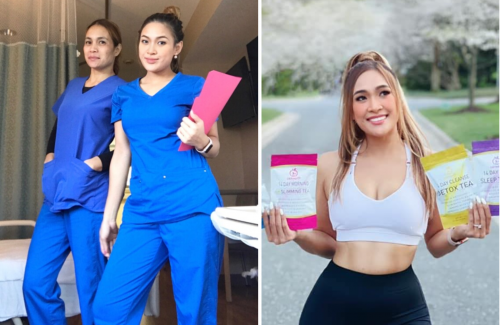
Stirred by her dream, perseverance, and thrust, Filipina-American Maye Felices-McDonald etches her name as the owner and CEO of quite a few businesses in the US such as GETMEFIT Slimming Products, and Mama’s Angels Senior Care.

Maye’s voyage was not a piece of cake. She developed her entrepreneurial skills as a vendor of sweets and paper dolls in school when she was still a kid, as a caretaker of her mother’s sari-sari store (sundry store), and as a student assistant when she was in college while studying Ladderized Nursing.

In 2017, Maye started as a part-time caregiver who made her car home for eight long months. Eventually, she courageously established her own caregiving firm named Mama’s Angels Care and later on catered to and met the caregiving demands in Maryland, Washington D.C., and Virginia starting with three caregivers to 49 healthcare providers at present. With this, she was also able to help fellow Filipinos by hiring them into her company.

As a dream-chaser, Maye capitalized on her 5Ps: Passion, Persistency, Perseverance, Positive Mindset, and the Power of Resilience which led her to the realization of her dreams which she found in the US.

As her business considerably grew, it became distinguished in the US, and in September this year, she proudly ramped up her well-known product on the esteemed New York Fashion Week runway putting in high spot her advocacy of unifying health, wellness, fitness, and fashion and her drive to take part in her young ambassadors’ will of fostering mental health awareness to the young ones.

Maye toiled and worked hard in achieving her dreams making her more than deserving of receiving laurels for her successful business undertakings along the lines of Modern CEO, Most Influential Young CEO for Business and Entrepreneurship, and Best Slimming Product of USA.

Image Source: Brían Nguyen Instagram

Uncategorized

Vietnamese-American Transgender Model Made History Winning local ‘Miss America’ Pageant

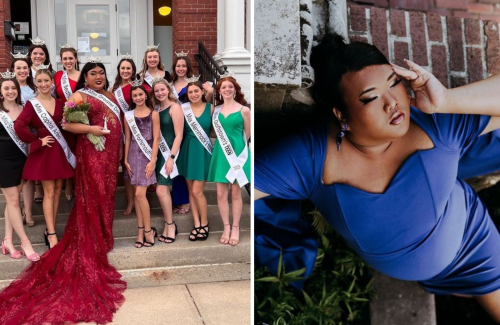
In the 100-year history of Miss America, 19-year-old Brían Nguyen has become the first transgender contestant to win a local Miss America Organization beauty pageant, Miss Greater Derry 2023.

The teenager from New Hampshire won a crown, title, and scholarship. She ecstatically wrote on her Instagram, “No words can describe the feeling of having the opportunity to serve my community and represent my community for the very first time at Miss New Hampshire.” 

Nguyen continued, “I am so honored to be crowned your new Miss Greater Derry 2023, and I am thrilled to show you all what I have up my sleeves. This will be an amazing year.”

Founded in 1986, the Miss Greater Derry Scholarship Program awards scholarships to young women in the Greater Derry area for academic skills, talent, character, community service, and poise.

The Miss Greater Derry Scholarship Pageant is also a preliminary event for the Miss New Hampshire Pageant and, ultimately, the Miss America Pageant.

As the new Miss Greater Derry, she recently attended the annual Best Buddies Champion Gala to support those with intellectual and developmental disabilities. $150,000 was raised over that night to help out their champion nominees. She will be working with Best Buddies New Hampshire throughout her reign.

Image Source: Carla Tramullas / MycoWorks

Uncategorized

MycoWorks’ Sustainable Mushroom Leather Raised Over $187M From General Motors and Hollywood A-Listers

“Growing the future has only just started. This industry will continue to surprise people,” says Philip Ross, co-founder of MycoWorks, a mycelium material founder and producer.

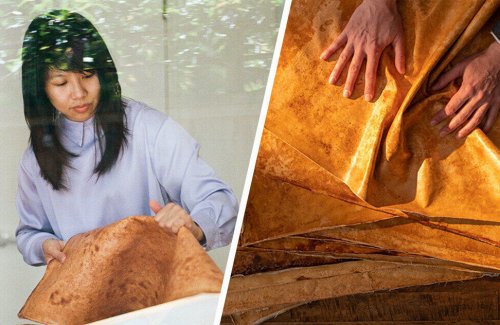
As the innovator of high-quality mushroom “leather” for the luxurious Hermes bags, the business acquired $187 million from Natalie Portman, John Legend, and General Motors and will soon cover the latter’s electric car interiors.

Ross unintentionally discovered leather-like material in reishi mushrooms, a fungus he farmed for his cancer and AIDS more than four decades ago. He then became a mycelium artist and featured his fungus-based works at famous museums.

According to Sophia Wang, co-founder of MycoWorks whom Phil met six years before they founded the firm while working together on art ventures, Ross’s discovery marked the “leather’s” birth to the globe.

Wang and Ross continued to discover more about mycelium and later realized that the material is enticing to buyers who don’t like synthesized contaminants and materials which are produced from animals.

Alongside raising their funding source, the company also conducted a groundbreaking at South Carolina Factory with the aim of attaining a sufficient supply of their fancy product.

With about 200 employees, Matt Scullin, the company’s CEO, said that the “Brands are making very significant changes to address what is really a growing demographic of people who want to buy sustainable products that have provenance and traceability and a lower carbon footprint, lower water use—and mycelium does all of those things.”

Compared to animal leather, the mushroom leather-like material is far more environmentally friendly as the former adds up to about a million tons of carbon dioxide which is tantamount to 30 million cars’ yearly emissions.

Despite environmental and animal issues, people prefer biomaterials or “next-gen” materials over the past decade making it in-demand as multi-billion dollars are invested in the industry.

Nonetheless, Hermes’ firm in France is soon to release its $4,200-worth “Victoria” bag made from MycoWorks’ amber-hued exquisite mycelium.