The Founders Behind Anise Health: How Two Women Are Reimagining Mental Health for the Asian Community - AHN Media Group

Stories

November 4, 2025

SHARE:

When Nisha Desai and Alice Zhang met at Harvard Business School, neither of them expected that a casual conversation about their frustrations with therapy would spark the idea for something much bigger.

As they juggled graduate school and their own mental health, they often felt therapy wasn’t built for people like them – they spent more time explaining their background to their therapists than actually healing. 

They realized it wasn’t just them – there’s a gap in mental healthcare that left many in the Asian and multicultural community feeling unseen and misunderstood.

That shared realization became the seed for Anise Health: a platform built to make therapy culturally attuned, accessible, and truly effective for the AAPI community.

A Problem They Both Knew Too Well

Before their paths crossed, both founders had already seen the same issue from different directions.

Nisha, who grew up in Florida in a family of healthcare entrepreneurs, had always been drawn to questions of access and equity in care. After studying finance and marketing at the University of Pennsylvania’s Wharton School and earning her MBA from Harvard, she worked in healthcare investing and later in digital product management at Humana. It was there, while helping build a mental health app, that she started hearing a troubling pattern from thousands of users – the same barriers she had personally faced.

Nisha recalls that people weren’t saying therapy didn’t work. They were saying it didn’t fit, that they didn’t feel understood.

Alice, meanwhile, came to the same conclusion through her own deeply personal experiences. Born in China, raised across Japan and Canada, and now based in New York, she calls herself a “third culture kid.” Her multicultural background gave her adaptability, but also a sense of never fully belonging anywhere.

That feeling resurfaced when she sought therapy during business school. Despite being fluent in English, she found herself translating her own emotions for her therapist – explaining why criticism from parents felt like love, or why pursuing excellence felt non-negotiable.

Alice remembers feeling exhausted after each session, explaining her background again and again, and leaving each time feeling unseen.

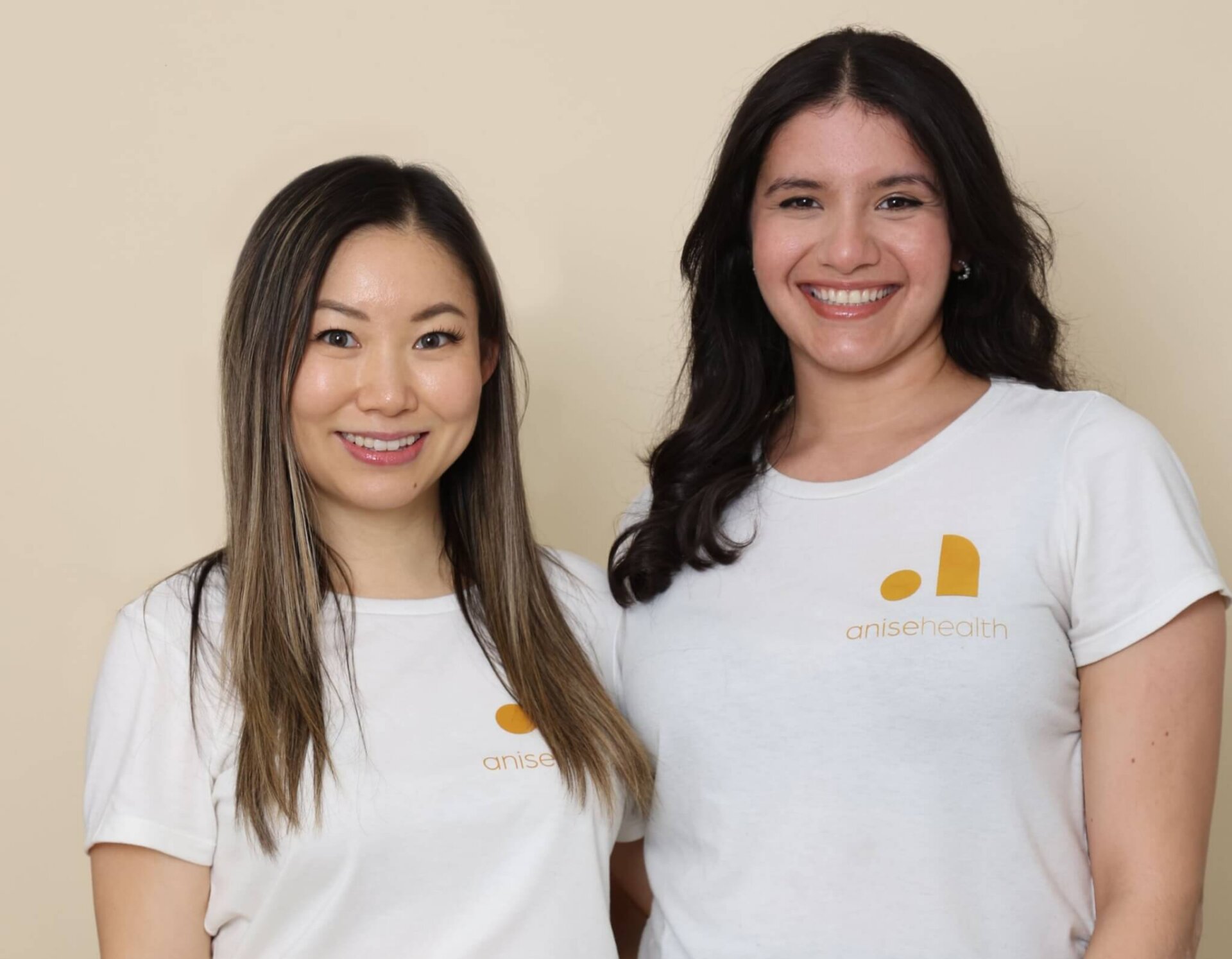
Alice Zhang (left) and Nisha Desai (right)

Building a Culturally Grounded Model of Care

After that pivotal conversation at Harvard, the two women began mapping out what culturally attuned mental health care could look like. They spoke to clinicians, patients, payors and community leaders, testing how cultural nuance could be integrated into evidence-based therapy and coaching.

They envisioned a new kind of care model: one that didn’t require clients to educate their therapists or set aside their cultural identity at the door. Instead, therapy would start from a place of understanding.

“Alice and I really built Anise to be what we believe our community has needed during our upbringing. What we kind of wished for ourselves through our own personal journeys with therapy.”

But building what didn’t yet exist came with challenges. They had to prove — to investors, clinicians, and even the broader healthcare system — that cultural context wasn’t just a “nice to have,” but essential to effective care. Many mental health professionals hadn’t been trained to deliver culturally adaptive therapy, so Anise Health had to design that framework from the ground up: provider training programs, accurate diagnostic tools, tailored care plans, curated resources and a scalable model for personalized, culturally attuned care.

Their persistence paid off. What started as late-night brainstorming sessions between classes evolved into a fully fledged mental health platform that blends clinical rigor with cultural empathy.

Growing the Movement

Since its founding, Anise Health has facilitated over 10,000 paid appointments and built a network of 60+ licensed providers across multiple states. The company is now expanding through insurance partnerships that make culturally attuned care more affordable and accessible.

Behind the scenes, Nisha leads operations and product design, while Alice drives partnerships and provider training.

Their complementary strengths, coupled with a shared sense of purpose, have helped Anise Health raise $6.4 million in funding and gain recognition as one of the top 10 most innovative Asian Pacific-led companies to watch by NYSE, Y Combinator, and Gold House.

Redefining the Future of Mental Health for Asian Communities

For both founders, Anise Health’s success goes beyond numbers. It’s about shifting how mental health is understood and delivered, starting with a community that has long been underserved and stigmatized.

“Our goal isn’t just to make care available,” Nisha says. “It’s to make it effective, culturally relevant, and sustainable within the healthcare system.”

By creating a new gold standard of culturally attuned care, Nisha and Alice aren’t just helping Asian Americans access therapy that finally feels like it speaks their language – they’re reimagining what inclusive mental health care can look like for everyone.

Learn more about Anise Health at anisehealth.co
Related Articles

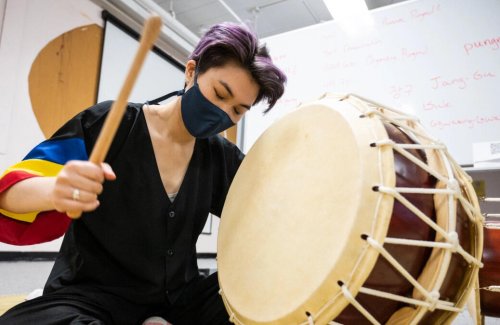
Image Source Colin Boyle/Block Club Chicago

Uncategorized

North Side Immigrant Rights Group Foster Community By Folk Drumming

Hana Center, a nonprofit organization for Asian American and immigrant rights, provides neighbors new opportunities to teach them traditional Korean folk drumming, which activists frequently use in their advocacy. 

Community engagement coordinator Won Joon Lee tells Block Club Chicago that the group teaches Pungmul, a Korean folk tradition with deep historical roots. It originated in Korea’s pre-industrial farming culture and used the hourglass-shaped janggu (a double-sided drum) to protest immigration and racism. 

Lee explained that during the Japanese occupation of Korea from 1910 to 1945, public gatherings were prohibited except for musical performances, making Pungmul a form of resistance. 

In 2017, two long-standing organizations,  the Korean American Community Services, and the Korean American Resource and Cultural Center were combined to become Hana Center, named from the Korean word for “one.”

The organization has a long history of youth Pungmul programming, but this summer marked the first time the non-profit offered classes for adults interested in advocacy work. 

The first-ever class will proceed after the initial session of eight weeks has passed. As the new program expands, the instructors intend to continue enrolling new students in it on an ongoing basis.

Hana Drum School instructor Inah Jeong said Pungmul drumming is loud as planned, and they are culturally and politically distinct. Korean immigrants may connect with Chicago immigrants and join the immigrant rights and citizenship march, she tells Block Club Chicago.

The ensemble delivered its first drumming class this summer, but new students are always welcome to join in. Residents and community organizations can benefit from such events, according to the center’s administrators.

Choi tells Block Club Chicago that the current situation is both exhausting and frightening, but she believes the strong and loving communities they form may provide joy even in difficult times.

Their communities enable them to change the world now and in the future. The goal according to Choi is to turn community building into advocacy that targets racial, gender, and economic concerns along with immigrant rights.

Hana Center is located at 4300 North California Avenue in Irving Park. It also offers services to address needs related to citizenship and immigration, housing, and other areas.

Image Source TomoCredit

Uncategorized

TomoCredit Raised Its Value To $222M To Help Gen-Z Build Credit Fast

TomoCredit announced that it had raised $22 million in a Series B funding round, giving it a post-money valuation of $222 million. 

It has also secured $100 million in debt financing and has raised $39 million in equity since its launch.

The newly acquired funds will be put to use by the corporation in the form of product line expansion, which may include the provision of mortgages and automobile loans. 

Kristy Kim founded TomoCredit in 2019 to help international students get credit. Three and a half years later, the fintech no longer focuses just on immigrants but is now also eyeing domestic students and SMBs that want to “build credit fast”. They received 2.5 million applications over time.

TomoCredit provides users credit limits of up to $30,000. It earns revenue from merchant interchange fees, not consumers. It doesn’t require a credit check, a deposit, or an APR.

According to TechCrunch, the firm doesn’t use FICO scores to underwrite, unlike many other credit offerings. Tomo Score, a “proprietary” underwriting algorithm, identifies “high potential borrowers” without credit scores. 

“Our customers are not in financial trouble…Once you identify them and give them a card, they spend a lot and don’t default. Our performance has been great and that gave us and our investors the confidence to scale.” Kim told TechCrunch.

Morgan Stanley’s Next Level Fund and Mastercard participated in the equity portion of the deal including GoldHouse, Asian Hustle Network, and Hyphen Capital, while Silicon Valley Bank provided the debt.

Alice Vilma co-manages Morgan Stanley’s Next Level Fund, which invests in early-stage innovation and tech-enabled enterprises with women or diverse founding teams, said that she was amazed by Kim’s ability to recognize a need as a young female immigrant and create a financial product.

“As a first-generation South Korean immigrant, I wanted to help immigrant communities to reach their American Dream faster with TomoCredit,” Kim told TechCrunch. “It has been wonderful to partner with minority-focused funds who truly understand Tomo’s mission.”

Ai Nguyen

Uncategorized

“My dad left our family for another woman when I was around 6 years old”

You might have heard a tale similar to this one here and there, but for every family who is now going through this — it feels like the beginning of the end. 

What more if your father left your family when you were young and just beginning a new life in a foreign place?

Nevertheless, it is utterly devastating that some even end up questioning themselves, “what have I done wrong or what should I have done right?” But eventually, you’ll come to the conclusion that you should just accept it, keep a positive attitude and figure out how to go on living your life without a father figure.

But what if one day your father knocks on your door and asks if he could come back to your family’s life?

Here’s Ai Nguyen, A Life and Business Breakthrough Coach, who shares a powerful story through her voice and experience of her 80-year-old dad.

The Crucial Memory

Last week, I celebrated my dad’s 80th birthday.  It was a deeply healing experience for me. Many of you don’t know this, but my dad left our family for another woman when I was around 6 years old, about a year after we had immigrated from Vietnam over to America. Here we are in a strange new country, and then he left us.

One of the last memories I had at that time was that he took me to the bus stop in the morning for school and told me that he was leaving the family and wasn’t coming back. That was it. I came home from school and he was gone.

For decades, I had blocked out this CRUCIAL memory of the bus stop day. It was brought out again during a healing hypnosis session I had last year. While growing up, he would come and visit our family from Guam every few years to attend any huge celebrations such as family weddings. 

Here we are in a strange new country, and then he left us.

-Ai nguyen

The Comeback

But then, about 18 years ago, he asked us if he could come back because he was struggling with his business. He was basically going to be homeless if we didn’t take him in.

This was such a stressful time in my life because we had to learn to build a life without him fully being there and then we had to also learn to accept him as he came back. Long story short, when he came back, even though he stayed, he had lost his power in the family.

We weren’t interested in what he had to say. I wasn’t interested in his opinions. Because, honestly, he lost our respect when he left the family. So, we had never celebrated his birthday.   

My dad had to learn how to make peace with himself. He practiced Buddhism, spirituality, and yoga to calm his internal state.

Long story short, when he came back, even though he stayed, he had lost his power in the family.

-Ai nguyen

The Celebration of Birthday and Healing

Fast forward to last week, his birthday party, my husband Dave and I flew back to St. Louis, Missouri to celebrate this with my family. My dad has been asking the family for the past year to do a party for him. He had an inkling that he would die soon and it was important for him to experience this. And so we made tons of food and brought the whole family together.

And there was a moment where I caught him feeling super happy, in front of the colorful walls, getting photos taken by me. Like a child’s smile when they are being acknowledged and celebrated. I caught it in the moment and in the photos.  

Ai’s father all smiles for his 80th birthday

And all of a sudden..

A deep level of compassion and forgiveness fell into my body.

(As I am writing this, I am CRYING. Nose dripping, wiping my shirt all over my face type of crying)

I suddenly realized that this man is 80 years old. And now he’s finally being celebrated. My heart felt the pain of living in a body for 80 years and not experiencing the greatest, most loving moments in life.  

I felt compassion for the pain of him having to forgive himself for his mistakes. I felt compassion for him, probably realizing he could have done more in his lifetime, but he didn’t get to do so. I felt compassion for him for having to release guilt, shame, and resentment over the years. Because death is near, and he simply wants to be acknowledged.

At that moment, I saw the inner child in him; the child who just wants more praise, love, and attention on this special day. And I wish if I had been quicker in my realization, that I had taken more pictures, to make him laugh, and make it even more of a special day for him. 

(A moment of regret showed up for me)

I suddenly realized that this man is 80 years old. And now he’s finally being celebrated. My heart felt the pain of living in a body for 80 years and not experiencing the greatest, most loving moments in life.  

-ai nguyen

This was the level of compassion that I had prayed for, and I wasn’t ready to fully receive it for many years until I participated in this birthday party.

I got balloons with his favorite celebration colors: red and gold. (Coincidentally, his outfit matched my balloon colors).  Intuitively, I knew what he wanted. If my sister had not asked me to be in charge of the balloons and decorations at the last minute, I would have missed out on seeing the joy and happiness in my dad.  

It was as though SPIRIT planned all of this to happen FOR ME.

I share this story with you because I want you to know that we all have the opportunity to experience forgiveness and healing. Be present, be open, and compassionate and spirit will give you powerful insights. Life flies by fast. Always celebrate yourself. Find gratitude and greatness in your reality and everything will shift for you!

Lastly, you have the power to turn your pain into your purpose.

Ai Nguyen

Your Life and Business Breakthrough Coach

Image Source Esquire Philippines

Uncategorized

Filipino Founder of Mega Sardines William Lim Shares Business Wisdom

Mega Global Corporation began as a fishing vessel in 1975 and is now one of the Philippines’ most successful canned sardine manufacturers. It has 88 ships, two functioning factories, one under development, and two headquarters.

The company’s founder William Lim said that her wife was from a fishing family and his enthusiasm for fishing sparked his successful business – but his entrepreneurial journey wasn’t easy.

Be a risk-taker

He advised taking calculated risks and anticipating outcomes. “When we came up with advertisements, in three to six months, our sales started to improve slowly. You need to spend to build your brand name so people will have confidence in your product,” he told Esquire.

Good Brand Communication

By learning how to communicate effectively to store owners and consumers about your brand, you will be able to differentiate it from its competitors. “Because nobody knew our brand, supermarket owners did not want to accept our products to be on their shelves,” he told Esquire Magazine, he had to personally visit the stores to convince them for a chance to sell their product. 

Adapt to the times

Simply abandoning ineffective old methods, and always taking opportunities to improve.

Remain focused on your vision

Never forget what the goal was when starting and always remember what the company stands for. He added that when it comes to making decisions about the company, these guiding principles will serve as the primary motivation and compass. “If you keep changing your focus, you have less time to succeed. You have to put your heart and mind to your vision and never give up, no matter the odds,” he tells Philstar.