Stories

June 28, 2023

SHARE:

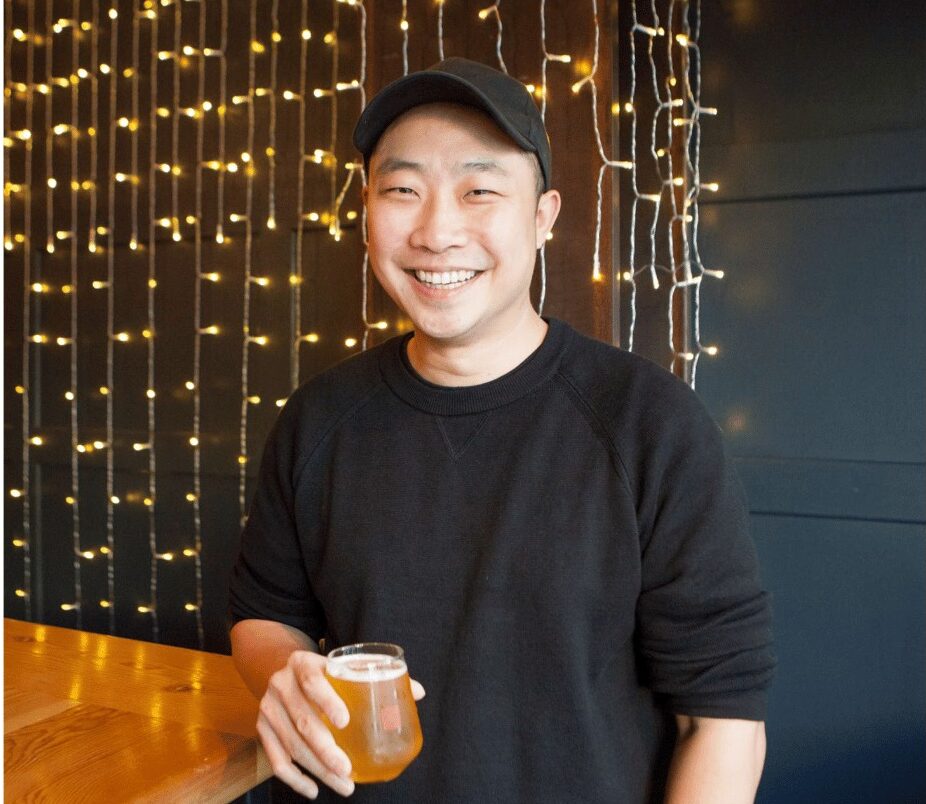
Youngwon Lee is the founder and CEO of Dokkaebier, an Asian-influenced craft brewery in Oakland, California. Dokkaebier takes its name from the ‘dokkaebi,’ the mysterious, shape-shifting creatures found throughout Korean folklore. Myths describe them as mischievous spirits who love to eat, drink, and be in the company of others. 

Lee started Dokkaebier after he discovered only 2% of people in the craft beer industry identify as Asian American. He knew then that he had to take action. Over the last three years, he worked tirelessly to create craft beers that not only pair well with Asian food but can make craft beer more diverse and inclusive.

Founded only three years ago, Dokkaebier is already one of the fastest-growing craft breweries in the U.S. Lee and his team have earned more than $1 million in sales, which they expect to increase to $3 million at the end of this year.

Dokkaebier’s Asian-influenced craft beers are available in more than 400 locations, including Whole Foods Market, H Mart, and BevMo!, plus their new flagship brewery and taproom in Oakland, California. They plan to create more than 30 new craft beers, launch in another 10 states and expand their footprint to a whopping 5,700 locations by the end of 2024. 

Lee has more than a decade of experience in the alcohol industry and has finally created something uniquely his with Dokkaebier.

WHERE DOKKAEBIER CAME FROM

Although I have worked in the alcohol industry for most of my career, I spent much of it in South Korea. It was not until I started working in the beer industry in the United States that I realized I was the only Asian person. I quickly realized I needed to be the change. 

Not only was the craft beer industry missing out on some much-needed diversity, but it also lacked creativity from unique and differing perspectives and experiences.

I wanted to create the first Asian craft beer brand. Everything would be Asian-influenced, including the design, packaging, name, and branding. Most importantly, it would also have an Asian-driven taste. I wanted to be authentic to myself and bring my history and heritage to an industry I love.

I have my wife to thank for the name. One day,  she said, “Why not just name the brand after dokkaebi?” 

Dokkaebi loves to eat, drink, and play but hides during the day. It was perfect for a craft beer brand! The creatures also capture our heritage as Korean Americans, so we combined dokkaebi with beer and got Dokkaebier.

IT HAS ALWAYS BEEN A PART OF WHO WE ARE

Aaron Weshnak, our head brewer, and I know beer, but we knew we had to do a lot of experimentation to come up with something original and do it consistently. It has always been a part of who we are; we experiment, shape-shift, and try new things—just like the dokkaebi which inspired our name. We always look for that perfect combination of flavors to share with others. 

When we started our experiments, we knew we had to start with Asian cuisine. We used flavors and ingredients we grew up with, like bamboo tea, Szechuan peppercorn, and even kimchi, which remains one of our most popular craft beers today. Then, we started thinking about what makes a great dining experience. 

We think Dokkaebier should be the Asian-inspired complement to your meal, even if you are not eating Asian cuisine, and if you are, then certainly an Asian-inspired craft beer would be the cherry on top.  

IT WAS CHALLENGING TO GET SET UP ONLINE AS AN EARLY-STAGE ALCOHOL STARTUP

I founded Dokkaebier in early 2020, just before the COVID-19 pandemic. We decided to launch a pop-up taproom in San Francisco for our debut. We worked with a former chef de cuisine from the two Michelin-star-restaurant Saison to have the perfect food pairing. But the pandemic shut everything down. 

We quickly found a new way to get our craft beer to the fans we had made in such a short time. It was challenging to get set up online as an early-stage alcohol startup, but we overcame it because we are all “shape-shifters” as dokkaebis. 

We then started to sample our beer at local beer festivals and events in the San Francisco Bay Area. It was important for us to be a part of the community, especially in uncertain times. We donated food and beer to first responders at Kaiser Permanente in Santa Clara, California, and worked on exclusive collaborations with local Asian American community groups and nonprofits. We also proudly supply our beer to local small businesses, including many Asian restaurants all across California. 

We are proud that Dokkaebier is available everywhere from local grocers, such as Berkeley Bowl, Bi-Rite Market, and Gus’s Community Market, and national retailers, like BevMo!, H Mart, Whole Foods Market, and Total Wine & More.

MOST PEOPLE GET BACK INTO LINE THREE OR FOUR TIMES BECAUSE THEY LOVE OUR F LAVORS AND INGREDIENTS

We have been blown away by the support of craft beer fans and Asian Americans who credit Dokkaebier for giving them the confidence to try craft beer for the first time. Our reception has been overwhelmingly positive. 

At every beer festival that we go to, people line up to try our beer. Most people get back into line three or four times because they love our flavors and ingredients. We typically have the longest lines of any brewery at any event and have even been recognized as the top or must-see beer at the LA Beer Festival and SF Beer Week.

Dokkaebier is also an award-winning beer. Craft beer fans and alcohol industry experts have recognized us with medals and international awards. We earned best-in-class recognition at the World Beer Championships and have won 10 times at the 2021 and 2022 Annual Brewski Awards. In 2022, every one of our craft beers won an award, with our milk stout taking home Beer of the Year and our kimchi sour and yuza blonde winning platinum medals. It’s truly amazing to see what we’ve accomplished in a short time.

Finally, we have been hard at work making Dokkaebier more accessible to more people. Dokkaebier is now carried in more than 400 restaurants and retailers, and we expect to see sales skyrocket this year. 

MY INDUSTRY EXPERIENCE HAS ALLOWED ME TO FOCUS MORE ON INNOVATION

The alcohol industry is heavily regulated and very complex. Even in the craft beer industry, every aspect of the business can be a massive undertaking, from manufacturing, distribution, and sales to operating a taproom. Fortunately, I have a lot of experience in the industry and have been able to navigate it all easily.

My industry experience has allowed me to focus more on innovation, especially research, and development. I believe Dokkaebier focuses more on ingredients and flavors than other craft beer companies or breweries. In only three years, we have developed and released more than 40 original craft beers. 

We can experiment more freely with all sorts of ingredients and collect feedback from craft beer fans about the flavors they want in ways other beer companies could not. Our relationship with our customers and community makes it easier for our craft beer to stand out.

STAYING TRUE TO OUR ROOTS MEANS EXPLORING THE WORLD AND SHARING OUR SPIRIT WITH OTHERS

We want to establish Dokkaebier as a nationally renowned Asian craft beer brand. When someone mentions one of our core beers, such as kimchi sour, we want them to think, “Isn’t that from Dokkaebier”? 

We hope that one day, Dokkaebier will be a household name and synonymous with Asian craft beer. In the near future, we might also move beyond craft beer. Dokkaebier could also introduce adults to other alcohol, like spirits, with our Asian-influenced style.

As a company, Dokkaebier values adventurousness, shape-shifting, and indulgence. We want to be available in other regions and different types of alcohol, as it aligns with our adventurous and shape-shifting spirit. For us, staying true to our roots means exploring the world and sharing our spirit with others.

ADVICE FOR THOSE WHO WANT TO ENTER THE CRAFT BEER INDUSTRY

The alcohol industry can be challenging as an entrepreneur, especially as a startup founder. I recommend working at a craft brewery or alcohol company for at least a few months. It is a great way to get paid to learn and find a mentor.

As an underrepresented minority in the industry, do not be shy. Once you find an opportunity, look for ways to bring your unique perspective to the business. Combining your unique voice is an important step to differentiate your personal and future craft beer brand from everyone else.

CONNECT WITH YOUNGWON

Website: enjoydkb.com

Instagram: @dokkaebier
Related Articles

Image Source: Boy Isaw Instagram

Uncategorized

Hard Work Pays Off For Bringing Filipino Street Food “Boy Isaw” To New York, Now Makes 14$K A Month

The Filipino street food vendor admits that perseverance and hard work were really his main capitals in achieving his dream.

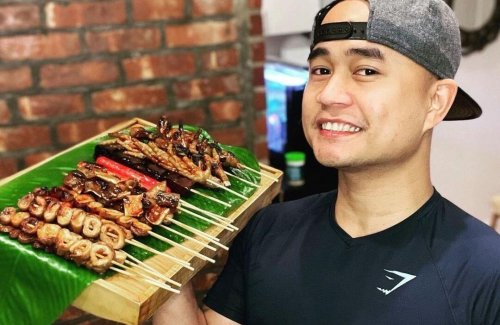
After introducing one of the most popular Filipino barbeque street food, “ihaw-ihaw,” especially the isaw (grilled chicken or pork intestines), to New York, Filipino street food seller Robin John Calalo has seen the fruits of his labor, earning more than $14,000 each month.

His shop, “Boy Isaw,” became well-known among fellow Filipinos and even foreigners who yearned for a taste of isaw, betamax (coagulated chicken blood), adidas (chicken feet), and other Filipino street food. 

Robin’s success came as a surprise considering that his small firm only had $50 when it was founded in 2019, during the onset of the pandemic. He claims that while in the supermarket, he suddenly made the decision to open his BBQ food cart due to a craving for Filipino food with his friends and family as the first customers.

According to Business News Philippines, Boy Isaw peddles in food bazaars and engages in online selling where he posts for-sale ready-to-grill street foods.

Aside from grilled food including hotdogs, chicken, and others which he posts on his Instagram, he also serves rice and chicharon bulaklak (deep-fried pork intestine) which is also a bestseller.

Image Source: Jane Nguyen / NBC News

Uncategorized

Kenneth Mejia Sits As Los Angeles’ New and First Filipino American City Controller

Taking the lead with a 21-point advantage, Kenneth Mejia, is now Los Angeles’ newly-elected City Controller assuming city-wide office after cutting the edge against City Councilmember Paul Koretz.

The 32-year-old is the first Filipino American to take the position. As a CPA and community militant, Mejia is pleased to embody the distinct community of L.A.

“We have a very diverse population in L.A. and I feel very proud and honored to represent that community and coming from a minority background makes you more empathetic about the people you’re fighting for,” Mejia said as quoted in NBC News.

He achieved a double-sweeping win after attaining more votes than any mayoral candidates and concluding the election with over 100,000 votes higher than Koretz, a radical and experienced public officer, which accordingly is a sign of many Angelenos’ renouncement of the status quo.

Mejia was also once an organizer of the L.A. Tenants Union who initiated the legalization of homelessness and made the concerned authorities liable for it.

The newly-elected City Controller mentioned that he eyes transforming the system and making it worker-friendly. He likewise shared that a controller is “the city’s accountant and paymaster,” which is different from high-profile City Council positions since he cannot promulgate a legislation or amend the city budget. These restrictions fit him wonderfully as a CPA and organizer, making his work more intriguing.

“You don’t really have to push an agenda when you’re running to present data and show numbers,” Mejia continues, “They have a story in themselves,” he added.

After the City Council decided to ban homeless encampments 500 feet from schools and daycare centers, Mejia calculated how many camps will be affected and created a digital map of 1,900 schools and daycare centers in the city, showing that 20% of the walkways would no longer be available as a campsite. Mejia’s staff employed computer technology to be more transparent to the public, especially regarding finances.

Image Source: Christopher DeVargas / Las Vegas Magazine

Uncategorized

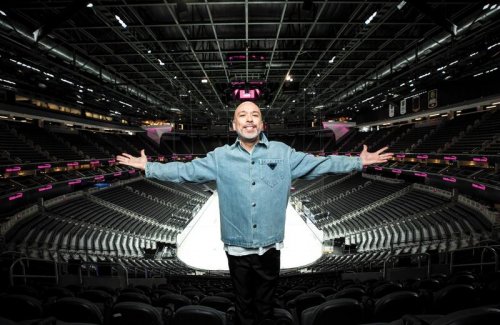
Jo Koy Makes History As The First Ever Comic Main Attraction At T-Mobile Arena

After Jo Koy’s recent successes, including the release of his two wildly popular Netflix specials,” In His Elements and Comin’ In Hot”, and the publication of his autobiographical debut book, entitled “Mixed Plate: Chronicles of an All-American Combo”, he is set to star as the first comic main attraction at Las Vegas’ T-Mobile Arena on November 19.

This year, the Filipino-American actor-comedian embarked on his first nationwide arena tour for Easter Sunday, a feature film based on those personal anecdotes and his other comedic content that hit theaters which also starred Lydia Gaston, Eugene Cordero, Tia Carrere, and Lou Diamond Philipps. 

It was a life-changing experience for the 51-year-old, and he plans to continue creating films from behind the camera and helping other Filipinos, Asian Americans, and artists from different races.

Jo Koy first experienced comedy while still a student in Las Vegas and will return to the same city to fulfill his dream of becoming the first primary comic attraction to play at T-Mobile Arena.

“When I play T-Mobile Arena, I discover that I’m the first cartoonist to ever do it, which is sort of cool,” he told Las Vegas Magazine, “There are other venues in Las Vegas, including some very large ones, but T-location Mobile’s right on the Strip has a unique appeal,” Jo Koy adds.

He also mentioned that performing at arenas and other famous places abroad is beyond anything he could have imagined and that the realization of it drives him crazy.

After finishing the book and movie he’s been working on for several years, Jo Koy said that the process was challenging because there were many obstacles and firsts to tackle; it was the first time a Filipino actor portrayed the main character in a Hollywood production. He felt good about himself and appreciated Dreamworks and Universal for helping him.

“I want to keep creating. I want to highlight the other talent that is out there because I have been addicted to being in front of the camera,” Jo Koy continued, “Knowing how difficult it was for me, I want to keep the door open and showcase more potential, not just Filipino talent but talent from other countries and races that want to be recognized — I want to see what I can do to help make it happen.”

Jo Koy also disclosed that he has his eye on a number of up-and-coming stand-up comedians, such as Matteo Lane, with whom he is now working, Asif Ali, and JR De Guzman.

Image Source: Wu Tsai Foundation

Uncategorized

Brooklyn Nets Owners Launched The Largest Business Accelerator for Minority-led Startups

After George Floyd’s controversial death in 2020, growing VC investments in businesses founded by people of color became a top priority. According to Crunchbase, just 2.4% of VC financing between 2015 and 2020 went to Black or Latinx enterprises. Funding for black entrepreneurs quadrupled to $1.8 billion in 2021. This year, however, saw a sharp decline in investments in minority founders.

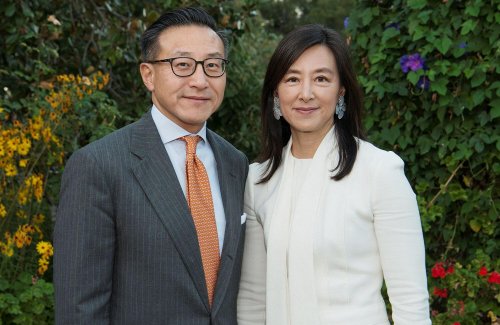
Entrepreneur and co-owner of the Brooklyn Nets, Clara Wu Tsai, launched BK-XL, the biggest business accelerator that aims to support 12 startups founded by Black, Indigenous, and other minority founders in 2023 by investing up to $500,000.

In an interview with The Associated Press, Wu Tsai stated that a shortage of finance is a major barrier to wealth growth for BIPOC businesses. She and her husband Joseph Tsai believe investing in BK-XL would be the greatest approach to overcome this challenge and generate wealth for the entrepreneurs and the jobs they create.

Wu Tsai stressed that she aims to highlight the underutilized entrepreneurial potential in Brooklyn to assist the neighborhood get back on its feet. She also thinks that BK-XL will demonstrate to the rest of the nation that investing in Black businesses pays off and is a smart move.

She added that any money made from investments in the BK-XL startups will be put back into Brooklyn-based companies. “The best way to demonstrate our faith in Brooklyn and Black-owned businesses,” she continued, “is to invest in them and demonstrate to the rest of the world that they are wise financial decisions.”

Prior to the release of BK-XL, Tsai’s Social Justice Fund also introduced “EXCELerate” last year, which offered no-interest loans to Black-owned small companies in need of assistance in order to recover from the closures caused by the COVID-19 pandemic.

As part of her strategy to leverage a combination of investments and donations to achieve goals for the neighborhood, she stated that BK-XL will shortly be followed by a philanthropic grant program to assist other businesses in Brooklyn.

All Brooklyn-based, BIPOC-led firms may submit a BK-XL application starting on December 5. But only companies in industries where the Tsais have the expertise, like e-commerce, will be approved.