The Day a Las Vegas Slot Machine Changed June Zhu's Vision for Entrepreneurship - AHN Media Group

Stories

July 16, 2026

SHARE:

When June Zhu immigrated to the United States, she wasn’t chasing certainty.

She was chasing the possibility.

Like millions of immigrants before her, she believed in something uniquely American: that regardless of where someone came from, if they worked hard, solved real problems, and created value for others, they could build a better future.

That belief led her to found ChargerGoGo.

At first glance, ChargerGoGo looks like a portable phone charging company. Today, its network spans more than 6,000 locations across all 50 states, serving more than one million users.

But ask June what business she’s really building, and her answer is unexpected.

“I’m not trying to just build the biggest charging network,” she says. “I’m trying to build one of the largest entrepreneurship platforms.”

The Question Every Founder Faces

That vision wasn’t obvious in the beginning.

Like countless founders, June spent years trying to answer the same question that keeps entrepreneurs awake at night:

How do you build something nationally without billions of dollars from venture capital?

Every new market required more equipment.

Every new customer required more investment.

Growth always seemed tied to raising more capital.

The Las Vegas Moment

Then one ordinary afternoon in Las Vegas, while talking with her team, she witnessed something that unexpectedly gave her a new perspective.

A few teammates each pulled a small amount of cash from their wallets and decided to play a slot machine together.

Nobody risked very much.

If they lost, the downside was limited to a few hundred dollars each. But if they won, everyone shared in a prize far greater than they could have won individually.

“It wasn’t about the slot machine,” June recalls with a smile. “It was about the ownership.”

She watched people willingly contribute because everyone had a stake in the outcome.

At that moment, the question in her mind changed.

Instead of asking, “How can I raise enough money to own every charging station?”

She started asking, “Why should I own them all?”

What if every charging station could become an income-producing asset for a local entrepreneur?

That idea transformed ChargerGoGo.

Rather than building a company that owned every charging station, June built a platform where local entrepreneurs could own, operate, and grow businesses under a shared brand.

Every charging station became more than hardware. It became an opportunity for someone to build recurring income and grow a business within their own community.

Building an Entrepreneurship Platform

For June, that model reflects something she has admired since arriving in America.

“The greatest strength of this country isn’t just innovation,” she says. “It’s that ordinary people have the opportunity to become builders.”

Instead of measuring success solely by the size of the network, she measures it by how many entrepreneurs it helps create.

Through ChargerGoGo’s distribution partner model, local business owners can build recurring income while expanding the company’s nationwide footprint. As the platform grows, so does the number of entrepreneurs building businesses of their own.

Why Ownership Matters More Than Ever

That belief feels even more relevant as artificial intelligence reshapes the global workforce.

While much of the conversation focuses on jobs disappearing, June believes the more important conversation is about creating more owners.

“The future shouldn’t belong only to companies with the most capital or the most powerful AI,” she says. “Technology should lower the barriers for everyday people to own businesses, generate wealth, and create opportunities for their families.”

That’s why she believes entrepreneurship is becoming more important, not less.

Her vision extends far beyond portable charging.

She imagines a future where platforms, AI, and connected infrastructure allow millions of people to own income-producing businesses that once required millions of dollars to build.

Redefining the American Dream

For June, that’s what the American Dream has always meant.

Not that success is guaranteed.

But that ownership is possible.

Today, when people ask what ChargerGoGo does, she could talk about charging stations, technology, or nationwide expansion.

Instead, she prefers a simpler answer.

“We’re building a platform that helps more people become entrepreneurs.”

Because in the end, June Zhu isn’t trying to build a billion-dollar company.

She’s trying to help build thousands of million-dollar entrepreneurs.

Perhaps that’s the most powerful way to measure success: not by how much one person owns, but by how many owners they help create.

Learn more about ChargerGoGo here:

📍Website

Related Articles

6060_Simone Portraits_2259_01_Edited-jpg

Stories

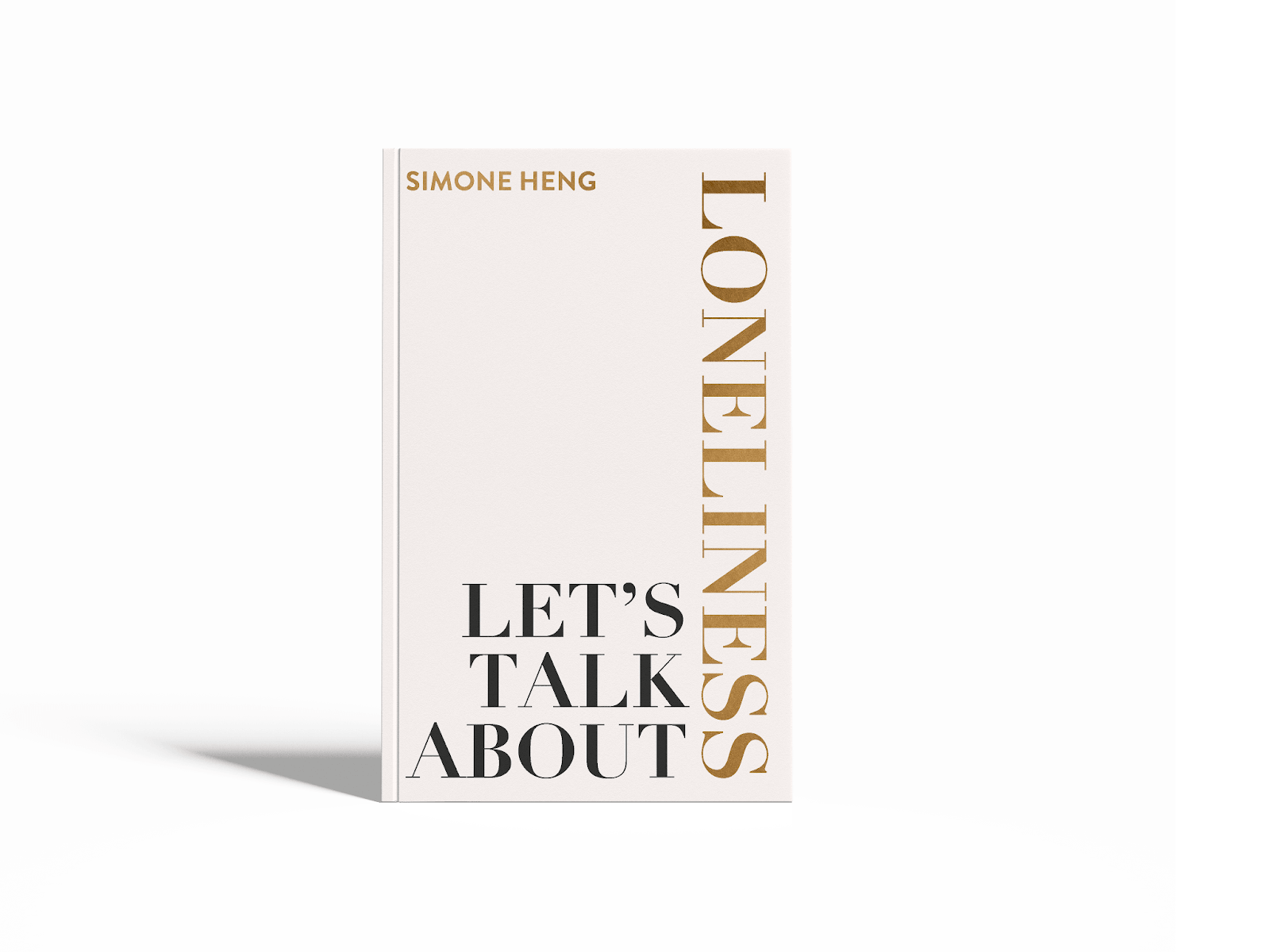
The Mission of Award-Winning Author Simone Heng and How Let’s Talk About Loneliness Expands Its Message Through Its Chinese Launch

Loneliness is often seen as a personal feeling, but for Simone Heng, it became a question worth exploring on a global scale.

Now, with the upcoming Chinese translation of her 2023 book, Let’s Talk About Loneliness, her message is reaching a new audience and entering a new chapter.

What began as a deeply personal experience has grown into a wider mission to make conversations about loneliness more accessible across cultures.

From Personal Isolation to a Written Voice

Simone Heng’s book Let’s Talk About Loneliness was born from a period of deep emotional isolation. After leaving her broadcasting career to care for her paralyzed mother, she found herself cut off from her social world. While others were building families and careers, she was navigating caregiving, grief, and isolation.

Before that chapter, her life had always been shaped by movement. She was born and is based in Singapore, grew up in Australia, studied in Switzerland, and worked in the UAE. Her background reflects a mix of cultures, even reflected in her DNA, which shows 11 different ethnicities.

But the defining moments were not just about where she had been, but what she had gone through. She lost her father at 19, and 10 years later, along with her sister, became the main support to her mother. Those experiences reshaped her priorities and slowly pulled her away from the life she was chasing.

In that quieter, more difficult season, she began asking questions she could not ignore. Why does loneliness feel so heavy, even when you are not physically alone? Why is it so hard to talk about?

Over time, Simone realized something that became central to her work. Loneliness is not simply about being alone. It is the gap between the kind and amount of connection a person wants and what they are actually experiencing.

A Book That Challenges Cultural Assumptions

Let’s Talk About Loneliness explores an idea many people overlook. Loneliness can exist even in collectivist societies. Simone highlights how cultural expectations, emotional restraint, and unspoken pressures can make it harder to express isolation. This perspective brought a diverse lens to the dialogue on loneliness often dominated by Western viewpoints.

She points out that in cultures where people are expected to always be surrounded by family, saying “I am lonely” can carry stigma. At the same time, many connections are shaped by obligation rather than genuine emotional closeness. These kinds of relationships do not always meet deeper emotional needs, and can leave people feeling alone even when they are not physically isolated.

Retitled in Chinese as “Anyway, I Am Just as Lonely,” it will be available in Xinhua, Sisyphus, and Yanijou bookstores in China. The book blends research with lived experience, making it both informative and deeply personal. With the release of the Chinese edition, the focus is on reaching Chinese-speaking communities where conversations around loneliness are often less visible.

Building a Mission Around Human Connection

Beyond the book, Simone Heng’s work continues to focus on one idea. Human connection is not just something we hope for, but something we absolutely must learn and build, particularly in the era of AI.

After spending 15 years in broadcasting, she chose to step away and start again in 2019. It was not an easy decision, and she built her career without financial backing, relying on persistence and clarity in what she wanted to create.

Today, she is a global speaker who works with leading organizations such as Google, Meta, Harvard University, and JPMorgan. She teaches audiences how to build meaningful connections both in and beyond the workplace.

Her message continues to resonate because it speaks to something many people are quietly experiencing. Without a sense of belonging and psychological safety, it becomes harder to think clearly, create, and show up fully.

At its core, her work is a reminder that connection is not about how many people are around us. It is about how understood we feel. And sometimes, putting that feeling into words is the first step toward changing it.

Learn more about Simone Heng here:

📍Website

Green Blue and White Minimalist Landscape Desktop Wallpaper-png

Stories

How Brett Bolton and Kayden Beasley Turned Adversity Into Triumph at the 2026 Paralympics

Two athletes, shaped by similar beginnings, turned personal challenges into a defining moment on the world stage.

Both were born in China and later adopted into the United States, where they grew up navigating identity, resilience, and belonging.

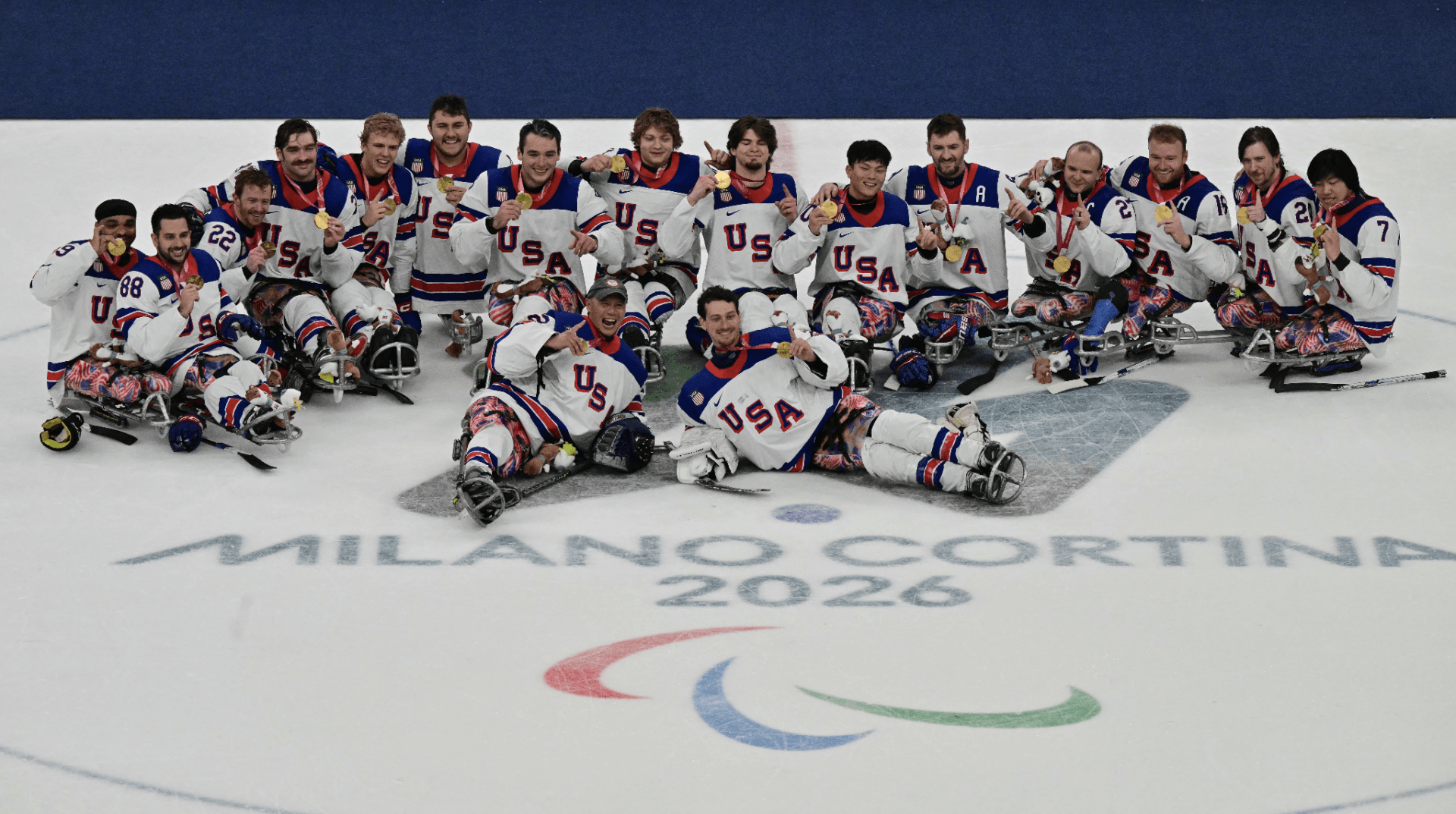
At the 2026 Winter Paralympic Games, their journeys came full circle as they helped lead Team USA to gold.

Image Source: Team USA Hockey

Brett Bolton’s Journey to the Top

Born in China with a congenital limb difference, Brett Bolton was adopted into the United States at just three years old, growing up in an environment that pushed him to adapt early and often. What could have been limitations became the foundation for resilience, shaping how he approached both life and sport.

That same quiet determination followed him onto the ice, where he carved out a place as a rookie forward for the U.S. sled hockey team. At the 2026 Winter Paralympic Games, Bolton didn’t just participate, he rose to the top, helping secure a gold medal and marking a powerful arrival on the global stage.

Image Source: NHL

Kayden Beasley’s Defining Moment

Like Bolton, Kayden Beasley’s story began in China before being adopted into the United States, where he grew up navigating questions of identity alongside his development as an athlete. Over time, discipline on the ice became his anchor, helping him build both physical strength and self-belief.

Years of training led to a defining moment at the 2026 Winter Paralympics, when Beasley delivered a clutch goal in the final. That single play helped seal a gold medal for Team USA, turning years of preparation into a moment that will be remembered on one of sport’s biggest stages.

Image Source: NPR

More Than a Medal: A Shared Story of Representation

At the 2026 Paralympic Games, their journeys intersected in a space that celebrates ability in all its forms. Beyond the competition, their presence highlights a broader shift in how athletes with impairments are seen, valued, and represented.

Their victories go beyond the scoreboard, carrying meaning for communities that rarely see themselves reflected at the highest levels of sport. Together, their stories stand as a reminder that representation is not just about visibility, but about redefining what strength and success look like.

1

Stories

A $38M Startup Exit That Rarely Happens in Vietnam: How Skinetiq Founder Hannah Nguyen Built a Trust-First Beauty Brand and Landed a Deal with Marico

Big exits in Vietnam’s startup scene are rare, but Hannah Nguyen proved they’re possible with the right foundation.

Long before Skinetiq became a multi-million-dollar brand, her journey started with a simple curiosity for beauty.

What followed was a business built not just on products, but on trust, community, and systems that scale.

Image Source: The Business Times

Starting With Trust

Hannah Nguyen’s story began on a rural coffee farm, where she experimented with making lipstick from berries using whatever she had on hand. That early curiosity grew into a strong passion for beauty, shaping how she approached products and people. It became the foundation of how she would later build her brand.

As she shared her journey online, she built a loyal community that trusted her voice. In a market like Vietnam where counterfeit products are common, that trust became her biggest edge. Instead of following trends, she focused on being real, which helped her turn followers into customers.

Image Source: Vietnam Investment Review

Growing Into a Real Business

Rather than continuing to sell other brands, Skinetiq chose to create its own skincare line. By solving real customer problems, the brand reached $16.5 million in revenue and proved strong demand. This step helped shift the business from content-driven sales to a product-focused company.

At the same time, Skinetiq built systems that allowed the business to run without relying on Hannah every day. This made the company more stable and easier to scale over time. That independence attracted Marico, leading to a majority stake deal at a $38 million valuation and showing how creators can build businesses that last.

1-jpg

Stories

How China’s Anta Became Puma’s Largest Shareholder and the World’s No. 3 Sportswear Giant Behind Nike and Adidas

China’s Anta Sports is making a bold global move, stepping beyond its home market with a major investment in Puma.

The company acquired a 29 percent stake in the German sportswear brand in a $1.8 billion deal, becoming Puma’s largest shareholder.

This signals Anta’s growing ambition to compete head-to-head with the biggest names in the global sportswear industry.

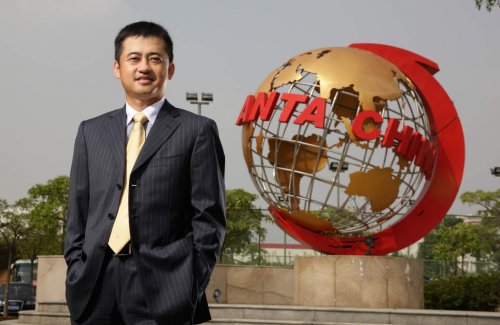
Image Source: Yicai Global

From Small Workshop to Global Brand

Anta’s journey began in 1986 when founder Ding Shizong, a high school dropout from Fujian, borrowed 10,000 yuan from his father to start reselling shoes. After quickly turning a profit, he reinvested his earnings and built a small manufacturing workshop. This early hustle laid the foundation for what would become one of China’s biggest sportswear companies.

By 1991, Anta had officially launched its own brand and began expanding across China. Over time, the company focused on scaling production, improving product quality, and building strong local distribution. These efforts helped Anta grow from a small business into a global brand with a strong foothold in the sportswear market.

Image Source: CGTN

Competing With the World’s Biggest Brands

Today, Anta controls around 23 percent of China’s sportswear market, surpassing both Nike and Adidas within the country. Its dominance at home has helped fuel its rise on the global stage, where it now ranks as the third-largest sportswear company. This growth reflects both strong local demand and strategic expansion beyond China.

Founder Ding Shizong has made it clear that Anta’s vision goes beyond being a regional leader. Rather than becoming the “Nike of China,” he aims to build what he calls the “Anta of the world.” With its recent investment in Puma, the company is taking a major step toward that goal and solidifying its place among the industry’s global giants.