News

February 14, 2025

SHARE:

The Immigrant Struggle

“We dream of going to America, to change our lives, we believed. But my life changed so much. I felt sad about life, didn’t know the language, and didn’t know the roads. I had no friends, so I felt very sad.” – Phong, a Vietnamese American expat interviewed by the Pew Research Center.

“I sometimes, just a little, wish that I would disappear so that my parents and my sister could be better off.” – Nolan, an Asian American interviewed by the Pew Research Center.

Dreams vs. Reality

The American Dream is often celebrated as a path to success, yet its reality is far more nuanced. Tales of rags to riches from Asian peers suggest its promise, but the Pew Research Center reports that one in ten Asian Americans still live in poverty as of 2024. The issue lies not solely in the Dream itself but in how it is constructed and understood.

For many Asians, the American Dream is synonymous with upward mobility achieved through hard work and resilience—a belief that effort alone can overcome systemic barriers. But resilience, by its nature, demands enduring hardship and accepting foreignness, perpetuating a narrative that reinforces isolation and discrepancy.

The American Dream is synonymous with upward mobility achieved through hard work and resilience (Image Source: Roberto Parada)

The American Dream is synonymous with upward mobility achieved through hard work and resilience (Image Source: Roberto Parada)

The Illusion of Gold

The idolization of a Western nation paved in gold is an illusion that perpetuates xenophobia and the model minority myth. This ideological flaw is alluring and dangerous. We have all heard heartbreaking stories of illegal labor exports and stowaway immigrants. Yet we tend to remember the rags-to-riches stories because it is comforting to view ourselves as the ones who might make it. All while labeling these immigrants as illegal, the other, the individual Asian Americans who will live in poverty. But by doing so, we have fallen trapped in the American Dream, clawing our way to the top for the sake of others. 

After the pandemic, anti-Asian and hate crimes have increased. The encounter paints a reflection of our society, there is no line between the one and the other nine, we are Asians and that is our identity. Then is the American Dream a lie? Not necessarily—but it is far from universal.

Community as the Key

Like all dreams, it is what we make of it.  Whether in America, Asia, or any part of the world, opportunities coexist with difficulties. Moving to another country means tackling obstacles such as language and cultural barriers alongside the burden you once had at home. Statistics show that 61% of Asian adults seek family and friends when facing financial burdens. This can become challenging when migrating to a new country. 

The key lies in recognizing that success is not achieved alone. Building networks and fostering solidarity within communities can challenge the isolating demands of resilience and redefine the Dream as a collective effort toward meaningful progress.

The American Dream is both a beacon of hope and a paradox. For many Asian Americans, the pursuit of upward mobility comes with sacrifices that are often overlooked. Yet, success doesn’t need to be a solitary journey. By embracing shared struggles and fostering a supportive community, one can find hope by redefining what the American Dream truly means.

Sources: Pew Research Center – 1 in 10: Redefining the Asian American Dream (Short Film), Pew Research Center – The Hardships and Dreams of Asian Americans Living in Poverty, Edelman, C&EN, Reappropriate.
Related Articles

Image Source: Paulo Chun / NBC News

Stories

Fifth-generation Entrepreneur Reimagines NYC Chinatown Landmark While Preserving Cultural Traditions

Even though times are tough and New York’s Chinatown is on the verge of dying, there is one place where things appear to be mostly the same as they have always been.

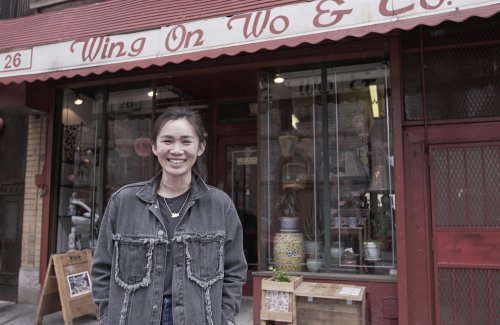
Since Mei Lum started volunteering as a child, Wing on Wo & Co has been run by her family. Brilliant and creative heritage enterprises have withstood generations of economic ups and downs. Mei represents her family’s legacy and New Yorkers and future generations of Chinatown residents.

The 32-year-old fifth-generation owner has bigger plans. Mei revived Wing on Wo’s late-19th-century ambiance. The store was a meeting place, credit union, and informal post office for low-income Chinese employees during the Chinese Exclusion Act.

She wants to run things because she has always wanted to expand the store’s conceptual boundaries. “A business doesn’t have to be so economically driven. There can still be genuine connections, which sustain a community,” she told The Guardian.

Wing on Wo is still primarily run by the original family for over a century. For 30 years, Mei’s father Gary has chatted with clients at the counter. Lorraine, her mother, handles the website and order processing. Her 105-year-old grandmother, Nancy, promotes the store’s hand-painted wine cups, fish-shaped glazed vases, and elegant dinner plates on Instagram.

In 2016, her grandmother intended to sell the family-owned porcelain specialty shop, which was worth close to $10 million. Mei took over the business to preserve it and create a community hub. She was planning to study international relations at Columbia University, but she now wants to run the family business. She wanted the store to be a hub for activists and artists to fight gentrification and displacement.

As a result of the pandemic, Mei decided to focus her efforts on online sales, digital advertising, and social media. To ensure that the business is preserving tradition and shaping the future of Chinatown, she has added several new initiatives, such as youth programs, an artist residency, and a ceramicist fair.

Image Source: Korina Sanchez Youtube Channel

Stories

This Street Vendor Selling “Magic Water” Proves That No One Is Too Small To Be Successful

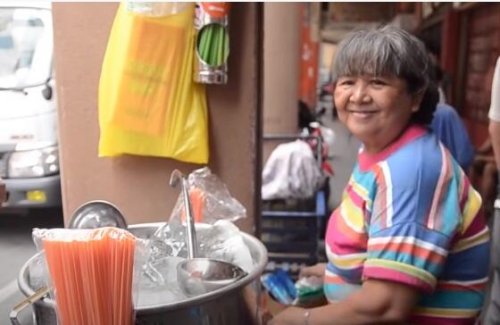
Priscilla Cornejo, better known as Nanay Bebe to the local people (“Nanay” means mother in Filipino), has been selling her magical water to the community since 1980 in the Philippines. She is convinced that her drink’s distinctive flavor is why so many customers seek out her business.

Magic Water, or known to be its local term “Samalamig” is also recognized as a leading refreshing drink in the Philippines. Despite coming from modest means, Nanay Bebe makes it her mission each day to quench the thirst of those hungry for success.

She explained that her drink is not just ordinary cold water. It has clear agar, sugar, mineral water, and tons of ice. When the agar hits the ice, it tends to melt, creating the ‘magic water,’ that will surely quench your thirst. 

Her business may not look like much compared to big companies or restaurants, as she only sells on the street, but it has tremendous growth potential. Nanay Bebe sells her magic water for PHP5 or PHP10 ($0.08 or $0.17) in small plastic bags, cups or some customers even bring their own Aquaflask or tumblers. From what she described, weekly earnings for her business could reach PHP35,000 ($600).

An endless line of curious onlookers from the street awaits to sample Nanay Bebe’s magic water. Many online publications, including those dedicated to food and social news, have featured it. Even today, some people attempt to duplicate Nanay Bebe’s traditional drink formula.

Image Source: Binance

Stories

From Gas Jockey To Binance CEO: How Changpeng Zhao Became Richest Man In Cryptocurrency

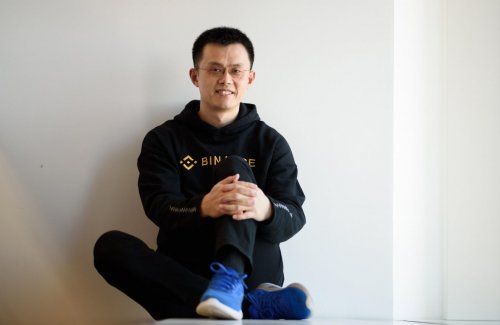
Binance is one of the most valuable cryptocurrency exchanges in the world as of today, and its founder and current CEO is Changpeng Zhao, according to the Bloomberg Billionaires Index, had a net worth of approximately $30 billion, which placed him in 33rd spot on the list of the world’s richest people.

Early on in life, Zhao was born into a family of educators in a rural village in Jiangsu province, China. He claimed that as a child living in rural China, he had to endure food rationing. His family immigrated to Canada in the late 1980s and felt incredibly fortunate to have been able to leave China.

When Zhao and his family moved to Canada, he worked several part-time jobs, including one at McDonald’s. He attempted to earn money at 14 by working at a Chevron gas station and as a volleyball referee.

He studied computer science at McGill University in Montreal, where he developed an interest in technology similar to that of his father, a math prodigy and programmer in his teens.

Zhao began coding when he was only 16 years old and took programming classes in high school before enrolling at McGill University.  After finishing college, Zhao worked at the Tokyo Exchange and then at Bloomberg in the Tradebook department from 2001 to 2005. Zhao left his job in 2005 to become a partner at the Shanghai firm Fusion Systems, which developed software for the financial markets. 

After discovering Bitcoin in 2013 while playing poker, he went all-in on crypto and committed his life to it. He even gave up his home to fund his Bitcoin investment. He persisted, even as the value of bitcoin dropped from $600 to $200 after he bought it.

Being a tech leader at Blockchain, a cryptocurrency wallet provider, and OKCoin, a cryptocurrency marketplace, Zhao decided to create his exchange, combining the efficiency of high-frequency trading platforms he had previously developed with the potential of cryptocurrencies. Thus, he started Binance with a $15 million initial coin offering.

However, getting to the top is more complicated than it seems, especially for Binance. When Binance’s cryptocurrency, BNB, dropped in value below its ICO price, Zhao and his early colleagues were forced to adapt quickly to changing market conditions.

As a result, Zhao initiated the initiative to make Binance a distributed organization with a flexible international staff. He was also instrumental in growing Binance into a user-friendly platform with maximum bandwidth, low fees, and other benefits.

In a relatively short period, Binance’s offering became too attractive to the cryptocurrency community to be held back by persistent difficulties. Six months after its launch, Binance soared to the top of the cryptocurrency exchange rankings, which remains to this day.

He is now widely known by his alias CZ and is widely regarded as the cryptocurrency industry’s most influential and prosperous figure. His majority stake in the cryptocurrency platform is responsible for much of his wealth at around $30.6 billion. Since the exact value of Zhao’s cryptocurrency holdings is unknown, Bloomberg’s blog post reported that it did not factor them into his wealth.

Image Source: Harper's Bazaar Singapore

News

A Culinary Adventure With Mark Wiens On HBO Go To Debut This November

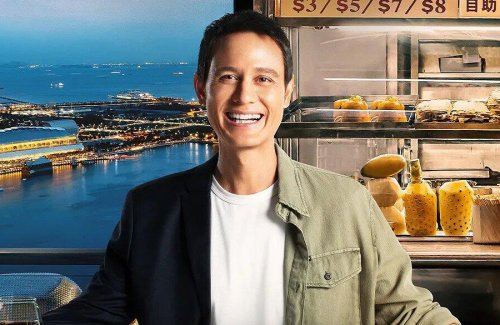
As the nation’s most famous foodie Mark Wiens is coming back to HBO Go with his very own show. He is currently located in Thailand and is a co-owner of Phed Mark, a popular Thai eatery known for its “very spicy” pad krapao.

A small look into the culture of Singapore will be presented in the Food Affair with Mark Wiens episode that will be made available on HBO GO on November 18th. Food is a serious matter; for Mark, it is not simply about consuming food; instead, he will bring each dish’s cultural and traditional elements to life.

The six-part series will feature him shooting the breeze up with everyone from Michelin-starred chefs to legendary street food vendors in Singapore.  He is impressed but used to being delighted by the city because it is home to more than fifty restaurants with Michelin stars and over sixty entries in the Bib Gourmand guide.

Mark found it inspiring to hear how the owners of different restaurants came to follow their dreams and create the unique cuisines they do today. ”It’s undeniable that food is at the center of all our lives, and that’s what brought us all together,” Mark shared.

The 36-year-old food enthusiast has persisted in pursuing his hobby of food vlogging, and he frequently takes the 9.3M audience of his YouTube channel around the world as he samples a variety of mouthwatering cuisines. The expressions on his face communicate to anyone who watches him exactly how delicious each dish is.

Follow Mark as he explores all aspects of Singapore’s food culture, from hawker centers and high-end restaurants.