News

February 14, 2025

SHARE:

The Immigrant Struggle

“We dream of going to America, to change our lives, we believed. But my life changed so much. I felt sad about life, didn’t know the language, and didn’t know the roads. I had no friends, so I felt very sad.” – Phong, a Vietnamese American expat interviewed by the Pew Research Center.

“I sometimes, just a little, wish that I would disappear so that my parents and my sister could be better off.” – Nolan, an Asian American interviewed by the Pew Research Center.

Dreams vs. Reality

The American Dream is often celebrated as a path to success, yet its reality is far more nuanced. Tales of rags to riches from Asian peers suggest its promise, but the Pew Research Center reports that one in ten Asian Americans still live in poverty as of 2024. The issue lies not solely in the Dream itself but in how it is constructed and understood.

For many Asians, the American Dream is synonymous with upward mobility achieved through hard work and resilience—a belief that effort alone can overcome systemic barriers. But resilience, by its nature, demands enduring hardship and accepting foreignness, perpetuating a narrative that reinforces isolation and discrepancy.

The American Dream is synonymous with upward mobility achieved through hard work and resilience (Image Source: Roberto Parada)

The American Dream is synonymous with upward mobility achieved through hard work and resilience (Image Source: Roberto Parada)

The Illusion of Gold

The idolization of a Western nation paved in gold is an illusion that perpetuates xenophobia and the model minority myth. This ideological flaw is alluring and dangerous. We have all heard heartbreaking stories of illegal labor exports and stowaway immigrants. Yet we tend to remember the rags-to-riches stories because it is comforting to view ourselves as the ones who might make it. All while labeling these immigrants as illegal, the other, the individual Asian Americans who will live in poverty. But by doing so, we have fallen trapped in the American Dream, clawing our way to the top for the sake of others. 

After the pandemic, anti-Asian and hate crimes have increased. The encounter paints a reflection of our society, there is no line between the one and the other nine, we are Asians and that is our identity. Then is the American Dream a lie? Not necessarily—but it is far from universal.

Community as the Key

Like all dreams, it is what we make of it.  Whether in America, Asia, or any part of the world, opportunities coexist with difficulties. Moving to another country means tackling obstacles such as language and cultural barriers alongside the burden you once had at home. Statistics show that 61% of Asian adults seek family and friends when facing financial burdens. This can become challenging when migrating to a new country. 

The key lies in recognizing that success is not achieved alone. Building networks and fostering solidarity within communities can challenge the isolating demands of resilience and redefine the Dream as a collective effort toward meaningful progress.

The American Dream is both a beacon of hope and a paradox. For many Asian Americans, the pursuit of upward mobility comes with sacrifices that are often overlooked. Yet, success doesn’t need to be a solitary journey. By embracing shared struggles and fostering a supportive community, one can find hope by redefining what the American Dream truly means.

Sources: Pew Research Center – 1 in 10: Redefining the Asian American Dream (Short Film), Pew Research Center – The Hardships and Dreams of Asian Americans Living in Poverty, Edelman, C&EN, Reappropriate.
Related Articles

Image Source: Legacies of War

News

First Lao-American and Millennial To Sit As Chair Of The US Campaign To Ban Landmines – Cluster Munition Coalition

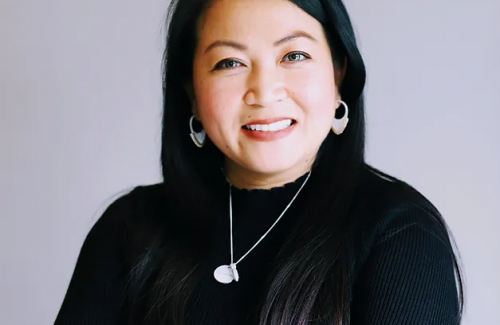
Legacies of War (LoW) CEO Sera Koulabdara is the new Chair of the US Campaign to Ban Landmines – Cluster Munition Coalition (USCBL-CMC). She will be the first millennial, BIPOC, and afflicted nation native to assume the job.

LoW is the only worldwide U.S. advocacy and educational organisation that addresses the repercussions of the American Secret War in Laos and its battles in Cambodia and Vietnam during the Vietnam War, including UXO disposal and victim/survivor support.

Héctor Guerra, Director of International Campaign to Ban Landmines (ICBL), has welcomed LoW, acknowledging their work as a great example of global collaborative efforts in supporting communities affected by landmines and cluster munitions.

According to Mary Wareham, Arms Advocacy Director of Human Rights Watch, there could not be a better placed organization to coordinate the USCBL-CMC than LoW, as it is committed to ensuring that the US joins and adheres to the international treaties prohibiting antipersonnel landmines and cluster munitions.

CEO of Roots of Peace, Heidi Kuhn, also recognized how fortunate USCBL-CMC is to have Sera as Chair, with her unique qualifications as a leader in mine action, and her family heritage in Laos as the basis of her passion. She claimed that Sera brings a renewed spirit of home to the UXO campaign.

Sera shared in her bio in LoW’s website, that she hopes to make a positive difference in the lives of the people in her father’s beloved homeland, Laos, and to create hope for future generations.

Image Source: Business News PH

Stories

Through Perseverance, Young Entrepreneur Operates 5 Fried Rice Restaurants and 30 Takoyaki Stalls At Age 21

Rice is an essential part of the Asian diet, and it is enjoyed in many different forms. One of these is the classic fried rice, which everybody knows is a tasty and easy meal.

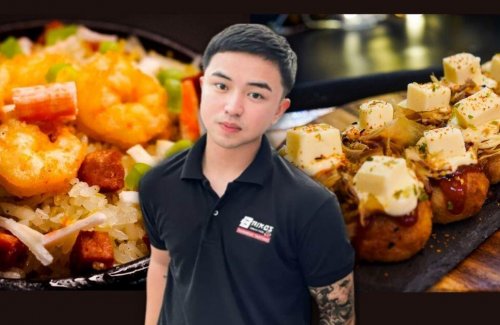
At the age of 21 years old, Briko Galeon from Tarlac City, Philippines, was able to expand his Korean Spam BKB Fried Rice business to 5 branches in just a span of 3 months. Aside from this, he also has a takoyaki business that he was able to expand into 30 branches within 1 and a half years of operation.

One of Briko’s franchisees, Sharmaine Anne De Leon, shared that she used to scroll social media posts about Korean fried rice and have cravings for it. She also said that BKB Fried Rice products are really good, and that’s why getting a franchise with BKB was an easy decision for her.

Briko shared that his inspiration for putting up businesses was his parents. He wanted to give back to his parents and be able to buy them gifts using his own money. Due to his success, he was able to buy 2 cars and is now providing for his family’s needs.

There isn’t an age too young or too old for a person to become an entrepreneur. Briko’s advice is to find a product that you genuinely love or are passionate about. Once you do this, it will be easier for you to learn about the product, its market, and how to serve it.

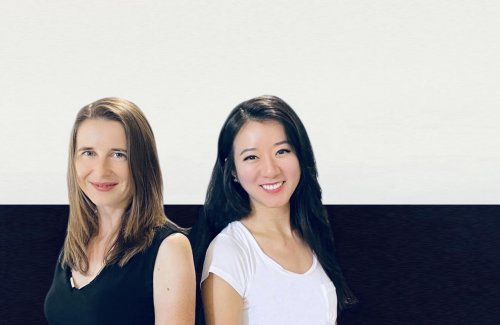
Nanxi and Tina

News

Blaze.tech Launches and Raises $3.5 Million Pre-Seed Round for AI-Powered No-Code Software Development

LOS ANGELES, January 11, 2023 — Blaze.tech, the smarter no-code platform that’s revolutionizing the way teams build web apps and tools, announced its official launch and has raised a $3.5 million pre-seed round led by Flybridge Capital and MaC Venture Capital. The round also included participation from investors and unicorn founders in enterprise SaaS including Vlad Magdalin (CEO, Webflow), Mada Seghete (Co-founder, Branch), Mark Schopmeyer (Co-CEO, CaptivateIQ), ACTAI Ventures, Sangha Capital, and Bill Tai. This funding round will accelerate Blaze’s growing customer base, increase the platforms’ integrations, and expand its AI capabilities. 

Today’s public launch follows a successful beta phase in which Fortune 500 companies and startups used Blaze to build dashboards, HIPAA compliant apps, complex workflows, automated invoice generators, and inventory management systems all without writing any code. Because of Blaze’s emphasis on security and its robust suite of enterprise security features, the company has found popularity with organizations in highly regulated industries like healthcare, legal, construction, transportation and logistics, and finance.

With Blaze’s AI-powered no-code platform, teams are able to create and launch highly custom and secure applications and internal tools in minutes. Blaze gives non-technical people the superpower to be entrepreneurial product builders with an intuitive all-in-one drag-and-drop interface and AI system. Blaze AI is powered by OpenAI’s GPT-3 model, the same one used by ChatGPT. App creators can tell Blaze AI to create complex workflows, automatic triggers, custom filters, advanced calculations, and more.

Blaze improves operations and productivity, and with pre-built integrations into Airtable, DocuSign, Freshdesk, Google Sheets, Salesforce, Stripe, Shopify, and many more tools, users can build multiple apps on top of their existing tech stack.

The no-code/low-code market is one of the fastest growing markets (from $25 Billion to $187 Billion in 2030), and Blaze’s unique positioning is enabling teams to build software with complexity, customizability, and security that otherwise would require writing code.

“We’re so excited to maximize the talents of people inside organizations by giving them the ability to solve business problems with software,” said Nanxi Liu, Co-CEO of Blaze. “We’re seeing individuals supercharge and significantly increase the efficiency of their team’s operations with Blaze.”

“Our users can implement their app’s business logic in just a few clicks because Blaze has done all the difficult work on the technical side to provide a platform that generates intuitive front-ends and secure, scalable back-ends,” said Tina Denuit-Wojcik, Co-CEO of Blaze.

“We are thrilled to support the Blaze team in their mission to create powerful tools and dashboards without the need for expensive engineering resources,” said Adrian Fenty, General Partner and Co-Founder of MaC Venture Capital. “Nanxi and Tina have the business acumen to be huge disruptors in the industry, and because they’ve experienced these challenges first-hand, we know Blaze is building a top-tier product.”

“Nanxi and Tina are exceptionally talented founders with deep insights into the needs of Blaze’s customer base. Having watched how well they led and capital efficiently managed their prior company to significant success, we were delighted to invest in this dynamic duo,” said Chip Hazard, General Partner and Co-Founder of Flybridge Capital.

Additional investors in the round include Dean Schnider (Partner, Najafi Companies), Felicia Curcuru (CEO of Binti), Holly Liu (Co-Founder, Kabam), Lin Capital, Michael Einziger (co-founder of the band Incubus), Mike Lu (co-founder of Triller), Root and Shoot Ventures, Socially Financed, and The K Fund.

About Blaze.tech

Blaze.tech is the smarter no-code platform that’s revolutionizing the way teams build web apps and tools. Blaze’s AI-powered platform improves operations and productivity by enabling non-technical people to build and launch custom software in minutes, without writing any code! From dashboards and workflows to portals and more, Blaze’s all-in-one-builder has pre-built integrations, security and reliability. 

Blaze is headquartered in Los Angeles and was founded in 2022. The founders, Nanxi Liu and Tina Denuit-Wojcik, previously founded Enplug, a leading digital signage software, which was acquired in 2021.

For more information, visit Blaze.tech.

Press Contact:

press@blaze.tech 

Press release documents here.

Image Source: Mila Supinskaya Glashchenko / Shutterstock

News

Indian-American’s Thriving Community Create A Positive Impact In North Texas

The rising population of Indian-Americans in North Texas is proving to be a strong force. Indian-Americans like Singh have permanently shaped North Texas’ cultural landscape in a variety of fields, including technology, education, and politics.

Tony Singh grew up with a father in the Indian Navy and moved every couple of years. Today, he’s settled in Little Elm, and even elected as councilman to serve his new neighborhood. Singh established initiatives to benefit Little Elm residents, while actively and regularly volunteering himself.

Most Indian-American employees work in only three industries: computer science and mathematics, management, and health care. Among all immigrants, Indian-Americans are the highest earners in the state. For this reason, Dinesh Hooda came to Texas in 2011 in search of employment.

Dinesh Hooda’s family had trouble adjusting until he attended India Association of North Texas’ Indian Independence Day. Through this, they established friends with Indian-Americans in North Texas who share similar experiences and struggles. Hooda is currently Uber’s senior technical program manager.

The fastest-growing ethnic group in the state is Asian, with Indian-Americans making up the majority of the group. Texas has the second-largest population of Indian Americans in the nation overall. This group will expand even more in the upcoming years, which could have a significant impact in the area. 

And while there are many struggles and difficulties to face as immigrants in the state, there are also lots of groups and communities willing to reach out to help one another and make each other feel welcome and at home.