News

February 6, 2025

SHARE:

The Ascension to Power

As Trump is re-elected, new reforms and policies are taking shape. Among them is his threat to impose a 25% tariff on Mexico and Canada, alongside a 10% tariff on China—claiming these countries allegedly failed to address illegal immigration and co-conspirators for illegal fentanyl distribution in the United States (US). 

Yet the article is not to stir political debate but to explore the ramifications of these tariffs on consumers and Asian countries. While many news outlets have focused on the potential setbacks in the affected countries, few have explored how others might either suffer or benefit from the situation. Hence, this piece shall highlight how Trump’s ascension to power might become the best opportunity for some Asian economies.

The Price of Tariffs

The Guardian defines a tariff as a tax imposed on foreign goods entering a country. As the world’s largest importer, the US brought in $3.2 trillion worth of goods in 2022, with imports from Canada, Mexico, and China totaling $1.2 trillion in 2023. Trump takes pride in this idea, believing the US government would receive more revenue through these tariffs, coining tariffs as the “most beautiful word in the dictionary” in an interview with Bloomberg. 

Brown University Professor of Economics Şebnem Kalemli-Özcan disagrees by arguing, “For many economists, tariff is actually the worst word in the dictionary.” She explains that ultimately American consumers and businesses will pay the price. As a trade-deficit nation, the US imports more than its exports. According to the Tax Policy Center, a 60% levy on Chinese goods accompanied by a 20% worldwide tariff could raise the costs for the average US household to up to $3,000 in 2025.

As companies face higher costs for goods, they often transfer those expenses to consumers through price increases. This can reduce consumer spending, which in turn lowers business investment and may lead to job losses.

Jason Miller, a professor of supply chain management at Michigan State University reaffirms such claims stating, “Because of the combination of these three countries, it’s going to be difficult to go down an aisle of a grocery store and not see some sort of inflationary effect.” Capital Economics projected that the newly announced tariffs could drive annual inflation up from 2.9% to as much as 4%.

Products affected by Trump’s Tariffs (Image source: BBC)

Nevertheless, Trump’s tariff threats carry weight, as they could impose significant economic pressure on targeted countries, prompting businesses to relocate. According to the BBC, Chinese factories with 500 workers have shrunk to just 200 employees, while American buyers are already exploring alternative manufacturing hubs in neighboring regions outside of China.

Business owner Huang Zhaodong, who recently relocated his factory, told the BBC that customers had pressured him to move production overseas. He agrees with their concerns, estimating that a 10% tariff increase could cost him an additional $800,000 in earnings. “Manufacturing clothes in China under these tariff conditions is simply unsustainable,” he said.

A Victor Emerges

Cases like Mr. Huang’s have proved the challenges that Trump’s tariff has imposed on countries like China. The beginning of the Trump trade war has led businesses to flee to Southeast Asian nations, most notably Vietnam. 

While other Southeast Asian nations also benefit from shifting supply chains, Vietnam has emerged as a top destination due to its growing industrial capacity and strategic location. The country recently rose to become the Association of Southeast Asian Nations (ASEAN) champion with an estimated 40% of all ASEAN exports to North America being from the country alone. Though it is difficult to quantify how many businesses have relocated from China, BBC reports that major brands like Puma, Nike, and Adidas have already moved production to Vietnam. Sources from Vietnam Briefing indicate Intel and Samsung have rapidly ramped up their investment in Vietnam and are projected to reach $100 billion in revenue by 2050. Propelled by robust exports and foreign investments, Vietnam’s economy has recently grown by 7.09%, reaching $476.3 billion—outpacing the 5.05% expansion seen in 2023.

It is debatable whether Trump’s glare will graze upon this nation. Experts debate whether he will target Vietnam with tariffs, as his trade policies often focus on countries with a trade surplus. In 2024, Vietnam held the third-largest trade surplus with the United States at $104.6 billion, accounting for nearly 30% of its total exports. This substantial trade imbalance makes Vietnam a potential target for Trump’s tariff threats. In this scheme, the nation might experience radical changes due to trade balances, exchange rates, supply chains, and foreign direct investment (FDI). However, Vietnam is more likely to benefit from US-imposed tariffs. This prediction is supported by trends from Trump’s first term when the country experienced significant economic growth due to an influx of manufacturers and factories relocating to Vietnam. 

Despite lingering skepticism, Trump has maintained a favorable view of Vietnam. As early as 1980, Trump publicly opposed the Vietnam War and visited the country twice during his first term. His business ventures have also extended to Vietnam, with his organization partnering with Kinh Bac City Development Holding Corporation (KBC) to develop a $1.5 billion complex in Hung Yen Province. Meanwhile, his new confidante, Elon Musk, has positioned Vietnam a key production hub for SpaceX’s Starlink satellite internet project, shifting suppliers and manufacturing from Taiwan to Vietnam to reduce geopolitical risks.

Reversing these investments may be impractical or simply too late. The confidence that both Trump and Musk have placed in Vietnam highlights the country’s growing role in global supply chains. Amid rising geopolitical tensions, Vietnam’s diplomatic strategy—often referred to as the “bamboo policy” for its balance of resilience and adaptability—has strengthened its international position. As long as the country continues to wisely navigate political and diplomatic negotiations and steer clear of populist pitfalls, Vietnam is well-positioned to sustain its economic growth and global influence.
Related Articles

Image Source: Boy Isaw Instagram

Uncategorized

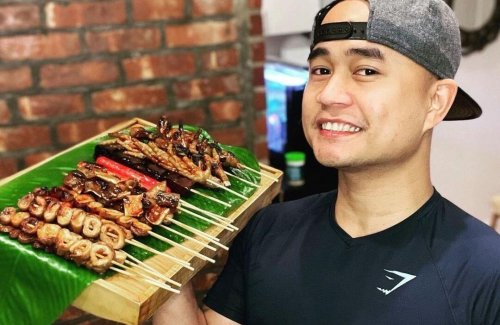
Hard Work Pays Off For Bringing Filipino Street Food “Boy Isaw” To New York, Now Makes 14$K A Month

The Filipino street food vendor admits that perseverance and hard work were really his main capitals in achieving his dream.

After introducing one of the most popular Filipino barbeque street food, “ihaw-ihaw,” especially the isaw (grilled chicken or pork intestines), to New York, Filipino street food seller Robin John Calalo has seen the fruits of his labor, earning more than $14,000 each month.

His shop, “Boy Isaw,” became well-known among fellow Filipinos and even foreigners who yearned for a taste of isaw, betamax (coagulated chicken blood), adidas (chicken feet), and other Filipino street food. 

Robin’s success came as a surprise considering that his small firm only had $50 when it was founded in 2019, during the onset of the pandemic. He claims that while in the supermarket, he suddenly made the decision to open his BBQ food cart due to a craving for Filipino food with his friends and family as the first customers.

According to Business News Philippines, Boy Isaw peddles in food bazaars and engages in online selling where he posts for-sale ready-to-grill street foods.

Aside from grilled food including hotdogs, chicken, and others which he posts on his Instagram, he also serves rice and chicharon bulaklak (deep-fried pork intestine) which is also a bestseller.

Image Source: Jane Nguyen / NBC News

Uncategorized

Kenneth Mejia Sits As Los Angeles’ New and First Filipino American City Controller

Taking the lead with a 21-point advantage, Kenneth Mejia, is now Los Angeles’ newly-elected City Controller assuming city-wide office after cutting the edge against City Councilmember Paul Koretz.

The 32-year-old is the first Filipino American to take the position. As a CPA and community militant, Mejia is pleased to embody the distinct community of L.A.

“We have a very diverse population in L.A. and I feel very proud and honored to represent that community and coming from a minority background makes you more empathetic about the people you’re fighting for,” Mejia said as quoted in NBC News.

He achieved a double-sweeping win after attaining more votes than any mayoral candidates and concluding the election with over 100,000 votes higher than Koretz, a radical and experienced public officer, which accordingly is a sign of many Angelenos’ renouncement of the status quo.

Mejia was also once an organizer of the L.A. Tenants Union who initiated the legalization of homelessness and made the concerned authorities liable for it.

The newly-elected City Controller mentioned that he eyes transforming the system and making it worker-friendly. He likewise shared that a controller is “the city’s accountant and paymaster,” which is different from high-profile City Council positions since he cannot promulgate a legislation or amend the city budget. These restrictions fit him wonderfully as a CPA and organizer, making his work more intriguing.

“You don’t really have to push an agenda when you’re running to present data and show numbers,” Mejia continues, “They have a story in themselves,” he added.

After the City Council decided to ban homeless encampments 500 feet from schools and daycare centers, Mejia calculated how many camps will be affected and created a digital map of 1,900 schools and daycare centers in the city, showing that 20% of the walkways would no longer be available as a campsite. Mejia’s staff employed computer technology to be more transparent to the public, especially regarding finances.

Image Source: Christopher DeVargas / Las Vegas Magazine

Uncategorized

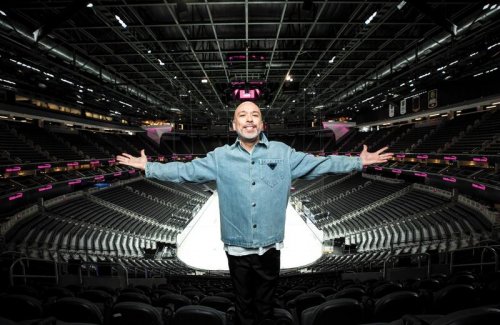
Jo Koy Makes History As The First Ever Comic Main Attraction At T-Mobile Arena

After Jo Koy’s recent successes, including the release of his two wildly popular Netflix specials,” In His Elements and Comin’ In Hot”, and the publication of his autobiographical debut book, entitled “Mixed Plate: Chronicles of an All-American Combo”, he is set to star as the first comic main attraction at Las Vegas’ T-Mobile Arena on November 19.

This year, the Filipino-American actor-comedian embarked on his first nationwide arena tour for Easter Sunday, a feature film based on those personal anecdotes and his other comedic content that hit theaters which also starred Lydia Gaston, Eugene Cordero, Tia Carrere, and Lou Diamond Philipps. 

It was a life-changing experience for the 51-year-old, and he plans to continue creating films from behind the camera and helping other Filipinos, Asian Americans, and artists from different races.

Jo Koy first experienced comedy while still a student in Las Vegas and will return to the same city to fulfill his dream of becoming the first primary comic attraction to play at T-Mobile Arena.

“When I play T-Mobile Arena, I discover that I’m the first cartoonist to ever do it, which is sort of cool,” he told Las Vegas Magazine, “There are other venues in Las Vegas, including some very large ones, but T-location Mobile’s right on the Strip has a unique appeal,” Jo Koy adds.

He also mentioned that performing at arenas and other famous places abroad is beyond anything he could have imagined and that the realization of it drives him crazy.

After finishing the book and movie he’s been working on for several years, Jo Koy said that the process was challenging because there were many obstacles and firsts to tackle; it was the first time a Filipino actor portrayed the main character in a Hollywood production. He felt good about himself and appreciated Dreamworks and Universal for helping him.

“I want to keep creating. I want to highlight the other talent that is out there because I have been addicted to being in front of the camera,” Jo Koy continued, “Knowing how difficult it was for me, I want to keep the door open and showcase more potential, not just Filipino talent but talent from other countries and races that want to be recognized — I want to see what I can do to help make it happen.”

Jo Koy also disclosed that he has his eye on a number of up-and-coming stand-up comedians, such as Matteo Lane, with whom he is now working, Asif Ali, and JR De Guzman.

Image Source: Wu Tsai Foundation

Uncategorized

Brooklyn Nets Owners Launched The Largest Business Accelerator for Minority-led Startups

After George Floyd’s controversial death in 2020, growing VC investments in businesses founded by people of color became a top priority. According to Crunchbase, just 2.4% of VC financing between 2015 and 2020 went to Black or Latinx enterprises. Funding for black entrepreneurs quadrupled to $1.8 billion in 2021. This year, however, saw a sharp decline in investments in minority founders.

Entrepreneur and co-owner of the Brooklyn Nets, Clara Wu Tsai, launched BK-XL, the biggest business accelerator that aims to support 12 startups founded by Black, Indigenous, and other minority founders in 2023 by investing up to $500,000.

In an interview with The Associated Press, Wu Tsai stated that a shortage of finance is a major barrier to wealth growth for BIPOC businesses. She and her husband Joseph Tsai believe investing in BK-XL would be the greatest approach to overcome this challenge and generate wealth for the entrepreneurs and the jobs they create.

Wu Tsai stressed that she aims to highlight the underutilized entrepreneurial potential in Brooklyn to assist the neighborhood get back on its feet. She also thinks that BK-XL will demonstrate to the rest of the nation that investing in Black businesses pays off and is a smart move.

She added that any money made from investments in the BK-XL startups will be put back into Brooklyn-based companies. “The best way to demonstrate our faith in Brooklyn and Black-owned businesses,” she continued, “is to invest in them and demonstrate to the rest of the world that they are wise financial decisions.”

Prior to the release of BK-XL, Tsai’s Social Justice Fund also introduced “EXCELerate” last year, which offered no-interest loans to Black-owned small companies in need of assistance in order to recover from the closures caused by the COVID-19 pandemic.

As part of her strategy to leverage a combination of investments and donations to achieve goals for the neighborhood, she stated that BK-XL will shortly be followed by a philanthropic grant program to assist other businesses in Brooklyn.

All Brooklyn-based, BIPOC-led firms may submit a BK-XL application starting on December 5. But only companies in industries where the Tsais have the expertise, like e-commerce, will be approved.