News

February 6, 2025

SHARE:

The Ascension to Power

As Trump is re-elected, new reforms and policies are taking shape. Among them is his threat to impose a 25% tariff on Mexico and Canada, alongside a 10% tariff on China—claiming these countries allegedly failed to address illegal immigration and co-conspirators for illegal fentanyl distribution in the United States (US). 

Yet the article is not to stir political debate but to explore the ramifications of these tariffs on consumers and Asian countries. While many news outlets have focused on the potential setbacks in the affected countries, few have explored how others might either suffer or benefit from the situation. Hence, this piece shall highlight how Trump’s ascension to power might become the best opportunity for some Asian economies.

The Price of Tariffs

The Guardian defines a tariff as a tax imposed on foreign goods entering a country. As the world’s largest importer, the US brought in $3.2 trillion worth of goods in 2022, with imports from Canada, Mexico, and China totaling $1.2 trillion in 2023. Trump takes pride in this idea, believing the US government would receive more revenue through these tariffs, coining tariffs as the “most beautiful word in the dictionary” in an interview with Bloomberg. 

Brown University Professor of Economics Şebnem Kalemli-Özcan disagrees by arguing, “For many economists, tariff is actually the worst word in the dictionary.” She explains that ultimately American consumers and businesses will pay the price. As a trade-deficit nation, the US imports more than its exports. According to the Tax Policy Center, a 60% levy on Chinese goods accompanied by a 20% worldwide tariff could raise the costs for the average US household to up to $3,000 in 2025.

As companies face higher costs for goods, they often transfer those expenses to consumers through price increases. This can reduce consumer spending, which in turn lowers business investment and may lead to job losses.

Jason Miller, a professor of supply chain management at Michigan State University reaffirms such claims stating, “Because of the combination of these three countries, it’s going to be difficult to go down an aisle of a grocery store and not see some sort of inflationary effect.” Capital Economics projected that the newly announced tariffs could drive annual inflation up from 2.9% to as much as 4%.

Products affected by Trump’s Tariffs (Image source: BBC)

Nevertheless, Trump’s tariff threats carry weight, as they could impose significant economic pressure on targeted countries, prompting businesses to relocate. According to the BBC, Chinese factories with 500 workers have shrunk to just 200 employees, while American buyers are already exploring alternative manufacturing hubs in neighboring regions outside of China.

Business owner Huang Zhaodong, who recently relocated his factory, told the BBC that customers had pressured him to move production overseas. He agrees with their concerns, estimating that a 10% tariff increase could cost him an additional $800,000 in earnings. “Manufacturing clothes in China under these tariff conditions is simply unsustainable,” he said.

A Victor Emerges

Cases like Mr. Huang’s have proved the challenges that Trump’s tariff has imposed on countries like China. The beginning of the Trump trade war has led businesses to flee to Southeast Asian nations, most notably Vietnam. 

While other Southeast Asian nations also benefit from shifting supply chains, Vietnam has emerged as a top destination due to its growing industrial capacity and strategic location. The country recently rose to become the Association of Southeast Asian Nations (ASEAN) champion with an estimated 40% of all ASEAN exports to North America being from the country alone. Though it is difficult to quantify how many businesses have relocated from China, BBC reports that major brands like Puma, Nike, and Adidas have already moved production to Vietnam. Sources from Vietnam Briefing indicate Intel and Samsung have rapidly ramped up their investment in Vietnam and are projected to reach $100 billion in revenue by 2050. Propelled by robust exports and foreign investments, Vietnam’s economy has recently grown by 7.09%, reaching $476.3 billion—outpacing the 5.05% expansion seen in 2023.

It is debatable whether Trump’s glare will graze upon this nation. Experts debate whether he will target Vietnam with tariffs, as his trade policies often focus on countries with a trade surplus. In 2024, Vietnam held the third-largest trade surplus with the United States at $104.6 billion, accounting for nearly 30% of its total exports. This substantial trade imbalance makes Vietnam a potential target for Trump’s tariff threats. In this scheme, the nation might experience radical changes due to trade balances, exchange rates, supply chains, and foreign direct investment (FDI). However, Vietnam is more likely to benefit from US-imposed tariffs. This prediction is supported by trends from Trump’s first term when the country experienced significant economic growth due to an influx of manufacturers and factories relocating to Vietnam. 

Despite lingering skepticism, Trump has maintained a favorable view of Vietnam. As early as 1980, Trump publicly opposed the Vietnam War and visited the country twice during his first term. His business ventures have also extended to Vietnam, with his organization partnering with Kinh Bac City Development Holding Corporation (KBC) to develop a $1.5 billion complex in Hung Yen Province. Meanwhile, his new confidante, Elon Musk, has positioned Vietnam a key production hub for SpaceX’s Starlink satellite internet project, shifting suppliers and manufacturing from Taiwan to Vietnam to reduce geopolitical risks.

Reversing these investments may be impractical or simply too late. The confidence that both Trump and Musk have placed in Vietnam highlights the country’s growing role in global supply chains. Amid rising geopolitical tensions, Vietnam’s diplomatic strategy—often referred to as the “bamboo policy” for its balance of resilience and adaptability—has strengthened its international position. As long as the country continues to wisely navigate political and diplomatic negotiations and steer clear of populist pitfalls, Vietnam is well-positioned to sustain its economic growth and global influence.


Related Articles

Image Source: NBC Sports

News

Dallas Stars Jason Robertson Carves Name in NHL History As Highest Pointer in Latest Season

Jason Robertson made NHL history by playing the second longest-drawn-out game in franchise record and the most lengthy game in Dallas history.

With 22 goals, the most in the NHL, the 23-year-old Filipino-American left winger for the Dallas Stars, made his season a success.

Robertson extended his point streak to 13 games, tying the Dallas Stars record set by Dave Gagner in the early 90s with a point over their opponent Blackhawks on Wednesday.

On Thursday night, he scored three goals, which were assisted by Joel Kiviranta and Wyatt Johnston, as well as Oettinger’s 31 saves in a shutout victory.

His 39 points ranked second in the league, trailing only Connor McDavid and setting himself as the highest-pointer in the 24 games of the season for Dallas Stars. 

Leading the way for the Stars, the victory was the team’s second straight triumph and was the 10th time Dallas had scored points in the previous 11 games.

Additionally, Miro Heiskanen and Roope Hintz also both enjoyed multi-point outings with three and two assists, respectively.

Stars coach Pete DeBoer reportedly claimed that “Robo is a guy that’s honestly hard to defend because he scores in a bunch of different ways,” according to the Dallas Morning News.

“He can score off the rush, he scores kind of lurking around the quiet areas of the ice waiting for the puck to come to him. It always seems to come to him. Tougher to defend a guy like that isn’t predictable,” the coach continued.

Coach Pete also remarked on how amazed he was to see Robertson play such an exceptional game and how incredible the player was for making it seem simple despite the difficulty of the game.

With his nightly exploits, Robertson is starting to catch the attention of the hockey world, which is quite an achievement in a market like Dallas, far from the hockey capital of Toronto. 

He’s outperforming expectations for his $7.75 million cap charge and propelled himself into the early race for the Hart Trophy.

Furthermore, Dallas Stars captain Jamie Benn stated that Robertson is leading the attack with confidence.

Image Source: South China Morning Post

Stories

Earthquake Victim With Amputated Legs Masters Dancing With Husband’s Self-Made Prosthetic Limbs

Nothing is impossible to 30-year-old Liao Zhi of Sichuan, China who lost her legs during an earthquake in 2008 but now mastered the art of dancing while wearing high heels with her now husband’s self-made prosthetic legs.

The Chinese former dance teacher caught the online community’s attention with her talent and story being an epitome of hope and faithfulness.

“It’s like she dances with life,” a netizen commented.

During the tragic incident in Sichuan where Zhi was trapped in the ruins of a building for 30 hours, she not only lost her legs but the most important persons in her life, her 10-month-old daughter who died in the disaster and her husband who divorced her seven months after the tragedy.

Being the only one to survive in the devastated building, the brave woman neither shed a tear nor complained of everything she went through including her legs being amputated.

Instead, Zhi said that “The earthquake gave me rebirth.”

After learning to walk with her artificial limbs, Zhi moved on from the nightmare by continuing and staging her passion in different places.

Although the training had been difficult and painful, Zhi was determined in doing what she loves. 

According to the South China Morning Post, she and her husband-dance partner defeated competitors in China and won as first runner-up in the reality show Dance Out My Life in 2013. 

Her husband became her strong support in recovering from her downfall.

Despite having been through a lot, Zhi remained optimistic. “Dance is my ray of sunshine, and while I would also be fine if I didn’t dance, I would not feel the same sense of joy that it gives me when I do,” she said.

Being an inspiration to many, Zhi’s life story was turned into a play entitled Angel’s Psalm that was staged at Kwai Tsing Theatre in 2015.

In an article by CCTGN, it was said that Liao is currently a happy wife as well as a proud mother. However, she is still fighting for a higher ambition – helping more people like her to recover their life value.

Image Source: Stephen Lovekin/Shutterstock

News

‘Raya and the Last Dragon’ Actress and Director Unveils New Production Company To Uplift Marginalized Community’s Emerging Filmmakers

Kelly Marie Tran and Carlos López Estrada, the lead character and co-director of the latest Walt Disney film Raya and the Last Dragon, have created a new production company, Antigravity Academy (AGA) dedicated to developing and producing movies, television, theater, and short-form material from and about individuals from traditionally marginalized communities.

AGA appointed Jared Stern’s “A Stern Talking To” former vice president of cinema and television Winsor Yuan to lead its film and television section.

As for the short form, such as music videos, advertisements, and branded content, Doug Klinger, co-founder of Internet Music Video Database and Reprobates agent and executive producer, will be in charge.

The Antigravity Academy will also serve as a training ground for new filmmakers entering the production industry.

The novice filmmakers’ movies will be chosen, produced, and packaged under the direction of former Sundance Institute head of Artist Community and AGA founding partner Abiram Brizuela.

Tran and Estrada were quoted in the Hollywood Reporter as saying, “We couldn’t be happier about providing a creative home for emerging filmmakers looking for a window into this often insular industry.” 

The two also stated they had learned from their experiences how crucial it is to establish a network that can assist with starting up.

“We are looking forward to partnering up with the most inspiring independent voices coming from communities that have been historically overlooked and helping them usher their stories into the world,” the two added.

Image Source: Lifestyle Asia Hong Kong

Blogs, Development, Ideas

Son of Restaurant Owners Now CEO of Multi-Million Dollar Company Casetify Imparts Tips To Successful Entrepreneurship

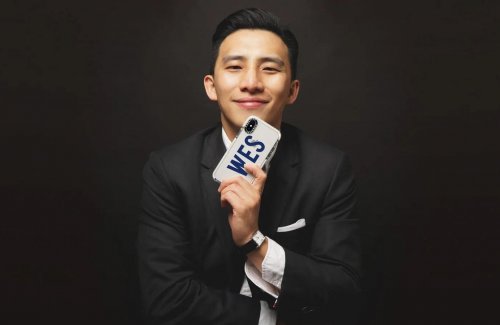
With a feeling of discontent towards the smartphone case designs available in the market, Hongkong native Wesley Ng co-founded Casetify, a multi-million dollar company that manufactures and produces cool smartphone cases.

The 41-year-old CEO takes his business-mindedness from his parents who own a restaurant in their region.

Ng established the business in 2011 together with his friend Ronald Yeung which has now reached over 15 million phone case sales around the world.

As an entrepreneur-grown man, Ng’s mindset is to make profits. According to him, it’s the most important thing to survive, as quoted in CNBC Make It.

“It comes down to one thing — being profitable. Being profitable was super underrated until recently,” he said in a virtual interview. 

Ng proudly shared that Casetify will be attaining $300 million in returns for this year alone.

Furthermore, he advised others to venture into businesses that make fortune and are cost-effective and to learn from other entrepreneurs just like how he learned from his mom and dad.

With his success in the chosen industry, Ng imparts hints to be a self-made millionaire in business:

1.Bootstrapping. Starting with $200,000 capital, Ng shared that he and Ronald always did things and operated out of the interests of the company and not of the stakeholders.

2. Overshare your problems. Business is a give-and-take process, it’s surprising how we can learn from others. Although it may seem a weakness for others to know your struggles as an entrepreneur, it is still fundamental to share and learn from them.

3. Entrepreneurship ‘not for everyone.’ Ng shared that knowing if “it’s for you” is important and to discover if it really is, you should “work closely with a founder” or link with beginners to know how hard it will be.

The successful CEO said that being a producer of a product he is really fond of is what keeps him on the move.