News

February 6, 2025

SHARE:

The Ascension to Power

As Trump is re-elected, new reforms and policies are taking shape. Among them is his threat to impose a 25% tariff on Mexico and Canada, alongside a 10% tariff on China—claiming these countries allegedly failed to address illegal immigration and co-conspirators for illegal fentanyl distribution in the United States (US). 

Yet the article is not to stir political debate but to explore the ramifications of these tariffs on consumers and Asian countries. While many news outlets have focused on the potential setbacks in the affected countries, few have explored how others might either suffer or benefit from the situation. Hence, this piece shall highlight how Trump’s ascension to power might become the best opportunity for some Asian economies.

The Price of Tariffs

The Guardian defines a tariff as a tax imposed on foreign goods entering a country. As the world’s largest importer, the US brought in $3.2 trillion worth of goods in 2022, with imports from Canada, Mexico, and China totaling $1.2 trillion in 2023. Trump takes pride in this idea, believing the US government would receive more revenue through these tariffs, coining tariffs as the “most beautiful word in the dictionary” in an interview with Bloomberg. 

Brown University Professor of Economics Şebnem Kalemli-Özcan disagrees by arguing, “For many economists, tariff is actually the worst word in the dictionary.” She explains that ultimately American consumers and businesses will pay the price. As a trade-deficit nation, the US imports more than its exports. According to the Tax Policy Center, a 60% levy on Chinese goods accompanied by a 20% worldwide tariff could raise the costs for the average US household to up to $3,000 in 2025.

As companies face higher costs for goods, they often transfer those expenses to consumers through price increases. This can reduce consumer spending, which in turn lowers business investment and may lead to job losses.

Jason Miller, a professor of supply chain management at Michigan State University reaffirms such claims stating, “Because of the combination of these three countries, it’s going to be difficult to go down an aisle of a grocery store and not see some sort of inflationary effect.” Capital Economics projected that the newly announced tariffs could drive annual inflation up from 2.9% to as much as 4%.

Products affected by Trump’s Tariffs (Image source: BBC)

Nevertheless, Trump’s tariff threats carry weight, as they could impose significant economic pressure on targeted countries, prompting businesses to relocate. According to the BBC, Chinese factories with 500 workers have shrunk to just 200 employees, while American buyers are already exploring alternative manufacturing hubs in neighboring regions outside of China.

Business owner Huang Zhaodong, who recently relocated his factory, told the BBC that customers had pressured him to move production overseas. He agrees with their concerns, estimating that a 10% tariff increase could cost him an additional $800,000 in earnings. “Manufacturing clothes in China under these tariff conditions is simply unsustainable,” he said.

A Victor Emerges

Cases like Mr. Huang’s have proved the challenges that Trump’s tariff has imposed on countries like China. The beginning of the Trump trade war has led businesses to flee to Southeast Asian nations, most notably Vietnam. 

While other Southeast Asian nations also benefit from shifting supply chains, Vietnam has emerged as a top destination due to its growing industrial capacity and strategic location. The country recently rose to become the Association of Southeast Asian Nations (ASEAN) champion with an estimated 40% of all ASEAN exports to North America being from the country alone. Though it is difficult to quantify how many businesses have relocated from China, BBC reports that major brands like Puma, Nike, and Adidas have already moved production to Vietnam. Sources from Vietnam Briefing indicate Intel and Samsung have rapidly ramped up their investment in Vietnam and are projected to reach $100 billion in revenue by 2050. Propelled by robust exports and foreign investments, Vietnam’s economy has recently grown by 7.09%, reaching $476.3 billion—outpacing the 5.05% expansion seen in 2023.

It is debatable whether Trump’s glare will graze upon this nation. Experts debate whether he will target Vietnam with tariffs, as his trade policies often focus on countries with a trade surplus. In 2024, Vietnam held the third-largest trade surplus with the United States at $104.6 billion, accounting for nearly 30% of its total exports. This substantial trade imbalance makes Vietnam a potential target for Trump’s tariff threats. In this scheme, the nation might experience radical changes due to trade balances, exchange rates, supply chains, and foreign direct investment (FDI). However, Vietnam is more likely to benefit from US-imposed tariffs. This prediction is supported by trends from Trump’s first term when the country experienced significant economic growth due to an influx of manufacturers and factories relocating to Vietnam. 

Despite lingering skepticism, Trump has maintained a favorable view of Vietnam. As early as 1980, Trump publicly opposed the Vietnam War and visited the country twice during his first term. His business ventures have also extended to Vietnam, with his organization partnering with Kinh Bac City Development Holding Corporation (KBC) to develop a $1.5 billion complex in Hung Yen Province. Meanwhile, his new confidante, Elon Musk, has positioned Vietnam a key production hub for SpaceX’s Starlink satellite internet project, shifting suppliers and manufacturing from Taiwan to Vietnam to reduce geopolitical risks.

Reversing these investments may be impractical or simply too late. The confidence that both Trump and Musk have placed in Vietnam highlights the country’s growing role in global supply chains. Amid rising geopolitical tensions, Vietnam’s diplomatic strategy—often referred to as the “bamboo policy” for its balance of resilience and adaptability—has strengthened its international position. As long as the country continues to wisely navigate political and diplomatic negotiations and steer clear of populist pitfalls, Vietnam is well-positioned to sustain its economic growth and global influence.

Related Articles

Duolingo Shares Climb 7% as Users Swarm to App to Learn Mandarin (7)-png

Stories

Jennifer Chun Blends Tradition With Innovation to Create Sustainable Fashion

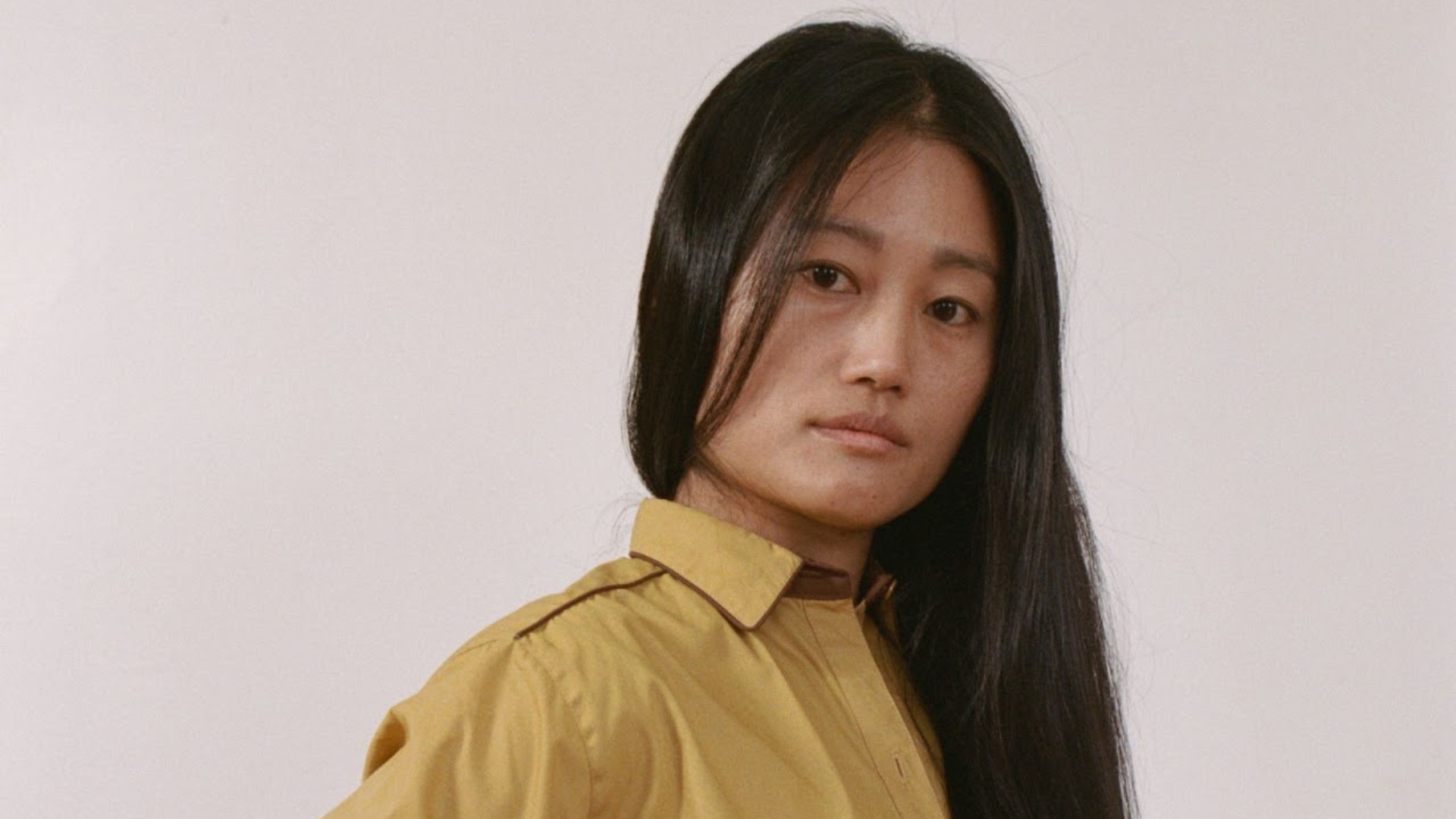
Jennifer Chun, Uniformed’s designer, brings a refreshing collaboration of Korean-American heritage and sustainability practices. Her story began during the pandemic, when she discovered traditional natural dyeing techniques. After connecting with experts and artisans, she came to Korea and got directly involved in the dyeing lessons. “I had no idea Korea had its natural dyeing traditions,” Chun shared.

Her collection is a celebratory integration of hand-dyed materials and fabrics from traditional markets to create a sustainable, limited-edition line.

Jennifer Chun blends her Korean heritage into her sustainable fashion line, Uniformed. (Photo credit: Wayn Ohara Reid)

Overcoming the Challenges of Slow Fashion

Amidst the growing world of fast fashion, it is clear that Chun’s main challenge lies in maintaining sustainability while navigating an industry deeply accustomed to mass production and fleeting trends.

Fashion has changed so much that consumers want items faster or cheaper because we have gotten used to mass production. I make such limited quantities that it can be a challenge working with factories that would rather produce en masse and do not want to make specialized pieces that take thought or time, as producing less can increase manufacturing prices. It’s difficult to educate consumers on this when even people in my industry aren’t aware of what goes into the whole process.

During the global lockdown, designer Jennifer Chun found an unexpected bridge to her Korean heritage through a chance encounter with an article on Korea’s natural dyeing traditions—an art form predating the country’s unification.

I came across an article about Korea’s natural dyeing and artisans. I had no idea Korea had its own natural dyeing traditions and techniques that predated the formal unification of Korea. In the article, they interviewed a natural dyer outside of Seoul, and I decided to just email her. My mother was in lockdown, living in LA, and like many senior citizens, the isolation was incredibly difficult. So I asked her to collaborate with me by helping me communicate with the natural dyer.  

We all eventually became pen pals. Once travel restrictions were lifted, my husband and I visited my father, who was living in lockdown in Korea. We made arrangements to meet with the natural dyer and visited her indigo farm and studio. She taught me how to cut the indigo and showed me the basic process of her craft. She suggested we collaborate.

The line developed from there, eventually leading to a capsule collection, incorporating fabrics developed in Korea, including hand-dyed materials and fabrics purchased in traditional markets around the country. And constructed into limited edition pieces to ensure sustainability, and designed with a uniform aesthetic, in New York City’s garment district.

Working with Korean artists—who prioritize quality over quantity—has deepened her appreciation for true craftsmanship. ‘There is so much pride in the craft and process. They do not compromise sustainability at any cost, and I had to assure them that I wouldn’t either if we were to collaborate,’ she explains, highlighting Uniformed’s commitment to sustainability.

Jennifer, while in South Korea.

Integrating Heritage into Design

Jennifer is not one to shy away from how her heritage has a profound impact on her design. She takes great pride in how it informs her work, and she has learned to combine these cultural elements more skillfully as she refines her craft. “With Uniformed, I am really proud that I have been able to bring my Korean American heritage into my designs,” she shared. “None of this is easy or formulaic, but it is a new, interesting, and inspired challenge.”

The opportunities to reconnect with her roots, meet local artisans, and learn new techniques have been both humbling and transformative for Jennifer. “It can be a very humbling experience to adopt a new perspective and craft after working in this industry a certain way,” she reflected. “You’re almost starting over and sometimes have to prove yourself, but it’s all been worth it for the new experiences.” This humility and commitment to continuous learning form the foundation of her design philosophy and entrepreneurial values.

Fashion with a Global Vision

Jennifer’s ultimate goal for Uniformed is to collaborate with artisans around the world, incorporating the diverse experiences of Koreans globally. “I want to understand more about Koreans in different parts of the world,” she shared. By blending these cultural perspectives, she aims to create a brand that celebrates the universal appeal of the ‘uniform,’ merging tradition with modernity.

Jennifer Chun’s design (Photo Credit: Kim Jae Min)

Connect With Jennifer Chun

IG: @uniformed_world

Website: uniformedworld.com

250506_AHS-EMAIL-MKT-jpg

Blogs, Technologies

Zero-Click Content: The Secret to Boosting Your Brand Visibility

Not every SEO win needs a click. With zero-click content, you can build visibility, authority, and trust—right from the search results. Here are 3 ways to make it work for you:

Answer Questions Directly

Create concise, clear answers to common search queries to increase your chances of landing in featured snippets.

Answer Questions Directly

Use Structured Data

Implement schema, a special code to help search engines understand your content better.

Prioritize Value Over Clicks

It’s not always about Google and clicks. Utilize your social content that gives immediate value to build authority and encourage users to seek you out.

Why Asian Hustle Solutions?

Want your brand to show up, stand out, and stick—even without the click? At Asian Hustle Solutions, we create zero-click content that builds trust fast and keeps you top of mind. Let’s make your digital presence work smarter.

If you want to learn more about our services, visit the Asian Hustle Solutions website at asianhustlenetwork.com/services/

250428 (2)-jpg

Blogs, Ideas

Turn Clicks Into Customers: 3 Essential Tips With Asian Hustle Solutions

Creating a website is an easy task, but turning the visitors into loyal customers may take more than that. Here are three tips to help you bring in more customers.

Build Trust Fast

“Show, don’t tell.” People are not going to believe you just because you say big words. Actions matter. Include your portfolios, testimonials, or reviews. People buy from brands they trust.

Build your brand symbol.

Capture Leads Immediately

“Seize the moment.” When leads show any initial interest, don’t just sit still and do nothing. Offer them a freebie (discount or resource) in exchange for their email. Stay in touch and build a fun process to guide them towards a purchase.

Capture Leads Immediately

Make Buying Easy

Simplicity is key. Clear calls-to-action, smooth checkout processes, and multiple payment options make it easy for visitors to say “yes.” Don’t expect leads to commit if the purchase process lasts over three working days.

Why Asian Hustle Solutions?

Getting traffic is just the start—we help you turn visitors into loyal customers. With smart strategies, optimized designs, and proven tools, Asian Hustle Solutions empowers your business to grow faster and stronger online.

If you want to learn more about our services, visit the Asian Hustle Solutions website at asianhustlenetwork.com/services/

250423-jpg

Blogs, Development

Search Intent: The Overlooked SEO Metric That Beats Algorithm Updates

Before choosing SEO keywords, you’ve likely considered high-volume terms and difficulty metrics. But to weather never-ending algorithm updates, search intent might be your golden ticket. Here’s why:

Customer Intention

The most critical factor in keyword selection—it ensures your content aligns with what customers actually need (not just what they search).

customer_intention

Relevance

A keyword may be popular but irrelevant to your brand. Focus on phrases that mirror your customers’ pain points and your solution.

relevance

Existing Ranking

Overlapping words can lead to cannibalization. For every new content, use fresh keyword sets to re-optimize existing assets and further align with customer needs.

existing_ranking

Why AHN Solutions?

Matching keywords to customer search intent requires strategy. We craft bulletproof SEO plans to ensure your success.

If you want to learn more about our services, visit the Asian Hustle Solutions website at asianhustlenetwork.com/services/