Stories

October 4, 2023

SHARE:

In the world of entrepreneurship, age knows no boundaries, and Oliver Noe (age 13) and Archer Noe (age 9) are perfect examples of this.

Sons of John Noe, CEO of Yobo Soju, these young talents are crafting their own path to success. We have previously featured John Noe and Yobo Soju in one of our articles titled “This Grape-Based Soju Brand Is Here To Empower Asian-American Spirits.”

Today, we turn our attention to the promising endeavors of Oliver and Archer as they share their inspiring journey in bringing the Maine Catch card game to life.

Finding Inspiration in Lobsters and Art

When asked about the source of their inspiration, the brothers responded with youthful exuberance, “We’re just two young, lobster-obsessed kids hoping to make our game a reality.” 

Their spark of creativity was ignited during a visit to Maine, where they stumbled upon a lobster shack that introduced them to the captivating world of rare lobsters and lobster collecting. Merging these newfound passions with their love for art, the concept of Maine Catch was born.

Navigating Challenges and Staying on Course

Like many creative minds, Oliver and Archer faced challenges on their journey. They openly admitted, “We often get sidetracked.”

Distractions can be a hurdle for entrepreneurs of any age, and learning to stay focused is a valuable skill they are honing.

“Our mission is to create a card game that people can enjoy. This achievement wouldn’t just be ours; it would inspire Asian children worldwide who dream of becoming entrepreneurs.”

Oliver and Archer Noe

Celebrating Artistic Achievements

Despite their age and the challenge of getting sidetracked, these young entrepreneurs have achieved remarkable milestones.

They take immense pride in the fact that all the art featured in Maine Catch is hand-drawn, meticulously refined on the computer, and masterfully shaded in. They have designed and created over 20 unique cards for the game.

Balancing School and Chores with Entrepreneurship

Beyond their entrepreneurial pursuits, Oliver and Archer are just like any other kids their age. While they are blazing a trail in the world of entrepreneurship, these young entrepreneurs still embrace their roles as students and household chore-doers.

Introducing Maine Catch

Oliver and Archer’s passion for game creation has been a lifelong journey, encompassing both imaginary adventures and tangible projects. Lately, their focus has shifted towards card games, with Maine Catch being their most ambitious and promising endeavor yet. It’s evident that their dedication to refining their skills is paying off with this exciting project.

Empowering Aspiring Entrepreneurs

When asked about their mission and vision for Maine Catch, the young entrepreneurs shared, “Our mission is to create a card game that people can enjoy. This achievement wouldn’t just be ours; it would inspire Asian children worldwide who dream of becoming entrepreneurs.” 

Their aspirations extend beyond their own success as they aim to empower the Asian community and inspire young minds to chase their entrepreneurial dreams.

Oliver and Archer Noe are setting a remarkable example of youthful determination and creativity in the world of entrepreneurship. Their journey from lobster shacks to designing a unique card game, Maine Catch, is an inspiring testament to the power of imagination and passion.

As they continue to grow and develop their entrepreneurial skills, they are not only achieving their dreams but also paving the way for aspiring young Asian entrepreneurs worldwide. We look forward to seeing Maine Catch make waves in the gaming world and the positive impact these young talents will have on their community.

SUPPORT OLIVER AND ARCHER

Website: mainecatchgame.com

Related Articles

Founder-Images_3-2-scaled-jpg

Stories

Singapore’s Snack Revolution: How The Golden Duck Turned Salted Egg Yolk Into a Premium Global Phenomenon

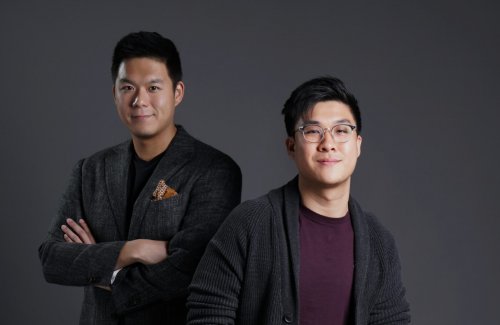
Chris Hwang (left) and Jonathan Shen (right) – founders of The Golden Duck

Growing up with Asian snacks like salted egg yolk chips meant savoring flavors that felt both comforting and unforgettable. Yet when Jonathan Shen and Chris Hwang turned their eyes to the global market, they saw a different reality: these beloved treats were undervalued, underpriced, and largely overlooked by international consumers.

Back in 2015, Singapore’s FMCG market was crowded, dominated by established Western brands. Asian flavors were largely seen as niche, affordable snacks rather than premium products you’d gift or showcase in events.

Jonathan and Chris quickly recognized a gap: millennial consumers craved adventurous, culturally rooted flavors, but no brand was presenting them in a way that made people proud to share them.

They founded The Golden Duck with a vision to elevate Asian snacking to a globally aspirational experience.

Today, The Golden Duck has sold over 20 million packs worldwide, and is stocked in 650+ Woolworths and Metro stores.

How It Began: Inspiration from a Familiar, Unlikely Flavor

Jonathan Shen and Chris Hwang didn’t start with a massive budget or fancy offices. What they had was complementary expertise, and a shared passion for snacks. 

Jonathan, with a keen eye for branding and marketing, looked at salted egg yolk and asked: what if salted egg yolk could feel luxurious? 

While ubiquitous in Asia, it was rarely found outside hawker stalls or home-cooked dishes.

Chris, a stickler for quality and craftsmanship, understood that getting the recipe and packaging right could make all the difference.

When it launched, crowds queued for hours, wanting to get their hands on chips that tasted like home but looked like luxury. The Golden Duck’s Salted Egg Yolk later earned Jonathan & Chris recognition on Forbes 30 Under 30 Asia.

How It Went: Bold Flavors, Relentless Hustle

Entering a competitive FMCG market without big funding meant bootstrapping everything—from sourcing ingredients to hand-packing orders. They had to balance daring flavors with high-quality production, ensuring every snack met premium standards.

It wasn’t just about product innovation. Breaking into a market dominated by Western brands meant shifting perceptions: convincing consumers that Asian snacks could be modern and premium. Every unconventional pairing, every new flavor, was a calculated risk.

Chris ensured every ingredient and recipe exceeded expectations, while Jonathan told the story in a way that resonated with millennial snack enthusiasts.

They launched pop-ups, engaged directly with customers, and refined details one by one. Salted egg yolk became their signature flavor, but it was only the beginning. The Golden Duck now offers a growing range of gourmet Asian-inspired snacks, from Chilli Crab Seaweed to Tom Yum Goong and Spicy Mala Hot Pot.

What’s Next For The Golden Duck?

The Golden Duck isn’t slowing down. In 2025, the brand launched a new line of canister chips for Western markets including Australia, the United States, and Canada, with bold flavours like bold flavours like Truffle Wagyu, Kombu Seaweed Butter, and Sour Cream & Sriracha. At the same time, the company is actively entering new markets such as the UK, Europe, and China.

Innovation and sustainability remain at the heart of The Golden Duck’s strategy. The company continues to explore new flavors and formats while sourcing real ingredients to deliver premium, authentic taste experiences.

With every new flavor and product, Jonathan Shen and Chris Hwang are proving that Asian snacks can be premium and globally celebrated. Every bite is a story of heritage, innovation, and taste waiting to be told.

Connect With The Golden Duck

Website: https://www.thegoldenduck.co/

IG: @thegoldenduck.sg

@thegoldenduck.au

IMG_6214 (1)

Stories

From Prison to Purpose: How Tuan Huynh Brewed Redemption Into VietFive Coffee

When you walk into VietFive Coffee in Chicago’s West Loop, the first thing you notice isn’t the rich aroma of Vietnamese Robusta beans. It’s the energy. Strangers sit shoulder-to-shoulder, conversations spark, and a sense of belonging fills the air. For founder Tuan Huynh, this space is far more than a café. It’s proof that redemption is real.

Tuan didn’t set out to build a coffee brand. He set out to rewrite a life story that once seemed destined to end behind prison walls. Today, he’s not just serving bold coffee; he’s serving hope, heritage, opportunity, and community.

The Darkest Chapter

Tuan’s early life was marked by conflict. Born in Vietnam, his family fled to the U.S. when he was just three years old, carrying little more than hope for a better future. They settled in government housing, where poverty pressed down on daily life. Like so many kids searching for belonging, Tuan got swept into the culture of gangs and drugs. At just 18 years old, barely an adult, his life took a devastating turn.

Convicted of first-degree murder, Tuan was sentenced to life in prison with the possibility of parole after 15 years. He spent the next decade and a half in Lansing Correctional Facility, one of the country’s maximum-security prisons.

Prison has a way of stripping people of their identity. For many, it cements a cycle of despair. But for Tuan, it became the crucible where transformation began. “Even in the darkest places,” he says, “I knew my story wasn’t finished.”

Choosing Creativity Over Despair

Inside those walls, during the latter half of his prison experience, Tuan chose to reimagine his life. He leaned into art and design, creative outlets that gave him purpose and revealed a talent for visual storytelling. Every sketch, every concept was an act of defiance against the idea that his future had already been written.

When he was finally paroled on June 21st, 2011, a date and time he still recalls with reverence, Tuan stepped into a world that had changed beyond recognition. He was a free man, but freedom didn’t come with an instruction manual. He carried the stigma of incarceration, the weight of lost time, and the daunting task of rebuilding from scratch.

A Door Opens in the Most Unexpected Place

Determined not to waste his second chance, Tuan pursued higher education, earning a Bachelor of Fine Arts in Conceptual Design. His portfolio caught the attention of the world’s largest advertising agency, which offered him a role in Chicago. For a refugee kid who had once been told he would never amount to anything, it was validation.

But something was still missing. After eight years in advertising, Tuan felt the pull of something deeper, something personal. On a trip back to Vietnam, the first since leaving as a child, he discovered his family’s legacy: generations of farmers cultivating Robusta coffee. That revelation ignited a vision.

Coffee, he realized, could be the perfect medium. It wasn’t just a drink. It was heritage, resilience, and connection poured into a cup. And with that, VietFive was born.

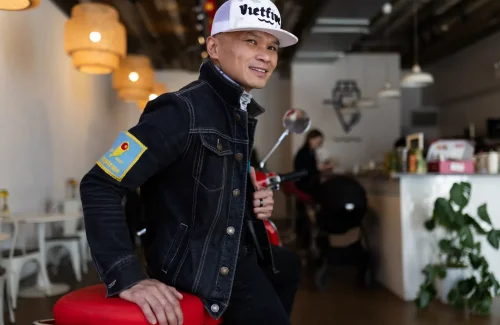
Tuan Huynh (right) with his uncle

Building VietFive Against All Odds

Launching a business as a formerly incarcerated person was no small feat. Doors closed before Tuan could step through them. Banks hesitated, investors doubted, and skeptics assumed his past would define his future. But Tuan refused to let rejection write his story.

Instead, he built VietFive from the ground up, importing beans from his family’s farm, shaping the brand through design, and pouring his heart into creating not just a business, but a movement.

VietFive is vertically integrated, meaning Tuan controls the process from farm to cup. That ensures authenticity, quality, and fair practices. But more than that, it provides every sip tells a story. A story of Vietnamese resilience. A tale of personal redemption.

The Power of Representation

For Tuan, VietFive is not just about coffee. It’s about representation. Too often, the stories of immigrants, refugees, and formerly incarcerated people are missing from mainstream narratives. By building VietFive, Tuan created a stage where those voices can’t be ignored.

“When people drink our coffee,” he says, “I want them to taste more than flavor. I want them to taste legacy, survival, and pride.”

That representation extends to the community VietFive has built. Walk into the café, and you’ll see it as a true “third space” where all are welcome. From business leaders to students, from immigrants to lifelong Chicagoans, VietFive has become a gathering point for connection.

Turning Pain Into Purpose

Tuan’s proudest achievement isn’t revenue numbers, though VietFive is on track to approach seven figures this year. His real pride is seeing familiar faces return, watching conversations unfold, and knowing that his café has become a home for many.

The struggles he faced, incarceration, rejection, and underrepresentation, didn’t vanish. But he reframed them. Each obstacle became a stepping stone, each “no” a chance to persist, each bias an opportunity to prove that transformation is possible.

In Tuan’s words, “VietFive is not just about beans. It’s about belonging.”

A Vision for the Future

Tuan’s mission is clear: to elevate Vietnamese Robusta on the global stage, to create spaces of connection, and to rewrite narratives that society often overlooks. He envisions VietFive not only as a coffee brand but as a global movement rooted in heritage and social impact.

For the Asian community, VietFive stands as an affirmation, proof that their culture, history, and voices belong at the table. For those who carry the weight of incarceration or failure, it’s a beacon of hope that broken beginnings can lead to beautiful new chapters.

Redemption in Every Cup

At its core, VietFive is more than coffee. It’s a story of redemption steeped into every brew. It’s the story of a refugee child who stumbled, a prisoner who refused despair, and an entrepreneur who now builds bridges where walls once stood.

When you sip VietFive, you’re not just tasting Robusta, you’re tasting resilience. You’re part of a narrative that proves our past does not define our future.

As Tuan Huynh himself puts it: “VietFive is my second chance in a cup. And I want every person who walks through our doors to feel that same possibility, that no matter where you’ve been, there’s always a way forward.”

Connect with Tuan Huynh

AHS EMAIL ANGLE (5)

Blogs, Development

Understand Conversions with Attribution

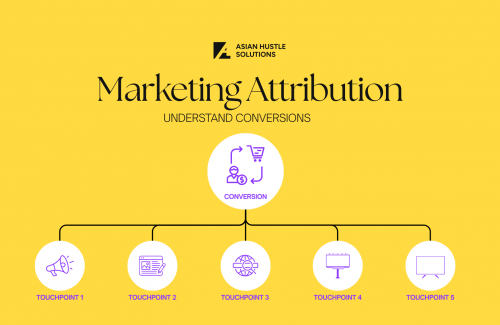
To win your customers, you need to run many marketing activities across multiple channels. And then those conversions came pouring in, but you don’t exactly know where those conversions come from since there are too many ongoing activities. That’s what marketing attribution does. By assigning credit to touchpoints, you can gauge how effective each touchpoint is to the conversion.

There are two types of Attribution:

  • Single-source attribution: Credits are given fully to one touchpoint, assuming that is the most effective one at driving conversion.
  • Multiple-source attribution: More complex models. This type of attribution model acknowledges that multiple touchpoints contribute to the buying decisions and gives partial credit to each.

Understanding attribution will help you to know where the revenue comes from so you can optimize your budget and gain more from your spending. to said touchpoint makes it more effective and less costly. Understanding the journey can help you win the race.

Why Asian Hustle Solutions?

At AHS, we specialize in helping brands capture attention and inspire action — whether you’re launching a new product or scaling your business, we’ll guide you to marketing that resonates and delivers results.

If you want to learn more about our services, visit the Asian Hustle Solutions website at asianhustlenetwork.com/services/

AHS EMAIL ANGLE (4)

Blogs, Development

Know Your Value Proposition

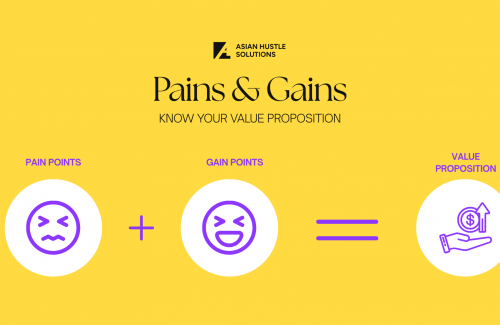
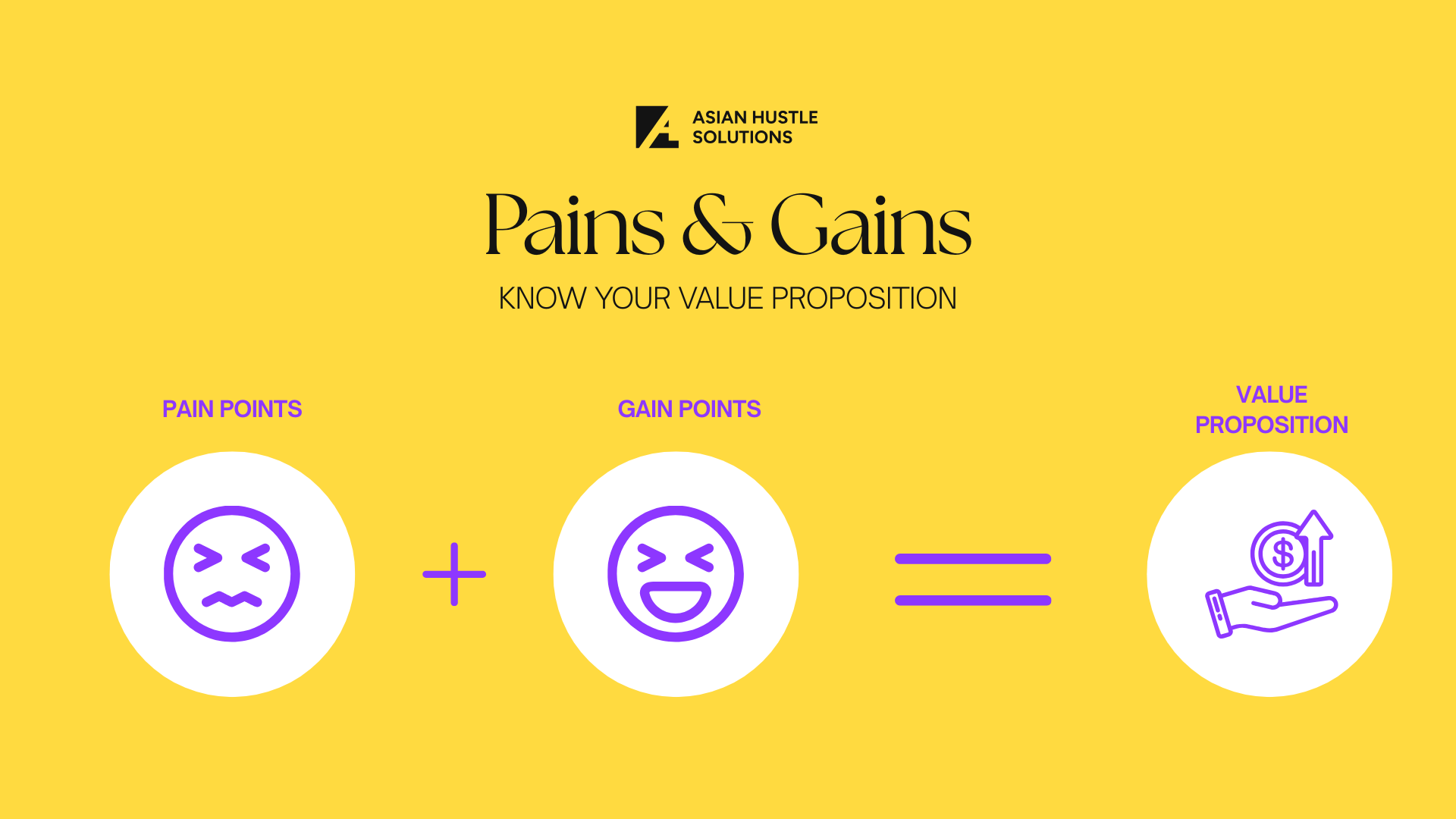
Pain points and gain points are not necessarily new concepts, but some might think they are opposing concepts, when in contrast, the two complement each other. Through customer pain and gain points, you can get a better understanding of your customers’ needs, and offer a unique value proposition.

  • Pain point: As the name suggests, it’s something that “pains” your customers; an issue that they have that needs to be addressed; a challenge that they need to overcome.
  • Gain point: Gain point, on the other hand, is more about you. What can your product or service do for the customers; what can they gain from using your service; what can you help them with?

The two are extremely simple and are a good place to start when you’re trying to advertise your product or service since they consider both your and your customer’s sides to offer a value proposition that is valuable. 

[Book a FREE call with us]
If you want to explore our services more, visit the Asian Hustle Solutions website at AHS.