Stories

October 8, 2026

SHARE:

Vietnam is one of the world’s biggest coffee-producing countries, yet Thomas Vu rarely saw Vietnamese coffee given the same attention in North America’s specialty coffee scene.

That gap became the idea behind Hanoi Drip Coffee, a Vancouver-based Vietnamese specialty coffee brand that has grown into a multi-million-dollar cafe business in just over two years.

For Vu, the goal goes beyond opening more cafes. He wants people to see Vietnamese coffee differently and prove that a brand deeply rooted in culture can belong on a global stage.

Giving Vietnamese Coffee the Spotlight It Deserves

Vu grew up around the flavors and rituals that make Vietnamese coffee instantly recognizable, from strong Robusta to condensed milk and the slow drip of a phin. Yet despite Vietnam’s rich coffee history, he felt much of that story was still missing from mainstream specialty coffee culture.

That became the opportunity behind Hanoi Drip. Rather than recreate a traditional Vietnamese cafe, Vu and his team asked a bigger question: What could a global Vietnamese coffee brand look like today?

Their answer was to keep the parts of Vietnamese coffee they loved while presenting them for a new generation. Hanoi Drip serves coffee grown in Vietnam, including coffee from Đà Lạt, and puts Robusta, Vietnamese flavors, and phin brewing at the center of the experience.

Learning How to Grow Without Losing the Brand

Building the brand was one challenge. Learning how to grow it without losing what people connected with was another.

When Hanoi Drip was smaller, Vu and the other founders could be involved in nearly every part of the business. As more locations followed, they had to learn how to train teams, develop leaders, manage costs, maintain product consistency, and make sure customers still had a strong experience even when the founders were not there.

Mistakes have been part of that process, and Vu does not pretend otherwise. His approach is to treat them as useful information: fix the problem, build a better system, and move forward, a mindset that has helped Hanoi Drip expand into multiple locations alongside retail coffee, wholesale, and membership offerings.

Taking Vietnamese Coffee Beyond Vancouver

For Vu, some of Hanoi Drip’s most meaningful wins happen when someone tastes Vietnamese coffee for the first time and wants to know more. It also means hearing Vietnamese customers say the brand reminds them of home while still feeling like it belongs to their generation.

That connection has extended beyond coffee. During KOOLFEST 2025, customers purchased more than 1,600 Ube Coconut Coffee and Ube Milk drinks, helping Hanoi Drip raise over $5,500 for a local charity, while the company has also created jobs and collaborated with Asian-owned businesses and creators.

And Vu is still thinking much bigger. He hopes to bring Hanoi Drip beyond Vancouver to markets such as Toronto and Los Angeles, while showing other Asian founders that building something modern does not mean leaving their culture behind.

Learn more about Hanoi Drip and follow the brand as it works to take Vietnamese coffee from Vancouver to a wider global audience.
📍Website

Related Articles

Image Source: Korina Sanchez Youtube Channel

Stories

This Street Vendor Selling “Magic Water” Proves That No One Is Too Small To Be Successful

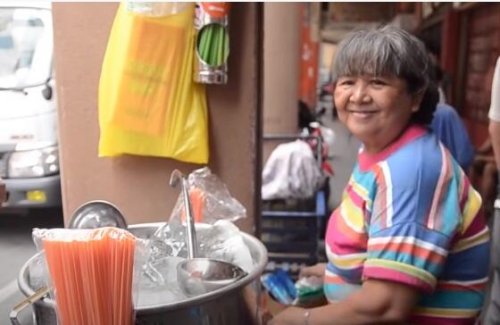
Priscilla Cornejo, better known as Nanay Bebe to the local people (“Nanay” means mother in Filipino), has been selling her magical water to the community since 1980 in the Philippines. She is convinced that her drink’s distinctive flavor is why so many customers seek out her business.

Magic Water, or known to be its local term “Samalamig” is also recognized as a leading refreshing drink in the Philippines. Despite coming from modest means, Nanay Bebe makes it her mission each day to quench the thirst of those hungry for success.

She explained that her drink is not just ordinary cold water. It has clear agar, sugar, mineral water, and tons of ice. When the agar hits the ice, it tends to melt, creating the ‘magic water,’ that will surely quench your thirst. 

Her business may not look like much compared to big companies or restaurants, as she only sells on the street, but it has tremendous growth potential. Nanay Bebe sells her magic water for PHP5 or PHP10 ($0.08 or $0.17) in small plastic bags, cups or some customers even bring their own Aquaflask or tumblers. From what she described, weekly earnings for her business could reach PHP35,000 ($600).

An endless line of curious onlookers from the street awaits to sample Nanay Bebe’s magic water. Many online publications, including those dedicated to food and social news, have featured it. Even today, some people attempt to duplicate Nanay Bebe’s traditional drink formula.

Image Source: Binance

Stories

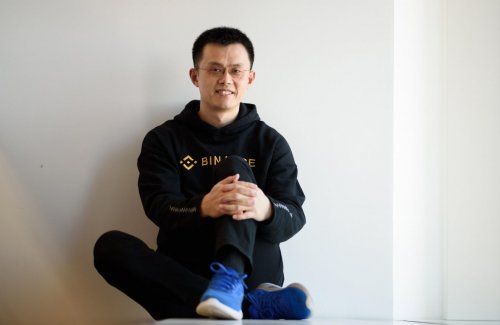
From Gas Jockey To Binance CEO: How Changpeng Zhao Became Richest Man In Cryptocurrency

Binance is one of the most valuable cryptocurrency exchanges in the world as of today, and its founder and current CEO is Changpeng Zhao, according to the Bloomberg Billionaires Index, had a net worth of approximately $30 billion, which placed him in 33rd spot on the list of the world’s richest people.

Early on in life, Zhao was born into a family of educators in a rural village in Jiangsu province, China. He claimed that as a child living in rural China, he had to endure food rationing. His family immigrated to Canada in the late 1980s and felt incredibly fortunate to have been able to leave China.

When Zhao and his family moved to Canada, he worked several part-time jobs, including one at McDonald’s. He attempted to earn money at 14 by working at a Chevron gas station and as a volleyball referee.

He studied computer science at McGill University in Montreal, where he developed an interest in technology similar to that of his father, a math prodigy and programmer in his teens.

Zhao began coding when he was only 16 years old and took programming classes in high school before enrolling at McGill University.  After finishing college, Zhao worked at the Tokyo Exchange and then at Bloomberg in the Tradebook department from 2001 to 2005. Zhao left his job in 2005 to become a partner at the Shanghai firm Fusion Systems, which developed software for the financial markets. 

After discovering Bitcoin in 2013 while playing poker, he went all-in on crypto and committed his life to it. He even gave up his home to fund his Bitcoin investment. He persisted, even as the value of bitcoin dropped from $600 to $200 after he bought it.

Being a tech leader at Blockchain, a cryptocurrency wallet provider, and OKCoin, a cryptocurrency marketplace, Zhao decided to create his exchange, combining the efficiency of high-frequency trading platforms he had previously developed with the potential of cryptocurrencies. Thus, he started Binance with a $15 million initial coin offering.

However, getting to the top is more complicated than it seems, especially for Binance. When Binance’s cryptocurrency, BNB, dropped in value below its ICO price, Zhao and his early colleagues were forced to adapt quickly to changing market conditions.

As a result, Zhao initiated the initiative to make Binance a distributed organization with a flexible international staff. He was also instrumental in growing Binance into a user-friendly platform with maximum bandwidth, low fees, and other benefits.

In a relatively short period, Binance’s offering became too attractive to the cryptocurrency community to be held back by persistent difficulties. Six months after its launch, Binance soared to the top of the cryptocurrency exchange rankings, which remains to this day.

He is now widely known by his alias CZ and is widely regarded as the cryptocurrency industry’s most influential and prosperous figure. His majority stake in the cryptocurrency platform is responsible for much of his wealth at around $30.6 billion. Since the exact value of Zhao’s cryptocurrency holdings is unknown, Bloomberg’s blog post reported that it did not factor them into his wealth.

Image Source: Harper's Bazaar Singapore

News

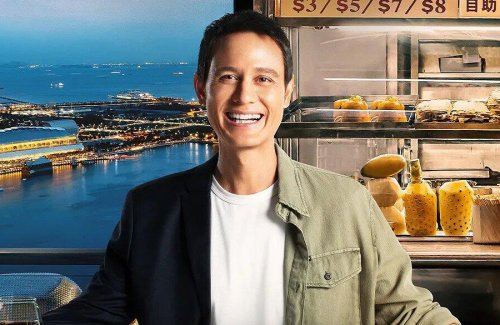
A Culinary Adventure With Mark Wiens On HBO Go To Debut This November

As the nation’s most famous foodie Mark Wiens is coming back to HBO Go with his very own show. He is currently located in Thailand and is a co-owner of Phed Mark, a popular Thai eatery known for its “very spicy” pad krapao.

A small look into the culture of Singapore will be presented in the Food Affair with Mark Wiens episode that will be made available on HBO GO on November 18th. Food is a serious matter; for Mark, it is not simply about consuming food; instead, he will bring each dish’s cultural and traditional elements to life.

The six-part series will feature him shooting the breeze up with everyone from Michelin-starred chefs to legendary street food vendors in Singapore.  He is impressed but used to being delighted by the city because it is home to more than fifty restaurants with Michelin stars and over sixty entries in the Bib Gourmand guide.

Mark found it inspiring to hear how the owners of different restaurants came to follow their dreams and create the unique cuisines they do today. ”It’s undeniable that food is at the center of all our lives, and that’s what brought us all together,” Mark shared.

The 36-year-old food enthusiast has persisted in pursuing his hobby of food vlogging, and he frequently takes the 9.3M audience of his YouTube channel around the world as he samples a variety of mouthwatering cuisines. The expressions on his face communicate to anyone who watches him exactly how delicious each dish is.

Follow Mark as he explores all aspects of Singapore’s food culture, from hawker centers and high-end restaurants.

Image Source: Open Table

Blogs, Development, Ideas

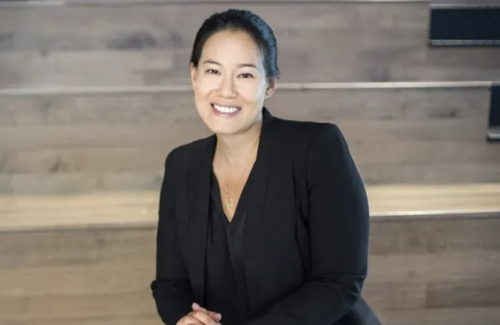
If You Are Doubting On Your Career Move, Take It From This CEO Who Made Corporate Twists and Turns

If you’re worried about making the wrong career move because you’ve started to second-guess yourself, keep in mind that there is no bad decision regarding your professional development. Debby Soo, CEO of restaurant reservation service OpenTable, can understand.

Consider Soo’s words carefully if you’re struggling to make a major career choice or feel paralyzed by uncertainty.

She eventually settled on a mantra that brought her peace. She struggled with worry and stress over her future career path and doubted her choices at each turning point. Eventually, things worked out for her. 

She realized that her work experience was valuable despite her dissatisfaction with her job. She knew that her decision which appeared disastrous at the time might ultimately result in professional success in ways she could never have imagined. Soo firmly believed there are no wrong turns in any career, “I didn’t have to spend so much time stressing about it,” she told CNBC Make It.

To maximize one’s employment as a learning opportunity, Soo suggested working diligently in any position. Soo advised, “Do the work, do the homework, and be prepared, even if it’s a boring and tedious task or position,” Soo explains to CNBC Make It, “If you put in the effort, something will come to fruition eventually.”

As a result of keeping an open mind and learning from her mistakes, she has come to appreciate the tasks she once found tedious. She has acquired knowledge in areas such as the types of work one never wants to do again and the best ways to handle problematic coworkers.

Soo was well aware that one choice regarding a job opportunity would not determine the course of the rest of her life. She may find that her definition of an ideal dream job shifts for the better due to the twists and turns she encounters along the way toward her goal of advancing her career. 

At the moment, Soo has continued to manage OpenTable since 2020. After more than a decade at the travel search company Kayak and work experience at Google that left her with a great deal of doubt about her professional future, Soo is now actively working to better herself and is successfully advancing her career as a CEO woman.