Stories

October 8, 2026

SHARE:

Vietnam is one of the world’s biggest coffee-producing countries, yet Thomas Vu rarely saw Vietnamese coffee given the same attention in North America’s specialty coffee scene.

That gap became the idea behind Hanoi Drip Coffee, a Vancouver-based Vietnamese specialty coffee brand that has grown into a multi-million-dollar cafe business in just over two years.

For Vu, the goal goes beyond opening more cafes. He wants people to see Vietnamese coffee differently and prove that a brand deeply rooted in culture can belong on a global stage.

Giving Vietnamese Coffee the Spotlight It Deserves

Vu grew up around the flavors and rituals that make Vietnamese coffee instantly recognizable, from strong Robusta to condensed milk and the slow drip of a phin. Yet despite Vietnam’s rich coffee history, he felt much of that story was still missing from mainstream specialty coffee culture.

That became the opportunity behind Hanoi Drip. Rather than recreate a traditional Vietnamese cafe, Vu and his team asked a bigger question: What could a global Vietnamese coffee brand look like today?

Their answer was to keep the parts of Vietnamese coffee they loved while presenting them for a new generation. Hanoi Drip serves coffee grown in Vietnam, including coffee from Đà Lạt, and puts Robusta, Vietnamese flavors, and phin brewing at the center of the experience.

Learning How to Grow Without Losing the Brand

Building the brand was one challenge. Learning how to grow it without losing what people connected with was another.

When Hanoi Drip was smaller, Vu and the other founders could be involved in nearly every part of the business. As more locations followed, they had to learn how to train teams, develop leaders, manage costs, maintain product consistency, and make sure customers still had a strong experience even when the founders were not there.

Mistakes have been part of that process, and Vu does not pretend otherwise. His approach is to treat them as useful information: fix the problem, build a better system, and move forward, a mindset that has helped Hanoi Drip expand into multiple locations alongside retail coffee, wholesale, and membership offerings.

Taking Vietnamese Coffee Beyond Vancouver

For Vu, some of Hanoi Drip’s most meaningful wins happen when someone tastes Vietnamese coffee for the first time and wants to know more. It also means hearing Vietnamese customers say the brand reminds them of home while still feeling like it belongs to their generation.

That connection has extended beyond coffee. During KOOLFEST 2025, customers purchased more than 1,600 Ube Coconut Coffee and Ube Milk drinks, helping Hanoi Drip raise over $5,500 for a local charity, while the company has also created jobs and collaborated with Asian-owned businesses and creators.

And Vu is still thinking much bigger. He hopes to bring Hanoi Drip beyond Vancouver to markets such as Toronto and Los Angeles, while showing other Asian founders that building something modern does not mean leaving their culture behind.

Learn more about Hanoi Drip and follow the brand as it works to take Vietnamese coffee from Vancouver to a wider global audience.


📍Website

Related Articles

Image Source: South China Morning Post

Stories

Earthquake Victim With Amputated Legs Masters Dancing With Husband’s Self-Made Prosthetic Limbs

Nothing is impossible to 30-year-old Liao Zhi of Sichuan, China who lost her legs during an earthquake in 2008 but now mastered the art of dancing while wearing high heels with her now husband’s self-made prosthetic legs.

The Chinese former dance teacher caught the online community’s attention with her talent and story being an epitome of hope and faithfulness.

“It’s like she dances with life,” a netizen commented.

During the tragic incident in Sichuan where Zhi was trapped in the ruins of a building for 30 hours, she not only lost her legs but the most important persons in her life, her 10-month-old daughter who died in the disaster and her husband who divorced her seven months after the tragedy.

Being the only one to survive in the devastated building, the brave woman neither shed a tear nor complained of everything she went through including her legs being amputated.

Instead, Zhi said that “The earthquake gave me rebirth.”

After learning to walk with her artificial limbs, Zhi moved on from the nightmare by continuing and staging her passion in different places.

Although the training had been difficult and painful, Zhi was determined in doing what she loves. 

According to the South China Morning Post, she and her husband-dance partner defeated competitors in China and won as first runner-up in the reality show Dance Out My Life in 2013. 

Her husband became her strong support in recovering from her downfall.

Despite having been through a lot, Zhi remained optimistic. “Dance is my ray of sunshine, and while I would also be fine if I didn’t dance, I would not feel the same sense of joy that it gives me when I do,” she said.

Being an inspiration to many, Zhi’s life story was turned into a play entitled Angel’s Psalm that was staged at Kwai Tsing Theatre in 2015.

In an article by CCTGN, it was said that Liao is currently a happy wife as well as a proud mother. However, she is still fighting for a higher ambition – helping more people like her to recover their life value.

Image Source: Stephen Lovekin/Shutterstock

News

‘Raya and the Last Dragon’ Actress and Director Unveils New Production Company To Uplift Marginalized Community’s Emerging Filmmakers

Kelly Marie Tran and Carlos López Estrada, the lead character and co-director of the latest Walt Disney film Raya and the Last Dragon, have created a new production company, Antigravity Academy (AGA) dedicated to developing and producing movies, television, theater, and short-form material from and about individuals from traditionally marginalized communities.

AGA appointed Jared Stern’s “A Stern Talking To” former vice president of cinema and television Winsor Yuan to lead its film and television section.

As for the short form, such as music videos, advertisements, and branded content, Doug Klinger, co-founder of Internet Music Video Database and Reprobates agent and executive producer, will be in charge.

The Antigravity Academy will also serve as a training ground for new filmmakers entering the production industry.

The novice filmmakers’ movies will be chosen, produced, and packaged under the direction of former Sundance Institute head of Artist Community and AGA founding partner Abiram Brizuela.

Tran and Estrada were quoted in the Hollywood Reporter as saying, “We couldn’t be happier about providing a creative home for emerging filmmakers looking for a window into this often insular industry.” 

The two also stated they had learned from their experiences how crucial it is to establish a network that can assist with starting up.

“We are looking forward to partnering up with the most inspiring independent voices coming from communities that have been historically overlooked and helping them usher their stories into the world,” the two added.

Image Source: Lifestyle Asia Hong Kong

Blogs, Development, Ideas

Son of Restaurant Owners Now CEO of Multi-Million Dollar Company Casetify Imparts Tips To Successful Entrepreneurship

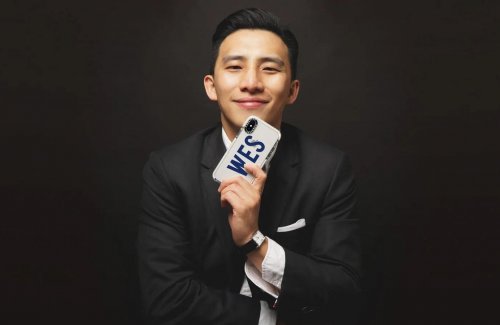
With a feeling of discontent towards the smartphone case designs available in the market, Hongkong native Wesley Ng co-founded Casetify, a multi-million dollar company that manufactures and produces cool smartphone cases.

The 41-year-old CEO takes his business-mindedness from his parents who own a restaurant in their region.

Ng established the business in 2011 together with his friend Ronald Yeung which has now reached over 15 million phone case sales around the world.

As an entrepreneur-grown man, Ng’s mindset is to make profits. According to him, it’s the most important thing to survive, as quoted in CNBC Make It.

“It comes down to one thing — being profitable. Being profitable was super underrated until recently,” he said in a virtual interview. 

Ng proudly shared that Casetify will be attaining $300 million in returns for this year alone.

Furthermore, he advised others to venture into businesses that make fortune and are cost-effective and to learn from other entrepreneurs just like how he learned from his mom and dad.

With his success in the chosen industry, Ng imparts hints to be a self-made millionaire in business:

1.Bootstrapping. Starting with $200,000 capital, Ng shared that he and Ronald always did things and operated out of the interests of the company and not of the stakeholders.

2. Overshare your problems. Business is a give-and-take process, it’s surprising how we can learn from others. Although it may seem a weakness for others to know your struggles as an entrepreneur, it is still fundamental to share and learn from them.

3. Entrepreneurship ‘not for everyone.’ Ng shared that knowing if “it’s for you” is important and to discover if it really is, you should “work closely with a founder” or link with beginners to know how hard it will be.

The successful CEO said that being a producer of a product he is really fond of is what keeps him on the move.

Image Source: Jonathan Sanchez

Uncategorized

Learning From His Single Mom, Parent Portfolio Co-Founder Jonathan Sanchez Realizes Financial Independence at 37

Now living a financially-stable life, the couple founders of Parent Portfolio, a website that serves families to make progress with their money and helps the younger generations become financially wise, teaches their kids lessons towards a successful life.

Born to a financially precarious environment, Jonathan Sanchez was reared with a thrifty outlook by his single mom, which made him yearn for financial stability.

Sharing the same financial sentiments, or even more, with his mother made him believe that if he would be able to get a degree and land a well-paid career, he would be freed from all his money issues.

However, he then realized that his mindset was not as easy as it seemed as, despite achieving a profession together with his wife, Jacqueline Sanchez, their incomes were just enough for their family’s essential needs. 

The Sanchez couple’s life turned 360 degrees after realizing a $1 million net asset by being economical, able to save, doing part-time jobs, and venturing into real estate.

At 37, Jonathan realized his long-dreamed financial independence and stability. In 2020, he decided to share this with other people by co-founding the Parent Portfolio with his wife.

Aside from helping other people, the couple is also bound in educating their kids with the following five valuable tips they shared on CNBC: 

  1. Always rethink one-time purchases. Living within the means and spending efficiently only on what is needed; 
  2. Budgeting gives you more freedom. Planning your budget is financial freedom which benefits you over and over again; 
  3. Don’t let social media influence your spending. Do not be pressured by what you see in the public network and discipline yourself in using gadgets; 
  4. Know where the money comes in, and where it goes out. The couple exposes their children to their income resources, introduces them to the “real world” and even shows diagrams on how to deal with the people and offices they transact with; and, 
  5. Start saving early, and don’t expect to get rich overnight. Learning from the fable of The Tortoise and The Hare, the couple teaches their children of being wise and patient.

“For now, your mother and I are responsible for providing for your needs and wants. A bank is a safe place to put your money because it allows the funds to grow over time. And when you’re old enough, you can use that money for your own goals,” Jonathan tells his children.