Stories

October 8, 2026

SHARE:

Vietnam is one of the world’s biggest coffee-producing countries, yet Thomas Vu rarely saw Vietnamese coffee given the same attention in North America’s specialty coffee scene.

That gap became the idea behind Hanoi Drip Coffee, a Vancouver-based Vietnamese specialty coffee brand that has grown into a multi-million-dollar cafe business in just over two years.

For Vu, the goal goes beyond opening more cafes. He wants people to see Vietnamese coffee differently and prove that a brand deeply rooted in culture can belong on a global stage.

Giving Vietnamese Coffee the Spotlight It Deserves

Vu grew up around the flavors and rituals that make Vietnamese coffee instantly recognizable, from strong Robusta to condensed milk and the slow drip of a phin. Yet despite Vietnam’s rich coffee history, he felt much of that story was still missing from mainstream specialty coffee culture.

That became the opportunity behind Hanoi Drip. Rather than recreate a traditional Vietnamese cafe, Vu and his team asked a bigger question: What could a global Vietnamese coffee brand look like today?

Their answer was to keep the parts of Vietnamese coffee they loved while presenting them for a new generation. Hanoi Drip serves coffee grown in Vietnam, including coffee from Đà Lạt, and puts Robusta, Vietnamese flavors, and phin brewing at the center of the experience.

Learning How to Grow Without Losing the Brand

Building the brand was one challenge. Learning how to grow it without losing what people connected with was another.

When Hanoi Drip was smaller, Vu and the other founders could be involved in nearly every part of the business. As more locations followed, they had to learn how to train teams, develop leaders, manage costs, maintain product consistency, and make sure customers still had a strong experience even when the founders were not there.

Mistakes have been part of that process, and Vu does not pretend otherwise. His approach is to treat them as useful information: fix the problem, build a better system, and move forward, a mindset that has helped Hanoi Drip expand into multiple locations alongside retail coffee, wholesale, and membership offerings.

Taking Vietnamese Coffee Beyond Vancouver

For Vu, some of Hanoi Drip’s most meaningful wins happen when someone tastes Vietnamese coffee for the first time and wants to know more. It also means hearing Vietnamese customers say the brand reminds them of home while still feeling like it belongs to their generation.

That connection has extended beyond coffee. During KOOLFEST 2025, customers purchased more than 1,600 Ube Coconut Coffee and Ube Milk drinks, helping Hanoi Drip raise over $5,500 for a local charity, while the company has also created jobs and collaborated with Asian-owned businesses and creators.

And Vu is still thinking much bigger. He hopes to bring Hanoi Drip beyond Vancouver to markets such as Toronto and Los Angeles, while showing other Asian founders that building something modern does not mean leaving their culture behind.

Learn more about Hanoi Drip and follow the brand as it works to take Vietnamese coffee from Vancouver to a wider global audience.
📍Website

Related Articles

Image Source: UPS Mag

News

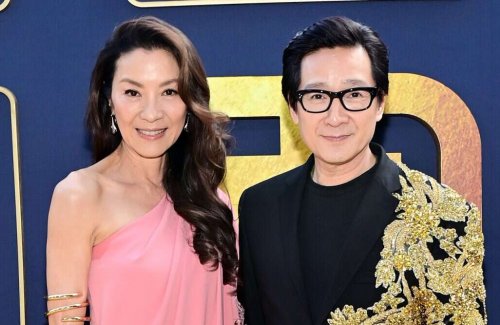
American Born Chinese: Michelle Yeoh and Ke Huy Quan Continue To “Ninja-kick” The Barriers For Asian Actors To Hell

“I think we’ve broken that glass ceiling, we’ve ninja-kicked it to hell,” said Michelle Yeoh on a panel for the Television Critics Association on Friday. “And hopefully it will never come back, broken like Humpty Dumpty pieces.”

Michelle was born in Malaysia and was a major Hong Kong action movie star before moving to America to a vastly different Hollywood landscape. She said that there were no roles out there that represented Asians before, the Hollywood situation has been improving for Asian actors and directors.

Yeoh reunites with her “Everything Everywhere” co-star and fellow Globe winner and Oscar favorite Ke Huy Quan in “American Born Chinese.”

Quan broke out as a child actor but eventually dropped out of acting because the roles were so scarce. He said that it was challenging to be an Asian actor as there were not many opportunities. It didn’t work out for him for two decades, but the landscape has changed.

According to Quan, the audience may react to the show with various emotions. Some are going to be upset, while others might find it humorous. He claimed that he experienced a vast range of feelings while portraying his character.

American Born Chinese was based on the 2006 graphic novel of the same name by Gene Luen Yang, follows struggling student Jin Wang (Ben Wang), who meets a Chinese-born student and is pulled into a supernatural world that includes Yeoh as the undercover Goddess of Mercy and Daniel Wu as the Monkey King. The series is set to premiere on Disney+ in 2023.

Image Source: The Harvest Official Trailer - YouTube

News

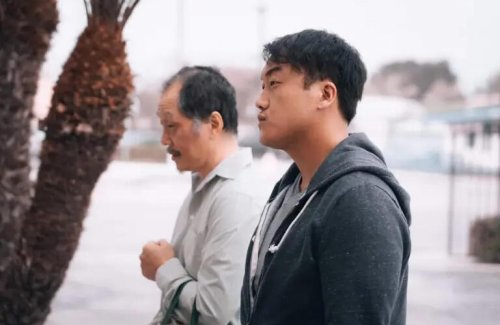
Upcoming ‘The Harvest’ Movie Features a Hmong Family and the Strength and Endurance of their Bond

Recently, Asian Americans are receiving a lot of praise in both film and television. The fact that Asian Americans are becoming more visible is fantastic, but most of these movies just focus on Chinese Americans, which is limiting for other Asians, particularly South and Southeast Asians.

This is what inspired Caylee So’s The Harvest, highlighting the Hmong community, illustrating how similar and yet dissimilar this culture is to what western society considers to be “Asian.”

The synopsis of the movie is that, Thai Moua returns to his family’s home in Southern California after several years of living in San Francisco to find his entire world in chaos.Thai and his family maintain a brave façade while witnessing the debilitating effects of his father Cher’s kidney failure. Thai is torn between trying to please his father and wanting to live his own life, between being a good son and growing up, but most of all, he is conflicted about keeping the cause that has kept him away for so long a secret.

The Harvest addresses the tenacity and endurance of family ties and how they can carry us through even the most trying times in a powerful and sympathetic way.

Doua Moua, who plays Thai and also wrote the compelling screenplay, said in a press statement, “As an actor, I was told my type of Asian does not fit into the narrative of America, which led me to writing narratives that I wanted to tell. I want to redefine what diversity really means and that is inclusion in front and in back of the camera.”

The show stars Doua Moua (Mulan & Gran Torino), Perry Yung (Warriors & The Knick), Dawn Ying Yuen, Chrisna Chhor, Lucas Velazquez, Hua Lee, Alfonso Caballero, Tomas K Thao, Mai Moua, Tsabmim Xyooj, Kue Lee, Chai Yang, ZhongKhang Yang, Mary Ly, Amery K Thao, Anneston Pisayavong, Arianna Rivas, Blake Kevin Dwyer, Greg Yoder, Christine Lin, and Tress Glenn.

The Harvest is not yet scheduled for release.

Image Source: Bloomberg

Stories

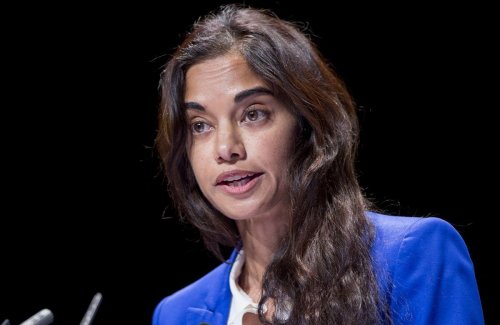
Mala Gaonkar – The Woman in Charge of the Biggest Hedge Fund Launch

With $1.8 billion under management, Mala Gaonkar’s SurgoCap Partners began trading and made history as the largest debut of a woman-led hedge fund in the industry’s history.

SurgoCap Partners invests in technology’s influence on financials, industrials, healthcare, and corporate data. The 20-person company bets on and against equities and can invest 25% of its assets in privately held enterprises.

At an investor conference in June, Gaonkar expressed her support for ServiceNow Inc., an enterprise software provider that aids in workflow automation.

Born in the US and raised in Bengaluru, India, Mala was a Kauffman Fellow. After graduating from Harvard with an MBA and economics degree, she founded Lone Pine in 1998. Later, she managed technology, media, internet, and telecom bets as a portfolio manager. She led the firm’s long-only funds.

She is also a founding trustee of Ariadne Labs, the Queen Elizabeth Prize for Engineering, the Tate Foundation, and Surgo Ventures, a charity that produces data-driven social and health solutions.

She is setting aside $100 million in capacity at SurgoCap for smaller endowments, foundations, and organizations that support marginalized populations or address climate change. She has amassed $35 million thus far.

Mala signed the Giving Pledge that she would devote the majority of her wealth to charitable causes.

Image Source: Legacies of War

News

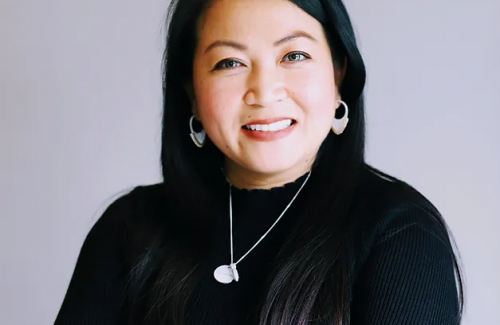
First Lao-American and Millennial To Sit As Chair Of The US Campaign To Ban Landmines – Cluster Munition Coalition

Legacies of War (LoW) CEO Sera Koulabdara is the new Chair of the US Campaign to Ban Landmines – Cluster Munition Coalition (USCBL-CMC). She will be the first millennial, BIPOC, and afflicted nation native to assume the job.

LoW is the only worldwide U.S. advocacy and educational organisation that addresses the repercussions of the American Secret War in Laos and its battles in Cambodia and Vietnam during the Vietnam War, including UXO disposal and victim/survivor support.

Héctor Guerra, Director of International Campaign to Ban Landmines (ICBL), has welcomed LoW, acknowledging their work as a great example of global collaborative efforts in supporting communities affected by landmines and cluster munitions.

According to Mary Wareham, Arms Advocacy Director of Human Rights Watch, there could not be a better placed organization to coordinate the USCBL-CMC than LoW, as it is committed to ensuring that the US joins and adheres to the international treaties prohibiting antipersonnel landmines and cluster munitions.

CEO of Roots of Peace, Heidi Kuhn, also recognized how fortunate USCBL-CMC is to have Sera as Chair, with her unique qualifications as a leader in mine action, and her family heritage in Laos as the basis of her passion. She claimed that Sera brings a renewed spirit of home to the UXO campaign.

Sera shared in her bio in LoW’s website, that she hopes to make a positive difference in the lives of the people in her father’s beloved homeland, Laos, and to create hope for future generations.