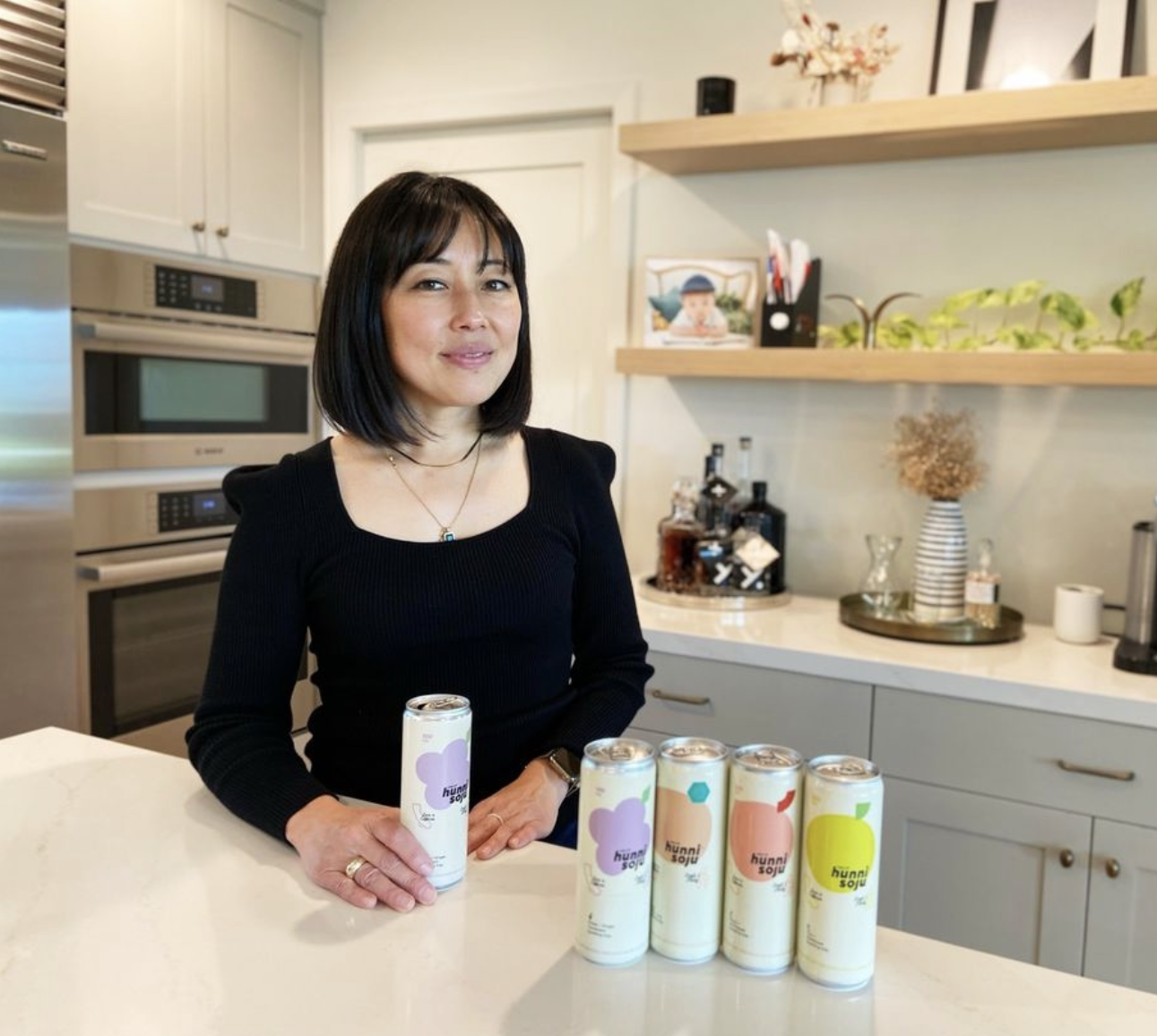
Founded in 2015 by Carolyn Kim, a Korean American mother and non-profit lawyer, Yobo Soju was born out of a desire to create an elegant soju that resonated with evolving lifestyles and refined tastes.
As the first American hand-crafted soju made in the New York Finger Lakes, Yobo quickly gained recognition, winning awards and becoming renowned for its exceptional taste.
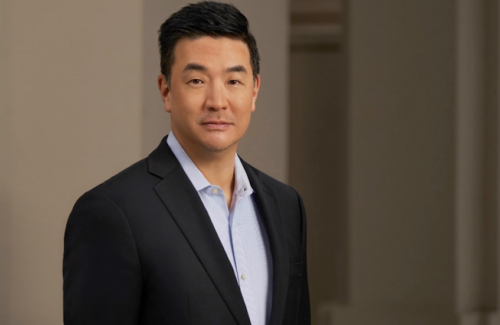
In 2021, John Noe joined the team as an investor and CEO, aiming to propel Carolyn’s vision to new heights. With offerings like Hunni Soju, YoboKish, KTOWN Soju, and Yobo Soju Luxe, they cater to various consumer preferences and occasions, making soju accessible to a wider audience.
Yobo Soju stands out from other brands by choosing to craft their soju from grapes, a departure from the traditional rice-based approach. This unique choice pays homage to Carolyn’s Korean American heritage and the desire to create a more premium and high-quality soju. The result is a velvety smooth liquid with a floral aroma and fruitiness, capturing the attention of cocktail bars and restaurants seeking to elevate their creations.
In an interview with John Noe, he shares his insights into the journey of Yobo Soju and its impact on the spirits market. Join us as we delve deeper into the story behind Yobo Soju and discover the inspiration and passion that drives its success.
HOW YOBO SOJU CAME TO LIFE
Yobo Soju was started in 2015 by Carolyn Kim, a Korean American mother of twins and a non-profit lawyer. At the time, there weren’t many premium soju on the market. While she enjoyed drinking soju in her earlier years, she wanted something that suited her evolving lifestyle and taste.

In a word, she wanted to create a soju that was ‘elegant.’ From that ambition, Yobo Soju was born, the first American hand-crafted soju made in the New York Finger Lakes. Immediately, Yobo won several awards and was touted for being one of the best-tasting soju available. Yobo made its way into top restaurants, cocktail bars, and retail accounts, and was ready to grow.
In 2021, I joined the team as an investor and CEO to push Carolyn’s vision further. We had a great product and initial distribution but needed to get to the next level. In developing our strategy, we started from the very top and figured we’d work our way down. How do we win over U.S. consumers completely unfamiliar with soju? If we could do that, winning existing soju consumers or lapsed soju consumers would be easy by comparison. From there, the obstacles started to stack.
Distributor: Will there even be any interest in soju?
Retailer: Where would I even put soju on my shelves?
Bar manager: How do I even serve soju?
Consumer: What is soju? How do I drink it?
Our strategy was to take our single product and to expand into a diverse portfolio that could navigate our obstacles. We created Hunni Soju, a ready-to-drink flavored soju cocktail line, to utilize a more approachable single-serve format. We created YoboKish, a range of unique aperitifs using our soju as its base, to reach mixology enthusiasts at home and at the bar. We created KTOWN soju, a range of all-natural flavored soju made with real fruit juice, as a playful way to drive soju trials in a multi-serve format. And we elevated our original distilled soju, renaming it Yobo Soju Luxe to honor traditional soju making while adding our own Korean American twist. Together, we’ve created a diverse Asian American spirit portfolio that can bring soju to nearly any type of account and occasion.

Together, the portfolio represents a diverse range of Asian American spirits to meet consumers of any level of soju familiarity. Since 2020, Yobo has expanded from 2 SKUs to 18 SKUs and our annual case volume has grown 50x with distribution in over 30 states. The strategy that seemed risky and overly ambitious in 2021 is now beginning to take hold.
Mass soju is a low-cost product produced at a significant volume that isn’t known for its great taste. But it’s the spirit of Korea, so why couldn’t it be more premium and made of higher quality?
John Noe

USING GRAPES TO CRAFT SOJU
Carolyn was very thoughtful in creating the first Korean American soju. Like her own identity, she wanted to source ingredients that were local to her while paying homage to her history and origin.
At the time, she lived in New York City, and so the idea of using Catawba grapes grown nearby in the Finger Lakes became an interesting choice. There was a disruptive statement to be made as well. In a category dominated by men, how would she represent Korean American women in creating the first soju made in America?
Mass soju is a low-cost product produced at a significant volume that isn’t known for its great taste. But it’s the spirit of Korea, so why couldn’t it be more premium and made of higher quality? Producing soju from grapes resulted in a liquid with a floral aroma, fruitiness, and a velvety smooth finish. Yobo was quickly adopted by cocktail bars and restaurants that wanted to create higher-end cocktails with soju. Consumers lauded its taste and Yobo gained a niche following.

Since then, we moved our operations to California and updated the branding, packaging, and formula for our flagship soju now called Yobo Soju Luxe. The formula change is one we didn’t take lightly. Moving to California not only gave us the ability to source grapes from California but to source rice as well. After much trial and error and countless recipes, we ended up with the current Yobo Soju Luxe formula made from organic wheat, California rice, and California grapes. It’s a blend that combines the best of each of those ingredients giving us a soju that’s impossibly smooth and almost creamy while representing what we believed to be truly Korean American.
PRODUCTION PROCESS AND STANDARDS
The majority of our products are produced in Ventura, California with our distiller.
The process is a labor of love where our formulas are distilled, mixed, and batched by our master distiller. Each bottle is inspected by hand and packed. But the part of the process that’s been the biggest adventure has been the formulation process.
Creating YoboKish, the collaborative name of our venture with Kristen Kish, took almost two years. We started the project with a completely blank canvas and no restrictions. What would a Top Chef winner do? We gave Kristen free rein and the project evolved through several iterations as we experimented with flavors, formats, and concepts. Eventually, we landed on the flavor profile Kristen loves most, bringing contrasting flavors together like bitter and sweet:
- SHINE – kumquat, rose, and ginger because kumquat is her favorite fruit.
- BLISS – sour cherry, pink peppercorn, and licorice because Kristen grew up in Michigan and loved licorice as a kid.
- EARTH – smoked mushroom umami because she’s a celebrity chef and she flexes.
- SEOUL – hibiscus, lemon balm, and raw honey because her wife Bianca has a nightly ritual of drinking hibiscus tea in a similar fashion (hence the name, SEOUL for the city where Kristen was born and SOUL for her soulmate, Bianca).

They’re each sweet and bitter, but soft and balanced at the same time. They’re all-natural and have no artificial coloring or flavors. And they provide mixologists with Top Chef-like ingredients to create an array of imaginative cocktails.

DIFFERENT OFFERINGS TO CATER DIFFERENT CONSUMER PREFERENCES
There is a distinct ritual to drinking soju.
Its smaller bottles and lower proof allow bottles to be easily consumed among a group of friends. Once a bottle is opened, it’s shared and poured, two hands pour, and two hands receive as it’s passed around the table until it’s empty. At Korean barbeque, singing karaoke, or out clubbing, the occasion for soju is a social one.
While we want our soju to be a part of all those rituals and occasions, we wanted to design our products for new occasions that would help us cross cultures.
In Yobo Soju Luxe, we wanted to create a celebratory bottle and liquid, one that could be gifted as a present or opened to commemorate an accomplishment.
In YoboKish, we wanted to create a ‘professional’ product for more advanced mixologists and cocktail enthusiasts.
In Hunni Soju, we wanted a format that would be conducive for trial, a single-serve, easy-to-drink, flavored soju that people could grab and go – to the beach, a picnic, golfing, and more.
And in KTOWN Soju, we wanted to take everything we’ve ever loved about eating and drinking in Korea town and take the experience of KTOWN to wherever the bottle goes. In fact, the design of the glass is made to look like a flask and the liquid is fruity, sweet, and welcoming to any first-time soju drinker.
WHAT SETS YOBO SOJU APART
Most people don’t realize that soju is the largest-selling spirit in the world by volume, outselling vodka, tequila, and whiskey in total cases. Despite its market size, most soju on the market are very similar – inexpensive liquid housed in small green bottles.
It wasn’t until more recently that more premium soju products arrived. But what makes our full line of products unique is our identity as a Korean American company and brand. There’s a generational shift in thinking about what soju could be in the United States and we intend to produce soju that is as beautifully designed as any other spirit you’d find on the shelf and of the highest quality.
Our glass is custom. Our liquid is all-natural and free from artificial coloring, flavors, or sweeteners. While we do our best to communicate our differences through our marketing communications, the best proof is when somebody tries our soju. If you’ve had other soju before, the difference is unmistakable.
JOHN’S GOALS AND VISION FOR YOBO SOJU
I started as CEO in 2021 and since then we’ve accomplished so much. The business has grown 50x in annual case volume with the expansion of its portfolio and is now distributed in more than 30 states. We’re about to launch major brand collaborations and product integration in the upcoming Joyride movie by Adele Lim.
We’ve poured at places like the Sundance Film Festival and Food & Wine Classic in Aspen. But beyond the business milestones, I believe what we’re doing is significant and will spark the imagination of others to follow.
Our mission has been to elevate the Korean American spirit by breaking boundaries, from the way we think about the liquid that constitutes soju to the communities we aim to reach. The world doesn’t need another tequila or vodka and yet much of the industry only sees opportunities in large, established markets.
As a Korean American, I know the power of the minority mindset and the impact that can be made by a few. Small is where everyone starts. We had two events just recently, a pride event at a fashion/design studio called Bobblehaus where we showcased KTOWN soju, and Food & Wine in Aspen where we showcased Kristen Kish’s aperitifs.
It was such an amazing experience pouring our drinks for people, explaining soju, introducing our products, and seeing everyone’s reactions. Some might overlook Asian American spirits right now because of its market size or lack of movie star endorsers, but from the view down here, we see a community building around us filled with faces of every identity and color sharing and enjoying soju with us.

THE IMPACT OF YOBO SOJU
The greatest impact Yobo has had is its personal impact on me.
I grew up in a small town in Texas and our family was the first Korean family in our neighborhood. When we arrived, the community of Korean Americans in my elementary school was limited to me and my brother (for the one year we overlapped). For most of my life, I struggled with my own Korean American identity and felt like I needed to find ways to be less ‘Korean’ to succeed.
I’ve had an entrepreneurial career having built and sold an advertising agency before Yobo in an industry where just like my elementary school, I was only one of a few Asian Americans along with my Chinese American partner. We built the agency up and sold it to a French holding company where we continued to grow the business. In that time, we worked with mass, established, ‘American’ brands that played very little in contributing to Asian American identity and culture. We were successful by all business standards, but regretfully, we contributed very little to our Asian American community.
At the time of joining Yobo as its CEO, the stories of hate crimes against Asian Americans started to surface. Here I am, a Korean American CEO of a Korean American company amidst a breakout of hatred toward a community I rarely embraced. It was the unfortunate wake-up call I required to find pride in my identity and to take more roles in paving the way for other Asian Americans more seriously. My Yobo journey has been profound, and instead of hiding my Korean-ness, I’m now on a mission to share it.
We have a few things lined up that I’m excited to share and announce. Beyond launching products and selling them into accounts, we’re here to make a statement. The Yobo organization is very small, a minority among minorities, but we believe we’ll make an outsized impact.
CONNECT WITH YOBO SOJU
Instagram: @yobosoju
Website: yobosoju.com