Stories

June 26, 2023

SHARE:

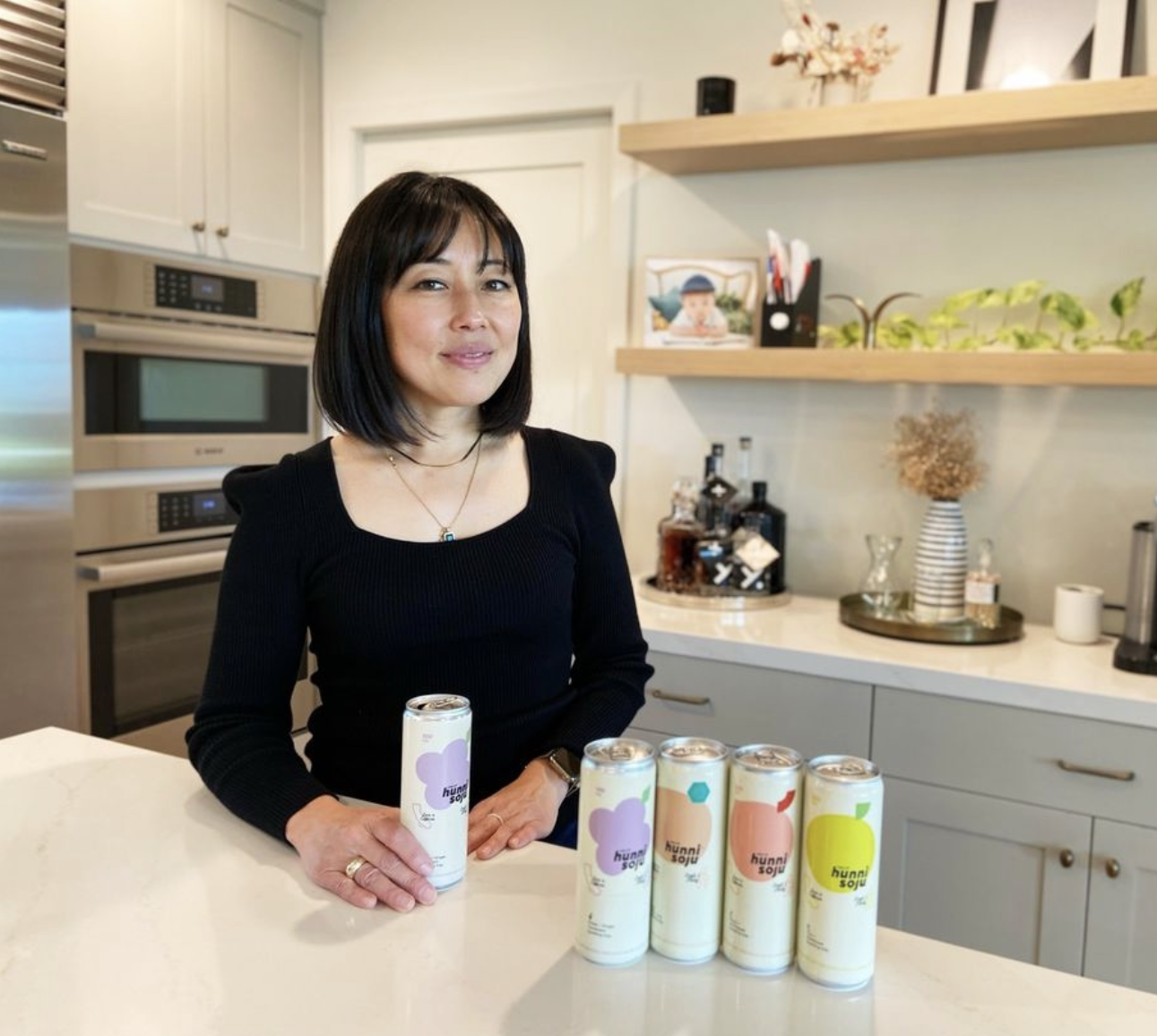
Founded in 2015 by Carolyn Kim, a Korean American mother and non-profit lawyer, Yobo Soju was born out of a desire to create an elegant soju that resonated with evolving lifestyles and refined tastes.

As the first American hand-crafted soju made in the New York Finger Lakes, Yobo quickly gained recognition, winning awards and becoming renowned for its exceptional taste.

In 2021, John Noe joined the team as an investor and CEO, aiming to propel Carolyn’s vision to new heights. With offerings like Hunni Soju, YoboKish, KTOWN Soju, and Yobo Soju Luxe, they cater to various consumer preferences and occasions, making soju accessible to a wider audience.

Yobo Soju stands out from other brands by choosing to craft their soju from grapes, a departure from the traditional rice-based approach. This unique choice pays homage to Carolyn’s Korean American heritage and the desire to create a more premium and high-quality soju. The result is a velvety smooth liquid with a floral aroma and fruitiness, capturing the attention of cocktail bars and restaurants seeking to elevate their creations.

In an interview with John Noe, he shares his insights into the journey of Yobo Soju and its impact on the spirits market. Join us as we delve deeper into the story behind Yobo Soju and discover the inspiration and passion that drives its success.

HOW YOBO SOJU CAME TO LIFE

Yobo Soju was started in 2015 by Carolyn Kim, a Korean American mother of twins and a non-profit lawyer. At the time, there weren’t many premium soju on the market. While she enjoyed drinking soju in her earlier years, she wanted something that suited her evolving lifestyle and taste.

Carolyn Kim

In a word, she wanted to create a soju that was ‘elegant.’ From that ambition, Yobo Soju was born, the first American hand-crafted soju made in the New York Finger Lakes. Immediately, Yobo won several awards and was touted for being one of the best-tasting soju available. Yobo made its way into top restaurants, cocktail bars, and retail accounts, and was ready to grow. 

In 2021, I joined the team as an investor and CEO to push Carolyn’s vision further. We had a great product and initial distribution but needed to get to the next level. In developing our strategy, we started from the very top and figured we’d work our way down. How do we win over U.S. consumers completely unfamiliar with soju? If we could do that, winning existing soju consumers or lapsed soju consumers would be easy by comparison. From there, the obstacles started to stack.   

Distributor: Will there even be any interest in soju?

Retailer: Where would I even put soju on my shelves?

Bar manager: How do I even serve soju?

Consumer: What is soju? How do I drink it?

Our strategy was to take our single product and to expand into a diverse portfolio that could navigate our obstacles. We created Hunni Soju, a ready-to-drink flavored soju cocktail line, to utilize a more approachable single-serve format. We created YoboKish, a range of unique aperitifs using our soju as its base, to reach mixology enthusiasts at home and at the bar. We created KTOWN soju, a range of all-natural flavored soju made with real fruit juice, as a playful way to drive soju trials in a multi-serve format. And we elevated our original distilled soju, renaming it Yobo Soju Luxe to honor traditional soju making while adding our own Korean American twist. Together, we’ve created a diverse Asian American spirit portfolio that can bring soju to nearly any type of account and occasion.

Together, the portfolio represents a diverse range of Asian American spirits to meet consumers of any level of soju familiarity. Since 2020, Yobo has expanded from 2 SKUs to 18 SKUs and our annual case volume has grown 50x with distribution in over 30 states. The strategy that seemed risky and overly ambitious in 2021 is now beginning to take hold.  

Mass soju is a low-cost product produced at a significant volume that isn’t known for its great taste. But it’s the spirit of Korea, so why couldn’t it be more premium and made of higher quality?

John Noe

USING GRAPES TO CRAFT SOJU

Carolyn was very thoughtful in creating the first Korean American soju. Like her own identity, she wanted to source ingredients that were local to her while paying homage to her history and origin.

At the time, she lived in New York City, and so the idea of using Catawba grapes grown nearby in the Finger Lakes became an interesting choice. There was a disruptive statement to be made as well. In a category dominated by men, how would she represent Korean American women in creating the first soju made in America?

Mass soju is a low-cost product produced at a significant volume that isn’t known for its great taste. But it’s the spirit of Korea, so why couldn’t it be more premium and made of higher quality? Producing soju from grapes resulted in a liquid with a floral aroma, fruitiness, and a velvety smooth finish. Yobo was quickly adopted by cocktail bars and restaurants that wanted to create higher-end cocktails with soju. Consumers lauded its taste and Yobo gained a niche following.

Since then, we moved our operations to California and updated the branding, packaging, and formula for our flagship soju now called Yobo Soju Luxe. The formula change is one we didn’t take lightly. Moving to California not only gave us the ability to source grapes from California but to source rice as well. After much trial and error and countless recipes, we ended up with the current Yobo Soju Luxe formula made from organic wheat, California rice, and California grapes. It’s a blend that combines the best of each of those ingredients giving us a soju that’s impossibly smooth and almost creamy while representing what we believed to be truly Korean American.

PRODUCTION PROCESS AND STANDARDS

The majority of our products are produced in Ventura, California with our distiller.

The process is a labor of love where our formulas are distilled, mixed, and batched by our master distiller. Each bottle is inspected by hand and packed. But the part of the process that’s been the biggest adventure has been the formulation process.

Creating YoboKish, the collaborative name of our venture with Kristen Kish, took almost two years. We started the project with a completely blank canvas and no restrictions. What would a Top Chef winner do? We gave Kristen free rein and the project evolved through several iterations as we experimented with flavors, formats, and concepts. Eventually, we landed on the flavor profile Kristen loves most, bringing contrasting flavors together like bitter and sweet:

  • SHINE – kumquat, rose, and ginger because kumquat is her favorite fruit. 
  • BLISS – sour cherry, pink peppercorn, and licorice because Kristen grew up in Michigan and loved licorice as a kid.
  • EARTH – smoked mushroom umami because she’s a celebrity chef and she flexes.
  • SEOUL – hibiscus, lemon balm, and raw honey because her wife Bianca has a nightly ritual of drinking hibiscus tea in a similar fashion (hence the name, SEOUL for the city where Kristen was born and SOUL for her soulmate, Bianca).

They’re each sweet and bitter, but soft and balanced at the same time. They’re all-natural and have no artificial coloring or flavors. And they provide mixologists with Top Chef-like ingredients to create an array of imaginative cocktails.

Kristen Kish

DIFFERENT OFFERINGS TO CATER DIFFERENT CONSUMER PREFERENCES

There is a distinct ritual to drinking soju.

Its smaller bottles and lower proof allow bottles to be easily consumed among a group of friends. Once a bottle is opened, it’s shared and poured, two hands pour, and two hands receive as it’s passed around the table until it’s empty. At Korean barbeque, singing karaoke, or out clubbing, the occasion for soju is a social one.  

While we want our soju to be a part of all those rituals and occasions, we wanted to design our products for new occasions that would help us cross cultures.

In Yobo Soju Luxe, we wanted to create a celebratory bottle and liquid, one that could be gifted as a present or opened to commemorate an accomplishment.

In YoboKish, we wanted to create a ‘professional’ product for more advanced mixologists and cocktail enthusiasts.

In Hunni Soju, we wanted a format that would be conducive for trial, a single-serve, easy-to-drink, flavored soju that people could grab and go – to the beach, a picnic, golfing, and more.

And in KTOWN Soju, we wanted to take everything we’ve ever loved about eating and drinking in Korea town and take the experience of KTOWN to wherever the bottle goes. In fact, the design of the glass is made to look like a flask and the liquid is fruity, sweet, and welcoming to any first-time soju drinker.

WHAT SETS YOBO SOJU APART

Most people don’t realize that soju is the largest-selling spirit in the world by volume, outselling vodka, tequila, and whiskey in total cases. Despite its market size, most soju on the market are very similar – inexpensive liquid housed in small green bottles.

It wasn’t until more recently that more premium soju products arrived. But what makes our full line of products unique is our identity as a Korean American company and brand. There’s a generational shift in thinking about what soju could be in the United States and we intend to produce soju that is as beautifully designed as any other spirit you’d find on the shelf and of the highest quality.

Our glass is custom. Our liquid is all-natural and free from artificial coloring, flavors, or sweeteners. While we do our best to communicate our differences through our marketing communications, the best proof is when somebody tries our soju. If you’ve had other soju before, the difference is unmistakable.

JOHN’S GOALS AND VISION FOR YOBO SOJU

I started as CEO in 2021 and since then we’ve accomplished so much. The business has grown 50x in annual case volume with the expansion of its portfolio and is now distributed in more than 30 states. We’re about to launch major brand collaborations and product integration in the upcoming Joyride movie by Adele Lim.

We’ve poured at places like the Sundance Film Festival and Food & Wine Classic in Aspen. But beyond the business milestones, I believe what we’re doing is significant and will spark the imagination of others to follow. 

Our mission has been to elevate the Korean American spirit by breaking boundaries, from the way we think about the liquid that constitutes soju to the communities we aim to reach. The world doesn’t need another tequila or vodka and yet much of the industry only sees opportunities in large, established markets.

As a Korean American, I know the power of the minority mindset and the impact that can be made by a few. Small is where everyone starts. We had two events just recently, a pride event at a fashion/design studio called Bobblehaus where we showcased KTOWN soju, and Food & Wine in Aspen where we showcased Kristen Kish’s aperitifs.

It was such an amazing experience pouring our drinks for people, explaining soju, introducing our products, and seeing everyone’s reactions. Some might overlook Asian American spirits right now because of its market size or lack of movie star endorsers, but from the view down here, we see a community building around us filled with faces of every identity and color sharing and enjoying soju with us.

John Noe

THE IMPACT OF YOBO SOJU

The greatest impact Yobo has had is its personal impact on me.

I grew up in a small town in Texas and our family was the first Korean family in our neighborhood. When we arrived, the community of Korean Americans in my elementary school was limited to me and my brother (for the one year we overlapped). For most of my life, I struggled with my own Korean American identity and felt like I needed to find ways to be less ‘Korean’ to succeed.

I’ve had an entrepreneurial career having built and sold an advertising agency before Yobo in an industry where just like my elementary school, I was only one of a few Asian Americans along with my Chinese American partner. We built the agency up and sold it to a French holding company where we continued to grow the business. In that time, we worked with mass, established, ‘American’ brands that played very little in contributing to Asian American identity and culture. We were successful by all business standards, but regretfully, we contributed very little to our Asian American community.

At the time of joining Yobo as its CEO, the stories of hate crimes against Asian Americans started to surface. Here I am, a Korean American CEO of a Korean American company amidst a breakout of hatred toward a community I rarely embraced. It was the unfortunate wake-up call I required to find pride in my identity and to take more roles in paving the way for other Asian Americans more seriously. My Yobo journey has been profound, and instead of hiding my Korean-ness, I’m now on a mission to share it.

We have a few things lined up that I’m excited to share and announce. Beyond launching products and selling them into accounts, we’re here to make a statement. The Yobo organization is very small, a minority among minorities, but we believe we’ll make an outsized impact.

CONNECT WITH YOBO SOJU

Instagram: @yobosoju

Website: yobosoju.com
Related Articles

335590593_731331605109386_7047023362761355809_n-jpg

Stories

This Young Baker Is Changing the Food System by ‘Vegan-izing’ Asian Snacks

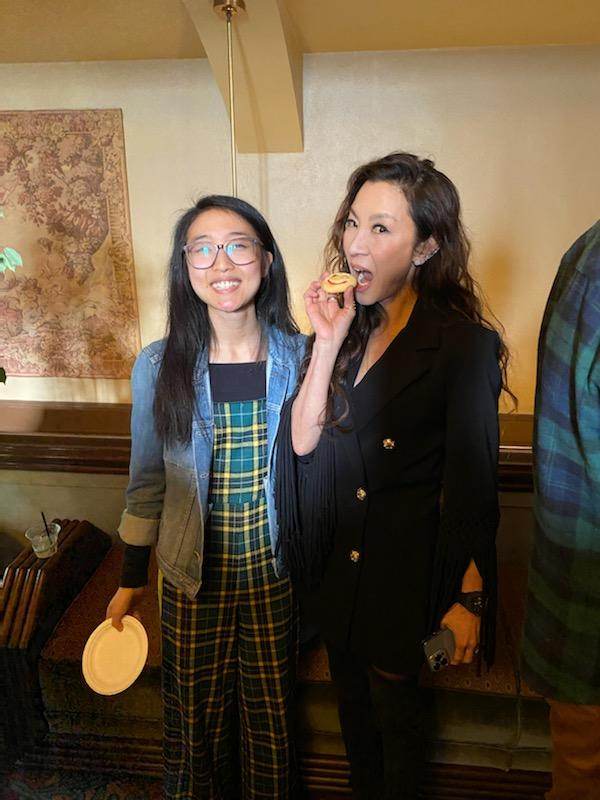
Annie Wang, a baker from Oakland, recently had the opportunity of making custom almond cookies for the premiere of Everything Everywhere All At Once.

Made from only the freshest, high-quality ingredients and created with sustainability in mind, Annie’s vegan, gluten-free, and upcycled Taiwanese Pineapple Cakes are perfect for anyone who cares for the environment and their taste buds.

In this interview, Annie shares her experience of growing up in rural towns in America, where she witnessed firsthand the harsh realities of food production, her journey of developing her recipes, her passion for reducing the use of animal products, and her experience of baking for the premiere of Everything Everywhere All At Once.

SEEING THE HARSH REALITIES OF HOW FOOD WERE BEING PRODUCED WHILE GROWING UP

I was born in New York City, but growing up, my family and I moved every three years. The towns we moved to in the later years were smaller and more rural than the others. During the time I lived in these states, I saw the harsh realities of how we produce and handle food in America.

In one town in Illinois, my classmates and I had to plug our noses to guard against the toxic smell wafting towards us from a nearby pig farm. When we lived in Arkansas, we lived 15 minutes away from a Tyson chicken factory where runoff from the factory sat in huge silos. Ironically, these rural towns where I got to school by walking through crop fields were the towns where neighbors often struggled the most with unstable access to nutritious and responsibly grown food.

These towns were also where I first learned about the enormous harm inflicted on people and animals by our current agricultural system and decided to adopt a plant-based diet. That decision meant a lot of the staples I grew up eating with my family were no longer an option.

After working at environmental nonprofits and food tech companies, I decided to start Annie’s T Cakes to help myself and others once again partake in culturally important foods while also helping to improve the food system.

MY DREAM AS A KID WAS TO OPEN A BAKERY

The first thing I ever cooked was a scrambled egg in fifth grade. I forgot to oil the pan so you could say the first go was a fail. I didn’t really bake growing up unless it was a box of brownie mix or Pillsbury cookies. Most of my time in the kitchen was spent working the stovetop via stir-frying, steaming, and boiling.

I’d watch my mom cook traditional dishes like tomato and scrambled eggs with noodles or filled buns. As I got older, I started taking on more responsibilities in the kitchen and would cook tea eggs, and steamed bread on my own. I loved getting experimental. I always made my bread and dumplings in unique shapes.

Last year, my dad told me that my dream as a kid was to open a bakery. It was news to me since the one fleeting dream I can remember was about being a vet. But hey, here we are! Definitely much further than my first failed scrambled egg.

The base of the Taiwanese pineapple cake recipe only took me three tries to make (the fastest I’ve yet to develop a recipe). I started by making milk bread and buns but I remembered how much I used to love Taiwanese pineapple cakes growing up and took a crack at it. A friend of mine in Oakland runs a business upcycling tofu fiber into flour (Renewal Mill). Since the pineapple cakes didn’t need to rise as the bread did, I thought it would be a perfect way to create a gluten-free option for customers and support her business as well. 

VEGAN-IZING ASIAN SNACKS AND FOODS

I started to dig deep into climate change, including the impact of animal agriculture on the environment, when I was in college. At the time, I got involved in our school’s student-led fossil fuel divestment campaign (our school divested in 2020!).

I was taking classes and reading about all the intersections between society, the food system, policies, etc. with our environment. I also learned so much from the other passionate student activists I worked with. To this day, I still draw from the incredible strength and compassion I felt from the student leaders I worked with in those days as I think about how to build a team and partnerships. 

A couple of years after I graduated college, I started working in food tech. I was interested in the field for its vast potential to positively impact the climate by shifting our food systems. I wanted to start a business ‘vegan-izing’ the Asian snacks and foods I grew up eating for years.

When the pandemic hit and I was laid off along with half of my team, I took the plunge. Building the business now, I think really deeply about sourcing ingredients and how to make things sustainable. In addition to building a vegan brand, I also use compostable packaging and try to reuse shipping materials to reduce waste. 

We see more food products on the market these days that do not use animal products. Heavily reducing the use of animal products as a society would be huge for reducing our negative impact on the environment and taking care of all living things on our planet.

THE ‘EVERYTHING EVERYWHERE ALL AT ONCE’ EXPERIENCE

My experience baking for the premiere of Everything Everywhere All At Once was a whirlwind!

The week before the premiere, I was put in touch with A24. In each of the markets the studio had launched the movie in, they’d worked with local bakers to create the smiley face cookie that appeared in the movie, and they still needed someone for the San Francisco premiere.

When they reached out to me, I actually didn’t have my almond cookie recipe finalized yet. I had been working on the recipe for a year at that point and felt like I just had a couple of days to nail it. So, I told the studio I would get back to them, and I cranked out test batch after test batch over the weekend.

After a couple of days, I finally had it done! And just like that, the next week, I took the recipe I had just finalized, made and packed 800+ cookies for the premier. Two nights before the premiere, I had started baking at around 7 am and continued into the night packing half of them. I thought it wasn’t that late but when I looked at the time it was 4 am! Thankfully the next day my boyfriend and two of our close friends came and helped me pack the other half of the cookies and it only took us only a few hours.

To see a cookie I made in the hands of hundreds of people, including the cast and directors of a movie that has touched so many lives was a once-in-a-lifetime event, to say the least. At the premiere, one of the directors expressed his happiness to me. He told me I had been the only baker that had made an actual almond cookie. Remembering that moment, and countless others throughout the week, I am so grateful that I got to be a part of such a special event with incredible changemakers. 

ADVICE TO BUSINESS OWNERS TOWARD SUSTAINABILITY

As small business owners, most of the time we’re just running around trying to get products out the door. Compromise happens daily because bandwidth is limited and nothing ever happens in an ideal way. 

For those that are trying to find ways to be more sustainable, take small steps toward a long-term plan of sustainability. Take note of things like the ingredients you use, where you source everything from, the amount of packaging you use, etc. and make changes where and when you can to reduce your footprint. Start small and intentionally design your business in a way where you are putting yourself on the road toward your ultimate, climate-friendly operation. 

WHAT TO EXPECT FROM ANNIE’S T CAKES 

My vision for Annie’s T Cakes is to bring these nostalgic vegan treats to people across the globe, starting first in California. I also aim to support local agricultural efforts by donating profits to organizations focused on sustainable agriculture in their communities.

In the near term, I’ll be in my kitchen, continuing to bring delicious and culturally relevant foods to our community!

Website: www.anniestcakes.com

Instagram: @anniestcakes

pioneer press-jpg

News

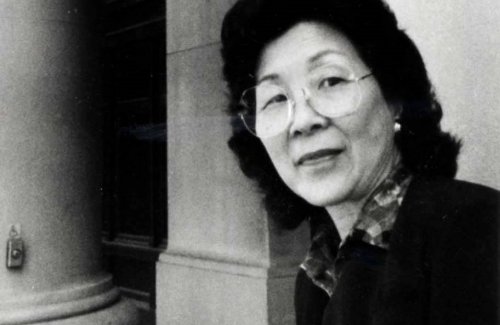
Culinary Icon Leeann Chin’s Journey to Building an Asian Cuisine Empire in Minnesota

Many Minnesotans are familiar with the name Leeann Chin and her beloved chain of Chinese restaurants across the state. But not everyone knows the extraordinary story behind her rise to success.

In 1980, at the age of 47, Leeann, a determined Chinese woman, opened her first restaurant in Minnetonka. Her life wasn’t easy from the start. She was forced into marriage as a young girl and moved to Minnesota with her husband.

Life in Minnesota was tough for Leeann. She had to raise six children in a small house with just one bathroom. Despite all the challenges, she remained strong and devoted to her family.

Cooking became Leeann’s way of expressing love, even though she didn’t say it with words. When her older daughter tragically passed away, Leeann found comfort in the kitchen, and her passion for cooking grew. Her delicious Chinese dishes quickly gained fame when she catered a luncheon for her sewing clients. They loved her food so much that they encouraged her to teach cooking and cater more events.

With hard work, Leeann’s restaurant business flourished. She even got support from unexpected sources, like Carl Pohlad, the owner of the Minnesota Twins, thanks to a party she catered where Sean Connery, the famous actor, was a guest.

As word spread about her delectable dishes, lines of eager customers formed around her restaurant, and her culinary empire flourished. In time, General Mills acquired her successful chain, marking a remarkable milestone in her journey.

Leeann’s passion for cooking didn’t end with her success; it carried on through her daughter Katie Chin, who also pursued a career as a chef. Together, they became celebrated national TV cooking stars, preserving Leeann’s legacy for future generations.

Today, Katie honors her mother’s memory with a cookbook, showcasing Leeann’s cherished recipes, including the famous chicken chow mein.

Featured Image Source: Pioneer Press

msnbc-jpg

News

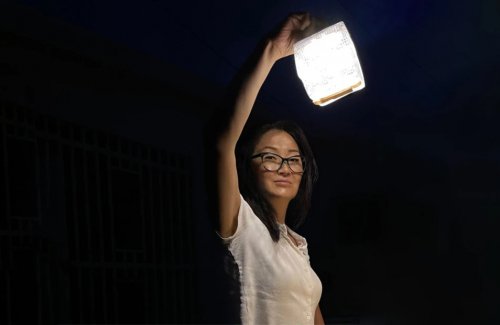
Korean Mompreneur Created Solar-Powered Solutions to Combat Air Pollution and Aid Disaster Zones

Inspired by her son’s asthma diagnosis, NYC local mom Alice Min Soo Chun decided to take action against air pollution, leading to the creation of innovative solar-powered solutions. Now, her groundbreaking solar technology is making a significant impact in regions affected by disasters, including war-torn Ukraine.

Her latest invention, the Mega Puff, is a fantastic foldable lantern that can also charge your phone. Unlike other solar chargers that take forever to charge, the Mega Puff does it in just one day. This smart mom has already donated thousands of these lanterns to help disaster victims.

As a child growing up outside Syracuse, Alice faced the harsh reality of bullying due to her Korean heritage. She found comfort in making origami with her mom. Later on, she became a teacher and launched her own company, Solight, to help others.

Since then, she has sold over one million solar-powered products and her efforts caught the attention of prominent figures like Disney CEO Bob Iger, who championed her cause after reading about her work.

Alice Min Soo Chun said to ABC7NY, “Small things matter, but if we all work collectively, we can change the world.”

Featured Image Source: MSNBC

SUPERIOR TELEGRAM-jpg

News

A New Family-Inspired Eatery Brings Vietnamese and Chinese Cuisine to Superior, Wisconsin

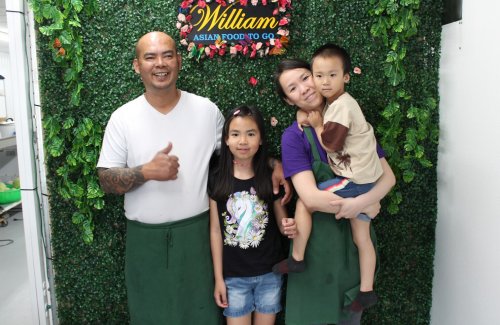
William Asian Food to Go, a charming new eatery nestled at Superior, Wisconsin, has recently entered the culinary scene, offering a delightful blend of Vietnamese and Chinese cuisine.

The name of the restaurant has special meaning for the proprietors because it honors their 4-year-old son, William Tran. The devoted owners, Dung Tran and Nguyet Ho, have filled the entire business with their familial love. Their gifted 9-year-old daughter Ngoc’s meticulously created artwork lends the interior decor a lively charm.

“The reason we opened this one is not for me and my wife, it’s for them,” Tran said to Superior Telegram.

Drawing upon their Vietnamese heritage, the couple presents a diverse menu that artfully captures the authentic flavors of Vietnam and China. Whether you crave fried rice, spring rolls, stir-fry, rice vermicelli dishes, or Vietnamese sandwiches, every dish is expertly prepared and made fresh to order.

Bringing nearly 15 years of culinary expertise to the table, Tran’s skills are well-reflected in the dishes he crafts with passion and precision. Notably, his brother once ran the beloved Pho Cali restaurant in Superior from 2017 to 2022, contributing to Tran’s local connection and commitment to providing an exceptional dining experience.

Although starting the company has been difficult, Ho and Tran are excited to see it expand. They are unwavering in their commitment to the family, making sure that the warmth and affection that gave birth to William Asian Food to Go are now at the core of their business.

Featured Image Source: Superior Telegram