Stories

June 26, 2023

SHARE:

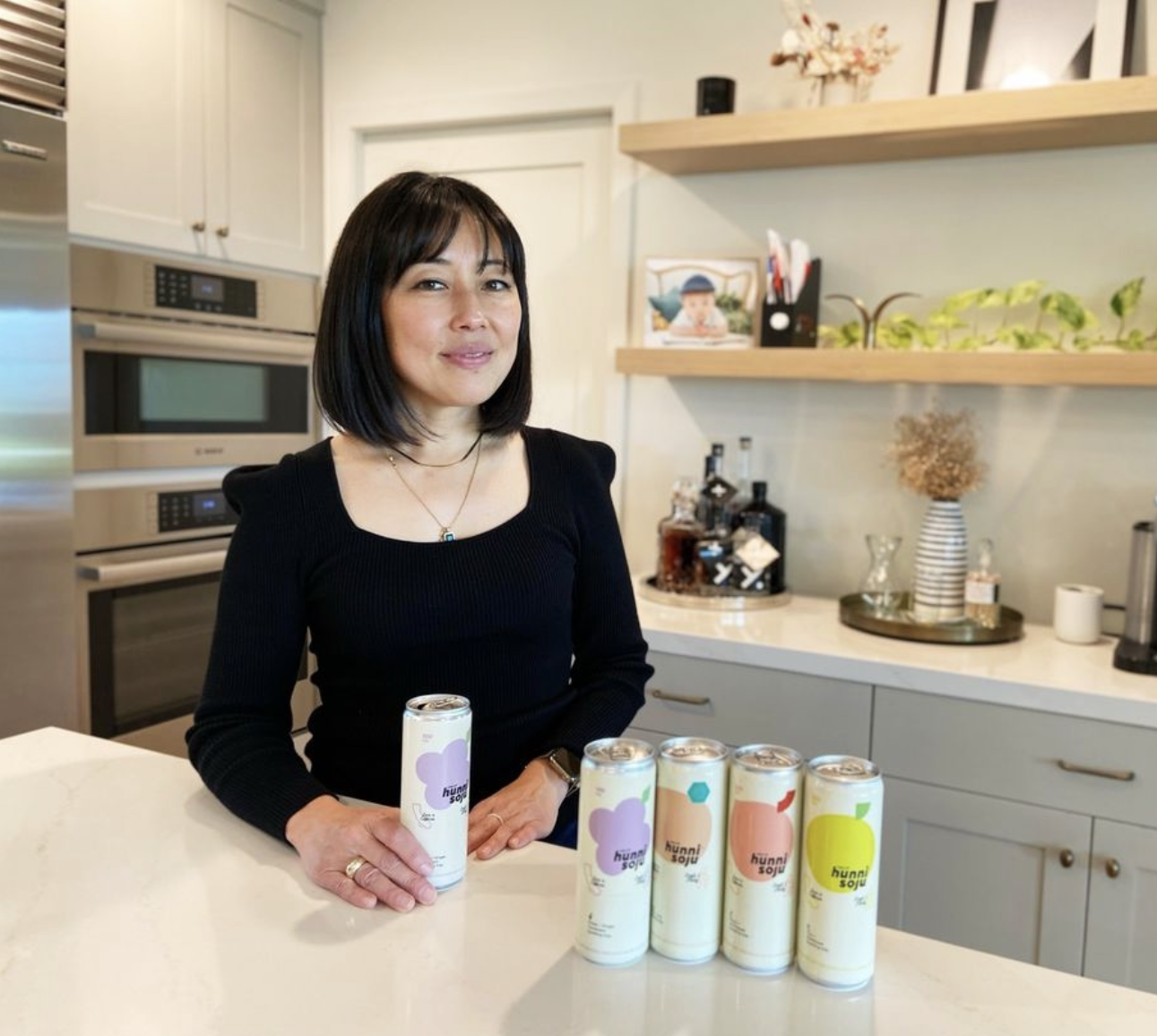
Founded in 2015 by Carolyn Kim, a Korean American mother and non-profit lawyer, Yobo Soju was born out of a desire to create an elegant soju that resonated with evolving lifestyles and refined tastes.

As the first American hand-crafted soju made in the New York Finger Lakes, Yobo quickly gained recognition, winning awards and becoming renowned for its exceptional taste.

In 2021, John Noe joined the team as an investor and CEO, aiming to propel Carolyn’s vision to new heights. With offerings like Hunni Soju, YoboKish, KTOWN Soju, and Yobo Soju Luxe, they cater to various consumer preferences and occasions, making soju accessible to a wider audience.

Yobo Soju stands out from other brands by choosing to craft their soju from grapes, a departure from the traditional rice-based approach. This unique choice pays homage to Carolyn’s Korean American heritage and the desire to create a more premium and high-quality soju. The result is a velvety smooth liquid with a floral aroma and fruitiness, capturing the attention of cocktail bars and restaurants seeking to elevate their creations.

In an interview with John Noe, he shares his insights into the journey of Yobo Soju and its impact on the spirits market. Join us as we delve deeper into the story behind Yobo Soju and discover the inspiration and passion that drives its success.

HOW YOBO SOJU CAME TO LIFE

Yobo Soju was started in 2015 by Carolyn Kim, a Korean American mother of twins and a non-profit lawyer. At the time, there weren’t many premium soju on the market. While she enjoyed drinking soju in her earlier years, she wanted something that suited her evolving lifestyle and taste.

Carolyn Kim

In a word, she wanted to create a soju that was ‘elegant.’ From that ambition, Yobo Soju was born, the first American hand-crafted soju made in the New York Finger Lakes. Immediately, Yobo won several awards and was touted for being one of the best-tasting soju available. Yobo made its way into top restaurants, cocktail bars, and retail accounts, and was ready to grow. 

In 2021, I joined the team as an investor and CEO to push Carolyn’s vision further. We had a great product and initial distribution but needed to get to the next level. In developing our strategy, we started from the very top and figured we’d work our way down. How do we win over U.S. consumers completely unfamiliar with soju? If we could do that, winning existing soju consumers or lapsed soju consumers would be easy by comparison. From there, the obstacles started to stack.   

Distributor: Will there even be any interest in soju?

Retailer: Where would I even put soju on my shelves?

Bar manager: How do I even serve soju?

Consumer: What is soju? How do I drink it?

Our strategy was to take our single product and to expand into a diverse portfolio that could navigate our obstacles. We created Hunni Soju, a ready-to-drink flavored soju cocktail line, to utilize a more approachable single-serve format. We created YoboKish, a range of unique aperitifs using our soju as its base, to reach mixology enthusiasts at home and at the bar. We created KTOWN soju, a range of all-natural flavored soju made with real fruit juice, as a playful way to drive soju trials in a multi-serve format. And we elevated our original distilled soju, renaming it Yobo Soju Luxe to honor traditional soju making while adding our own Korean American twist. Together, we’ve created a diverse Asian American spirit portfolio that can bring soju to nearly any type of account and occasion.

Together, the portfolio represents a diverse range of Asian American spirits to meet consumers of any level of soju familiarity. Since 2020, Yobo has expanded from 2 SKUs to 18 SKUs and our annual case volume has grown 50x with distribution in over 30 states. The strategy that seemed risky and overly ambitious in 2021 is now beginning to take hold.  

Mass soju is a low-cost product produced at a significant volume that isn’t known for its great taste. But it’s the spirit of Korea, so why couldn’t it be more premium and made of higher quality?

John Noe

USING GRAPES TO CRAFT SOJU

Carolyn was very thoughtful in creating the first Korean American soju. Like her own identity, she wanted to source ingredients that were local to her while paying homage to her history and origin.

At the time, she lived in New York City, and so the idea of using Catawba grapes grown nearby in the Finger Lakes became an interesting choice. There was a disruptive statement to be made as well. In a category dominated by men, how would she represent Korean American women in creating the first soju made in America?

Mass soju is a low-cost product produced at a significant volume that isn’t known for its great taste. But it’s the spirit of Korea, so why couldn’t it be more premium and made of higher quality? Producing soju from grapes resulted in a liquid with a floral aroma, fruitiness, and a velvety smooth finish. Yobo was quickly adopted by cocktail bars and restaurants that wanted to create higher-end cocktails with soju. Consumers lauded its taste and Yobo gained a niche following.

Since then, we moved our operations to California and updated the branding, packaging, and formula for our flagship soju now called Yobo Soju Luxe. The formula change is one we didn’t take lightly. Moving to California not only gave us the ability to source grapes from California but to source rice as well. After much trial and error and countless recipes, we ended up with the current Yobo Soju Luxe formula made from organic wheat, California rice, and California grapes. It’s a blend that combines the best of each of those ingredients giving us a soju that’s impossibly smooth and almost creamy while representing what we believed to be truly Korean American.

PRODUCTION PROCESS AND STANDARDS

The majority of our products are produced in Ventura, California with our distiller.

The process is a labor of love where our formulas are distilled, mixed, and batched by our master distiller. Each bottle is inspected by hand and packed. But the part of the process that’s been the biggest adventure has been the formulation process.

Creating YoboKish, the collaborative name of our venture with Kristen Kish, took almost two years. We started the project with a completely blank canvas and no restrictions. What would a Top Chef winner do? We gave Kristen free rein and the project evolved through several iterations as we experimented with flavors, formats, and concepts. Eventually, we landed on the flavor profile Kristen loves most, bringing contrasting flavors together like bitter and sweet:

  • SHINE – kumquat, rose, and ginger because kumquat is her favorite fruit. 
  • BLISS – sour cherry, pink peppercorn, and licorice because Kristen grew up in Michigan and loved licorice as a kid.
  • EARTH – smoked mushroom umami because she’s a celebrity chef and she flexes.
  • SEOUL – hibiscus, lemon balm, and raw honey because her wife Bianca has a nightly ritual of drinking hibiscus tea in a similar fashion (hence the name, SEOUL for the city where Kristen was born and SOUL for her soulmate, Bianca).

They’re each sweet and bitter, but soft and balanced at the same time. They’re all-natural and have no artificial coloring or flavors. And they provide mixologists with Top Chef-like ingredients to create an array of imaginative cocktails.

Kristen Kish

DIFFERENT OFFERINGS TO CATER DIFFERENT CONSUMER PREFERENCES

There is a distinct ritual to drinking soju.

Its smaller bottles and lower proof allow bottles to be easily consumed among a group of friends. Once a bottle is opened, it’s shared and poured, two hands pour, and two hands receive as it’s passed around the table until it’s empty. At Korean barbeque, singing karaoke, or out clubbing, the occasion for soju is a social one.  

While we want our soju to be a part of all those rituals and occasions, we wanted to design our products for new occasions that would help us cross cultures.

In Yobo Soju Luxe, we wanted to create a celebratory bottle and liquid, one that could be gifted as a present or opened to commemorate an accomplishment.

In YoboKish, we wanted to create a ‘professional’ product for more advanced mixologists and cocktail enthusiasts.

In Hunni Soju, we wanted a format that would be conducive for trial, a single-serve, easy-to-drink, flavored soju that people could grab and go – to the beach, a picnic, golfing, and more.

And in KTOWN Soju, we wanted to take everything we’ve ever loved about eating and drinking in Korea town and take the experience of KTOWN to wherever the bottle goes. In fact, the design of the glass is made to look like a flask and the liquid is fruity, sweet, and welcoming to any first-time soju drinker.

WHAT SETS YOBO SOJU APART

Most people don’t realize that soju is the largest-selling spirit in the world by volume, outselling vodka, tequila, and whiskey in total cases. Despite its market size, most soju on the market are very similar – inexpensive liquid housed in small green bottles.

It wasn’t until more recently that more premium soju products arrived. But what makes our full line of products unique is our identity as a Korean American company and brand. There’s a generational shift in thinking about what soju could be in the United States and we intend to produce soju that is as beautifully designed as any other spirit you’d find on the shelf and of the highest quality.

Our glass is custom. Our liquid is all-natural and free from artificial coloring, flavors, or sweeteners. While we do our best to communicate our differences through our marketing communications, the best proof is when somebody tries our soju. If you’ve had other soju before, the difference is unmistakable.

JOHN’S GOALS AND VISION FOR YOBO SOJU

I started as CEO in 2021 and since then we’ve accomplished so much. The business has grown 50x in annual case volume with the expansion of its portfolio and is now distributed in more than 30 states. We’re about to launch major brand collaborations and product integration in the upcoming Joyride movie by Adele Lim.

We’ve poured at places like the Sundance Film Festival and Food & Wine Classic in Aspen. But beyond the business milestones, I believe what we’re doing is significant and will spark the imagination of others to follow. 

Our mission has been to elevate the Korean American spirit by breaking boundaries, from the way we think about the liquid that constitutes soju to the communities we aim to reach. The world doesn’t need another tequila or vodka and yet much of the industry only sees opportunities in large, established markets.

As a Korean American, I know the power of the minority mindset and the impact that can be made by a few. Small is where everyone starts. We had two events just recently, a pride event at a fashion/design studio called Bobblehaus where we showcased KTOWN soju, and Food & Wine in Aspen where we showcased Kristen Kish’s aperitifs.

It was such an amazing experience pouring our drinks for people, explaining soju, introducing our products, and seeing everyone’s reactions. Some might overlook Asian American spirits right now because of its market size or lack of movie star endorsers, but from the view down here, we see a community building around us filled with faces of every identity and color sharing and enjoying soju with us.

John Noe

THE IMPACT OF YOBO SOJU

The greatest impact Yobo has had is its personal impact on me.

I grew up in a small town in Texas and our family was the first Korean family in our neighborhood. When we arrived, the community of Korean Americans in my elementary school was limited to me and my brother (for the one year we overlapped). For most of my life, I struggled with my own Korean American identity and felt like I needed to find ways to be less ‘Korean’ to succeed.

I’ve had an entrepreneurial career having built and sold an advertising agency before Yobo in an industry where just like my elementary school, I was only one of a few Asian Americans along with my Chinese American partner. We built the agency up and sold it to a French holding company where we continued to grow the business. In that time, we worked with mass, established, ‘American’ brands that played very little in contributing to Asian American identity and culture. We were successful by all business standards, but regretfully, we contributed very little to our Asian American community.

At the time of joining Yobo as its CEO, the stories of hate crimes against Asian Americans started to surface. Here I am, a Korean American CEO of a Korean American company amidst a breakout of hatred toward a community I rarely embraced. It was the unfortunate wake-up call I required to find pride in my identity and to take more roles in paving the way for other Asian Americans more seriously. My Yobo journey has been profound, and instead of hiding my Korean-ness, I’m now on a mission to share it.

We have a few things lined up that I’m excited to share and announce. Beyond launching products and selling them into accounts, we’re here to make a statement. The Yobo organization is very small, a minority among minorities, but we believe we’ll make an outsized impact.

CONNECT WITH YOBO SOJU

Instagram: @yobosoju

Website: yobosoju.com
Related Articles

Mike Yam poses in the studio on Thursday, July 14, 2022 in Inglewood, California

Stories

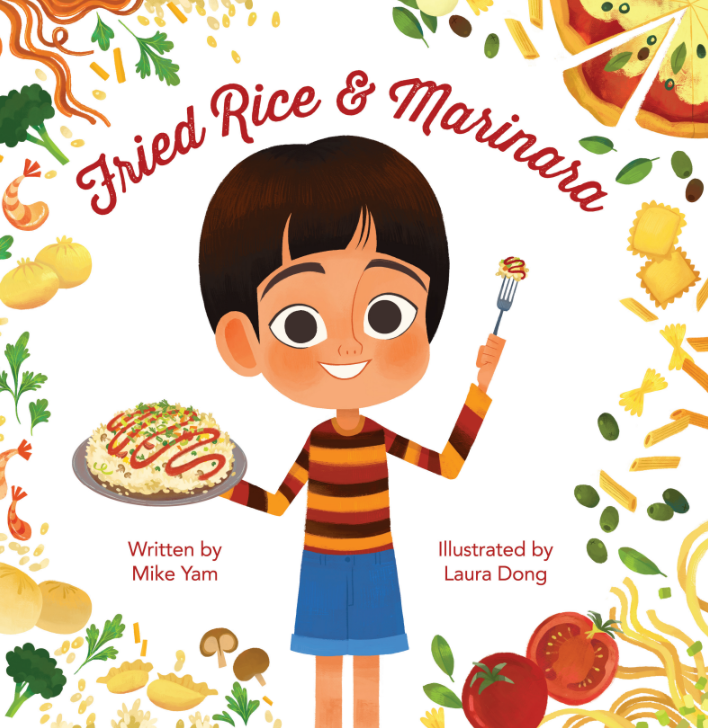
Michael Yam’s Mission to Empower Readers with His Children’s Book ‘Fried Rice and Marinara’

Michael Yam, the host of NFL Total Access on NFL Network, has now ventured into the world of children’s books with his first-ever creation, “Fried Rice and Marinara.”

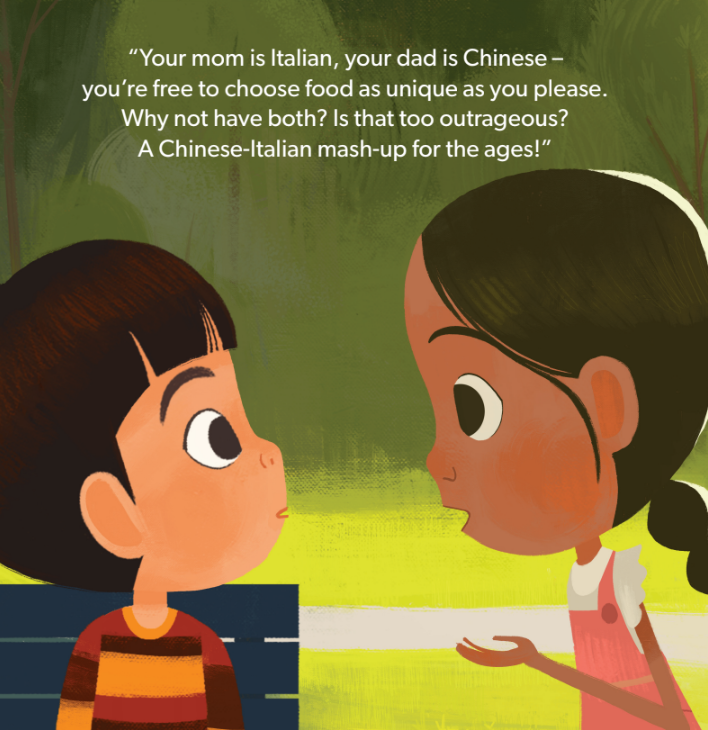
This heartwarming tale revolves around Mikey Yam, a character just like Michael, who cherishes both his Chinese and Italian heritage. Michael wrote this story to show young readers that it’s okay to have a diverse background and to be proud of who they are.

Drawing inspiration from his own life, Michael wanted to share the joy of embracing different cultures with children. In “Fried Rice and Marinara”, he uses the magic of food to bring the story to life and spark curiosity about diverse backgrounds. Through this delightful book, Michael hopes to encourage kids to learn about their own heritage and appreciate the uniqueness of others.

As a first-time children’s book author and illustrator, Michael faced some challenges, but his passion for storytelling and connecting with young readers drove him forward.

Read through as we learn more about Michael and how he aims to inspire all children to feel confident in their identities with his book “Fried Rice and Marinara”, through an interview with Asian Hustle Network.

BREAKING BARRIERS WITH “FRIED RICE AND MARINARA”

During the course of my career, I have been fortunate enough to speak to students about a path in broadcasting. I have always been disheartened by the lack of Asian representation in media classes. Aside from cultural factors, I believe the lack of widespread representation at high levels of sportscasting is a major reason why Asian American students are picking other career paths.

Strengthening the pipeline is one of the ways I think this changes. If young kids can see themselves in stories, I think it can spark an interest in storytelling. 

MIKEY YAM AS A MULTIETHNIC LEAD CHARACTER

As a kid, I didn’t think anything of the different cultures. I always knew I was Chinese and Italian, but as I got older, I realized that my friends didn’t have to think about or balance multiple cultural experiences that were very different.

Part of the reason I wanted to write “Fried Rice and Marinara” was to have young readers see a multiethnic character in a lead role. I also wanted to spark the thought that families with diverse backgrounds are normal.

At times in my childhood, I thought I had to “pick a side”, which is weird to think about now. I really want young kids to be able to embrace their heritage and be proud of their background. I know for my family, food was a backdrop to everything we did. I wanted to use cuisine as a vehicle to bring the story to life.

NAVIGATING BOTH SIDES OF HIS HERITAGE

First and foremost, it’s about embracing both cultures. I think many people focus on the differences between ethnicities, but we would all be in a better place if we gravitated to what’s the same.

Both my Chinese and Italian sides value family and the joy that comes from spending time with each other. I have fond memories of BBQs as a kid and my birthday parties having both Italian and Chinese food. 

CHALLENGES HE FACED IN THE WRITING PROCESS

I’ve spent my career telling the stories of athletes. I’m comfortable in that realm, but with “Fried Rice and Mariana”, it’s the first time I tried to connect with a young audience in a medium I’ve never worked in.

I have always loved having fun with my nieces and nephews, telling them crazy stories at home. I tried to imagine telling them this story as if we were in person. No, I can’t rhyme on the fly like in the book, but it’s about the tone.

I always love asking kids questions to see where their mind goes. If you notice at the back of the book, there is a page that gives kids an opportunity to write their funky food combinations with the ability to draw them, too. It’s really important to me that the experience with the book doesn’t end when they’re finished reading it. 

WHAT HE HOPES FOR READERS TO TAKE FROM HIS BOOK

I want young Asian readers to be able to see themselves as a main character in a story.

According to a study conducted by the University of Wisconsin (2022) you are nearly as likely (39% BIPOC/37% Animal/Object) to see a children’s story about an animal or object than you are to see a story depicting a character from a diverse background. I see that as a problem. 

I want all children to be exposed to various cultures. The child who doesn’t often get to see characters who look like them will hopefully feel confident and have more self-worth. My hope is other children will be exposed to other cultures and develop an appreciation for experiences different from their own.  

CONNECT WITH MIKE YAM

Instagram: @Mike_Yam

Twitter: @Mike_Yam

Threads: @Mike_Yam

OLYMPUS DIGITAL CAMERA

Stories

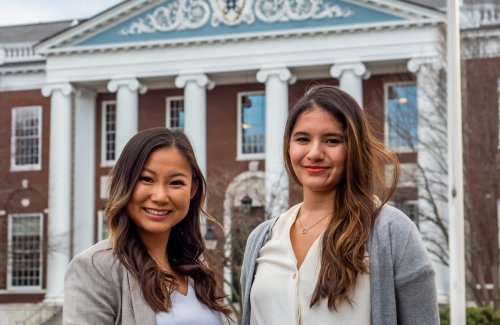
How Anise Health Addresses the Unique Mental Health Needs of the Asian Community

Anise Health is on a mission to improve mental healthcare for Asian Americans.

Recognizing the lack of health equity in the existing mental healthcare system, especially for people of color, Anise Health aims to create a positive change by offering culturally-responsive care.

Anise Health wants to make mental health care accessible and affordable for everyone. They work with different health plans and offer affordable plans for those who pay themselves. They have big plans to reach more people of color and support them in their mental health journey. 

Anise Health believes that everyone deserves the care and support they need to live a happier and healthier life. Read through the inspiring insights from Anise Health in an interview with Asian Hustle Network.

Alice and Nisha, founders of Anise Health

ADDRESSING THE UNIQUE MENTAL HEALTH NEEDS OF THE ASIAN COMMUNITY

Anise Health is building the gold standard of mental healthcare for Asian Americans because there is an urgent need to advance health equity.

People of color are extremely underserved by the existing mental health care system, with 50% dropping out of therapy after just the first session. Specifically, 41% of Asian Americans experience current symptoms of depression and anxiety, yet only 30% report feeling supported today. The sharp increase in anti-Asian hate crimes compounded with the model minority myth means that the Asian community often suffers in silence, leading to devastating consequences such as Asian young adults being the only ethnic group with suicide as the leading cause of death.

Anise is on a mission to change these trends by creating a culturally-responsive digital mental health platform built by and for the Asian community. We’re humbled by the incredible results our clients achieve on our platform, including:

  • 97% completion rate of the first 4 weekly sessions, which far exceeds the industry benchmark of outsized dropouts after the first session
  • 95% of our clients report feeling heard or understood by their provider, demonstrating a strong therapeutic alliance between providers and clients
  • Net promoter score of 84 (46 points above the industry average), indicating unparalleled satisfaction with our provider curation and training

SPECIFIC CHALLENGES THAT INDIVIDUALS FACE WHEN SEEKING MENTAL HEALTH SUPPORT

Asian Americans experience unique stressors such as collectivistic family dynamics, bicultural tension living as a minority in a majority culture, pressure to achieve and perfectionism from reinforced narratives of self-sacrifice, intergenerational trauma from unhealed historical wounds, excessive shame and guilt leading to internalized self-criticism, rigid gender norms and relationship expectations, to name a few. 

Our clinical advisory board comprises pioneering experts in the field who are leading evidence-based research to address these stressors and empower the well-being of the Asian community. We infuse their expertise into our care models and translate this information into digestible educational formats which are curated in our digital resource library.

DESTIGMATIZING MENTAL HEALTH

Anise normalizes mental health by delivering psychoeducational webinars and interactive workshops tailored to Asian Americans. Our clinicians lead these group services across a diverse range of topics for a variety of enterprise partners and schools, including Netflix, LinkedIn, Microsoft, and many more. We also host free community engagement programming with a large network of over two dozen nonprofit partners, as well as speaking at multicultural conferences and celebratory events.

For individuals seeking 1-on-1 services, Anise has developed care models that are clinically validated and culturally tailored, which research shows to be ~5x more effective than one-size-fits-all offerings. We are the only platform providing a holistic suite of services that integrate individual teletherapy, behavioral coaching, peer support groups, alternative medicine, and a curated library of self-service digital resources. Furthermore, our approach enables the accurate assessment of cultural stressors and personalization of care using machine learning technology. Anise’s proprietary clinical care model incorporates cultural adaptation along every step of the client’s journey from intake to blended treatment plans.

THE CULTURALLY-RESPONSIVE CARE MODEL

At Anise, culturally-responsive care means seeing a client as more than just a set of symptoms and diagnoses. Clients are seen as unique individuals whose racial and cultural contexts shape how they experience the world and how their needs are not being met.

Our providers are recruited for their deep expertise in culturally-responsive care and extensive experience supporting Asian clients. Once hired, providers are trained in our proprietary curriculum to explore clients’ intersecting identities and empowered in monthly consultation sessions, which offer providers their own space for connection and continued learning. In fact, our providers are diverse and maintain a wide range of ethnic backgrounds, sexual orientations, language capabilities, and therapy approaches.

Therapists and coaches work together as a dedicated team for clients, where the therapist helps the client navigate through psychological history and set concrete therapy goals, while the coach works with the client to achieve these goals. This empowers Asian clients to achieve lasting outcomes.

TESTIMONIALS

  • Anise Client – “Therapy had not worked for me before, but after meeting my Anise clinician I have regained confidence in the process and am excited to continue working with my therapist.”
  • Anise Clinician – “I found Anise’s clinical model to be such a culturally effective way to provide mental health services for clients and clinicians. Especially the way it incorporated coaching with therapy.”
  • Enterprise Partner – “I had never thought about burnout through the lens of cultural identity and how that may impact me. This session helped me understand deeper elements of what I was dealing with.”

ACCESSIBILITY AND AFFORDABILITY

Anise is in-network with Managed Health Network and Optum, and is in the process of contracting with several large health plans, in addition to accepting HSA and FSA benefits. For self-pay clients, Anise is affordable with subscription plans averaging $200 per month, nearly 1/4 the cost of average private practice rates in New York and California. For clients who want to supplement their holistic health, Anise offers clinician-led peer support circles along a variety of diverse themes at only $25 per week.

LOOKING IN THE FUTURE

We have ambitious growth plans to support the Asian community and people of color more broadly, which include expanding to more states, partnering with universities to support students, and offering our services as covered employee benefits for businesses. We are open to feedback and love piloting solutions with our community. Contact Anise Health’s Head of Growth, Angel Wang, for ideas at angel@anisehealth.co

CONNECT WITH ANISE HEALTH

Website: anisehealth.co

Instagram: @anisehealth

Linkedin: Anise Health

TikTok: @anisehealth

Facebook: Anise Health

the honeycombers-png

News

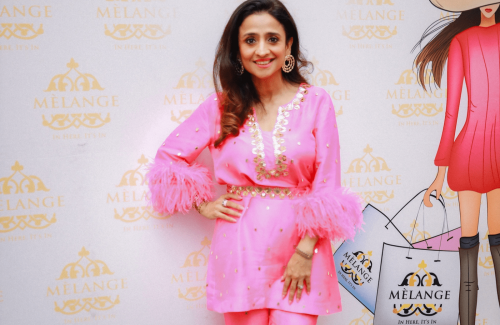
Samia Khan is Championing Modern South Asian Fashion Through Melange

Melange is a multi-label South Asian fashion platform that shares fashionable items from South Asia.

Samia Khan, who lives in Singapore but comes from Mumbai, started Melange in 2015. She wanted to bring attention to modern Indian designs for clothes, jewelry, and other accessories. She loves fashion that’s versatile, meaning you can wear it in different situations. She doesn’t think it’s just for Indian people – anyone can enjoy it.

During a virtual chat with The Peak, she talked about a special event she went to in Mumbai, India. It displayed how famous fashion companies like Yves Saint Laurent, Chanel, and Dior have used Indian fabrics for a long time. Samia was really impressed by this exhibition, and is excited about the growing interest in Indian fashion.

Because of the pandemic, Samia had to move Melange’s business online. This turned out to be good because more people from different countries like the US, UK, and Australia can now enjoy Indian fashion through her website.

Samia wants to keep sharing South Asian fashion and hopes to have a permanent showroom someday. “I want South Asian fashion to be accessible to many more people. I hope to be able to contribute to my heritage in this way,” Samia shares with The Peak.

Featured Image Source: The Honeycombers

ezgif.com-webp-to-jpg-jpg

News

Ghazal Alagh Wanted Safe Products for Her Baby and Built a Billion Dollar Business During Pregnancy

Ghazal Alagh is the co-founder of MamaEarth, a company worth $1.2 billion. She’s not a graduate from fancy colleges like IIT or IIM, but her story is remarkable and full of inspiration.

Ghazal’s journey began in Gurgaon, Haryana, where she grew up in a middle-class family. After finishing her studies in computer application from Punjab University in 2010, she explored her creative side by learning about design and art at the New York Academy of Art. These experiences laid the foundation for her entrepreneurial path.

In 2016, Ghazal and her husband, Varun Alagh, started MamaEarth because they wanted safe and natural products for their soon-to-arrive baby. They cared deeply about the environment, so they made sure their products were organic and packed in materials that could be recycled.

Like many business ventures, their journey wasn’t easy, but eventually, MamaEarth became Asia’s first brand to earn the MadeSafe label, showing that their products were free from harmful stuff. They started selling online but soon expanded to physical stores. They have their own place to create and test products, which helped them achieve big success.

Now, MamaEarth isn’t just about baby stuff; they offer all kinds of personal care items. Over 5 million people use their products in 500 cities. Last year, they made a profit of Rs 14 crores and became a unicorn, now worth $1.2 billion.

Featured Image Source: Fortune India