Stories

June 26, 2023

SHARE:

Founded in 2015 by Carolyn Kim, a Korean American mother and non-profit lawyer, Yobo Soju was born out of a desire to create an elegant soju that resonated with evolving lifestyles and refined tastes.

As the first American hand-crafted soju made in the New York Finger Lakes, Yobo quickly gained recognition, winning awards and becoming renowned for its exceptional taste.

In 2021, John Noe joined the team as an investor and CEO, aiming to propel Carolyn’s vision to new heights. With offerings like Hunni Soju, YoboKish, KTOWN Soju, and Yobo Soju Luxe, they cater to various consumer preferences and occasions, making soju accessible to a wider audience.

Yobo Soju stands out from other brands by choosing to craft their soju from grapes, a departure from the traditional rice-based approach. This unique choice pays homage to Carolyn’s Korean American heritage and the desire to create a more premium and high-quality soju. The result is a velvety smooth liquid with a floral aroma and fruitiness, capturing the attention of cocktail bars and restaurants seeking to elevate their creations.

In an interview with John Noe, he shares his insights into the journey of Yobo Soju and its impact on the spirits market. Join us as we delve deeper into the story behind Yobo Soju and discover the inspiration and passion that drives its success.

HOW YOBO SOJU CAME TO LIFE

Yobo Soju was started in 2015 by Carolyn Kim, a Korean American mother of twins and a non-profit lawyer. At the time, there weren’t many premium soju on the market. While she enjoyed drinking soju in her earlier years, she wanted something that suited her evolving lifestyle and taste.

Carolyn Kim

In a word, she wanted to create a soju that was ‘elegant.’ From that ambition, Yobo Soju was born, the first American hand-crafted soju made in the New York Finger Lakes. Immediately, Yobo won several awards and was touted for being one of the best-tasting soju available. Yobo made its way into top restaurants, cocktail bars, and retail accounts, and was ready to grow. 

In 2021, I joined the team as an investor and CEO to push Carolyn’s vision further. We had a great product and initial distribution but needed to get to the next level. In developing our strategy, we started from the very top and figured we’d work our way down. How do we win over U.S. consumers completely unfamiliar with soju? If we could do that, winning existing soju consumers or lapsed soju consumers would be easy by comparison. From there, the obstacles started to stack.   

Distributor: Will there even be any interest in soju?

Retailer: Where would I even put soju on my shelves?

Bar manager: How do I even serve soju?

Consumer: What is soju? How do I drink it?

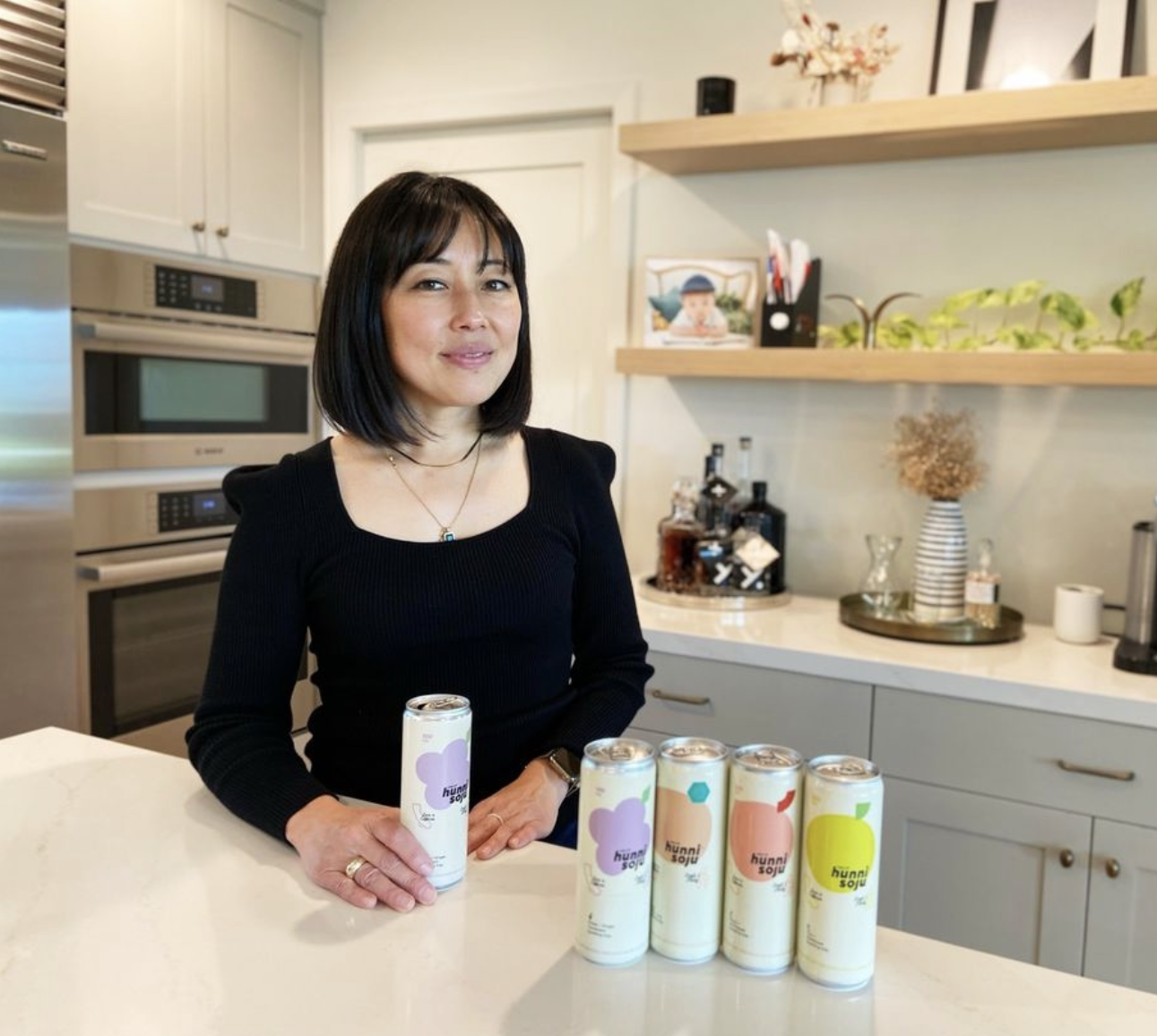
Our strategy was to take our single product and to expand into a diverse portfolio that could navigate our obstacles. We created Hunni Soju, a ready-to-drink flavored soju cocktail line, to utilize a more approachable single-serve format. We created YoboKish, a range of unique aperitifs using our soju as its base, to reach mixology enthusiasts at home and at the bar. We created KTOWN soju, a range of all-natural flavored soju made with real fruit juice, as a playful way to drive soju trials in a multi-serve format. And we elevated our original distilled soju, renaming it Yobo Soju Luxe to honor traditional soju making while adding our own Korean American twist. Together, we’ve created a diverse Asian American spirit portfolio that can bring soju to nearly any type of account and occasion.

Together, the portfolio represents a diverse range of Asian American spirits to meet consumers of any level of soju familiarity. Since 2020, Yobo has expanded from 2 SKUs to 18 SKUs and our annual case volume has grown 50x with distribution in over 30 states. The strategy that seemed risky and overly ambitious in 2021 is now beginning to take hold.  

Mass soju is a low-cost product produced at a significant volume that isn’t known for its great taste. But it’s the spirit of Korea, so why couldn’t it be more premium and made of higher quality?

John Noe

USING GRAPES TO CRAFT SOJU

Carolyn was very thoughtful in creating the first Korean American soju. Like her own identity, she wanted to source ingredients that were local to her while paying homage to her history and origin.

At the time, she lived in New York City, and so the idea of using Catawba grapes grown nearby in the Finger Lakes became an interesting choice. There was a disruptive statement to be made as well. In a category dominated by men, how would she represent Korean American women in creating the first soju made in America?

Mass soju is a low-cost product produced at a significant volume that isn’t known for its great taste. But it’s the spirit of Korea, so why couldn’t it be more premium and made of higher quality? Producing soju from grapes resulted in a liquid with a floral aroma, fruitiness, and a velvety smooth finish. Yobo was quickly adopted by cocktail bars and restaurants that wanted to create higher-end cocktails with soju. Consumers lauded its taste and Yobo gained a niche following.

Since then, we moved our operations to California and updated the branding, packaging, and formula for our flagship soju now called Yobo Soju Luxe. The formula change is one we didn’t take lightly. Moving to California not only gave us the ability to source grapes from California but to source rice as well. After much trial and error and countless recipes, we ended up with the current Yobo Soju Luxe formula made from organic wheat, California rice, and California grapes. It’s a blend that combines the best of each of those ingredients giving us a soju that’s impossibly smooth and almost creamy while representing what we believed to be truly Korean American.

PRODUCTION PROCESS AND STANDARDS

The majority of our products are produced in Ventura, California with our distiller.

The process is a labor of love where our formulas are distilled, mixed, and batched by our master distiller. Each bottle is inspected by hand and packed. But the part of the process that’s been the biggest adventure has been the formulation process.

Creating YoboKish, the collaborative name of our venture with Kristen Kish, took almost two years. We started the project with a completely blank canvas and no restrictions. What would a Top Chef winner do? We gave Kristen free rein and the project evolved through several iterations as we experimented with flavors, formats, and concepts. Eventually, we landed on the flavor profile Kristen loves most, bringing contrasting flavors together like bitter and sweet:

  • SHINE – kumquat, rose, and ginger because kumquat is her favorite fruit. 
  • BLISS – sour cherry, pink peppercorn, and licorice because Kristen grew up in Michigan and loved licorice as a kid.
  • EARTH – smoked mushroom umami because she’s a celebrity chef and she flexes.
  • SEOUL – hibiscus, lemon balm, and raw honey because her wife Bianca has a nightly ritual of drinking hibiscus tea in a similar fashion (hence the name, SEOUL for the city where Kristen was born and SOUL for her soulmate, Bianca).

They’re each sweet and bitter, but soft and balanced at the same time. They’re all-natural and have no artificial coloring or flavors. And they provide mixologists with Top Chef-like ingredients to create an array of imaginative cocktails.

Kristen Kish

DIFFERENT OFFERINGS TO CATER DIFFERENT CONSUMER PREFERENCES

There is a distinct ritual to drinking soju.

Its smaller bottles and lower proof allow bottles to be easily consumed among a group of friends. Once a bottle is opened, it’s shared and poured, two hands pour, and two hands receive as it’s passed around the table until it’s empty. At Korean barbeque, singing karaoke, or out clubbing, the occasion for soju is a social one.  

While we want our soju to be a part of all those rituals and occasions, we wanted to design our products for new occasions that would help us cross cultures.

In Yobo Soju Luxe, we wanted to create a celebratory bottle and liquid, one that could be gifted as a present or opened to commemorate an accomplishment.

In YoboKish, we wanted to create a ‘professional’ product for more advanced mixologists and cocktail enthusiasts.

In Hunni Soju, we wanted a format that would be conducive for trial, a single-serve, easy-to-drink, flavored soju that people could grab and go – to the beach, a picnic, golfing, and more.

And in KTOWN Soju, we wanted to take everything we’ve ever loved about eating and drinking in Korea town and take the experience of KTOWN to wherever the bottle goes. In fact, the design of the glass is made to look like a flask and the liquid is fruity, sweet, and welcoming to any first-time soju drinker.

WHAT SETS YOBO SOJU APART

Most people don’t realize that soju is the largest-selling spirit in the world by volume, outselling vodka, tequila, and whiskey in total cases. Despite its market size, most soju on the market are very similar – inexpensive liquid housed in small green bottles.

It wasn’t until more recently that more premium soju products arrived. But what makes our full line of products unique is our identity as a Korean American company and brand. There’s a generational shift in thinking about what soju could be in the United States and we intend to produce soju that is as beautifully designed as any other spirit you’d find on the shelf and of the highest quality.

Our glass is custom. Our liquid is all-natural and free from artificial coloring, flavors, or sweeteners. While we do our best to communicate our differences through our marketing communications, the best proof is when somebody tries our soju. If you’ve had other soju before, the difference is unmistakable.

JOHN’S GOALS AND VISION FOR YOBO SOJU

I started as CEO in 2021 and since then we’ve accomplished so much. The business has grown 50x in annual case volume with the expansion of its portfolio and is now distributed in more than 30 states. We’re about to launch major brand collaborations and product integration in the upcoming Joyride movie by Adele Lim.

We’ve poured at places like the Sundance Film Festival and Food & Wine Classic in Aspen. But beyond the business milestones, I believe what we’re doing is significant and will spark the imagination of others to follow. 

Our mission has been to elevate the Korean American spirit by breaking boundaries, from the way we think about the liquid that constitutes soju to the communities we aim to reach. The world doesn’t need another tequila or vodka and yet much of the industry only sees opportunities in large, established markets.

As a Korean American, I know the power of the minority mindset and the impact that can be made by a few. Small is where everyone starts. We had two events just recently, a pride event at a fashion/design studio called Bobblehaus where we showcased KTOWN soju, and Food & Wine in Aspen where we showcased Kristen Kish’s aperitifs.

It was such an amazing experience pouring our drinks for people, explaining soju, introducing our products, and seeing everyone’s reactions. Some might overlook Asian American spirits right now because of its market size or lack of movie star endorsers, but from the view down here, we see a community building around us filled with faces of every identity and color sharing and enjoying soju with us.

John Noe

THE IMPACT OF YOBO SOJU

The greatest impact Yobo has had is its personal impact on me.

I grew up in a small town in Texas and our family was the first Korean family in our neighborhood. When we arrived, the community of Korean Americans in my elementary school was limited to me and my brother (for the one year we overlapped). For most of my life, I struggled with my own Korean American identity and felt like I needed to find ways to be less ‘Korean’ to succeed.

I’ve had an entrepreneurial career having built and sold an advertising agency before Yobo in an industry where just like my elementary school, I was only one of a few Asian Americans along with my Chinese American partner. We built the agency up and sold it to a French holding company where we continued to grow the business. In that time, we worked with mass, established, ‘American’ brands that played very little in contributing to Asian American identity and culture. We were successful by all business standards, but regretfully, we contributed very little to our Asian American community.

At the time of joining Yobo as its CEO, the stories of hate crimes against Asian Americans started to surface. Here I am, a Korean American CEO of a Korean American company amidst a breakout of hatred toward a community I rarely embraced. It was the unfortunate wake-up call I required to find pride in my identity and to take more roles in paving the way for other Asian Americans more seriously. My Yobo journey has been profound, and instead of hiding my Korean-ness, I’m now on a mission to share it.

We have a few things lined up that I’m excited to share and announce. Beyond launching products and selling them into accounts, we’re here to make a statement. The Yobo organization is very small, a minority among minorities, but we believe we’ll make an outsized impact.

CONNECT WITH YOBO SOJU

Instagram: @yobosoju

Website: yobosoju.com

Related Articles

Joeydolls-Launch-Dolls-67-jpg

Stories

A Mother’s Mission to Create Dolls that Celebrate Asian Heritage and Address Lack of Representation in the Toy Industry

When COVID-19 forced Samantha Lee to put her wedding photography/videography business on hold, she seized the opportunity to cherish precious moments with her one-year-old daughter.

As news of the alarming increase in Anti-Asian hate spread, Samantha became deeply concerned about the world her daughter would grow up in.

Born in Malaysia to Chinese parents, Samantha’s family made the life-changing decision to relocate to Australia when she was just eight months old, motivated by her father’s aspiration for a better life. Growing up, Samantha only had blonde dolls to play with, so she wanted to be like her blonde classmates. She thought that they were so lucky to be born that way. 

She wanted differently for her daughter, so she embarked on a quest to find dolls that represented their Asian heritage to help her daughter feel proud of her Asian identity. However, Samantha was disheartened by the lack of diversity and representation available in the toy industry when she couldn’t find any.

Fuelled by a passionate desire to make a difference, Samantha resolved to create dolls that would empower Asian children and celebrate the vibrant tapestry of Asian cultures. Starting with six cultures, Samantha’s goal was to expand her collection to represent as many cultures as possible, including underrepresented regions like Southeast Asia, Vietnam, and the Philippines.

Now, after months of hard work and unwavering dedication, Samantha’s dolls, Joeydolls, are finally ready to be ordered. These dolls embody the beauty and traditions of various Asian cultures, instilling a sense of pride and confidence in children.

Join us as we delve into the inspiring story of Samantha Lee, who, in an exclusive interview with Asian Hustle Network, shares her journey in creating Joeydolls.

LACK OF REPRESENTATION IN DOLLS

When I was growing up, I grew up with only blonde dolls and only saw the same on TV. I remember thinking that I was so envious of my classmates at school – that they were so lucky to be both that way. I also remember thinking that I could never be a princess or a famous actress. Not seeing myself represented meant that I always felt like I was not good enough the way I was, that I didn’t really matter, and that I was only meant to be on the sidelines. 

When I witnessed the rise in anti-Asian hate, I was scared for the world my daughter would grow up in. I began to reflect upon my own experience. I didn’t want her to feel the same shame I grew up with. Since we were in lockdowns during the pandemic, my daughter couldn’t play with other children so I started to look for dolls that could be her companion. Most of the dolls only had fair skin and black hair and they were considered “Asian”. I just couldn’t connect to them, especially since I also experienced colorism while pregnant. I was told that it would be better if my daughter was born with my husband’s fair skin and my eyes (double eyelids). I was really disheartened by the continued concept of beauty in the Asian community. 

Around that time, we celebrated my daughter’s first year birthday by putting her in traditional Chinese and Korean outfits and I wondered why dolls didn’t do the same. I wanted her to not only feel comfortable with who she is, how she looks, and where she comes from. 

THESE DOLLS ARE MORE THAN JUST DOLLS FOR PEOPLE, THEY ARE PART OF THEIR STORY AND THEIR HEALING

I faced a lot of challenges in creating the dolls. I didn’t know anything about producing a doll – or a toy for that matter. I also had no experience in fashion or sewing. I was just a mom who wanted to make a difference. It was hard to find the resources since I also had no contacts in the industry.

I started with the concept of doing 6 ethnicities and then expand in the future. I wanted to make sure that Southeast Asia was represented since they have been underrepresented for so long. Initially, I wanted the dolls to have different skin tones to pick from for each ethnicity, however, it was so difficult to do so on a mass scale.

I was also surprised at how difficult it was to find the right shades for the skin tones and at the same time keep costs low since my production numbers were not large enough. As I was losing so many of my contracts in my photography business, I didn’t have a sustained and reliable income to be able to support this passion project. So I really tried to develop the dolls on a shoestring budget. 

I wanted to start the prototyping and manufacturing process locally but the costs got exponentially larger especially when it was so difficult to find the fabrics and materials we needed. We were so limited in what we were able to source so that’s when I began to look overseas. 

I began developing the dolls with one company that gave a very good price for the dolls, but they had a lot of trouble finding the right skin tone and couldn’t do the hair like we wanted. Then, we found another company that was able to do the skin tones and hair we wanted, but I found that their quality was not acceptable. Quality was very important to me because I really wanted people to feel proud to have these dolls and what they represented.

I often posted to Instagram about my progress and people would respond by saying that they teared up seeing them. I knew that these dolls are more than just dolls for people, they are part of their story and their healing. So many people said that they would have so loved having these dolls when they were younger and it would have helped them feel better about themselves. That’s exactly what I wanted these dolls to do for people – to help them feel that they are worthy in this world. 

It took a lot of dedication to learn each of the cultures and the symbolism behind some of the traditional details. I also wanted the dolls to be safe for babies to have as well, so that’s where I struggled with keeping the details accurate, cost-effective, and most importantly safe for all children. There was a lot of back and forth and redesigning. We went through countless prototypes and so many times I wanted to give up because I felt that I was not up to the task to complete it.

I had to remind myself of my “why”. I decided that instead of trying to hide behind social media, I would be vulnerable and talk about the struggles behind developing these dolls. I was worried that people would tell me to just give up, but instead, they gave me so many messages of support. They pushed me to keep going and told me how much they appreciated what I was doing. That these dolls make such an impact on them! I knew I had to keep going. So I kept pushing. These dolls are not only for my children but also for the other children who NEED these dolls.

YES, WE ARE ASIAN BUT WE HAVE SO MANY DIFFERENCES THAT MAKE US SPECIAL AND UNIQUE

I hope that children will see the dolls and feel proud to learn more about their heritage and also just be comfortable in their own skin. I hope that it helps parents teach their children how worthy they are. I hope that the dolls will help foster positive self-esteem and self-confidence. 

I want to change the narrative – that Asians are not a monolith. Yes, we are Asian but we have so many qualities that make us special and unique. So in doing so, I also hope that these dolls will help create more awareness and education about Asian diversity. That each of our cultures is not the same. That each should be celebrated. 

I hope that our dolls can be a stark contrast to the hate. That’s why I created the campaign #StartAsianLove instead.

CHILDREN AND ADULTS WILL FINALLY FEEL INCLUDED AND REPRESENTED BY DOLLS THAT RESEMBLED THEM

Even when my daughters couldn’t speak, their faces would light up and they would giggle with delight as I designed the dolls on my computer. It was a heartwarming experience, even during moments when I wasn’t fully satisfied with the prototypes. I would hide them around the house or in my office, and my daughters would discover them, hugging and kissing the dolls as if they were their dear companions. The sheer joy they exhibited upon seeing those happy doll faces was truly priceless.

When my youngest daughter Jasmine turned 1, we dressed her in a traditional hanbok. To my delight, my oldest daughter Joey pointed at the Korean doll and exclaimed, “It looks like Jasmine!” On another occasion, she referred to the same doll as a “princess.” It was a deeply touching moment for me because I had never imagined that Asians, including myself, could be seen as princesses.

The feedback I received from parents further affirmed the impact of my work. One parent expressed gratitude for creating a different world for their child, where they could proudly embrace their culture and heritage without the fear of being bullied or pressured to assimilate. The acknowledgment of the value of diversity was deeply meaningful to them.

Another parent expressed admiration for how Joeydolls would positively influence the lives of other girls. The representation of Asian culture was applauded, as it meant that children and adults will finally feel included and represented by dolls that resembled them. The support and well wishes I received from these parents fueled my motivation, and I am grateful for their continued support.

I WAS IN TEARS READING EACH MESSAGE BECAUSE I COULD FEEL HOW EACH PERSON CONNECTED WITH MY STORY

It was amazing to receive all the messages of support on AHN! I was in tears reading each message because I could feel how each person connected with my story and just wanted to give me that push to keep going.

I knew that my story was important. As a community, we needed to see these dolls be finally made and put in the hands of young children, and how these dolls can further impact the community on a much greater level.

I was excited about being the one to push for changing our narrative, breaking stereotypes, and deconstructing racism and colorism. These are all important changes I wanted to make in the world and all the messages solidified how important my work was.

SAMANTHA’S HOPE FOR JOEYDOLLS

My goal is to represent as many ethnicities/cultures within Asia. This will further help solidify the messaging of how beautiful and diverse Asians are! Also, I want to create boy/gender-neutral dolls too.

I hope that children (and adults!) of all backgrounds (not just Asians) will appreciate and love our dolls and what they symbolize. I also have some other fun ideas that I hope to work on that still encompass celebrating the beauty of Asian culture and diversity. 

CONNECT WITH SAMANTHA

Website: joeydolls.com

Instagram: @joeydolls

Facebook: Joeydolls

Youtube: Joeydolls

TikTok: @joeydollsco

la crosse tribune-png

News

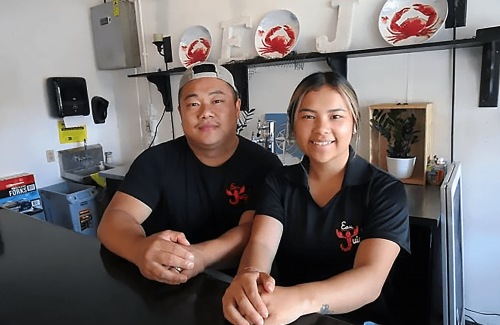
Couple Behind Eau Juicy-La Crosse Unveils Their Asian-inspired Menu

Bringing a delightful blend of Asian-inspired Cajun seafood to the city, Eau Juicy-La Crosse has been making waves since its opening on July 14. The minds behind this exciting venture are Xavier Yang and his fiancee, Yer Thao, who express their satisfaction with the positive response received from the community.

Through this venture, Yang and Thao have gained valuable insights into the preferences of local residents. Yang shares his observations with La Crosse Tribune, stating, “We’ve noticed that here, a lot of people like snow crab.” Located at 412 Main St. in downtown La Crosse, the restaurant has become a focal point after the closure of Soula’s Cuisina at the end of June.

Building on their prior experience, Yang and Thao operated their first Eau Juicy restaurant in Eau Claire from July 2021 to September 2022. Their success has paved the way for the next chapter, as they plan to open another Eau Juicy establishment in nearby Altoona come spring, according to La Crosse Tribune.

Unveiling the favorites on their menu, patrons are drawn to the head-off shrimp and the sumptuous Dillybob Special platter. This elaborate feast includes 4 to 5 pounds of shrimp, mussels, crawfish, and snow crab, complemented by four servings of corn, potatoes, and a generous portion of sausages. This feast is designed to cater to the appetites of two to four individuals.

Aside from seafood, the menu boasts a diverse array of options, ranging from wings and french fries to egg rolls and a variety of sides such as corn, potatoes, sausages, sticky rice, and sweet rolls. The dining experience is further elevated by an array of sauces, allowing patrons to tailor their meals to their preferences. Additionally, the restaurant offers catering services to ensure their delectable offerings are a highlight of special occasions.

Looking ahead, Yang and Thao are eager to expand their beverage options. Pending the acquisition of a city liquor license, they plan to introduce beer, wine, and cocktails to complement their culinary offerings, enhancing the overall dining experience.

Featured Image Source: La Crosse Tribune

Eater LA-jpg

News

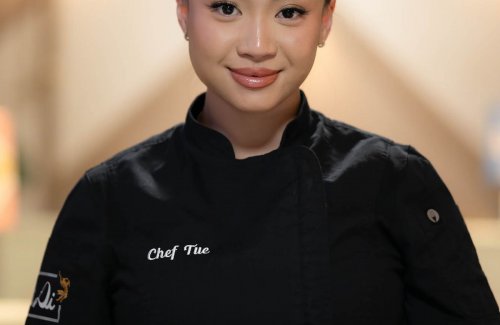
Tue Nguyen’s Journey from TikTok Stardom to Opening Her Own Restaurant

Tue Nguyen is a young cook who came to the US from Vietnam as a kid. She became extremely well-known on TikTok for demonstrating how to prepare Vietnamese food. She went from posting videos of her cooking Vietnamese dishes on TikTok during the pandemic to opening her own restaurant called Di Di near Los Angeles.

“I think that’s always kind of been like a dream. But… I honestly didn’t know that it would come this fast,” Nguyen shared in a recent interview with AFP.

She learned cooking in a special school, but her real talent came from her family’s way of cooking. Her mom and stepdad taught her how to make good food and trust her taste.

At first, Tue put videos online as TwayDaBae where she did mukbangs. People liked them, but they loved her cooking videos more. She saw that most of her audience didn’t just want to watch, they also wanted to learn how to make the delicious food themselves.

Tue didn’t start by making a big restaurant. She began with small places where she cooked for people. The first place where she did this is now her restaurant, called Di Di. Many people follow her on social media like Instagram and TikTok. They like her videos a lot, but Tue thinks that sharing recipes online won’t stop people from coming to her restaurant. She says her online recipes are simple, while her restaurant food looks and tastes more special.

Di Di, which means “Let’s go” in Vietnamese, is like a piece of Tue’s heart. It’s filled with comfy chairs, pretty lamps, and plants. It opened recently and is already making people happy. Tue mixes what she learned in cooking school with the flavors from her family.

Featured Image Source: Eater LA

The Fresno Bee-jpg

News

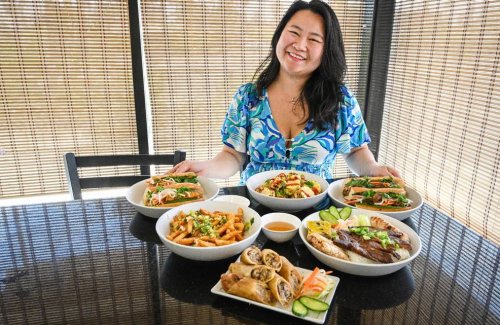
How Leila Jace Built a Thriving Street Food Joint Inspired by Childhood Memories in Vietnam

Growing up in Vietnam, Leila Jace cherished the simple joys of childhood, like the intoxicating aroma of smoky grilled corn wafting from street vendors as she walked home from school. She didn’t have much money, but she saved up her lunch money to buy a treat she loved – a slightly charred corn on the cob sprinkled with scallions for extra flavor.

Little did she know that this fond memory would become the star of her own restaurant in Fresno, California.

Just nine months ago, Leila’s dream came true as she opened the doors to Sizzle n’ Steam, a cozy spot at Maroa and Shields avenues in Fresno. This Vietnamese street food joint has quickly become a hit, boasting an impressive 4.5-star rating on Yelp.com and even snagging the third spot in The Bee’s poll for the most underrated restaurant in town.

Leila’s journey to becoming a food entrepreneur is quite a story. According to The Fresno Bee, Leila came to California at 14 without speaking much English. She pursued her studies and even built a successful career in retirement planning. But a longing for change and a desire to be close to her parents led her to Fresno, where she decided to give life a new flavor – by opening a restaurant.

What makes Sizzle n’ Steam so special? It’s all about fusing Leila’s unique style and travel adventures with the mouthwatering Vietnamese street food. Yes, the menu features well-known delicacies like pho, spring rolls, and bowls of vermicelli noodles. But the real magic lies in the lesser-known treats that Leila has added, like the Gilroy garlicky fries that pay homage to the place her family first settled when they came to the U.S. The restaurant also offers an array of vegan and vegetarian options, catering to a diverse clientele.

Aside from what her restaurant has to offer, Leila’s warm hospitality is outstanding, transforming her customers into friends, and turning Sizzle n’ Steam into a hub where diners feel right at home.

Featured Image Source: The Fresno Bee