Stories

June 26, 2023

SHARE:

Founded in 2015 by Carolyn Kim, a Korean American mother and non-profit lawyer, Yobo Soju was born out of a desire to create an elegant soju that resonated with evolving lifestyles and refined tastes.

As the first American hand-crafted soju made in the New York Finger Lakes, Yobo quickly gained recognition, winning awards and becoming renowned for its exceptional taste.

In 2021, John Noe joined the team as an investor and CEO, aiming to propel Carolyn’s vision to new heights. With offerings like Hunni Soju, YoboKish, KTOWN Soju, and Yobo Soju Luxe, they cater to various consumer preferences and occasions, making soju accessible to a wider audience.

Yobo Soju stands out from other brands by choosing to craft their soju from grapes, a departure from the traditional rice-based approach. This unique choice pays homage to Carolyn’s Korean American heritage and the desire to create a more premium and high-quality soju. The result is a velvety smooth liquid with a floral aroma and fruitiness, capturing the attention of cocktail bars and restaurants seeking to elevate their creations.

In an interview with John Noe, he shares his insights into the journey of Yobo Soju and its impact on the spirits market. Join us as we delve deeper into the story behind Yobo Soju and discover the inspiration and passion that drives its success.

HOW YOBO SOJU CAME TO LIFE

Yobo Soju was started in 2015 by Carolyn Kim, a Korean American mother of twins and a non-profit lawyer. At the time, there weren’t many premium soju on the market. While she enjoyed drinking soju in her earlier years, she wanted something that suited her evolving lifestyle and taste.

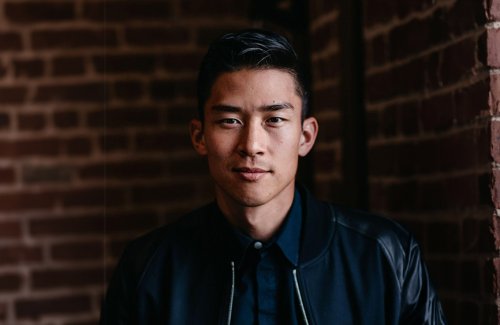
Carolyn Kim

In a word, she wanted to create a soju that was ‘elegant.’ From that ambition, Yobo Soju was born, the first American hand-crafted soju made in the New York Finger Lakes. Immediately, Yobo won several awards and was touted for being one of the best-tasting soju available. Yobo made its way into top restaurants, cocktail bars, and retail accounts, and was ready to grow. 

In 2021, I joined the team as an investor and CEO to push Carolyn’s vision further. We had a great product and initial distribution but needed to get to the next level. In developing our strategy, we started from the very top and figured we’d work our way down. How do we win over U.S. consumers completely unfamiliar with soju? If we could do that, winning existing soju consumers or lapsed soju consumers would be easy by comparison. From there, the obstacles started to stack.   

Distributor: Will there even be any interest in soju?

Retailer: Where would I even put soju on my shelves?

Bar manager: How do I even serve soju?

Consumer: What is soju? How do I drink it?

Our strategy was to take our single product and to expand into a diverse portfolio that could navigate our obstacles. We created Hunni Soju, a ready-to-drink flavored soju cocktail line, to utilize a more approachable single-serve format. We created YoboKish, a range of unique aperitifs using our soju as its base, to reach mixology enthusiasts at home and at the bar. We created KTOWN soju, a range of all-natural flavored soju made with real fruit juice, as a playful way to drive soju trials in a multi-serve format. And we elevated our original distilled soju, renaming it Yobo Soju Luxe to honor traditional soju making while adding our own Korean American twist. Together, we’ve created a diverse Asian American spirit portfolio that can bring soju to nearly any type of account and occasion.

Together, the portfolio represents a diverse range of Asian American spirits to meet consumers of any level of soju familiarity. Since 2020, Yobo has expanded from 2 SKUs to 18 SKUs and our annual case volume has grown 50x with distribution in over 30 states. The strategy that seemed risky and overly ambitious in 2021 is now beginning to take hold.  

Mass soju is a low-cost product produced at a significant volume that isn’t known for its great taste. But it’s the spirit of Korea, so why couldn’t it be more premium and made of higher quality?

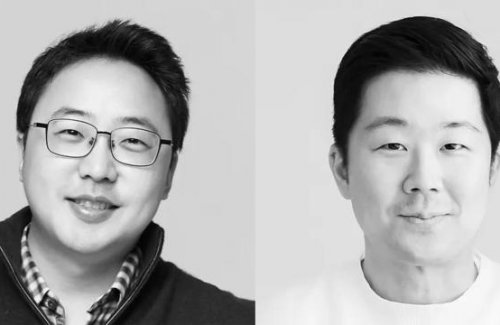
John Noe

USING GRAPES TO CRAFT SOJU

Carolyn was very thoughtful in creating the first Korean American soju. Like her own identity, she wanted to source ingredients that were local to her while paying homage to her history and origin.

At the time, she lived in New York City, and so the idea of using Catawba grapes grown nearby in the Finger Lakes became an interesting choice. There was a disruptive statement to be made as well. In a category dominated by men, how would she represent Korean American women in creating the first soju made in America?

Mass soju is a low-cost product produced at a significant volume that isn’t known for its great taste. But it’s the spirit of Korea, so why couldn’t it be more premium and made of higher quality? Producing soju from grapes resulted in a liquid with a floral aroma, fruitiness, and a velvety smooth finish. Yobo was quickly adopted by cocktail bars and restaurants that wanted to create higher-end cocktails with soju. Consumers lauded its taste and Yobo gained a niche following.

Since then, we moved our operations to California and updated the branding, packaging, and formula for our flagship soju now called Yobo Soju Luxe. The formula change is one we didn’t take lightly. Moving to California not only gave us the ability to source grapes from California but to source rice as well. After much trial and error and countless recipes, we ended up with the current Yobo Soju Luxe formula made from organic wheat, California rice, and California grapes. It’s a blend that combines the best of each of those ingredients giving us a soju that’s impossibly smooth and almost creamy while representing what we believed to be truly Korean American.

PRODUCTION PROCESS AND STANDARDS

The majority of our products are produced in Ventura, California with our distiller.

The process is a labor of love where our formulas are distilled, mixed, and batched by our master distiller. Each bottle is inspected by hand and packed. But the part of the process that’s been the biggest adventure has been the formulation process.

Creating YoboKish, the collaborative name of our venture with Kristen Kish, took almost two years. We started the project with a completely blank canvas and no restrictions. What would a Top Chef winner do? We gave Kristen free rein and the project evolved through several iterations as we experimented with flavors, formats, and concepts. Eventually, we landed on the flavor profile Kristen loves most, bringing contrasting flavors together like bitter and sweet:

  • SHINE – kumquat, rose, and ginger because kumquat is her favorite fruit. 
  • BLISS – sour cherry, pink peppercorn, and licorice because Kristen grew up in Michigan and loved licorice as a kid.
  • EARTH – smoked mushroom umami because she’s a celebrity chef and she flexes.
  • SEOUL – hibiscus, lemon balm, and raw honey because her wife Bianca has a nightly ritual of drinking hibiscus tea in a similar fashion (hence the name, SEOUL for the city where Kristen was born and SOUL for her soulmate, Bianca).

They’re each sweet and bitter, but soft and balanced at the same time. They’re all-natural and have no artificial coloring or flavors. And they provide mixologists with Top Chef-like ingredients to create an array of imaginative cocktails.

Kristen Kish

DIFFERENT OFFERINGS TO CATER DIFFERENT CONSUMER PREFERENCES

There is a distinct ritual to drinking soju.

Its smaller bottles and lower proof allow bottles to be easily consumed among a group of friends. Once a bottle is opened, it’s shared and poured, two hands pour, and two hands receive as it’s passed around the table until it’s empty. At Korean barbeque, singing karaoke, or out clubbing, the occasion for soju is a social one.  

While we want our soju to be a part of all those rituals and occasions, we wanted to design our products for new occasions that would help us cross cultures.

In Yobo Soju Luxe, we wanted to create a celebratory bottle and liquid, one that could be gifted as a present or opened to commemorate an accomplishment.

In YoboKish, we wanted to create a ‘professional’ product for more advanced mixologists and cocktail enthusiasts.

In Hunni Soju, we wanted a format that would be conducive for trial, a single-serve, easy-to-drink, flavored soju that people could grab and go – to the beach, a picnic, golfing, and more.

And in KTOWN Soju, we wanted to take everything we’ve ever loved about eating and drinking in Korea town and take the experience of KTOWN to wherever the bottle goes. In fact, the design of the glass is made to look like a flask and the liquid is fruity, sweet, and welcoming to any first-time soju drinker.

WHAT SETS YOBO SOJU APART

Most people don’t realize that soju is the largest-selling spirit in the world by volume, outselling vodka, tequila, and whiskey in total cases. Despite its market size, most soju on the market are very similar – inexpensive liquid housed in small green bottles.

It wasn’t until more recently that more premium soju products arrived. But what makes our full line of products unique is our identity as a Korean American company and brand. There’s a generational shift in thinking about what soju could be in the United States and we intend to produce soju that is as beautifully designed as any other spirit you’d find on the shelf and of the highest quality.

Our glass is custom. Our liquid is all-natural and free from artificial coloring, flavors, or sweeteners. While we do our best to communicate our differences through our marketing communications, the best proof is when somebody tries our soju. If you’ve had other soju before, the difference is unmistakable.

JOHN’S GOALS AND VISION FOR YOBO SOJU

I started as CEO in 2021 and since then we’ve accomplished so much. The business has grown 50x in annual case volume with the expansion of its portfolio and is now distributed in more than 30 states. We’re about to launch major brand collaborations and product integration in the upcoming Joyride movie by Adele Lim.

We’ve poured at places like the Sundance Film Festival and Food & Wine Classic in Aspen. But beyond the business milestones, I believe what we’re doing is significant and will spark the imagination of others to follow. 

Our mission has been to elevate the Korean American spirit by breaking boundaries, from the way we think about the liquid that constitutes soju to the communities we aim to reach. The world doesn’t need another tequila or vodka and yet much of the industry only sees opportunities in large, established markets.

As a Korean American, I know the power of the minority mindset and the impact that can be made by a few. Small is where everyone starts. We had two events just recently, a pride event at a fashion/design studio called Bobblehaus where we showcased KTOWN soju, and Food & Wine in Aspen where we showcased Kristen Kish’s aperitifs.

It was such an amazing experience pouring our drinks for people, explaining soju, introducing our products, and seeing everyone’s reactions. Some might overlook Asian American spirits right now because of its market size or lack of movie star endorsers, but from the view down here, we see a community building around us filled with faces of every identity and color sharing and enjoying soju with us.

John Noe

THE IMPACT OF YOBO SOJU

The greatest impact Yobo has had is its personal impact on me.

I grew up in a small town in Texas and our family was the first Korean family in our neighborhood. When we arrived, the community of Korean Americans in my elementary school was limited to me and my brother (for the one year we overlapped). For most of my life, I struggled with my own Korean American identity and felt like I needed to find ways to be less ‘Korean’ to succeed.

I’ve had an entrepreneurial career having built and sold an advertising agency before Yobo in an industry where just like my elementary school, I was only one of a few Asian Americans along with my Chinese American partner. We built the agency up and sold it to a French holding company where we continued to grow the business. In that time, we worked with mass, established, ‘American’ brands that played very little in contributing to Asian American identity and culture. We were successful by all business standards, but regretfully, we contributed very little to our Asian American community.

At the time of joining Yobo as its CEO, the stories of hate crimes against Asian Americans started to surface. Here I am, a Korean American CEO of a Korean American company amidst a breakout of hatred toward a community I rarely embraced. It was the unfortunate wake-up call I required to find pride in my identity and to take more roles in paving the way for other Asian Americans more seriously. My Yobo journey has been profound, and instead of hiding my Korean-ness, I’m now on a mission to share it.

We have a few things lined up that I’m excited to share and announce. Beyond launching products and selling them into accounts, we’re here to make a statement. The Yobo organization is very small, a minority among minorities, but we believe we’ll make an outsized impact.

CONNECT WITH YOBO SOJU

Instagram: @yobosoju

Website: yobosoju.com
Related Articles

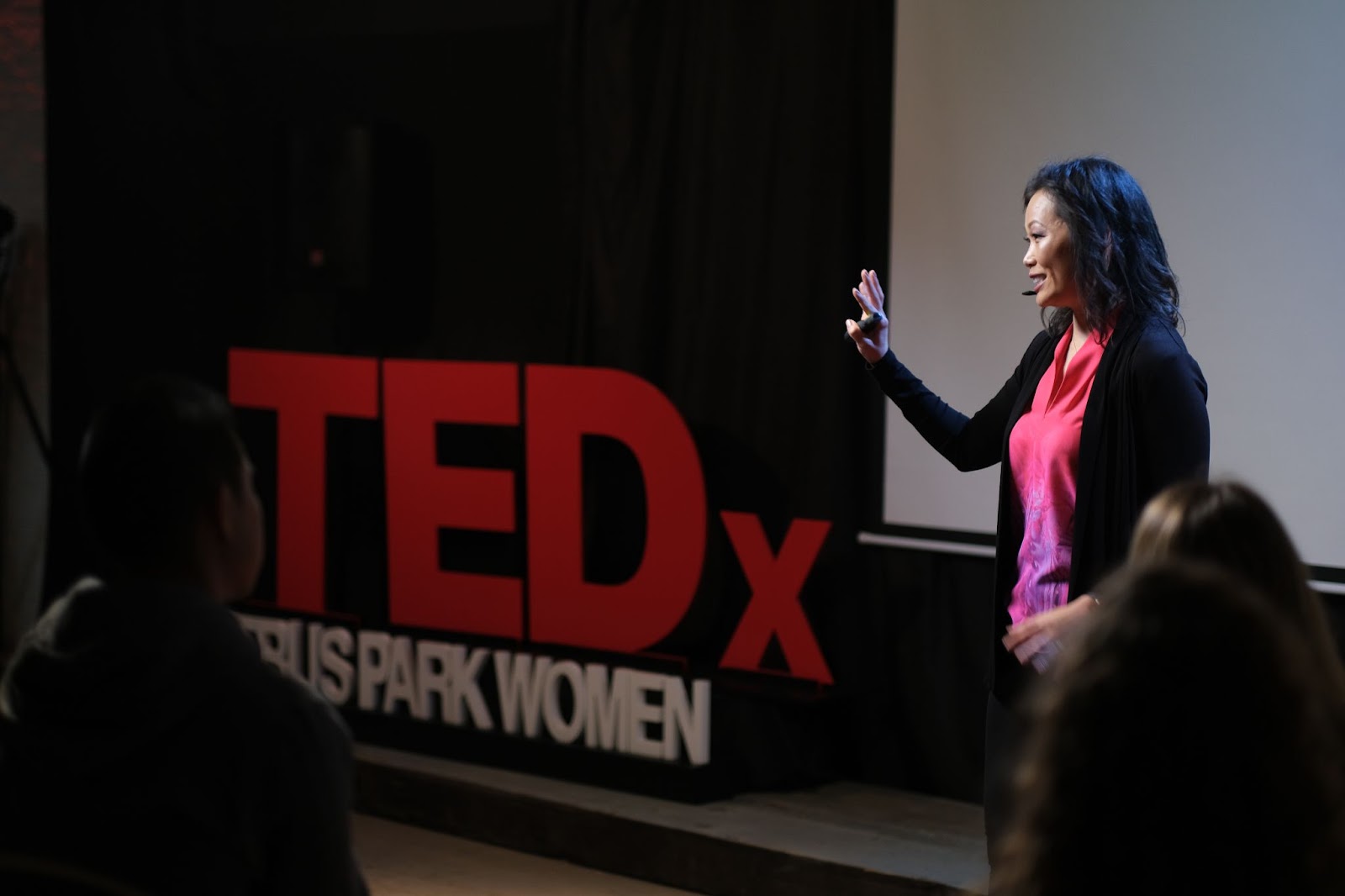
Jenny Woo_by Laura Brad Photo (1)-jpg

Stories

How Jenny Woo Builds Deeper Connections With A Card Deck Up Her Sleeve

Social media undoubtedly has brought our society many wonders. The connection it can bring and the impact it can make are undeniable. But along with the rise of platforms that prioritize online personas and shortcut conversations, profound connections feel like an endurance test.

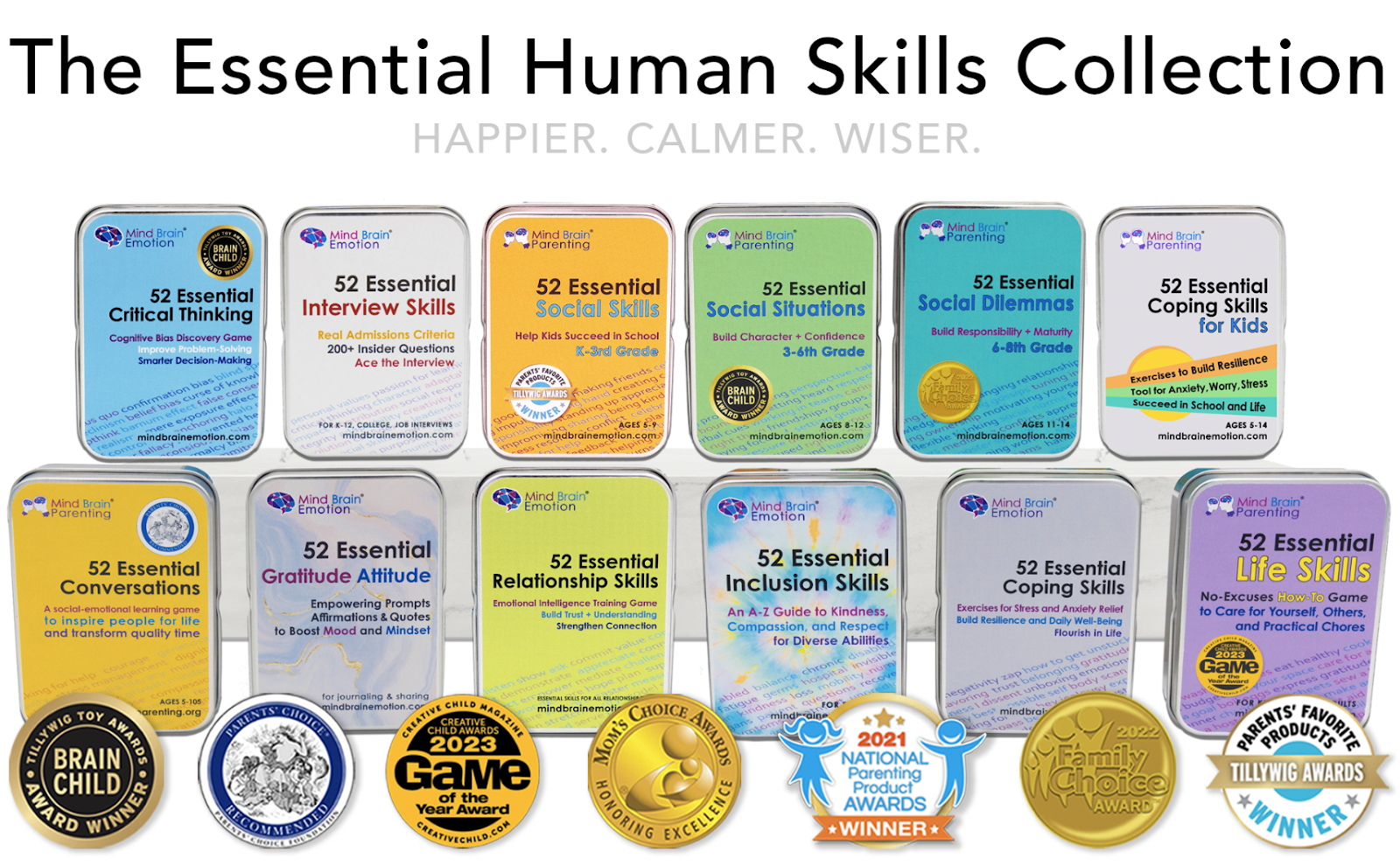
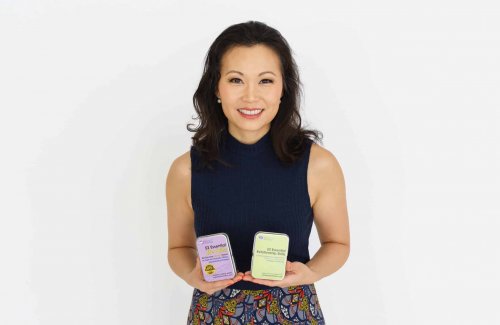
Jenny Woo, taking an emotional and deep-dive reading of this pattern, decided to develop the 52 Essential Conversations. She then established Mind Brain Emotion with the hope of helping people stay in tune with their emotions, building happiness, serenity, and wisdom. 

AN INCUBATION AT HARVARD

It was an insightful experience to have this exclusive interview with Jenny Woo, whose keen observation and curiosity have led her to the creation of Mind Brain Emotion, educational card games, and mental health tools to help people build essential human skills and connections.

Delightfully quipping “I earned enough credentials so that my parents and grandparents could each have an honorary degree,” Jenny showcased a strong personality, one that is “resourceful, resilient, and hard-working.” As she would humorously refer to herself as a “knowledge smuggler,” Jenny dug up the problems in current education towards one’s emotional development:

During my study and research at Harvard, I was drawn to the intersection of emotional intelligence and cultural identity. Self-awareness, social awareness, and relationship skills were three key components of emotional intelligence. As a management consultant, executive coach, and HR leader, I had already observed how essential these skills were for career success. 

And yet, the education system did little to expose students to these skills. Teaching resources were scarce, expensive, and outdated, and only the most expensive private schools had access. I also interviewed Harvard and MIT students on what got them to be where they are today and realized that a large component was having access to essential conversations and connections with mentors and parents. 

Jenny also detailed the inspiration behind her first deck, 52 Essential Conversations, which came from careful investigation into neuroscience and social affairs:

My findings are also aligned with neuroscience research from Harvard/MIT on the power of conversations. For the average Joe or Jenny, like me, we had limited access to social capital and resources like this. So, it inspired me to translate emotional intelligence research and social capital into affordable and relatable card games to help everyone reach their potential. In my research, I also saw a lack of representation and conversations around diversity, equity, and inclusion in the emotional intelligence learning framework. For example, how could we practice self-awareness or social awareness if we didn’t discuss the role of race? Being socially aware is also understanding our privilege and past.

NAVIGATION THROUGH RACISM AND MISOGYNY 

Jenny’s journey was never met with only the appraisals but also the scathing criticism of her success as an Asian American. Her detractors claimed many misogynistic things upon her (“women like this die alone”) and called her a CCP spy, because it was never expected of a woman like her to achieve such success. However, it is the meaning of her work and the applauding reaction of her supporters that have kept her moving forward: 

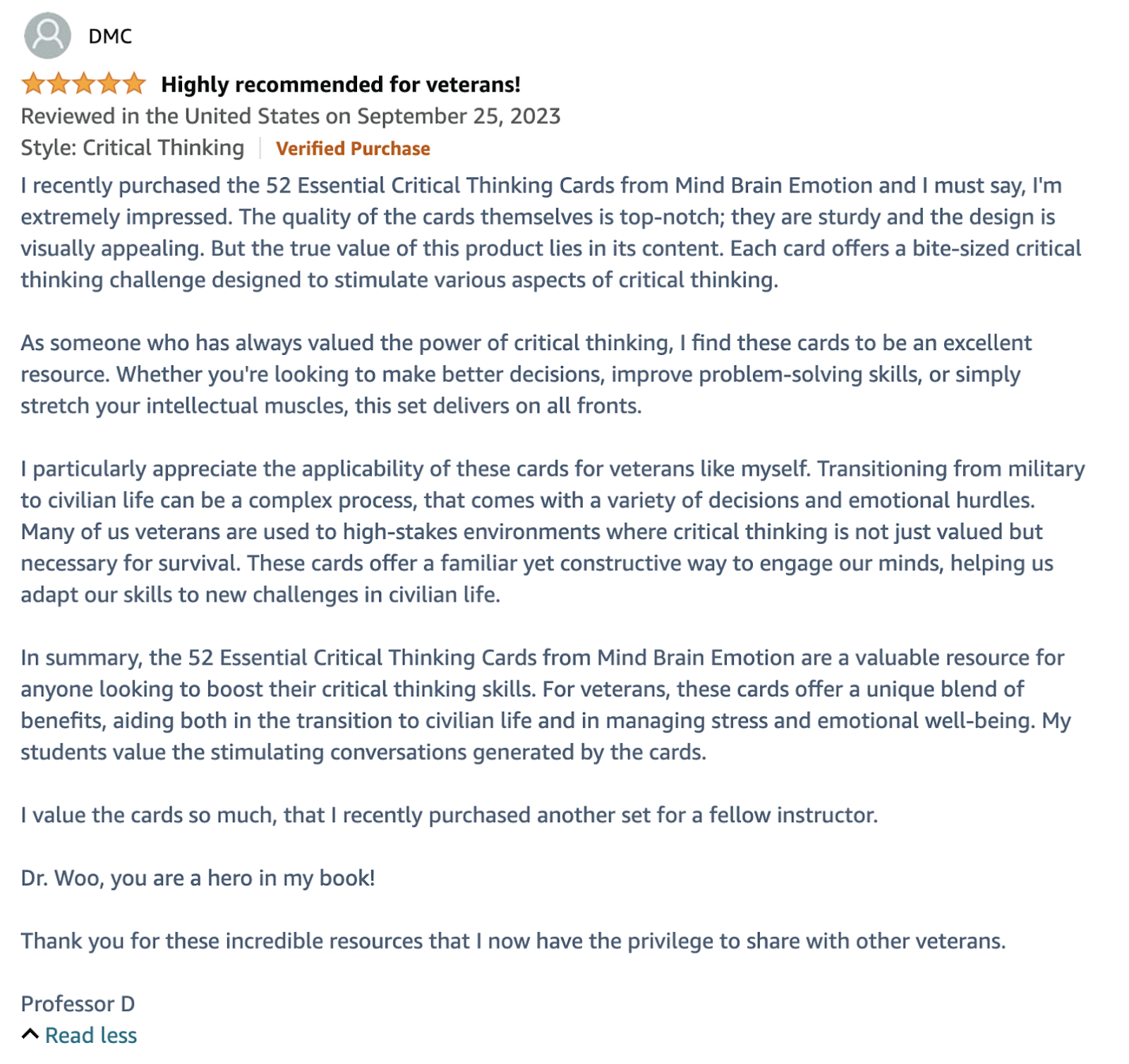
User testimonials are why I do what I do. My card decks are being used in ways that I had never imagined – in veteran hospitals and curriculums, in Federally-funded programs that support homeless youth and displaced families, in trauma-informed social work to help neglected and abused kids and adults, for Ukraine teen refugees, in speech-language therapy to help clients build reading comprehension, in community college and adult learning ESL classes to help immigrants learn language and networking, in gifted and talented programs to help students build both critical thinking and empathy, in workplaces for teambuilding and mentorship, etc. I’ve done university research on the utility of the card decks and it’s amazing to see it benefiting people from all socioeconomic classes, from poverty to affluence. 

At the end of a school district workshop I delivered, the school counselor told me that the divorced parents who had been on toxic non-speaking terms were surprisingly communicating warmly to each other and their child by the end of my hands-on workshop using the card decks. It’s anecdotes like this that keep me going.

AI, GEN Z, AND MIND BRAIN EMOTION

When asked about how AI has transcended society, she brought up the concerns for mental health, fearing the permeating scarcity of personal connection:

I was interviewed on an emerging study on the impact of AI on the mental health of workers (not just in the US, but also in the Asia Pacific) between the ages of 25 – 55. It found that workers were lonelier and craved more social interaction. I love tech and AI, and I believe they have improved the quality of our lives tremendously. However, in the context of emotional intelligence, it’s making it harder for people to experience authentic and unfiltered IRL emotional connections and social interactions. Lately, I’ve been interviewed a lot on emotional intelligence topics like how to initiate a conversation with strangers, phubbing, and how to cope with social anxiety and ghosting. Although people are now much more aware of the importance of mental health, I’m afraid that many are left with little practice (or willingness) for human-to-human connection. 

However, there’s always a silver lining. With the growing acceptance to talk about mental health among younger generations, Jenny sees a glimmer of hope in her products. They have the potential to support young people in fostering greater openness and understanding surrounding mental health issues:

I have a few more decks in the works that support Gen Alpha, GenZers, and Millennials. My card deck topics were created based on user feedback on their needs. For example, I created the 52 Essential Coping Skills during the pandemic to support my college students’ mental health. Many of the cards stemmed from a course I had been teaching, where I created practical Zoom games and assignments to help my students cope with the situations they were confiding in me. My class was oversubscribed with a long waitlist, so I made my exercises into this card game to offer instant support.

I created the 52 Essential Critical Thinking Skills in response to Black Lives Matter and Asian Hate crimes to give younger generations the tools for activism and advocacy. Most recently, a national youth-centered activism nonprofit organization contacted me to discuss collaborative partnerships to support our younger generations. We want to provide concrete tools to help our youth go from civic-conscious to civic-committed while managing the mental health toll of the geopolitical issues. Lastly, reaching younger generations through social media and YouTube would be great. I would love to collaborate with influencers who care deeply about mental health!

Speaking about her vision for Mind Brain Emotion, she expressed her desire to expand Mind Brain Emotion globally, especially in APAC:

I’d love to connect with publishers and distributors to bring evidence-based emotional intelligence resources into those countries. I believe these resources will benefit both the younger and older generations.

CONNECT WITH JENNY WOO / MIND BRAIN EMOTION

Website: http://mindbrainemotion.com

Socials: 

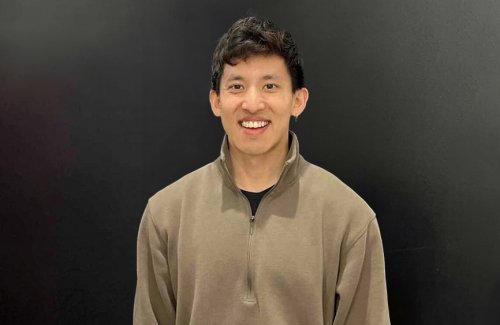
Neal Jean

Awaken* newsletter

Behind the Scenes: A Conversation With Neal Jean About the Birth of Beacons.ai

If you want to see what the next generation of Asian leaders looks like–look no further than Beacons.ai co-founder and CEO, Neal Jean. Backed by Y Combinator, a16z, and even our former guest Bryant Chou, Beacons is an up-and-coming Operating System for creators. A one-stop shop for creators to do email marketing, make their online store, their link in bio, etc. Despite still being early in his entrepreneurial journey, Neal has already accumulated an incredible amount of insights and experiences, and I hope you enjoy learning about them as much as I did. Without further ado:

BEFORE STARTUPS

Neal’s background before startups is quite unorthodox. A few years after graduating from Duke undergrad, he went back to college and got a second bachelor’s degree, then went on to get a PhD from Stanford. I asked Neal to connect the dots for me:

I grew up in Ohio and when I was 18, I didn’t really know what I wanted to do with my life. I wasn’t ready to make big decisions like that. I wasn’t aware of many different career paths. When I got to Duke, I didn’t really know what I wanted to do. I ended up studying economics and math there. I started my career as an options trader working in finance. I fell into that because I was studying economics and was somewhat good at math. It became clear to me very quickly that I didn’t want to do that my whole life. Around 2010 or 2011, I was living in Chicago working in trading and I’d be sitting at my trading desk reading essays by Paul Graham about startups. At the time, I thought it would be cool to build a company and make a difference, but I wasn’t confident that I could do it myself. I wasn’t technical and I wasn’t very familiar with it. Now I know that it doesn’t really matter if you’re technical, you learn everything by doing it anyway.

I mentioned that as a non-technical person, being unconfident in my ability to start a startup resonated with me.

Definitely. I majored in economics, so maybe you can relate to some of this [I also majored in economics]. One of the only things I remembered from my economics classes at Duke was this idea that advances in technology are the only thing that really moves the world forward over long periods of time. I think that idea really stuck with me. It was one thing that drew me to tech. I started my career in finance. I actually got fired from that first job. I made a bad trade, lost a decent amount of money, and got fired the next day. Looking back, I feel really lucky because it gave me a chance to reset and be more intentional about what I wanted to do with my life. 

So my younger brother, Joel, was Stanford class of 2011. He then went to MIT and did a PhD there, researching solar cells. It just felt like the stuff he was working on, he was trying to save the world since he was working on climate change you know. He was working on developing new types of solar materials. It just felt very meaningful compared to what I was doing. He actually now has a solar startup called Swift Solar. So I decided to go back to school, went to Georgia Tech for two years, did a second bachelor’s in EE, and I thought I also wanted to work in solar, but the summer before I went to Stanford, I took Andrew Ng’s machine learning class on Coursera and found it really interesting. I did a rotation in a machine learning group at Stanford and decided to switch to CS basically. My PhD was mostly on using computer vision and satellite imagery to map out poverty in Africa, which was the kind of meaningful project I wanted to work on coming out of finance. But even coming into Stanford, I had the idea that I wanted to build something eventually. Near the end of my PhD, I started working with a couple of friends on some projects. That led to applying to YC, pivoting a couple of times, and eventually getting to what we’re working on at Beacons today. 

PIVOTING IDEAS

Most startups have co-founders. I asked Neal how he met his and if he had any advice for other people looking for co-founders:

I have three co-founders. Two of them were in my PhD program. We met when we were visiting Stanford, deciding what grad school to go to. I met our fourth co-founder at Georgia Tech when I was doing my second undergrad there, so I’ve known him for over 10 years. I think I got lucky and ended up being able to work with my friends. If you get lucky and you have friends who have similar interests and you work well together, that can be a great path. One of the things that surprised me about startups is that it’s very random. Before you do a startup, you read about startups in TechCrunch and you think they all follow a standard path. It’s like you raise a pre-seed, you raise a seed round, you raise a series A and then whatever. But people do all kinds of crazy things, and the same goes for finding a co-founder. There are lots of ways to do it. If you don’t have friends to do it with, one thing I would suggest is to develop your own interests. Follow things that you’re interested in and try to go deep in those areas. You’ll naturally start doing more interesting things and meet more people. If you’re doing that intentionally, I think you’ll create a lot of luck surface area for yourself.

Earlier in the interview, Neal mentioned that his team pivoted a few times, so I asked him what the original idea for Beacons was:

I used to live in Rains [graduate apartments at Stanford], and the first project that we built was a face recognition smart lock for my apartment. We tried to get it to recognize all of our friends’ faces and unlock my apartment when they showed up. It worked sometimes. We made a portable version of it to bring to our YC interview. That’s what we got into YC with.

We quickly pivoted away from our original idea after our YC interview. We realized that all of our backgrounds were in software, and to build the kind of company we initially envisioned would require more of a consumer hardware focus. So, we started exploring new ideas and different things. We entered YC without a clear idea and spent the first month building productivity software, which I think is a common trap for founders who don’t have any better ideas.  

About a month into YC, I attended a friend’s wedding in Singapore and met a woman who was running an e-commerce company and doing all of her marketing through influencers on Instagram. She heard about my background in machine learning and asked if I could build a system to help her find influencers to work with. She showed me spreadsheets where she was tracking people’s follower counts and the number of likes and comments they were getting on their posts. She would then compute their engagement ratios and try to figure out how much she would be willing to pay them. It seemed like a good problem to automate and potentially improve with machine learning. I returned to SF, discussed it with my co-founders, and we invited her to come from Singapore to SF so we could start building this system for her. She actually came over the next Monday and moved into our apartment. I gave up my bed for her and moved into my co-founder’s bed. We spent the rest of YC building with her, and that was how we got into the creator space. Eventually, we realized that we were more excited to build products for the creator side of the market than the brand side.

We first started building something that’s similar to Cameo. We were trying to build a Cameo for creators. However, we soon realized that Cameo was already doing a good job at catering to creators. But that’s how we started talking to lots of creators. We saw Linktree taking off around that time. Their product looked pretty basic and we weren’t that good at building software at the time. So we thought we could probably compete with them. That’s how we started down the path we’ve been on for the last couple of years.

GETTING CUSTOMERS

I’m always curious how startups get their first customers, and I was especially curious about Beacons since they sell to influencers. Here’s what Neal had to say:

It is harder today because I think there are more people trying to reach out and get in touch with these creators. We just used cold email in the beginning, this was when we were still building the Cameo for creators. 

We put together a list of 50 creators who were based in the Bay Area and I emailed all of them. The email was basically like, “Hey, whatever your name is, your biggest fan, Jesse, who is my co-founder, wants to pay you $20 for this video. So you have $20 waiting for you. Just reply to my email and we’ll tell you how you can get this money.” We thought it could work. We got one reply out of the 50. Her name is Suki. Her Instagram is @sukiluser, if you want to look her up. She had just moved to the Bay Area from Toronto. She didn’t have many friends yet. She asked if Jesse was my co-founder. I confirmed, she was really nice about it. We met up the next day in Hayes Valley. She was our first user. She’s an advisor to the company today and still a friend. 

Although I thought this idea was genius, it sounded like it wasn’t too effective, so I asked Neal if he switched up his tactics to get customers 2-10:

No, we kept doing the cold email. After we pivoted to the link in bio, we started a new cold email strategy. We would find creators who are using Linktree. Then, we would rebuild their website in Beacons. We would send them a screenshot of the website we built for them that was nicer than their existing Linktree website and then ask them to sign up. That’s how we got our first couple hundred users. 

PHD FOUNDERS

Because I know some folks who have or are pursuing a PhD and are looking to get into startups afterwards, I figured I’d ask Neal to reflect on the advantages and disadvantages of being a founder with a PhD:

I think we have more challenges than strengths. One challenge was that we didn’t have any experience working. My other co-founders had never worked before. I had only worked in finance. So I had never worked in tech. I had no idea how tech companies actually operate. So we just had to learn a lot of things from scratch and probably made a lot of rookie mistakes along the way. We also weren’t native to our space. None of us were content creators. And I think early on, there were some challenges that came with that. One, we didn’t have the most empathy for our users. So we were trying to build for them, but we didn’t really know what it was like. We’ve worked on that and improved over time. However, we probably made some decisions and mistakes that others wouldn’t have. From investors, there was a perception that we were mercenaries. We were machine learning PhDs, but we were building things for TikTok creators. They wondered if we were just capitalizing on a hot space. In terms of advantages: now that AI is so popular, I think our backgrounds are going to be more helpful. That’s maybe a more obvious one. A less obvious one that I think has been important is that we’re not necessarily smarter than people who don’t have PhDs. But one thing you do learn during your PhD is not to be intimidated by problems that you don’t know the answer to initially. As a founder, you often don’t know how to do anything going into it. You’re constantly figuring out new things. When you do a PhD, one of the challenges is that you have to bring new knowledge into the world. You’re always trying to figure out things that haven’t been figured out before. You’re not sure if you can figure it out, or at least not sure if you can figure it out in this way. So there’s a certain amount of intellectual resilience or courage that you develop. I think that’s actually been pretty helpful for building a company. To clarify, resilience or intellectual courage isn’t exclusive to PhDs, but it was helpful that we had developed that over time.

Naturally, I had to ask Neal how they managed to convince investors to bet on them:

It depends on the investor. Different investors care about different things and respond to different things. We’ve always been honest about who we are and who we’re not. We didn’t misrepresent ourselves as creator experts. We’ve always been earnest and curious, and over time, dedicated to solving problems in this space. For investors who cared more about that than domain expertise, our approach resonated with them. It’s probably a good thing because if you get money from an investor that doesn’t really match with you, it’s likely to cause problems later on.

BEING NON-TECHNICAL

Backtracking, I asked Neal to expand on an earlier point he made about how non-technical people can dive into a startup and pick things up along the way:

It was definitely beneficial for our team to have experience in software. But none of us had built any consumer software before; we were all research people. We knew Python, but we didn’t know JavaScript. I had imagined that to work and contribute to an early-stage startup, you have to be able to code things up yourself and build products yourself. It depends on the type of company you’re building. If you’re building a dev tools startup, maybe that’s more accurate. But there are many companies where it’s very helpful to have a non-technical person who’s willing to do a lot of different things to make the company work. At Beacons, I’ve done very little coding in the five years that we’ve been working together. Even though I have a PhD in CS, most of the work I’ve done at Beacons to help the company is not writing code. 

We’re a product-led company. Our go-to-market motion is mostly people using the product, and then other people seeing them use the product and adopting it for themselves. We haven’t done a lot of sales or even a lot of marketing up to this point. My role was mostly leading product, especially early on. Now we have other people on the product team. But early on, I was the main product person. Doing product is really about understanding your users or customers and then understanding their problems and then trying to figure out how you can solve them. Because we’re building a software product, it was about understanding how to solve them with software for the most part. The hard part is really understanding the problem and being creative in thinking about how you can provide a solution. That cycle of understanding the problem and then figuring out how to solve it actually creates a lot of leverage within the company.

One thing I took away from previous interviews is that you can’t just go and add all the features that your users ask you to. Users will ask you for this and that, but maybe you’ll end up with a really hodgepodge product if you do that. I wanted to get Neal’s thoughts on how to cut through the noise and identify what it is users actually need:

You do your best. If you look at our product, we definitely added a bunch of features that people asked for that didn’t end up being very useful. I definitely can’t claim that we’ve always done a good job of this. Understanding the problem is not a simple thing, there are lots of different problems and ways to think about them. It’s about fitting them together into one cohesive model of who the customer is and which problems are important enough to solve. It’s also about understanding which problems your company is well-positioned to solve or where you have a right to win as a company. It’s a high dimensional thing that requires a complex model of how the world works, how your customer fits into that world, how you fit into that world, and where you think things are going in the future. Then, it’s about trying to align all those things and build for that future while being constrained on the money, time, and people that you have to deliver that stuff. 

I asked Neal if he wrote out his models explicitly:

Yes, I really like to whiteboard stuff out. We have whiteboards in our office. That was a skill I picked up during my PhD. I also do a lot of writing internally. I believe that writing is thinking. There’s this quote, “Writing is nature’s way of showing you how sloppy your thinking is.” I believe that. 

BEING AN ASIAN FOUNDER

As per newsletter tradition, I asked Neal how being Asian has qualified his experience as a founder:

It’s definitely something I’ve thought about, but I wouldn’t say I spend a ton of time thinking about it. I think I’m relatively lucky in a lot of ways. As a founder, I’m a man, and women often have it harder as founders. I’m Asian, but as far as being a minority goes, being an Asian man is not the worst thing as a founder. I think because of other characteristics that I have, like having a PhD in machine learning from Stanford, I don’t not fit the mold that people are expecting. I think Asians are still pretty underrepresented in leadership roles.

I mentioned that although there are some very successful Asian founders, it seemed that Asian founders were especially lacking in terms of CEO representation. 

I share your impression that there aren’t many visible Asian CEOs. Jensen Huang, for example, has recently been in the media a lot. We’re still an early company, so I hope to help change that someday. However, it’s not always top of mind. Most days, I’m focused on what needs to get done at work.  

A fair answer, given that Neal is really in the thick of things having just launched Beacons 2.0 (a big expansion of their product suite featuring AI-powered tools) several months ago. 

SHOUTOUTS

The only thing Neal wanted to shoutout was Beacon’s mission:

For us, we always saw these creators as a new class of online entrepreneurs. They didn’t have a lot of tooling or support for them yet. That’s always been a big part of our mission at Beacons. This is actually related to the research I did at Stanford, where I got really excited about using software to create better economic opportunities for people around the world. I was doing that research on poverty in Africa. That’s a part of our mission at Beacons that I’m still pretty excited about, even though I never would have guessed that I would be working with TikTokers. It’s a cool space to be in. We’re starting to build one of the better, more comprehensive platforms out there to support online entrepreneurs, at least ones where content is pretty important for their business. We’re starting to build in a lot more AI and machine learning stuff to help them run their business more easily and make better decisions across the business. 

Given the rapid and accelerating growth of the creator economy, I suspect that Neal and his team will be in for some very busy and fun years. I’m excited to see how Neal grows during his time leading Beacons, and I hope that he’ll come back and grant us another interview once he’s made it!

Thank you Neal for speaking with us!

Awaken* newsletter

Navigating Startups and Challenges: A Conversation with Webflow’s Bryant Chou

On November 10th, I had the honor of chatting with Bryant Chou. Bryant is the co-founder of Webflow, one of the leading website-building platforms in the world with a valuation of $4 billion. Within startup-land, Webflow is especially notable for being mostly bootstrapped, waiting five years before raising an additional round after their seed round in 2014.

In our conversation, we touched on a variety of topics ranging from being Asian American to working at startups vs. big tech. 

Note: Quotes were lightly edited for brevity and clarity.

EARLY CAREER

I started our conversation by asking Bryant if he had any entrepreneurial endeavors before his first official company. While he never directly started a business, Bryant did display early signs of his scrappiness.

My mom gave me twenty dollars a week for all of my lunches and whatever discretionary income. So, of course I spent most of it on food, but that essentially meant that I had nothing really left over. But I also really wanted to be a normal high school student and go to prom and go to dances and stuff like that. So I made money in high school by entering Counter-Strike tournaments. I would earn, I don’t know, a few hundred bucks in these local LAN parties. And that’s how I paid for dances. So I always kind of adapted and tried to apply myself in different ways, with whatever skill sets I had.

He continued on to talk about his motivation for getting into startups:

To be honest, I don’t know if I would have done startups if I was at Facebook or Google. You know, I didn’t land those jobs coming out of school. I wasn’t smart enough. Didn’t pass those interviews… I think because I was at a mid-tier tech company, it kind of gave me more hunger to do something on my own. I wanted a change and believed software startups were the future. I took the plunge in 2011, driven by the belief that startups would be significant, 

However, he also cautioned about rushing into startups: 

You need to think about the things that really need to be true in order to be a founder and do it successfully. One of those things is working in a space that you really want to affect and make a difference in. You just want to make sure that you’re working on something that’s worthy of 16 hour days, you know?

BRYANT’S ROLE AT WEBFLOW

Although Bryant is perhaps best known as being the co-founder and CTO of Webflow, I saw that Bryant had recently shifted his focus away from technology to growth and marketing for Webflow, so I asked him about that:

Because we were bootstrapped, we never really invested in growth and marketing. So what started as an impatient maneuver on my end, like, ‘hey, I think we need to start doing these things’ turned into, ‘hey, this is actually something that is ROI positive.’ Who would have thunk? I suppose even though I’m an engineer and builder and product person at heart, I’m also a company builder in that sense. So I’ve–for example, started our marketing, started sales, started data, started security, so all these things are just things that are just like, ‘hey, we need to do these things. Let’s figure out how to do it.’ And I think that’s something that most entrepreneurs are going to have to do. I don’t think you’d necessarily have an option to not do it.

Coincidentally, I had talked to the new CTO of Webflow, Allan, a few months prior. Alan was super nice and very sharp–a great backfill for Bryant.

NAVIGATING ASIAN IDENTITY

As the Asian Hustle Network, I naturally had to ask Bryant about how he felt being Asian qualified his experience as a founder, he started out by acknowledging the position of Asian men:

It’s a well-known fact that Asian men in Western societies have a different bar to hurdle than other people. One of the reasons why I was so keen to help produce the 38 in the Garden movie with Jeremy Lin is because he articulated this so well. Have you seen that documentary? 

I had not, in fact, seen the documentary. Oops. I watched it after the interview on his recommendation and it was very, very good. Please give it a watch! Bryant continued:

It’s my one and only film and probably the last one that I’ll ever be involved in. I’m totally okay with this because I believe this cause is important. Part of the reason why I agreed to chat with you is because we obviously have a chip on our shoulder. We are seen differently in society. I’ve dealt with it in various ways myself. I’ve taken a colorblind approach to business interactions and never thought about my race or ethnicity in certain environments. I think that’s ultimately what you have to do. As Asian people in Western society, you’re supposed to be heads down, let your actions speak for themselves. I still very much have that approach. Who knows if it’s the most optimal thing to do.

Despite his colorblind approach, Bryant was clearly very cognizant of the fact that people perceive Asians differently, and had a suggestion for our readers:

To just walk amongst people of the same race and they speak your language, I think that’s like a worthy thing to do and to dive into. I identify as Taiwanese, at least as much as I identify as an American. When I go there, I literally feel different. I feel like I’m one of the same, like I’m among my people, I’m not viewed as a minority, I’m just viewed as a normal person. I think every Asian-American should have that sensation at some point in their life that they feel like they’re seen as someone just like everyone else, and the only place where I felt that has been Taiwan.

I knew Bryant grew up in the Bay where there were a lot of Asians, so I asked him if he felt the same sensation in those areas, he suggested:

The broader construct of society that we live in is still the US, which is still 85% non-Asian. I think Asian Americans make up about 12% of the population, maybe even less. I don’t think it’s so much about not being in the majority. It’s more about the sensation that you get that you are biologically or ethnically more similar to the people that you’re walking around with in Asia.

NAVIGATING ENTREPRENEURIAL CHALLENGES

Moving onto the next topic, I asked Bryant about his emotional experience as I had heard a lot of founders talk about how difficult this aspect of running a startup was:

I thought it would be harder technically than it would be emotionally. But I would say the social emotional components of building a company are 100 times harder than the technology itself.

I followed up by asking if there were any specific experiences that stood out to him:

They’ll come up in different forms. In 2020, there were a lot of social justice issues that made running a company very challenging. Ultimately, when you’re at a company, you need to be hyper-rational. You’re faced with a conundrum between being a good steward of the company’s mission and vision and maybe what people inside your company believe, and sometimes those things clash.

It was clear that this level of situation took an emotional toll on Bryant, so I asked him how he copes with it and prevents it from seeping into his personal life:

You compartmentalize most of it. It helps to have a supporting spouse and partner. It’s great to have kids that can distract you from this.

ADVICE FOR YOUNG PROFESSIONALS

Adding on his comments about entrepreneurial pain, Bryant offered:

I think like if you’re in your 20s, I would actually be chasing that kind of pain. It’s the best time to chase pain and suffering. If it means that will lead to a certain level of intellectual expansion, social emotional awareness. There’s no better time to find the limits of what you’re capable of than when you’ve graduated, when you’ve got a whole life in front of you. Like, it’s time to see what you’re made of. So I’d be a huge proponent of young folks going to startups that are hectic and crazy, working in environments where they can learn, dedicating time and energy to perfecting a craft. Those are things that you don’t learn in school. And those are only things that you can chase on your own accord.

This made me think about how I have a lot of friends who go into Big Tech. A good number of them say that they want to pursue their own company eventually, but want to get their start at a big company to build up their skills. I asked Bryant what he thought about this approach:

There’s two kinds of learning that you can do at a big tech company. One is technology related. So you can go and immerse yourself in a technology, and be surrounded by technologists that can help you. That’s something very valuable for sure, but learning how to do things the way Meta or Google does things is not transferable at all to startups. None of their processes matter. None of their ways of thinking about building products matter. It’s just a whole ‘nother ball game. There are maybe some professional skills that you get to pick up. Communication, the ergonomics around the work–such as just documenting your work, making your work transparent, and just picking up good habits–that’s for sure. But there’s nothing like working in an early stage startup where you’re building something from nothing. You know, you’re almost never doing that at a big company.

I was somewhat surprised that Bryant felt that the Meta or Google way of thinking about products was applicable, so I pressed him to elaborate:

So actually, that’s a great example of something that I did retain. It’s more so the principles at which you approach building a product, right? Developing customer empathy, ensuring you’re not over-engineering things really matters. Facebook and Meta have an abundance of resources. Engineers at large companies are very good at building incredible things that are well-defined in a narrow spectrum. However, in a startup, you’re trying to go as wide as possible with what an engineer could potentially contribute to and build 60 to 80% of it. It doesn’t need to be perfect.

Bryant’s comment about over-resourced companies made me think about the opposite, under-resourced companies, and how I often hear about employees at those companies working weekends and long nights. I asked Bryant if he thought that was necessary in a startup:

There’s a time and place for it. I don’t believe nights and weekends are required. It’s important for people in their 20s to find their limits professionally and personally. This means making time for personal things like dating, hanging out with friends, and attending events. It’s about striking the right balance. For instance, I encourage my team members to take vacations when needed. It’s crucial for startup leaders to have a good pulse on their employees, understanding their strengths and weaknesses, and checking in on their well-being. I don’t believe anyone at SpaceX or elsewhere can stare at a problem for 100 hours a week and feel productive. It’s important to step out of your zone, draw inspiration from different things, and take breaks. To live a balanced life. When I say that people should find their limits professionally and personally, it’s like that limit is different for each person. But you have to feel like you’re able to stretch, build the muscle for your mental and physical strength to stretch when you need it. I think that’s really important to do.

SHOUTOUTS  

Webflow is hiring across multiple functions! Please visit this link to find and apply for open roles, or feel free to get in touch with Bryant at bryant@webflow.com if you would like to reach out personally for opportunities.

38 at the Garden, the short film about Jeremey Lin which Bryant helped produce is available to watch on HBO Max. The film is 38 minutes short and is a must-watch for all Asian Americans.

Thank you Bryant for speaking with us!

1acf417a7f79dcca12c8fadaae682231-jpg

News

Ethos Fund’s Inaugural $12 Million Fund Invests In US-Vietnam Tech Synergy

Ethos Fund, the joint creation of David Yo and Simon Shin, serves a unique purpose of forging connections between the tech ecosystems of Vietnam and the U.S. Their approach is both innovative and influential, laying the foundation for strengthened cross-border collaboration between two nations. 

This innovative firm moves away from conventional models by prioritizing investments in a distinct group: “third culture founders”. Shaped by navigating multiple cultures, these individuals possess a unique blend of global understanding and a fervent desire to solve critical problems.

Ethos Fund acts as a bridge, fostering collaboration between the growing tech ecosystems of the United States and Vietnam. Led by the Korean-American duo of David Yi and Simon Shin, the firm leverages their founders’ multicultural backgrounds to identify promising investment opportunities. Their inaugural $12 million fund targets both sides of the US-Vietnam tech equation.

David Yi (L) and Simon Shin (R), co-founders of Ethos Fund (Ethos Fund)

The name “Ethos” reflects their core philosophy. Ethos Fund believes that founders are more than just cross-cultural connectors. Their unique third culture, shaped by experiences beyond nationality or geography, drives their vision and impact.

In the US, Ethos Fund seeks out “third culture founders”, individuals whose experiences span across cultures. Ethos Fund identifies these innovative minds with the potential to innovate industries and empower them through investments.

Within Vietnam, Ethos Fund takes a bold step further. They actively invest in early-stage startups, even those pre-revenue and pre-product. Their focus lies on the Vietnamese diaspora and expats filled with innovative ideas.

Ethos Fund’s commitment extends beyond financial support. They actively cultivate a collaborative environment by offering educational programs and events specifically designed to connect US and Vietnamese entrepreneurs. This dedication to enhancing cross-national collaboration emphasizes Ethos Fund’s vision for a future where geographical boundaries are no longer a concern.