Stories

March 17, 2023

SHARE:

Crystal was feeling emotionally and physically drained from her job before she finally decided to quit. She didn’t have any plans lined up when she did, which was very unlikely for her. So she decided to pursue something she’s passionate about – stickers and stationery.

Juice Box Club was molded out of creativity, perseverance, and determination. This small business has faced numerous hurdles along the way, from financial uncertainty to unexpected delays in product arrivals. But despite the challenges, Crystal has remained committed to her dream of sharing her unique designs with the world.

Crystal’s designs are inspired by real-life experiences, from personal passions like fitness and mental health to inside jokes with friends. And speaking of friends, Crystal recently launched a new collection of plushies called Boba Friends, inspired by her own friend group and their real-life pets.

Now, her small business is more than just a sticker shop. She is now designing and selling lifestyle items (glassware, tote bags, apparel) and even plushies! Let’s dive into the story of how The Juice Box Club was born.

HOW THE JUICE BOX CLUB CAME TO LIFE

The process of setting up my own stationery shop was very nerve-racking and exciting at the same time. When I first started off, I used Etsy and I had a lot of support from people back home in New York City, where I was born and raised. However, when I learned that it took a huge chunk of the profits, I took it off and started my own website. I registered my shop as an LLC because I felt like this was going to be a long-term commitment.

I decided to start my own stationery shop because it was always a hobby and passion of mine. I would always collect envelopes, paper, and stickers. 

The concept of The Juice Box Club came from some drawings I did and then while I was sharing it with my friend, we were messaging about a cute name. The Juice Box Club kinda reminded me a little bit of The Breakfast Club, an extremely memorable movie, and that’s what I wanted my brand to be.

OVERCOMING BUSINESS HURDLES

The challenges I have faced circled around finance, having too many ideas, running it by myself, products not arriving on time, machines not working, and rejection.

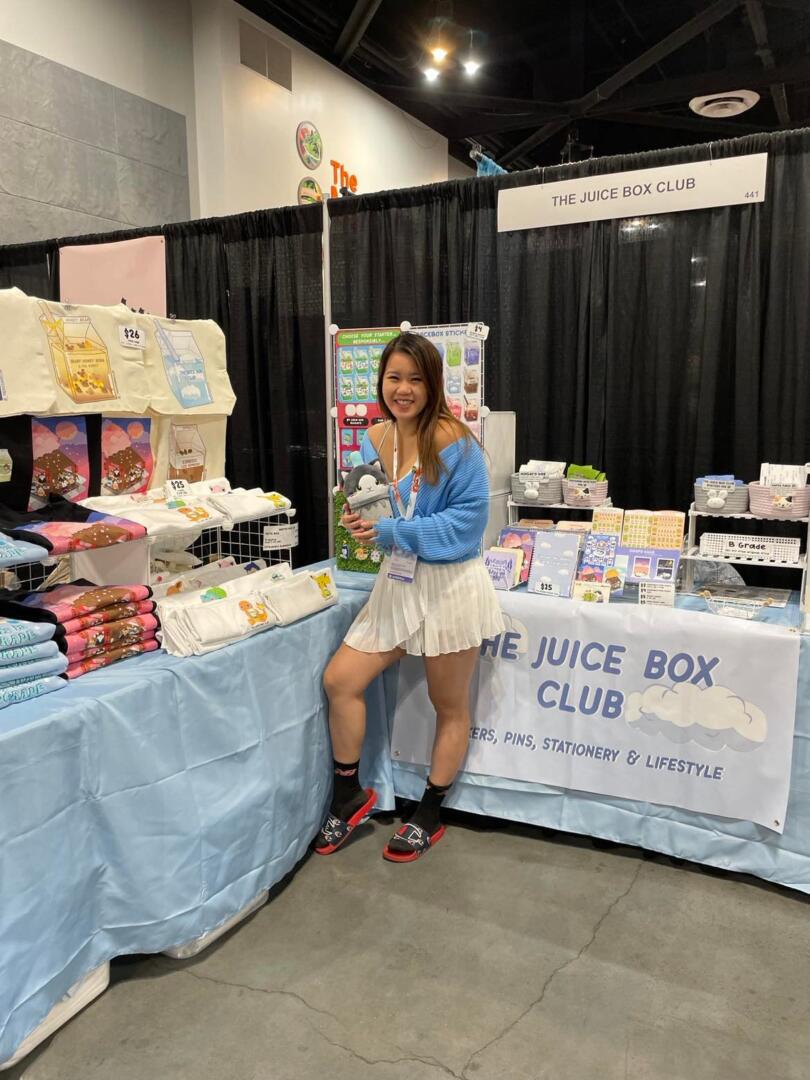
Finance — in terms of not knowing if I’ll make any sales this week or the next. I do sign up for a lot of in-person pop-up events! I rely on that more than my online sales since the internet nowadays is so funky with algorithms. I also like interacting with customers because they have an opportunity to get to know the brand firsthand.

Having too many ideas — definitely a challenge because I didn’t wanna grow too fast and then have a bunch of inventory. I used to work in fashion and I was used to always developing NEW items. I felt like I had to do the same with my brand, but I realized that I don’t and it’s okay to slow it down. 

Running the business by myself — also pretty hard! Sometimes I would ask my friends if they’d want to help me at bigger events. But most of the time, I’m a one-woman team. I had to do everything from designing, packaging, shipping, content creation, handling emails, etc.

Products not arriving on time — There are times when I outsource items since I don’t have the time or the tools or make them. When I first started, I outsourced my stickers and they were LATE by 1-2 weeks. There was also another time when all of my plushies came EARLY and I had to store 12 big boxes (1,200 plushies total) in my garage and some in my house. 

My Cricuit machine was not working in the beginning — I was making and hand-cutting all my stickers. I gave my Cricut a break and went back and tried it again until it finally started to work properly.. after 5 months.  

Rejection is something I dealt with a lot growing up, so I thought I’m okay with it by now. But getting rejected by big conventions or wholesale sites hits differently. However, I learned to see it as dodging a bullet. If it’s meant to be, it will be, maybe at the right time.

DESIGNS INSPIRED FROM LIFE

Everything designed in my shop all ties into my life somehow. When I first started, I had seven juice box designs. Six of them were themed — three were inspired by my personal passion for fitness/bodybuilding and the other three were inspired by the importance of mental health because I’m a very functional-anxious person and have a hard time relaxing. 

Some of my juice box designs were inspired by my texts with my friends so you might find cute and funny quotes on them. For example, “broke b*tch juice” was inspired by my convo with my bestie, Beth, we always talk about how things are so expensive and how we’re always broke. Or if you see the Pokémon x Soju collection, it was a merge of my childhood and adulthood — because I grew up playing Pokemon with my brother and spent my college years pounding shots of soju.

The Juice Box Club Pokémon x Soju Collection

THE BOBA FRIENDS

Growing up, I didn’t have a consistent group of friends. Most of them just either change or grow apart. But when I moved to California, I met my best friend who later on introduced me to my current friend group.

Some of us in the group have pets, so I then designed characters based on our pets, and their personalities reflect the owner! I called them Boba Friends because boba gatherings are one of the most common hangouts to do now! They have different flavors as well. I own the two cats, Platinum and Luna. My best friend Beth owns Sesame, a lionhead rabbit, and my friend Justin owns Kona, the Shiba Inu. Now none of us owns a bear or frog but I dedicated Ribberto the Frog and his personality to my late friend Josh because it was his favorite.

The Boba Friends Plushies

In the future, I plan to continue producing more drawings and products for The Juice Box Club. I hope to have my products in shops and stationery stores. I am also working on a YouTube channel to show my journey and reach more people.

Website: www.thejuiceboxclub.shop

Instagram: @thejuiceboxclub

Related Articles

Image Source: Brendan Duong

Stories

A Secret Business Purchase Grew Into A Multi-million Dollar Enterprise

Tess Nguyen who is a trained physiotherapist was searching Gumtree, Australia’s marketplace, for a physiotherapy clinic to buy. Instead, a sleepwear ad called Midnight Mischief captured her eye, “I’d never heard of personalised pyjamas, and I was pretty up-to-date with trends, so I sent an inquiry,” she told 7life.

She consulted her friends who have accounting and business experience and told Tess it was worth nothing and advised her not to buy it. However, she liked the pyjamas’ style and name, plus she was able to bargain the business down to $15,000. So, a month later she bought the business.

Tess kept the purchase secret from her family. The business was going slow during the first two years, and running the business while working as a full time physiotherapist, took its toll.

When 2020 hit, the business was ready for the huge demand prompted by COVID and people staying at home. The big moment was when TV presenter Jules Sebastian posted a photo of herself wearing Midnight Mischief pyjamas.

The brand grew 165% in the year to July 2021. And Tess has gone from pyjama girl to Pyjama Queen – selling a set every 10 minutes. The designs retail for about $99.95 – and her sleepwear empire is now turning over $2.3 million.

“I’m so glad I did it and I’d tell anyone else to do the same,” Tess told 7Life, “Just go for it. You can figure it out as you go along. It’s worked for me.”

Image Source: Chris Pizzello/ Invision /AP file

Stories

Awkwafina Knows Best About How She Is Still More Financially Great Living On $500 A Month

Even though the Crazy Rich Asians actress’ wealth is likely in the millions, she believes that a mere $500 per month is sufficient to cover her expenses.

The 32-year-old actress recently told Harper’s Bazaar that her money philosophy goes back to when she was building her Awkwafina musical and comedy persona, which she used as an outlet for her creativity while she worked a day job in book publicity.

Her grandmother brought her up in a one-bedroom apartment in Queens, New York. Because her family’s restaurant went out of business and they were forced to sell their home, she has developed a greater appreciation for monetary gain than any other aspect of her life.  

Awkwafina remembers that funds were tight at home and that she would stay up late with her grandma, who worried about paying the bills.

She also claims that despite being in a better financial position to support her family and herself, she still maintains a just-the-basics mentality. The actress has been known to buy clothes at Target and not spend much money on anything. She set out with the simple objective of covering her living expenses. 

She explains to Harper’s Bazaar, “I went into this mode off, if I can make $500 a month, that’s all I need.” 

Awkwafina’s motivation and success are attributed mainly to her refreshingly optimistic view of financial considerations. She has kept herself busy acting in the years since, including launching her comedy series on Comedy Central and becoming the first Asian-American actress to win the Golden Globe for best actress for her lead role in the 2019 drama “The Farewell.”

Image Source: Photograph by Ken Richardson Boston Magazine

Stories

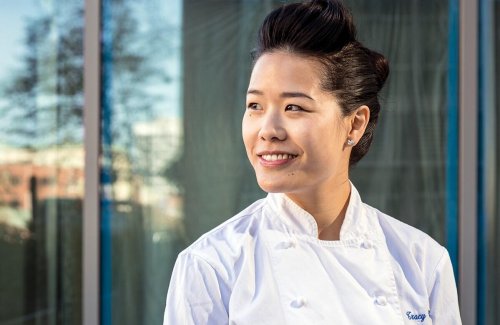
Chef Tracy Chang Gives Back To The Community Through The Language Of Food

Restaurateur Tracy Chang started the nonprofit Off Their Plate and Project Restore Us through the COVID-19 pandemic in 2020. 

The owner of the Japanese tapas restaurant,  PAGU, started Off Their Plate as a way to feed healthcare workers, and Project Restore Us sends nutritious and culturally appropriate grocery boxes to families living in food deserts. Both groups work to support local kitchens run by women and BIPOC and volunteers.

As a chef, Tracy also finds herself more in tune with customers than ever before. As someone who grew up lactose intolerant, she sources ingredients responsibly and remains mindful of the way guests feel after they leave her restaurant. This is also part of her restaurant’s ethos.

Her grandmother has also influenced Tracy’s cooking. Although her grandmother didn’t speak English, she spoke the language of food really well, said Tracy, and that was something that always resonated with her.

For Tracy, her personal experience has definitely come into play — trained in Spain but worked at a Japanese restaurant, and she grew up with a lot of Japanese and Taiwanese food, “The menu at PAGU is autobiographical and about my experience learning very specific dishes and techniques from people like my grandmother, my mentor and some of the chefs I’ve worked with.” she told TimeOut.

Image Source: CNN

Stories

Young Tech Startup Founders In Asia Make Mental Health Support Accessible To Break Stigma

Breaking down societal stigma and creating a new mental healthcare system for the Asia-Pacific area are two of Theodoric Chew’s objectives, founder of the digital mental health app, Intellect.

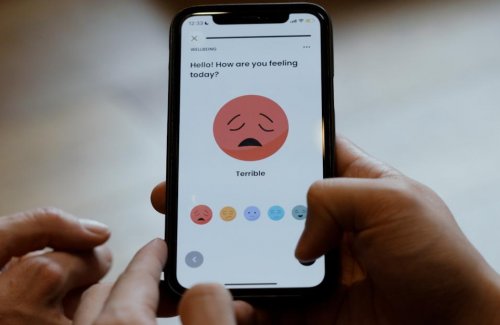
Founded in 2019, the mobile app frequently monitors users’ moods, delivers rescue sessions and exercises, and lets them chat with therapists in real-time. 

The 26-year-old explained that mental health is just as important as physical health, “You and I face things like stress, burnout, sleep issues, and relationship struggle as well.” he told CNN, “ That’s where actually a lot of us should start working on our mental wellbeing.”

Since early 2020, the startup serves over 3 million Asia-Pacific users in 15 languages. According to CNN Business, the Singapore-based mobile app has raised $20 million in its Series A funding, the largest amount raised by a mental health start-up in Asia.

Early this year, Singapore and Jakarta-based digital mental healthcare start-up, Ami, has raised at least $3 million from a number of investors, including Meta, the owner of Facebook. The firm was founded by Justin Kim, a Forbes 30 Under 30 Asia alum with Beknazar Abdikamalov.

Both digital mental health companies are targeting employers in their business models, where companies can subscribe to provide staff unlimited, private access to their services.

According to the WHO, depression and anxiety disorders cost the global economy $1 trillion a year in lost productivity. In March, it was reported that anxiety and sadness surged 25% worldwide in the first year of the pandemic.