Stories

March 17, 2023

SHARE:

Crystal was feeling emotionally and physically drained from her job before she finally decided to quit. She didn’t have any plans lined up when she did, which was very unlikely for her. So she decided to pursue something she’s passionate about – stickers and stationery.

Juice Box Club was molded out of creativity, perseverance, and determination. This small business has faced numerous hurdles along the way, from financial uncertainty to unexpected delays in product arrivals. But despite the challenges, Crystal has remained committed to her dream of sharing her unique designs with the world.

Crystal’s designs are inspired by real-life experiences, from personal passions like fitness and mental health to inside jokes with friends. And speaking of friends, Crystal recently launched a new collection of plushies called Boba Friends, inspired by her own friend group and their real-life pets.

Now, her small business is more than just a sticker shop. She is now designing and selling lifestyle items (glassware, tote bags, apparel) and even plushies! Let’s dive into the story of how The Juice Box Club was born.

HOW THE JUICE BOX CLUB CAME TO LIFE

The process of setting up my own stationery shop was very nerve-racking and exciting at the same time. When I first started off, I used Etsy and I had a lot of support from people back home in New York City, where I was born and raised. However, when I learned that it took a huge chunk of the profits, I took it off and started my own website. I registered my shop as an LLC because I felt like this was going to be a long-term commitment.

I decided to start my own stationery shop because it was always a hobby and passion of mine. I would always collect envelopes, paper, and stickers. 

The concept of The Juice Box Club came from some drawings I did and then while I was sharing it with my friend, we were messaging about a cute name. The Juice Box Club kinda reminded me a little bit of The Breakfast Club, an extremely memorable movie, and that’s what I wanted my brand to be.

OVERCOMING BUSINESS HURDLES

The challenges I have faced circled around finance, having too many ideas, running it by myself, products not arriving on time, machines not working, and rejection.

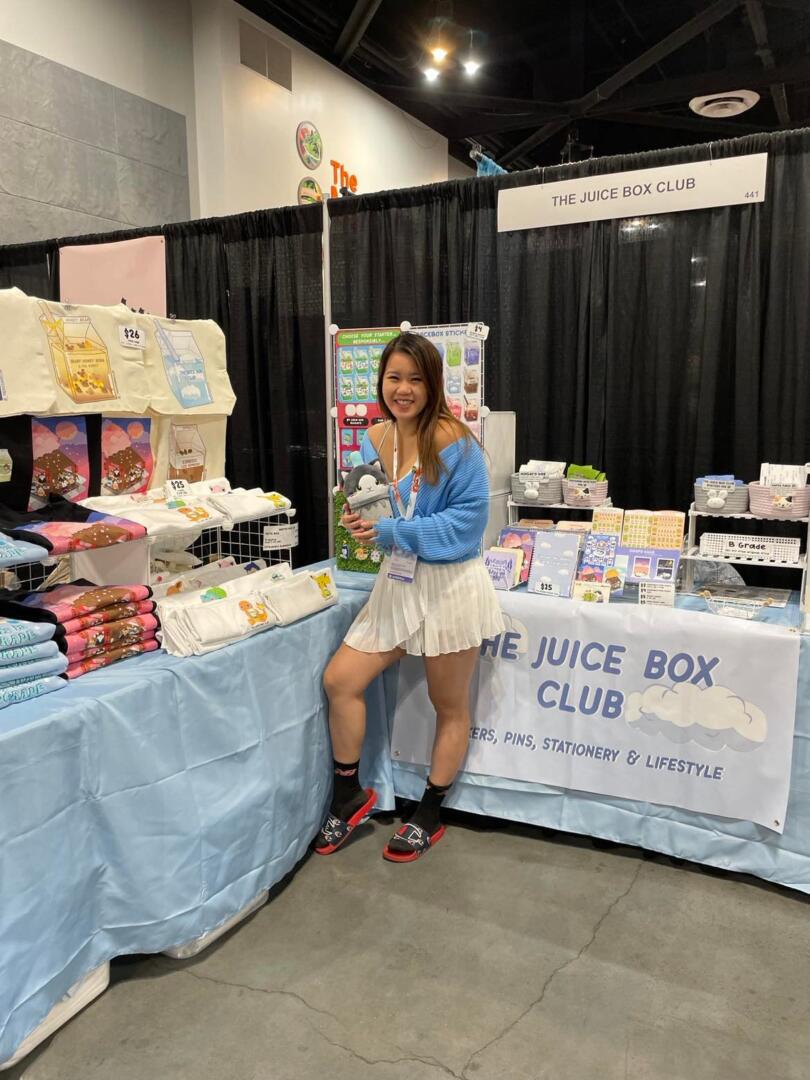
Finance — in terms of not knowing if I’ll make any sales this week or the next. I do sign up for a lot of in-person pop-up events! I rely on that more than my online sales since the internet nowadays is so funky with algorithms. I also like interacting with customers because they have an opportunity to get to know the brand firsthand.

Having too many ideas — definitely a challenge because I didn’t wanna grow too fast and then have a bunch of inventory. I used to work in fashion and I was used to always developing NEW items. I felt like I had to do the same with my brand, but I realized that I don’t and it’s okay to slow it down. 

Running the business by myself — also pretty hard! Sometimes I would ask my friends if they’d want to help me at bigger events. But most of the time, I’m a one-woman team. I had to do everything from designing, packaging, shipping, content creation, handling emails, etc.

Products not arriving on time — There are times when I outsource items since I don’t have the time or the tools or make them. When I first started, I outsourced my stickers and they were LATE by 1-2 weeks. There was also another time when all of my plushies came EARLY and I had to store 12 big boxes (1,200 plushies total) in my garage and some in my house. 

My Cricuit machine was not working in the beginning — I was making and hand-cutting all my stickers. I gave my Cricut a break and went back and tried it again until it finally started to work properly.. after 5 months.  

Rejection is something I dealt with a lot growing up, so I thought I’m okay with it by now. But getting rejected by big conventions or wholesale sites hits differently. However, I learned to see it as dodging a bullet. If it’s meant to be, it will be, maybe at the right time.

DESIGNS INSPIRED FROM LIFE

Everything designed in my shop all ties into my life somehow. When I first started, I had seven juice box designs. Six of them were themed — three were inspired by my personal passion for fitness/bodybuilding and the other three were inspired by the importance of mental health because I’m a very functional-anxious person and have a hard time relaxing. 

Some of my juice box designs were inspired by my texts with my friends so you might find cute and funny quotes on them. For example, “broke b*tch juice” was inspired by my convo with my bestie, Beth, we always talk about how things are so expensive and how we’re always broke. Or if you see the Pokémon x Soju collection, it was a merge of my childhood and adulthood — because I grew up playing Pokemon with my brother and spent my college years pounding shots of soju.

The Juice Box Club Pokémon x Soju Collection

THE BOBA FRIENDS

Growing up, I didn’t have a consistent group of friends. Most of them just either change or grow apart. But when I moved to California, I met my best friend who later on introduced me to my current friend group.

Some of us in the group have pets, so I then designed characters based on our pets, and their personalities reflect the owner! I called them Boba Friends because boba gatherings are one of the most common hangouts to do now! They have different flavors as well. I own the two cats, Platinum and Luna. My best friend Beth owns Sesame, a lionhead rabbit, and my friend Justin owns Kona, the Shiba Inu. Now none of us owns a bear or frog but I dedicated Ribberto the Frog and his personality to my late friend Josh because it was his favorite.

The Boba Friends Plushies

In the future, I plan to continue producing more drawings and products for The Juice Box Club. I hope to have my products in shops and stationery stores. I am also working on a YouTube channel to show my journey and reach more people.

Website: www.thejuiceboxclub.shop

Instagram: @thejuiceboxclub
Related Articles

Image Source: Considered Objects

Stories

Japanese-American Designer Sara Sakanaka Revamps Vintage Kimonos Into Modern Clothing

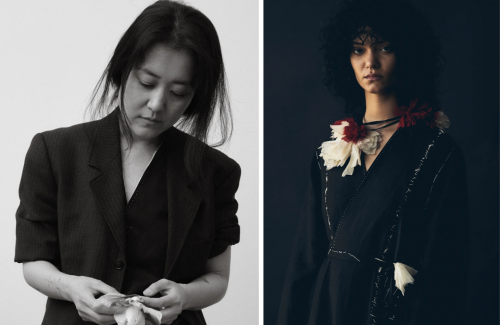
Each of us has a unique way of imparting the memories, stories, and mementos we want to pass on to our future generations. As for 39-year-old Japanese-American designer Sara Sakanaka, the way is by incorporating ancient tales into modern clothing.

In her studio in Brooklyn, Sara preserves a little drawstring bag that her grandmother sewed for her decades ago. One of Sakanaka’s oldest mementos, this heirloom represents a long-standing ideology and was made from leftover fabric.

You will also find in her studio, folded stacks of rescued textiles waiting for her to stitch them into something new, exactly like her grandmother used to do as a hobby.

After her grandmother passed away, Sara began studying the kimonos she had inherited from her. She realized that giving these garments a second chance through reconstruction was a means of healing and re-establishing her identity and cultural roots.

Her initial creation was a classic, collared, button-down shirt. She embroidered a tiered patchwork flower fashioned from leftover silk scraps inside each garment she produced.

“There’s this whole idea that objects have lives,” she says in a Vogue interview. “I like to see every piece as a truly considered object in that way,” thus, naming her label as Considered Objects.

Considered Objects offers tapered silk slacks, oversized coats, two-toned vests, draped dresses, and hand-sewn accessories. Each item is made of recyclable materials, and within each garment is a silk scrap flower and a tag. Each shirt comes with a drawstring bag, a keepsake designed to be handed on like the one she inherited from her grandma.

Image Source: Business Insider / Linkedin

Stories

These Two South Asian Millenials Are Breaking Cultural Barriers To Empower Women’s Financial Freedom and Literacy

“Our culture has countless strict gender roles, one of which is that men manage money and women don’t,” Aashka Piprottar, the founder of Boss Betis, told Wealthy Wolfe’s Parween Mander over email. “So while men get to discuss money openly and proudly, women, if they ever discuss it, do so in hushed, quick voices.”

Those gender roles convinced Aashka from a young age “that I was just destined to be ‘bad with money’ and I would just have to rely on my father — and then in the future, probably my husband — to manage the money for me,” she adds. 

Boss Betis is a community-based platform to destigmatize the conversation around money, specifically the unique challenges faced by desi women. The platform wants to instill that financial freedom and literacy are essential to women’s empowerment. 

While Wealthy Wolfe is a digital financial coaching & education platform for women of color from immigrant upbringings specifically.

Aashka also told Parween that she’s unlearned the harmful money narratives of her childhood through working in the wealth management and financial wellness space.

By 27, Parween had a $150,000 net worth, so she could support herself and her parents without feeling burdened. She advised that we must put on our financial oxygen masks first, as well as to start a  “Parent fund” account to save money for our families in case they need it, “This is a way to set a financial boundary so that you don’t feel resentful or sabotaged if they require funds from you.” Parween wrote on Business Insider.

Understanding the complexity of the South Asian culture, Parween has helped one of her clients to set up strategic savings accounts to separate her money, while still contributing funds when her client’s parents asked for it.

Parween affirms that cultural expectations and narratives play a huge role in their ability as South Asian women to make different decisions, especially when it comes to their money and building wealth. 

Image Source: Omakase Restaurant Group

Stories

Omakase Restaurant Group: How These Two Immigrants Went From Dishwasher And Busboy To Co-Founders

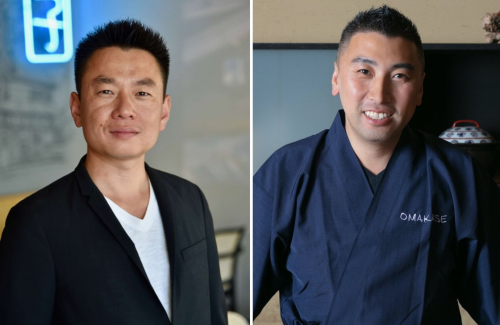
Kash Feng, co-founder and CEO of Omakase Restaurant Group, moved to the Bay Area at age 18. He was the only child of factory workers, so when he moved to the U.S. in 1999 with his buddies, he borrowed $20,000 from relatives and friends, promising to return them.

Feng started working as a dishwasher at a Chinese restaurant in the East Bay, and was quickly promoted to busboy. He progressed through various industrial occupations, frequently juggling three jobs at once, while also taking English classes.

In 2007, he met Jackson Yu, who eventually became his business partner and executive chef of Omakase sushi restaurant. Like Feng, Yu also had modest beginnings. At 16, he and his parents left China and moved to the Bay Area. 

Yu was a Japanese buffet busboy and gas boy on his days off. He was once asked to help out when the sushi chef cut his fingers one day. Yu then became so skilled that he could manually shape 2,000 identically sized sushi rice balls per day. Other sushi establishments took notice of this, including the well-known Ebisu in the Sunset, where he worked for five years to master sushi making.

They were both 26 when they decided to start their own restaurant business, Live Sushi, pooling all their savings and borrowing from relatives. Their restaurant was a hit from the beginning. Eventually, they were able to pay off all their loans, and the rest is history.

Now, Omakase Restaurant Group is an ever-growing empire, with different establishments all over San Francisco.

Image Source: Shark Tank

Stories

Software Engineer Turned Crocheting Hobby Into A Six-figure Business Takes $450k Deal on ‘Shark Tank’

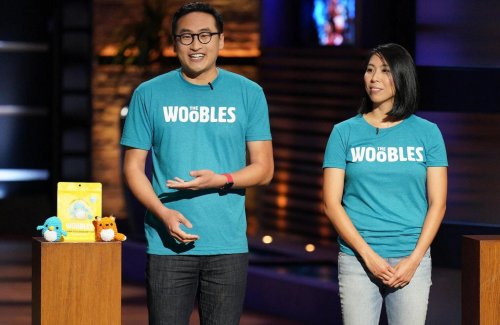
Justine Tiu, a former Google Classroom software engineer, started crocheting to unwind after work. After realizing its appeal, she and her ex-Wall Street director husband, Adrian Zhang, launched The Woobles, a crochet kit company.

On Friday’s “Shark Tank,” the two explained the hobby’s vast appeal. The firm made $3.1 million last year and $5.3 million since launching two years ago.

All five Sharks quickly decided they wanted a piece of the company, and they showed they were willing to betray their business partners to get it.

The Woobles is a crafting kit company that offers patterns, step-by-step video tutorials, and all the materials needed to do amigurumi crochet, a Japanese fiber art form, even if you are a complete beginner. Once your kit arrives with all the materials, a login code gives you step-by-step written and video instructions to make your craft and helpful hints when you get stuck.

Tiu and Zhang ultimately received a $450,000 investment offer from sharks Mark Cuban and Lori Greiner. In exchange, the company, which at the time of filming was on pace to generate $7 million in yearly sales, gave Cuban and Grenier a split of 6% equity.