Stories

March 17, 2023

SHARE:

Crystal was feeling emotionally and physically drained from her job before she finally decided to quit. She didn’t have any plans lined up when she did, which was very unlikely for her. So she decided to pursue something she’s passionate about – stickers and stationery.

Juice Box Club was molded out of creativity, perseverance, and determination. This small business has faced numerous hurdles along the way, from financial uncertainty to unexpected delays in product arrivals. But despite the challenges, Crystal has remained committed to her dream of sharing her unique designs with the world.

Crystal’s designs are inspired by real-life experiences, from personal passions like fitness and mental health to inside jokes with friends. And speaking of friends, Crystal recently launched a new collection of plushies called Boba Friends, inspired by her own friend group and their real-life pets.

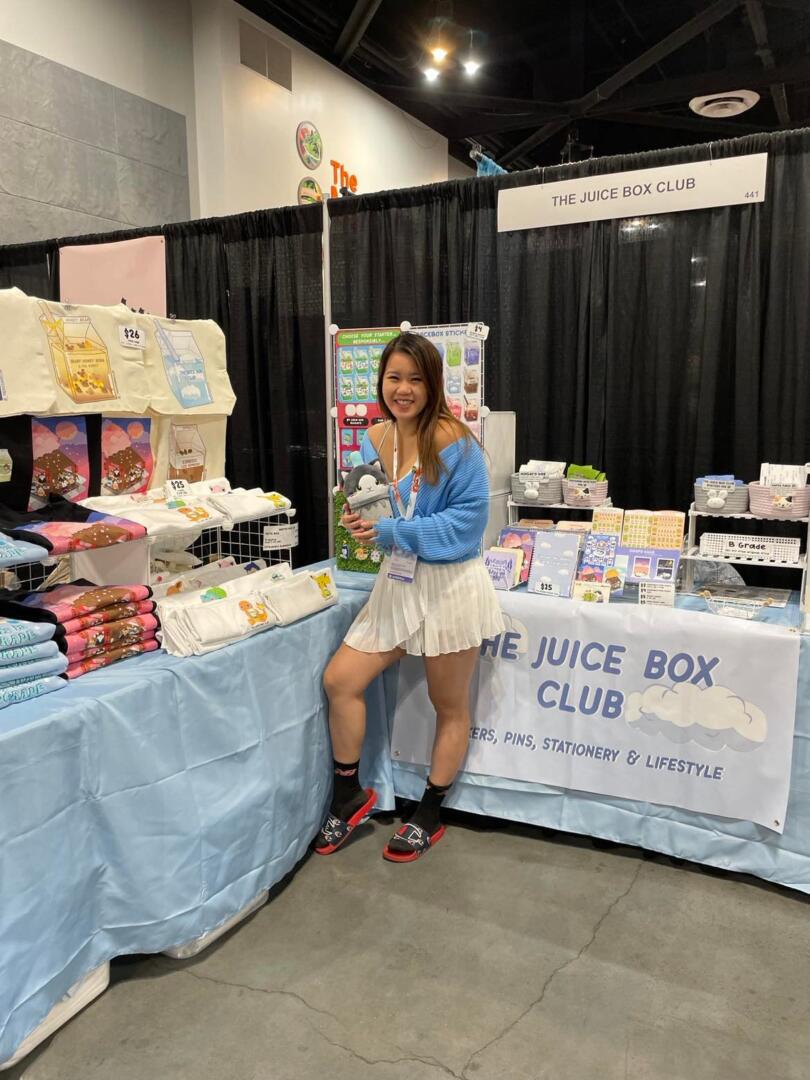
Now, her small business is more than just a sticker shop. She is now designing and selling lifestyle items (glassware, tote bags, apparel) and even plushies! Let’s dive into the story of how The Juice Box Club was born.

HOW THE JUICE BOX CLUB CAME TO LIFE

The process of setting up my own stationery shop was very nerve-racking and exciting at the same time. When I first started off, I used Etsy and I had a lot of support from people back home in New York City, where I was born and raised. However, when I learned that it took a huge chunk of the profits, I took it off and started my own website. I registered my shop as an LLC because I felt like this was going to be a long-term commitment.

I decided to start my own stationery shop because it was always a hobby and passion of mine. I would always collect envelopes, paper, and stickers. 

The concept of The Juice Box Club came from some drawings I did and then while I was sharing it with my friend, we were messaging about a cute name. The Juice Box Club kinda reminded me a little bit of The Breakfast Club, an extremely memorable movie, and that’s what I wanted my brand to be.

OVERCOMING BUSINESS HURDLES

The challenges I have faced circled around finance, having too many ideas, running it by myself, products not arriving on time, machines not working, and rejection.

Finance — in terms of not knowing if I’ll make any sales this week or the next. I do sign up for a lot of in-person pop-up events! I rely on that more than my online sales since the internet nowadays is so funky with algorithms. I also like interacting with customers because they have an opportunity to get to know the brand firsthand.

Having too many ideas — definitely a challenge because I didn’t wanna grow too fast and then have a bunch of inventory. I used to work in fashion and I was used to always developing NEW items. I felt like I had to do the same with my brand, but I realized that I don’t and it’s okay to slow it down. 

Running the business by myself — also pretty hard! Sometimes I would ask my friends if they’d want to help me at bigger events. But most of the time, I’m a one-woman team. I had to do everything from designing, packaging, shipping, content creation, handling emails, etc.

Products not arriving on time — There are times when I outsource items since I don’t have the time or the tools or make them. When I first started, I outsourced my stickers and they were LATE by 1-2 weeks. There was also another time when all of my plushies came EARLY and I had to store 12 big boxes (1,200 plushies total) in my garage and some in my house. 

My Cricuit machine was not working in the beginning — I was making and hand-cutting all my stickers. I gave my Cricut a break and went back and tried it again until it finally started to work properly.. after 5 months.  

Rejection is something I dealt with a lot growing up, so I thought I’m okay with it by now. But getting rejected by big conventions or wholesale sites hits differently. However, I learned to see it as dodging a bullet. If it’s meant to be, it will be, maybe at the right time.

DESIGNS INSPIRED FROM LIFE

Everything designed in my shop all ties into my life somehow. When I first started, I had seven juice box designs. Six of them were themed — three were inspired by my personal passion for fitness/bodybuilding and the other three were inspired by the importance of mental health because I’m a very functional-anxious person and have a hard time relaxing. 

Some of my juice box designs were inspired by my texts with my friends so you might find cute and funny quotes on them. For example, “broke b*tch juice” was inspired by my convo with my bestie, Beth, we always talk about how things are so expensive and how we’re always broke. Or if you see the Pokémon x Soju collection, it was a merge of my childhood and adulthood — because I grew up playing Pokemon with my brother and spent my college years pounding shots of soju.

The Juice Box Club Pokémon x Soju Collection

THE BOBA FRIENDS

Growing up, I didn’t have a consistent group of friends. Most of them just either change or grow apart. But when I moved to California, I met my best friend who later on introduced me to my current friend group.

Some of us in the group have pets, so I then designed characters based on our pets, and their personalities reflect the owner! I called them Boba Friends because boba gatherings are one of the most common hangouts to do now! They have different flavors as well. I own the two cats, Platinum and Luna. My best friend Beth owns Sesame, a lionhead rabbit, and my friend Justin owns Kona, the Shiba Inu. Now none of us owns a bear or frog but I dedicated Ribberto the Frog and his personality to my late friend Josh because it was his favorite.

The Boba Friends Plushies

In the future, I plan to continue producing more drawings and products for The Juice Box Club. I hope to have my products in shops and stationery stores. I am also working on a YouTube channel to show my journey and reach more people.

Website: www.thejuiceboxclub.shop

Instagram: @thejuiceboxclub
Related Articles

Memphis Flyer-jpg

News

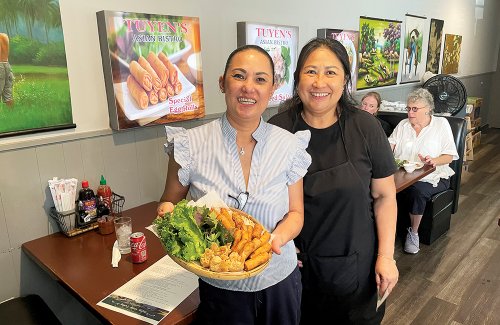
Tuyen Le’s Inspiring Journey from Being a Reluctant Server to a Beloved Chef and Restaurant Owner

Tuyen Le, the owner of Tuyen’s Asian Bistro, has come a long way from her days as a server at her family’s old restaurant, Saigon Le.

Tuyen’s mother opened Saigon Le in 1992. She joined her family at the restaurant, planning to only stay for a day. But she ended up dedicating over 30 years to the establishment. Saigon Le became renowned for its unique dishes, like the little-bitty egg rolls wrapped in lettuce with a special sauce that attracted celebrities like Woody Harrelson, Cybill Shepherd, and MTV’s Jeff Buckley.

When she was working as a server in Saigon Le, Tuyen had a gambling addiction which was evident in the way she served. According to Memphis Flyer, Tuyen didn’t like being a server, but her mother forced her to be one, saying that she can’t say no to her mama.

When Tuyen decided to quit gambling, she turned to cooking. She claimed that she didn’t know she was good at it, until everything she cooked turned out to be good.

Eventually, Tuyen pursued other ventures and started a seafood restaurant named “New Orleans Seafood,” where she served crab legs, lobster, and other items, but no Asian food. However, economic challenges, exacerbated by the pandemic, led to its closure.

Customers were longing for the return of Saigon Le’s authentic Vietnamese flavors, so Tuyen opened Tuyen’s Asian Bistro. Located at 288 North Cleveland, the tiny restaurant focuses solely on Vietnamese cuisine.

Though Tuyen’s Asian Bistro may be small, it is undoubtedly big on flavors and hospitality. Tuyen ensures that every guest feels welcomed and cherished throughout their dining experience, treating them as family.

Featured Image Source: Memphis Flyer

ezgif.com-webp-to-jpg-jpg

News

Asian American Writer Runs a Workshop in His Apartment to Support His Career and Help Aspiring Writers

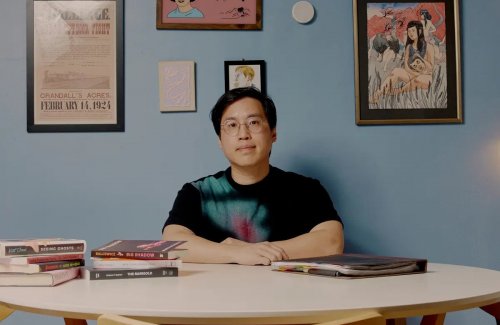
Tony Tulathimutte, an accomplished literary author, has established a unique side hustle that supports both his writing career and aspiring writers.

His writing workshop, Crit, held in his Brooklyn apartment, attracts eminent guest speakers and launches the careers of new authors. Renowned figures such as Jonathan Franzen, Hua Hsu, and Carmen Maria Machado have participated as guest speakers.

Tulathimutte’s success, including an O Henry award and the sale of his second novel, Rejection, inspired him to create Crit. The class tackles topics like money management for writers, which is crucial in today’s challenging writing landscape, where traditional media companies and publication venues are shrinking, and making a living as a writer is becoming increasingly difficult.

According to The Guardian, Crit accommodates nine students per session, meeting twice a week over two months and costs $800 per spot, amounting to an annual income of approximately $30,000 for Tulathimutte. To supplement his earnings, he takes up freelance writing assignments, visiting faculty positions, and currently serves as a thesis adviser at Brooklyn College.

Over the years, Crit has not only become a successful side venture but also fostered a thriving community of writers. Tulathimutte encourages alumni interaction through book swaps, parties, and a dedicated Slack channel, providing opportunities for aspiring authors to connect with potential agents or editors.

While Crit students have achieved 12 book deals to date, Tulathimutte remains humble about his role in their success. He believes many of them would have succeeded eventually, but he takes pride in offering a high-quality writing workshop that aids their growth.

Featured Image Source: The Guardian

Generic Aadhaar-jpeg

News

Young Indian Built a $60M Startup to Provide Accessible Medicine

At just 21, Arjun Deshpande has made a significant impact on India’s pharmaceutical industry.

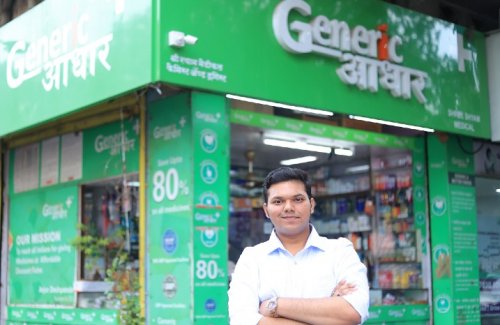
His entrepreneurial journey began during college when he witnessed the struggle many people faced in accessing affordable medicine. At just 16 years old, in 2018, he founded Generic Aadhaar to offer a range of low-cost generic medicines as an alternative to expensive branded drugs typically found in traditional pharmacies.

Today, Generic Aadhaar not only provides generic medicines online but also operates a network of franchises offering discounts ranging from 80% to 90%. Arjun has caught the attention of renowned industrialist and philanthropist Ratan Tata, who was deeply impressed by Arjun’s vision after listening to his inspiring TED talk. With Tata’s support and backing, Generic Aadhaar is now worth approximately Rs 500 crore or 60 million dollars.

Arjun’s remarkable achievements have been recognized both nationally and internationally, landing him on prestigious lists such as Forbes 30 Under 30 Asia and Fortune India 40 Under 40. He also received from President Droupadi Murmu, who called him as the “wonder kid of pharma” and acknowledged the company’s significant contribution to the country’s economic growth.

Looking ahead, Arjun plans to expand Generic Aadhaar’s operations to several countries and open stores in Oman, Dubai, Colombia, and Vietnam.

His inspiring journey not only motivated many young individuals to pursue entrepreneurship and create positive change, but also gave hope for millions of Indians who can now access affordable medication through Generic Aadhaar.

Featured Image Source: Generic Aadhaar

Impact Team Photo

Stories

Three Cal Students Launch Plant-Based, Sushi-Grade Tuna to Pave the Way for Seafood Sustainability

The effects of climate change are becoming increasingly evident today. This is why three visionary individuals came together to address one pressing issue: the unsustainable practices in our food system, particularly regarding seafood.

Kelly Pan, Adrian Miranda, and Stephanie Claudino Daffara, the founders of Impact Food, combined their diverse expertise and unwavering commitment to create a positive impact.

Driven by a shared passion for food innovation and ocean sustainability, they embarked on a journey to revolutionize the concept of seafood. Through meticulous research and cutting-edge technology, by studying the composition of animal-based seafood and leveraging their knowledge in food science and molecular biology, they developed their first product, Impact Tuna.

With Impact Food, Kelly, Adrian, and Stephanie strive to redefine the way we approach food. By choosing plant-based seafood, individuals not only enjoy a delectable culinary experience but also contribute to a healthier future for our planet, our oceans, and ourselves.

Read through as we learn more about the remarkable journey of Impact Food and its founders, Kelly, Adrian, and Stephanie, through an exclusive interview with Asian Hustle Network.

IMPACT FOOD’S DYNAMIC FOUNDER TRIO

In January 2020, we met while studying at UC Berkeley in renowned scientist and entrepreneur Dr. Ricardo San Martin’s Alternative Meat Challenge Lab, a product-design-based entrepreneurship course that examines how food is made and why alternative meats are a key solution to creating a more sustainable food system.

A passionate foodie-business student (Kelly), a vegan home chef-computer science student (Stephanie), and a scientist-biochemistry student (Adrian) found each other and decided to combine their fields of expertise to work towards a shared passion for food innovation and ocean sustainability. 

REDEFINING SEAFOOD SUSTAINABILITY

We were inspired by the innovative solutions we saw in terrestrial meat products like beef and chicken, and the science behind creating them. As we brainstormed in class for a protein alternative that could become the center of the plate, we realized that seafood was a wide white space in dire need of new solutions.

With an ever increasing global population, the conventional seafood industry (e.g. commercial fishing and aquaculture) continues to overfish and deplete our oceans but is still unable to keep up with rising seafood demand. 90% of fish stocks have been used up, and we’re rapidly losing biodiversity and destroying marine ecosystems which support all life on our planet, so we need to take action now before it is too late.

This is when we knew we were on a mission to reimagine a more sustainable food system through delicious and nutritious seafood created using plants and scientific innovation. Through Impact Food, we would be able to do our part in alleviating pressure on our oceans and transform our global food system to be better for our people, planet, and animals.

OVERCOMING OBSTACLES IN PLANT-BASED SEAFOOD INNOVATION

At Impact Food, one of our core values is “Delicious Innovation” – to always develop the tastiest, high-quality food.

All seafood species have a very unique, complex taste and texture profile, so we knew that it would be challenging to recreate the sensory experience of conventional seafood. To overcome the challenge of developing realistic seafood texture, we focused heavily on R&D and consulted with industry experts from chefs to scientists and seafood purveyors to truly understand the composition of fish. This knowledge combined with a lot of experimentation allowed us to match the subtle ocean flavor, nutritional profile, and delicate texture of species like bluefin tuna.

Another challenge we faced was scaling our proprietary seafood texturization technology. We were very fortunate to bring on a talented bioprocess engineer last fall, who helped us scale our process and significantly accelerate our commercialization timeline.

IMPACT FOOD’S UNIQUE SEAFOOD PRODUCTION PROCESS

The process of making our first flagship product (raw sushi-grade Impact Tuna) began with extensively studying the scientific composition of seafood and developing a proprietary production process using plants and biotechnology.

Our novel food technology platform relies on our unique texturization process that optimizes and transforms our seafood base (a blend of plant ingredients such as pea protein, algae, & vegetable juice) into a whole-muscle structured seafood product.

In addition to completely removing animal fish from the seafood supply chain, our plant-based seafood is a more sustainable food choice that can always be consistently supplied with exceptional quality. Due to supply chain volatility, the quality and pricing of animal-based seafood products are constantly in a state of uncertainty and harm the entire food system. 

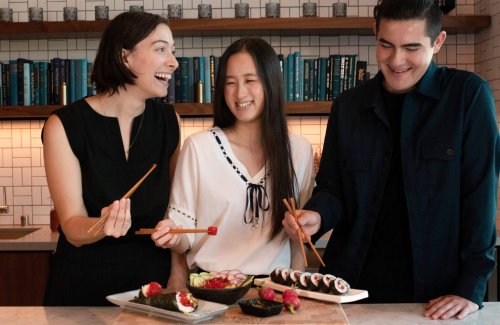
Therefore, we developed a craveable, true replacement for sushi-grade tuna with under 10 plant ingredients and a longer shelf life than conventional tuna. Our product is also high in omega 3, protein, fiber, and potassium with none of the negative consequences such as overfishing and mercury contamination.

IMPACT FOOD’S EFFORTS IN RAISING AWARENESS

Since food is a very social and cultural experience, we realized that we needed to collaborate with the food service industry to reinvent the seafood consumption experience while remaining authentic to traditional cuisines.

Restaurants, chefs, and cafeterias (e.g. corporate and college campuses) play a critical role in introducing customers to new culinary experiences, encouraging trial, and familiarizing them with plant-based seafood and its benefits. By adding these sustainable options to their menus, they are also able to influence a wider audience and drive market demand for seafood alternatives.

Recently, we launched Impact Tuna in Southern California at Pokeworks and became the first fish-free seafood ever offered at the world’s leading poke chain with 65+ locations across the US and internationally. Pioneering this novel dining experience with Pokeworks is a major step for us in creating large-scale demand for sustainable eating and bringing plant-based seafood to the masses.

In addition to our food service partnerships, we also utilize channels such as social media to raise awareness about the benefits of plant-based seafood. Although we only sell our plant-based seafood ingredients to food service, we still prioritize connecting with end consumers via the visual and informational content we share on channels such as Instagram and TikTok.

Recent media coverage about the unsustainable and inhumane practices involved in commercial fishing such as the Seaspiracy documentary has also been immensely helpful in generating awareness about an obscure and complex seafood industry.

SCALING WITH QUALITY AND ENVIRONMENTAL CARE

We have begun commercial production and are currently building out our own manufacturing pilot plant to ensure high-quality control and consistency of our food innovations.

Because our proprietary process can use standard equipment that is traditionally used in other industries, we can reach price parity with conventional seafood and scale to high volumes very quickly. We are continuously investing our resources into R&D and optimizing our supply chain so that we can constantly innovate, and maintain product quality while scaling our production.

To meet increasing market demand while ensuring the quality and sustainability of our products as we scale in the US and soon internationally, we are also building strategic partnerships with and collaborating with other companies (e.g. foodservice distributors, suppliers, restaurants, startups, etc.) to strengthen the ecosystem for sustainable protein solutions. Together, we’ll be able to develop and scale products with better taste, texture, and nutritional value.

IMPACT FOOD’S FUTURE OF DELICIOUS PLANT-BASED SEAFOOD

Our primary driver at Impact Food is to make a positive global impact by creating a future of food that can sustainably feed the world while protecting our oceans and marine life.

We strive to create a global impact and movement of consumers eating more consciously and sustainably. To do this, we need to make our innovations available and accessible everywhere our consumers eat, around the globe.

Today, we’re excited to continue scaling our production, onboard more food service partners, and expand distribution to major markets for seafood such as Japan. Our goal is to reconstruct the center of the plate with a new, tastier whole-muscle seafood experience that is healthier for you and the planet without harming any animals.

Impact Tuna is just the beginning, and we’re excited to leverage our seafood technology platform to expand our product pipeline and recreate various other seafood species using plants. Stay tuna’ed and join us on our voyage to revolutionize the global seafood system. 

CONNECT WITH IMPACT FOOD

Website: eatimpactfood.com

Linkedin: Impact Food

Tiktok: @eatimpactfood

Instagram: @eatimpactfood

Facebook: Impact Food

Twitter: @eatimpactfood