Stories

November 21, 2023

SHARE:

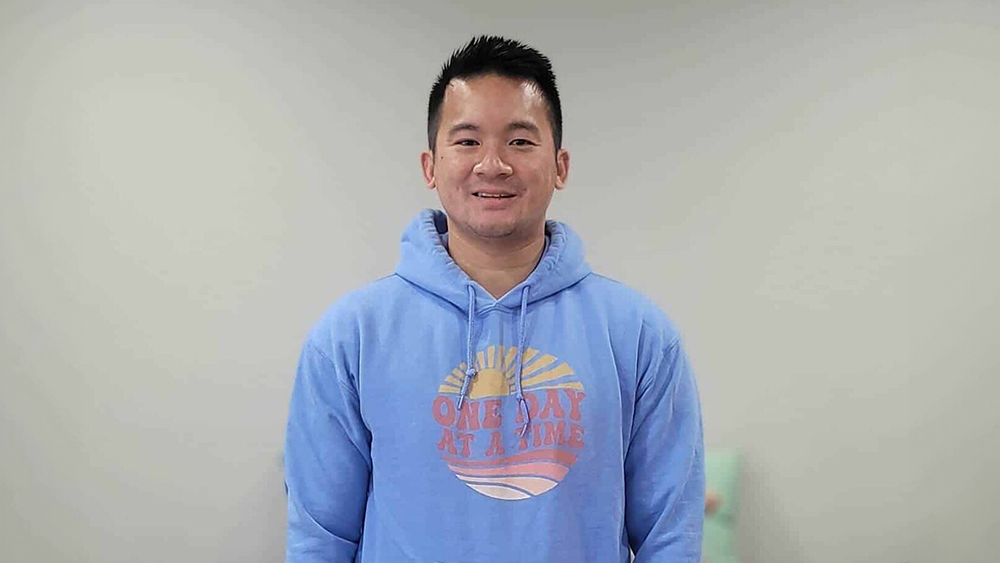
Having experienced homelessness himself, Alex Nguyen knows firsthand how challenging it can be to not have even the basic essentials.

Growing up as a first-generation Vietnamese child, raised by a single mother who had him at a young age, Alex faced many challenges that most of us can’t even imagine. But instead of letting his difficult past define him, he decided to take action. This is what inspired him to start Project Peace Clothing.

Alex admits that he has dealt with some trauma and mental health issues growing up, and for this he decided to undergo a three-and-a-half-year therapy. Now, Alex is a mental health nurse, slowly working towards his psychiatric mental health nurse practitioner degree. He’s passionate about helping people who struggle with mental health issues, especially those in the addiction population and the homeless community.

Through his clothing line, Alex is not only advocating for mental wellness and women’s empowerment, but he’s also helping the homeless community. For every purchase from Project Peace Clothing, Alex gives another homeless person not just the basic survival needs like food and water, but also a piece of clothing to help keep them warm on cold nights.

Alex’s past has made him more compassionate and empathetic towards homeless people, and he’s using his experiences to make a positive impact on the world. He believes that intentional acts of kindness, even if unnoticed, can cause a ripple effect that touches the lives of many.

Join us as we take a closer look at the inspiring story of Alex Nguyen and his mission to spread peace, love, and kindness through Project Peace Clothing.

MOVING FROM PLACES TO PLACES

Alex’s mother was only 17 years old when she became pregnant with him by his father, who fled the country when Alex was just one year old. Growing up was challenging for both Alex and his mother, as they never had a stable place to live. They frequently moved from place to place because the rent was difficult to pay, and there were times they slept in their car or rented a motel day by day. While his mother was at work, Alex was often left with other relatives, and she eventually dropped out of college to support him.

During his college years, Alex continued to face challenges. He lived in a garage at a friend’s house for several years and worked two jobs while studying. He even had to carpool with two friends because he didn’t have a car, and he didn’t have any support besides himself. Despite all of this, he persevered and graduated in 2017, hoping that his life would finally turn for the better.

A SENSE OF FULFILLMENT AND HAPPINESS

Growing up in an unstable household without a parental figure to guide him, Alex learned everything on his own and developed a survival mentality. He made friends and reached out to distant relatives for support, and started working at a young age to make ends meet. For a long time, he believed that money was the solution to all his problems.

After graduating and becoming a nurse in 2018, Alex began working over 60 hours a week. It was also around this time that he  realized he was suffering from mental illness. He had been independent for so long that he didn’t realize the toll it had taken on his mental health.

By 2021, Alex was working three jobs and neglecting his physical and mental health. One day, while at work, he permanently damaged his lower back when he tried to catch a falling patient. 

He was forced to leave two of his three jobs and had time to reflect on his life. It was during this period that he realized that caring for others, particularly those suffering from mental illness, gave him a sense of fulfillment and happiness. He realized that money did not bring him happiness.

Alex started transitioning to become a mental health nurse and is now pursuing a degree as a Psychiatric Mental Health NP. He finds peace and happiness in helping those in need and believes that this is his true calling in life.

PROJECT PEACE CLOTHING

Alex’s own experiences with homelessness growing up inspired him to start Project Peace Clothing. He remembers the freezing nights sleeping in his car and can empathize with those who are currently experiencing homelessness. He believes that his ability to put himself in other people’s shoes and feel their suffering comes from having experienced similar hardships himself. Alex cares deeply for those without housing and acknowledges that many people struggle to empathize with the homeless due to stereotypes and misconceptions.

While working as a nurse, Alex would create care packages for those without housing, which he would distribute during the day or at night. He would buy supplies from Costco and Walmart, put them together in bags, and leave a few in his car to hand out when he saw someone in need. However, he wanted to do more than just provide care packages. He wanted to provide clothes and warmth to those who need them, particularly at night when the temperatures drop.

This desire to make a bigger impact led Alex to start Project Peace Clothing. Through this initiative, he hopes to provide warmth and comfort to the homeless community by distributing blankets, jackets, hats, and other clothing items. Alex’s firsthand experience with homelessness has taught him the importance of basic necessities such as warm clothing, and he is passionate about helping those in need.

The Empower Women collection was inspired by Alex’s girlfriend of 10 years. “I wouldn’t be here today without her,” he said. This collection aims to promote positive messages that make women feel good and valued.”

THAT WAS PEACE

Project Peace Clothing has had a significant impact on the community so far, despite its small scale. As a nurse and student, Alex dedicates his time to helping people both at work and outside of work.

Alex also shares a heartwarming story about a recent encounter he had while ordering one of his favorite desserts called che, a Vietnamese dessert:

“I saw a young homeless Asian pacing back and forth in front of the shop. He reminded me of myself, and something deep inside me wanted to talk to him. I asked him, “Hey, are you hungry? Do you want anything?” He responded that he wished to have the Che 3 Mau, but here at the Hien Khanh, there are a few options, so I got all of the possibilities with some extra savory food for him to share with others.

As I gave him the food, I remember he told me, “How’s your day?” I responded, “It’s good, thank you.” I walked back to my girlfriend, and when I was about to reverse, I saw him in my mirror, looking up into the sky after sipping the dessert drink. To me, that was peace.”

ADVICE ON MAKING A POSITIVE IMPACT IN THE COMMUNITY

When asked for advice on how to make a positive impact on one’s community, Alex recommends following one’s passion and seeking to understand the specific community or population one wishes to help. This may involve volunteering and actively engaging with members of the community. Alex stresses the importance of being open-minded and actively listening, with the intention to both attend and talk. He believes that this approach can be life-changing and can make a meaningful difference in the lives of others.

CONNECT WITH ALEX

Website: projectpeaceclothing.com

Instagram: @projectpeaceclothing

Facebook: Project Peace Clothing
Tiktok: @projectpeaceclothing
Related Articles

Spectrum News-jpg

News

Young Entrepreneur Olivia Huynh Rockets to Success with Unique Bubble Tea Shop

In the heart of North Texas is an extraordinary 11-year-old, Olivia Huynh, with big dreams and ambitions as diverse as acting, singing, and artistry.

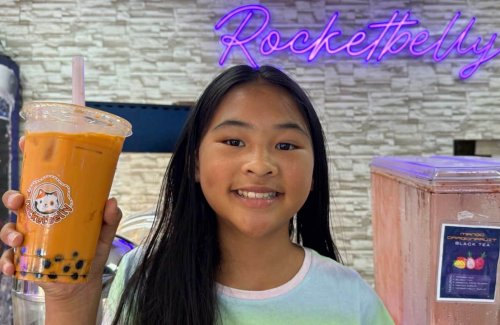
At her young age, Olivia is the proud owner of Rocketbelly, an Arlington-based bubble tea shop claiming to be the sole self-serve boba tea destination in Texas. “She really is the owner,” said Olivia’s mother, Mary Huynh, to Spectrum News. “She thought of the concept and runs the place. Most of the money we used came from money she’s earned in modeling and acting gigs.”

Olivia was 4 years old when she expressed her desire to be in movies. Her mother created a YouTube channel, featuring a young Olivia’s DIY arts and crafts, sweet treat tutorials, and imaginative gift ideas. Simultaneously, Olivia started auditioning for commercials, landing roles in major brand advertisements.

As for Rocketbelly, the outer space-themed shop opened its doors in the fall of 2022,  offering a diverse range of 10 milk tea and two fruit tea flavors, along with 28 different toppings, including freshly made boba.

Image Source: Spectrum News

The Huynh family has ambitious plans to expand Rocketbelly to multiple locations across North Texas, while Olivia remains resolute in pursuing her acting career with the full support of her family.

Featured Image Source: Spectrum News

jennfinalimages-197-jpg

Stories

This Couple Created a Mahjong Inspired Game That Celebrates Diverse Cultures

Meet Jennifer Guo and Adam Szakacs, a couple with a creative vision. They wanted their child to cherish both her Chinese and Jewish roots, despite living far from family. So, they invented something extraordinary.

Inspired by their grandmothers’ unexpected friendship over mahjong, they reimagined the game as “Not Your Ma’s Jong.” This isn’t just any game; it’s a lively card version of mahjong that celebrates their backgrounds. It carries a powerful message – embracing your heritage and sharing it with others is something to be proud of.

Through Not Your Ma’s Jong, Jennifer and Adam hope to bring people closer. By sharing traditions, they aim to show that understanding each other’s cultures can create harmony.

In an exclusive interview with Asian Hustle Network, Jennifer and Adam share their journey in creating “Not Your Ma’s Jong.” Read through as we get a glimpse of how this game could help forge connections and celebrate diverse cultures.

Whether celebrating certain holidays, traveling together to meaningful places, or simply making a memorable recipe together, spending quality time together is the most important thing – and playing a game like Not Your Ma’s Jong is one way to spend time together.

Jennifer Guo

Can you tell us about the inspiration behind creating Not Your Ma’s Jong and how it connects to your Chinese and Jewish heritage?

Jenn: I learned how to play mahjong as a kid by watching my grandma play in China. Mahjong was a part of our daily lives and at the center of every family occasion. For me, mahjong is a way to connect with those memories.

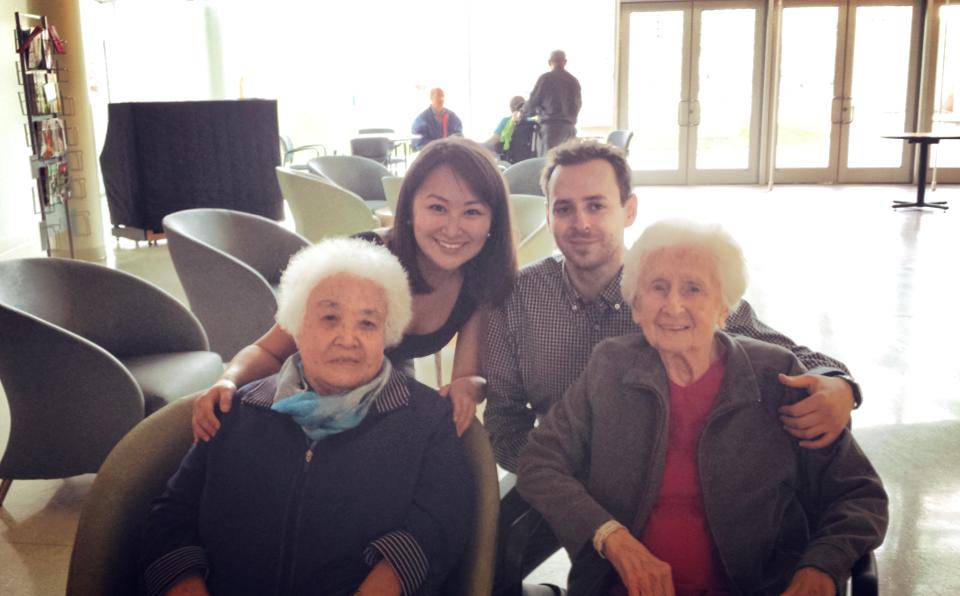
My grandma used to split her time between her home in Xi’an, China, and Toronto where she stayed with my parents. In 2014, we brought my grandma to visit Adam’s granny who was healing from a hip injury. My grandma speaks only Mandarin, so we started by translating some simple hellos and small talk. It was so special to have them meet and communicate with each other.

Adam: At one point, we were talking about their respective cultures and the things they enjoy. My granny plays a lot of card games and also mentioned mahjong. Jenn’s grandma’s eyes lit up, and she told us about playing throughout her life. Jenn’s grandma is certainly the more avid player, but once my granny’s hip recovered and she was back home, they were able to play together.

Jenn: When I was pregnant with our first daughter in 2018, we started thinking about how we could connect our children with their cultures and heritage. I realized that living in Canada, they would not have the same exposure to Chinese traditions like mahjong as I did growing up. We started thinking about ways to honor the memories we had of growing up with our parents and grandparents and decided to create a simplified version of mahjong, which became Not Your Ma’s Jong.

Jenn and Adam with their grandmas

As an international card game played around the world, what do you believe makes Not Your Ma’s Jong unique and appealing to a diverse audience?

Adam: We realized that even though our grandparents played mahjong and we played with them, we never played with our friends. We started asking around and kept hearing the same thing–most of our friends had heard of mahjong or seen their families play, but few knew how to play themselves.

Jenn: Not Your Ma’s Jong is a simplified version of mahjong, using 75 cards as opposed to 144 tiles in the traditional game. The rules are also simplified to create a fast-paced and fierce game that anyone can pick up quickly. When we started playing test versions with our friends, the excitement showed us we were on to something!

Could you share some examples of how you incorporated Chinese and Jewish emblems into Not Your Ma’s Jong? How do these cultural elements enhance the gameplay experience and foster cultural understanding?

Jenn: We wanted to dedicate the game to our grandmas. Many of the cards are symbols from growing up with them – some with Adam’s Jewish granny, and some with my Chinese grandma. Some center around memories of family feasts we’d eat together, gifts they’d give us, or how they made us feel – and while the symbols are specific to our cultures, those memories and feelings are universal.

Other cards are a bit whimsical – we imagined what their friendship could have been if they had lived near each other earlier in their lives. Things like doing tai chi together in a park, or building a muscular snowman together! We wanted to make them relatable for people who grew up in any culture, with special winks for people who grew up Chinese or Jewish.

What are some of the challenges you faced while developing and popularizing Not Your Ma’s Jong? How did you overcome those challenges, and what lessons did you learn along the way?

We had a lot of fun creating Not Your Ma’s Jong – but turning it into a product and making people aware of it was hard! After the initial Kickstarter campaign, the remaining games sat in our home for over a year until we started to get some media attention. We were fortunate that a blog article turned into a newspaper feature which then got our story and the game featured on TV twice! Hasbro took an interest at that point, licensed the game and it’s now being sold around the world. This showed us that people love it once they hear about it! That initial exposure was the hard part.

Can you share any heartwarming stories or feedback you have received from players of Not Your Ma’s Jong?

Adam: The initial Kickstarter campaign was a very personal experience for us. We received stories and repeat orders from some of the earliest recipients of the game, sharing how they played with their parents, children, or nieces and nephews, and how it caused them to reminisce about their own family stories when they saw the illustrations on the cards. We still love getting emails and seeing reviews from people who feel a connection to the game.

What advice would you give to individuals or families who are seeking to explore and celebrate their own cultural heritage? How can games like Not Your Ma’s Jong play a role in this process?

Jenn: It was important to us to not let our families’ cultures and memories fade away for our daughters, and creating this game was one of our ideas to do that. I know it’s hard – especially with young kids – but I think it’s important for parents to think back on their childhoods and choose some of the traditions that they want to continue with their children. Whether celebrating certain holidays, traveling together to meaningful places, or simply making a memorable recipe together, spending quality time together is the most important thing – and playing a game like Not Your Ma’s Jong is one way to spend time together.

In conclusion, what message or lasting impact do you hope Not Your Ma’s Jong will leave on players and society as a whole?

Jenn: The world can sometimes feel so divided – we hope people see this game, and the story behind it, as a small example of how people with different cultural backgrounds and languages can find common ground and develop a friendship. We hope they get a glimpse into Chinese and Jewish cultural experiences and relate with their own experiences too!

CONNECT WITH NOT YOUR MA’S JONG

Instagram: @notyourmasjong

Threads: @notyourmasjong

Website: notyourmasjong.com

People Daily-png

News

Meet The Chinese Pancake Shop Owner with Exceptional Calligraphy Skills

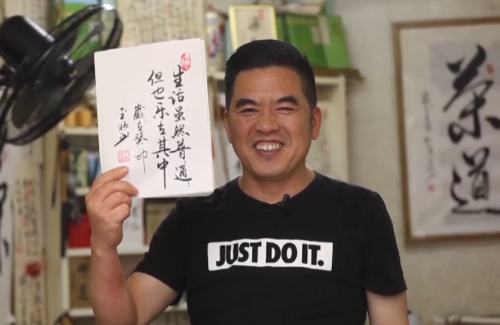
Mastering the art of calligraphy has transformed Kang Jinming, a humble 50-year-old proprietor of a cozy pancake roll shop, into a local sensation known as “the calligrapher at a pancake shop.” Situated in the heart of Hefei city, the capital of China’s Anhui Province, Kang’s unassuming establishment is renowned for its delectable stuffed pancake rolls, a favorite among the locals.

Over weekends, as customers savor their pancake rolls, Kang surprises them with a small yet significant gift—a carefully composed note featuring a line of poetry, a fragment of prose, an age-old adage, or a beautifully scribed Chinese character. Most commonly, the characters for “Le” (joy) and “Qu” (fun) are included in these tokens.

For 30 years, while taking care of his shop, he practiced calligraphy. When there are no customers around, Kang quietly sits at a small table and practices his writing with a brush. After closing his shop, he continues on bigger pieces of paper. His love for calligraphy makes him use anything he can find to write on – old books, newspapers, and even cardboard.

Kang’s establishment has become a local attraction, drawing both online attention and physical visits from locals and tourists alike. Looking to the future, Kang aims to create a few calligraphy pieces and have them framed as a legacy for the next generation.

“That’s what lies in the innermost part of my heart—knowing that I’ve left something in the world and society and that I’ve been happy doing what I love. I will be content with my life,” he shared with People Daily.

Featured Image Source: People Daily

Asian journal-jpg

News

How Plants Became a Source of Hope During the Pandemic for Peter Dario

When tough times hit during the pandemic, people everywhere turned to plants for comfort. Lockdowns and worries made people feel alone, but planting things brought them joy and hope. Terrace Plant Shop is an example of this.

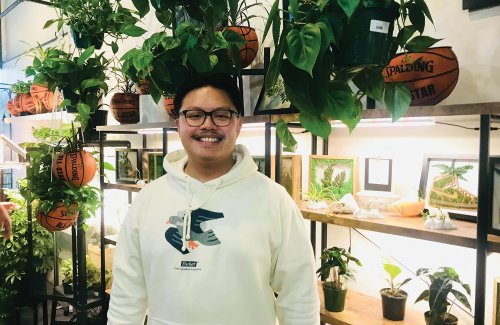
The proud Filipino-American owner, Peter Dario, faced a big tragedy two years ago, when he lost his dad and grandpa to COVID-19. This was really tough for his family. To help heal, they started getting into plants, even though Peter wasn’t into them before.

Peter wasn’t sure if it would work at the beginning. But despite the uncertainty, he took the leap.

Terrace Plant Shop goes beyond being a store – it stands as a symbol of resilience. People who also navigated pandemic struggles found hope in its story. It proved that even when things are tough, positivity can grow.

Beyond plants, the shop offers an array of treasures like soil, pots, and even candles. Among the diverse plant offerings, the Monstera Adansonia, with its striking heart-shaped leaves, steals the spotlight. The “Friendship Plant,” or Pilea Peperomioides, is another crowd favorite. Its low-maintenance nature and cheerful appearance are a hit.

Terrace Plant Shop also offers workshops that teach people how to craft terrariums, miniature plant havens. These interactive sessions cater to groups and teams, fostering creativity and connection.

Featured Image Source: Asian Journal