Stories

November 8, 2023

SHARE:

Postpartum care is a critical period for new mothers, yet it is often overlooked in our society.

Many women struggle with physical and emotional changes after giving birth, and the lack of support and attention to their needs can lead to postpartum depression and other health issues. This is why Dr. Kristal Lau’s book on postpartum care is a crucial addition to the conversation.

When Kristal joined the AHN community two years ago, she was still pivoting out of her medical career. She shared that her mom has been encouraging her to pursue her idea of writing a book on Malaysian Chinese postpartum confinement practices and include notes from her medical background.

During her confinement month after birthing her first child, Kristal compromised with her mother to modernize some of the confinement practices by medical logic. With a balance of traditional Chinese and modern postpartum care, her book provides a comprehensive guide for modern moms to take care of themselves during this important time while feeling connected to their Chinese roots.

In this article, we will dive into Kristal’s journey as an author. We will also explore why postpartum care should be a mainstream topic and why it is important to prioritize the health and well-being of new mothers.

BECOMING A MOTHER OF TWO

I practiced medicine in Australia as a Basic Physician Trainee before moving to the USA and would’ve chosen to specialize in geriatrics medicine if I hadn’t met my husband.

Ironically, I’ve chosen to work in the perinatal world now, because I used to actively avoid seeing pregnant women patients when I was a junior doctor. I felt intimidated by the responsibility of two lives and potentially more if the patient already had children.

Becoming a mother of 2 while facing the challenges of a modern immigrant from South East Asia to the West (and being a US military spouse) opened my eyes to the importance of postpartum care in setting mothers up to thrive in the postpartum year and beyond. Especially when I was planning for my first confinement practice and had to adapt things to where we were living in rural Alabama. From this experience, I decided that contributing to a small part of the perinatal industry was fitting.

POSTPARTUM 30: THIRTY DAYS TO A NURTURED FOURTH TRIMESTER

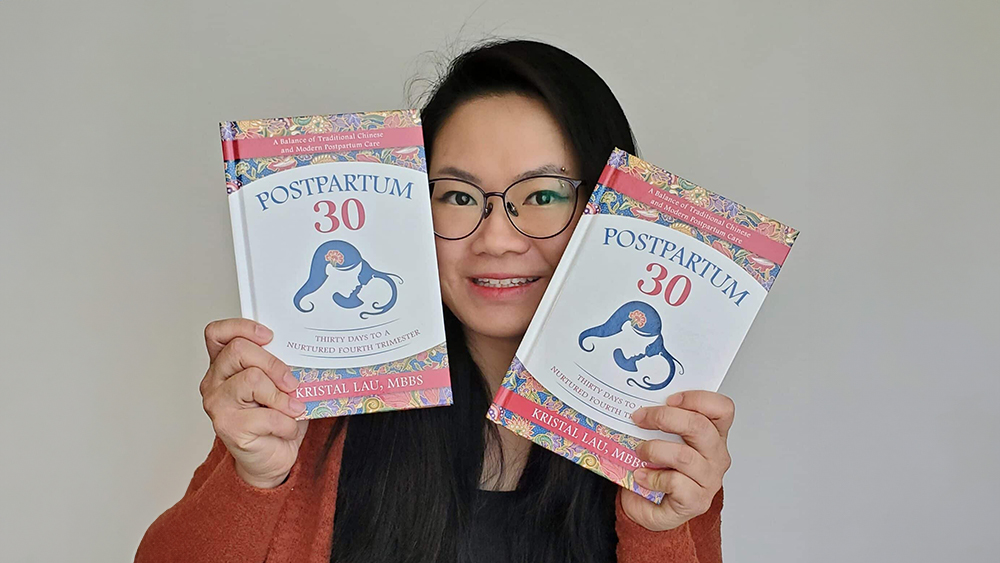
The core message of my book entitled “Postpartum 30: Thirty Days to a Nurtured Fourth Trimester” is about preserving a traditional and cultural practice so that it remains relevant to current and future generations. Otherwise, we’d forget!

So, the key components of my book showcase the best of both worlds. I discuss postpartum physiology (what we know today about how the birthing body recovers after birth) and basic Traditional Chinese Medicine (TCM) principles around the postpartum body. 

I have chapters dedicated to adapting confinement practices to fit a modern mom and her family’s needs and lifestyle. I also guide readers on how to respectfully tell their mothers or mothers-in-law that they’d like to practice a modern version of confinement and include them in the picture.

MODERN MOMS WITH CHINESE ROOTS CAN EASILY BENEFIT FROM THIS BOOK

Firstly, it’s written in English! Readers don’t have to know any Mandarin or Chinese dialects (just like me!) to understand the TCM and confinement concepts I discuss in the book.

Secondly, I include historical references about the confinement practice and discuss why certain practices made sense to our ancestors. Finally, I challenge two aspects of the traditional confinement practice head-on. I encourage readers to embrace all the emotions that come with the chaos of the postpartum period instead of pushing them away. And I encourage spouses and partners to be the main confinement support person rather than another family member.

PUBLISHING MY BOOK HAS BEEN VERY SURREAL

I fully invested in writing this book after the overwhelming support from Asian Hustle Network group members when this book was just an idea. I also appreciated the nuances brought up by the AHN members in that defining post which added more to developing my book’s content. My first beta readers were also from the AHN community!

I’ve always wanted to be an author ever since I was a teen, so I can’t believe that I’ve done it! The book has also allowed me to represent a small part of Malaysian and Chinese culture to the world. Plus, it’s my biggest ticket away from medicine and into carving out an unconventional career that works for me!

Making time to write my book was the biggest challenge because I got pregnant with my second baby just after starting a 6-month book coaching program to develop my book. I’ve also been living in Germany since 2020 due to my husband being stationed here at a military base. So, I was writing on and off throughout my pregnancy and postpartum year while juggling our newborn, toddler, deployments, 2 dogs, and trying to thrive in a foreign country. The next biggest challenge was believing in myself, and that I have what it takes to write on this topic.

BALANCE AND EVOLUTION FOR POSTPARTUM CARE

To balance traditional Chinese practices of postpartum care with modern medical logic, I drew from my professional background as a medical doctor and a public health graduate, and my personal background as a Malaysian who grew up with both TCM and modern medicine. I also consulted with my medical peers and a TCM doctor (a connection I made through AHN too!) about how postpartum care from the East and West can meet in the middle.

An example of this balance is compromising on the hair-washing practice. Personal hygiene is a big part of the confinement practice. The strict traditional way is no hair washing for the entire confinement month. A modern compromise is to not wash the hair for the first 2 weeks and once you start washing your hair, make sure to dry it completely while in the warm bathroom before stepping out into a more chilly environment.

As more attention is given to the concept of matrescence, the transition a woman goes through to become a mother, it’s important to recognize the need for nurturing and support during this time.

Physical therapy should be a standard part of postpartum care, as many women suffer from pelvic floor and back pain issues after giving birth. Unfortunately, too many women are told that these issues are “normal” and should be lived with. Pain and discomfort should not be considered normal, and pelvic floor rehabilitation should be a global standard of care for all new mothers, rather than being limited to a few countries or requiring out-of-pocket expenses. The rest of us have to learn how to ask for pelvic floor rehabilitation referrals and likely pay out of pocket for it.

CARING FOR NEW MOTHERS

Two big areas where family members can help a new mother in the postpartum period are to help her feel seen and alleviate her mental load.

Unfortunately, new mothers frequently fade into the background as the newborn baby takes the spotlight. So, holding space for the new mother to grow into her new identity and showering her with attention reminds her that she’s still her own person and that she’s equally important as the baby!

Women and mothers are also commonly the main household manager in many families who do all the planning, troubleshooting, and preempting of troubles. This is the mental load of women and mothers. Alleviating this during the postpartum period isn’t just asking her what help she needs, it’s becoming the Project Manager at home while she recovers.

Asking her what she needs still requires her to plan and troubleshoot, and that doesn’t help lighten her mental load when she needs all the energy to recover from birth and care for the newborn.

MODERN MOTHERS HAVE DIFFERENT NEEDS THAN THE GENERATIONS BEFORE

First, society needs to accept that this generation and the upcoming generation of modern mothers have very different needs and challenges compared to the generation before us and not shame us for it. 

For example, many women in my generation (especially us Millennials in developing countries like Malaysia) have been conditioned to “do-it-all” i.e. excel at our careers and in being a mother. It’s ingrained in us to “mother like we didn’t have jobs and achieve in our career like we didn’t have children”. Why do moms today carry this burden? It’s likely because we were exposed to conflicting messages about womanhood and motherhood while growing up. We were empowered to be anything we wanted and that we could achieve anything we put our minds and hard work to i.e. embrace the modern woman identity. Yet, we’re still pressured to marry before 30 and start having kids while constantly reminded, “Don’t waste your education by becoming a stay-at-home mom!”. Balancing the identities of an empowered modern woman with the traditional (and biological) roles within motherhood is a unique challenge for many moms of our generation.

So, only when society is willing to empathize with this struggle, then they can provide the social, emotional, and mental support to help modern moms thrive as they go through matrescence.

My book normalizes the notion of nurturing mothers from the beginning of their motherhood journey; the postpartum year. I encourage mothers to prioritize themselves and not feel completely guilty about it. And to get comfortable with asking for help and accepting help before things get too overwhelming. It’s nice to be recognized as a SuperMom but it’s also nice to not have to live up to that image.

CONNECT WITH KRISTAL

Instagram: @mamaswingwoman

Facebook: @mamaswingwoman

Twitter: @drkristallau

LinkedIn: Kristal L.

Website: mamaswingwoman.com

Book webpage: tinyurl.com/pp30book

Author webpage: Kristal Lau – Mandala Tree Press
Related Articles

News

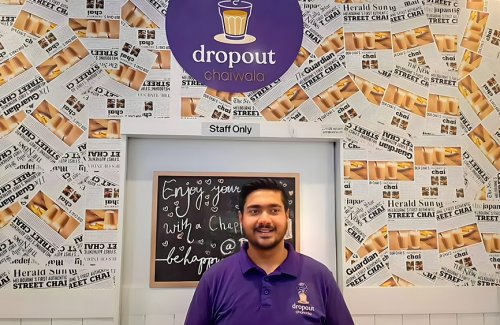
How College Dropout Sanjith Konda House Became a Successful Entrepreneur

Sanjith Konda House, an 18-year-old from Bengaluru, India, set off on a conventional journey to Australia to pursue a Business Studies degree at La Trobe University in Melbourne. However, he made an unconventional turn, abandoning his studies in pursuit of an entrepreneurial dream that would later become a successful enterprise, ‘Dropout Chaiwala.’

Sanjith’s bold decision to step away from academia during his fifth semester in exchange for a tea business venture demonstrated exceptional courage, a trait deeply ingrained by his upbringing.

Supported by his parents—a father employed as a mechanical engineer at a Saudi Arabian oil company and a homemaker mother—Sanjith had always been instilled with the values of responsibility and independence beyond his years.

With an initial investment of $120,000, Sanjith, alongside his friends Asar Ahmed Syed, Preetam Akula, and Arun P. Singh, set up their first ‘Dropout Chaiwala’ outlet on Elizabeth Street. Their menu started simple, offering just five varieties of chai, but they gradually began to catch the attention of students and office-goers alike.

Despite facing initial obstacles, Sanjith’s unwavering determination was the driving force behind the business’s growth. By March, they had a mobile chai truck in operation, catering to university events, festivals, and weddings. Another significant milestone came in August with the opening of a third store on La Trobe Street.

Under Sanjith’s dynamic leadership and with the dedication of his team, which included Apoorva Singla overseeing the Elizabeth store, Dropout Chaiwala expanded its menu to include light snacks. Within a year, the business generated $600,000 in sales and provided employment to 40 individuals, turning Sanjith’s bold leap of faith into a thriving success.

Featured Image Source: India Times

News

BLACKPINK, TXT, Jung Kook, and Stray Kids Dominate the 2023 MTV VMAs

The 2023 MTV Video Music Awards proved to be an unforgettable night for K-pop, as three South Korean groups left an indelible mark on the music industry. These victories not only celebrated their remarkable talents but also emphasized the growing influence of K-pop worldwide.

The MTV Video Music Awards 2023 unfolded on September 12 at the Prudential Center in Newark, New Jersey.

TXT – Tomorrow X Together, affectionately known as TXT, had a groundbreaking night, bagging the Push Performance of The Year award for their electrifying single “Sugar Rush Ride.” The group also graced the stage with a spectacular performance of their new hit “Back for More,” featuring the sensational artist Anitta. In a fierce competition with nominees like Ice Spice, Jvke, Saucy Santana, and Reneé Rapp, TXT emerged victorious, marking their first-ever VMA win.

Stray Kids – Stray Kids joined the ranks of VMA winners, securing their first-ever VMA in the Best K-Pop category for their track “S-Class.” Their performance of the song during the show captivated the audience and showcased their incredible talent. Competing against esteemed K-pop acts like Aespa, Blackpink, Fifty Fifty, Seventeen, and TXT, Stray Kids’ victory is a testament to their growing influence in the industry.

BLACKPINK –  BLACKPINK, the global sensation, achieved an historic feat by winning the prestigious “Best Group of the Year” award. This victory is especially significant as it had been an astonishing 24 years since a girl group last held this honor – TLC in 1999.

BTS – While the spotlight shone on these remarkable wins, it’s crucial to acknowledge BTS’s continued dominance in the K-pop world. With an impressive nine VMA trophies to their name, BTS remains at the pinnacle of the K-pop genre, even during their well-deserved hiatus. Jung Kook also achieved a historic milestone by winning the ‘Song of the Summer’ award for his collaboration with Latto, securing the Moonman award.

The 2023 MTV VMAs will be remembered as a pivotal moment in K-pop history, with TXT, Stray Kids, BLACKPINK, and BTS making headlines and solidifying their status as global music icons. As K-pop’s influence continues to surge worldwide, we eagerly anticipate more groundbreaking achievements from these talented artists in the years to come. 

Featured Image Source: Lifestyle Asia HK

Peter Yang-jpg

Stories

The Inspiring Story of How Pokeworks Became the Largest Poke Chain in the US

Founded in 2015, Pokeworks emerged as a culinary venture stemming from a shared vision. Drawing inspiration from numerous trips to Hawaii, the founders were captivated by the distinct flavors of poke, prompting them to bring this fresh, healthful, and beloved island delicacy to the mainland United States.

With a steadfast commitment to a wholesome lifestyle and premium ingredients, Pokeworks offers a culinary experience that reverberates with authenticity. Their menu artfully captures the genuine essence of Hawaiian flavors, showcasing a medley of signature creations and customizable options.

Aside from this, Pokeworks champions sustainability, prioritizing responsibly sourced seafood and conscientious material choices. This ethos extends to all aspects of the brand’s operations, affirming a holistic dedication to social and environmental responsibility.

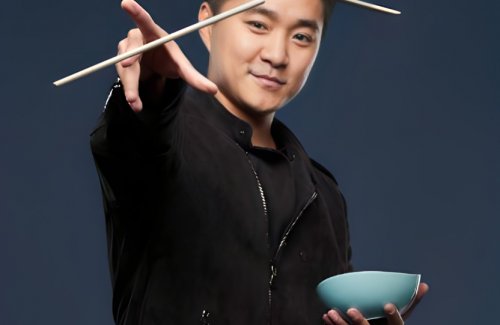
Asian Hustle Network had the chance to sit down for an interview with one of Pokeworks’ co-founders, Peter Yang. Join us as we delve deeper into their story and uncover the insights that drive their success.

HOW IT ALL STARTED

The idea of Pokeworks dates back to 2015, when my co-founders, Mike Chen and Mike Wu, met over lunch. Mike Chen just had his wedding in Maui and Mike Wu had just come back to the mainland after months in Oahu launching a restaurant. They reminisced about the delicious poke they enjoyed on the island and wondered why it’s not a staple on the mainland. We took inspiration from build-your-own fast casuals like Chipotle, and ran with the idea of “Poke Your Way”. As cliche as it sounds, we spent months R&D’ing out of Mike Wu’s garage until we all felt the flavors were perfect.

Several months later, we opened the doors to our first location in midtown Manhattan – a tiny 750-square-foot space. It was a cold December, and most of the city had left for the holidays – it was quiet… and our sales were bleak. Besides correcting our guests on the pronunciation of “poke”, I had to turn away several guests with “Sorry, no, we do not sell Pokemon cards.” Educating the market was definitely an early challenge we had to overcome.

The new year rolled around and our lines got progressively longer day after day. As business grew, we kept our heads down and continued to focus on operational excellence – great products and great guest service. Word quickly spread, and we became the popular kids on the block.

Fast forward 8 years and a pandemic later, we’re 70 locations proud across the U.S., Canada, Mexico, and Taiwan.

SUSHI BURRITO

THE CONCEPT OF SUSHI BURRITO

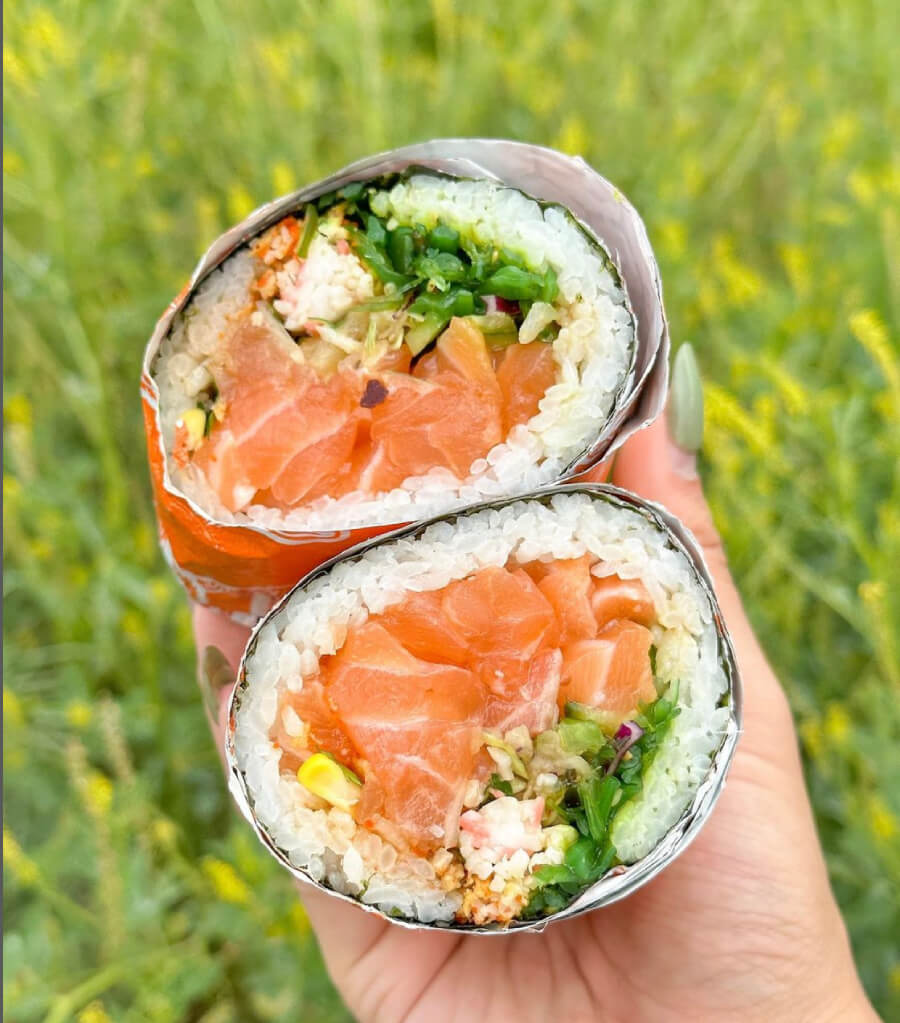
We aimed to create a handheld version of Poke by blending two of my personal favorites: a burrito and a sushi roll – what’s not to love? We had fun with it and added it to the menu.

Little did we know, this menu addition would become a turning point in our growth.

During a lunch rush one day, a representative from Business Insider walked into our tiny shop and asked if she could record a video featuring our Poke Burrito. Despite my initial hesitation – our shop was so small that my staff and I could barely squeeze another body in without slowing down our line – I agreed. Well, it was a good thing I let her shoot the video because once it was uploaded, it went absolutely viral.

It. Was. Insanity. This short 1 minute clip, triggered lines around the block for months. We had to hire bouncers for crowd control!

POKEWORKS’ COMMITMENT TO SUSTAINABILITY

Early in our brand development, the co-founders took deliberate steps to define our core values. One of them is: “Sustainability – meeting today’s needs without compromising tomorrow.” The founders understand that it goes beyond just making a profit, but how we can leave the world a better place for our children. Personally, since becoming a father recently, this sentiment has never rung louder. We want to make sure it’s not just a marketing buzzword, but a core value that helps guide our every decision. 

All of the seafood that we source carries a “Best Choice” rating by the Monterey Bay Seafood Watch, procured from vendors that are environmentally and socially responsible. Our tuna is exclusively procured from Marine Stewardship Council (MSC) certified sources, a reflection of our commitment to ending overfishing and promoting sustainable fishing practices. Our salmon holds certifications from both the Aquaculture Stewardship Council (ASC) and Best Aquaculture Practices (BAP), embodying the highest industry standards for minimizing environmental impact and upholding the well-being of communities, workers, and animals.

For many of our store build-outs, the wood used in our dining rooms is of local species and is certified by the Forest Stewardship Council. In some of our shops, the facade of our counters is made with recycled bamboo chopsticks.

Our commitment to sustainability extends to exploring alternative seafood and plant-based products. We are partnering with leading plant-based food manufacturers such as Impact Foods and Omni Foods to explore alternative seafood options. Our plant-based spam musubis are also a huge hit! We’ve also partnered with innovators like Wildtype, to explore cutting-edge cultivated seafood.

FRANCHISEE SPOTLIGHT

We seek franchisees who embody a passion for the brand and resonate with our mission statement and core values. One of which is being service-obsessed: We put the team’s needs first. We are here to serve our guests and community. We do this by being responsive, helpful, productive, and following through with our commitments, and spreading aloha.

I’d like to extend a big shout-out to Alvin Zhang, an exceptional franchisee at Pokeworks who embodies this value and who truly shines as both an entrepreneur and an outstanding individual dedicated to his community. At the peak of the pandemic, when hospitals were facing dire circumstances, Alvin and his Pokeworks team worked overtime to generously donate over 2000 poke bowls to 12 hospitals across Queens NY, and Long Island.

UPLIFTING THE AAPI COMMUNITY

We take pride in the Asian-inspired products and flavors that we serve. From spicy Sichuan poke to sweet chili gochujang poke. Sharing these flavors from our roots to the mainstream is a great privilege. 

During COVID, we partnered with Heart of Dinner to help nourish NYC’s community of Asian elders. They have a wonderful mission of supporting the AAPI community, and we’re proud to be a part of it.

We also take immense pride in having Regina Cheung, a Chinese-American, at the helm as CEO at Pokeworks, leading the charge with remarkable expertise and charisma. Furthermore, all of the co-founders are Asian-American and share the immigrant journey. 

We hope that our story and Pokeworks’ AAPI leaders can inspire future generations of AAPI entrepreneurs to dive confidently into their careers and passions. 

PETER YANG’S ADVICE TO ASPIRING ENTREPRENEURS

Don’t do it alone. Learn to ask for help. It all starts within your community.

We are very proud to say that there are a total of 8 co-founders at Pokeworks. Most advisors will tell you that’s crazy, but we made it work! We’ve learned to set aside our egos and each of us plays a distinct and vital role within the organization.

This principle aligns perfectly with another core value of ours: the incredible power of teamwork.

CONNECT WITH POKEWORKS

Instagram: @pokeworksco

Website: pokeworks.com

Franchise: pokeworksfranchise.com

AHN STORIES-png

Stories

How Uji Time Dessert Brings East Asian Flavors to the Bay Area

Sharon Ku, born and raised in Hong Kong, is one of the co-founders behind Uji Time Dessert, a delightful dessert store in the Bay Area.

Sharon has been working in the food industry for the past 15 years since she graduated from UC Berkeley with a major in Nutrition Science.

Through Uji Time Dessert, Sharon and her team bring together the best of East Asian flavors and desserts, making them accessible to everyone. The pop-up store’s authenticity and creativity garnered massive success, and it became the first dessert shop of its kind in the Bay Area.

In an interview with Asian Hustle Network, Sharon Ku shared her journey as an entrepreneur. Read through as we discover how she turned her passion into a thriving business, and how she found inspiration within the community.

HOW IT ALL STARTED

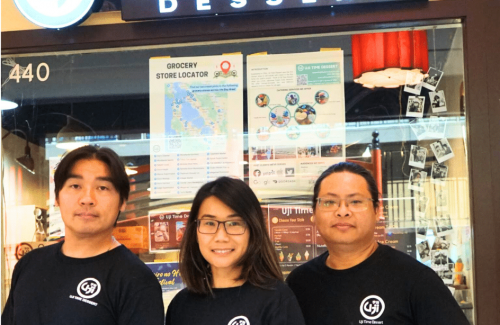
Uji Time Dessert opened its first pop-up store in April 2016. Together with John Ip and Benson Leung, we have been taking far east flavors and desserts and making them mainstream in the Bay Area. Our famous Fish Cone, called Taiyaki, is our take on the traditional Japanese dessert in the shape of a fish, usually filled with red bean paste. The pop-up was a great success because of its authenticity. Uji Time Dessert was the first dessert store selling Taiyaki soft serve in the Bay Area.

Uji Time Dessert loves to combine and meld elements from multiple traditional desserts to create affordable treats for everyone. Our goal is simple – think of Uji Time Dessert when you crave Japanese fusion-style desserts.

Uji Time Dessert regularly offers Instagrammable, fun, and delicious desserts and ice cream for all ages. It has transformed into a full-scale dessert cafe, from Fish Cone (Taiyaki), black sesame soft serve, lychee ice cream mochi, Matcha Latte, Earl Grey puddings, to Hojicha and Genmaicha ice cream. Depending on the season, Uji Time Dessert offers limited production seasonal flavors, such as strawberry rose and lavender in soft serve or ice cream.

During COVID, we connected with many local businesses to do cross-promotion and share resources. We offer our stores as pick-up locations for other business owners. Other business owners help to promote our brand and products.

In 2022, Uji Time Dessert expanded its footprint to Seattle, Washington, and Albuquerque, New Mexico. Uji Time Dessert continues to seek opportunities to serve our customers.

NAVIGATING THROUGH THE COVID-19 CHALLENGES

COVID hit hard across Bay Area San Francisco in 2020. Our sales dropped to 0% as we only sold soft-serve ice cream. Our stores were forced to close for 3-12 months. We closed two stores permanently.

Despite COVID-19 challenges, we expanded from 0 to 25 local supermarkets. Closing three stores didn’t stop us; we opened three new locations and have more coming in Palm Springs and New Mexico with our licensed partners.

These difficulties brought our team closer and made us stronger. From a small ice cream shop, we now distribute to various locations in the Bay Area. The growth and partnerships showcase our resilience and quality. I’m inspired and confident in our continued success.

SUPPORT AND INSPIRATION WITHIN THE COMMUNITY

I’m grateful to the Asian Hustle Network community for sharing inspiring stories of persistence, and for the connections I’ve made in this group.

I met Jing who has a passion for helping small businesses, the owner of Kaya Bread, and other inspiring individuals. Connecting with like-minded entrepreneurs and supporting my brand growth has been invaluable. 

Once again, I want to express my gratitude to the Asian Hustle Network for providing a platform that facilitates learning, sharing, and gaining inspiration. I am truly thankful for the opportunity to be part of this community and to share my story of resilience, growth, and the joy of forging connections to support others in building their own brands.

Processed with VSCO with fa1 preset

VALUABLE LESSONS AS A SUCCESSFUL ENTREPRENEUR

I would suggest everyone not to give up.

We should not focus on what might stop us from achieving our goals. We should think of what we can do to make a change. Don’t be afraid and try to reach out. Many experienced entrepreneurs would love to share their experiences and thoughts with you.

CONNECT WITH UJI TIME DESSERT

Instagram: @ujitimedessert

Tiktok: @ujitimedessert

Facebook: Uji Time Dessert