Stories

November 8, 2023

SHARE:

Postpartum care is a critical period for new mothers, yet it is often overlooked in our society.

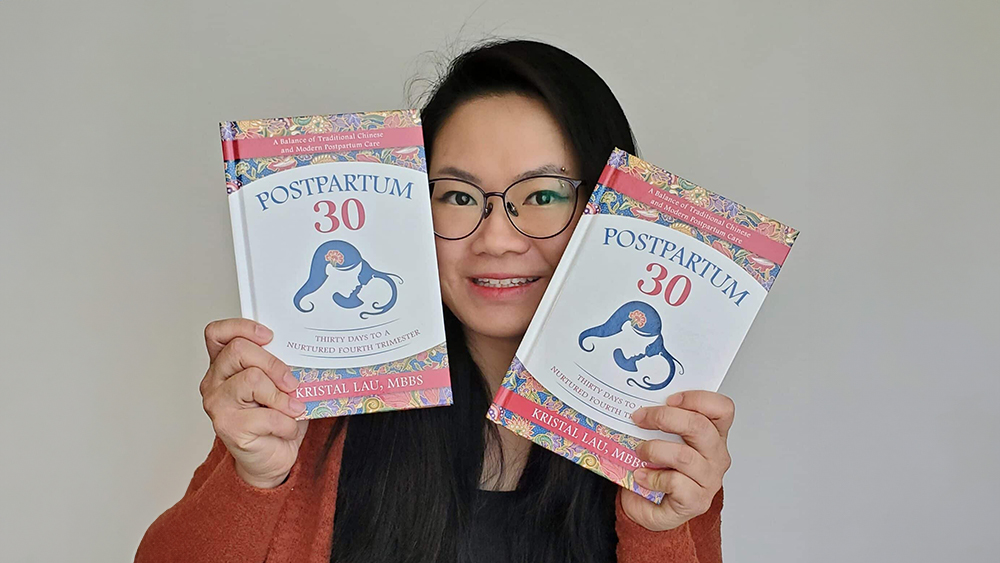
Many women struggle with physical and emotional changes after giving birth, and the lack of support and attention to their needs can lead to postpartum depression and other health issues. This is why Dr. Kristal Lau’s book on postpartum care is a crucial addition to the conversation.

When Kristal joined the AHN community two years ago, she was still pivoting out of her medical career. She shared that her mom has been encouraging her to pursue her idea of writing a book on Malaysian Chinese postpartum confinement practices and include notes from her medical background.

During her confinement month after birthing her first child, Kristal compromised with her mother to modernize some of the confinement practices by medical logic. With a balance of traditional Chinese and modern postpartum care, her book provides a comprehensive guide for modern moms to take care of themselves during this important time while feeling connected to their Chinese roots.

In this article, we will dive into Kristal’s journey as an author. We will also explore why postpartum care should be a mainstream topic and why it is important to prioritize the health and well-being of new mothers.

BECOMING A MOTHER OF TWO

I practiced medicine in Australia as a Basic Physician Trainee before moving to the USA and would’ve chosen to specialize in geriatrics medicine if I hadn’t met my husband.

Ironically, I’ve chosen to work in the perinatal world now, because I used to actively avoid seeing pregnant women patients when I was a junior doctor. I felt intimidated by the responsibility of two lives and potentially more if the patient already had children.

Becoming a mother of 2 while facing the challenges of a modern immigrant from South East Asia to the West (and being a US military spouse) opened my eyes to the importance of postpartum care in setting mothers up to thrive in the postpartum year and beyond. Especially when I was planning for my first confinement practice and had to adapt things to where we were living in rural Alabama. From this experience, I decided that contributing to a small part of the perinatal industry was fitting.

POSTPARTUM 30: THIRTY DAYS TO A NURTURED FOURTH TRIMESTER

The core message of my book entitled “Postpartum 30: Thirty Days to a Nurtured Fourth Trimester” is about preserving a traditional and cultural practice so that it remains relevant to current and future generations. Otherwise, we’d forget!

So, the key components of my book showcase the best of both worlds. I discuss postpartum physiology (what we know today about how the birthing body recovers after birth) and basic Traditional Chinese Medicine (TCM) principles around the postpartum body. 

I have chapters dedicated to adapting confinement practices to fit a modern mom and her family’s needs and lifestyle. I also guide readers on how to respectfully tell their mothers or mothers-in-law that they’d like to practice a modern version of confinement and include them in the picture.

MODERN MOMS WITH CHINESE ROOTS CAN EASILY BENEFIT FROM THIS BOOK

Firstly, it’s written in English! Readers don’t have to know any Mandarin or Chinese dialects (just like me!) to understand the TCM and confinement concepts I discuss in the book.

Secondly, I include historical references about the confinement practice and discuss why certain practices made sense to our ancestors. Finally, I challenge two aspects of the traditional confinement practice head-on. I encourage readers to embrace all the emotions that come with the chaos of the postpartum period instead of pushing them away. And I encourage spouses and partners to be the main confinement support person rather than another family member.

PUBLISHING MY BOOK HAS BEEN VERY SURREAL

I fully invested in writing this book after the overwhelming support from Asian Hustle Network group members when this book was just an idea. I also appreciated the nuances brought up by the AHN members in that defining post which added more to developing my book’s content. My first beta readers were also from the AHN community!

I’ve always wanted to be an author ever since I was a teen, so I can’t believe that I’ve done it! The book has also allowed me to represent a small part of Malaysian and Chinese culture to the world. Plus, it’s my biggest ticket away from medicine and into carving out an unconventional career that works for me!

Making time to write my book was the biggest challenge because I got pregnant with my second baby just after starting a 6-month book coaching program to develop my book. I’ve also been living in Germany since 2020 due to my husband being stationed here at a military base. So, I was writing on and off throughout my pregnancy and postpartum year while juggling our newborn, toddler, deployments, 2 dogs, and trying to thrive in a foreign country. The next biggest challenge was believing in myself, and that I have what it takes to write on this topic.

BALANCE AND EVOLUTION FOR POSTPARTUM CARE

To balance traditional Chinese practices of postpartum care with modern medical logic, I drew from my professional background as a medical doctor and a public health graduate, and my personal background as a Malaysian who grew up with both TCM and modern medicine. I also consulted with my medical peers and a TCM doctor (a connection I made through AHN too!) about how postpartum care from the East and West can meet in the middle.

An example of this balance is compromising on the hair-washing practice. Personal hygiene is a big part of the confinement practice. The strict traditional way is no hair washing for the entire confinement month. A modern compromise is to not wash the hair for the first 2 weeks and once you start washing your hair, make sure to dry it completely while in the warm bathroom before stepping out into a more chilly environment.

As more attention is given to the concept of matrescence, the transition a woman goes through to become a mother, it’s important to recognize the need for nurturing and support during this time.

Physical therapy should be a standard part of postpartum care, as many women suffer from pelvic floor and back pain issues after giving birth. Unfortunately, too many women are told that these issues are “normal” and should be lived with. Pain and discomfort should not be considered normal, and pelvic floor rehabilitation should be a global standard of care for all new mothers, rather than being limited to a few countries or requiring out-of-pocket expenses. The rest of us have to learn how to ask for pelvic floor rehabilitation referrals and likely pay out of pocket for it.

CARING FOR NEW MOTHERS

Two big areas where family members can help a new mother in the postpartum period are to help her feel seen and alleviate her mental load.

Unfortunately, new mothers frequently fade into the background as the newborn baby takes the spotlight. So, holding space for the new mother to grow into her new identity and showering her with attention reminds her that she’s still her own person and that she’s equally important as the baby!

Women and mothers are also commonly the main household manager in many families who do all the planning, troubleshooting, and preempting of troubles. This is the mental load of women and mothers. Alleviating this during the postpartum period isn’t just asking her what help she needs, it’s becoming the Project Manager at home while she recovers.

Asking her what she needs still requires her to plan and troubleshoot, and that doesn’t help lighten her mental load when she needs all the energy to recover from birth and care for the newborn.

MODERN MOTHERS HAVE DIFFERENT NEEDS THAN THE GENERATIONS BEFORE

First, society needs to accept that this generation and the upcoming generation of modern mothers have very different needs and challenges compared to the generation before us and not shame us for it. 

For example, many women in my generation (especially us Millennials in developing countries like Malaysia) have been conditioned to “do-it-all” i.e. excel at our careers and in being a mother. It’s ingrained in us to “mother like we didn’t have jobs and achieve in our career like we didn’t have children”. Why do moms today carry this burden? It’s likely because we were exposed to conflicting messages about womanhood and motherhood while growing up. We were empowered to be anything we wanted and that we could achieve anything we put our minds and hard work to i.e. embrace the modern woman identity. Yet, we’re still pressured to marry before 30 and start having kids while constantly reminded, “Don’t waste your education by becoming a stay-at-home mom!”. Balancing the identities of an empowered modern woman with the traditional (and biological) roles within motherhood is a unique challenge for many moms of our generation.

So, only when society is willing to empathize with this struggle, then they can provide the social, emotional, and mental support to help modern moms thrive as they go through matrescence.

My book normalizes the notion of nurturing mothers from the beginning of their motherhood journey; the postpartum year. I encourage mothers to prioritize themselves and not feel completely guilty about it. And to get comfortable with asking for help and accepting help before things get too overwhelming. It’s nice to be recognized as a SuperMom but it’s also nice to not have to live up to that image.

CONNECT WITH KRISTAL

Instagram: @mamaswingwoman

Facebook: @mamaswingwoman

Twitter: @drkristallau

LinkedIn: Kristal L.

Website: mamaswingwoman.com

Book webpage: tinyurl.com/pp30book

Author webpage: Kristal Lau – Mandala Tree Press
Related Articles

image

News

Asia’s Negative Mindset & Crab Mentality

Japan has an old proverb: “The nail that sticks up gets hammered down.” 

While in China, there is a saying, “The higher the tree, the stronger the wind.”

In a critical lens, both idioms illustrate harmony and unity – a vital essence of Asian culture and heritage. Nevertheless, the proverbs also shed light on a contrasting school of thought: conformity and crab mentality. 

Crab mentality refers to the situation one can explore by placing a crab or a collective of crabs in a bucket. A lone crab can inevitably crawl out of the bucket, however, a peculiar scenario would arise if one situates a group of crabs in a bucket. As a crab tries to crawl out, the other crabs will pull it back down. If it tries again, the others will rip its claws off to ensure it can never do so again. Ultimately, no crabs can go anywhere besides the stew pot you are brewing. 

Crab in a bucket scenario (Image source: Microsoft Designer)

Crab in a bucket scenario (Image source: Microsoft Designer)

It is naivety to assume human beings are a unified collective group. History, wars, and jealous conflicts are testaments to human being’s selfishness. Hence, it is arguable that we are inclined to place ourselves above others, even if it means at the expense of our peers. Despite being a precarious thought, this insight opens new dimensions to understanding crab mentality in the human context. 

“Remember your cousin Timmy in China? He has 15 years of experience. He’s nine!” 

Steven He’s dad (played by Steven He) exclaimed.

Terms like “Asian-level difficulty,” “Tiger Moms,” and “Asian parents” have become widely recognized through memes, movies, and other mainstream media, serving as a lens for global audiences to understand and appreciate aspects of Asian culture. Yet, one community still paints a negative view of the Asian community, even discriminating against its individuals – and the answer is ironically the Asian community itself.

The purpose of this work is not to discriminate or criticize any peculiar group but to foster intellectual discourse and encourage reflection on societal dynamics and individual perspectives. The chosen quote embodies this intention, capturing four intertwined facets.

Understanding the concept of face is crucial when discussing Asian culture and heritage. Face serves as a societal construct that governs social interactions and determines one’s standing within a social hierarchy. It is a dynamic measure that can be given, earned, taken away, or lost, often extending beyond the individual to include family and friends. For those unfamiliar with this concept, here’s a simplified explanation:

  • A wife who earns a promotion gains face for herself in front of her boss, while also bringing face to her husband and parents through her achievement. 
  • Conversely, a student who performs poorly on an exam loses face among peers, and their parents, in turn, lose face within their social and familial circles.

Despite being debatable, visualizing face as a form of currency provides an interesting lens through which to examine crab mentality in Asian communities. Much like any valuable asset, currency must be earned, safeguarded, and strategically utilized. Losses, even those meant for long-term gains, are approached with caution and calculation. Consequently, individuals strive to enhance their reputation while using criticism to diminish the face of others.

The concept of face is deeply tied to education and parenting, playing a role in fostering crab mentality. Asian children are often raised to prioritize self-achievement above personal aspirations, adhering to predetermined paths for the “greater good” of the family. This emphasis on collective reputation often comes at the cost of individual dreams, reinforcing a mindset where personal success is weighed against familial expectations.

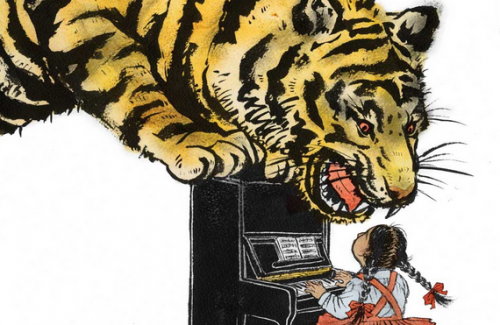
Parenting can affect mindsets, a reflection on Tiger Moms (Image source: Mims On The Move)

Parenting can affect mindsets, a reflection on Tiger Moms (Image source: Mims On The Move)

Indeed this is a generalized claim that leaves certain minorities for speculation, but the interplay between face and sacrifice is crucial in understanding the environment Asian children grow up. Literary works like Truyện Kiều (Tales of Kieu), a renowned Vietnamese poem, highlight traditional ideals through terms like cầm-kỳ-thi-họa—the four virtues defining a successful woman. Similarly, the stereotype of Asian children being expected to become doctors or lawyers has become a familiar cultural reference in contemporary discourse.

No parents want their children to grow up as bad people. Hence, it would be injudicious to blame parents and the system for a negative societal mentality. Yet, there are certain repercussions to sacrificing a child’s dream in return for a destined path to greatness. This leads to the third facet of crab mentality in Asian communities: A ramification for every child following the same success path means comparison and competition. 

Let’s revisit Steven He’s joke: Timmy is used as a benchmark for comparison. The only way for Steven to save face is by climbing the same ladder and offering Timmy a similar spiteful insult. This vicious cycle of comparison fuels crab mentality within families, peers, and the broader community. True to reality, Asian students often spend countless hours in extra classes and clubs to meet rigorous expectations. Tiger moms push their children to excel in every class as if their lives depend on it. There is no middle ground—you’re either a winner or a failure.

This brings us to the final facet: the absence of praise and apologies. Ironically, according to BBC and Vocal Media, Asia is home to some of the politest people in the world, with countries like Japan and Thailand leading the way. Despite this, hierarchy plays a pivotal role in relationship dynamics. To save face, many Asian parents rarely offer praise to their children. Astonishingly, when it comes to apologies, parents often go to great lengths to defend their actions rather than acknowledge their mistakes. 

A similar response can be seen in Asian workplaces, where higher-ups are more inclined to criticize and are far out of reach from their team members. Individuals will praise their peers and colleagues in hopes of receiving similar treatment instead of actual commemoration. Workers often segregate themselves into teams of interest to promote one another instead of collaborating as a group. These groups create outcasts who, despite their talents, are looked down upon and have their accomplishments taken or snuffed out by negative criticisms. This reluctance to give praise and apologize reinforces a mindset of self-achievement above all else. At first glance, mentality such as these are not wrong, but they leave cracks for detrimental thoughts of arrogance and selfishness – ultimately sustaining the crab mentality.

While this article explores the crab mentality within the Asian community, it is important to recognize that this negative mindset is not exclusive to any one group—it exists everywhere. The concepts of face, self-achievement, competitiveness, community, and sacrifice are what make Asian heritage unique and beautiful. This work argues that these cultural elements are not the root cause of the crab mentality, but rather, insights into why such a mindset may emerge. 

Avenue of Stars, Hong Kong

News

The Rise of Asian Representation in Food Shows: A Lunar New Year Celebration

Credits: Patricia Ratulangi Vice President, Global Communications Nielsen

In recent years, food shows featuring Asian chefs and cuisines have seen a surge in popularity, capturing the attention of diverse audiences around the globe. This trend highlights the growing appetite for cultural representation and inclusivity in entertainment. As we celebrate Lunar New Year—a holiday deeply rooted in food traditions—it’s the perfect time to reflect on how Asian representation in food media resonates with viewers and drives mass viewership.

Food shows featuring Asian chefs and cuisines highlight cultural diversity, resonating with audiences and driving viewership, especially during Lunar New Year celebrations.

Food shows stand out as a medium where culture, tradition, and storytelling intersect seamlessly. Programs like Top Chef, which has featured contestants such as Melissa King and Hung Huynh, and The Great American Recipe, where home cooks celebrate diverse culinary heritages, showcase the rich variety of Asian cuisines and the personal narratives behind them. These stories invite viewers to connect with the cultural roots and contemporary adaptations of dishes they may have never experienced before.

2024 Viewing MinutesAsianTotal U.S.
Top Chef‎‎  ‎ 458.0 million5.7 billion
The Great American Recipe‎ ‎ ‎ 9.8 million84.5 million
Chrissy & Dave Dine Out‎‎  ‎ 9.2 million61.4 million
Dinner Time Live with David Chang‎ ‎ ‎ 67.4 million430.1 million
Source: Nielsen audience measurement: Jan 1 – Nov 30, 2024

Lunar New Year exemplifies the central role food plays in cultural celebration. From dumplings symbolizing wealth to fish representing prosperity, the holiday is a sensory feast steeped in meaning. By spotlighting Asian chefs and their innovative approaches to dishes that represent their heritage, food shows bridge the gap between cultural nuance and modern audiences. 

A Tết (Vietnamese Lunar New Year) tray filled with traditional Vietnamese dishes for Lunar New Year, symbolizing happiness and peace.

The success of Asian-centered food programming aligns with broader audience preferences for authenticity. Nielsen data reveals that 63% of viewers are more likely to support brands and content creators that authentically represent diverse communities. For mass audiences, this means a greater willingness to engage with shows that go beyond superficial portrayals and offer genuine insights into Asian culinary arts.

The viewership data highlights the significant appeal of food shows among both Asian audiences and the broader U.S. audience, underscroring the growing đemand for authentic, inclusive food shows that celebrate diverse cultures.

Nielsen Chart A
Nielsen Chart B

As Lunar New Year festivities fill homes with the aroma of traditional dishes, the increasing visibility of Asian representation in food shows reminds us of the universal power of food to connect people across cultures—one dish, one story at a time.

Elegant Cinematic Wedding Thumbnail HD 169 (4)-png

Stories

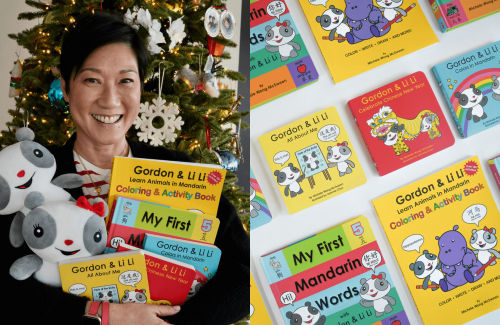
Michele Wong McSween Brings Chinese Culture to Life Through Gordon & Li Li

Navigating one’s cultural identity is confusing, especially in a diverse nation like the United States (US). One minute, you proudly claim that heritage of yours, and two seconds later, you feel as if your identity were the main character of a roast party. That carries on to the parents, who face the challenges of keeping their children connected to their roots amidst the complexities of a multicultural society. 

As a Chinese parent, Michele Wong McSween knows this all too well. By the time Michele became a mother, the pressure of teaching her children Mandarin had only grown stronger. That gave birth to “Gordon & Li Li,” a series of books designed to make learning Mandarin and connecting with Chinese culture fun and approachable for kids.

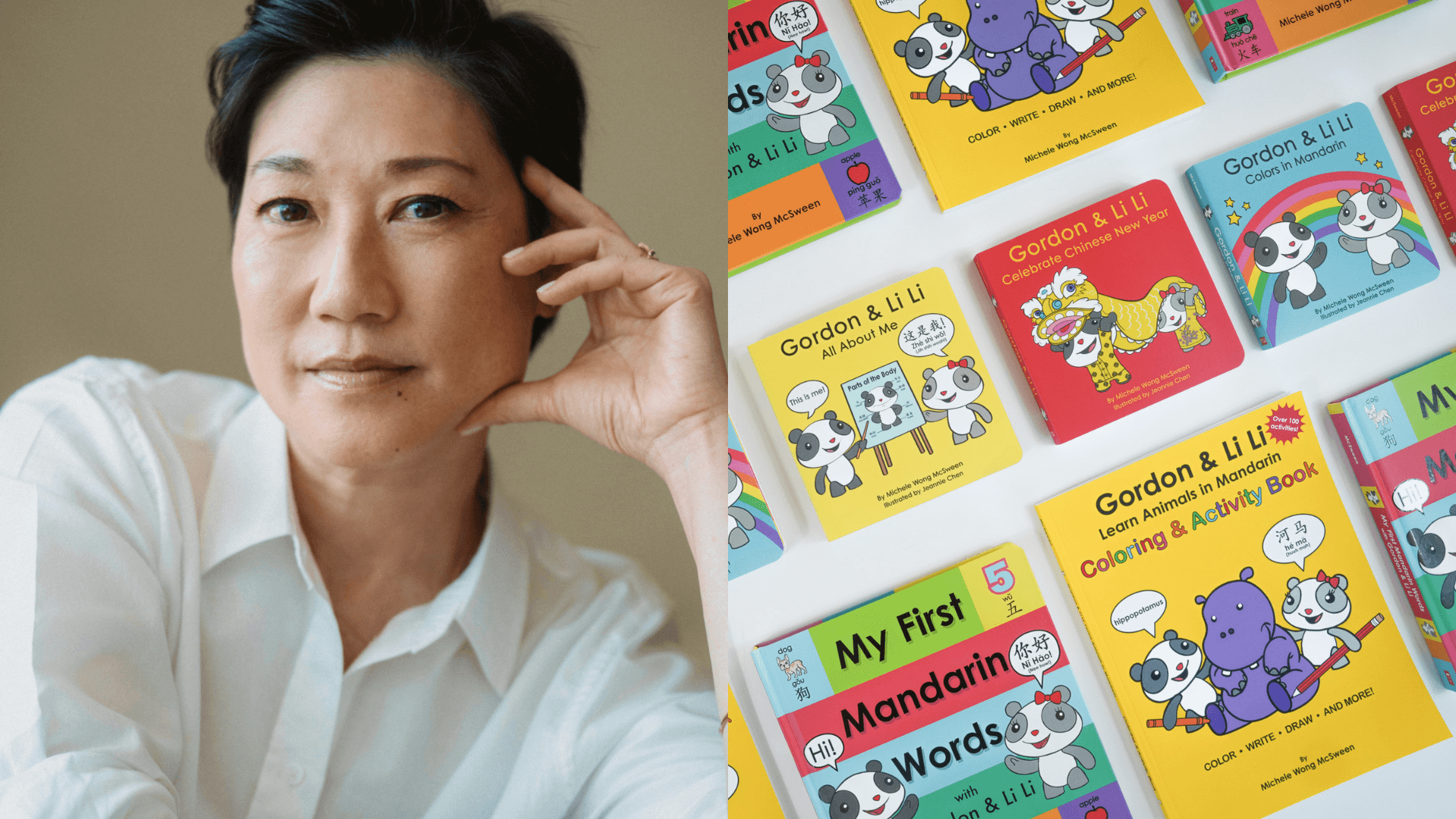
Michele Wong McSween cleverly dilutes the weight of this language in her new upcoming books, Gordon & Li Li: Celebrate Chinese New Year Coloring & Activity Book and All About Me, inspiring families to embrace their heritage, one book at a time.

Throwback New Year

Back in her early Lunar New Year days, Michele would help her mother decorate the house with blossoms, prepare lucky foods, and then gather at her grandparent’s home for a joyful dinner celebration. And what’s Lunar New Year without the iconic Hong Bao (red envelopes) and the sounds of familial peals of laughter? It was these little moments with her family that developed a lifelong passion for Chinese culture and language.

But the mounting pressure of growing up and starting a family soon dawned on her the challenges of instilling that same cultural pride in her children. “As a fourth-generation Chinese American, I didn’t grow up with the gift of language, and I found the books that existed to be intimidating, old-fashioned, and uninspiring,” she says. “How could I expect my children to get excited about learning a language when I wasn’t even inspired to?”

The Birth of Gordon & Li Li

The struggles to find suitable and engaging resources for her kids to learn Mandarin inspired Gordon & Li Li, a children’s book series that takes readers on the journey of two main characters, Gordon and Li Li. Mandarin Chinese is already a tough language, let alone studying it like a daily chore. So, she created her own educational books that blend entertainment and cultural values while adapting to modern technology, making these lessons more engaging and accessible.

The initial concept was to become the “go-to” board book series for families eager to introduce their little ones to Mandarin and Chinese culture. Within three years, I self-published three books, but as my children grew older and their learning needs changed, I knew I had to create something that could grow and engage with them in this next phase. Seeing how much they loved learning on an iPad, I entered the technology world and created and launched the Gordon & Li Li: Learn Animals in Mandarin app on iTunes in 2012.

Recognizing the challenges she faced while teaching her children Mandarin, she came up with the idea for "Gordon & Li Li" - a fun and engaging book series to help children learn Mandarin.
Recognizing the challenges she faced while teaching her children Mandarin, she came up with the idea for “Gordon & Li Li” – a fun and engaging book series to help children learn Mandarin.

For all the grand visions, there lie the grappling challenges Michele must balance: being both a full-time mother and a founder. Her working hours began when her children went to bed, often ending late into the night, only for her to start the day all over again. Not coincidentally, these burdens are further intensified by her lack of experience in publishing, marketing, or business management.

As a mom of three boys, the hardest part was trying to find the time and energy to spend on G&L while balancing the demands of motherhood. My work day wouldn’t begin until the boys were in bed. I’d clean the house, spend a few hours on G&L, go to bed by 1 a.m. or 2 a.m., then start the day all over again. On top of that, with no training in publishing, marketing, or running a small business, I often felt like I’d take one step forward and 100 steps back.

In those moments, the fleeting thoughts of giving up are already tempting enough. Despite this, her commitment and perseverance led her on a fortress path. Better still, the “heartfelt” feedback she received along the way has proven to be highly worthy and rewarding. After all, trees will bear fruits—and her fruits can help sustain many following generations on the heritage tree.   

Sixteen years in, and I’m finally learning to embrace the challenges as opportunities to grow instead of seeing them as failures. I’ve surrounded myself with a supportive network and a strong community, and I’ve become more patient with myself as I learn new skills. I’ve also learned to practice self-care because self-care isn’t selfish—it’s essential!

Michele Wong McSween continues growing this age-old tree of Chinese heritage through her two upcoming books, each offering a unique and engaging way for children to learn Mandarin.

Gordon & Li Li: Celebrate Chinese New Year Coloring & Activity Book and the Impact of Lunar New Year and Family

Michele’s work shows an emphasis on family, which is placed at the forefront in many Asian households. Her upcoming book Celebrate Chinese New Year Coloring & Activity Book is a reflective extension of that value, whereas Lunar New Year has always been traditionally associated with family gatherings. “My favorite childhood memories of Lunar New Year were the source of inspiration for Gordon & Li Li: Celebrate Chinese New Year,” she says. “These core memories have inspired me to continue the traditions with my own children and through my book. I hope that families everywhere can enjoy celebrating Lunar New Year, whether they’re reconnecting with their heritage like me, or learning about it for the first time.”

With the Celebrate Chinese New Year Activity Book, I hope to bring the fun and festive traditions of the Lunar New Year to children through interactive, hands-on activities. I specifically designed it to engage with kids as they grow. From simple coloring and matching activities to more challenging ones like Chinese Character Search, Crosswords, and Find the Differences. This book has something for everyone and helps connect children of all ages to the excitement and significance of the New Year.

Michele's upcoming book, Celebrate Chinese New Year Coloring & Activity Book, reflects her childhood memories of Lunar New Year and aims to engage children of all ages with interactive activities.
Michele’s upcoming book, Celebrate Chinese New Year Coloring & Activity Book, reflects her childhood memories of Lunar New Year and aims to engage children of all ages with interactive activities.

Exploring Body Awareness With Gordon & Li Li: All About Me

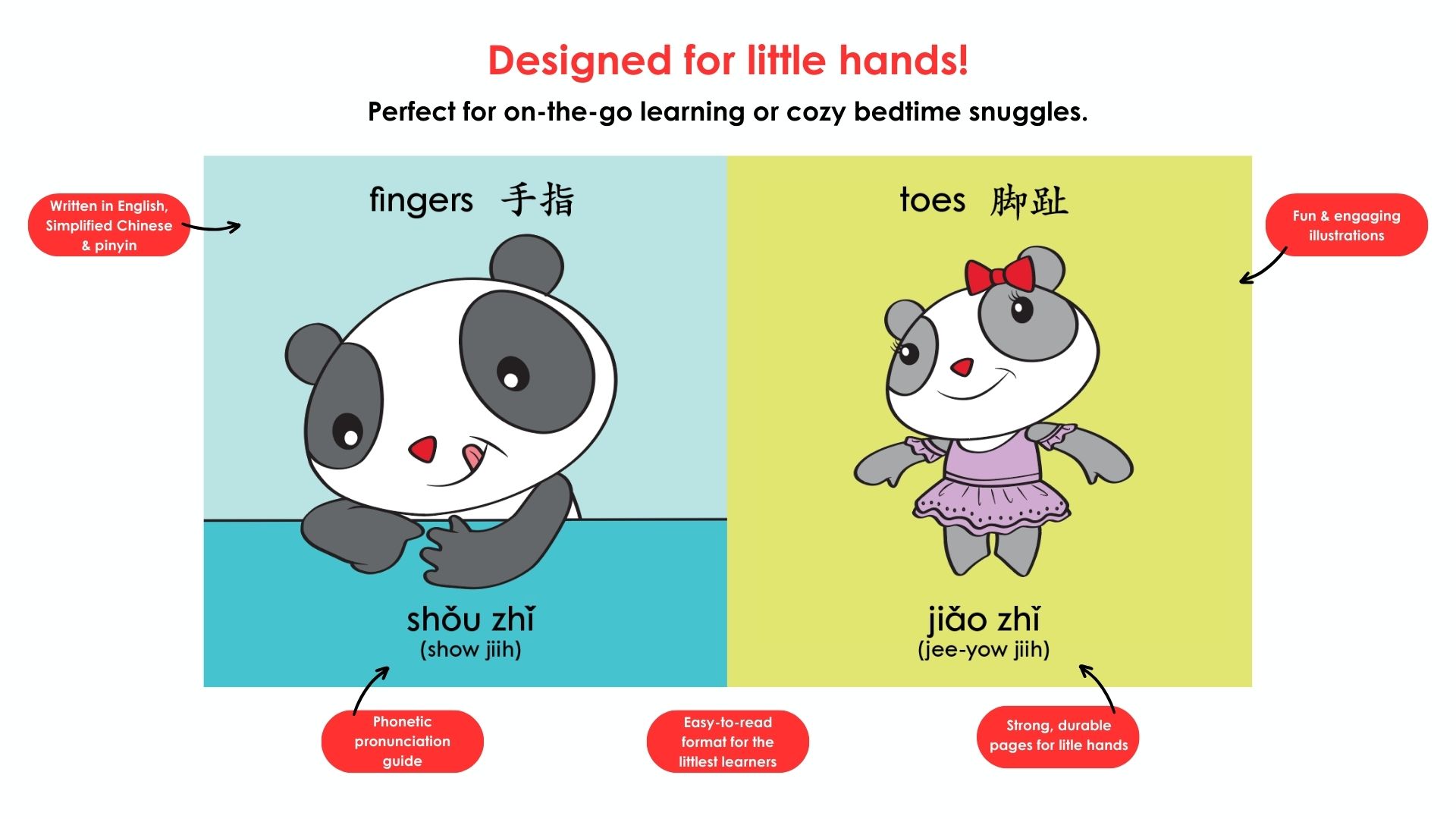
Gordon & Li Li: All About Me, on the other hand, tackles something closer and more physical, introducing young readers to parts of the body through Mandarin. Illustrated with playful and colorful artwork, each page opens a world of body parts such as fingers, toes, and shoulders. Basic words like “fingers” (手指, shǒu zhǐ) and “toes” (脚趾, jiǎo zhǐ) are demonstrated in fun and engaging ways with real-life examples to help children apply the words to their everyday activities. For example, “I am counting my ‘shǒu zhǐ’” or “Li Li is dancing ballet on her ‘jiǎo zhǐ.’”

Gordon & Li Li: All About Me introduces young readers to body parts in Mandarin, using playful illustrations and real-life examples to teach words.

This thoughtful approach allows children not only to learn new words but also to develop an early connection to body awareness and confidence. The simple, portable layout makes it perfect for children to carry wherever they go. And that’s not all! As the book comes to the last page, children can also practice singing along to the childhood anthem “Head, Shoulders, Knees, and Toes” in Mandarin, creating a fun and memorable activity for young readers.

Children reading a book from Gordon & Lili

Celebrate With Special Giveaways and Events

The journey is long, yet, the fruits are arriving. Landing a deal with Scholastic and building connections with talented individuals within the AAPI community has been inspiring and defining in her growth, professionally and culturally. 

What I’m most proud of is seeing the pride in my sons’ faces and the deeper cultural connection we’ve built as a family through this shared experience. It fills my heart with pride knowing that Gordon & Li Li connects us as a family and it inspires me to continue creating something meaningful for my boys—and for families everywhere.

In celebration of her new book’s release, Michele Wong McSween is hosting exciting Lunar New Year events and giveaways! These events are perfect opportunities for families to explore the books in-depth, enjoy a range of interactive activities, and learn more about Chinese culture and language. Stay tuned to AHN or Michele’s social media (mentioned below) for more updates on the giveaway!

Yet, Michele’s vision does not stop there. She shares that another book is already in the works, called Gordon & Li Li: ABC’s in NYC, set to launch in time for AAPI Heritage Month! This exciting new book will introduce children to learning their ABCs while exploring Gordon’s hometown, New York City.

Connect With Michele Wong McSween

Facebook: Gordon & Li Li 

Instagram: @gordonandlili

Website: Gordon & Li Li

IMG_4718-jpeg

Stories

Empowering the Future: Jason Chan on Uplifting Communities

“Hustle is more than just work, it is a movement that can change the world,” Jason Chan, Chief of Staff to AT&T President of the West Region and Director of External Affairs. 

Inspired by the hustle, sacrifice, and unwavering determination of his family and the first generation of Asian American immigrants, Jason felt a profound calling to make a difference for his community. This passion led him to a career in government affairs and advocacy, where he focuses on fostering collaboration between government entities, corporations, and organizations to create policies that truly support and uplift the communities they serve.

A Tale of Challenge and Inspiration

“I’ve been inspired by the countless stories of resilience and perseverance within our community,” states Jason. As a member of the Asian American, Native Hawaiian, and Pacific Islander (AANHPI) community, he is driven by a deep sense of responsibility to honor the legacy of those who paved the way before him—laying the groundwork for future generations.

Jason emphasizes that success is rarely a linear journey, and challenges are an inevitable part of the process. One of the most significant obstacles in his career has been navigating roles where AANHPIs are underrepresented, particularly in decision-making positions. This lack of representation has required Jason to work even harder to demonstrate his value, advocate for diversity, and ensure that the AANHPI community receives the recognition it deserves. 

What helped Jason overcome these challenges was leaning on a strong network of allies and mentors who believed in his vision and capabilities. He came to see setbacks not as failures but as opportunities for learning, growth, and redefining what’s possible. Jason firmly believes that the key to overcoming hardships lies in surrounding yourself with people who inspire, uplift, and challenge you to reach your fullest potential.

“During my time as Appointments Secretary for then-Mayor Gavin Newsom, it wasn’t always easy to challenge existing systems and push for diverse appointments. But I stayed committed to my belief that representation matters, and over time, those efforts led to tangible changes in the city’s leadership.” Jason exclaims.

The experience further solidified Jason’s conviction in the power of creating spaces for diverse voices and perspectives. It served as a powerful reminder that meaningful change becomes achievable when people unite and collaborate. With this belief at heart, Jason remains dedicated to his mission of uplifting others and dismantling the barriers that hinder progress.

Jason believes that overcoming hardships lies in surrounding yourself with people who inspire, uplift, and challenge you to reach your fullest potential.

Jason believes that overcoming hardships lies in surrounding yourself with people who inspire, uplift, and challenge you to reach your fullest potential.

From Dreams to Success

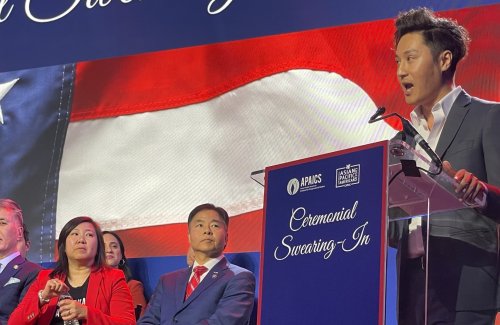
Jason has achieved numerous milestones, including being named Chairman of both the Asian Pacific American Institute for Congressional Studies (APAICS) and the California Asian Pacific Islander Legislative Caucus Institute (CAPILCI). These prestigious positions highlight his dedication to advocating for the representation and equity of the AANHPI community. Through these roles, Jason has been able to directly influence policies at both the national and state levels while fostering leadership development for the next generation.

In his current role at AT&T, Jason has demonstrated his commitment to supporting the AANHPI and LGBTQ+ communities through strategic partnerships, building strong relationships with stakeholders, and advocating for initiatives and policies that promote diversity and inclusion. His efforts have resulted in stronger connections, increased visibility for underrepresented groups, and meaningful investments in fostering equity and inclusion. However, Jason’s proudest accomplishment lies in the mentorship and guidance he has provided to emerging leaders, helping to shape the next generation of changemakers.

Jason shares with Asian Hustle Network, “Never underestimate the power of your story and the impact you can make. Our journeys, no matter how humble or challenging, hold immense value. They shape who we are and inspire others to dream bigger and aim higher.”

For Jason, the most rewarding achievement of his journey is witnessing the leaders he has mentored make meaningful contributions to their communities and careers. To him, success is not measured by personal accolades but by the impact one has on others and the legacy of opportunities created for future generations.

Success and the Journey Ahead

Jason’s vision is to create pathways that empower individuals to reach their full potential and, in turn, give back to their communities. He is dedicated to uplifting the Asian community by ensuring policies and decisions reflect our stories, perspectives, and needs. Through his work, he hopes to inspire others to take bold steps toward achieving greater representation and making their voices heard.

Jason affirms, “Let’s continue to hustle—not just for our personal ambitions, but for the collective success of our community. Together, we can create a future where every voice is heard, every dream is supported, and every barrier is broken.”

Connect With Jason

Facebook: Jason Chan

Linkedin: Jason C.

Twitter: Jason Chan

Instagram: @jayson326