Stories

September 2, 2023

SHARE:

Meet Jennifer Guo and Adam Szakacs, a couple with a creative vision. They wanted their child to cherish both her Chinese and Jewish roots, despite living far from family. So, they invented something extraordinary.

Inspired by their grandmothers’ unexpected friendship over mahjong, they reimagined the game as “Not Your Ma’s Jong.” This isn’t just any game; it’s a lively card version of mahjong that celebrates their backgrounds. It carries a powerful message – embracing your heritage and sharing it with others is something to be proud of.

Through Not Your Ma’s Jong, Jennifer and Adam hope to bring people closer. By sharing traditions, they aim to show that understanding each other’s cultures can create harmony.

In an exclusive interview with Asian Hustle Network, Jennifer and Adam share their journey in creating “Not Your Ma’s Jong.” Read through as we get a glimpse of how this game could help forge connections and celebrate diverse cultures.

Whether celebrating certain holidays, traveling together to meaningful places, or simply making a memorable recipe together, spending quality time together is the most important thing – and playing a game like Not Your Ma’s Jong is one way to spend time together.

Jennifer Guo

Can you tell us about the inspiration behind creating Not Your Ma’s Jong and how it connects to your Chinese and Jewish heritage?

Jenn: I learned how to play mahjong as a kid by watching my grandma play in China. Mahjong was a part of our daily lives and at the center of every family occasion. For me, mahjong is a way to connect with those memories.

My grandma used to split her time between her home in Xi’an, China, and Toronto where she stayed with my parents. In 2014, we brought my grandma to visit Adam’s granny who was healing from a hip injury. My grandma speaks only Mandarin, so we started by translating some simple hellos and small talk. It was so special to have them meet and communicate with each other.

Adam: At one point, we were talking about their respective cultures and the things they enjoy. My granny plays a lot of card games and also mentioned mahjong. Jenn’s grandma’s eyes lit up, and she told us about playing throughout her life. Jenn’s grandma is certainly the more avid player, but once my granny’s hip recovered and she was back home, they were able to play together.

Jenn: When I was pregnant with our first daughter in 2018, we started thinking about how we could connect our children with their cultures and heritage. I realized that living in Canada, they would not have the same exposure to Chinese traditions like mahjong as I did growing up. We started thinking about ways to honor the memories we had of growing up with our parents and grandparents and decided to create a simplified version of mahjong, which became Not Your Ma’s Jong.
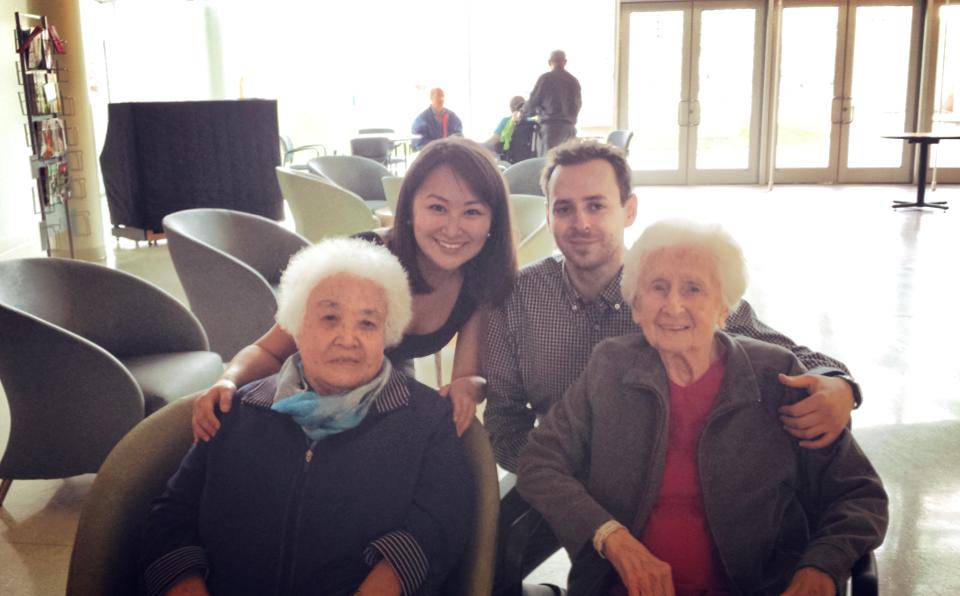
Jenn and Adam with their grandmas

As an international card game played around the world, what do you believe makes Not Your Ma’s Jong unique and appealing to a diverse audience?

Adam: We realized that even though our grandparents played mahjong and we played with them, we never played with our friends. We started asking around and kept hearing the same thing–most of our friends had heard of mahjong or seen their families play, but few knew how to play themselves.

Jenn: Not Your Ma’s Jong is a simplified version of mahjong, using 75 cards as opposed to 144 tiles in the traditional game. The rules are also simplified to create a fast-paced and fierce game that anyone can pick up quickly. When we started playing test versions with our friends, the excitement showed us we were on to something!

Could you share some examples of how you incorporated Chinese and Jewish emblems into Not Your Ma’s Jong? How do these cultural elements enhance the gameplay experience and foster cultural understanding?

Jenn: We wanted to dedicate the game to our grandmas. Many of the cards are symbols from growing up with them – some with Adam’s Jewish granny, and some with my Chinese grandma. Some center around memories of family feasts we’d eat together, gifts they’d give us, or how they made us feel – and while the symbols are specific to our cultures, those memories and feelings are universal.

Other cards are a bit whimsical – we imagined what their friendship could have been if they had lived near each other earlier in their lives. Things like doing tai chi together in a park, or building a muscular snowman together! We wanted to make them relatable for people who grew up in any culture, with special winks for people who grew up Chinese or Jewish.

What are some of the challenges you faced while developing and popularizing Not Your Ma’s Jong? How did you overcome those challenges, and what lessons did you learn along the way?

We had a lot of fun creating Not Your Ma’s Jong – but turning it into a product and making people aware of it was hard! After the initial Kickstarter campaign, the remaining games sat in our home for over a year until we started to get some media attention. We were fortunate that a blog article turned into a newspaper feature which then got our story and the game featured on TV twice! Hasbro took an interest at that point, licensed the game and it’s now being sold around the world. This showed us that people love it once they hear about it! That initial exposure was the hard part.

Can you share any heartwarming stories or feedback you have received from players of Not Your Ma’s Jong?

Adam: The initial Kickstarter campaign was a very personal experience for us. We received stories and repeat orders from some of the earliest recipients of the game, sharing how they played with their parents, children, or nieces and nephews, and how it caused them to reminisce about their own family stories when they saw the illustrations on the cards. We still love getting emails and seeing reviews from people who feel a connection to the game.

What advice would you give to individuals or families who are seeking to explore and celebrate their own cultural heritage? How can games like Not Your Ma’s Jong play a role in this process?

Jenn: It was important to us to not let our families’ cultures and memories fade away for our daughters, and creating this game was one of our ideas to do that. I know it’s hard – especially with young kids – but I think it’s important for parents to think back on their childhoods and choose some of the traditions that they want to continue with their children. Whether celebrating certain holidays, traveling together to meaningful places, or simply making a memorable recipe together, spending quality time together is the most important thing – and playing a game like Not Your Ma’s Jong is one way to spend time together.

In conclusion, what message or lasting impact do you hope Not Your Ma’s Jong will leave on players and society as a whole?

Jenn: The world can sometimes feel so divided – we hope people see this game, and the story behind it, as a small example of how people with different cultural backgrounds and languages can find common ground and develop a friendship. We hope they get a glimpse into Chinese and Jewish cultural experiences and relate with their own experiences too!

CONNECT WITH NOT YOUR MA’S JONG

Instagram: @notyourmasjong

Threads: @notyourmasjong

Website: notyourmasjong.com

Related Articles

Stories

A Cancer Survivor’s Life-Changing Journey to Self-Discovery and Empowerment

Jeanny Chai is an entrepreneur, coach, and cancer survivor. She’s inspired hundreds of women to break free from unfulfilling jobs and relationships. But she wasn’t always this way. In this exclusive interview she talks about how she went from a scared loner kid to a powerful leadership coach. 

Childhood Pressures and Shaping of Mindset

Growing up, Jeanny was always under pressure to achieve. Sound familiar? In episode 3 of her podcast, Asians Breaking Ceilings, she shares the expectations her parents placed on her.  “Oh, you’re going to be a doctor.” 

She lived under constant pressure to be perfect. “I was called careless when I missed math problems and my parents were displeased. I got disapproval and felt like a burden whenever I made mistakes, like spilling milk or getting sick. I felt like I had to be perfect to avoid anyone getting mad at me.”

You don’t need anyone’s permission, apology, validation, or approval for you to make the transition from unfulfilled to living your leadership potential.

Jeanny Chai

Her Battle with Cancer and Path to Transformation

As an adult she was free from her parents but then cancer got her. Her doctor told her that she had 3 tumors, stress-induced. Her reaction? “ashamed, scared, angry and then finally hopeful.” Despite cancer being a shitty experience, she had HOPE. How? 

Hope came when she realized that she was allowed to ask for help. It wasn’t her job to suffer alone in silence. She had managed to handle all the other stressors in her life alone, but this one was too much for her – and that was okay. For the first time ever, Jeanny learned asking for help was not a sign of failure or weakness. This theme would return later on.

A Glimmer of Hope in Solitude

Cancer threw Jeanny’s life and routine out the window. Yet the hardest part wasn’t the physical pain – it was the overwhelming sense of loneliness she experienced. Unable to have visitors, she was profoundly isolated, physically and emotionally. She shares, “When you are under so much medication, your days and nights mesh together and you get lost in your own thoughts,”

But in that time of sadness, Jeanny felt a glimmer of hope. One day, she heard a loud voice that declared, “You are already good enough.” The unexpected declaration left her in a state of awe. 

Jeanny had never entertained such a notion about herself before; this was a pivotal moment.  She kept repeating this idea to herself for the next few years, and that’s when she started to feel stronger, more confident, and more in control of her life. This also marked the starting point of her business, Bamboo Myth.

A Journey of Self-Discovery

After casually beating cancer, Jeanny embarked on a five-year journey of self-discovery.

“When I got sick, I was no longer focused on becoming the next Elon Musk or landing a job at the next unicorn start-up in Silicon Valley. Instead, I bought myself an electric piano and an acoustic guitar.  Later I bought a saxophone and ukulele and I gave myself voice lessons. I bought myself a baby rabbit, who was my bedside companion during my chemotherapy treatment. I remembered that I loved music, singing, and animals and learned to create my own happiness,” she shared.

With cancer showing her that life was short, Jeanny decided to leave the corporate world and start her own business, pursuing purpose instead of promotions. 

“Asians Breaking Ceilings” Podcast

Fast forward a few years and her business is thriving. She speaks about the Bamboo Ceiling at Fortune 500 companies and major conferences. 

She also runs a 12-week coaching program called “Live Your Leadership Potential,” and has coached over 300 Asian women, bringing “life-changing” results. Her program centers on 2 core principles that help women regain confidence, energy, and agency.

She teaches that what’s needed isn’t communication strategies, but permission to speak without guilt or shame. Once women overcome this barrier, their natural leadership abilities and newfound confidence are allowed to shine.

The best part? Jeanny emphasizes that this mindshift set doesn’t require years of therapy or yoga; all it takes is a focused approach to transform from burnout to happiness.

Now she is making these cultural-specific leadership strategies available to everyone,  through her podcast. In it, she shares a powerful new definition of success. 

“Confidence, assertiveness, and happiness are an inside job. So my new definition of success is this: Being able to decide, create, and ask for what you want in your career and life. And my podcast is designed exactly to do just that,” Jeanny shared.

Advice for Those with Similar Struggles

Did you resonate with any of this? Jeanny has the the following advice for individuals who struggle with people-pleasing, fear, or lack of self-compassion:

First, you must stop stuffing your feelings and coping by working harder and harder. Realize that you don’t need anyone’s permission, apology, validation, or approval for you to make the transition from unfulfilled to living your leadership potential.  

Stop getting more certifications and degrees to fill that feeling of “not being enough.”

Listen to my podcast! Start with Episode 1 and let yourself feel again. Many of us have numbed out our emotions so we can handle and cope with all the stress but this is the opposite of what we need to do to begin the transformation. 

Find a safe person (therapist, coach) and tell them your story. As Brene Brown says, shame thrives in silence. That’s why I’m paving the way by speaking up so others can speak up and be transformed for good.

And take this FREE assessment that I’ve created just for Asian Americans. It helps you identify in just under 5 minutes what is your biggest roadblock to success:

https://quiz.tryinteract.com/#/5daf9bbeb77a6e0014e41210

There is personal advice emailed to you based on your quiz results. 

CONNECT WITH JEANNY CHAI

Instagram: @jeannychai

Linkedin: Jeanny Chai

Twitter: @bamboomyth

Facebook: Bamboo Myth

Website (Bamboo Myth): bamboomyth.com

Website (Podcast): asiansbreakingceilings.com

Screen Shot 2023-09-26 at 2.33.38 PM-png

Stories

Young Siblings, Big Dreams: Oliver and Archer Noe’s Lobster-Inspired Card Game

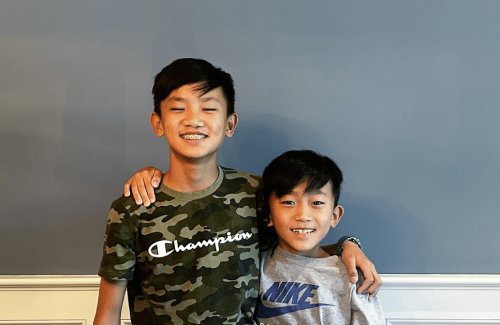
In the world of entrepreneurship, age knows no boundaries, and Oliver Noe (age 13) and Archer Noe (age 9) are perfect examples of this.

Sons of John Noe, CEO of Yobo Soju, these young talents are crafting their own path to success. We have previously featured John Noe and Yobo Soju in one of our articles titled “This Grape-Based Soju Brand Is Here To Empower Asian-American Spirits.”

Today, we turn our attention to the promising endeavors of Oliver and Archer as they share their inspiring journey in bringing the Maine Catch card game to life.

Finding Inspiration in Lobsters and Art

When asked about the source of their inspiration, the brothers responded with youthful exuberance, “We’re just two young, lobster-obsessed kids hoping to make our game a reality.” 

Their spark of creativity was ignited during a visit to Maine, where they stumbled upon a lobster shack that introduced them to the captivating world of rare lobsters and lobster collecting. Merging these newfound passions with their love for art, the concept of Maine Catch was born.

Navigating Challenges and Staying on Course

Like many creative minds, Oliver and Archer faced challenges on their journey. They openly admitted, “We often get sidetracked.”

Distractions can be a hurdle for entrepreneurs of any age, and learning to stay focused is a valuable skill they are honing.

“Our mission is to create a card game that people can enjoy. This achievement wouldn’t just be ours; it would inspire Asian children worldwide who dream of becoming entrepreneurs.”

Oliver and Archer Noe

Celebrating Artistic Achievements

Despite their age and the challenge of getting sidetracked, these young entrepreneurs have achieved remarkable milestones.

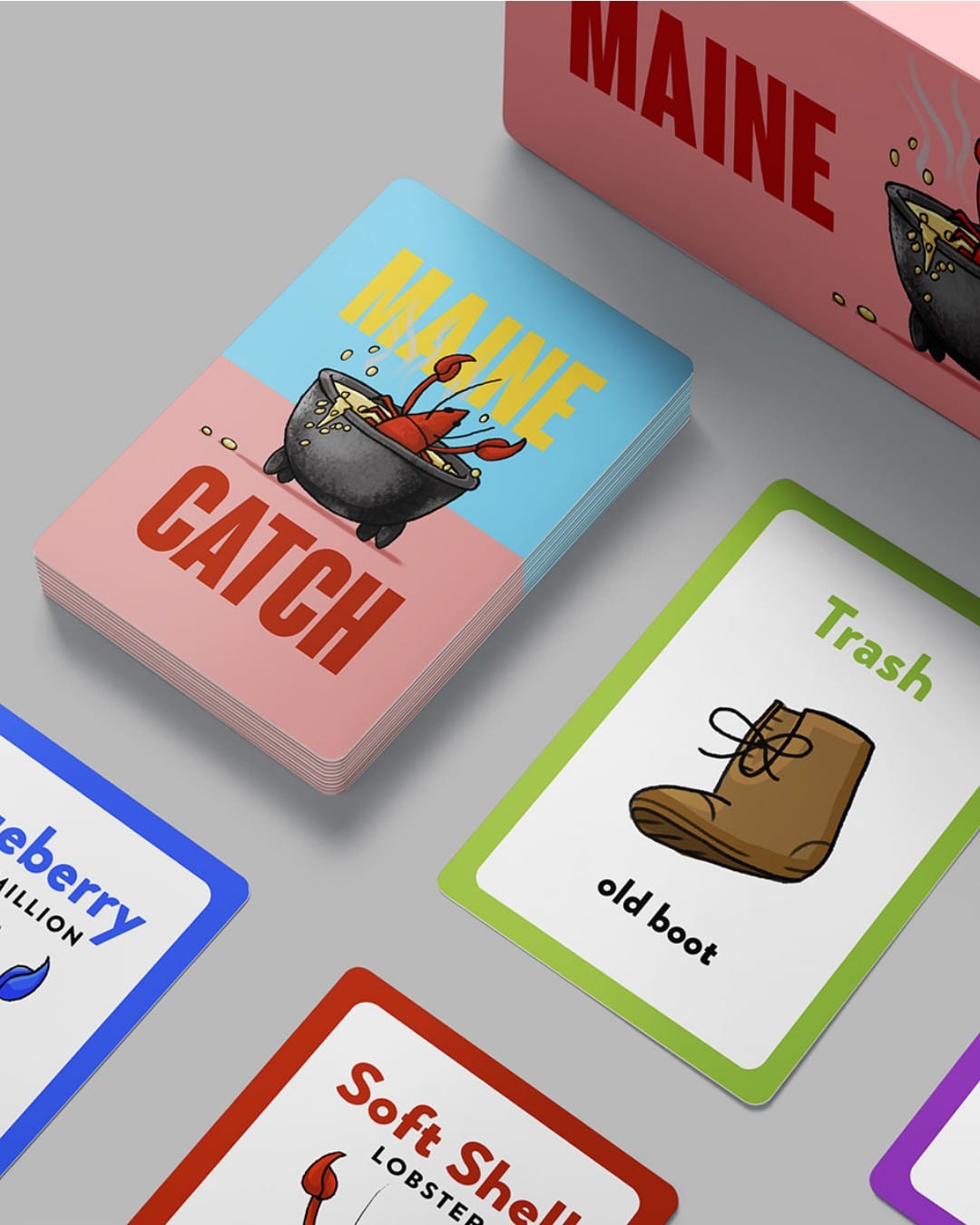
They take immense pride in the fact that all the art featured in Maine Catch is hand-drawn, meticulously refined on the computer, and masterfully shaded in. They have designed and created over 20 unique cards for the game.

Balancing School and Chores with Entrepreneurship

Beyond their entrepreneurial pursuits, Oliver and Archer are just like any other kids their age. While they are blazing a trail in the world of entrepreneurship, these young entrepreneurs still embrace their roles as students and household chore-doers.

Introducing Maine Catch

Oliver and Archer’s passion for game creation has been a lifelong journey, encompassing both imaginary adventures and tangible projects. Lately, their focus has shifted towards card games, with Maine Catch being their most ambitious and promising endeavor yet. It’s evident that their dedication to refining their skills is paying off with this exciting project.

Empowering Aspiring Entrepreneurs

When asked about their mission and vision for Maine Catch, the young entrepreneurs shared, “Our mission is to create a card game that people can enjoy. This achievement wouldn’t just be ours; it would inspire Asian children worldwide who dream of becoming entrepreneurs.” 

Their aspirations extend beyond their own success as they aim to empower the Asian community and inspire young minds to chase their entrepreneurial dreams.

Oliver and Archer Noe are setting a remarkable example of youthful determination and creativity in the world of entrepreneurship. Their journey from lobster shacks to designing a unique card game, Maine Catch, is an inspiring testament to the power of imagination and passion.

As they continue to grow and develop their entrepreneurial skills, they are not only achieving their dreams but also paving the way for aspiring young Asian entrepreneurs worldwide. We look forward to seeing Maine Catch make waves in the gaming world and the positive impact these young talents will have on their community.

SUPPORT OLIVER AND ARCHER

Website: mainecatchgame.com

Taufeek Shah

Stories

The Success Behind the First-Ever National Asian-Filipino-Owned Hot Sauce Brand

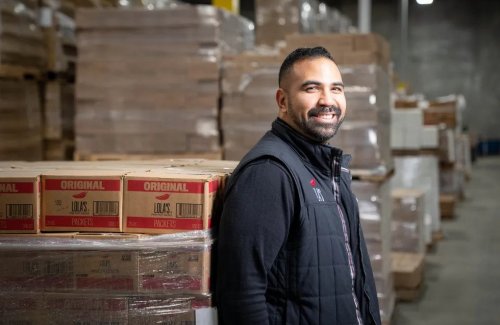
Taufeek Shah, the Founder and CEO of Lola’s Fine Hot Sauce, embodies a story that celebrates both multiculturalism and the passing down of traditions from one generation to the next.

Taufeek’s unique background, growing up with a Filipino mother and a Pakistani father who were immigrants, provided him with a rich tapestry of cultural influences. This upbringing laid the foundation for his culinary journey.

Taufeek’s parents arrived in the U.S. with dreams of a better life, despite limited resources. His father served in the military, while his mother established a medical practice in rural Northeast Iowa. Technically raised in small-town Iowa, Taufeek’s life was deeply influenced by three distinct cultures—Filipino, Pakistani, and American.

They aptly named their business “Lola’s,” a heartfelt tribute to Taufeek’s mother and a nod to the Tagalog term for grandmother.

Delightful Blend of Flavors

Taufeek’s culinary adventure was inspired by the delicious meals he savored at home. The fusion of Filipino and Pakistani flavors, combined with the locally grown peppers from Iowa farmers, crafted a one-of-a-kind gastronomic experience. This delightful blend of flavors ignited Taufeek’s vision to share these flavors with the world by bottling them.

A Humble Beginning

Taufeek’s venture into the business world began during his career in the financial services sector. He introduced his mother’s homemade hot sauce at office gatherings, and it became an immediate sensation. Encouraged by the enthusiastic feedback, he persuaded his mother to join him in sharing their family’s hot sauce with a broader audience.

Their entrepreneurial journey commenced with humble beginnings, starting at pop-up locations and farmer’s markets. As their loyal customer base expanded, Taufeek’s confidence in building a successful enterprise grew. They aptly named their business “Lola’s,” a heartfelt tribute to Taufeek’s mother and a nod to the Tagalog term for grandmother.

The Recipe for Success

The secret to Lola’s Fine Hot Sauce’s success was their dedication to preserving the original recipe. Taufeek took on multiple roles, from investor to CEO, marketer, and even delivery driver, to propel their brand forward. They started by supplying restaurants and gradually expanded into retail outlets, gaining a foothold across the nation.

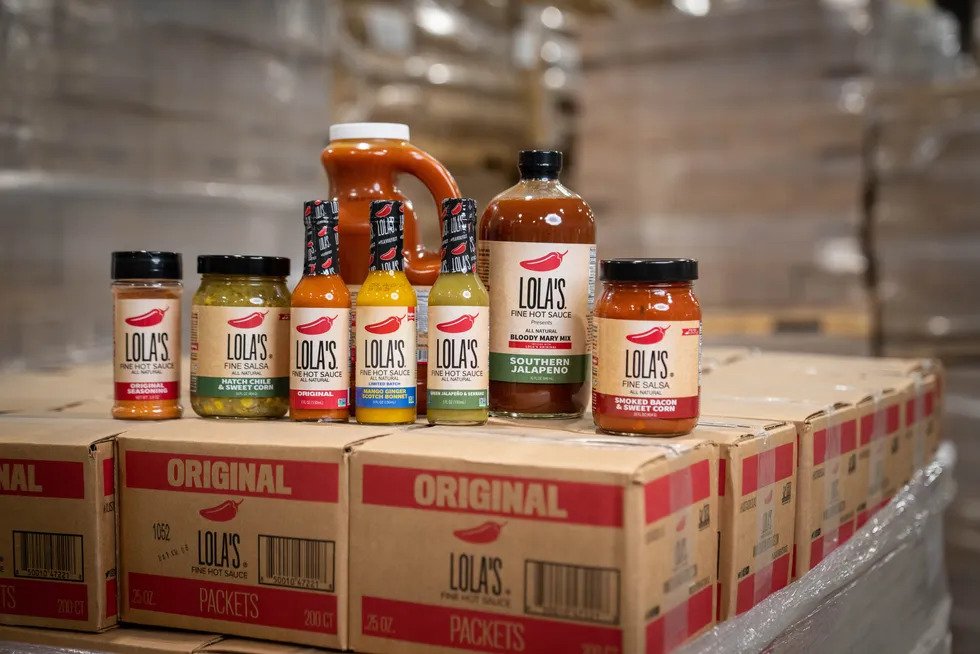
Today, Lola’s Fine Hot Sauce is available in over 14,000 locations, a testament to their unwavering commitment to quality and taste.

First-Ever National Asian-Filipino-Owned Hot Sauce Brand

The mission of Lola’s Fine Hot Sauce is to provide a truly unique hot sauce for everyone to enjoy. Their hot sauce is made from the freshest ingredients and includes a blend of the world’s most unique peppers for a delectable experience. Their sauces are meant to enhance your dishes with delightful flavor, not just intense heat.

Their recent milestone of landing in over 3,600 Walgreens stores across the country makes them the first-ever national Asian-Filipino-owned hot sauce brand in the United States.

The legacy of Lola’s Fine Hot Sauce extends far beyond being a mere condiment. It serves as a symbol of family heritage, the fusion of diverse cultures, and the realization of the American dream.

CONNECT WITH LOLA’S FINE HOT SAUCE

Instagram: @LolasFineHotSauce 

Website: lolasfinehotsauce.com 

News

Filipino Couple Started a Small Business to Support Autism in the Philippines

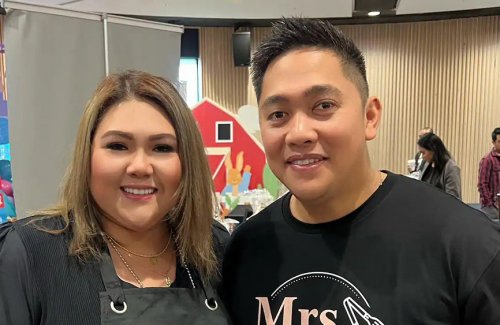
Amidst a worldwide lockdown, Chris and Minette Sales, a Filipino couple living in Australia, found a way to help families back in the Philippines who are dealing with autism. Their small business, Mrs. Market, helps groups that support people with autism.

Their journey began when their twin sons were diagnosed with autism. Living in Australia gave them access to much-needed help for their children. But Minette, being a Filipino, wanted to share this kind of support with families in the Philippines.

Their business, Mrs. Market, started because their children had special dietary needs. They decided to use this as an opportunity to give back. Some of their profits go to organizations in the Philippines that help people with autism.

Image Source: Mrs. Market

Chris, a nurse, already had a feeling that their sons were behind in their development. He told Minette that they needed to face the challenge together and be the best parents for their kids. They run their small business with support from Minette’s mom, who’s also a nurse, and their friends who help when they can.

Mrs. Market is part of a community in Melbourne that supports Filipino business owners. The Sari-Sari Success community started during the lockdown and has become a place where Filipinos can share their experiences as entrepreneurs. It’s all about helping each other succeed, build networks, and make new friends.

Featured Image Source: SBS Filipino