Stories

September 2, 2023

SHARE:

Meet Jennifer Guo and Adam Szakacs, a couple with a creative vision. They wanted their child to cherish both her Chinese and Jewish roots, despite living far from family. So, they invented something extraordinary.

Inspired by their grandmothers’ unexpected friendship over mahjong, they reimagined the game as “Not Your Ma’s Jong.” This isn’t just any game; it’s a lively card version of mahjong that celebrates their backgrounds. It carries a powerful message – embracing your heritage and sharing it with others is something to be proud of.

Through Not Your Ma’s Jong, Jennifer and Adam hope to bring people closer. By sharing traditions, they aim to show that understanding each other’s cultures can create harmony.

In an exclusive interview with Asian Hustle Network, Jennifer and Adam share their journey in creating “Not Your Ma’s Jong.” Read through as we get a glimpse of how this game could help forge connections and celebrate diverse cultures.

Whether celebrating certain holidays, traveling together to meaningful places, or simply making a memorable recipe together, spending quality time together is the most important thing – and playing a game like Not Your Ma’s Jong is one way to spend time together.

Jennifer Guo

Can you tell us about the inspiration behind creating Not Your Ma’s Jong and how it connects to your Chinese and Jewish heritage?

Jenn: I learned how to play mahjong as a kid by watching my grandma play in China. Mahjong was a part of our daily lives and at the center of every family occasion. For me, mahjong is a way to connect with those memories.

My grandma used to split her time between her home in Xi’an, China, and Toronto where she stayed with my parents. In 2014, we brought my grandma to visit Adam’s granny who was healing from a hip injury. My grandma speaks only Mandarin, so we started by translating some simple hellos and small talk. It was so special to have them meet and communicate with each other.

Adam: At one point, we were talking about their respective cultures and the things they enjoy. My granny plays a lot of card games and also mentioned mahjong. Jenn’s grandma’s eyes lit up, and she told us about playing throughout her life. Jenn’s grandma is certainly the more avid player, but once my granny’s hip recovered and she was back home, they were able to play together.

Jenn: When I was pregnant with our first daughter in 2018, we started thinking about how we could connect our children with their cultures and heritage. I realized that living in Canada, they would not have the same exposure to Chinese traditions like mahjong as I did growing up. We started thinking about ways to honor the memories we had of growing up with our parents and grandparents and decided to create a simplified version of mahjong, which became Not Your Ma’s Jong.
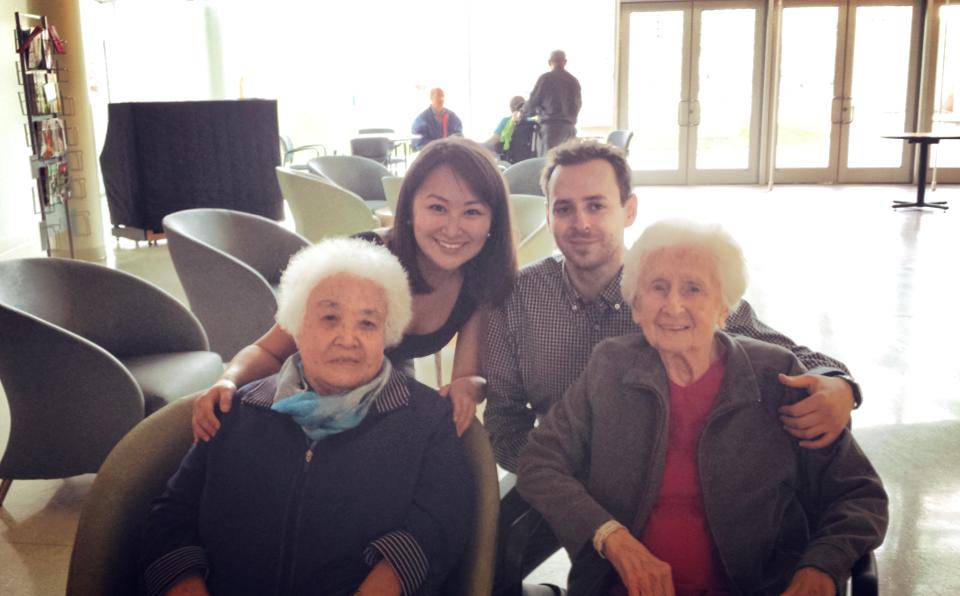
Jenn and Adam with their grandmas

As an international card game played around the world, what do you believe makes Not Your Ma’s Jong unique and appealing to a diverse audience?

Adam: We realized that even though our grandparents played mahjong and we played with them, we never played with our friends. We started asking around and kept hearing the same thing–most of our friends had heard of mahjong or seen their families play, but few knew how to play themselves.

Jenn: Not Your Ma’s Jong is a simplified version of mahjong, using 75 cards as opposed to 144 tiles in the traditional game. The rules are also simplified to create a fast-paced and fierce game that anyone can pick up quickly. When we started playing test versions with our friends, the excitement showed us we were on to something!

Could you share some examples of how you incorporated Chinese and Jewish emblems into Not Your Ma’s Jong? How do these cultural elements enhance the gameplay experience and foster cultural understanding?

Jenn: We wanted to dedicate the game to our grandmas. Many of the cards are symbols from growing up with them – some with Adam’s Jewish granny, and some with my Chinese grandma. Some center around memories of family feasts we’d eat together, gifts they’d give us, or how they made us feel – and while the symbols are specific to our cultures, those memories and feelings are universal.

Other cards are a bit whimsical – we imagined what their friendship could have been if they had lived near each other earlier in their lives. Things like doing tai chi together in a park, or building a muscular snowman together! We wanted to make them relatable for people who grew up in any culture, with special winks for people who grew up Chinese or Jewish.

What are some of the challenges you faced while developing and popularizing Not Your Ma’s Jong? How did you overcome those challenges, and what lessons did you learn along the way?

We had a lot of fun creating Not Your Ma’s Jong – but turning it into a product and making people aware of it was hard! After the initial Kickstarter campaign, the remaining games sat in our home for over a year until we started to get some media attention. We were fortunate that a blog article turned into a newspaper feature which then got our story and the game featured on TV twice! Hasbro took an interest at that point, licensed the game and it’s now being sold around the world. This showed us that people love it once they hear about it! That initial exposure was the hard part.

Can you share any heartwarming stories or feedback you have received from players of Not Your Ma’s Jong?

Adam: The initial Kickstarter campaign was a very personal experience for us. We received stories and repeat orders from some of the earliest recipients of the game, sharing how they played with their parents, children, or nieces and nephews, and how it caused them to reminisce about their own family stories when they saw the illustrations on the cards. We still love getting emails and seeing reviews from people who feel a connection to the game.

What advice would you give to individuals or families who are seeking to explore and celebrate their own cultural heritage? How can games like Not Your Ma’s Jong play a role in this process?

Jenn: It was important to us to not let our families’ cultures and memories fade away for our daughters, and creating this game was one of our ideas to do that. I know it’s hard – especially with young kids – but I think it’s important for parents to think back on their childhoods and choose some of the traditions that they want to continue with their children. Whether celebrating certain holidays, traveling together to meaningful places, or simply making a memorable recipe together, spending quality time together is the most important thing – and playing a game like Not Your Ma’s Jong is one way to spend time together.

In conclusion, what message or lasting impact do you hope Not Your Ma’s Jong will leave on players and society as a whole?

Jenn: The world can sometimes feel so divided – we hope people see this game, and the story behind it, as a small example of how people with different cultural backgrounds and languages can find common ground and develop a friendship. We hope they get a glimpse into Chinese and Jewish cultural experiences and relate with their own experiences too!

CONNECT WITH NOT YOUR MA’S JONG

Instagram: @notyourmasjong

Threads: @notyourmasjong

Website: notyourmasjong.com

Related Articles

News

Chinese Paper Company Promotes Employee Well-Being through Running Incentives

Guangdong Dongpo Paper, a paper company based in Guangdong, China, is reshaping the conventional corporate bonus structure by tying annual bonuses to employees’ physical fitness levels.

Chairman Lin Zhiyong recently revealed an unconventional program where the size of the annual bonus is directly proportional to the number of miles an employee runs each month.

Under this fitness-centric initiative, employees must achieve a monthly running target of 62 miles to qualify for an annual bonus equivalent to 130% of their monthly salary. Those covering a more modest 31 miles per month still earn a bonus equivalent to one month’s salary. As an added incentive, employees who sustain a pace of 31 miles per month for six consecutive months are rewarded with a complimentary pair of running shoes.

Lin Zhiyong, who has scaled Mount Everest twice in 2022 and 2023, justified the program and said to Business Insider, “My business can only endure if my employees are healthy.” 

While some employees have embraced the initiative as a novel way to stay fit and earn extra income simultaneously, social media platform Weibo has witnessed skepticism.

Critics question the feasibility of expecting employees to run two miles daily to meet the ambitious monthly target, speculating whether the company aims to transform its workforce into track athletes. Concerns about potential health risks have also surfaced, with some individuals fearing that the rigorous physical requirements may lead to injuries or health complications. 

Despite the mixed reactions, Guangdong Dongpo Paper’s innovative approach to employee incentives has sparked discussions about the delicate balance between workplace motivation and individual health, leaving observers curious about the long-term impact of this incentive program on both the company and its employees.

News

A Global Celebration of API Excellence in the 21st Annual Unforgettable Gala

In a dazzling celebration of Asian and Pacific Islander (API) luminaries in the entertainment industry, Character Media presented the 21st Unforgettable Gala (UNFO). This black-tie event, held at the prestigious Beverly Hilton, attracted over 700 esteemed guests, including influential entertainers, leaders, and prominent API-led brands.

This year, UNFO expanded its reach globally by partnering with AsiaLab, an entertainment platform fostering collaboration among API stars internationally, with an aim to broaden awards categories, recognizing exceptional API contributions on a global scale.

The event, which took place on December 16th, featured an exquisite three-course gourmet dinner, special on-stage moments by honorees, live entertainment, and exclusive performances. The festivities continued at an extravagant after-party, ensuring an unforgettable night for attendees.

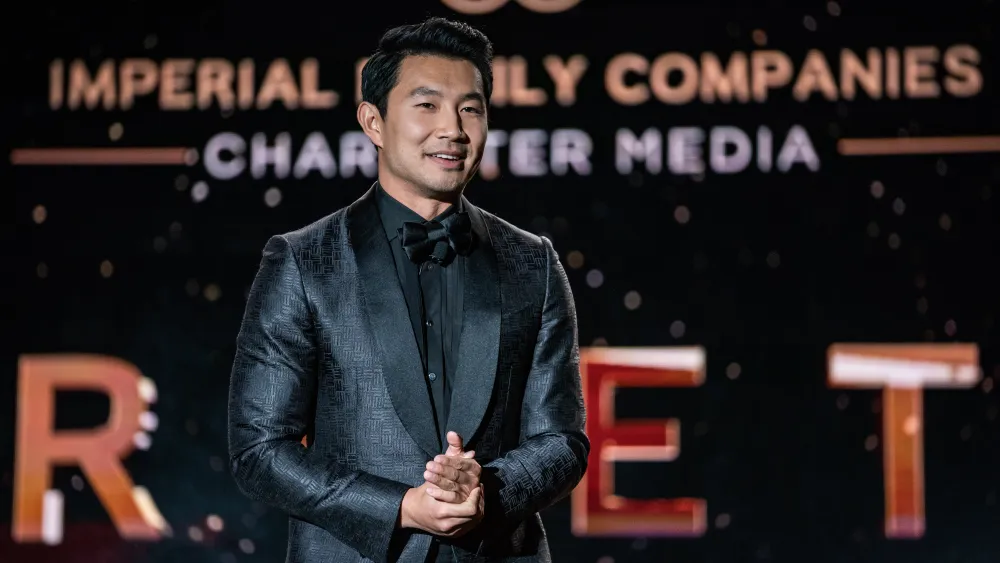
Simu Liu, Source: Variety

Special guests, including host Simu Liu, Selection Committee Co-Chairs Destin Daniel Cretton and Lisa Ling, added glamour to the evening. Notable honorees included Charles Melton, Steven Yeun, Greta Lee, Young Mazino, Adele Lim, Sung Jin Lee, Steven Lim, and the cast of “Never Have I Ever.” Global influencers, such as Mackenyu and Byeong Kyu Cho, were recognized for their groundbreaking contributions.

Keynote addresses by Destin Daniel Cretton and Lisa Ling, along with contributions from esteemed committee members, including Apl.de.Ap, Bing Chen, Sujata Day, Ken Jeong, Jeremy Lin, and Janet Yang, added to the event’s significance.

Founder James Ryu expressed pride in overcoming challenges, emphasizing the collective dedication and resilience of the entertainment community. The Gala not only celebrated API excellence but also highlighted the industry’s enduring commitment to inclusivity and representation.

Stories

How Saigon Cider Became The First Vietnamese Organic Cider

In every sip of cider, there’s a story waiting to be told—a narrative of flavors, a journey of craftsmanship, and a celebration of culture.

For Saigon Cider, it all began when Hannah Jefferys left her job as an architect in 2011 and moved to Vietnam when she was just 25 years old. Hannah grew up in a little place in the British countryside called Somerset, where she witnessed how cider evolved from being a farmer-associated drink to a cosmopolitan summer beverage.

Upon reaching Saigon and basking in the daily dose of sunshine, Hannah delved into the rich Vietnamese ‘nhậu’ culture, centered around shared dishes and toasts on plastic chairs lining the pavements of Saigon.

“There’s nothing quite like it elsewhere in the world — certainly not in the UK,” Hannah shared.

Yet, amidst the rich cultural tapestry, there was something she missed… cider.

A STORY OF INSPIRATION

Hannah found inspiration in the everyday scenes of Vietnamese individuals setting up shop just about anywhere and having a go. “Us British tend to think about risk rather than how things might work, and tend not to take the leap,” she says. She was also inspired by some local F&B brands that started their hustle in home kitchens, gradually expanding to a national and global scale.

This is how Saigon Cider was brought to life. What started as a humble stall at Saigon Outcast became the first organic craft cider in Vietnam.

CELEBRATING VICTORIES

Saigon Cider has notched up some impressive achievements on its journey. With their lineup of three ciders, they have been able to win 15 international awards, beating brands from established cider-making countries like the UK, US and France in some of the competitions.

Even despite the hurdles during the global pandemic and the challenges of being a small yet growing company in a bustling market, Saigon Cider has stood tall, and built a strong brand and following.

This year, Saigon Cider is entering new international markets, and they are incredibly proud to be able to share a taste of Vietnam with the world.

A NARRATIVE OF FLAVORS

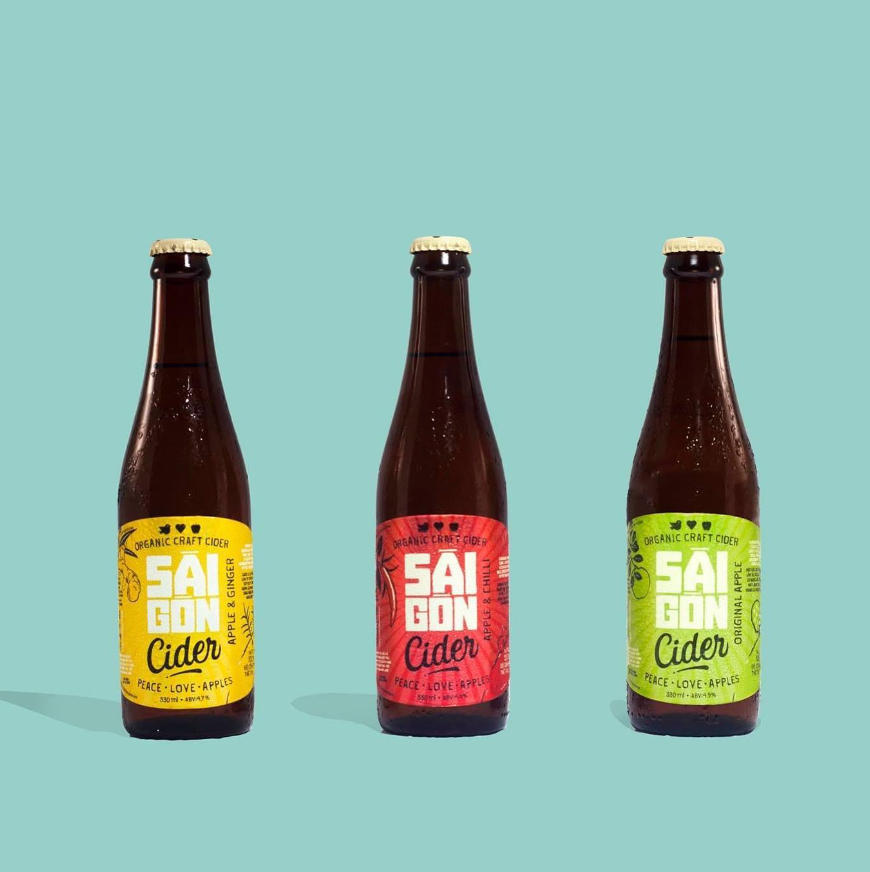
Saigon Cider currently has three delightful flavors to offer:

  1. APPLE & GINGER: A blend featuring organic apples with a punch of Vietnamese ginger. This one is a revitalizing splash of a cider.
  2. ORIGINAL APPLE: This cider is crafted from fuji, gala and other favorite organic apples, perfect for a well deserved chill break after chaos.
  3. APPLE & CHILLI: A combination of organic apples with a Vietnamese chilli kick, delivering a dose of spice and sense of mischief.

Each flavor is thoughtfully crafted to bring a delightful and invigorating experience to everyone’s palate.

A GLOBAL TASTE WITH LOCAL ROOTS

Despite cider being an original British drink, Hannah is proud to present Saigon Cider as a Vietnamese brand.

“From the start, we have been a Vietnamese brand first and foremost, and proudly so. We were created here, grown here and inspired by here and I’m now personally rooted here with my Vietnamese family. 

Our Vietnamese-ness runs through everything we do, our choices of organically farmed ingredients, our labeling and of course, our name. In export markets we retain as much Vietnamese wording on our labels as we can and we hope that we are chosen with pride by Vietnamese and that wider Asian consumers will also feel some sense of ownership over our brand,” Hannah shared with Asian Hustle Network.

The brand currently has openings for exclusive distribution deals in various countries. They would love to grow with overseas Vietnamese distributors who know how to ‘nhậu’, so now is the time to hit them up and be a part of sharing Peace, Love & Apples globally.

CONNECT WITH SAIGON CIDER

Facebook: Saigon Cider

Instagram: @saigoncider

Linkedin: Saigon Cider

Fei-Fei_Li.original-png

News

Fei-Fei Li’s Exclusion from Influential List Fuels Debate on Gender Disparity in AI Leadership

In a recent revelation, the artificial intelligence (AI) community has been thrust into a contentious discussion surrounding gender representation after the omission of Fei-Fei Li from the New York Times’ “Who’s Who Behind the Dawn of the Modern Artificial Intelligence Movement” list.

The list, published on December 3, 2023, spotlighted twelve influential figures instrumental in the growth of AI over the past decade, including industry giants such as Sam Altman, Bill Gates, Elon Musk, and Mark Zuckerberg. However, a striking absence of women, notably Fei-Fei Li, has ignited a broader conversation about gender diversity in the AI landscape.

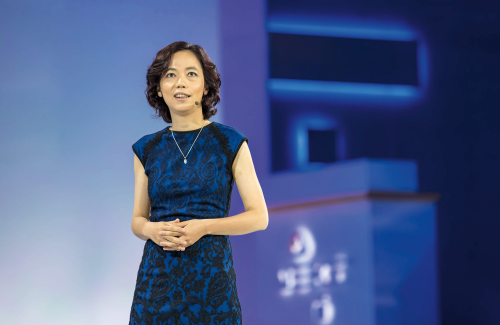
Image Source: IEEE Spectrum

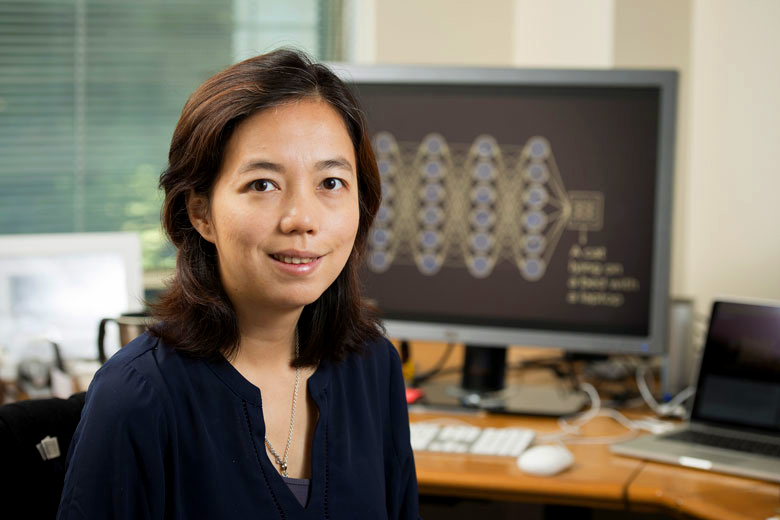
Fei-Fei Li is a distinguished computer science researcher recognized for her creation of ImageNet, a pioneering dataset, that drove progress in computer vision, and paved the way for AlexNet. Her contributions, spanning nearly 15 years as a professor at Stanford University and co-director of the Stanford University Human-Centered AI Institute, have significantly shaped the AI field.

According to VentureBeat, the New York Times described the featured individuals as “a group of researchers, tech executives and venture capitalists” who “had worked for more than a decade to fuel AI” before chatbots “exploded in popularity.”

The list’s lack of gender diversity, particularly the absence of women like Fei-Fei Li, has sparked widespread criticism and calls for a more inclusive representation of the diverse talent within the AI community.

Featured Image Source: Caltech EE