Stories

July 19, 2024

SHARE:

Photography is not just about capturing images. For some, it can be about preserving memories, telling stories, and expressing emotions.

In today’s visually-driven world, high-quality photography has become more important than ever, yet it often remains out of reach for many due to its high costs.

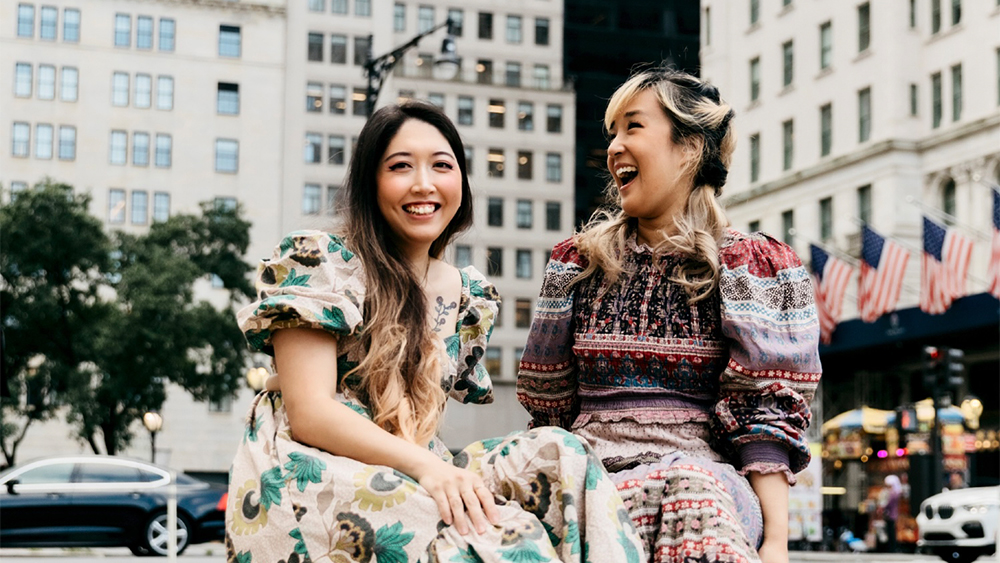
Enter Shoott, an AAPI female-run startup co-founded by Jennifer Tsay and Jennifer Yeh, redefining photography with an innovative, affordable approach. Their pay-per-photo model offers free 30-minute sessions, allowing clients to pay only for the photos they love, creating a win-win situation for both photographers and clients.

Jennifer Yeh (left) and Jennifer Tsay (right) co-founded Shoott after recognizing the financial struggles many photographers face in the gig economy.

In June 2018, they tested this idea in New York City, and it worked. Clients loved the convenience and affordability, and photographers appreciated the improved logistics and reduced travel time. The company grew rapidly during the pandemic, expanding to over 60 cities in the US and increasing revenue from $807K in 2019 to $9MM in 2023.

In an exclusive interview with Asian Hustle Network, Jennifer Tsay shared Shoott’s inspiring journey, the challenges they faced, and their vision for the future.

The Inspiration Behind Shoott

As an actor and creative, Jennifer Tsay saw firsthand how most artists struggle because their lives are gig to gig. You may have one gig a week, two in totally different places, or sometimes none at all. This led them to develop a business model with two complementary goals:

  • Goal #1: Improve logistics for the photographer.
  • Goal #2: Create a hard-to-resist offer for clients.

This blossomed into Shoott’s unique model which offers free photo sessions with clients only paying for the photos they want, and photographers benefiting from Shoott handling all marketing, scheduling, and logistics on top of a minimum hourly rate plus commissions.

A joyful family of four poses together, captured by Shoott

Early Challenges and Indicators of Success

Starting Shoott came with the typical hurdles of first-time entrepreneurship. The team had to learn quickly, constantly test hypotheses, and maintain strict alignment on goals. They also faced skepticism from photographers who feared exploitation. Shoott navigated this by ensuring transparency and creating a model where photographers’ earnings were directly tied to the company’s success. Positive client feedback and growing demand confirmed they were on the right track, with Shoott maintaining a 4.8 star rating on Google and expanding to over 60 cities in the US.

Staying Relevant in a Changing Industry

Shoott stays ahead by engaging with photographer communities, reading industry trends, and listening to feedback from clients and photographers. This constant evolution helps Shoott remain relevant and meet the changing tastes and demands of its clientele.

According to Tsay, “It’s also crucial to always stay sharp on what’s trending on social media in terms of tastes and demand. What do people like? What do people value? What are people trying to convey about themselves? This has so many implications for what we provide as a service and also how we approach our brand as a whole – to run a brand is to be continually evolving!”

Community Impact and Contributions

Shoott’s mission is twofold:

  • To support freelance photographers in the community by providing a reliable source of supplemental income so artists can stay artists if they so desire; and
  • To help people in the community capture their life moments both big and small with a beautiful and affordable photography service. 

“We truly hope our offer creates more demand for professional photography – anything we can do to promote and normalize the habitual support of artists is a major win in our book!” Tsay shared.

A Memorable Client Story

One touching story comes from Lydia, a solo parent who praised Shoott for capturing authentic moments with her daughter. Despite financial constraints, Shoott’s affordable model allowed Lydia to obtain high-quality photos that she otherwise couldn’t afford.

Diversity and Inclusion

Shoott is an AAPI female-run startup that prioritizes diversity and inclusion. They ensure varied representation in their marketing and hire team members from diverse backgrounds. Understanding the different personal commitments of their team, Shoott offers a flexible work environment, accommodating various needs while ensuring dedication to the job.

Personal Rewards

When Shoott started, their primary goal was to see if they could create a business model to balance all parties and create an ultimate win-win-win for clients, photographers, and staff. “We didn’t know if we could do it, but we had to try,” Tsay shared.

“What’s been personally rewarding is to see that we could start with this really ambitious goal and actually make it a reality. It sounds nuts to be able to make a business that offers free photo sessions work, but we just achieved profitability last year for the first time. It’s so gratifying to see that when we put our minds to something, we can make things work. And on top of that, we provide a service that is fundamentally about gratitude and love – how many people can say that?”

Shoott co-founders Jennifer Yeh (left) and Jennifer Tsay (right), celebrating their journey from an ambitious goal to a profitable reality, provide a service centered on gratitude and love for all parties involved.

Message from Jen and Jen

In addition to our free 30 minute consumer offer, we’re so proud to be building out our headshot and branding offer for teams, organizations, and conferences. We realized how many people hate having their photo taken and we wanted to provide a fun and empowering experience for folks while delivering high quality photos to support their endeavors. If your team is in the market for new and affordable headshots, please let us know!

Connect with Shoott

IG: @shoottphotos

TikTok: @shoottphotos 

Facebook: Shoott

LinkedIn: Shoott
Related Articles

Image Source: Shoutout LA

Uncategorized

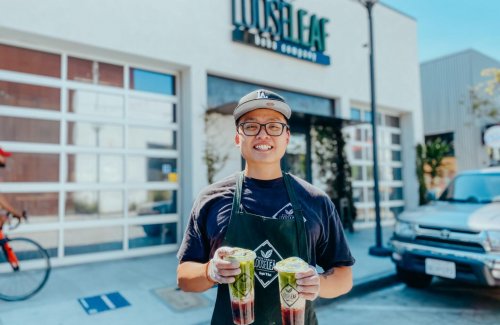
Loose Leaf Boba Company Blends Third-wave Coffee And Tea With Cultural Inclusion

Loose Leaf Boba Company is not only well-known for its expert “bobaristas.” but also for its diverse cultural representation including Burmese, Thai, Filipino, and Hispanic. “Going out for boba” was a childhood tradition that assisted the company’s mission of unifying people by normalizing cultural differences.

The brand constantly values cultural inclusivity and also empowers BIPOC, AAPI, women, and the LGBTQ+ community.

Loose Leaf Boba Company’s sharp vision of “Building a Better Boba Company” comes to life every time a customer experiences a foreign favorite, for which they make beverages for customers to try global favorites. This means making tasty beverages like Vietnamese Egg Coffee or Mexican-inspired Guava Atole.

Founded in 2012 by husband and wife duo Thomas and Jasmine Liu in West Covina, the viral third-wave shop has locations across the United States, including Connecticut, California, and Massachusetts.  This bubble tea tycoon has big plans to grow large retail sites in metro Dallas, TX, Northampton, MA, and Hadley, MA.

Image Source: Forbes Asia

Stories

Farm of the Future: Farm66 Cultivates Vegetables Within Hong Kong’s Skyscrapers

In the course of COVID-19, a significant number of people have reported having insufficient access to fresh food entirely for sustainable living.

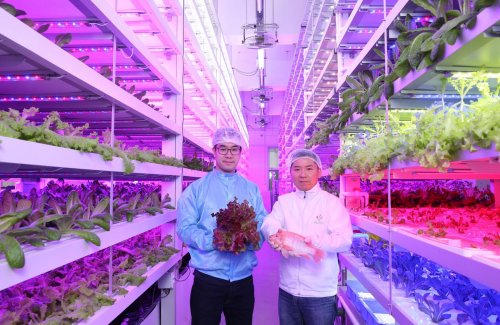
Gordon Tam has created an urban farm that solves this problem. He is the co-founder and CEO of the Hong Kong-based vertical farming – Farm66. With advanced farming technology, he grows fresh vegetables inside skyscrapers in Hong Kong. 

In 2013, Tam and Billy Lam, Farm66’s COO, founded Hong Kong’s first high-tech vertical farm and developed LED lighting and wavelength innovations for farms. Tam and his team found that different light wavelengths affect plant growth. Red LEDs generate longer, stronger stems, whereas blue LEDs produce larger, stronger leaves.

The technological and robotic advances at Farm66 are also both groundbreaking. The 20,000-square-foot indoor farm is managed with IoT sensors and robots for quality assurance and other tasks. 

When asked about the challenges facing conventional farming, Tam cites a lack of talent as a significant issue. “It’s because the children of many remaining farmers don’t want to take over the farms. They think it’s a very tedious job.” – he told Forbes. This is why he placed a premium on technology and saw it as a means to attract young people to farming by making the industry more appealing.

Farm66’s latest farming mechanism impressed billionaire Tang Yiu’s tech-focused venture capital firm ParticleX. The Alibaba Entrepreneurs Fund, Sino Group, and the Hong Kong government’s Cyberport and Science & Technology Parks are also investors. A total of over $4 million in funding has been acquired so far. Hengqin Financial Investment and the City University of Hong Kong have also backed Farm66.

There are currently fifteen full-time workers at Farm66, including data analysts, food scientists, and mechanical engineers, who can harvest as much as seven tons of vegetables every month. Tam hopes to share its company’s urban farming methods and success in Hong Kong with other cities. For instance, Farm66 converted a shipping container into a mobile farm for use in Middle Eastern desert cities.

Image Source: Jack X. Li/Eater Chicago

Stories

Chicago’s Khmai Fine Dining: A Daughter’s Tribute To Mother’s Healing From Khmer Rouge

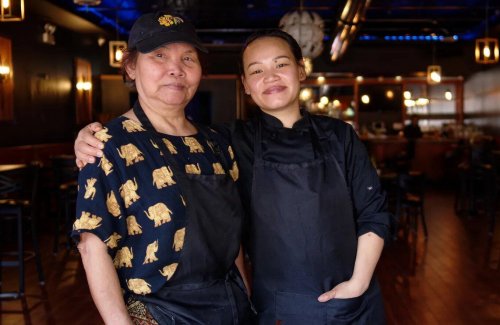
Khmai Fine Dining is a unique Cambodian restaurant in Rogers Park, Chicago. Owned by executive chef Mona Sang, the name is a mix of “Khmer,” the language and ethnicity of native Cambodians, and “me,” the Khmer term for mother, to emphasize her mother’s important role in presenting traditional Cambodian cuisine.

Mona, together with her sister, two brothers, and mother Sarom Sieng came to the US in early 1980 after surviving the Cambodian genocide. The Khmer Rouge tortured Sarom and executed her husband as the family fled to Thai refugee camps.

A single mother who never spoke English, Sarom began cooking for other families in the Cambodian community in order to survive and eventually expanded into catering events at Living Water Community Church in Rogers Park.

Mona hasn’t heard every detail of Sarom’s experience during the genocide, but the trauma her mother went through is still very clear to her. “I don’t know the whole story, but she tells it little by little when she’s cooking,” Mona told Eater Chicago. “I think there’s a lot of other people out there who have been through the same thing, but their story has never been told.”

In 2018, another family tragedy came when one of Mona’s brothers died unexpectedly in his sleep. Her mother discovered him the next morning and that image haunted Sarom.

Now that she is almost 80 years old, Sarom spends her days with her 13 grandchildren or assisting at Khmai.

According to Eater, Mona isn’t simply conveying a message to its customers with Khmai’s name. It is also a way of healing and writing a love letter to her mother who has fought for them to survive through the restaurant.

Khmai’s mesmerizing dishes include “Nom Bahn Chok”, a vermicelli noodle dish with minced tilapia marinated in kreoung and prahok, simmered in coconut fish stock, “Sach Koh Ang”, beef skewers marinated in lemongrass, Khmer spices and chili peppers, and Mai’s famous eggrolls stuffed with ground chicken, bean thread noodles and taro root.

Image Source: Liezel Nudalo Formentera

Uncategorized

Filipina Mom Started Her Career Selling Vegetables Got Her Degree At 32 To Become A Teacher

Liezel Nudalo Formentera is now ready to work toward achieving her lifelong ambition in the field of education.

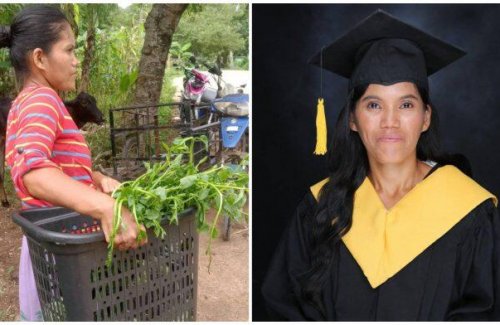
Formentera works as a street vendor in Cebu, Philippines, and hopes to improve her family’s situation someday. The only way she can see doing so is to further her education and get a better job. She could not finish elementary and high school, but she was determined and decided to join the DepEd’s ALS (Department of Education’s Alternative Learning System) program. 

ALS is a parallel learning system in the Philippines that gives students an alternative to the formal education they already got. She didn’t have to miss out on her primary education because of ALS.

In 2018, Formentera finished high school, and she began to sign up for college. She went to Cebu Technological University to earn a Bachelor of Industrial Technology with a major in Computer Technology (CTU). 

Because she also has to look after her children while she is in school, there were times when she felt physically exhausted from her work. They also experienced financial difficulties, but her farmer husband assists and supports her. There were times when she wanted to give up on her studies when times were tough, but she considered her children and the life she has worked so hard to provide for them. Thus, she worked harder for it.

She understood that there is no age limit on learning. Today, she remains overjoyed and grateful that she never expected to graduate from college. “Life is like this when you are confronted with hard times; simply pray to the Lord, and your blessing will arrive when you least expect it. This is for my children and my hope for the prosperity of my family. My children will not face poverty as I did.” – she happily shared with their local newspaper, The Philippine Star.