Stories

July 19, 2024

SHARE:

Photography is not just about capturing images. For some, it can be about preserving memories, telling stories, and expressing emotions.

In today’s visually-driven world, high-quality photography has become more important than ever, yet it often remains out of reach for many due to its high costs.

Enter Shoott, an AAPI female-run startup co-founded by Jennifer Tsay and Jennifer Yeh, redefining photography with an innovative, affordable approach. Their pay-per-photo model offers free 30-minute sessions, allowing clients to pay only for the photos they love, creating a win-win situation for both photographers and clients.

Jennifer Yeh (left) and Jennifer Tsay (right) co-founded Shoott after recognizing the financial struggles many photographers face in the gig economy.

In June 2018, they tested this idea in New York City, and it worked. Clients loved the convenience and affordability, and photographers appreciated the improved logistics and reduced travel time. The company grew rapidly during the pandemic, expanding to over 60 cities in the US and increasing revenue from $807K in 2019 to $9MM in 2023.

In an exclusive interview with Asian Hustle Network, Jennifer Tsay shared Shoott’s inspiring journey, the challenges they faced, and their vision for the future.

The Inspiration Behind Shoott

As an actor and creative, Jennifer Tsay saw firsthand how most artists struggle because their lives are gig to gig. You may have one gig a week, two in totally different places, or sometimes none at all. This led them to develop a business model with two complementary goals:

  • Goal #1: Improve logistics for the photographer.
  • Goal #2: Create a hard-to-resist offer for clients.

This blossomed into Shoott’s unique model which offers free photo sessions with clients only paying for the photos they want, and photographers benefiting from Shoott handling all marketing, scheduling, and logistics on top of a minimum hourly rate plus commissions.

A joyful family of four poses together, captured by Shoott

Early Challenges and Indicators of Success

Starting Shoott came with the typical hurdles of first-time entrepreneurship. The team had to learn quickly, constantly test hypotheses, and maintain strict alignment on goals. They also faced skepticism from photographers who feared exploitation. Shoott navigated this by ensuring transparency and creating a model where photographers’ earnings were directly tied to the company’s success. Positive client feedback and growing demand confirmed they were on the right track, with Shoott maintaining a 4.8 star rating on Google and expanding to over 60 cities in the US.

Staying Relevant in a Changing Industry

Shoott stays ahead by engaging with photographer communities, reading industry trends, and listening to feedback from clients and photographers. This constant evolution helps Shoott remain relevant and meet the changing tastes and demands of its clientele.

According to Tsay, “It’s also crucial to always stay sharp on what’s trending on social media in terms of tastes and demand. What do people like? What do people value? What are people trying to convey about themselves? This has so many implications for what we provide as a service and also how we approach our brand as a whole – to run a brand is to be continually evolving!”

Community Impact and Contributions

Shoott’s mission is twofold:

  • To support freelance photographers in the community by providing a reliable source of supplemental income so artists can stay artists if they so desire; and
  • To help people in the community capture their life moments both big and small with a beautiful and affordable photography service. 

“We truly hope our offer creates more demand for professional photography – anything we can do to promote and normalize the habitual support of artists is a major win in our book!” Tsay shared.

A Memorable Client Story

One touching story comes from Lydia, a solo parent who praised Shoott for capturing authentic moments with her daughter. Despite financial constraints, Shoott’s affordable model allowed Lydia to obtain high-quality photos that she otherwise couldn’t afford.

Diversity and Inclusion

Shoott is an AAPI female-run startup that prioritizes diversity and inclusion. They ensure varied representation in their marketing and hire team members from diverse backgrounds. Understanding the different personal commitments of their team, Shoott offers a flexible work environment, accommodating various needs while ensuring dedication to the job.

Personal Rewards

When Shoott started, their primary goal was to see if they could create a business model to balance all parties and create an ultimate win-win-win for clients, photographers, and staff. “We didn’t know if we could do it, but we had to try,” Tsay shared.

“What’s been personally rewarding is to see that we could start with this really ambitious goal and actually make it a reality. It sounds nuts to be able to make a business that offers free photo sessions work, but we just achieved profitability last year for the first time. It’s so gratifying to see that when we put our minds to something, we can make things work. And on top of that, we provide a service that is fundamentally about gratitude and love – how many people can say that?”

Shoott co-founders Jennifer Yeh (left) and Jennifer Tsay (right), celebrating their journey from an ambitious goal to a profitable reality, provide a service centered on gratitude and love for all parties involved.

Message from Jen and Jen

In addition to our free 30 minute consumer offer, we’re so proud to be building out our headshot and branding offer for teams, organizations, and conferences. We realized how many people hate having their photo taken and we wanted to provide a fun and empowering experience for folks while delivering high quality photos to support their endeavors. If your team is in the market for new and affordable headshots, please let us know!

Connect with Shoott

IG: @shoottphotos

TikTok: @shoottphotos 

Facebook: Shoott

LinkedIn: Shoott
Related Articles

107308298-1695918669890-107308298-1695912316230-230920-mi-10-MM-jae-byun00_00_21_07Still021_REV-jpg

News

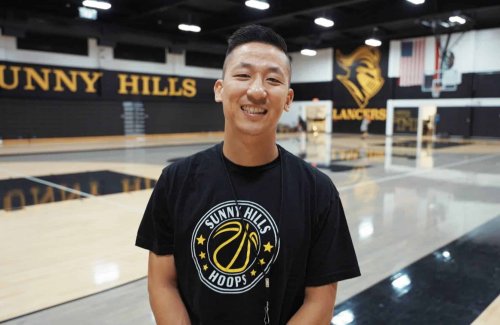
A Teacher and Basketball Coach’s Path to a Six-Figure Income in Orange County

Meet Jae Byun, a math teacher and basketball coach in Orange County, California, who’s making a six-figure salary doing what he loves.

Originally majoring in business economics at the University of California, Irvine, Jae initially set his sights on a financial industry career. However, after completing internships in that field, he felt a desire for something different.

During his senior year in 2013, he accepted a coaching position at his former high school in Orange County, guided by the stability and income potential his coaches emphasized in the teaching profession.

“It wasn’t going to make me a millionaire, but it was going to allow me to have time and freedom. That really appealed to me,” he said to CNBC.

Born in South Korea, Jae moved to California at a young age and grew up valuing hard work, learning from his truck driver father and spa worker mother. His parents were concerned about him at first and disappointed that he took a career in education, but eventually, they came around with the fact and loved that Jae now lives with them. Jae is paying them $800 for rent and helping with household expenses, even though they told him that he didn’t need to.

Image Source: CNBC

It took Jae about six years to reach his current salary of nearly $115,000, including coaching stipends and summer programs. He actively manages his money, saving half of his monthly income and investing in retirement accounts. Even with some unexpected expenses, Jae remains committed to financial stability.

Looking ahead, Jae plans to generate extra income and ensure a comfortable retirement for his parents.

Featured Image Source: CNBC

IMG_1735-jpg

Stories

How This Solo Female Founder Leverages Technology to Create Authentic Relationships

Ever found yourself in a new place, surrounded by unfamiliar faces, looking for friends or a community that shares your interest? Erin Zhao knows that feeling all too well.

With a childhood marked by frequent moves, each relocation brought Erin the recurring challenge of seeking kindred spirits who matched her enthusiasm for outdoor activities like cycling, golfing, and hiking. But here’s the thing: we live in an era where it’s so easy to connect with people virtually, have friends online, and yet feel like something’s missing.

As a person who loves solving puzzles and coming up with creative solutions, Erin founded OutWeGo, a wellness platform headquartered in the Bay Area, designed to combat feelings of loneliness and disconnection by facilitating personalized activities in an exclusive and curated community.

The Challenges of Being a Solo Female Founder and First-Time Entrepreneur

Erin faced distinctive challenges on her path to establishing OutWeGo, specially as a solo female founder and a first-time entrepreneur. One of them was finding the delicate balance between technological innovation and a human-centric vision.

Creating a digital platform that encourages authentic personal connections demands not only technical skills but also a deep understanding of social dynamics and user safety. Erin tackled this challenge by immersing herself in user feedback, embracing iterative design, and ensuring the platform was not only secure but also intuitively designed.

Another challenge that Erin faced was the weight of responsibilities that comes with being a solo founder. Managing everything from product development to marketing, finance, and user experience without the buffer of co-founders meant an increased workload and the necessity for rapid up-skilling in various domains.

Erin met this challenge head-on by embracing continuous learning, taking online courses, and networking with experts to acquire knowledge beyond her initial expertise.

Creating a Solution to the Problem

While doing extensive market research, including interviews with her friends and strangers, Erin found that the struggle of having real, meaningful connections these days is widespread. She discovered that many people, particularly those relocating or seeking companionship for specific activities, faced difficulties in finding suitable partners.

Realizing the commonality of this problem, Erin saw a clear opportunity to leverage technology and create a solution with OutWeGo.

Bridging the Gap with OutWeGo

Erin’s mission with OutWeGo is clear – to facilitate genuine, meaningful connections by bridging the gap between digital interactions and real-world social experiences. The vision is to create an exclusive, curated platform where individuals bond over shared interests, particularly in outdoor and sports activities.

For the Asian community, OutWeGo serves as a powerful tool for empowerment. The platform fosters inclusivity, providing a space where Asians in the diaspora can connect with peers who share similar backgrounds, values, and passions. OutWeGo nurtures a sense of belonging and solidarity, reinforcing cultural connections and supportive networks among Asians living abroad.

OutWeGo Cycling Activity

Erin’s role in advancing overall wellness and social cohesion aligns with the principles of diversity, inclusivity, and mutual respect, making a tangible difference in the lives of the Asian community.

Connect with OutWeGo

Website: outwegosocial.com

Instagram: @outwegosocial

Linkedin: OutWeGo

107029357-1647031565961-Francis_Lau_-_B-roll_Stringoutmp400_24_35_15Still004-jpg

News

The Unspoken Truth About Early Retirement Based on This 42-Year-Old Retired Engineer

In the pursuit of early retirement, Francis, a 42-year-old electrical engineer, made headlines when he quit his job in 2017 with a substantial $1.2 million in savings and investments.

At the time, he embraced the FIRE (Financial Independence, Retire Early) movement, a concept that advocates for financial freedom and early retirement. However, Francis’s unique journey and subsequent return to work shed light on the misconceptions surrounding the desire for complete retirement.

According to CNBC, upon leaving his engineering role, where he earned a $120,000 base salary plus additional equity and bonuses, Francis discovered that a life without work became “really boring.” Contrary to the belief that most people aspire to retire early, he contends that what individuals truly seek is a sabbatical or extended break from their careers, typically lasting a year or two.

Image Source: CNBC

He had $1.2 million in savings and investments when he quit his job, and he shared that the trick to getting there was spending as little money as possible. First, he paid off his house, which cost $22,000 a year. Then, he tried hard to spend as little money as possible on everything else. 

He cut out things like streaming services and even went without a cellphone for a bit. Francis is also really good at using credit cards to get points, and he has more than 20 of them at a time. This helps him get extra value for his money.

Even though he enjoyed two years of not working and traveling, Francis got a bit bored and decided to start working again in 2019. But this time, he focused on his YouTube channel with 350,000 followers, making videos about money topics. It turns out people loved it, and he now makes around $10,000 a month from YouTube. This money covers his living costs, and whatever is left goes into his savings.

“Now I no longer call myself ‘retired’ because I am putting in my full-time effort into YouTube,” Francis shared to CNBC. “I’d like to put a lot more work into it and grow it … I think it’s a work in progress.”

Featured Image Source: CNBC

News

Chinese Paper Company Promotes Employee Well-Being through Running Incentives

Guangdong Dongpo Paper, a paper company based in Guangdong, China, is reshaping the conventional corporate bonus structure by tying annual bonuses to employees’ physical fitness levels.

Chairman Lin Zhiyong recently revealed an unconventional program where the size of the annual bonus is directly proportional to the number of miles an employee runs each month.

Under this fitness-centric initiative, employees must achieve a monthly running target of 62 miles to qualify for an annual bonus equivalent to 130% of their monthly salary. Those covering a more modest 31 miles per month still earn a bonus equivalent to one month’s salary. As an added incentive, employees who sustain a pace of 31 miles per month for six consecutive months are rewarded with a complimentary pair of running shoes.

Lin Zhiyong, who has scaled Mount Everest twice in 2022 and 2023, justified the program and said to Business Insider, “My business can only endure if my employees are healthy.” 

While some employees have embraced the initiative as a novel way to stay fit and earn extra income simultaneously, social media platform Weibo has witnessed skepticism.

Critics question the feasibility of expecting employees to run two miles daily to meet the ambitious monthly target, speculating whether the company aims to transform its workforce into track athletes. Concerns about potential health risks have also surfaced, with some individuals fearing that the rigorous physical requirements may lead to injuries or health complications. 

Despite the mixed reactions, Guangdong Dongpo Paper’s innovative approach to employee incentives has sparked discussions about the delicate balance between workplace motivation and individual health, leaving observers curious about the long-term impact of this incentive program on both the company and its employees.