Stories

April 30, 2024

SHARE:

In a world where AI is all the rage, two AHN members are using AI to champion authentic storytelling in the publishing industry.

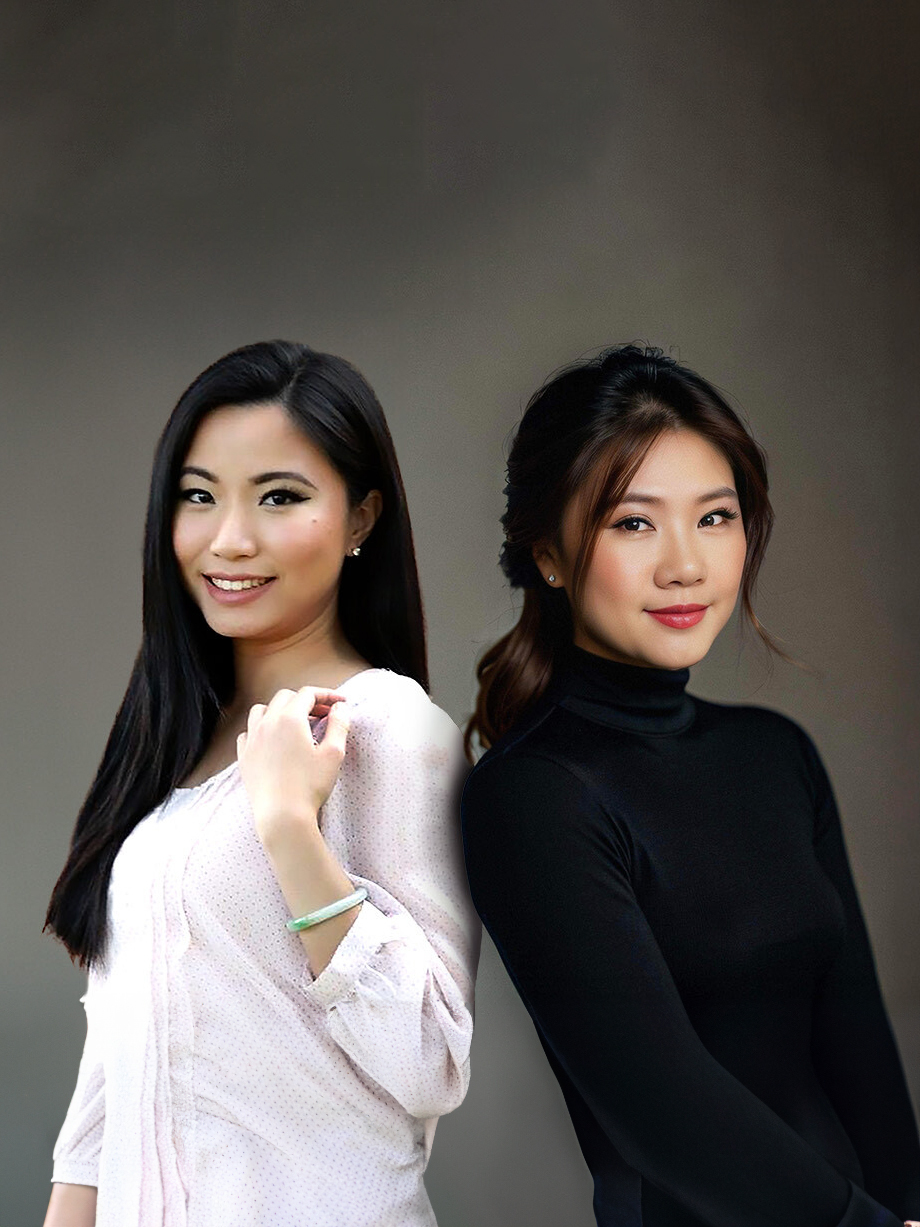
As entrepreneurs and advocates for change, Yobe Qiu and Serena Li have made it their mission to champion diversity and inclusion in children’s literature, ensuring that every child, regardless of their background, sees themselves represented and celebrated. Now they are building a new platform together  – BookAnAuthor.com – which uses machine learning to make it easier for schools, organizations and corporations to book authors for events, and buy directly from authors.

A MATCH MADE IN AHN

We had the opportunity to have an exclusive interview with Yobe and Serena, whose journeys began with a chance encounter on the Asian Hustle Network community. Yobe is a serial entrepreneur in education and founder of By Yobe Qiu Multicultural Books and Toys, while Serena is the founder of Duck Duck Books and Eco Goods. It was here that Yobe and Serena found common ground:

Yobe: We were both members of the AHN group and I have posted a few times in the group to connect with other “hustlers.” One day I posted about looking for an editor in our community for our newest book, “I Am an Amazing Asian Girl”. I wanted to make sure my editor is someone who my book can speak to and Serena commented on my post that she could help. That was the start of our relationship, and AHN was our matchmaker! 

We started working together on that project and I was extremely impressed with her talent, dedication, and brilliance, we went on to do a few more projects together. What initially drew us to each other’s work was our experience in our fields, our respect for each other’s work ethics, and our support for each other to help one another grow. 

Serena: I am incredibly grateful that Yobe took a chance with me. During the pandemic, where in-person interaction was close to none, Yobe trusted me with her book – a stranger across the country. Our relationship is a testament to the power of community. 

ASIAN AMERICAN BOOKS EVERYWHERE ALL AT ONCE

Together, Yobe and Serena embarked on a mission to promote diversity and representation in children’s literature, culminating in the launch of the “Asian American Books Everywhere All At Once” campaign in April 2023. The campaign aimed to provide books featuring AAPI characters and stories to schools across the United States, championing authentic storytelling and cultural celebration:

Yobe: I was inspired by Michelle Yeoh when she said at the Oscars, “Every little girl who looks like [her] to know what’s possible. Dream big.” I wanted to provide books to schools that feature AAPI children, families, and cultures, to help our children feel represented and celebrated. That night, I called up Serena and two other author friends to join forces. We named the campaign, “Asian American Books Everywhere All at Once” as a spin-off from EEAAO’s huge win for the AAPI community in media! The name, despite being very long, received tremendous support among the community. It was very timely. Within a month, we exceeded our original goal and sent over 1500+ books to 20 schools across 5 states and donated books to them. 

Serena: All of the books we donated either featured AAPI characters or were written by an AAPI author. Our effort was a direct response to the book ban that was happening across the U.S. Instead of sitting still, we rallied our community at a grassroots level to support the schools around the country. 

DIFFERENT UPBRINGINGS, SAME GOALS

Yobe and Serena grew up from different backgrounds, but together, they draw upon their rich experiences to advocate for greater inclusivity and representation in children’s literature, ensuring that young readers from all walks of life feel empowered and inspired by the stories they encounter.

Yobe: Growing up surrounded by diversity and a very strong Chinese community in NYC’s Chinatown, I am proud of who I am and my culture because it was celebrated in the city. I wouldn’t be who I am today if it wasn’t because of the environment I grew up in. I’ve learned to be curious and make friends with people from all cultures growing up in the Big Apple. The hustling culture and welcoming spirit of New York Chinatown is ingrained in my DNA. 

My first job after graduate school was teaching. I wanted to discuss the Lunar New Year with my students, but there weren’t any materials that covered the diverse ways many Asian diasporas celebrate their New Year. I had students who were Korean, Vietnamese, Indian, and Thai in the classrooms, but most of the books were about the Chinese New Year. In my opinion, it was important not only to discuss the culture I was from but also to acknowledge the blended cultures my daughter’s generation would grow up in. So I took the initiative and wrote my very first book, “Our Lunar New Year: Celebrating the Lunar New Year in 5 Different Asian Communities.”

Serena: My experience was a bit different than Yobe’s. I moved to a suburb in Houston, TX at the age of 14 with my family. I didn’t speak any English. At that time, Houston wasn’t nearly as diverse. I remember my neighbors and classmates genuinely asking me, “Do Asians speak Asian?”. The road to immigration was hard, but I survived it. Being a 1.5-generation Chinese American, I identified equally as a Chinese person and as an American. 

Fast forward, now that I have children of my own, I look at them daily and ponder how they would identify themselves. I want them to grow up being proud of exactly who they are, their family history, and their blended cultures. I want to write books that hone in on the social emotional themes that are cross-cultural, so children can be kind to themselves and kind to others. I want to write books that are bilingual, so children of different cultures can learn to be open-minded. 

BOOKANAUTHOR.COM: YOUR GATEWAY TO LITERARY CONNECTIONS

Building upon the success of their campaign, they set their sights on a new endeavor: BookAnAuthor.com. This innovative platform, set to launch on April 15, 2024, aims to connect authors with schools, organizations, and independent bookstores, making literary engagements more accessible and fostering a love for reading among students nationwide:

Yobe: For the same reasons why literature should feature more diverse characters and stories, coming out of the pandemic, we see an increasing need for in-person literary engagements. There’s nothing that inspires students more than meeting their favorite authors. Currently, there isn’t a platform available that helps schools and organizations discover and book authors for events based on their requirements and constraints. The diverse authors, especially those who don’t have traditional agents representing them, are having a hard time finding which institutions are seeking authors for events at the moment. We want to build an ecosystem that offers literary services in a comprehensive way, from discovery to booking, from bulk orders to fundraising. Our tagline is “Your Gateway to Literary Connections”. 

Serena: Both Yobe and I are passionate about helping other authors. We each have consulting businesses helping authors realize their publishing dreams. Book An Author naturally becomes our next step. It allows us to take the learning from our very successful Asian American Books Everywhere All At Once campaign last year and scale it to support not only our immediate network but also the entire publishing community. We are here to use technology to disrupt the publishing industry! 

With BookAnAuthor.com, authors can showcase their profiles, books, and expertise, organized by zip code, rates, and availability. This allows for efficient management of bookings, event scheduling, and receipt of valuable feedback from schools, ultimately improving services and expanding audiences.

For schools, the platform simplifies the process of finding and booking diverse, vetted authors for visits, workshops, and other activities. It offers flexible discovery and booking options based on location, rates, and genres, as well as the ability to release RFPs and review customized bids systematically.

Additionally, the platform provides access to educational resources, enables educators to share feedback and ratings, and includes money-back guarantees and security features for easy booking processes.

CONNECT WITH YOBE AND SERENA / BOOK AN AUTHOR

“We are so grateful to have this community and if anyone has any insight for us, we are all ears. We are also happy to help anyone else in the community if they need help with publishing!” – Yobe Qiu

Book An Author: @BookAnAuthor (Facebook, Instagram, LinkedIn, TikTok) 

Website: bookanauthor.com 

Yobe Qiu, Co-founder and CEO, CFO: https://www.linkedin.com/in/yobe-qiu/

Serena Li, Co-founder and COO, CMO: https://www.linkedin.com/in/serenayli/

By Yobe Qiu – Multicultural Children’s Books and Toys: @ByYobeQiu (Facebook, Instagram, TikTok, Amazon) 

Duck Duck Books + Eco Goods – Multilingual, SEL Kids Books and Eco-conscious Gifts: @duckduckbooks (Facebook, Instagram, Threads, TikTok, Pinterest, Google, YouTube)
Related Articles

The Fresno Bee-jpeg

News

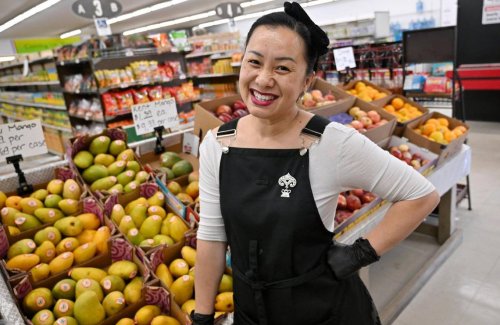
Hmong Baker “The Brioche Lady” Opens Her Own Asian Grocery Store in Fresno

Renowned for her fluffy French bread, The Brioche Lady has returned, assuming a new role as the proprietor of an Asian grocery store.

While many people are familiar with Nubchi Thao for her delectable French brioche bread sold at farmers markets and her previous bakery, The Brioche Lady Bakery, she has now taken on the role of an Asian grocery store owner. Thao is of Hmong descent and was raised in France, where she acquired her expertise in baking French bread.

Located in Tarpey Village at the intersection of Ashlan and Clovis avenues, the newly opened store named TBL Asian Market is situated between the Arco station and the Sno-White Drive-In, replacing the former Golden Phoenix Asian Market, which was owned by Thao’s relatives.

According to Fresnobee, customers can now immerse themselves in a culinary journey spanning Filipino, Vietnamese, and various other cuisines. The store’s fresh vegetable section showcases an assortment of items, including fresh Thai peppers, okra, lychee, and rambutan—a peculiar fruit adorned with distinctive red whiskers.

The market boasts an extensive selection of noodles and rice, catering to diverse tastes. Moreover, the snack aisle entices shoppers with an array of treats sourced from several countries. From cookies originating from various regions to chocolate-dipped Pocky sticks, Japanese mochi desserts, and even wasabi peas, the store caters to a wide range of palates. Adding a touch of warmth and familiarity, one is likely to encounter the Thao family’s children among the store’s employees. 

In addition to on-site baking, Thao is exploring alternative avenues for customers to enjoy her beloved bread. She intends to introduce a brioche mix, empowering customers to bake their own loaf at home by simply adding eggs, water, and butter.

Furthermore, she is developing a larger version of the mix tailored for bakeries and restaurants. Additionally, Thao seeks to establish partnerships that would allow others to bake her recipe and serve the thriving Hmong community, which holds a strong affinity for her bread.

Featured Image Source: The Fresno Bee

NY Times-jpg

News

How Asian American Brewers are Celebrating Their Roots in Craft Beer

The craft beer industry in the United States has long been dominated by white owners, but a new wave of Asian American brewers is making their mark and infusing their heritage into their beers.

Although the number of Asian American-owned breweries remains low, their presence is steadily growing, challenging the prevailing demographics. These brewers are breaking cultural barriers and embracing their identities, creating unique brews that reflect their heritage.

One pioneering example is Highland Brewing in Asheville, North Carolina, which opened its doors under the leadership of Oscar Wong, a Chinese immigrant. Being one of the few Chinese Americans in the craft beer scene at the time, Wong faced the challenge of standing out in a predominantly white industry. Now, his daughter, Leah Wong Ashburn, serves as the CEO of Highland Brewing, continuing her father’s legacy.

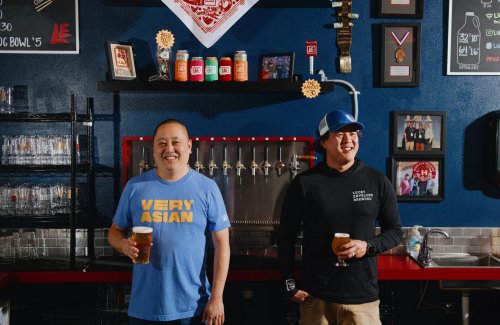
Raymond Kwan and Barry Chan, owners of Lucky Envelope Brewing in Seattle, both children of Chinese immigrants, made a significant career change when they decided to pursue their passion for brewing. According to the New York Times, they took the leap and started their own brewery over a few beers one night.

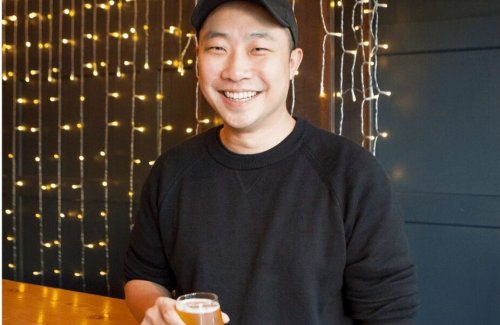
Similarly, Youngwon Lee, the Korean American founder of Dokkaebier in Oakland, California, as featured also in Asian Hustle Network, drew from his heritage to create unique flavors. Collaborating with his white head brewer, they used elements from homemade kimchi to develop a kettle sour beer, infusing it with the sourness, chile, and ginger found in Korean cuisine.

These Asian American brewers are not only making their mark through their beers but also actively participating in efforts to diversify the craft brewing industry. While challenges persist, these brewers are toasting to a future where diversity and inclusivity thrive in the world of craft beer.

Featured Image Source: NY Times

dk4-jpg

Stories

The Fastest-Growing Asian-Influenced Craft Brewery Dokkaebier All Started with a Dream for More Representation In The Industry

Youngwon Lee is the founder and CEO of Dokkaebier, an Asian-influenced craft brewery in Oakland, California. Dokkaebier takes its name from the ‘dokkaebi,’ the mysterious, shape-shifting creatures found throughout Korean folklore. Myths describe them as mischievous spirits who love to eat, drink, and be in the company of others. 

Lee started Dokkaebier after he discovered only 2% of people in the craft beer industry identify as Asian American. He knew then that he had to take action. Over the last three years, he worked tirelessly to create craft beers that not only pair well with Asian food but can make craft beer more diverse and inclusive.

Founded only three years ago, Dokkaebier is already one of the fastest-growing craft breweries in the U.S. Lee and his team have earned more than $1 million in sales, which they expect to increase to $3 million at the end of this year.

Dokkaebier’s Asian-influenced craft beers are available in more than 400 locations, including Whole Foods Market, H Mart, and BevMo!, plus their new flagship brewery and taproom in Oakland, California. They plan to create more than 30 new craft beers, launch in another 10 states and expand their footprint to a whopping 5,700 locations by the end of 2024. 

Lee has more than a decade of experience in the alcohol industry and has finally created something uniquely his with Dokkaebier.

WHERE DOKKAEBIER CAME FROM

Although I have worked in the alcohol industry for most of my career, I spent much of it in South Korea. It was not until I started working in the beer industry in the United States that I realized I was the only Asian person. I quickly realized I needed to be the change. 

Not only was the craft beer industry missing out on some much-needed diversity, but it also lacked creativity from unique and differing perspectives and experiences.

I wanted to create the first Asian craft beer brand. Everything would be Asian-influenced, including the design, packaging, name, and branding. Most importantly, it would also have an Asian-driven taste. I wanted to be authentic to myself and bring my history and heritage to an industry I love.

I have my wife to thank for the name. One day,  she said, “Why not just name the brand after dokkaebi?” 

Dokkaebi loves to eat, drink, and play but hides during the day. It was perfect for a craft beer brand! The creatures also capture our heritage as Korean Americans, so we combined dokkaebi with beer and got Dokkaebier.

IT HAS ALWAYS BEEN A PART OF WHO WE ARE

Aaron Weshnak, our head brewer, and I know beer, but we knew we had to do a lot of experimentation to come up with something original and do it consistently. It has always been a part of who we are; we experiment, shape-shift, and try new things—just like the dokkaebi which inspired our name. We always look for that perfect combination of flavors to share with others. 

When we started our experiments, we knew we had to start with Asian cuisine. We used flavors and ingredients we grew up with, like bamboo tea, Szechuan peppercorn, and even kimchi, which remains one of our most popular craft beers today. Then, we started thinking about what makes a great dining experience. 

We think Dokkaebier should be the Asian-inspired complement to your meal, even if you are not eating Asian cuisine, and if you are, then certainly an Asian-inspired craft beer would be the cherry on top.  

IT WAS CHALLENGING TO GET SET UP ONLINE AS AN EARLY-STAGE ALCOHOL STARTUP

I founded Dokkaebier in early 2020, just before the COVID-19 pandemic. We decided to launch a pop-up taproom in San Francisco for our debut. We worked with a former chef de cuisine from the two Michelin-star-restaurant Saison to have the perfect food pairing. But the pandemic shut everything down. 

We quickly found a new way to get our craft beer to the fans we had made in such a short time. It was challenging to get set up online as an early-stage alcohol startup, but we overcame it because we are all “shape-shifters” as dokkaebis. 

We then started to sample our beer at local beer festivals and events in the San Francisco Bay Area. It was important for us to be a part of the community, especially in uncertain times. We donated food and beer to first responders at Kaiser Permanente in Santa Clara, California, and worked on exclusive collaborations with local Asian American community groups and nonprofits. We also proudly supply our beer to local small businesses, including many Asian restaurants all across California. 

We are proud that Dokkaebier is available everywhere from local grocers, such as Berkeley Bowl, Bi-Rite Market, and Gus’s Community Market, and national retailers, like BevMo!, H Mart, Whole Foods Market, and Total Wine & More.

MOST PEOPLE GET BACK INTO LINE THREE OR FOUR TIMES BECAUSE THEY LOVE OUR F LAVORS AND INGREDIENTS

We have been blown away by the support of craft beer fans and Asian Americans who credit Dokkaebier for giving them the confidence to try craft beer for the first time. Our reception has been overwhelmingly positive. 

At every beer festival that we go to, people line up to try our beer. Most people get back into line three or four times because they love our flavors and ingredients. We typically have the longest lines of any brewery at any event and have even been recognized as the top or must-see beer at the LA Beer Festival and SF Beer Week.

Dokkaebier is also an award-winning beer. Craft beer fans and alcohol industry experts have recognized us with medals and international awards. We earned best-in-class recognition at the World Beer Championships and have won 10 times at the 2021 and 2022 Annual Brewski Awards. In 2022, every one of our craft beers won an award, with our milk stout taking home Beer of the Year and our kimchi sour and yuza blonde winning platinum medals. It’s truly amazing to see what we’ve accomplished in a short time.

Finally, we have been hard at work making Dokkaebier more accessible to more people. Dokkaebier is now carried in more than 400 restaurants and retailers, and we expect to see sales skyrocket this year. 

MY INDUSTRY EXPERIENCE HAS ALLOWED ME TO FOCUS MORE ON INNOVATION

The alcohol industry is heavily regulated and very complex. Even in the craft beer industry, every aspect of the business can be a massive undertaking, from manufacturing, distribution, and sales to operating a taproom. Fortunately, I have a lot of experience in the industry and have been able to navigate it all easily.

My industry experience has allowed me to focus more on innovation, especially research, and development. I believe Dokkaebier focuses more on ingredients and flavors than other craft beer companies or breweries. In only three years, we have developed and released more than 40 original craft beers. 

We can experiment more freely with all sorts of ingredients and collect feedback from craft beer fans about the flavors they want in ways other beer companies could not. Our relationship with our customers and community makes it easier for our craft beer to stand out.

STAYING TRUE TO OUR ROOTS MEANS EXPLORING THE WORLD AND SHARING OUR SPIRIT WITH OTHERS

We want to establish Dokkaebier as a nationally renowned Asian craft beer brand. When someone mentions one of our core beers, such as kimchi sour, we want them to think, “Isn’t that from Dokkaebier”? 

We hope that one day, Dokkaebier will be a household name and synonymous with Asian craft beer. In the near future, we might also move beyond craft beer. Dokkaebier could also introduce adults to other alcohol, like spirits, with our Asian-influenced style.

As a company, Dokkaebier values adventurousness, shape-shifting, and indulgence. We want to be available in other regions and different types of alcohol, as it aligns with our adventurous and shape-shifting spirit. For us, staying true to our roots means exploring the world and sharing our spirit with others.

ADVICE FOR THOSE WHO WANT TO ENTER THE CRAFT BEER INDUSTRY

The alcohol industry can be challenging as an entrepreneur, especially as a startup founder. I recommend working at a craft brewery or alcohol company for at least a few months. It is a great way to get paid to learn and find a mentor.

As an underrepresented minority in the industry, do not be shy. Once you find an opportunity, look for ways to bring your unique perspective to the business. Combining your unique voice is an important step to differentiate your personal and future craft beer brand from everyone else.

CONNECT WITH YOUNGWON

Website: enjoydkb.com

Instagram: @dokkaebier

franchising-jpeg

News

Asian Immigrants are Making Their Mark in the Franchise Industry

The success of Asian immigrants in the franchise industry can be attributed to their resourcefulness, hard work, and the strong familial bonds they cultivate.

A lot of Asian immigrants have resorted to franchising as a means to build a better life for themselves and their loved ones. In doing so, they have not only achieved personal success but have also become integral contributors to the American economy.

Asian immigrants, particularly those from India and China, often possess advanced degrees and a wealth of experience. Despite their qualifications, they frequently encounter obstacles in securing suitable employment or promotions due to language barriers, cultural disparities, and occasional discrimination. Many have turned to franchising because of this.

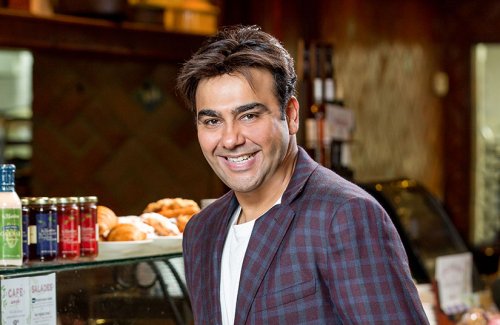
Jagjit Singh Saini, a highly qualified chemist from India, embarked on a new chapter in the United States, only to face the challenges of cultural and language barriers. Undeterred, Saini harnessed his entrepreneurial spirit and ventured into a field far removed from chemistry. He purchased a 7-Eleven franchise in Long Island, New York, and since then, he has expanded his business empire to ten franchises, employing over a hundred individuals.

Shoukat Dhanani, who arrived from Pakistan, started small with a gas station in Alabama. Today, his company, the Dhanani Group, controls over 1,000 Burger King and Popeyes locations. Sunny Dharod, an immigrant from India, began his journey as a busboy in his father’s restaurant. Today, he operates over 150 Applebee’s, 47 Pizza Huts, and 71 Taco Bell franchises. These immigrant entrepreneurs have not only achieved financial success but have also made significant contributions to their communities.

Franchising offers a pathway to entrepreneurship with a lower risk profile compared to starting a business from scratch. By investing in a franchise, immigrants gain access to established business models, renowned brand recognition, and support networks comprising fellow franchisees.

These factors make franchising an attractive prospect, while also providing an avenue to support family immigration by creating jobs and facilitating visa sponsorship for relatives. In fact, immigrants exhibit a significantly higher rate of entrepreneurship, with a 0.53 percent entrepreneurship rate compared to only 0.29 percent among native-born Americans.

As the franchise industry continues to thrive and evolve, it is crucial to recognize the significant role that Asian immigrants play in shaping its landscape. Stories like these inspire future generations to pursue their dreams, and remind us of the limitless potential within each individual.

Featured Image Source: Franchising.com