Stories

July 10, 2023

SHARE:

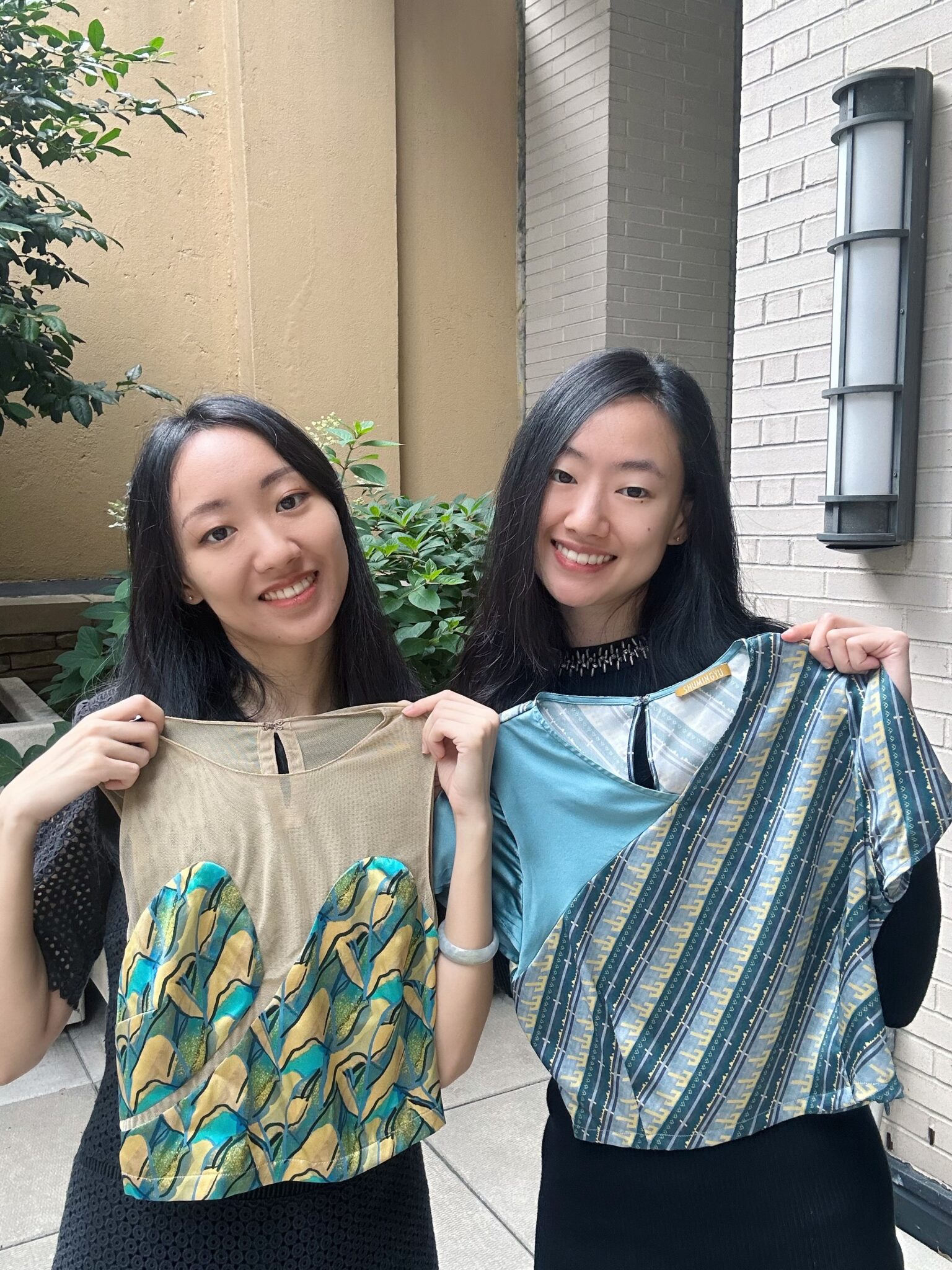
SHUMINGYU is an esteemed designer womenswear brand that finds its roots in the poetic essence of Chinese art.

Alvina Ding and Laura Ding, the talented sister team behind the brand, have embarked on a remarkable venture to preserve and interpret the artistic lineages of China through the medium of fashion.

With their deep personal connection to their heritage as second-generation Chinese Americans, their brand serves as a heartfelt expression of their cultural journey and a platform to share the cultural memories passed down through generations. The name SHUMINGYU holds great significance, as it pays tribute to the profound Chinese saying “落叶归根”, which invokes the powerful imagery of autumn leaves falling towards their roots, returning to the soil that once nurtured it.

Throughout history, Chinese artists have expressed their poetic selves through various art forms such as painting and poetry. SHUMINGYU draws inspiration from this legacy. Alvina, as the designer, and Laura, in charge of marketing, collaborate to create a collection that captures the elegant beauty inherent in Chinese aesthetics.

In an exclusive interview with Asian Hustle Network, Alvina and Laura walked us through their journey of preserving Chinese artistic lineages through fashion.

WHAT INSPIRED THEM TO CREATE SHUMINGYU

Alvina and Laura: We always had a passion for Chinese culture. As Chinese Americans, we were fortunate to grow up in a household that gave us exposure to the beauty of the culture such as its poetry and the arts, despite not being able to visit that often.

The fact that we were physically removed from the country of our cultural heritage, in many ways enabled us to appreciate the culture even more. We spent the next decade in between the U.S. and China, completing our undergraduate degrees in Beijing, kickstarting our early professional careers, and finishing graduate school in the U.S. It was during this time that the idea for SHUMINGYU was conceptualized. 

Alvina: The idea for SHUMINGYU was first planted in my mind in college, where I was formally introduced to the canon of Chinese artistic lineages as a Chinese art history major. I thought it was odd that despite the breadth and nuances of Chinese aesthetics that were crystalized over thousands of years, it was rarely reflected in modern fashion products. To me, culture should not be relegated to a museum. It has meaning only when it is a part of one’s daily life. While I was studying fashion design at Parsons and Laura was in business school, we began to turn this idea into reality. I want this type of beauty to be seen, not only in rarified spaces such as classrooms and museums but by more people through a medium such as fashion that can be a part of our everyday lives. This fuels me as a fashion designer. 

HOW SELF-DISCOVERY INFLUENCED THEIR AESTHETIC AND VISION

During our young adult years living between China and the U.S., we came to understand that identity is multifaceted.

There isn’t one way to be American, Chinese, or Chinese American. Cultural identity and heritage are not limited by where you were born or what period you are living in. It is something that is constantly evolving, passed down through generations, and shaped by the people who are currently living and breathing it.

This motivated us to combine the cultural fluency we gained over the years with design as a universal language to create SHUMINGYU. This is our way of sharing our perspectives on the beauty of Chinese aesthetics and the artistic lineages that have come before us with a global audience.

THE CREATIVE PROCESS

Alvina: I first decide on a particular theme, which is either a genre of Chinese art or a type of craft. Then I dive into research on the theme for a month or two. I read academic papers and art history books to understand the significance of this kind of genre, the elements that influenced its formation, what type of art it had an impact on later, its philosophical underpinnings, where the colors come from, and literary references. I look at the most representative pieces of art from the genre and identify the most distinctive characteristics that will define the overall feel of the collection.

During this process, I am looking at art objects that have graced the courts of emperors, the gaze of connoisseurs, and the hands of skilled artisans. From the free-spirited brushwork of ink paintings, the rhythmic flow of poetry, and the delicate luster of ceramics, all of this informs my final design decisions.

As I do the research, I see designs in my head. I visualize the images and colors and capture what I see into sketches, which I then translate into prints. Once I finish my prints, I think about what silhouettes they would work best on. From then on, it’s about deciding what fabrics work best for each design and seeing how different designs fit together into an overall collection.

SHOWCASING CULTURAL HERITAGE INTO THEIR DESIGNS

Each of our collections has a specific theme, and then we incorporate that theme into the custom prints that we develop, as well as the silhouettes of our designs. For example, our first collection ‘Of Blue Mountain and Verdant Forests’ was designed around the theme of Chinese landscape paintings. Therefore, each custom print that we developed is rooted in a piece of artwork, literature, or philosophy that is connected to landscape paintings. Our hope is that with each piece a customer wears, they can discover a new piece of culture.

Example 1:

The print of our Brushwork Dress is inspired by a brush stroke technique from the Southern Song Dynasty landscape painting The Joy of Harvest. Developed by the painter Li Tang from the Northern Song dynasty, the technique is called the “axe-cut stroke” and uses angular, staccato brushstrokes to depict the rocky surfaces of mountain peaks. The brush stroke derives its name from its visual resemblance to chopped wood and is one of two major brush strokes used to depict the texture of rocks in landscape paintings. The color of the dress is inspired by the golden brown hue of the painting scroll and the style lines are outlined in the shape of mountain ranges. The skirt hem shape is symbolic of the reflection of mountains in the water.

The Joy of Harvest is a masterpiece by Song Dynasty artist Ma Yuan (1160 – 1225), one of the most influential landscape painters of his time.

Example 2:

The print of our Spring Mountains Set is inspired by the mountain ranges from the Sui Dynasty painting Spring Excursion, widely cited as the earliest surviving work of Chinese landscape painting. The print traces the delicate, twisting brush strokes that outline the rise and fall of spring mountains in the distance. The colors are inspired by the luxurious powdered gold, malachite green, and azurite blue pigments used in the painting.

Painted by artist Zhan Ziqian, Spring Excursion was one of the first paintings to give prominence to mountains and rivers over human figures. It is considered a seminal work that marks the genesis of the most influential category of Chinese art for thousands of years to come.

FOSTERING A DEEPER APPRECIATION OF CHINESE AESTHETICS AMONG A GLOBAL AUDIENCE

We want to share the breadth, depth, and nuances of Chinese aesthetics with a global audience through our clothing. By offering an alternative aesthetic view to the exotified and caricatured version of Chinese fashion that has been perpetuated throughout the past century, we want to move beyond the set of narrow motifs that have defined what Chinese fashion can look like and open the door into a world where design is created by those who live and breathe the culture and comes from an informed and nuanced perspective.

Perhaps one of our prints will spark someone’s interest in understanding a particular artistic movement in history or thinking about how Chinese aesthetics is perceived today. If our pieces can inspire people to value culture more and spark conversations, then we’d consider that a success. 

WHAT LIES AHEAD FOR SHUMINGYU

We already have a lineup of themes for our future collections, and some designs are already in the works for our second and third collections. We also want to integrate more types of fabrics, silhouettes, and crafts into our designs.

In addition to clothing, we have future plans to expand into accessories, including handbags and fragrances. We are excited to bring our vision to life, step by step, and hope that others are excited to come along on this journey as well!

CONNECT WITH SHUMINGYU

Instagram: @shumingyuofficial

Website: shumingyu.co
Related Articles

Asian journal-jpg

News

How Plants Became a Source of Hope During the Pandemic for Peter Dario

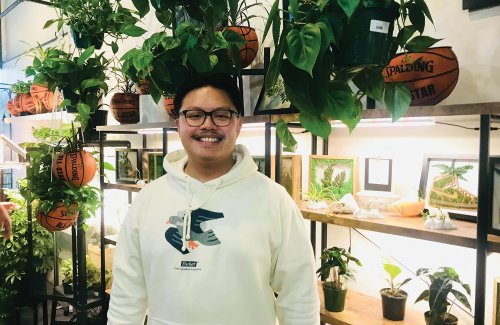
When tough times hit during the pandemic, people everywhere turned to plants for comfort. Lockdowns and worries made people feel alone, but planting things brought them joy and hope. Terrace Plant Shop is an example of this.

The proud Filipino-American owner, Peter Dario, faced a big tragedy two years ago, when he lost his dad and grandpa to COVID-19. This was really tough for his family. To help heal, they started getting into plants, even though Peter wasn’t into them before.

Peter wasn’t sure if it would work at the beginning. But despite the uncertainty, he took the leap.

Terrace Plant Shop goes beyond being a store – it stands as a symbol of resilience. People who also navigated pandemic struggles found hope in its story. It proved that even when things are tough, positivity can grow.

Beyond plants, the shop offers an array of treasures like soil, pots, and even candles. Among the diverse plant offerings, the Monstera Adansonia, with its striking heart-shaped leaves, steals the spotlight. The “Friendship Plant,” or Pilea Peperomioides, is another crowd favorite. Its low-maintenance nature and cheerful appearance are a hit.

Terrace Plant Shop also offers workshops that teach people how to craft terrariums, miniature plant havens. These interactive sessions cater to groups and teams, fostering creativity and connection.

Featured Image Source: Asian Journal

News

Marquis Blends Asian Roots and Modern Flair with Innovative Energy Drinks

The energy drink industry is on an exciting upswing, having expanded by a remarkable $7 billion over the past half-decade. Stepping into this dynamic field is Marquis, a family-founded beverage brand rooted in AAPI heritage. Their approach involves crafting a sparkling drink featuring a unique caffeine blend, setting them apart in the market.

Unlike most energy drinks and functional beverages that cram 200 to 300 milligrams of caffeine into each serving, Marquis opts for a milder 100 milligrams. Interested buyers can find Marquis beverages both on the official website, drinkmarquis.com, and select Target stores, including the Downtown branch located at 735 S. Figueroa Street, as well as local Erewhon Markets.

LA natives Christopher Lai and Danny Huang, co-founders of Marquis, are leading the charge for a healthier caffeine experience. Lai shared with LA Downtown News that around 90% of American adults consume caffeine daily, but Marquis’ caffeine drink comes with added benefits.

Marquis crafts its beverages with organic ingredients, sidestepping added sugars and excess calories. Their concoction combines green tea, green coffee, and yerba mate to offer a balanced, natural energy lift throughout the day. Huang emphasized their ability to provide sustained, natural energy with a fraction of the usual caffeine content.

Marquis beverages boast antioxidants, vitamins B and C, setting them apart in promoting health-conscious choices. Lai’s focus on differentiation from other energy drink companies reflects in Marquis’ careful crafting and dedication to responsible caffeine consumption.

The brand’s flavors, including citrus yuzu, lychee peach, mango ginger, super berry, and pineapple passion, carry a unique touch shaped by their “Asian-ness,” as described by Huang. Their latest flavor, lemon lavender, adds a botanical dimension. Huang revealed that these flavors are a testament to their history, culture, and personal experiences, a way to share nostalgia and love with the world.

Featured Image Source: LA Magazine

Screen Shot 2023-07-09 at 2.39.59 PM-png

Stories

An Entrepreneur’s Dream to Bring a Taste of Cambodia to the World and the Miracle That Started It All

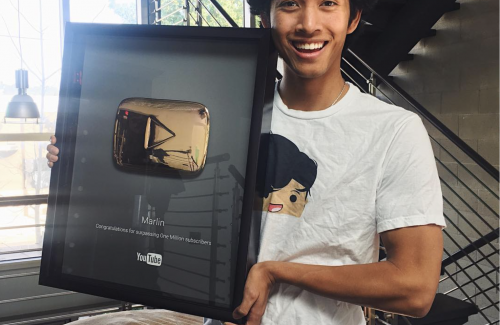
Marlin Chan is a remarkable individual whose journey embodies determination and triumph in the face of adversity. Born to Cambodian immigrants, Marlin’s family overcame hardships that spanned continents, shaping the very essence of his character.

His parents faced the harsh realities of the 1970’s Cambodian Genocide that forced their separation for nearly 2 decades. After being apart for 18 years, a fortunate stroke of serendipity allowed them to miraculously reunite and lead to the birth of the miracle baby Marlin.

Inspired by his grandmother’s beef crisps, Marlin started a business venture called “Yay’s” to pay homage to his culture. Through Yay’s, Marlin continues his family’s legacy of hard work and determination, sharing a unique taste of Cambodia to the world.

Asian Hustle Network had the privilege to sit down with Marlin Chan and delve into his inspiring journey. Join us as we explore his remarkable story of strength, dreams, and resilience.

CHALLENGES THAT MARLIN’S PARENTS FACED AS CAMBODIAN IMMIGRANTS

During the Cambodian Genocide, my parents faced the challenge of survival, as those of higher status, like artists, government officials, and intellectuals were among the first to be targeted and eliminated. 

Because there were countless horror stories of Khmer U.S. Air Force members being killed upon arrival at the Phnom Penh’s air station, it prevented my dad from returning home after serving the U.S. Air Force to save his family. This marked the onset of my parents 18-year separation.

Amid their time in the work camps, my mom tragically lost my sister to chickenpox and malnutrition due to the mistreatment by the Khmer Rouge. This tragic event left her devastated. To escape the work camps, my mom and her family had to navigate minefields at night to be unseen.

Like many immigrants, my dad faced the challenge of not knowing the English language upon his arrival in America so he turned to television to learn how to speak the language. Meanwhile, my mother successfully made her way to America to start a new life and began selling noodles on the streets of Stockton, California to support our family.

THE REMARKABLE REUNION OF LONG-LOST LOVE AFTER 18 YEARS

One day, my father visited a local donut shop for the first time to meet with an old friend, and the donut shop owner recognized him from their days in Cambodia. 

As the owner was inquiring about my mother, he revealed that the last he heard about her and her family’s whereabouts was in Stockton, California. My father’s face drained of color, and he froze upon hearing this shocking revelation. Immediately, he asked if the owner had their contact information and without skipping a beat, he got in touch and embarked on a road trip to Northern California the very next morning.

Upon arriving in Stockton, California, my dad found my mom, still hopeful and strong-willed as she had always been, but her health wasn’t in the best condition. She was living in a one-bedroom shared apartment with multiple other families. They promptly went for health check-ups and discussed restarting a life together again. In that same year, I was born on October 7, 1993. The Stockton Newspaper published an article of Marlin Chan as the miracle baby that beat the odds of survival with my parents’ long-lost reunion and my mother’s ability to bear children at forty.

LESSONS THAT SHAPE MARLIN’S JOURNEY

As a child of Cambodian immigrants, here are some of the things I learned:

  • Stay curious, for knowledge is a treasure that never diminishes and our curiosity fuels our drive to innovate. 
  • Having a positive outlook can transform our perception of life, particularly during trials.
  • Material wealth is temporary. The value in developing your knowledge and skills is what truly holds the key to unlocking your infinite potential for abundance, which created a drive for me to continually invest in myself.

Relentlessness and grit are values I learned from my parents’ stories at a young age. I come from a determined, resilient family that fights for love. Hearing stories of my mom walking from Cambodia to the border of Thailand in search of refuge taught me the power of determination. Based on these principles, I have always believed in my potential and fostering a strong work ethic. While I may not always be the most attractive or intelligent person in the room, I strive to outwork everyone to the best of my abilities.

FACING FAILURE, FINDING STRENGTH

When I was eighteen years old, I was selected as one of the top 10 finalists to compete on ‘Internet Icon,’ a show created by Ryan Higa, my content creator idol. Unfortunately, I ended up placing 8th on the show, and as a young eighteen-year-old, I was devastated. I doubted whether I could become a full-time content creator if I couldn’t win this competition.

In the following year, I took a service industry job at Chipotle and completely stopped making videos. By the end of that year, I felt a renewed sense of fervor and determination to pursue my career in content creation. The skills I learned from my job at Chipotle, such as executing with excellence to avoid repetition, transferred to my work ethic for content creation.

By doing something that wasn’t creative, it shifted my perspective with content creation and allowed me to pursue my passions with more fervor and focus. I realized that I would only be a failure if I gave up since you miss 100% of the shots you don’t take. This experience resonated with the Japanese proverb, “Fall seven times, stand up eight.”

Over the next three years, I moved to Los Angeles, California, and gained over 1 million subscribers, turning content creation into a full-time job. I learned that if I could visualize my goals, they could become my reality, or even exceed beyond my imagination.

LOOKING AHEAD

My greatest accomplishment would be giving my parents a better life and inspiring kids to foster their talents and pursue their passions.

Looking ahead, my goals for the future are centered around bringing joy and delight to the world with my food and creations. I aspire to represent Asian Americans, who are under-represented in American media and encourage my Asian community to share a piece of their culture with others.

My dream is to become the first Cambodian American to bring a taste of Cambodia to every home with Snack Yay’s on a global scale. Bringing exposure to the Cambodian community would be a true fulfillment of my mission in life.

ABOUT HIS BRAND YAY’S

My Grandma, known as ‘Yay’ in Khmer, has been crafting beef crisps since the early 90’s to cover her apartment rent in Stockton, California. Beef crisps consist of thinly sliced marinated beef air-dried to a delightful crunch with flavor profiles that offer a symphony of umami, sweetness, and spiciness. Consumer goods expert Kathryn Tuttle described them as a fusion of ‘Beef Carpaccio meets potato chips meets bright Asian flavors.’ What sets these apart from traditional American beef jerky is their light and crispy texture. While regular beef jerky takes about 3 hours to dehydrate, beef crisps demand up to 20 hours for that perfect crispiness.

Growing up, I thought beef crisps was a snack that was readily available in stores. My earliest memories involved enjoying this delectable treat outdoors, helping my grandma sell them to our community. The concept of making Yay’s as a brand first came to me in December 2017. Though the idea took root then, I didn’t start the business until June 2023. Pioneering and expanding something unprecedented like this has not been an easy feat. It was very discouraging at first to reach out to over 57 different manufacturers and be told numerous times that it couldn’t be done because of the technical hurdles in producing beef jerky with this level of crispiness.

Yay’s is currently self-manufactured to ensure we use the highest quality ingredients. Every bag we send out meets our standards because we take the time to slow-dry the meat for over 20 hours, while typical beef jerky takes 3 hours to produce.

We initially started out in a small commercial kitchen in Camarillo, California, and transferred to a medium-sized commercial kitchen in New Jersey this year to increase production. We are sourcing USDA Prime meat from the same suppliers that many Michelin-starred restaurants in New York City use. Every bag of Yay’s is handcrafted because we value quality. For me, the possibility of sharing a taste of Cambodia to the world is a dream come true.

MARLIN CHAN’S INSPIRATIONAL MESSAGE TO YOUNG AAPI INDIVIDUALS

Never give up. Remember to focus on your own journey because you are uniquely you, and your authenticity is your ultimate gift to share with the world. Being referred to as a miracle baby since birth has shaped my perspective to preserve through the seasons of life and be grateful of the blessings in my life. Maintaining a positive attitude is a powerful tool to develop unwavering confidence in your potential to achieve anything you set your mind to.

CONNECT WITH MARLIN CHAN

Instagram: @marlinramseychan

Youtube: @snackmarlin

Yay’s Instagram: @snackyays

SBS

News

He Used to Dislike Food, But Now He’s a Chef Mastering Asian Flavors

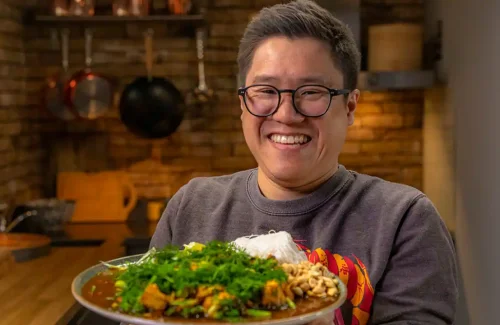
Chef Jeremy Pang’s journey into the world of cooking took an unexpected turn from his childhood aversion to food. In his early years, he confessed that he had a distaste for meals.

However, his life took an exciting turn when his family relocated to Singapore, exposing him to open-air food markets, where culinary artisans specialized in single dishes. This experience transformed his perspective, igniting a passion for Asian cuisine that would shape his career.

The pandemic prompted a shift in Pang’s family dynamic, leading him to cook with his son and discover his preferences. Through this shared experience, they explored crafting homemade pizzas and flapjacks. This is when they found out that his son really likes the flavors of Chinese food, like light and tasty dishes with fish and crispy veggies.

An advocate of the Asian tradition of feasting, Pang believes that sharing multiple dishes is integral to the dining experience. This philosophy, deeply ingrained in his approach to cooking, led him to create “Simple Family Feasts,” a guide designed to make the concept accessible to all.

Image Source: Irish News

Central to Pang’s culinary finesse is his artful balancing act of flavors and textures. He highlights the significance of contrast – harmonizing crispy and tender, soft and resilient, while incorporating fresh vegetables or quick-fried selections. This balance is the key to an unforgettable dining experience.

Featured Image Source: SBS